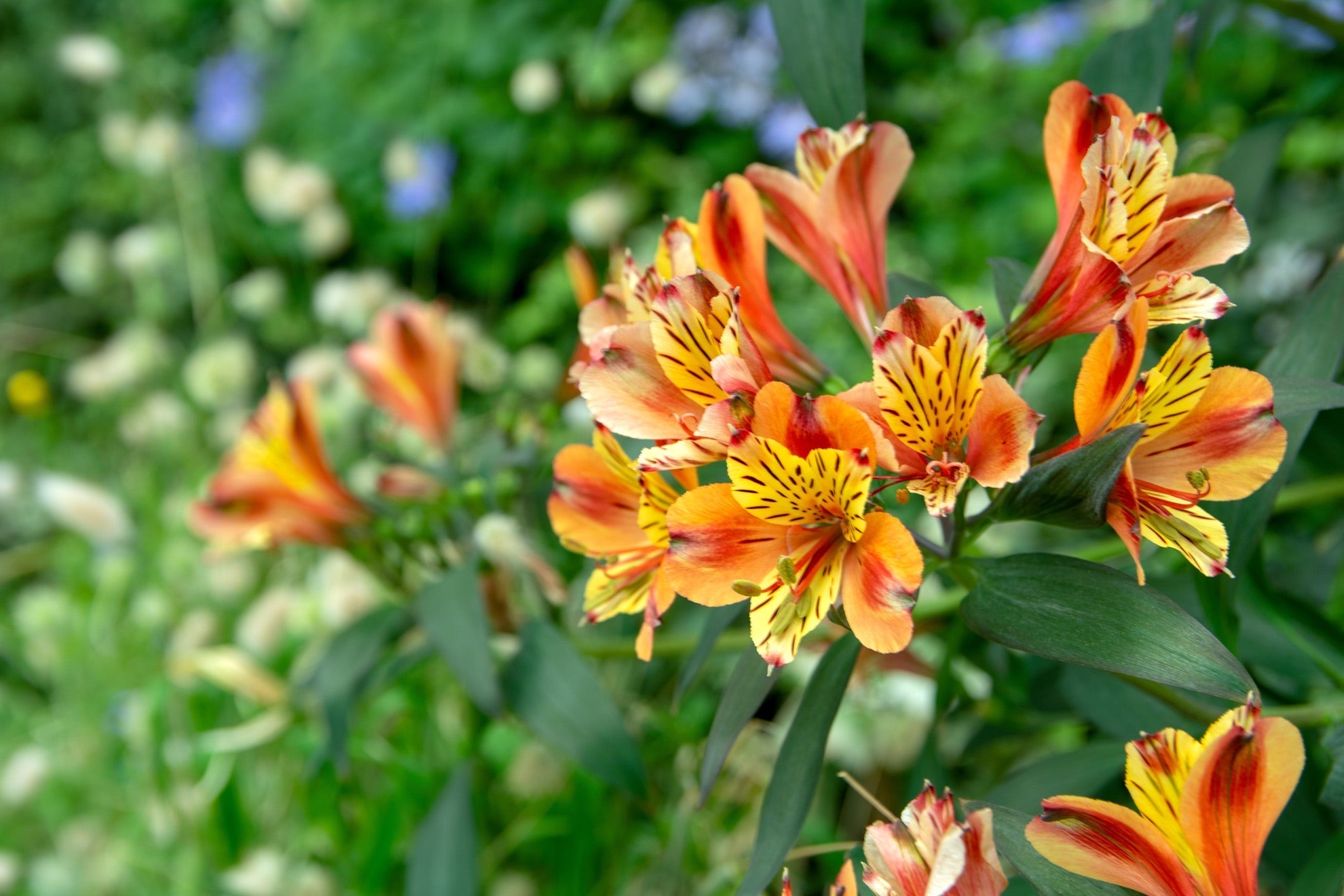
If you are not familiar with Alstroemeria, when growing them you will soon find that they can be great value plants for a garden – providing beautiful, vibrant flowers over quite a long period.
Deadheading can lead to a longer blooming period since the plants will often produce new flowers, rather than rushing to produce seeds and wasting their energy on that.
Deadheading will also mean, of course, that your flower beds and container gardens look great all summer long.
“As well as leading to longer blooming, deadheading can be a very calming task,” says Horticulturist Colin Skelly.
“I find that the minutes, and even hours, fly past when I’m deadheading and it’s great think time, a king of horticultural mindfulness!”

Just remember that deadheading all flowers will mean that you cannot collect the seed, so be sure to leave some flowers to go to seed if you wish to collect these to sow.
Fortunately, deadheading Alstroemeria could not be simpler, so read on for a more in-depth explanation:
| Difficulty | Easy |
| Equipment Required | Gloves |
| When To Deadhead | July – September |
When To Deadhead Alstroemerias

Start to deadhead Alstroemerias as soon as the first flowers begin to fade.
When exactly your Alstroemeria will be in bloom will depend on which cultivars you have chosen.
Generally these plants flower between June and as late as October.
1) Loosen Any Ties To Supports

Some taller varieties of Alstroemeria do better with some form of support, so if you have staked or otherwise supported your Alstroemeria, the first step will be to loosen and remove any ties, and move supports out of the way.
2) Pull Off Faded Flower Stems At The Base
Once you have removed any supports or ties that are in the way, you can simply remove the stems with faded flowers.
Rather than cutting off the flowers, it is best to pull gently on the stem, so that it comes away at the base.
Pulling rather than cutting is best because this strategy encourages new growth to form.
3) Cut Back Any Remaining Stems

You can continue to deadhead throughout the flowering season, but it is a good idea to leave dead vegetation of herbaceous perennials in place over the winter because it provides an excellent habitat for wildlife.
So, stop deadheading before the end of the season arrives and make your garden just that little bit friendlier for wildlife over the winter months.
Then in early spring, cut back or pull off any remaining stems to the base before any new growth emerges, to make way for new growth.