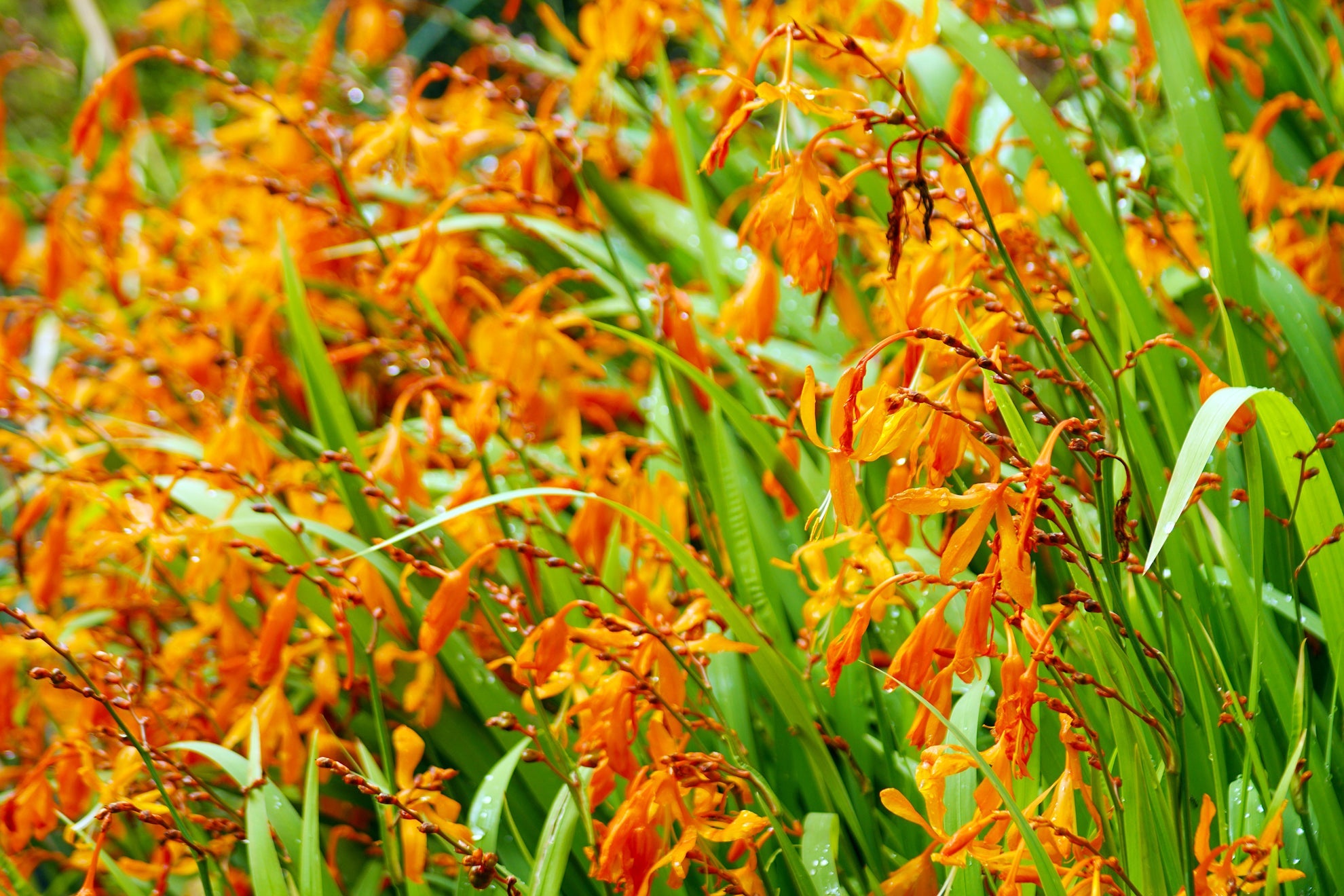
Crocosmia is a very easy plant to grow and care for.
As long as it has moist yet free-draining soil and a sunny or lightly shaded spot, it should thrive and flower well for a number of years with very little work on your part.
Though not strictly essential, it can be beneficial to cut back dead foliage from crocosmias before new growth emerges in the spring.
You can prune crocosmia by:
- Waiting for the foliage to die back.
- Cutting off dead foliage to the base.
Read more about this simple process below.
| Difficulty | Easy |
| Equipment Required | Secateurs, gardening gloves |
| When To Prune | March |
When To Prune Crocosmia
The most important thing to remember when cutting back crocosmia is that you should never do so while the leaves are still green and in active growth.
After the plant flowers, usually between August and October, the plant leaves still have an important job to do.
They are busy and hard at work, converting sunshine and carbon dioxide into energy.

When the leaves begin to die back at the end of the growing season, the energy they collected will be stored in the corms over the winter, allowing new growth and flowering the following year.
If you cut back the Crocosmia before the leaves have been able to do their job, there will not be enough energy stored in the corms to allow the plant to grow and flower well next year.
As soon as the leaves naturally die back, you can think about cutting off the dead, brown leaves to tidy things up and for appearances.

However, it is far better to wait until early spring to cut back the plants, as Mark Wash from Trecanna Nursery, states:
“No pruning or deadheading is required until the cut back at the end of the season,” he says.
If you wait until early spring, shortly before new growth emerges, wildlife will be able to make use of the cover, shelter and habitat that the dead foliage provides over the coldest part of the year.
Waiting until spring will also give the corms below a little extra protection, which can be a good thing, especially in colder parts of the UK.
So, if you want to have a wildlife-friendly garden and ensure no winter damage takes place in colder areas, hold off pruning crocosmia until around March.
1) Wait For Foliage To Die Back
As mentioned above, it is best to hold off cutting back the dead foliage until the early spring.
“A gentle shake of the stems will help loosen any spent flowers to keep the clump looking fresh,” says Mark, though this step is completely optional.

However, you can cut back hard any time after the foliage dies.
You will be able to tell when the foliage has died back because it will have turned a brownish colour and no portions will be green.
2) Cut Back Dead Foliage
This job really could not be simpler: just take a pair of secateurs and a hold of a clump of the foliage and cut it off close to the ground.
Once you have removed the foliage, it will make a great addition to your composting system.

“Depending on the state of decomposition of the foliage (i.e., not too slimy), it can be cut back into small sections and left on the ground around the plants,” shares Horticulturist Colin Skelly.
“This allows the foliage to rot down directly on the soil and provides a surface mulch – this can be done with other perennials too.”
After pruning, you can also consider replenishing the mulch around the base of your plants with fresh homemade compost or other organic material to maintain fertility and help make sure that the plants have what they need to flower well later in the year.