Brilliant and cheerful, sunflowers are among the easiest plants to grow from seed.
Sunflower seeds germinate very reliably and can be sown directly in open ground, making these plants among the top contenders for introducing family members, especially children, to the pleasures of gardening.
Regardless of the variety, sunflowers tend to be heavy feeders and drinkers, so, even though the plants are tough and vigorous, their needs will require aspiring gardeners to learn about plant care and requirements.
You can grow sunflowers from seed by following these steps:
- Select an ideal spot for planting your sunflower seeds.
- Prepare the ground with rich and fertile soil.
- Sow your chosen variety of sunflower seeds.
- Protect the seedlings as they grow.
- Thin out your young sunflower seedlings.
- Provide the correct aftercare for your sunflowers.
This process is explained in more depth below.
| Difficulty | Easy |
| Equipment Required | Gardening gloves, pots, seeds, suitable compost, trowel, bamboo canes, cotton string |
| When To Sow | April to May |
1) Select A Spot For Sowing
In warmer regions of the UK, sunflower seeds may be sown outdoors in the second half of April.

In colder regions, wait until the weather warms up in May.
Sunflowers need sun, so choose a spot that receives several hours of sunlight per day.

A southern aspect is best, but east or west-facing aspects will work too.
It is advisable for the growing site to be sheltered from blustery winds.
2) Prepare The Planting Site
Most annual sunflowers will grow in almost any type of soil, but for them to flourish, they need rich and fertile soil that is kept moist but drains very well.
Start with a mixed loam and enrich it with humus, compost and well-rotted manure, incorporating these into the ground at about a 1:3 ratio with the soil.
Do not use chicken manure for these plants.

To facilitate drainage, add some grit, sand or perlite to the soil, especially if the ground is clayey.
Though not strictly necessary, till the ground with a rake or a hoe to break up clods and make a friable soil.

The best soil pH is in the neutral to slightly alkaline range, between 6.6-7.8.
Sunflowers will not thrive in acidic soil, so if your soil has an acidic pH, you should correct this before growing them.
3) Sow The Sunflower Seeds
At the planting site, make a very shallow furrow using a gardening trowel or a stick.
Sunflower seeds germinate reliably, so you may as well sow them thinly.
Space them by about half the spread of the variety you are growing.
If in doubt, sow seeds at around 20cm apart.

Sunflower seeds need darkness to germinate.
Cover the seeds with a 1cm layer of soil and gently pat it down, but do not firm it up.
Moisten the ground well using a watering can fitted with a rose.
Keep the ground moist and, if necessary, water daily.
4) Protect The Seedlings As They Grow
Sunflower seedlings and young plants are prime targets for various garden pests, but none more so than slugs and snails, which can destroy many small plants overnight.
“Aside from slugs and snails, mice would make a tasty meal of any sunflowers I direct sowed into the soil,” says Master Horticulturist Colin Skelly.
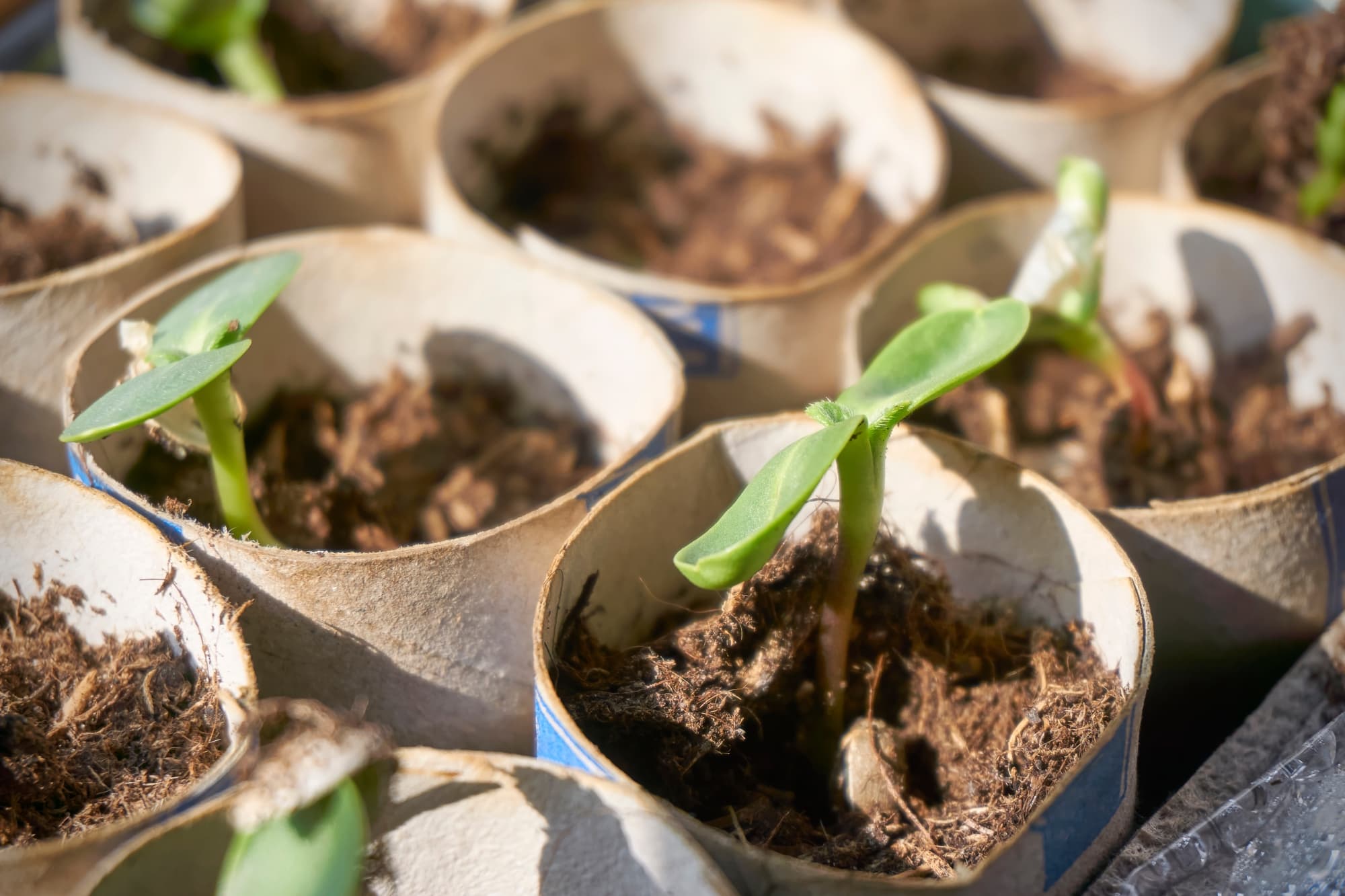
“I sow in pots in a greenhouse or cold frame, using mesh to protect the compost from unwanted snack-seeker, and plant out when the young plants are robust enough to be transplanted.”
Other pests that are a threat to emerging sunflowers include squirrels and birds.
If you know of slug and snail activity in your garden, protect seedlings proactively.

Consider protecting seedlings with mesh netting to protect them from pests.
It will need to be a stiff type of netting and its edges will have to be wedged into the ground all around so that slugs and snails cannot work their way in.
It can be removed after the young plants are sufficiently mature and can withstand an attack from these garden pests.
5) Thin Out Your Young Plants
About 3 weeks after germination, the young plants should be thinned as necessary.
For all adjacently-sown seeds that have germinated, one young plant will need to be removed.

It should be the one that is weaker and slower-growing.
Water the ground first and then, after a short while, uproot the chosen plants.
6) Seedling Aftercare
Sunflowers thrive in moist soil, so be sure that the ground does not dry out.
If there has been no rainfall, water the ground well.

In hot and dry weather, you may need to water every other day.
Other than watering, sunflowers do not need any aftercare, with one exception.
Some taller varieties that have an upright habit may droop or keel over.

If your varieties show signs of doing so, insert long canes into the soil a few centimetres from the stem.
Tie the stem loosely to the cane at two levels.

I prefer to use cotton string and avoid string or twine made of synthetics for this purpose.