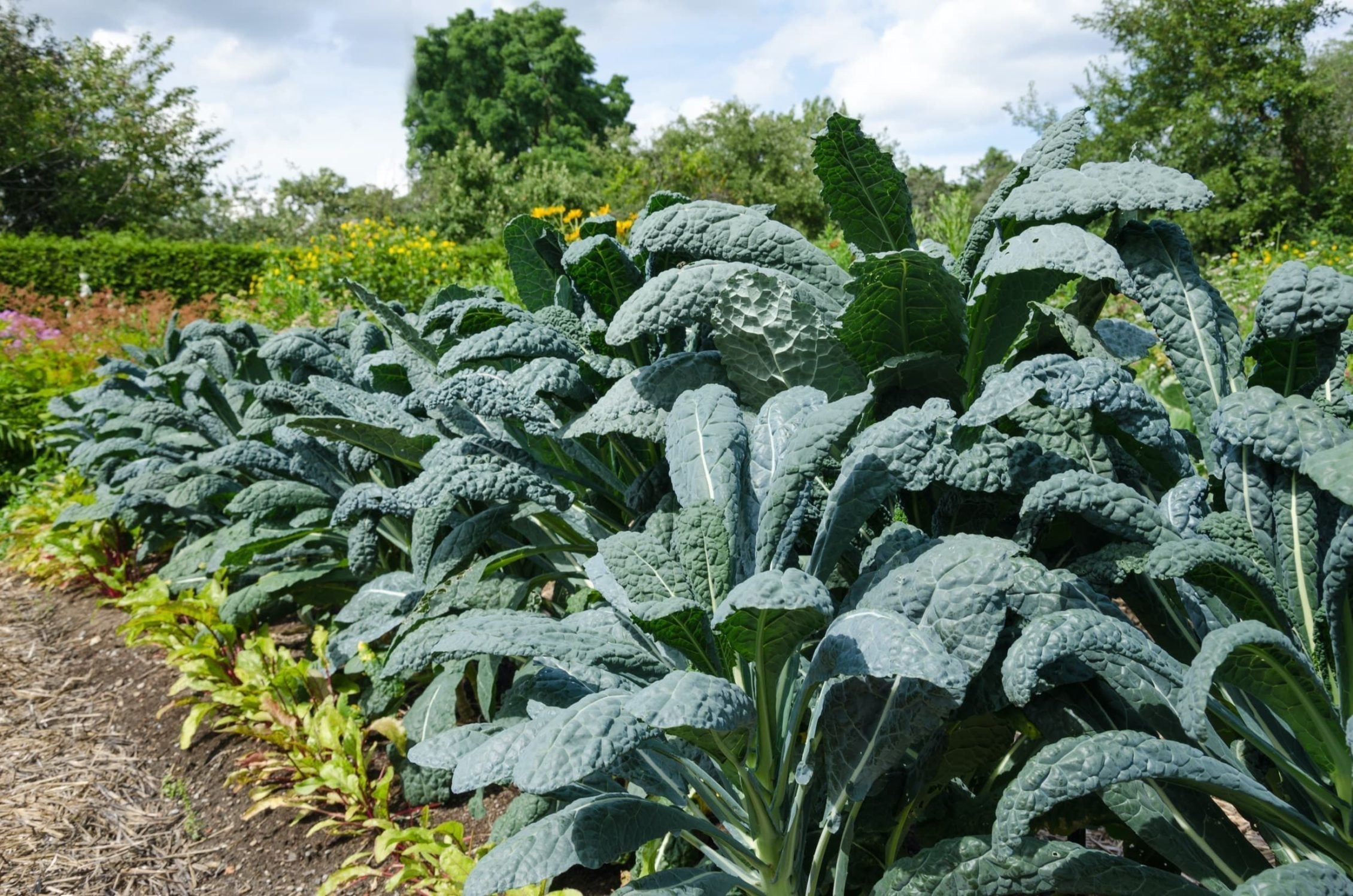
Kale is a tasty and increasingly trendy type of cabbage.
It has big, dense curly leaves, and for most varieties, these will be a rich dark green.
It’s a great plant for growing in your garden – after reading this guide you’ll have all the info you need to grow it at home.
Overview
| Botanical Name | Brassica oleracea |
| Common Name(s) | Kale |
| Plant Type | Vegetable |
| Native Area | None (Cultivated) |
| Hardiness Rating | H4 |
| Foliage | Large, edible leaves |
| Flowers | Small, not desired |
Kale is a versatile ingredient that you can use in salads, in dishes, or as a garnish.
“Unusually for me, I have 3-4 varieties of kale growing in my garden in May already this year,” shares Kathy Slack, Garden Blogger.
“I usually save it until later in the year, but I couldn’t resist growing it as soon as possible this year – I love it.”
It features in recipes including everything from roasted sesame seeds, to fried chorizo and poached egg, to the humble British potato.
Why Grow Kale?
If you fancy growing this wonder vegetable in your garden, you’re in luck.
There are a few things you need to do to take care of it – which we’ll cover later – but it’s nowhere near as strenuous as some other plants.

If you’re not convinced of its benefits already, here are some reasons why kale is a great plant to grow:
Firstly, it’s hardy – kale tolerates cold and light shade well, and is not prone to as many pests and diseases as some other plants.
Also, it will produce a good harvest in almost any condition.
As long as you avoid heavy shade or particularly soggy ground, you’ll reap the bounty of your efforts each time it comes to harvesting.
“I love growing kale,” shares Garden Writer Janice Shipp.
“You will never starve if you grow kale as you can be picking it almost all year round.”
How To Grow Kale
“I grow a lot of perennial vegetables, especially kale,” shares Sara Venn, the Founder of Edible Bristol.
“Kale just keeps growing and is minimal in terms of maintenance. All you have to do is keep weeding around them and they will get on with it and give you a great crop.”
You have a few options for where to grow kale.
It can either be grown in your garden as from seed, or indoors in window boxes, conservatories, or similar.

Once seeds have sprouted indoors they can be moved outdoors for optimal results.
The next sections of this guide will teach you how to grow kale in each of these places.
Growing Outdoors
The Old Farmer’s Almanac says that “you can plant kale at any time, from early spring to early summer”.
We recommend sowing in early May.
To prepare your kale bed, mix about a cup of general fertiliser and pour into your compost.
Then you’re ready to plant your seeds.
Planting about a centimetre deep into well-drained, light soil will give the seeds the best chance to thrive.

After about 2 weeks, thin the seedlings so that they are spaced 20 to 30cm apart.
We also recommend netting the plants to protect them from hungry birds, as kale is one of their favourites!
“Covering the rows is a must in my garden,” says Master Horticulturist Colin Skelly.
“Kale and cabbage are favourites for pigeons in particular and they will quickly devour any offerings I plant for them.
“Covering with mesh also helps to prevent other leaf-munching fans of kale.”
The best conditions for kale are full sun, moderately heavy and well-draining soil, and a pH level of around 6.5.
It’s recommended to grow kale as part of a crop rotation, in order to maximise its access to nutrients in the soil, and to reduce the risk of pests.
Growing Indoors
Growing indoors is good because it protects the seedlings during the most vulnerable phase of their life.
To do this, fill your pot nearly to the top with compost, then place two seeds in a hole 1cm deep.

Cover them, water gently, and leave on a windowsill with lots of sunlight.
The seeds will germinate anywhere from 5-30°C, although the optimal temperature is around 15°C.
Planting Out
You’ll want to transplant your kale outside around mid-June.
Again, because kale is quite hardy, there is some flexibility with dates.
You want to look for plants are about 15 centimetres tall, as these are most likely strong enough to be successfully moved.
Plants sown indoors need to be ‘hardened off’ before being planted out.

This means you give them a chance to get used to outdoor conditions before being transplanted, because there are fluctuations in temperature outside that plants aren’t used to, as well as more wind.
To do this, leave them outdoors for a couple of hours on the first day, then incrementally longer over a week or so.
When it’s time to plant them out, plant them a couple of centimetres deeper than they were before, and keep about fifty centimetres between the plants.
Water the ground if it is dry, and take care not to disturb the roots.
Kale Plant Care

It’s a hardy plant, but you still need to a few things to give your kale the best chance to grow strong.
Here are our top kale care tips:
- Remove yellow or yellowing leaves from the plant.
- Water the soil when conditions are dry.
- Keep a careful eye out for weeds shortly after planting, and remove them quickly.
- Add a nitrogen-rich feed in mid-February to encourage new shoots.
- Consider putting a cloche over your kale plant in winter to keep the plant warmer and encourage more tender leaves.
You’ll need to keep an eye out for pests, too.
The next section introduces the most common kale pests, and how to deal with them.
Common Pests
It’s not just humans that enjoy eating kale – many bugs and pests are attracted to the rich, green leaves.
Aphids

These insects can affect kale, just like most other plants.
They make their home on a leaf, eat the nutrients inside, and are very hard to dislodge.
The best option is to remove and compost infected leaves before the aphids have a chance to spread.
Cabbage White Butterfly

Cabbage white butterfly – also known as cabbageworm caterpillars – will eat holes in leaves, and impact the health of your plant.
Cabbage Whitefly

Cabbage whitefly occurs when larvae make their homes on kale leaves.
You will see a cloud of white ‘dust’ when you move the leaves.
This pest weakens the plant, and can make it vulnerable to other diseases.
Cabbage Root Fly Larvae
These eat the root of the kale, which prevents the plant from getting enough water.
If left untreated this can seriously hinder the plant’s ability to grow.
Flea Beetles

These are another pest you may find, and prevention is easier than removal.
Consider row covers to keep your kale protected, and a layer of mulch on surrounding soils to prevent beetle larvae developing into adult beetles.
Club Root
Keep an eye out for club root, too, even though this will not ‘eat’ the leaves of your kale.
It is an affliction of the kale root, so you have to look out for signs above the ground.
Wilted leaves with a blue tint can signify this problem.