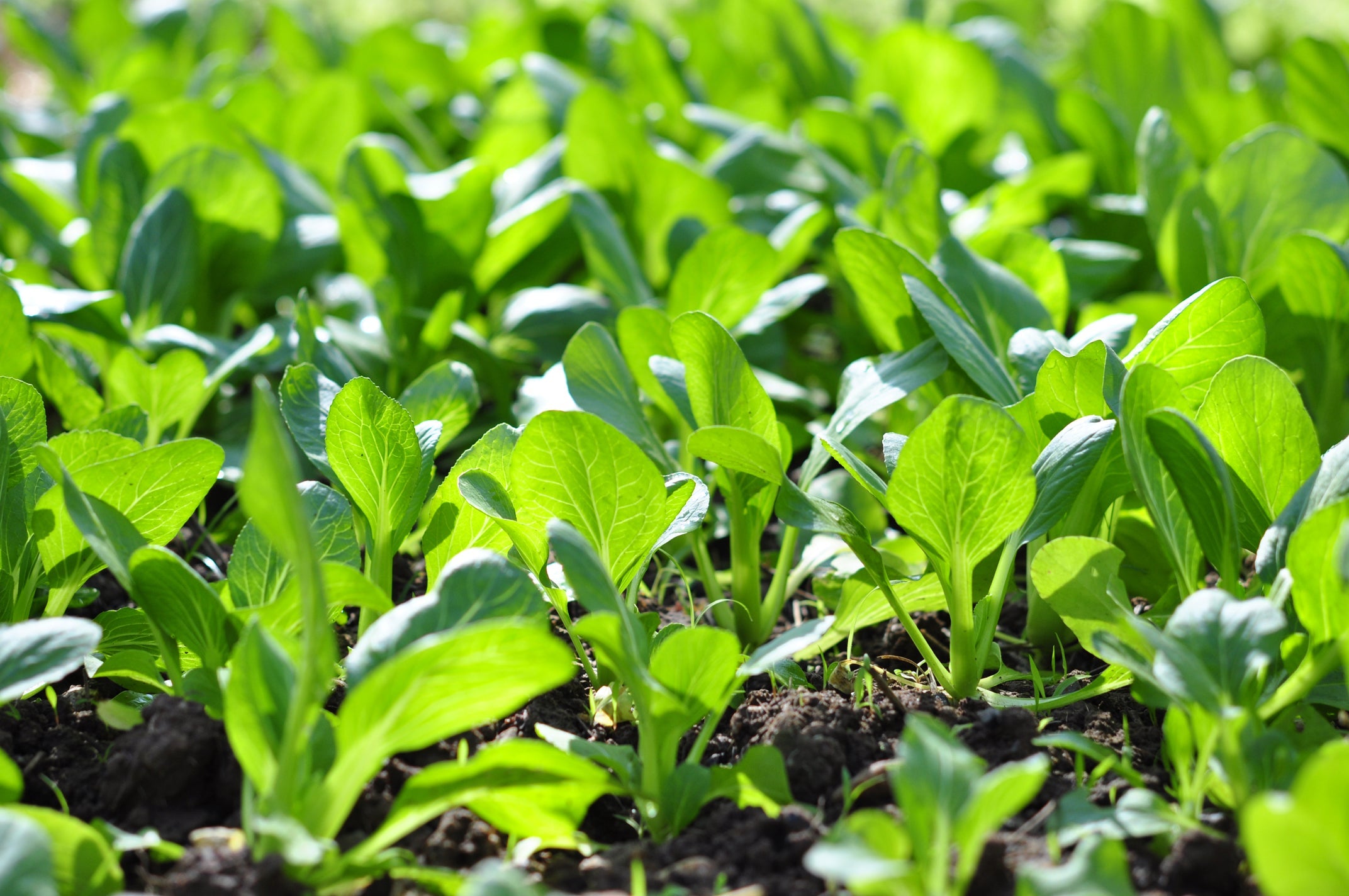
Pak Choi, also called Bok Choy, is a staple green used in Korean cooking, but you don’t have to prepare Korean dishes to enjoy this veggie, as it’s also delicious in stir-fries, salads and soups.
This vegetable, especially when young, is prone to bolting in very warm or very cold weather, or when there is a sudden and sharp change.
Though a few new cultivars have been bred to be bolt-resistant, relatively stable temperatures within a range of 12-25°C are most suitable, meaning it’s best grown in the late spring or early summer or late summer to early autumn in the UK.
No matter which variety you choose, you can sow and grow tasty Pak Choi by following these steps:
- Find a suitable location for sowing and cultivate to a shallow depth.
- Sow your Pak Choi seeds indoors in late winter, or sow directly outdoors after the last frost.
- Water consistently to avoid issues with bolting.
- Thin out the seedlings so that plants are placed between 12-14cm apart.
This process is explained in more depth below.
| Difficulty | Medium |
| Equipment Required | Secateurs and gardening gloves |
| When To Sow | April – July |
1) Find A Spot For Sowing
For any Pak Choi, choose a position in full sun that is sheltered and does not have a north-facing aspect.
The soil should be of a rich, fertile type, and a mixed loam is best.

Cultivate it to a shallow depth and amend with some well-rotted manure or organic compost.
It is not necessary to feed Bok Choy, though you can mix a small quantity of balanced slow-release fertiliser such as blood, fish and bone into the soil at the time of sowing seeds.
The soil should drain very well and have a pH of slightly alkaline to neutral.
2) Sow Pak Choi Seeds
Sow seeds soon after the last frost when the ground is workable and the soil has lost its chill.

Seeds should be spaced depending on your variety and at what stage you intend to harvest the veggie.
Sow seeds thinly 2cm deep.
You could begin by spacing seeds 3-4cm apart if you intend to harvest semi-mature or mature Pak Choi.

If you intend to harvest your plants at the baby stage, you could place seeds more closely together.
Cover lightly with soil but do not pack it in.
“Pak Choi crops are a magnet to slugs and snails, so I would advise some protection is put in place to prevent attack from molluscs,” adds Roy Nicol, a Master Horticulturist.
“The soil can be treated with slug nematodes a week or so before sowing; snails also avoid ground treated in this way.”
3) Water Consistently
Pak Choi does best in soil that is consistently moist but not soggy.
Dry soil, especially in summer can trigger bolting.

Accounting for rain, water the plants twice a week with 1-1.5cm of water.
Try to water at soil level and in the early or mid morning.
4) Thin Out Seedlings
When the seedlings reach 5-6cm tall, it is time to thin them out.
Cut every alternate seedling at soil level with secateurs.
This first round of thinning should result in seedlings spaced apart by 6-8cm.

After about 3 weeks, thin a second time so that the plants are spaced apart by about 12-14cm.
After another three weeks, if you intend to harvest plants at maturity, do the last round of thinning, spacing the plants 20-25cm apart.