IN THIS GUIDE
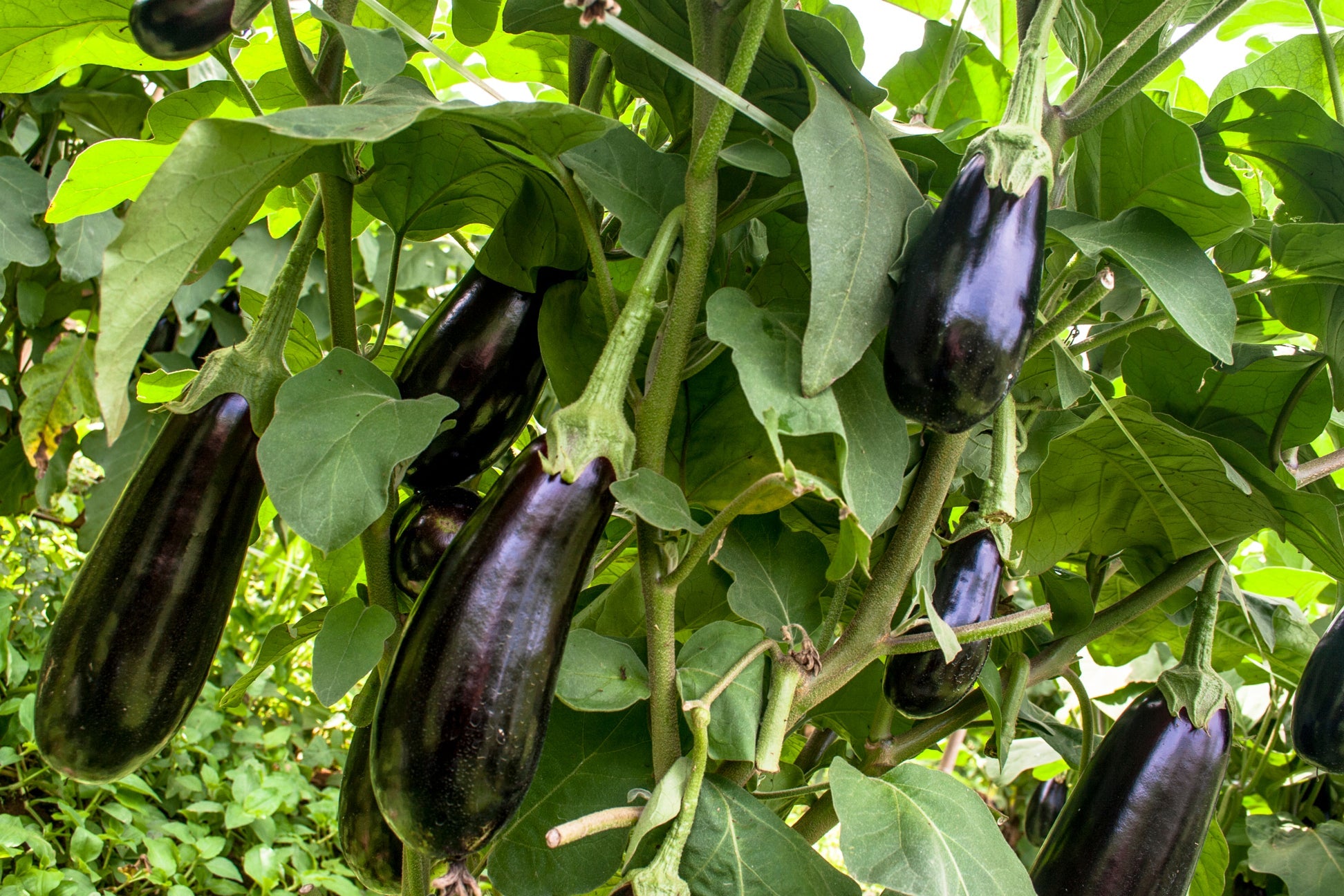
Known as the eggplant in America, the aubergine thrives in very warm and humid conditions – which is unsurprising as it originates from South Central China and South East Asia.1
In India, it’s known by yet a third name – Brinjal.2
No matter what we call it, this vegetable is technically a berry and, therefore, a fruit, even though it is most often used as a vegetable here in the UK.

“Aubergines are best grown under glass but can also be grown in a warm, sunny and sheltered spot outside if the soil has been warmed beforehand and the plants fleeced for a short period after planting out,” shares Roy Nicol, a Master Horticulturist.
You might be wondering how you can help feed aubergine as it grows.
In this guide, we’ll share everything you need to know about watering and fertilising your aubergine plants so they can stay happy and healthy whilst growing in your garden.
Watering
Aubergines should be grown in free-draining soil that is kept moist but not soggy.
These plants need regular watering and may require daily watering in hot weather.

The soil should be made moist down to about 15cm.
Before watering, it would be advisable to check the soil down to a depth of 3-4cm to determine if it is dry or moist.
If you observe the leaves curling or the plant wilting during warm weather, that’s probably a sign that the soil is insufficiently moist.
Instead of the usual and customary cold water, use tepid water for these warm-weather plants that have no resistance to the cold.

Another departure from the norm is in wetting the foliage, as these plants would enjoy a daily spray of tepid water on their leaves.
This will deter pests, particularly red spider mites, to which the plant is susceptible.
Feeding
Feeding is key to growing plump and rich aubergines and the best start is to grow them in rich, fertile soil.

When sowing seeds, use a low-nutrient or seed-sowing compost and when transplanting young plants, use a multi-purpose compost and a balanced fertiliser to grow them on.
When planted in their final positions, start to feed with a high-potash fertiliser as soon as you see vegetables beginning to form.

For an easier application, you could use a liquid formula.
Feed Aubergine plants with this fertiliser once every 2 weeks by pouring it onto the soil to encourage fruit formation and pick the fruits when they are a bright, glossy and deep purple or black colour.
References
1. Solanum melongena. (n.d.). North Carolina Extension Gardener Plant Toolbox. Retrieved April 25, 2023, from https://plants.ces.ncsu.edu/plants/solanum-melongena/#:~:text=This%20species%20is%20native%20to,eggplant%20is%20considered%20an%20annual
2. Why Is It Called an Eggplant? (2019, August 20). Wonderopolis. Retrieved March 10, 2023, from https://www.wonderopolis.org/wonder/why-is-it-called-an-eggplant