Swiss chard, or leaf beet as it is commonly known, is a biennial vegetable that is best eaten in its first year of growth.
Growing Swiss Chard from seed is an easy process and can be sown direct or undercover to plant out later, depending on your requirements.
| Difficulty | Easy |
| Equipment Required | Module or seed tray, compost, rake (if sowing direct) |
| When To Sow | March – September |
| When To Plant Out | April – September |
Watch this short video from Emily Cupit where she sows Swiss Chard in her garden at home:
Here’s a simple process for growing Swiss chard from seed:
- Harvest seeds from the pods of existing plants, or purchase seeds from your chosen retailer.
- Prepare the soil or fill shallow pots with a peat-free growing medium.
- Sow seeds at a depth of 2cm.
- Growing on the seedlings.
This process is explained in more depth below:
When To Sow Swiss Chard Seeds

Swiss chard seed can be sown directly into the soil from spring until summer or in an unheated greenhouse from a little earlier.
It can also be sown under cover in the autumn to crop the following year.
1) Harvesting Chard Seeds

Swiss chard seeds can be collected and stored from plants in their second year of growth, to save until spring to sow.
“I don’t typically save chard seeds as I remove the crop at the end of the season to prepare for next season’s sowings,” says Horticultural Consultant Colin Skelly.
“With a small vegetable garden, I prefer to use the space to grow as many crops as possible in succession. I, therefore, tend to rely on purchasing seeds unless they can be harvested in the first year (such as tomatoes).”
To collect the seeds, allow the seed stalks to dry and wait until the seeds are completely brown before harvesting and storing in a cool, dark and dry environment.
2) Fill Shallow Pots

From spring onwards, once the ground is workable and has warmed up a little, the sowing area can be prepared by raking to a fine tilth.
Chard prefers a fertile soil, so adding some well-rotted manure or garden compost to the soil the previous season can be beneficial.
If sowing undercover, module or seed trays can be filled with a peat-free multi-purpose compost ready for sowing.
3) Sow Seeds

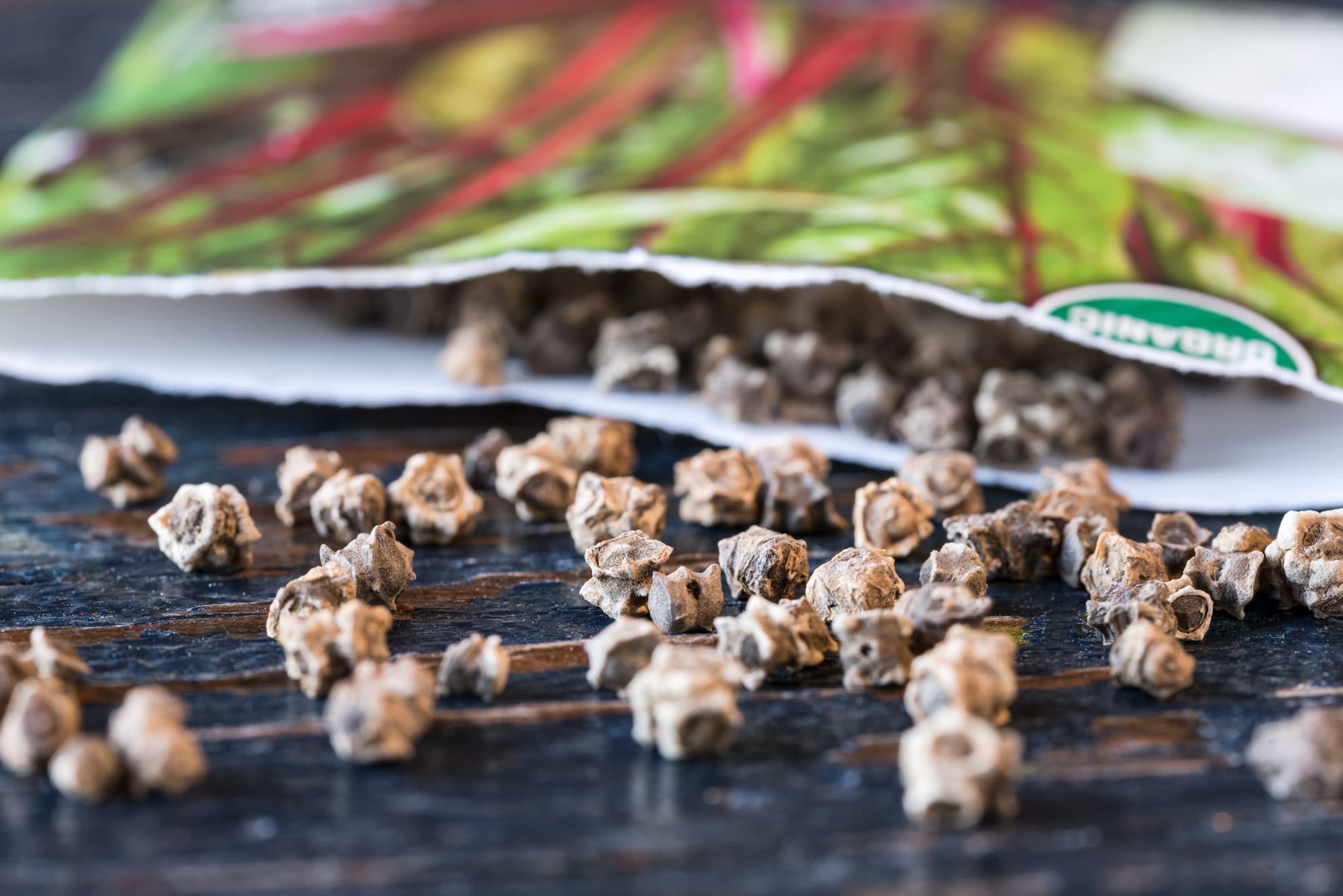
Swiss chard seeds are fairly large and easy to handle making them a good plant for growing with children.
Sow the seeds individually in module cells or thinly in seed trays and water in well, being careful not to displace the seed.
If sowing direct, the seed can be sown at the same depth in drills or holes, but at a spacing of 10–15cm apart and again watered in thoroughly.
4) Growing On

Keep the soil moist and once germinated and large enough to handle, plants started off undercover can be pricked out into individual pots or planted out in their final position.
With directly sown Swiss chard, the seedlings need to be thinned to a final spacing of 30cm to allow the plants room to grow as they mature.

As the new plants mature, continue to keep the soil moist and a layer of mulch can be added around the plants to help conserve moisture and suppress weeds.
If picked as small leaves, successional sowing every 2–4 weeks will provide a bountiful supply – or if harvesting as large leaves and sowing in spring and then one later in summer should suffice.