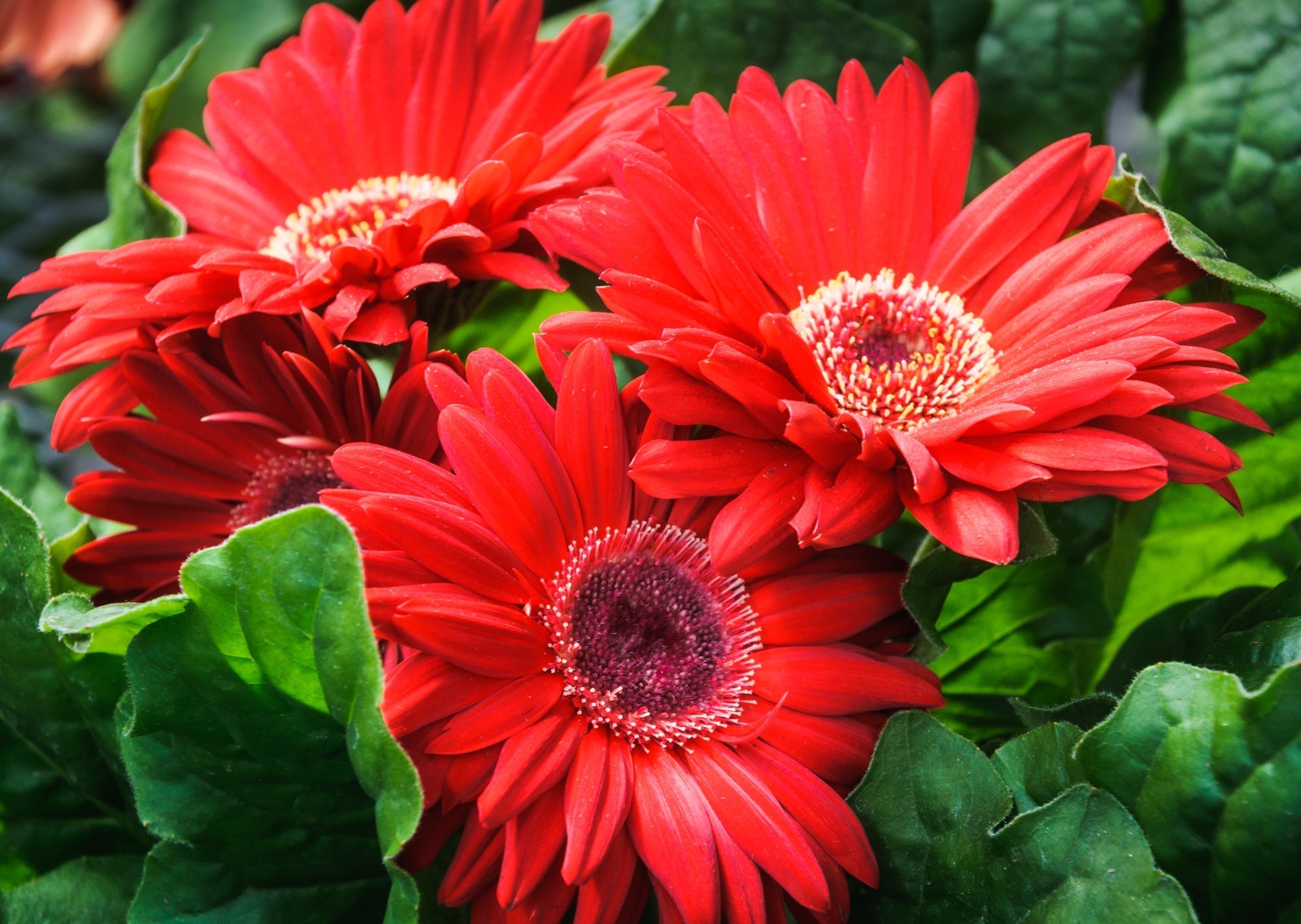
Gerberas have been a firm favourite in British gardens for centuries and are frequently used in bouquets.
In fact, they are so popular, it has been claimed that they are the fifth most-used cut flowers in the world.1
With short and long-stemmed varieties, they can be used in large ornamental displays or made into cute little posies.

In addition to this, when planted, gerberas really do bring absolute joy to the garden, but they can be faced with a couple of issues.
A common problem you will come up against with gerberas is brown spots.
In this article, we will look at how to avoid brown spots on your leaves and petals – as well as how to deal with them if they appear.
What Causes Brown Spots?

The brown spots that can appear on gerberas are usually caused by Alternaria, which is a fungus that flourishes in humid environments.2
The leading cause of Alternaria is water splashing on the leaves during rainfall or watering, as Master Horticulturist Colin Skelly explains:
“Too much water and splashing are the enemies of Gerbera growers in the UK.
“Whilst it is possible to control watering, it is not possible to control the rain.
“However, I have found placing pots under the eaves of the house or in the lee of a wall can help.”
Preventing Brown Spots
Brown spots on gerberas are unsightly and ruin the natural beauty of the plant, but never fear – we have some brilliant solutions to help you avoid brown spots and to keep your gerberas looking gorgeously glorious.

There are lots of ways to avoid pesky brown spots on your gerberas, here are our top tips:
- When you water your gerberas, I recommend that you water thoroughly.
- Don’t over water. The soil should feel moist, not saturated.
- Make sure there is adequate drainage in the flowerbed or pot.
- Feed your gerberas frequently in spring and summer with a well-balanced liquid fertiliser.
- Pinch off old, dead leaves and discard them. This will ensure healthy new foliage growth.
- Clear fallen leaves away from the plant or they will encourage fungus to grow.
- Water at the base of the plant, taking care to avoid splashing the leaves.
- Do not use sprinklers or overhead watering.
- Wait for the soil to become dry before watering again.
- If you are planting multiple gerberas, make sure they are spaced evenly, giving them adequate space to grow and to allow for air circulation.
Spot The Difference

Yes, by following those easy steps you will really be able to spot the difference and avoid those nasty brown spots, instead keeping your gerberas healthy and happy – just like they keep us.
References
1. Wholesale Gerbera Guide & Wedding Flower Guides UK. (n.d.). Triangle Nursery. Retrieved March 16, 2023, from https://www.trianglenursery.co.uk/flower-guides/gerbera-guide
2. Orton, T. G. (2020). Breeding for Disease and Insect Resistance. Elsevier EBooks, 345–382. https://doi.org/10.1016/b978-0-12-815396-3.00019-6