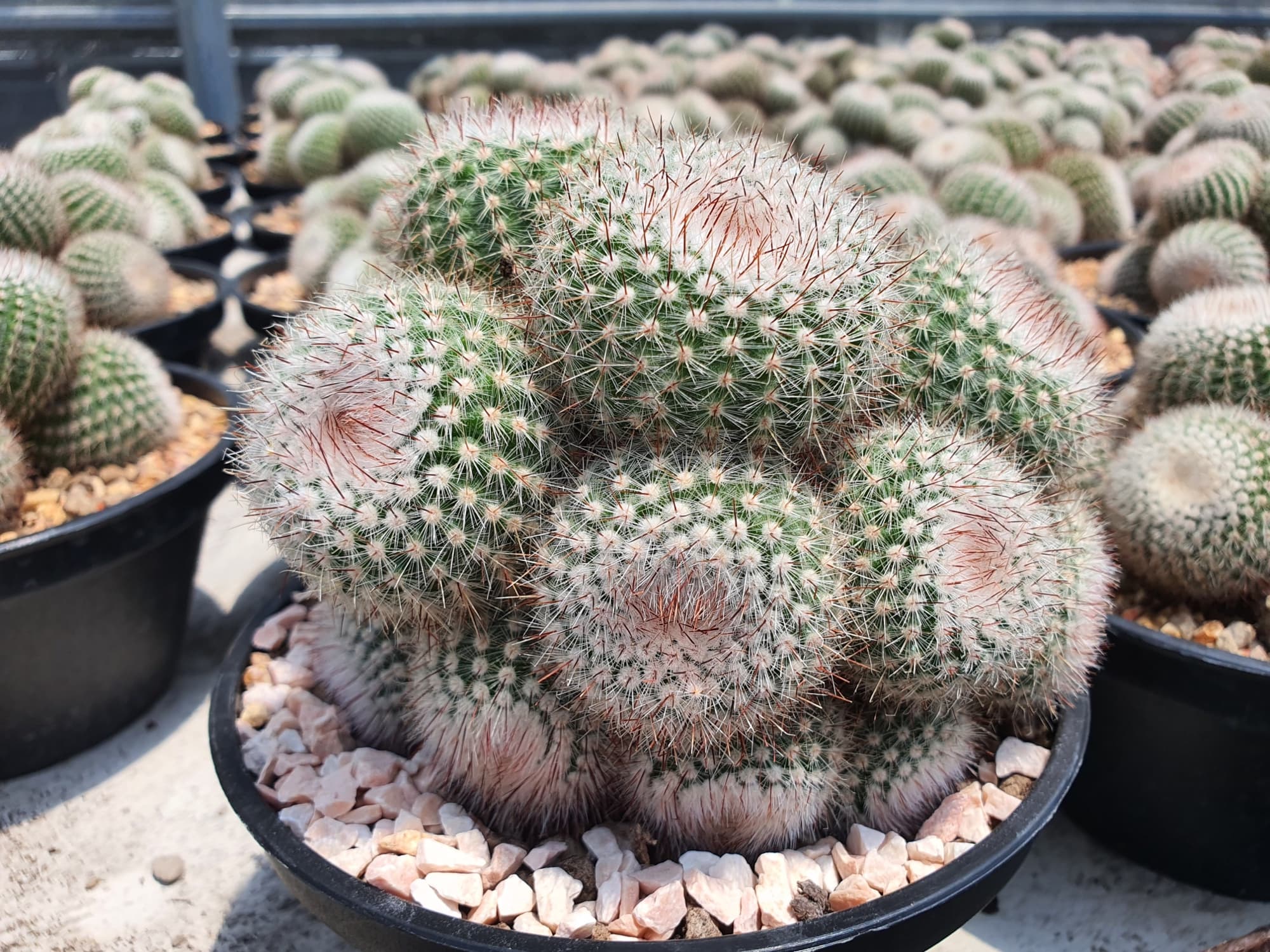
Notocactus is a group of cacti within the Parodia genus, commonly called ‘Ball Cacti’.
They previously belonged to the Notocactus genus but were reclassified.
There are a number of different ball cacti that are commonly grown under glass in the UK.
If you are looking for relatively easy and straightforward cacti to grow, there are several Parodia, formerly classified as Notocactus and still commonly referred to by that name, to consider.
Overview
| Botanical Name | Notocactus / Parodia |
| Common Name(s) | Ball Cactus |
| Plant Type | Cactus |
| Native Area | The Andes and South America |
| Hardiness Rating | H2 |
| Foliage | Evergreen |
| Flowers | Funnel-shaped |
| When To Sow | March to July |
These cacti are native to South America.1

These are cacti with solitary or clustered globe-form, spiny stems with many ribs.
They typically bear funnel-shaped flowers close to the apex of the ball-shaped form in the early summer.
The flowers are often yellow, occasionally purple on some species and cultivars, but can vary a lot in shade and size.
How To Grow Notocactus
Notocactus are generally grown in a well-ventilated indoor space.
A conservatory or greenhouse is ideal; as long as you meet the growing requirements of these plants they can be grown in a range of settings.
Growing Conditions
Remember, the goal with growing cacti is to provide them with conditions as close as possible to those that they would enjoy in the wild within their native range.
This means thinking about the light levels, temperatures, humidity and the growing medium in which the plants will grow.
These cacti require reasonably warm summer temperatures, though not excessive heat.

They need temperatures to remain above freezing in winter.
Ventilation is important, there should be good airflow and humidity should remain moderate to low.
Sunlight
Indoors or under cover, these plants will require a bright location, but they will typically appreciate some protection from intense light during summer.
Outdoors in summer, they will definitely need a sheltered spot in full sun.
Soil Preference
Notocactus should be grown in a cacti potting mix, specially formulated to provide the free-draining conditions that these plants need.
You can make your own mix if you prefer, but you should always make sure that it is free-draining.
Notocactus Care Guidelines
Notocactus are, when positioned correctly, relatively easy to care for and should not take up a great deal of your time.
Watering
Water moderately when the growing medium is dry during the spring and summer.

During autumn and winter, water sparsely and keep the growing medium almost entirely dry while the plant is in dormancy.
Feeding
In the spring and summer once every 6-8 weeks, it is also a good idea to feed your cacti.
Make sure that you do so with an organic feed that is dilute and low in nitrogen.
Don’t feed too much as this can do more harm than good.
Repotting
Typically, these cacti will not need to be repotted frequently.
Once every three years or so will usually suffice.
When roots start to emerge through the holes at the base of the container, select a new pot just slightly larger than the old one and fill it with a new growing medium.
Propagation
Notocactus can be propagated from seed, which should be sown in the spring or summer.
“Simply scatter seeds thinly across the top of a free-draining, low-nutrient compost mix,” shares Horticultural Consultant Peter Lickorish.

Temperatures between 19-24°C are needed for germination to take place, so it can help improve success rates to use a heated propagator.
Common Problems
Ball cacti can have problems with common houseplant pests such as mealybugs and aphids while they are in flower.
They may also encounter fungal issues (especially if overwatered or with poor drainage) but are generally relatively disease-resistant.
As long as you place these cacti in a suitable spot, don’t overwater and make sure drainage is perfect, you should not go too far wrong and should find that these cacti are relatively easy to grow.
Notocactus Varieties
Some good options to consider are:
P. magnifica

P. scopa subsp. scopa (AGM)

P. werneri

And a few more worth checking out if you have time:
- P. leninghausii (AGM)
- P. ottonis (AGM)
- P. tabularis
There are also plenty of other options, but the above could be a good place to start building your cactus collection.
References
1. Notocactus: Gems in a Historical Genus. (2018, September 24). North American Rock Garden Society. Retrieved August 1, 2023, from https://www.nargs.org/article/notocactus-gems-historical-genus