Peat is a natural accumulation of partially decayed vegetation or organic matter.
It is found in areas of peatland, bogs, moors and mires.
What Is Peat-Free Compost?
Peat free compost, as the name suggests, is any compost that does not contain peat.
Peat has traditionally been used for creating potting composts because it has a range of benefits for growing plants.
However, those who are environmentally conscious have recognised that digging up precious peat ecosystems to grow our plants is not a sustainable or eco-friendly choice.1
“There are many vital reasons for peat to be left in the ground,” shares Garden Writer Nic Wilson.
“Healthy peat bogs support unique ecosystems, which include rare plants like the great sundew, and provide breeding sites for birds such as golden plover.
“A peat bog also stores vast amounts of CO2, but stored carbon is released back into the atmosphere when peat is extracted, contributing to climate breakdown.”
Consumers and compost manufacturers, therefore, are increasingly turning to alternative options – these peat-free composts were historically considered to be inferior to peat-based products for potting mixes.
But research and development have now generated a range of products that can be as good as, or even superior to peat-based options.
“We’ve been peat-free for 18 months across our whole nursery,” shares Rosy Hardy, the Owner of Hardy’s Cottage Garden Plants.
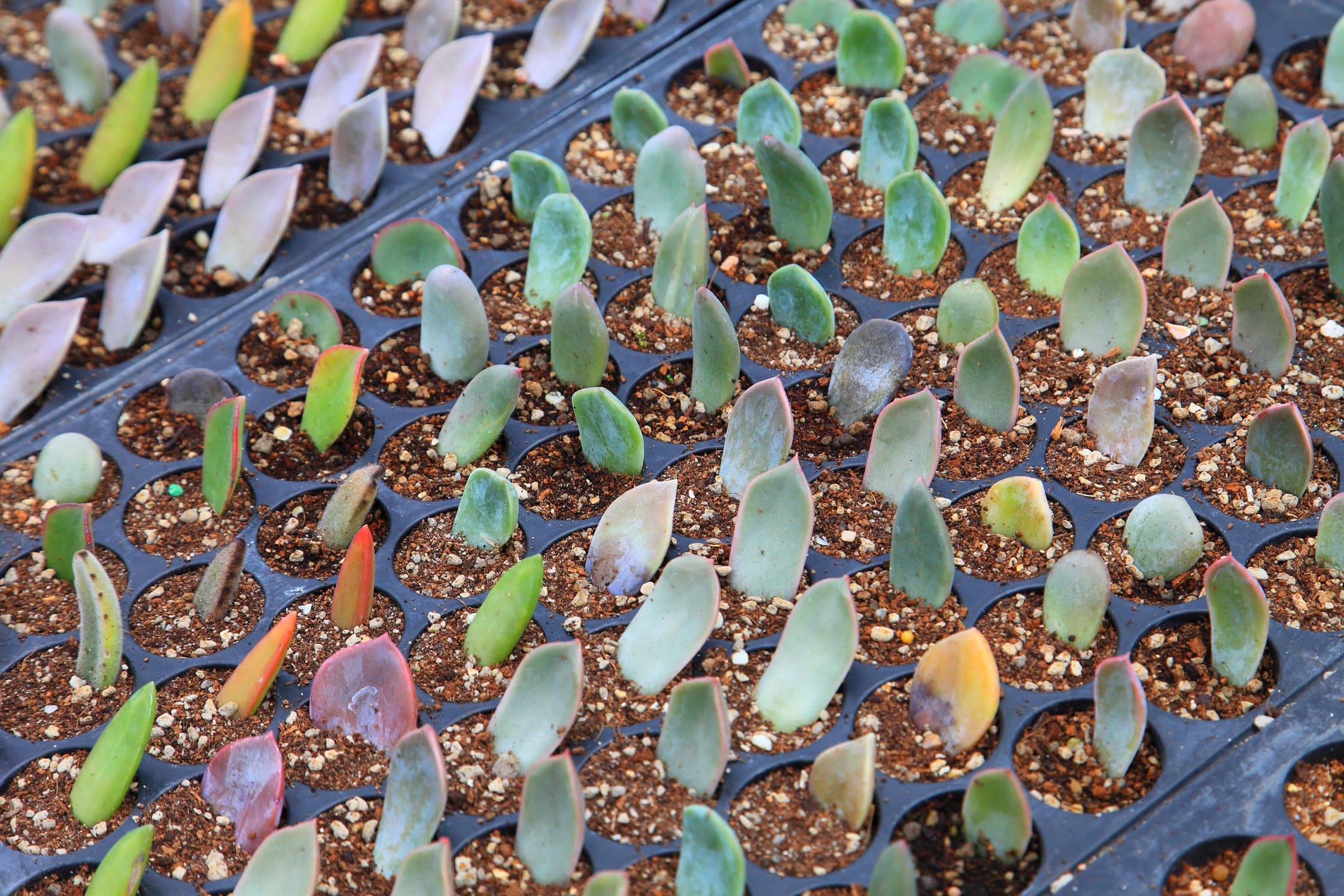
“We were struggling to grow completely peat-free in our propagating area and we are still testing some substitutes, but we are not going back!
“It’s good to be peat-free to help the planet, but it is hard as a commercial grower.”
Sourcing Peat-Free Compost
Gardeners can either make their own peat-free composts and potting mixes (see below) or purchase a product that states that it is peat-free on the label.
Either way, watering and feeding requirements will usually be somewhat different for peat-free growing media than for peat-based options.
One important thing to note about peat-free composts is that they can vary significantly in their ingredients and efficacy. Some are much better than others.
Typically, price is indicative of how good a peat-free compost will be. The results of using a cheaper peat-free compost option will usually be more variable, and if you pay a little more, you will tend to see better results.
Do not be tricked by terms on a label such as ‘organic’ or ‘eco friendly’ – such wording does not always guarantee that a compost or potting mix is peat-free.
What Is It Made Of?
Peat free composts and potting mixes can be made using a range of different ingredients, to a range of different recipes.
Most peat-free options contain one or more of the following:
- Woody materials (bark, woodfibre, sawdust, etc..)
- Coconut husk (coir)
- Municipal green waste (usually no more than 30% of the finished product).
- Bracken
- Straw waste
- Waste sheep’s wool.
A homemade growing medium usually comprises:
- Homemade compost (made with brown carbon-rich and green nitrogen-rich materials).
- Leaf mold
- Loam or sand (inorganic soil elements)
What Are Its Benefits?
A peat-free growing medium is far better for our planet. Using peat simply isn’t an option for anyone who wants to garden in a sustainable and eco-friendly way.
Peat comes primarily from lowland raised bogs, which is an increasingly rare habitat type in the UK and across Europe.2
Peat bogs are important wetlands, which play a vital role in the water cycle, flood mitigation, and in drinking water provision and filtration.3
In the UK, more than 28 million people use drinking water from water sources that rely on peatlands.4
And globally, peatlands provide nearly 4% of all potable water stored in reservoirs.5
The distinctive environmental conditions of peat wetlands mean that they provide a crucial habitat for a wide range of flora and fauna.
Preserving wetlands is crucial for preserving biodiversity and halting biodiversity losses. Wetlands are the most biologically diverse of all ecosystems, and it is vital that we protect these precious ecosystems.
What is more, protecting peatlands is also crucial for carbon sequestration. Peatland ecosystems store more CO2 than all other vegetation types, including the world’s forests.6
Peat covers just 3% of the world’s land area but stores one-third of the Earth’s soil carbon.7
When we dig up peat for use in horticulture, we are hastening the destruction of these precious ecosystems and contributing to the climate crisis.
The problem is that while peat is naturally replenished, it only grows very slowly (around 1mm per year). We are using it up far faster than it can naturally be replaced.
Peat free growing media can be a far more sustainable and eco-friendly choice. Though it is important to look into exactly what goes into a peat-free compost, and where it comes from.
When choosing peat free compost, we need to look at issues such as water retention, water distribution and nutrient provision.
We need to balance our own needs and the needs of our plants with the needs of the planet and humanity as a whole to make the right compost choices for our gardens.
What Do You Use Peat Free Compost For?
Peat free composts vary considerably. Some are considered to be all-purpose composts, which can be used for a wide range of different plants through all stages of their growth.
Some are specifically suited to seed starting, or for growing in containers. Others are specifically suited to ericaceous (acid-loving) plants.
Make sure you pay attention to what exactly is in a peat-free compost, and read about the plants to which it is suited.
- Wood-based mixes tend to be suitable for most plants, as they have excellent drainage properties and low pH.
- Coir retains water well, and maintains good aeration, but does not hold nutrients well.
- Green waste, where this is used, has high levels of nutrients. But has high pH and may not always be the best option for seed starting and potting mixes.
- Bracken is high in potash
- Sheep’s wool provides slow-release nitrogen and is good for water retention.
Make sure that you choose (or create) a potting mix suited to the plants you wish to grow.
How To Make Peat-Free Compost
It is perfectly possible to make your own peat-free compost/potting mix.
There are a number of different recipes to consider, which combine compost made at home with organic matter with leaf mould, and soil ingredients like loam/sand.
If you do decide to make your own then of course the results can be variable.
One issue is that if you use a soil component, weeds and fungal pathogens can creep in.
“Although the risk of weeds and pathogens tips the balance away from using home-made compost mixes”, says Horticulturist Colin Skelly, “the RHS recommends it as the best, lowest carbon option for potting on plants – although getting the technique right might take a bit of trial and error.”
Personally, I have had few issues with using a mix of 1/3 compost (including well-rotted chicken manure and bedding as well as kitchen scraps, and shredded woody material from the garden), 1/3 leaf mould and 1/3 loamy soil to start my seeds.
If you have issues with damping off when sowing seeds into this mix, you can sterilize the loam/soil using your oven.
PH, moisture retention and available nutrients will be variable. But good composting practices can help you to establish a successful system and make a potting mix that works for a wide range of edible produce and other plants.
“People have to remember that peat-free compost holds water more than they realise,” adds Rosy.
“It dries out on the top, but can still be damp underneath, so it’s important to do the finger test and check that the soil is actually dry before watering.”
You can also choose a soil-less recipe, and use woody materials or coir to create the right mix.
Though coir is a waste product, however, it is worth noting that it may not be the most eco-friendly choice either, since it has to travel a long way to reach us.
References
1. For Peat’s Sake. (2022, November 16). Garden Organic. Retrieved March 21, 2023, from https://www.gardenorganic.org.uk/get-involved/campaigns/for-peats-sake
2. Raised bog. (n.d.). The Wildlife Trusts. Retrieved March 21, 2023, from https://www.wildlifetrusts.org/habitats/wetlands/raised-bog
3. Anderson, R. (2022, February 9). Peatland ecosystem services. Forest Research. Retrieved March 21, 2023, from https://www.forestresearch.gov.uk/research/peatland-ecosystem-services/
4. Harrison, A. (2018, May 15). Peatland contributions to UK water security. University of Leeds. Retrieved March 21, 2023, from https://www.leeds.ac.uk/news/article/4232/peatland_contributions_to_uk_water_security
5. Xu, J., Morris, P., Liu, J., & Holden, J. (2018). Hotspots of peatland-derived potable water use identified by global analysis. University of Leeds. Retrieved March 21, 2023, from https://eprints.whiterose.ac.uk/129766/6/Hotspots%20of%20peatland-derived%20potable%20water%20AAM.pdf
6. Peatlands and climate change. (n.d.). IUCN. Retrieved March 21, 2023, from https://www.iucn.org/resources/issues-brief/peatlands-and-climate-change
7. Huang, Y., & Wang, Y. (2021, June 22). Peatlands worldwide are drying out, threatening to release 860 million tonnes of carbon dioxide every year. World Economic Forum. Retrieved March 21, 2023, from https://www.weforum.org/agenda/2021/06/peatlands-worldwide-emissions-carbon-environment-climate-change/