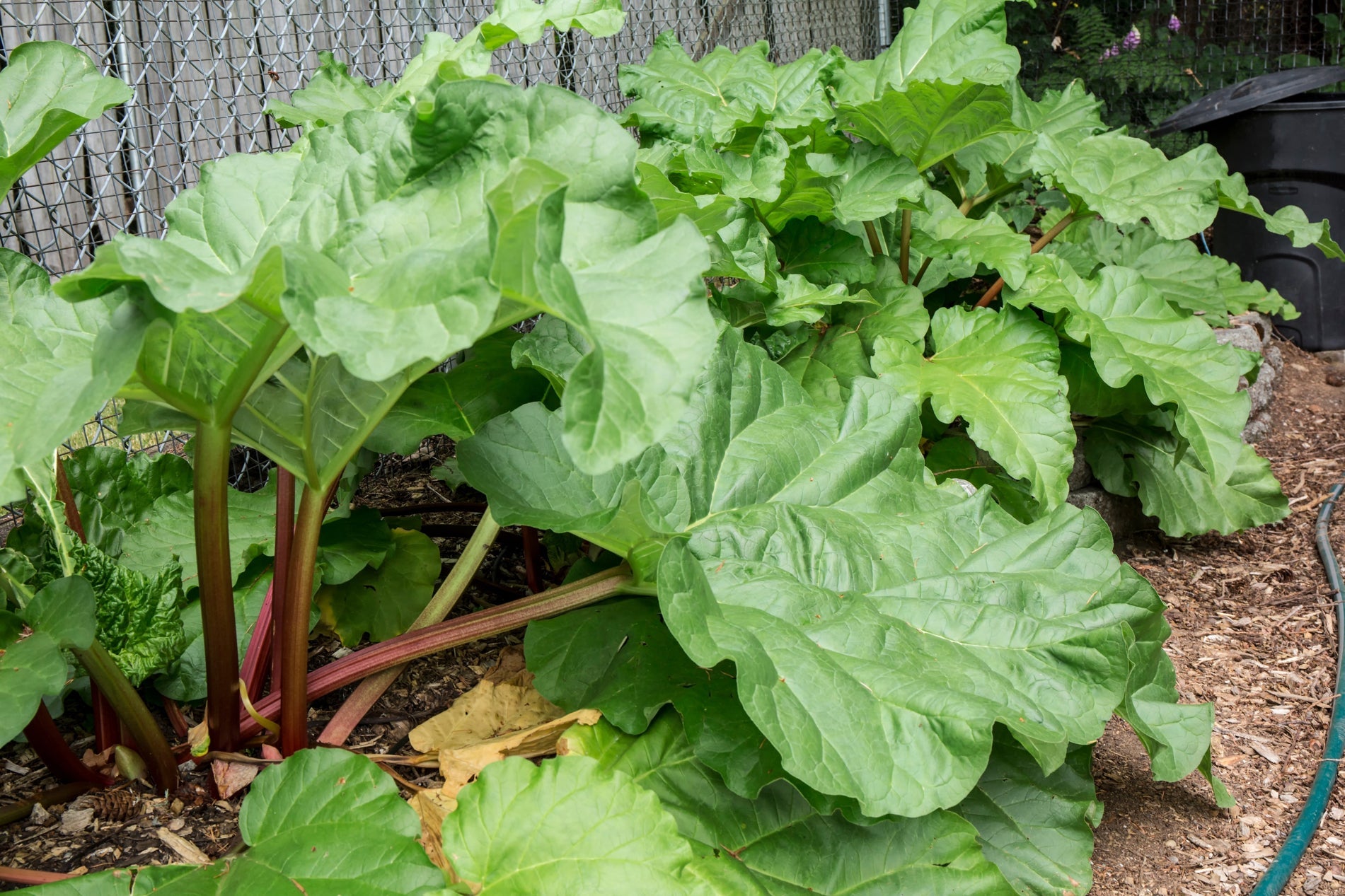
Rhubarb is an easy-to-care-for perennial vegetable that is widely grown here in the UK for its delicious and colourful stems.
It has a hardiness rating of H5, which indicates that it is a hardy plant and can withstand a harsh winter and temperatures down to as low as -15°C.
Caring for rhubarb over the winter period involves:
- Potentially moving pot-grown rhubarb undercover to overwinter.
- Removing any old or dying foliage from the plant.
- Mulching the rhubarb crowns with organic matter.
- Dividing more mature plants if necessary.
This process is explained in more depth in this guide.
| Difficulty | Easy |
| Equipment Required | Secateurs, gloves, mulch, spade, knife |
1) Move Pot-Grown Rhubarb Undercover
Rhubarb is a hardy plant and here in the UK does not generally need any winter protection.

In fact, rhubarb actually needs a couple of months with temperatures close to freezing point to grow well.
That being said, frost can damage any new growth or pot-grown plants, so it can be advisable to move any container-grown rhubarb out of a frost pocket or exposed site to the lee of a wall.
2) Remove Old Foliage
In autumn, the rhubarb foliage and stems will naturally die back and become soft and tatty looking.

After dying back, the foliage can be cut away with a clean and sharp pair of secateurs or a knife and removed and composted safely, as the leaves will lose their toxicity as they decompose.
3) Mulch Annually
Being hungry feeders, rhubarb plants, whether grown in the ground or in containers, will benefit from an annual mulch of organic matter or well-rotted manure.

This mulch can be added in winter or early spring and will not only help feed the plant for the growing season but also help conserve moisture during the warmer months.
To prove effective, this layer of mulch should be 5-8cm thick and spread evenly around the plant, being careful not to cover the crown or growing tips, as this can lead to the crown rotting.
4) Divide Older Plants
Over time, rhubarb plants can lose vigour or become congested, so they can benefit from being divided every 4-5 years.

In winter when the rhubarb is dormant, simply lift the crown with a spade from the soil and split it into 2-3 pieces using a knife, ensuring that each new division has at least 1-2 new buds.
“I like to use an old bread knife for dividing plants,” shares Dan Ori, a Master Horticulturist.
“On big clumps, I use sharp two spades driven in back to back pulling the handles back and forth to prise the clump apart.”
These new divisions can then be potted up or planted out to replace old stock.