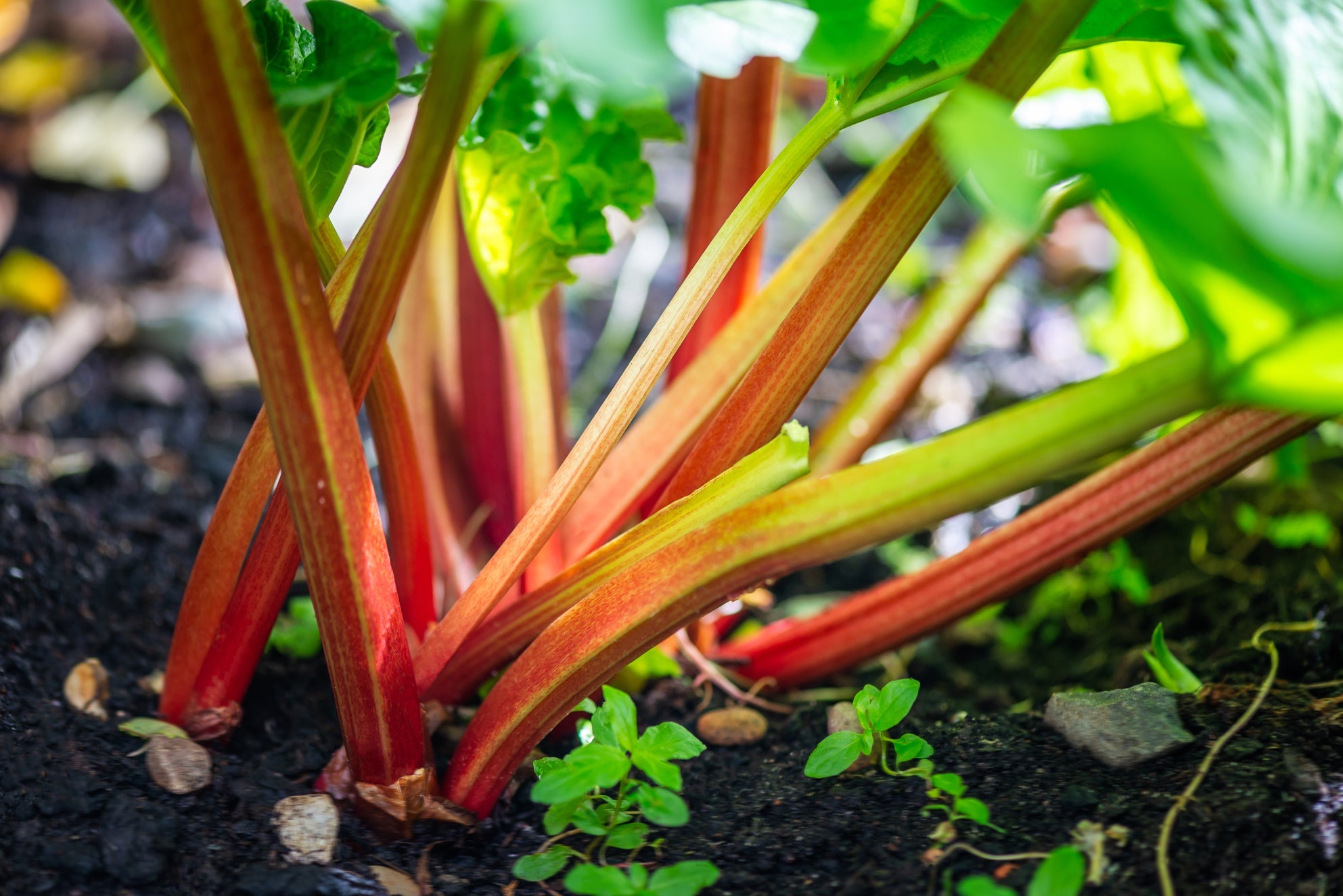
Rhubarb is a perennial vegetable grown for its colourful and tasty stems that can be harvested from March until June.
“Rhubarb is great, as you can put it in the ground and forget about it and save money, rather than buying it from the shop,” shares Garden Designer Humaira Ikram.
“Rhubarb plants also look so architectural and pretty.”
As a perennial, the stems and foliage of a rhubarb plant naturally die back in late autumn as the plant enters its winter dormancy, in order to produce new growth the following spring.
Pruning rhubarb is fairly simple if you follow a simple process for cutting back the plant:
- Fully cut back the spent foliage and stems to the base of the plant.
- Remove any of the flowering stems to prevent your rhubarb from going to seed.
- Dispose of the old leaves (despite common misconceptions it is safe to compost them).1
This process is explained in more depth below.
| Difficulty | Easy |
| Equipment Required | Gloves, secateurs or a gardening knife |
| When To Prune | October to December |
When To Prune Rhubarb
Rhubarb should be cut back after the current season’s growth has turned soft and died back.

Here in the UK, this is generally around October to November, but can be later in milder parts of the country.
1) Cut Back Dead Foliage
Once the rhubarb’s stalks and leaves have died back, they can be removed from the plant, leaving the growing tips of the plant open to the colder temperatures they need to receive over winter.
This can either be done by cutting the stems close to the base of the plant with a sharp and clean pair of secateurs or a knife, or by pulling them gently away from the crown.
“The advice I would give whenever you are removing rhubarb leaves is to try and twist the stems away from the base and not cut or snap them off unless they are too tough,” shares Dan Ori, a Horticultural Consultant.
“This will help prevent rot and damage to the crown.”

If not removed, the dead foliage will start to soften and rot which can lead to problems such as disease and crown rot.
2) Remove Flowering Stems
Although not that common, rhubarb plants can sometimes flower during the summer months, especially after periods of heavy rain.
These flowering stems which will eventually set seed if not removed can take precious energy away from the plant and cause it to weaken.

To remove the flowering stalks, simply cut the stem at the base of the plant with a clean and sharp knife.
3) Dispose Of Old Foliage
With rhubarb, only the stems are edible, so there can often be some concern as to whether the leaves can be safely added to a home compost pile.
However, during the decomposing process of composting, the oxalic acid in the leaves degenerates – meaning they are perfectly safe to compost at home.2
References
1. Composting rhubarb leaves. (n.d.). Chicago Botanic Garden. Retrieved April 27, 2023, from https://www.chicagobotanic.org/plantinfo/composting_rhubarb_leaves
2. Are rhubarb leaves safe to put in the compost pile? (n.d.). Iowa State University. Retrieved April 27, 2023, from https://hortnews.extension.iastate.edu/faq/are-rhubarb-leaves-safe-put-compost-pile