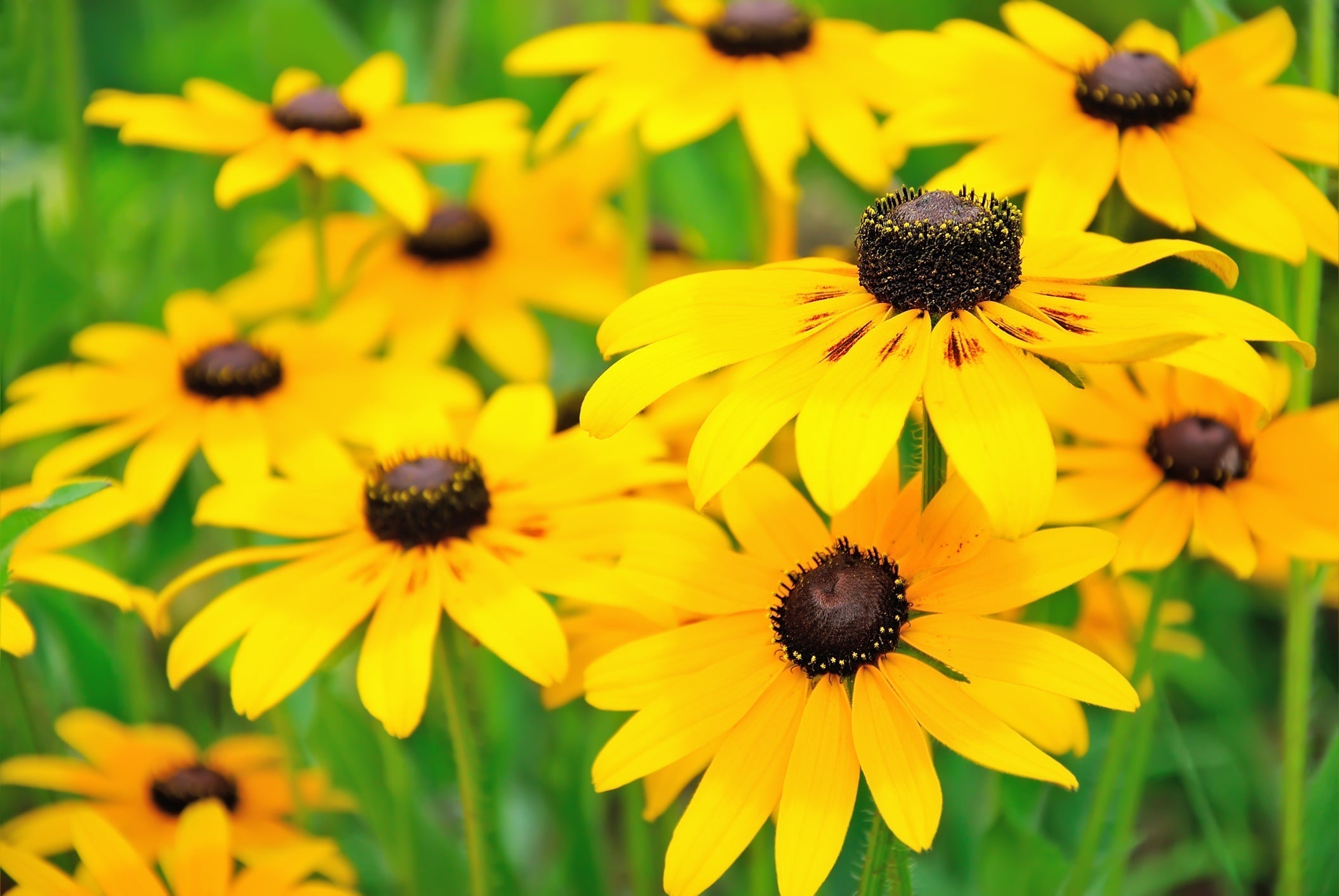
Rudbeckias are cheerful daisy-like plants that add charm and joy to any garden.
They have an ever-spreading root system that forms clumps of thin roots.
Over time the roots can become tangled and matted which will reduce flowering - dividing your rudbeckias every few years will prevent this.
It can also give you new little plants to put in your garden or share with family and friends.
Here’s how to do it:
- Prepare the plant with some watering and loosening of the soil.
- Remove the plant from the ground with a shovel or spade.
- Divide the plant at the roots to create several new sections.
- Transplant the divided plants into your preferred locations.
| Difficulty | Easy |
| Equipment Required | Gloves, shovel or similar tool |
| When To Divide | Early spring |
When To Divide
The best time to divide your rudbeckias is in early spring when you start to see new growth.
We also recommend dividing your rudbeckias on a cloudy day to prevent your plants from drying out.
1) Prepare The Plant
You will want to give your plants a generous glug of water the day before you plan to divide them.
You should also prepare the spot where you wish to plant your new divisions.

Loosen the soil and remove any weeds, stones and leftover plant material.
Trim back the foliage of your rudbeckia to make division easier.
2) Remove Your Plant From The Ground
Using a sharp shovel or similar, dig into the ground about 15cm from the leaf edges around the circumference of your plant.

Gently remove the plant from the ground in one clump if possible.
If it’s particularly overgrown, cut it apart with secateurs and remove the plant section by section.
3) Divide Into Sections
Shake the rootball to remove as much soil as possible, or use a hose to gently spray water over the roots.
Now you can separate the plant into sections.

Make sure each one has 3-5 young healthy-looking shoots.
Pull the sections apart either with your hands, or cut them with a sterilised blade.
“A great tool for this sort of task is a hori hori, a Japanese knife-like tool that is perfect for slicing or fine weeding,” shares Master Horticulturist Colin Skelly.
“They are increasingly popular due to their versatility and are becoming widely available in the UK.”
4) Transplant Your Divided Plants
Once you have separated your rudbeckia, you should plant them into their new home immediately to prevent the roots from drying out.
Dig a hole and place the rudbeckia at a similar depth to the depth you removed it from.
Cover with soil and pat the surface of the soil into place, then water your plants thoroughly.