IN THIS GUIDE
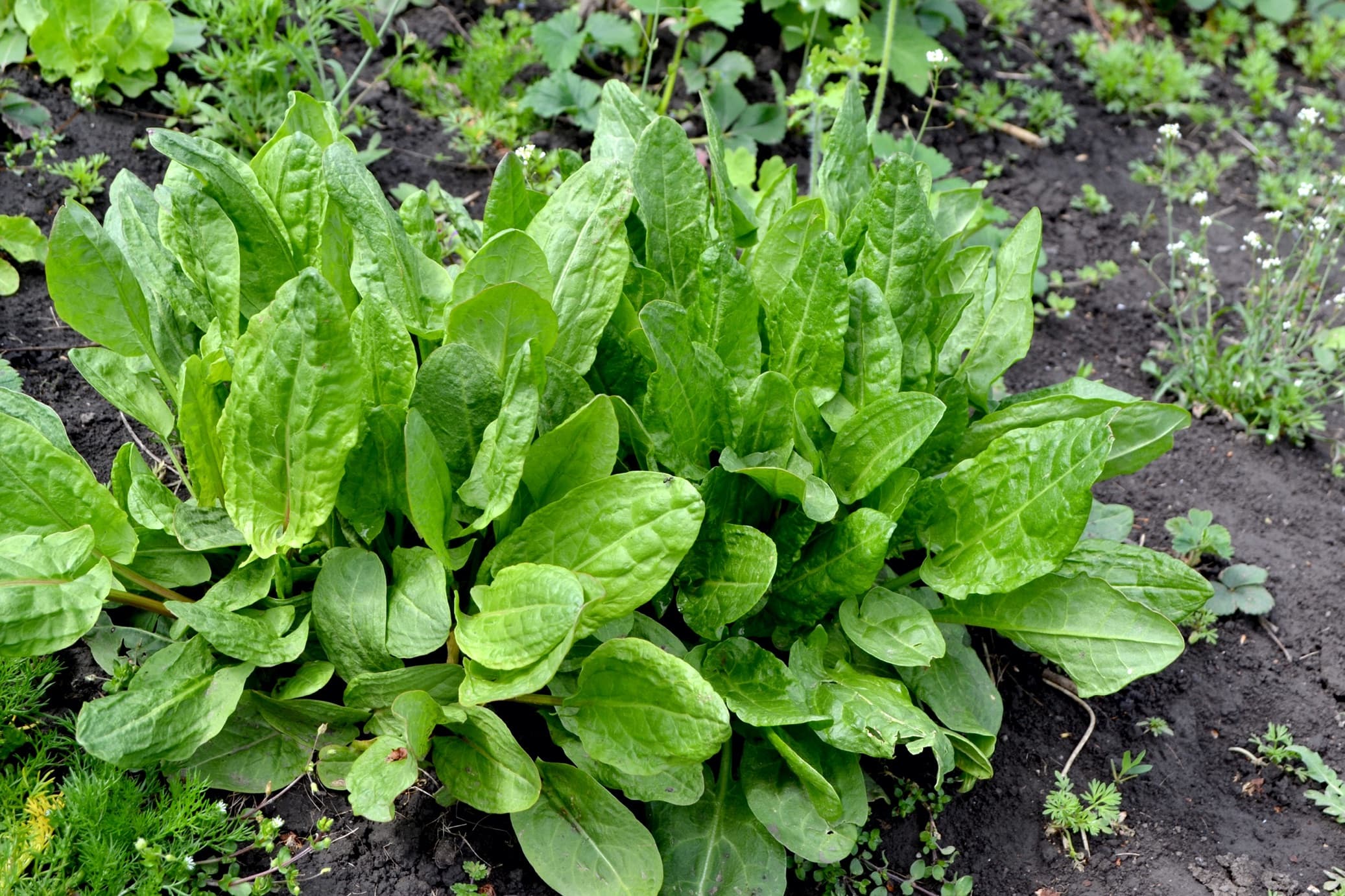
Sorrel may have been flying under your Herbs-and-Spices Radar but once you grow and use this very versatile herb, it will stay on your radar for a long time.
This plant is not difficult to grow, it is quite easy to care for, and you can use it for soups, salads, and sauces, and even as a leafy vegetable.
If you’re into multi-cultural cuisine and like to prepare dishes from all round the world, the herb you have to have is Sorrel, sometimes incorrectly called ‘Dock’.

Unlike rosemary, thyme, and such, Sorrel is what you make of it – or, in fact, what various nations make of it.
There’s one word that best describes this tangy-citrusy leaf: versatile.
It can be a veggie, an appetiser, a soup, a salad, a sauce, and…well, a herb!
Overview
| Botanical Name | Rumex acetosa |
| Common Name(s) | Sorrel |
| Plant Type | Herb / Perennial |
| Native Area | Europe / Central America |
| Hardiness Rating | H3-H7 |
| Foliage | Some retain leaves all year |
| Flowers | Tall spikes reddish flowers |
| When To Sow | February, March, April, May, June, July, August |
Rumex of some species or another occurs in nature from Sub-Tropical to Tundra Zones.
Rumex arcticus grows in the Arctic and is relied upon as a foodstuff by many people who live there.1
Rumex vesicarius is likewise used as a culinary ingredient except that it grows in the heat and dust of India.2
Many other Rumex species grow wild in forests, fields, meadows, roadsides, and poor and gravelly land virtually through the length and breadth of all continents.

Sorrels, therefore, span the gamut of Hardiness Zones.
Though most prefer full sun, a few varieties grow in partial shade or even full shade.
Rumex acetosa is a perennial and is hardy in RHS Zones H3-H7 (USDA Zones 3 to 9) – making most varieties suitable for all areas of the UK.
The majority of Rumex species are invasive to some or another degree and many, particularly R. acetosella or Sheep Sorrel, are considered weeds in North America.
How To Grow Sorrel
R. acetosa, R. scutatus, and R. sanguineus are available through many sellers, brick-and-mortar nurseries as well as online.
Other species of sorrel may be harder to find at nurseries. However, many Sorrels can be propagated by root division.

If you allow the flowers to wither and go to seed, you will automatically get new Sorrel plants.
These plants spread rapidly and can be hard to control – to prevent them from spreading, cut off the flower stalks – a side benefit will be the renewed production of the useful part of the plant, the foliage.
“I recommend growing sorrel near the house where you can easily harvest leaves and cut off any flowering stems that appear,” says Dan Ori, a Horticultural Consultant.
“Don’t underestimate one flower’s ability to propagate numerous plants; I would advise cutting off any flower stalks that appear and, if you wish to propagate new plants, the safest way is to divide.”
Growing From Seed
Prepare a bed with a good mix of soil that is organic but not rich.
It should have good drainage and be in a sunny location, preferably full sun.
Plant R. acetosa or Common Sorrel seeds in April, sowing them 15-20cm apart and about 1cm under the soil.
Keep the soil moderately moist.
After the plants germinate, water them in moderation twice a week though in an area with ample rainfall you may not need to water them for days on end.

Sorrel Ongoing Care
As the plants grow, you may need to thin them if they were planted too closely.
Weed the bed as you would for any other plant.
Overwintering
As a perennial, Sorrel will become dormant in the winter but will re-emerge in spring.
As a cold-hardy plant, Common Sorrel varieties do not need protection but it would be wise to lightly cover or mulch it with organic compost if you anticipate frost.
Propagation
Besides growing from seed, Common Sorrel may be propagated by dividing the roots.
Other Sorrels may be grown in the same way with minor variations; after all, Sorrels are easy-grow and no-care plants.

As for plant care, if there is one thing that Sorrel doesn’t need and doesn’t even want, it is TLC treatment.
Indeed, it can be said that Sorrels flourish on neglect.
Common Problems
Sorrels, growing as they do wild in nature all around the world, are tough and robust plants and in general are worry-free.
The only problem you need to keep an eye open for are slugs and snails, which are not too difficult to repel or eliminate.
Infrequently Sorrels get attacked by aphids or leaf miners.
Sorrels are disease-resistant plants.
References
1. Rumex arcticus Arctic. (n.d.). Plants for a Future. Retrieved March 24, 2023, from https://pfaf.org/User/Plant.aspx?LatinName=Rumex+arcticus
2. Rumex vesicarius. (n.d.). India Biodiversity Portal. Retrieved March 24, 2023, from https://indiabiodiversity.org/species/show/266390