Growing

Growing Mexican Feather Grass: The Perfect Plant To Add Texture To A Border Edge
IN THIS GUIDE Overview How To Grow Mexican Feather Grass Ongoing Plant Care Common Problems References Ornamental grasses can be great additions to prairie planting, flower borders, or containers. And Mexican Feathergrass is one of many great options to consider. “I like grasses in a garden because there is a lot of movement in them,” shares Garden Designer Peter Reader. “They also add a lot of texture as you can see through them, so I like to play around with them as an ornamental in a garden.” Mexican feathergrass: Stipa tenuissima, or Nassella tenuissima as it is now officially known, is a grass native to the southwest of the United States, northern Mexico and Argentina.1 “This grass is well proportioned for use as an edge to a border when given room to gently spill over the side,” shares Master Horticulturist Peter Lickorish. “It is surely one of the softest and most tactile plants you could ever grow.” Overview Botanical Name Nassella tenuissima / Stipa tenuissima Common Name(s) Mexican Feather Grass Plant Type Perennial Grass Native Area Central and South America Hardiness Rating H4 Foliage Semi-evergreen Flowers Feathery flowering panicles When To Plant March-September When To Prune March In the UK, it is one of the most popular ornamental grasses. It is not really considered to be an invasive problem here like it is in other parts of the world, but it can still self-seed and pop up in other areas of your garden. This is a semi-evergreen perennial grass, which takes its name from the feather-like fronds of seed heads which form above the foliage in summer. Starting as upright clumps of silvery green grass, the plant turns a beautiful brownish beige in late summer. How To Grow Mexican Feather Grass Plant out either self-sown plants, plug plants or larger pot-grown specimens into their final growing positions any time from March to the end of summer. Place plants in a spot with full sun, in a well-drained soil or potting medium. Simply create a planting hole large enough to accommodate the roots, pop the plant into the hole, firm it in and then water it well. If you have heavy soil, it can be useful to amend it by adding a handful of sand or horticultural grit to the base of your planting hole. If you plan to keep your Mexican feather grass in a container, make sure that the pot you select has good drainage, and that water can drain away freely from the base. Fill it with a peat-free potting mix, with added grit to improve drainage. Growing From Seed While many gardeners will choose to purchase and plant out plugs or larger clumps of pot-grown Mexican feather grass, which can be purchased from garden centres and plant nurseries in spring and summer, it is also possible to grow this plant from seed. Seeds are sown in March or April in a cold frame. Seeds can be sown together in pots and planted out as clumps, or pricked out into individual pots and grown out to create more plants. Either strategy can work well, and even individual blades should quickly establish and grow into clumps in the right setting. Ongoing Plant Care Caring for this ornamental grass is very easy and straightforward, making it a great choice for a low-maintenance space as long as the environmental conditions are right. This plant is unfussy about soil type or pH, as long as waterlogging does not occur. Once established, it is drought tolerant and feeding is not required. This plant does best in poorer soils, as soil that is too rich can encourage floppiness. Overwintering Stipa tenuissima is hardy throughout much of the UK, coping with winter temperatures between -5 and -10°C. Aspect This grass can be placed in many different positions around a garden and will thrive in any aspect as long as it receives plenty of sun. Pruning Unlike deciduous ornamental grasses, this grass is semi-evergreen, so it does not need to be cut back late in the winter as you would do with deciduous types. Instead, in spring, comb through with gloved hands or use a rake to get rid of older foliage and seed heads. You should find that this is just like combing hair, and the dead growth should come away freely. If the plant is looking messy or the grass has become drenched in a deluge, you can also cut it back hard towards the end of spring or early summer. New foliage will soon emerge. Propagating As mentioned above, this is a plant which can gently self-seed. This is not usually an issue, however, and plants that pop up in unwanted positions are fairly easy to remove, replant or give away. Another option is simply to divide existing clumps. The best time for division is between the middle of spring and early summer. “Dividing or lifting off-sets regularly can keep it as a slender hedge and this way I find plants generally reach a maximum height of around 50cm,” adds Peter. Companion Planting S. tenuissima works very well with herbaceous perennials and other ornamental grasses in a border, bed or container. Some flowering plants to consider planting alongside this grass are: Achillea Agastache Alliums Asters Cosmos bipinnatus Echinacea purpurea Eryngium Helenium Knautia macedonica Penstemons Rudbeckia Salvias Sedums Verbenas Veronicastrum Common Problems This is a plant that is usually pest and disease free. Issues only occur due to waterlogged soil or damage due to heavy rainfall. As long as the drainage is good and the plant gets plenty of sun, there should not be many issues. Does Mexican Feather Grass Spread Quickly? Though it can self-seed, and pop up elsewhere in your garden, it is not considered to be a problem in UK gardens. Clumps spread fairly readily when in the right location and can be great for spreading to fill gaps in a bed or border. References 1. Plant Database. (n.d.). Lady Bird Johnson Wildflower Center – the University of Texas at Austin. Retrieved March 24, 2023, from https://www.wildflower.org/plants/result.php?id_plant=nate3
Learn more
Citronella Plant (Pelargonium Citrosum) - Containers Are A Must For This Tender Plant
IN THIS GUIDE Overview Why Grow Citronella? Planting Ongoing Plant Care Propagation The term ‘citronella’ can be a confusing one, as there are a number of different plants which are referred to by that name. In this article, we discuss the merits and growing habits of Pelargonium cucullatum subsp. cucullatum, a lemon-scented pelargonium also commonly referred to as Pelargonium citrosum and the ‘Citronella plant’. This should not be confused with plants in the Citronella genus, nor with lemongrass, which is sometimes referred to as citronella grass. Overview Botanical Name P. cucullatum subsp. cucullatum Common Name(s) Citronella Plant; Mosquito Plant Plant Type Grass / Shrub Native Area South Africa Hardiness Rating H1C Foliage Evergreen Flowers Pink and purple flowers When To Plant May – August When To Prune March – May (or after flowering) P. cucullatum subsp. cucullatum, also sometimes referred to as the ‘Mosquito Plant’, is an evergreen shrub with a branching habit. It is well-known for its strong citrus scent and may produce attractive pinkish or purplish flowers sometime between spring and autumn. Citronella plants can grow to a maximum height of around 1.5m, with a spread of between 0.5-1m. It can also be kept much smaller and grown in moderately sized containers. Why Grow Citronella? Like some other pelargoniums, this is an edible plant. “Although the correct species name is P. cucullatum ssp. cucullatum, this plant will also be found sold as P. ‘Citronella’ or P. cucullatum,” explains Colin Skelly, a Horticulturist with nearly 15 years of experience. “There is also a double-flowered cultivar, P. cucculatum ‘Flore Pleno’. It will often be sold and described as a scented leaved Pelargonium with other species and cultivars.” The scented flowers and leaves can both be eaten in a number of recipes and are used to add a lemony flavour and aroma. While they may not help to keep insects out of your home, despite the rumours, keeping a citronella plant indoors could bring a pleasing scent to your living spaces. In the UK, the citronella plant cannot be grown outdoors during the winter, but can be placed outdoors in a warm, sunny spot during the summer months. Planting Where To Plant Citronella plants require a sunny spot and temperatures above 5-10°C. Over the summer, it can be grown in chalk, loam or sandy soil which is well-drained and has an alkaline or neutral pH in a suitable, sunny spot. However, since it will not be able to survive outside in the UK when temperatures fall, it is typically grown in containers. Remember that a container should be filled with a suitably free-draining growing medium, such as a peat-free multipurpose compost with added John Innes (or an equivalent soil-based potting mix), and added grit. If your citronella plant is being grown in the ground, plants should be lifted in early autumn. Alternatively, cuttings could be taken in order to have new plants placed the following year. These plants might also be grown indoors all year round as houseplants. Remember that these plants like a sunny location, so it is important to make sure when growing indoors, that you place them in as light and bright a spot as possible. Ideally, these plants should get at least 6 hours of sunlight each day. Alternatively, they can thrive in a sunny greenhouse that remains reliably frost-free in winter. When growing indoors or under cover, ensuring adequate ventilation is also important, as these plants require good airflow. This might involve opening windows or vents in summer and also might mean avoiding crowding too many potted plants on a windowsill or greenhouse staging. How To Plant Citronella plants can be purchased online or from a number of plant nurseries. They are typically purchased as plug plants, or as pot-grown specimens. They can be planted out in late spring or summer after the last frosts in your area in a suitable spot in your garden, or potted up into suitable containers and placed either outdoors in a suitable location, greenhouse, or on a sunny windowsill. Spring is the best time to plant houseplants, to ensure the best establishment. However, you can pot up citronella plants to use as houseplants throughout the year. Ongoing Plant Care Watering Remember that citronella likes free-draining conditions, so it is important to make sure that you do not overwater, and that water can drain freely from the container or through the garden soil in which it is grown. However, you will need to moderately water your plant when growing indoors or under cover and should not let the growing medium dry out entirely. Remember that your plants will require more water in the summer, though they still won’t need a huge amount. Over the winter months, you should water only very sparingly, and make sure that the potting medium has time to dry each time you water. Outdoors, natural rainfall will usually be sufficient. The plants are fairly drought tolerant and in the UK, excess rainfall rather than too little rainfall is likely to be more of an issue. Feeding Pelargoniums will respond rather well to feeding, so it is a good idea to provide plants in pots with a balanced, organic liquid feed every fortnight through spring. Then, once the flowers begin to appear, you should switch to a potassium-rich feed, such as comfrey tea or another organic feed, and water with this every couple of weeks throughout the rest of the summer. Over autumn and winter, reduce feeding to around once a month. Pruning Flowers can be deadheaded to promote flowering and the plant can also be given a light trim if required to keep their shape and size in check. Plants grown outdoors can also be cut back hard in autumn to make it easier to overwinter them indoors. If you are growing indoors year-round keeping your plants constantly in active growth, it can be a good idea to prune back hard in spring ready for the growth of the new season. Pests & Problems Unfortunately, these plants can be susceptible to a range of common problems, especially when grown indoors or under cover. Aphids, whiteflies, vine weevils, caterpillars, glasshouse leafhoppers and mealybugs can all become an issue. Check over your plants regularly and consider organic solutions for pest management such as organic pesticides like soap sprays when growing indoors. Outdoors, encourage natural predation and achieve pest control by creating a wildlife-friendly garden where the ecosystem is in balance. Fortunately, the citronella plant is not commonly affected by diseases. Propagation Citronella plants can be propagated relatively easily by means of softwood cuttings, taken any time between spring and autumn. Take non-flowering shoots as these will root more easily. Often, cuttings are taken in spring or early summer and potted up by midsummer when they should have developed reasonably strong root systems. Later cuttings should only be potted up into their own individual pots the following spring. As tender plants, Citronellas are not necessarily low-maintenance plants, but for their lemony scent and their flowers, it may be well worthwhile making the effort to grow these plants.
Learn more
Organic Gardener Shares How To Identify And Fix A Serious Leatherjacket Infestation
IN THIS GUIDE What Are Leatherjackets? What Do They Look Like? Are They A Problem In The Garden? How To Identify A Leatherjacket Problem Leatherjacket Benefits In A Garden Ecosystem How To Deal With A Serious Infestation References Leatherjackets can be a common problem in lawns, eating roots and causing patches. But what exactly are leatherjackets? Are they really a problem? And what should you do about them? In this article, we’ll take a closer look at these common larvae, how you can work out if you have leatherjackets causing damage in your lawn, flower beds or vegetable patches – and what to do about it if you do. What Are Leatherjackets? Leatherjacket Leatherjackets are the larvae of crane flies, also known as ‘daddy longlegs’ (Tipula ssp.).1 There are a range of different species of crane flies present in UK gardens. What Do They Look Like? The larvae are grey-brown in colour, with no obvious head and no legs. Depending on the species they can be up to 3cm long. They take their name from the fact that these larvae have a tough leathery skin. The long dangling legs of the adults make them easily recognisable, and they are a familiar sight across the British Isles. Female adult crane flies lay up to 300 eggs in the lawn or on the soil surface sometime in the late summer.2 After a couple of weeks, a proportion of these will hatch into the leatherjacket larvae. If the weather is dry at this time, fewer will tend to hatch successfully. If the weather over the winter is cold, the leatherjackets will overwinter as small larvae and will not grow to feed on plants or potentially cause problems until the following mid-summer. However, if the winter is mild, young larvae will continue to feed and can begin to cause problems by the time winter is through. Once the leatherjackets are fully grown, they pupate below the soil surface. The adult flies then emerge from their pupal cases and the life cycle continues. Are They A Problem In The Garden? It is important to understand that only a few species of crane fly larvae actually pose a problem in your garden. These few species can be problematic because they eat the roots of lawn grasses, leaving yellow or brown patches and causing the grasses to die back in certain infested areas. Leatherjackets can also occasionally become an issue in vegetable plots or flower beds, especially in new beds which have recently been created over an area of lawn. The larvae may nibble off seedlings at ground level, causing them to collapse. How To Identify A Leatherjacket Problem It is important not to rush to judgement if you see adult crane flies in your garden. Because these may not be of the species which pose a threat to your lawn or seedlings. If you do see patches of dead or dying grass in your lawn, or patches where birds have made small round holes in the turf, then leatherjackets may be the issue. But it is important to investigate a little to make sure that a different problem is not to blame. Dry and dying patches of lawn can have a range of causes. To make sure that it is leatherjackets and not a disease or other pest issue, you should lift a patch of the turf that is affected. If leatherjackets are present, you should see that the root system of the affected grass is damaged or practically non-existent, and should find the culprits themselves fairly easily in the upper layers of the soil. You can also see whether leatherjackets are the problem by watering and then covering the affected area with a layer of black plastic. Leave this is place overnight. The next morning, if leatherjackets are present, lift the cover and you should see a large number of these grubs on the surface. Where you see holes in the soil where birds have dug in their beaks, this could be a tell-tale sign that larvae are present. Corvids and starlings will look for leatherjackets in this way. However, they could also be looking for chafer grubs. Foxes and badgers may also dig up chafer grubs, so if there is greater disturbance then chafer grubs may be more likely to be the issue. In a new flower or vegetable bed, if seedlings or small plants have their stems damaged at the soil level and collapse, there can be a number of culprits. Again, looking around in the upper levels of the soil for the leatherjackets themselves will help you identify whether or not these pests are to blame. Leatherjacket Benefits In A Garden Ecosystem Leatherjackets can be a pest for those who like a neat and tidy lawn, and can occasionally be an issue in other parts of the garden. But as mentioned above, it is important to remember that only a small number of crane fly species have larvae which will actually do any damage. Even if you do have an infestation of a damaging type, it will need to be rather a large infestation to pose a serious threat to your lawn grasses or other plants. It is important to remember that like all other garden creatures, crane flies and their larvae are part of the garden ecosystem. The best way to deal with any pest species is not to eradicate them or get rid of them entirely. Rather, the best strategy is to manage their numbers, and create a balanced ecosystem with plenty of predators to keep their numbers down. “Leatherjacket populations would rarely be large enough to cause yellowing or die back in lawns to a significant level,” shares Horticultural Consultant Colin Skelly. “Especially today when we are less likely to be wanting a green carpet outdoors but looking to see grass in the garden as a resource for wildlife. “If a severe problem does arise, most likely it will not persist and return to lower levels.” So if you have a lot of crane flies and leatherjackets, look to attract plenty of the birds and other species which eat them to your garden. They can be valuable prey for a range of different animals. Those many species of crane fly which do not cause damage feed not on roots of plants but on decaying vegetation, fungi etc. They therefore play an important role in recycling nutrients in the soil and can be beneficial within the garden ecosystem. How To Deal With A Serious Infestation If you do have a serious infestation of damaging leatherjackets in your garden, then it is of course important to manage the problem organically. First of all, try to manage the problem by manually removing the larvae, and by taking steps to increase the numbers of natural crane fly predators present in your garden. If all else fails, however, there is a biological control to consider. It is possible to purchase certain pathogenic nematodes – Steinernema feltiae or Steinernema carpocapsae, which can be watered into the lawn, or soil. These nematodes are microscopic organisms which enter the bodies of the leatherjackets and give them a bacterial disease. These can be used in moist soil, which has a temperature of at least 12°C. When the conditions are right, these should be watered into the area of the infestation and the surrounding area. However, it is crucial not to try this when the soil is too cold. If the leatherjacket population is out of control and a lot of damage is being caused, these nematodes can be the most effective solution. References 1. Baker, J. (n.d.). Leatherjackets and Crane Flies. NC State Extension Publications. Retrieved March 17, 2023, from https://content.ces.ncsu.edu/leatherjackets-and-craneflies 2. Crane Flies | Facts & Identification, Control & Prevention. (2020, July 24). Orkin Canada. Retrieved March 17, 2023, from https://www.orkincanada.ca/pests/flies/crane-flies/
Learn more
Chafer Grubs Can Cause A Lot Of Lawn Damage - Here Are Some Biological Solutions
IN THIS GUIDE What Are Chafer Grubs? Turf Damage What Do Chafer Grubs Look Like? Chafer Grubs In A Lawn Signs Of Infestation Prevention Biological Solutions Organic Control Chafer Grub Garden Benefits References Chafer grubs can pose a problem for those who prize perfect lawns, but can also be beneficial in your garden. If you are wondering how to get rid of chafer grubs then it is likely that you have encountered a problem with your lawn. But it is important to realise that though they can lead to a lawn that looks less than ideal, there are many reasons to want chafer grubs around. Only some chafer grubs pose a problem in a garden, and as you will discover in this article, not even these grubs need to be considered a serious problem at all. Read on to find out more about chafer grubs, when you might want to get rid of them – and why, most of the time in an organic garden, they are great garden wildlife to have around. What Are Chafer Grubs? ‘Chafer grubs’ are the larvae of chafer beetles. They live below the soil, beneath lawns, in beds and borders and in compost heaps.1 There are a number of different species of chafer beetles present in UK gardens. These grubs can easily be confused with those of dung beetles and stag beetles, though these other creatures will do no harm in your garden and the stag beetle is an endangered species. There are five species of chafer beetles in the UK which are known to cause lawn damage.2 Turf Damage The main grubs which pose a potential problem for gardeners are Smaller garden chafers (Phyllopertha horticola) and Welsh chafers (Hoplia philanthus). These types of chafer grub are most commonly found underneath areas of turf. They can be viewed as a problem because they can destroy the root systems of grasses in a lawn – though they will not usually pose a threat to other mature plant species. Lawns can also be damaged by wildlife digging up the lawn to retrieve them. Other species found in the UK include the cockchafer (Melolontha melolontha) and the summer chafer (Amphimallon solstitiale) which will very occasionally feed on and damage the roots of plants in a bed or border, around the edges of a lawn.3 But these are usually not a problem in a garden. All species of chafer, as you will discover below, have benefits within the garden ecosystem. One species – the Rose chafer grub (Cetonia aurata) can be particularly beneficial and is often found within a composting system, where they lend a helping hand in breaking down organic matter. What Do Chafer Grubs Look Like? Chafer grubs are chubby white grubs with bodies curved into a ‘C’ shape. They have light brown heads and three pairs of legs close to the head end of their bodies. These grubs can reach a length of up to around 18mm long – bigger than the adults of the species. Larger chafer grubs such as the cockchafer and summer chafer can have larger larvae up to 30mm in length.4 One thing to bear in mind is that it is very difficult to distinguish between the different grubs of different chafer species, and also difficult to distinguish those of chafer beetles from those of other beetles. Only if you find these under your turf, and see damage to the lawn, should you assume that these are feeding on the roots and that they may be a problem in your garden. Chafer Grubs In A Lawn As mentioned above, the only chafer grubs that can really pose an irritation to gardeners are small garden chafers and welsh chafers that can damage a lawn. If there is a serious infestation in a lawn, damage will be most clear between September and April, when the grubs are at their most active and are nearing maturity. Signs Of Infestation Lawn damage from chafer grubs If chafers have been eating roots in a lawn, patches may become yellowed and die back. But a telltale sign that chafer grubs are present is the disturbed areas of the lawn, where birds such as corvids (members of the crow family), foxes or badgers have dug to retrieve and eat them. Gardeners who prize a perfect lawn may be irritated by the destruction, which can soon turn a neat and orderly area of turf into what looks like a pitted minefield. While other wildlife, such as leatherjackets, can also cause areas of lawn to die back, these will not usually be unearthed in the same way as chafer grubs by other animals. In May or June, if you have a large infestation, you will see adult beetles flying up from the turf in large numbers, usually in the evening as the light begins to fade. In an organic garden, it is certainly worthwhile remembering that there are many more useful ways to use the space in your garden that will be far more beneficial to you (and to the ecology of the site) than a lawn. So if you are not able to maintain a perfect lawn, consider replacing it with a meadow garden, a vegetable plot, or even a beautiful and productive food forest. Prevention With more diverse and abundant, eco-friendly planting schemes, chafer grubs are far less likely to be a problem. If you do wish to maintain a lawn, then keep it well-watered and fed. Though please make sure to use only organic fertilisers, and never synthetic fertilisers or herbicides, which pose a threat to the environment, wildlife and people.5 Problems are more likely to take hold in a lawn that is less heavily managed. Preventing moss growth may also help to avoid a damaging population. Biological Solutions In very extreme cases, there is a biological control available. Gardeners can water in Heterohabditis bacteriophora nematodes any time when temperatures are between 12-20°C – usually between July and September. These nematodes infect the larvae with a fatal bacterial disease. However, this is the ‘nuclear option’, and should only ever be viewed as a last resort. Organic Control If the population of chafer grubs in a lawn has become excessive, this should be taken as a sign that the ecosystem is out of balance. In an organic garden, boosting biodiversity and maintaining a natural balance in the garden ecosystem is an important part of the puzzle. Excessive numbers of chafer grubs may be a sign that there are insufficient numbers of their natural predators in the ecosystem. Attracting more rooks, crows, magpies, jays, foxes, badgers etc. to your garden is one of the best ways to keep their numbers under control. Make sure you have plenty of habitats and diverse planting to attract a wide range of wildlife into your garden. Chafer Grub Garden Benefits The main reason why chafer grubs can be a good thing in your garden is that all species are important food sources for grub-eating wildlife. All organic gardens should have some ‘pests’, because it is only when these creatures are present that natural biodiversity will be maintained and their predators will be present too. So do not be too quick to get rid of chafer grubs entirely. “Most gardens with areas of grass will have chafer grubs but never notice any damage,” Horticultural Consultant Colin Skelly summarises. “Where there is repeated severe damage, consider changing the use of the area but this would be a rare consideration. “In general, see chafer grubs as part of the garden ecosystem. If you remove them, you are removing food for the more charismatic birds and larger wildlife that you want to see in your garden.” References 1. Chafer grubs in lawns. (n.d.). Royal Horticultural Society. Retrieved March 17, 2023, from https://www.rhs.org.uk/biodiversity/chafer-grubs-in-lawns 2. Lifecycle and control of Chafer grubs, the larvae of the chafer beetle. (n.d.). Agrovista Amenity. Retrieved March 17, 2023, from https://amenity.agrovista.co.uk/technical-updates/common-pests-in-the-uk-chafer-grubs/ 3. Chafer grubs in garden borders. (n.d.). Royal Horticultural Society. Retrieved March 17, 2023, from https://www.rhs.org.uk/biodiversity/chafer-grubs-in-garden-borders 4. Mumford, C. (2015, April 22). Chafer grub Q&A. Pitchcare. Retrieved March 17, 2023, from https://www.pitchcare.com/news-media/chafer-grub-q-a-for-pitchcare.html 5. Fertilisers | Agriculture and Land-Use. (n.d.). The RSPB. Retrieved March 17, 2023, from https://www.rspb.org.uk/our-work/policy-insight/england-westminster/farming-and-land-use/land-use-and-nature/fertilisers/
Learn more
Grow Pampas Grass If You Want To Add Vertical Interest Or Screen A Garden Area
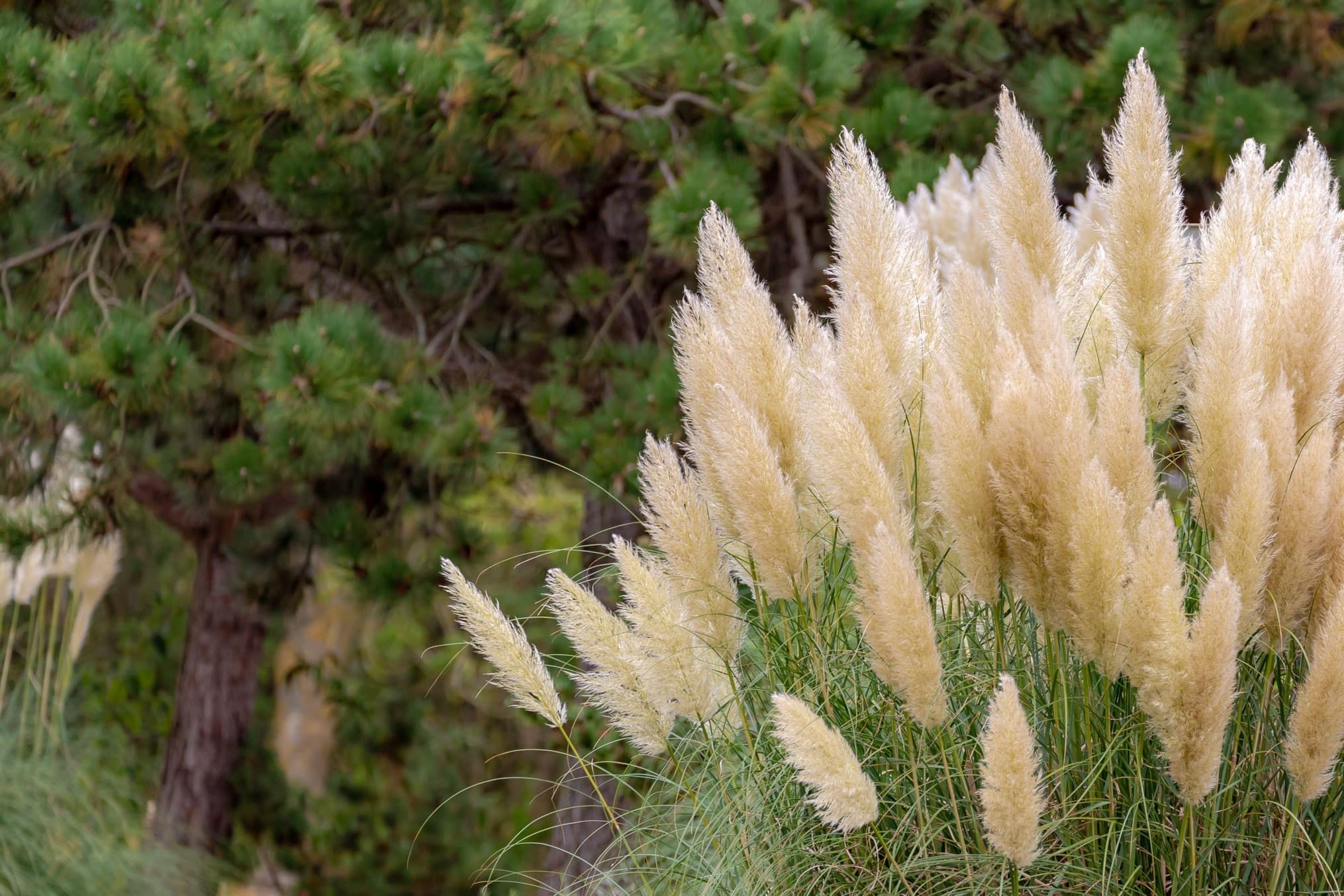
IN THIS GUIDE Overview How To Grow Pampas Grass Ongoing Pampas Care Common Problems References Cortaderia selloana, more commonly known as ‘Pampas Grass’, is a tall, proud grass boasting silvery-pink panicles (that’s the swishy bits on top). Whether resting or swaying gently in the wind, the silver-pink palette casts a captivating aesthetic and invites the gaze, adding a subtle attractiveness to any outdoor space. Pampas grass is a great way to bring a different tone to the green-heavy palettes and flower-heavy backdrops of British gardens. It’s a versatile plant, equally suited to use as a border to frame an area, a screen to fence off an area, an element to add vertical interest to a flower bed or as a stand-alone focal point to draw the eye in a certain direction in a design scheme. Overview Botanical Name Cortaderia selloana Common Name(s) Pampas Grass Plant Type Perennial Native Area South America Hardiness Rating H6 Foliage Evergreen Flowers Silver white spikes, sometimes with pink or purple tinge When To Sow March, April, May Flowering Months July, August, September, October Pampas grass is part of the family Poaceae, which contains all types of grass, from bamboo to the ubiquitous green blades you see in gardens and parks up and down the UK.1 This plant is so iconic that an entire region of South America is named after it – the Pampas (or ‘La Pampa’) is a vast, flat area of grassy plains spanning a large section of Central Argentina.2 The panicles and grass combine to provide a visually interesting colour palette, and the plant’s height and confidence make it a fantastic vertical contribution to beds and garden areas. It’s a great way to bring something a little different to your garden, and it’s very easy to grow! How To Grow Pampas Grass This is an enthusiastic grower, and will get big quickly! It’s also considered an invasive species in some areas of the world, raising the interesting question of what differentiates a problematic plant from an acceptable one.3 Make sure you’re ready for the rate and spread of pampas’ growth, and that you’ve got a suitable area of garden set aside. Hardiness Pampas grass is hardy enough to survive whatever the weather conditions in the UK throw at it. The plant has an RHS hardiness rating of H6, meaning it can make do with temperatures down to -20°C. Where To Grow This plant likes full sun best, although it will make do with partial shade. If you choose to grow pampas in shade, the eventual height of the plant will be shorter. Grasses with too little sun exposure may also fail to flower, so make sure you find a spot that aligns with your eventual plans for the plant. Pick a spot with moist soil and good drainage. The grass is resilient to wind, drought, and other elemental hassles that may discourage other plants: one of the reasons it makes such great borders. Pampas grass isn’t fussy in terms of soil composition or acidity, so you don’t need to worry too much about soil type. Planting For best results, plant pampas grass in spring. This gives it more than enough lead time to establish itself, and build the required strength for future years and seasons. Pampas grass is a real treat to plant, because it’s so easy – all you need to do is sprinkle seeds over freshly-raked soil, water gently, then leave them to get on with it. The water and gentle spring sunlight provide perfect conditions for germination, and you’ll see growth quickly. When grown from seed, Pampas grass will take 2-3 years to flower, so if you would like to see these striking plumes earlier, I would advise purchasing a 5L potted plant. If your garden is popular with birds, you may need to cover your pampas seeds with light netting. Something to prevent inquisitive beaks from playing havoc, but which lets light through and leaves enough space for fledgling growth. Ongoing Pampas Care Fertilising Pampas grass doesn’t need much in the way of fertiliser, but giving the plant a dose in spring, summer, and autumn of the first year will help it to reach full strength. Watering Unless you’re living through particularly severe drought conditions, pampas grass won’t need watering, although it’s best to water while the plant is establishing for the best start. This plant hails from arid regions and is perfectly fine to be left to its own devices once established. Relocating & Propagating You can move established pampas grass by carefully uprooting it, then transplanting it into a hole just bigger than the root ball. Teasing the root ball gently apart and watering the soil gently after covering over will both help the transplanted grass to take better, and reduce the risk of trauma. To propagate, simply replant a clump cut from an established plant. Female pampas is showy and silky Female cuttings will take root and re-establish themselves (you can tell female plants by the more vibrant and showy plumes). Overwintering To boost your plant’s resilience during the winter, you can mulch the base of the plant and cover this with cardboard, netting, or similar. This will insulate the roots and reduce the impact of cold. As we said earlier the plant can survive even the coldest UK temperatures, but a little extra help never goes amiss. Common Problems As a non-native species, pampas isn’t a natural part of the diet of UK-native wildlife that might typically be considered as ‘pests’. This means it’s unlikely to be bothered when growing in your garden. Insects do tend to take up residence in these plants, so if you’re propagating, inspect carefully for bugs or their nests. Whether you choose pampas grass for its colour palette, its striking height, or the fact that it’s so easy to grow, this plant is guaranteed to deliver. It’s visually interesting and versatile enough to function in many areas of your garden, making it the perfect choice for gardeners of all levels. References 1. Cortaderia selloana (Pampas Grass, Uruguayan pampas grass). (n.d.). North Carolina Extension Gardener Plant Toolbox. Retrieved March 22, 2023, from https://plants.ces.ncsu.edu/plants/cortaderia-selloana/ 2. The Editors of Encyclopaedia Britannica. (1998h, July 20). The Pampas. Encyclopedia Britannica. Retrieved March 22, 2023, from https://www.britannica.com/place/the-Pampas 3. Pennisi, SV. (2009, December 16). Pampas Grass. UGA Cooperative Extension. Retrieved March 22, 2023, from https://extension.uga.edu/publications/detail.html?number=C983
Learn more
12 Short And Low Growing Grasses Chosen By Horticulturists To Match Any Garden Scheme
IN THIS GUIDE 1) Acorus gramineus ‘Ogon’ 2) Elymus magellanicus 3) Festuca glauca 4) Hakonechloa macra 5) Imperata cylindrica 6) Koeleria glauca 7) Luzula sylvatica 8) Milium effusum 9) Melica uniflora 10) Pennisetum villosum 11) Sesleria caerulea 12) Nassella tenuissima Ornamental grasses can add movement, variation and year-round colour to your borders, raised beds and garden planting schemes. While most of us might associate the term ‘grasses’ with the slender elegances of rushes and reeds, these versatile and diverse plants come in all shapes and sizes. “I think the one group of plants that is essential to my work are ornamental grasses,” shares Designer Wes Shaw. “They are such versatile plants that can be used anywhere. They look great all year, are easy to grow, drought tolerant and have fantastic form and texture. “I love naturalistic planting and they combine so well with other perennials to produce beautiful displays that will also benefit wildlife and diversity.” In fact, the grass genus is one of the biggest in the entire plant kingdom, with strains and species having adapted to every conceivable climate and soil type on the planet. What that means is that in addition to the long, waving stems of taller grasses, there are also a number of small, short and low-growing varieties which are perfect for more economical spaces. “Ornamental grasses are my favourite, purely because of the fact that they add movement to a garden, lots of interest throughout the year if you select the right ones and are great for wildlife,” shares TV Presenter Mark Lane. “They look lovely when they’re frosted in the autumn and winter and are a brilliant plant for putting into a border to divide up colours and blur plants together.” They also work well in stitching the aesthetic of your garden together, providing a subtler background link between more showy blooms. The fact that there are many evergreen varieties available – alongside the multi-toned colours that many varieties offer – makes them an ideal method of brightening up your display throughout the colder months. “Ornamental grasses are successful in our natural world that they obviously work well in our gardens,” says Neil Lucas, an expert on ornamental grasses. “You need to make sure that you’re growing the right plants in the right soil. “When using grasses, the important factors are shade and drainage, and if you can get those factors right, grasses split quite easily into those categories so you can learn where to put them.” Aside from the practical considerations of which grasses will flourish in the conditions available to you, the other major factor in your decision-making process should be a cosmetic one. In this respect, it pays to be bold in your choice of ornamental grasses, opting for colours that will change and transform as the calendar year progresses. This means they can not only complement the existing décor in your display, but provide a focal point all of their own, as well. “In almost all of our schemes, we include grasses,” says Garden Designer Gavin McWilliam. “They catch the light and look great. They also act as a great filter between the different planting groups and are relatively low-maintenance.” For any green-fingered enthusiast for whom space is at a premium, or who simply wishes to use smaller varieties of grass to create a more compact and grounded effect, here is a suggested list of low-growing ornamental grasses that won’t exceed one metre in height – 1) Acorus gramineus ‘Ogon’ COMMON NAME: SWEET FLAG HARDINESS RATING: H6 TYPICAL HEIGHT: 0.3M Acorus gramineus ‘Ogon’ – otherwise known as Sweet Flag – is a semi-evergreen grass which provides vibrant colour for much of the year. Its distinctive sword-shaped leaves are a delicious yellow in colour, complemented by the lush green of the variegated stripes which line them. The plant will remain an attractive component of your display until late autumn when the foliage begins to fade, at which point it should be pruned back to encourage further growth the following year. Unlike many other grasses, A. gramineus actually prefers wetter soil types with poor drainage, so it makes for an excellent addition to the periphery of a pond, fountain or other water feature. Alternatively, you can leverage the vibrancy of its foliage to brighten up shady areas of the garden which don’t receive much in the way of sunlight. 2) Elymus magellanicus COMMON NAME: Magellan Rye Grass HARDINESS RATING: H6 TYPICAL HEIGHT: 0.6M With its metallic blue leaves that carry an almost silver hue, Elymus magellicanus is perhaps the bluest of all bluegrasses. It’s a native of South America, with the plant found in plentiful supply in the colder climes of southern Chile and Argentina. For that reason, it holds up well against the vagaries of the Great British climate, though it won’t prosper in the extremes of a summer heatwave or a winter frost. Instead, E. magellanicus prefers a milder year-round temperature. In the right conditions, it can provide evergreen colour, though gardeners may notice that it exhibits signs of fading and fatigue in winter. If that happens, it should be cut back severely in spring, after which it will rebound slowly but reliably, requiring very little in the way of maintenance. It shouldn’t require dividing for several years, but spring is the best time to do so when the opportunity does arise. 3) Festuca glauca COMMON NAME: Blue Fescue ‘Blaufuchs’ HARDINESS RATING: H5 TYPICAL HEIGHT: 0.35M Sometimes called ‘Blaufuchs’ or Blue Fox, Festuca glauca is another compact grass defined by the steely blue of its leaves. Unlike Elymus magellanicus, however, F. glauca is a deciduous plant which dies away during the colder months. Its foliage is also narrower and more needle-like than the sword-shaped fronds of its South American counterpart, while the green buds of flowers which appear in summer are similarly slender and unglamorous in their nature. The striking colour of its leaves makes it an ideal addition to a rock garden, where the metallic hues will complement the greys and whites of pebbles and stones beneath. Growing to just 35cm in height, it’s easily manageable and will thrive in most soil types with little in the way of support. 4) Hakonechloa macra COMMON NAME: Japanese Forest Grass HARDINESS RATING: H7 TYPICAL HEIGHT: 0.5M Hailing from the rocky cliffs of the Japanese island of Honshu, this attractively shaped perennial grass is great for bringing a touch of the Orient into your garden. Its long, curving green leaves spring from a tufted mound and shoot upwards, before draping over themselves in an eye-catching manner. Meanwhile, the red and brown hues that the foliage takes on in autumn and winter make it a crowd-pleaser right through the calendar. The cascading nature of the plant’s growth makes it ideal as an edging element to a pathway, an understated backdrop to taller and showier shrubs or flowers or as a standalone focal point in a minimalist gravel forecourt. It’s fully hardy and slow growing, meaning it doesn’t require much in the way of garden care, though it will appreciate being pruned in winter and mulched in sprung to encourage an encore of growth in the following year. 5) Imperata cylindrica COMMON NAME: Red Baron HARDINESS RATING: H4 TYPICAL HEIGHT: 0.5M Characterised by the brilliance of its scarlet spikes, Imperata cylindrica – or Red Baron, to give it one of its common names – is perhaps one of the more eye-catching inclusions on this list. The redness of the foliage fades into a mellow green at its roots and the entire leaf turns slightly translucent as it matures. This interesting visual effect makes it perfect for livening up borders and pairing with similarly ostentatious grasses and shrubs. It’s a hardy little critter which will handle most soil types with ease, but for the most vivid colours which really pop, it’s advisable to grow I. cylindrica in moist soil with a high humus count in full view of the sun’s rays. It also works equally well in a pot or container and when set alongside three or four other plants of the same genus, it will produce a particularly impressive aesthetic. 6) Koeleria glauca COMMON NAME: Blue Hair Grass HARDINESS RATING: H5 TYPICAL HEIGHT: 0.5M The blue-green tufted hummocks of Koeleria glauca (common name: Blue hair grass) are most popular in rock gardens and gravel forecourts. The foliage is at its most stunning earlier in the year, while the blooming of silver-green flowers come summertime adds another layer of intrigue. As the shadows begin to lengthen and autumn sets in, the leaves and flowers both fade to a rustic straw-yellow. Hardy, low-maintenance and unassuming, K. glauca is a fantastic choice for those looking for a more reserved accompaniment to brighter flowering plants. Indeed, perhaps the only drawback of this resilient and versatile species is that it generally doesn’t last as long as some others on this list, so may require replacement within a couple of years. 7) Luzula sylvatica COMMON NAME: Great Woodrush HARDINESS RATING: H7 TYPICAL HEIGHT: 0.8M This evergreen perennial is often planted en masse, forming a handsomely hummocked carpet for your garden floor. Although Luzula sylvatica does bear small clusters of brown flowers in late spring and early summer, the floral blooms are not considered its finest attribute. “Like many plants sold as grasses, Luzula is not technically a grass but a perennial in the Rush family,” explains Horticultural Consultant Colin Skelly. “From the ornamental rather than botanical standpoint, the effect is the same, and Luzula is a fantastic plant for damp shade where it will cover the ground and look fantastic and associate well with other damp and shade-loving perennials.” Instead, it’s the glossy greenery of its foliage, which spills out of loose clumps in an overflowing effect, which steal the show. Native to both Europe and southwest Asia, this hardy little plant knows a thing or two about colder temperatures. It doesn’t enjoy the full heat of the sun if the soil beneath it is allowed to dry out, but will otherwise cope with pretty much anything the elements can throw at it. For best results, plant it in grouped clumps and divide to propagate further come springtime. 8) Milium effusum COMMON NAME: Bowles’ Golden Grass HARDINESS RATING: H7 TYPICAL HEIGHT: 0.5M With sprouting foliage that appears bright yellow in spring before turning a rich green later in the year, Milium effusum is a favourite among gardeners searching for a bright grass to add some energy to a dark or jaded part of their display. It’s semi-evergreen in nature, meaning the foliage is prone to losing some or all of its lustre in the colder months, but it invariably grows back again the following year. The delicate yellow flowerheads of summertime only add to its appeal. It’ll work best in soil with good drainage, while it doesn’t overly enjoy too much UV radiation, so keep it in a shady spot to coax the best performance out of it. Dead foliage and flowerheads can be pruned in spring and they can be propagated by division at that time of the year, too. Other than that, M. effusum will thrive when left to its own devices. 9) Melica uniflora COMMON NAME: Wood Melick HARDINESS RATING: H7 TYPICAL HEIGHT: 0.5M As the Latin name of this elegant grass suggests, Melica uniflora flowers bloom singly come summertime. Their spiky panicles are apt to sway pleasingly in a gentle breeze, while the dense, pointed foliage beneath provide depth and colour to their backdrop. For that reason, they’re a popular choice for blending the edges of a garden with the surrounding environment, blurring the lines between nature and nurture. As a native of Europe, northern Africa and southwestern Asia, Melica uniflora is a highly adaptable grass which will fare well in almost all conditions, from the high altitude of the Alps to the low plains of the prairie. As such, it should perform well wherever you place it in your garden and will grow in slowly spreading clumps that are easy to manage should they become too big for their horticultural boots. 10) Pennisetum villosum COMMON NAME: Feathertop HARDINESS RATING: H3 TYPICAL HEIGHT: 0.5M Pennisetum villosum – or feathertop – is one of the most desirable ornamental grasses going, especially in sensory gardens where touch is just as important as aesthetics. That’s due to the bobbing masses of rabbit tail-like blooms, which spring up each summer and sit proudly atop the fine-leaved foliage like clouds. As well as being incredibly easy on the eye, they’re also the kind of grass that begs to be touched. As natives of tropical regions of Africa, P. villosum is unlikely to survive the harsher extremes of a British winter. There’s no need to worry, however, since they are experts at self-seeding and will, in all likelihood, come back the following year even stronger with little in the way of help from your end. 11) Sesleria caerulea COMMON NAME: Blue Moor Grass HARDINESS RATING: H7 TYPICAL HEIGHT: 0.5M Although not the first grass on this list to carry a bluish tinge to its green, Sesleria caerulea is perhaps unique in its combination of those two colours. That’s because the topside of its leaves features a dull blue that’s almost grey in hue, while the underside is painted in a rich dark green. Together, those shades make for quite the head-turning specimen, while the purple flowers which proliferate during summer are just the icing on the cake. Ideal for use as ground cover, Sesleria caerulea prefers well-draining soil that receives full or partial sun. It’ll reach a maximum of 50cm in height, meaning it can work well at the front of a border with taller plants behind, while the only maintenance it will require is a quick raking in spring to separate the dead leaves from the live ones. 12) Nassella tenuissima COMMON NAME: Mexican Feather Grass HARDINESS RATING: H4 TYPICAL HEIGHT: 0.6M Nassella tenuissima goes by many names: Mexican Feather Grass, Pony’s Tail or Angel Hair to name but a few. One look at the soft feathery flowerheads which proliferate in summer will reassure you that each of them is an apt moniker for this attractive deciduous, clump-forming grass. It’s particularly effective when placed alongside other grasses or as part of a herbaceous border, adding understated charm to its surroundings. The long, slender stems of N. tenuissima grow to a maximum of 60cm in length, while the plant will perform most impressively in full view of the sun and in sandy soil that enjoys good drainage. Its flowerheads make for attractive cut-and-dried floral displays, but alternatively, the seeds within them can provide a solid source of sustenance for finches and other birds in autumn and winter.
Learn more
10 Perfect Ornamental Grasses For Containers With Tips From RHS Gold-Medalist Neil Lucas
IN THIS GUIDE 1) Anemanthele lessoniana 2) Carex 3) Cortaderia selloana ‘Pumila’ 4) Festuca glauca 5) Hakonechloa macra ‘Aureola’ 6) Miscanthus sinensis ‘Morning Light’ 7) Pennisetum setaceum 8) Stipa gigantea ‘Pixie’ 9) Stipa ichu 10) Stipa tenuissima Notes When Growing Ornamental Grasses In Containers Many ornamental grasses that can be grown in garden beds can also work well in containers. Ornamental grasses can work very well as container plants – adding drama, height and/or visual interest to a container garden on a patio, balcony, or in another outside space. “A lot of ornamental grasses do well because they have a fibrous root system that is easy to please,” shares Ornamental Grass Expert Neil Lucas. “The bigger the container, the better the grass will perform.” As long as you care for them correctly – watering, fertilising, cutting back and repotting as required – you should find that it is relatively easy to enjoy these grasses without having to grow them in the ground. “I love grasses, because they give 10 months of interest throughout the year and when you cut them down you can have bulbs coming up through them,” shares Garden Designer Amanda Patton. “They bring such a lot of movement and light into the garden, so always sneak a few into gardens.” Here are the best 10 for including in gardens: 1) Anemanthele lessoniana COMMON NAME(S): Pheasant’s Grass, Pheasant’s Tail, New Zealand Wind Grass PLANT TYPE: CLUMP-FORMING; SEMI-EVERGREEN HARDINESS RATING: H4 TYPICAL HEIGHT: 0.6 – 0.9M Hailing from New Zealand, this grass is known as pheasant’s grass – a name which reflects its drooping foliage. It naturally grows in windy environments, and does not enjoy having wet feet. So growing it in a container can be a great idea, especially if the soil is not very free-draining where you live. It grows quickly, to 60-90cm in height, and lives for 3-5 years. It has foliage that is green when it emerges, but which turns yellow-tan, orange and reddish, becoming more intense during the winter months. Sprays of airy flower heads emerge in late summer – tease out dead foliage from the clump in the container each spring. 2) Carex COMMON NAME(S): Sedges PLANT TYPE: EVERGREEN PERENNIAL HARDINESS RATING: TYPICALLY H5 TYPICAL HEIGHT: 0.5 – 1M Though Carex are technically sedges rather than grasses, there are a great many that work extremely well instead of or alongside ornamental grasses in containers. “The fact they are sedges gives them fairly broad leaves in a variety of exciting and sometimes variegated tones,” says Master Horticulturist Peter Lickorish. Some examples of Carex that work very well in containers include: C. buchananii C. comans C. elata C. flagellifera C. morrowii C. oshimensis C. testacea “Smaller grasses like Carex can be mixed with perennials or bedding plants to create short-term displays, with plants potted on or planted out once they outgrow their pot,” adds Peter. 3) Cortaderia selloana ‘Pumila’ COMMON NAME(S): Pampas Grass PLANT TYPE: EVERGREEN PERENNIAL HARDINESS RATING: H6 TYPICAL HEIGHT: 0.5 – 1.2M Pampas grasses are often too large to consider growing in containers. But you can consider some options within this genus when you have a container garden and are looking for something to add drama. Cortaderia selloana ‘Pumila’ has foliage that reaches just 50cm or so in height, and sends up plumes on stems around 1.2m high in late summer. This works for larger containers and is more manageable than most C. selloana, which reach up to 2.5-3m in height. 4) Festuca glauca COMMON NAME(S): Blue Fescue PLANT TYPE: EVERGREEN HARDINESS RATING: H5 TYPICAL HEIGHT: 0.3M If you are looking for smaller grasses for containers, then Festuca glauca (blue fescue) offers a number of excellent options. Try: ‘Blaufuchs’ ‘Casblue’ ‘Elijah Blue’ ‘Golden Toupee’ All of the above can work very well in containers. 5) Hakonechloa macra ‘Aureola’ COMMON NAME(S): Hakone Grass PLANT TYPE: CLUMP-FORMING; DECIDUOUS HARDINESS RATING: H7 TYPICAL HEIGHT: 0.3M Hakonechloa is a perennial deciduous grass that can work just as well in containers as it can in garden beds or borders. “The Hakonechloa is my number one choice for container growing and you can use either the green or variegated forms,” says Neil. “They are really easy to please, slow-growing (so they are happy in pots) and they look stunning in containers in the summer months.” There are a range of different cultivars to choose from. ‘Aureola’ is just one that is a great pick for container gardens, and containers can be placed in shade as well as in sunnier spots. These grasses will live for 10 years or more, and since they are relatively slow-growing, will need repotting only every couple of years or so. “I love the combination of the zestful hues of Hakone grasses with dark or slate-coloured containers,” says Peter. 6) Miscanthus sinensis ‘Morning Light’ COMMON NAME(S): Eulalia PLANT TYPE: DECIDUOUS PERENNIAL HARDINESS RATING: H6 TYPICAL HEIGHT: 1 – 1.5M Miscanthus are common ornamental grasses in the UK. More compact varieties often work very well in containers, as well as in borders. ‘Morning Light’ is one cultivar that can grow well in a container, as long as it is medium-large in size. In pots, it will grow to around 1.2m in height, creating a strong and dramatic statement for your outside space. M. sinensis ‘Kleine Fontane’ is one somewhat smaller Miscanthus, compared to others in the genus, to consider. 7) Pennisetum setaceum COMMON NAME(S): Fountain Grass PLANT TYPE: CLUMP-FORMING; DECIDUOUS HARDINESS RATING: H3 TYPICAL HEIGHT: 1 – 1.5M Many Pennisetum also work very well when grown in containers. Fountain grasses make a great architectural and visual statement. Their fountain-like arching habit means that they are natural for container growing. There are also many other interesting Pennisetum to consider, with a variety of textures, and hues. Try ‘Fireworks’ for example, with its brilliant red colours. P. thunbergii ‘Red Buttons’ and P. villosum are two other types of grass in this genus to consider growing in containers. 8) Stipa gigantea ‘Pixie’ COMMON NAME(S): Golden Oats ‘Pixie’ PLANT TYPE: TUFTED EVERGREEN HARDINESS RATING: H4 TYPICAL HEIGHT: 1 – 1.2M Stipa is another genus that offers a range of interesting options for ornamental grasses which can be grown in containers. Stipa gigantea is one species within this genus which offers a range of dramatic architectural grasses for container gardens, as well as for other parts of a garden. Golden oats ‘Pixie’ is one option to consider. It forms dense mounds of foliage, and open-branched panicles of oat-like flowers during the summer, to a height of around 1m. 9) Stipa ichu COMMON NAME(S): Peruvian Feather Grass PLANT TYPE: DECIDUOUS PERENNIAL HARDINESS RATING: H4 TYPICAL HEIGHT: 0.9 – 1M Stipa is such a useful genus of grasses that these last two options on our top ten container grasses list are also Stipa. S. ichu, also known as Jarava ichu or Peruvian feather grass, is another of our top picks. The feathery plumes with silvery-white flowers grow to around 90cm in height during the summer months and look beautiful spilling out of a container. 10) Stipa tenuissima COMMON NAME(S): Mexican Feather Grass PLANT TYPE: DECIDUOUS; MOSTLY PERENNIAL HARDINESS RATING: H4 TYPICAL HEIGHT: 0.5 – 0.6M S. tenuissima, Mexican feather grass, is another beautiful Stipa grass that also works very well in containers. Forming tufts of up to around 60cm in height, this is another very manageable choice in a container garden. The graceful shape of the plant and the texture it creates also means that it is known as ‘ponytails’. “It is also sold under the name Nassella tenuissima too – a recent reclassification,” adds Peter. Notes When Growing Ornamental Grasses In Containers When growing ornamental grasses in containers, it is important to understand whether the grasses you are growing are perennials, and whether they die back in winter or will remain standing throughout the winter months. You need to know for each particular species and cultivar what care is required, and when you should cut back and when you should leave the grass in place. You will of course also need to know how long your grass can remain in its container for – and how, as well as how often – it will need to be repotted over time.
Learn more
Horticulturists Share 10 Ornamental Grass Types For Movement In The Garden
IN THIS GUIDE Choosing Ornamental Grasses 1) Carex 2) Stipa 3) Pennisetum 4) Festuca 5) Molinia 6) Miscanthus 7) Hakonechloa 8) Cortaderia 9) Calamagrostis 10) Deschampsia Where To Use Them Why Grow Ornamental Grasses? References Choosing ornamental grasses for your garden can be a great way to add drama and style. “I love ornamental grasses for the softness and movement they can provide in a garden,” Manoj Maldé, award-winning Garden Designer, says. We offer some things to think about when choosing ornamental grasses in the UK – help you think about why and where you might use them in your garden, while exploring ten of the best ornamental grasses to consider. To help inform this guide we interviewed Hayley Willerton, the Owner of The Alpine and Grass Nursery. “I love their versatility, low maintenance, drought tolerance and amazing range that can suit both a large garden and a small trough,” says Hayley, when asked why she is so passionate about growing grasses. “There’s a grass for everyone.” Choosing Ornamental Grasses “I’ve spent most of my life training myself not to have favourites because I have to adapt to the locations in which I’m growing my plants, so I can’t be biased about which ones I love,” shares Neil Lucas, an ornamental grass specialist. “Having said that, there are always plants that you love.” When choosing ornamental grasses for your garden, you should consider: Whether you want annual or perennial grasses. If evergreen or deciduous species are right for you. Sunlight and shade conditions in the area where the grass is to grow. What type of soil you have, and its characteristics. If you want an ornamental grass to grow in the ground or in containers. “I’m a big fan of grasses,” says TV Presenter and Garden Designer Danny Clarke. “They give you some movement in a garden, which also gives an added touch of sense. “The sound of the grass in the breeze is great.” “In containers, it’s a good idea to choose grasses that will keep their shape, combine well with others and stay evergreen for an all-year-round display,” says Hayley. “Whilst those in the ground will draw water from the soil, those planted in containers will require regular watering, especially in drier times.” “When watering grasses, it is best to do this early in the day so that their leaves get a chance to dry out during the day. Calamagrostis brachytricha “For success when planting grasses into the garden, it is important to consider whether the grasses you choose are cool season grasses, such as Carex testacea and Stipa tenuissima, or warm season grasses, such as Panicum virgatum ‘Shenandoah’ and Calamagrostis brachytricha. “Warm-season grasses are best planted when the average daily temperatures have started to rise, whereas the cool-season types can be planted much earlier.” Neil is also a fan of Panicum grasses, as he shares: “My current favourite plant is Panicum amarum ‘Sea Mist’, which is a Knoll Gardens introduction and I’m really delighted at how it looks in the garden.” So, if you’ve decided ornamental grasses are right for your garden – which should you choose? “Some of my personal favourites are Pennisetum macrourum, Hakonechloa macra and Calamagrostis varia,” says Manoj. Here are ten more genera that could provide the answers you are looking for and help you to find the right plants for the right places: 1) Carex Carex oshimensis Technically a sedge rather than a grass, Carex has flowering stems that are triangular and solid rather than round and hollow in cross-section.1 But this plant is grass-like and often grouped in and categorised with ornamental grasses. The arching leaves of these plants, produced in clumps, can vary dramatically in colour and can have different edging or stripes. Most carex will prefer consistently moist soil in sun or light shade, but there are a few which like wet soil, and others that thrive in acid conditions. Carex elata ‘Aurea’ “Most grasses will not cope with shade or prolonged damp but Carex really expands the range of options for grass-like planting in these conditions,” says RHS Master Horticulturist Colin Skelly. “I like to grow Carex divulsa and C. remota in damp shade because I like the natural feel that they provide and because they are very tolerant of a range of conditions. “There are variegated options of Carex as well and the genera Luzula and Acorus also provide attractive options in similar conditions.” Carex to consider include: C. comans ‘Bronze Leaved’ C. dipsacea ‘Dark Horse’ C. elata ‘Aurea’ (Pictured above) C. oshimensis ‘Evergold’ C. siderosticta ‘Variegata’ 2) Stipa Stipa is a genus of grasses that provides several more great options for UK gardens. These are perennial grasses that have fluffy, feathery or oat-like flowering beds. Some are deciduous, and some are evergreen. They come in various sizes and so can work well in many gardens. Stipa calamagrostis (Rough Feather Grass) Stipa tenuissima (Syn. Nasella tenuissima), Mexican feather grass, is a deciduous ornamental grass forming tufts of thread-like leaves that are around 60cm in height. It has narrow, arched panicles of feather-like flowers in the summer. It will grow well in any medium or light, moderately moist yet well-drained soil in full sun. Other Stipa to consider include: S. gigantea ‘Pixie’ (Golden oats ‘Pixie’) S. gigantea ‘Gold Fontaene’ (Golden Oats ‘Gold Fontaene’) S. calamagrostis (Rough Feather Grass) S. pseudoichu S. ichu (Syn. Jarava ichu) 3) Pennisetum Pennisetum advena Commonly known as ‘fountain grasses’, this is another type of ornamental grass well worth considering in a UK garden. Pennisetum orientale ‘Fairy Tails’ Pennisetum orientale ‘Fairy Tails’ is a perennial, deciduous grass that can grow up to around 1.2m tall. It forms quite upright clumps of greyish-green leaves and forms arching silvery-pinkish flower heads that fade to a soft beige by the time of the first frosts. Pennisetum advena ‘Fireworks’ P. advena ‘Fireworks’ is a more dramatic option, with leaves of deep burgundy red that fade to pink at the edges when grown in full sun. The red flower plumes fade to brown gradually over the autumn months. Other interesting Pennisetum ornamental grasses include: P. villosum (bunny tail-like flowers; great for stroking). P. orientale P. thunbergii ‘Red Buttons’ P. macrourum (African Feather Grass) P. alopecuroides ‘Red Head’ 4) Festuca Festuca ornamental grasses can be either herbaceous or evergreen. They have linear, often strikingly hued leaves and form brownish flower heads in summer. One particularly interesting Festuca is Festuca glauca ‘Blaufuchs’. It has dramatic steely blue needle-like leaves, and forms compact tufts around 20cm in height. It will grow in almost any reasonably well-drained soil in full sun and can be great for rock gardens or containers. Another interesting small Festuca glauca is ‘Golden Toupee’, which has bright yellow leaves in spring which fade to greyish green. Other ornamental grasses within this group include: F. amethystina (Tufted Fescue) F. gigantea (Giant Fescue) F. arundinacea F. caesia F. violacea 5) Molinia If you are looking for a British native ornamental grass then Molinia caerulea (Purple Moor Grass) is a great option to consider. This belongs to a genus with just two herbaceous perennial grasses. It forms clumps of erect leaves up to around 1.2m tall, with tall spikes of purplish flowers which emerge in the summer. Molinia arundinacea ‘Skyracer’ In autumn, the foliage turns a zingy yellow colour. Cultivars of Molinia caerulea include ‘Karl Foerster’, ‘ Skyracer’ (pictured) and ‘Windspiel’. 6) Miscanthus Miscanthus sinensis Miscanthus are common ornamental grasses for UK gardens. They grow well in a range of locations and provide visual appeal over a long period. Compact varietals work very well to break up borders, or even in containers, while larger and grander varietals are best grown as isolated specimen plants so their elegance can be admired from 360 degrees. They will flower best in full sun and dislike having wet feet. M. sinensis ‘Zebrinus’ Miscanthus to consider when looking for ornamental grasses for your garden include: M. sinensis ‘Zebrinus’ (Pictured) M. sinensis ‘Ghana’ M. sinensis ‘Morning Light’ M. sinensis ‘Flamingo’ M. sinensis ‘Kleine Fontane’ 7) Hakonechloa Hakonechloa is a type of perennial, deciduous grass. It forms compact tufts of arching stems. In the late summer and autumn, it has arching flower panicles, which are obvious in some cultivars and insignificant in others. Hakone Grass Hakonechloa macra, also known as Hakone Grass, is known for its tough and eye-catching foliage. Unlike many other grasses, this is a great choice for moist and shady conditions. The foliage can come in a range of hues, sometimes with variegation. Options for those looking for ornamental grasses for a more moist and shady spot include: H. macra ‘Alboaurea’ H. macra ‘All Gold’ H. macra ‘Aureole’ H. macra ‘Naomi’ H. macra ‘Nicholas’ 8) Cortaderia Cortaderia, or Pampas Grasses, are another well-known genus of ornamental grasses well worth considering for many gardens. They are large evergreen grass species which typically form grand, compact tufts of rough-edged leaves and bear grand silvery or pinkish panicles of flowers. Cortaderia selloana Cortaderia selloana is a grand and dramatic plant selection, growing up to 2.5-3m high, and spreading into clumps 1.8m wide or more. Its grand plumes of flowers are 45-90cm long, silvery-white and often tinged with pink or purple. But it will need full sun and a rich, deep, fertile, well-drained soil to perform at its best. If you want something smaller and a bit more manageable, consider C. selloana ‘Pumila’, which forms clumps of leaves around 45cm in height, then sends up silky, cream-coloured plumes on stems 1.2m high in late summer. 9) Calamagrostis Calamagrostis is a genus of grasses that also provides several great options when it comes to ornamental grasses for UK gardens. These are perennial grasses that form tufts of linear leaves, with upright stems which bear dense flowering panicles in summer. Karl Foerster Grass Calamagrostis x acutiflora ‘Karl Foerster’ is one common option to consider. It is a striking grass prized for its plentiful flower stems that stand up well to a height of up to 1.8m without support. 10) Deschampsia Deschampsia grasses are tufted grasses that can be either deciduous or evergreen. They have linear or thread-like leaves and open flowering panicles that form during the summer. Deschampsia cespitosa Deschampsia cespitosa is a deciduous ornamental grass called ‘Tufted Hair Grass’. Interesting cultivars include: D. cespitosa ‘Schottland’ D. cespitosa ‘Goldschlier’ D. cespitosa ‘Tatra Gold’ D. cespitosa ‘Waldschatt’ D. cespitosa ‘Bronzeschleier’ Of course, the options mentioned above are just a small selection of the many ornamental grasses that you could consider for your garden. But these should give you a place to start if you are seeking out some attractive ornamental grass varieties for your beds and borders. Where To Use Them Ornamental grasses can be used in a wide range of different gardens. The good news is that there are so many grasses to choose from that you can find one that is suited to almost every position. There are ornamental grasses that grow best in full sun, and others that can cope with shade. Some thrive in very dry conditions, while others love a water-retentive or even boggy site, perhaps even as a marginal beside a garden pond. You can find dramatic grasses that grow metres tall, and others that are ideal for small gardens or containers that are much more restricted in size. Some grow just 30cm or so high. Taller grasses will do best in a sheltered position, as this will prevent their long flower spikes from becoming damaged by wind. You can use ornamental grasses as individual specimen plants, or in mixed beds or borders. But, arguably, ornamental grasses look at their very best when planted together in drifts of naturalistic, prairie-style planting in a sunny border. They can also be beneficially planted to partially screen off certain areas of a garden from view, or to obscure unsightly views from the garden. Why Grow Ornamental Grasses? Ornamental grasses are great low-maintenance plants. Many can grow even in problematic locations, on even the poorest of soils. They take little work, are bothered by few pests or diseases, and often provide visual interest for most, if not all, of the year.2 They can break up and soften other planting, especially dense floral borders… They can be used to relieve stolid, overly floral and old-fashioned planting and give a garden a natural but more modern appearance and atmosphere. And ornamental grasses can often also bring benefits for local wildlife too – providing them with shelter, and seeds to eat later in the year – especially if they form part of a broader and more varied perennial planting scheme.3 They can work very well in drifts interspersed with perennial prairie wildflowers, for example. References 1. Uyterhoeven, S. (2011, November 11). Sedges and Grasses. Plant Talk. Retrieved March 28, 2023, from https://www.nybg.org/blogs/plant-talk/2011/11/tip-of-the-week/sedges-and-grasses/ 2. Russ, K. (2017, August 27). Ornamental Grasses and Grass-like Plants. Home & Garden Information Center | Clemson University, South Carolina. Retrieved March 28, 2023, from https://hgic.clemson.edu/factsheet/ornamental-grasses-and-grass-like-plants/ 3. Wildlife benefits of uncut grasslands. (n.d.). The Wildlife Trust for Lancashire, Manchester and North Merseyside. Retrieved March 28, 2023, from https://www.lancswt.org.uk/wildlife-benefits-uncut-grasslands
Learn more