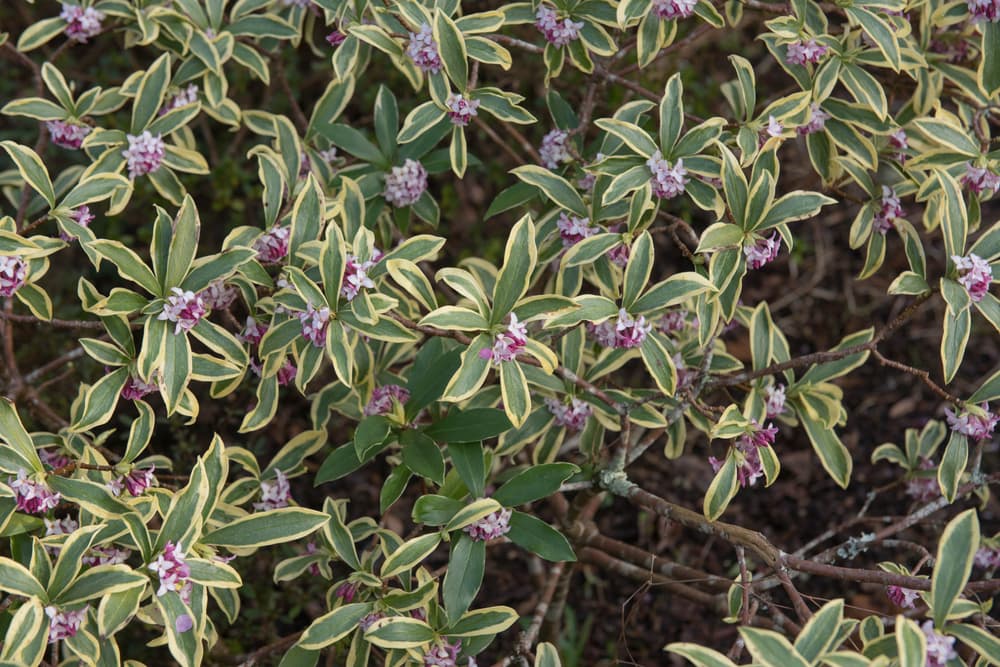
There’s nothing like a nice shrub to bring depth and a splash of colour to your boundaries and borders, and the Viburnum tinus shrub is a perfect candidate for this.
The rich depth of its green leaves is captivating, and the dazzling white-pink floral bloom from late winter through to early spring is a great forerunner to the other flowers in your garden.
This guide includes advice from the Co-Owner of Classic Viburnums, Gary Ladman.
Overview
| Botanical Name | Viburnum tinus |
| Common Name(s) | Laurustinus / Common Laurustinus / Tinus |
| Plant Type | Shrub |
| Native Area | Mediterranean |
| Hardiness Rating | H4 |
| Foliage | Evergreen |
| Flowers | Clusters of small white, creamy flowers with a pink tint in the centre followed by dark blue berries |
| When To Plant | September-November |
| When To Prune | February-May |
While native to the Mediterranean, this plant has established itself nicely in the UK.
Viburnum tinus goes by several names based on the root Laurus, alluding to its similarity to the bay laurel plant.
How To Grow Laurustinus
You’re best off planting out your Laurustinus in autumn to give it the best chance at taking hold before the harshest conditions set in.
Planting out in spring works too, but only for plants already established in containers.

Viburnum tinus is quite adaptable, meaning it’s suited to a variety of conditions.
“The dappled shade of larger trees and shrubs is perfect for Viburnum tinus, providing shade from intense summer sun and some protection from cold winds,” says Colin Skelly, a Master Horticulturist.
“A perfect companion for spring bulbs.”
As a rule, you’ll want to protect it from chilly wind in the colder months and hot sunshine in the summer.
Viburnum Tinus Care
Once your viburnum is in the ground, you’ll want to take good care of it to maximise the likelihood of a long and fruitful life.
Overwintering
As we’ve mentioned, V. tinus is suitably hardy for most British gardens.

An RHS hardiness rating of H4 signifies a minimum temperature of between -5 to -10°C – anything below this and your plant may not survive.
Unless you live in the furthest northern reaches of Scotland or there’s a particularly punishing winter, you should be able to grow this plant with no issues.
Aspect
The ideal aspect for Laurustinus is anything but north-facing.
The plant enjoys shade or sun and you just need to protect it against the hottest summer rays.
You’ll also want to make sure the plant is well sheltered, as cool winds aren’t ideal.
Soil Requirements
In terms of soil composition, this plant isn’t fussy and will tolerate most soils and pH levels.

Soil moisture levels are where you need to be careful as viburnum likes moist but well-drained soil that is never dry but is also not prone to becoming waterlogged.
“If you have a particular issue with wet soil, a method you could opt for is to butterfly the root ball,” says Gary.
“With your spade or sharp knife, cut through the bottom half of the root ball entirely and spread it out horizontally in the planting hole which is now just half as deep as if you were planting the root ball intact.
“This keeps the roots closer to the surface which is going to dry out faster which prevents root rot.
“I have planted in situations where water would fill a planting hole as soon as the hole was dug.
“Situations such as this require drastic measures where you might have to leave the entire root ball above the ground and backfill with a mound of soil, gradually sloping away from the crown of the plant.”
Feeding
To ensure healthy growth, you’ll want to test the soil regularly and amend any nutrient deficiencies.
It’s recommended to do this every 2-3 years.
Using an evenly balanced fertiliser once a year will encourage a vibrant bloom and healthy foliage.
Pruning
This plant has been placed into pruning group 8 by the Royal Horticultural Society, meaning that it needs little to no pruning once established.1

If you do decide to prune to keep the plant at a manageable size, aim to do this before the growing season begins in mid-spring.
Prune after the last frost to reduce the risk of frost damage.
Companion Planting
This plant goes works really well when planted with Snowdrops, Black Mondo and Lady’s Mantle.
Propagation
You can propagate this plant by taking cuttings between 8-10 inches long that have multiple growth nodes.

Remove all the leaves, dip them in some water and then add rooting hormone.
Aim to take cuttings in warm months, as doing so earlier or later may lead to root rot before it takes hold.
Common Problems
V. tinus is especially vulnerable to two specialist pests, the viburnum whitefly and the viburnum beetle.
Viburnum Beetle
The larvae of this pest cause the first round of damage, which is then amplified by the adult beetles later in the year.
Symptoms include holes in the leaves with the veins untouched and visible cream-coloured larvae from April or grey adult beetles from July.

Removing bugs by hand is a good way to control infestations initially, although if they become heavily established pesticide control may be necessary.
Encouraging wildlife may help keep them in check too, as birds and other bugs like these beetles as tasty snacks.
Viburnum Whitefly
These sap-suckers are small flies with white wings that live beneath leaves in the summer and remain present over winter.
Unless your viburnum has black sooty mould, whiteflies may not need to be removed.

With this in mind, tolerate their presence or attempt to encourage predatory wildlife before looking into pesticide solutions.
References
1. Shrubs: pruning evergreens. (n.d.-c). Royal Horticultural Society. Retrieved March 27, 2023, from https://www.rhs.org.uk/plants/types/shrubs/evergreen-pruning-guide