Interviews

How Georgie Newbery Grew A Flower Farm From A Humble Wheelbarrow
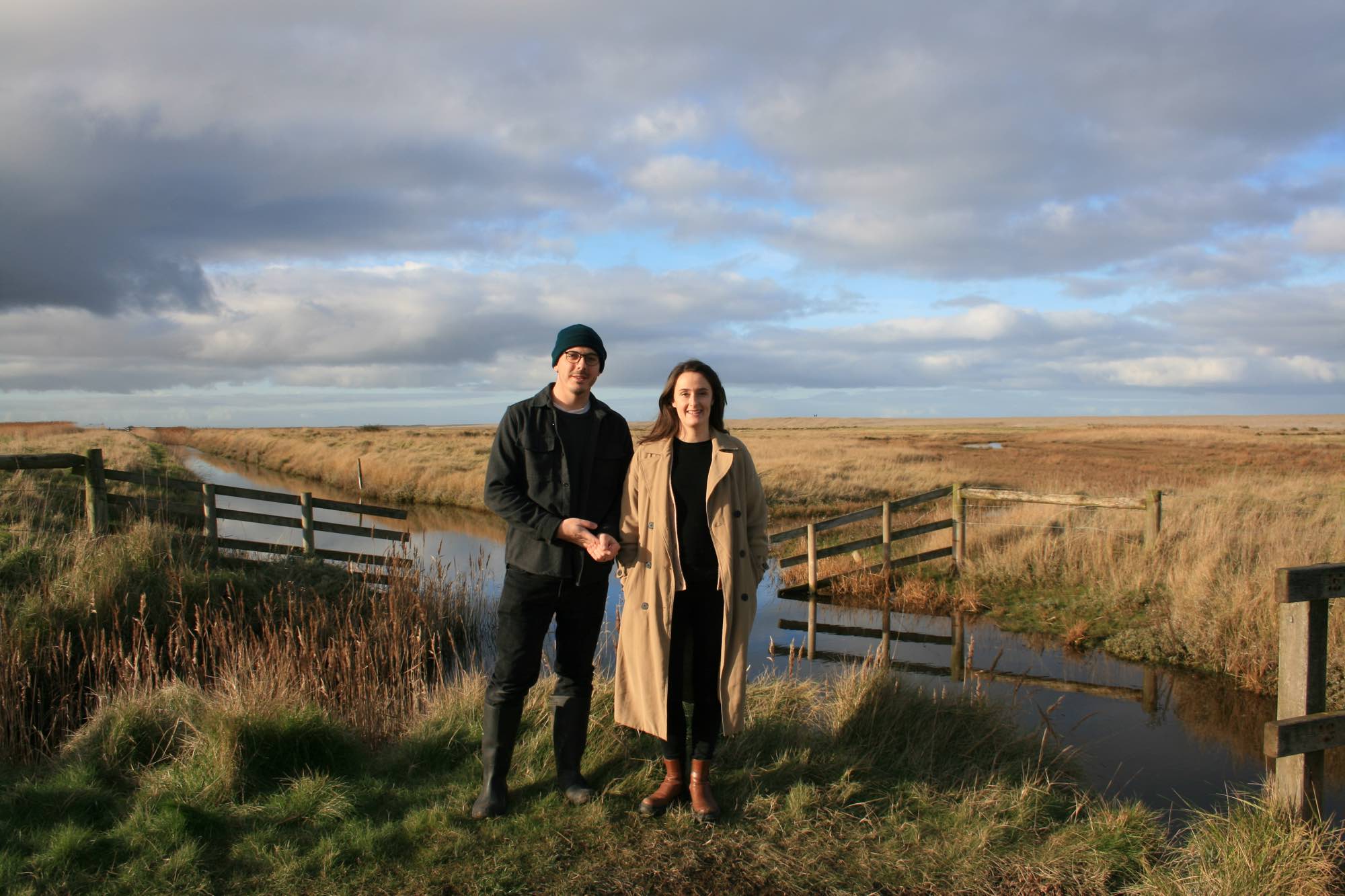
In the picturesque landscapes of Somerset, Georgie Newbery has carved a niche for herself as a Flower Farmer, Florist and Author. Together with her husband, Fabrizio Boccha, she founded Common Farm Flowers in 2010. What began as a humble wheelbarrow filled with sweetpeas has, over the past decade, blossomed into a thriving floral business. Today, Common Farm Flowers offers a range of services, from delivering exquisite bouquets and subscriptions to conducting workshops. Dive into this article to explore Georgie Newbery’s first memories of gardening for her mother, how she nurtured her career in horticulture and what a usual day looks like for her. How Did You First Get Into Gardening? “I was taught to weed by my mother, who gave me 10p for every yard I completed,” shares Georgie. “Now, I can spot a groundsel seedling from fifty feet away!” What Led You To A Career In Horticulture? “A neighbour sent me a bouquet of flowers in the post. At the time, I was looking for a new direction. “I had two very small children and needed a job I could do in twenty-minute increments between feeding, wiping, putting down to sleep and getting up to play with the kids. “The bouquet arrived from my neighbour and I had a lightbulb moment. I thought, I can do this, I can grow bouquets for sale. And so I did. “Nearly fourteen years later, we’re still doing it.” What Does A Typical Working Day Look Like For You? “I fall out of bed about 6am and start with a coffee and a list,” she explains. “I answer a few emails, reply to a bit of social media interaction and I’m at my desk or outside by 8am. Monday is admin day, Tuesdays I often teach, on Wednesday I harvest flowers, and on Thursday and Friday I arrange them. “I often teach workshops online from 5pm and sometimes all day here at the studio. My year is fairly minutely organised to include everything from school concerts, family birthdays, sowing, planting, harvesting and the Chelsea Flower Show, so no two days are the same, but the year repeats itself. “I do most of my gardening at the weekends when the phone is less likely to ring and I can put off emails until Monday.” In One Word, What Is The Biggest Lesson Horticulture Has Taught You? “Patience.” What’s Next For You? “Hopefully more writing and more YouTube,” shares Georgie. “If I could make enough through writing and YouTube then I would be free to experiment more, be less concerned with harvest numbers and more with finding out how things work, how to do them better and how to share that information with other growers. “My dream is that we all save the world one flower at a time. I don’t want to be the best flower farmer, I want to be one who inspires a world of flower growers.”
Learn more
Harry Hoblyn On His Role As Head Gardener At Historic Charleston House And Garden
Harry Hoblyn is the Head Gardener at Charleston, which was previously home to the historic Bloomsbury Group. He has worked in the horticultural industry for several years – I spoke to Harry about his journey at Charleston and the way nature has shaped his life. Imagery in this interview has been provided with permission by Harry Hoblyn. How Did You Start Out In Horticulture? “Having worked and volunteered on a number of small-scale organic farms across the globe in my mid-twenties, I found myself increasingly drawn to working outdoors and being with nature,” shares Harry. “I began to undertake RHS horticultural training, worked for a Sussex landscaping business and looked around for other opportunities. “This eventually led me to Charleston, where I have been working since 2019.” How Has Horticulture Shaped Your Outlook On Life? “My life is informed by natural spaces and the way in which we interact with them,” he says. “I appreciate both the aesthetic and utilitarian aspects of the horticultural sphere and increasingly understand that nature, whilst inherently beautiful and fecund in its own right, can be gently guided by the gardener in a way that is productive, ecologically sensitive and artistic.” Can You Explain A Little About Your Role As Head Gardener At Charleston? “As Head Gardener at Charleston, I am responsible for the upkeep of a historic space nestled at the foot of the Downs. Charleston, once home to the Bloomsbury group, is now a thriving cultural centre with a historic house and garden, contemporary gallery and diverse programme of events. “I am responsible for ensuring that the outdoor spaces are both visually appealing and sensitively maintained. I consider myself an arts and craft gardener with an interest in the wider landscape. “In my role, I look after mixed herbaceous borders, a small kitchen garden, pond and woodland, fruit trees, lawns and wildflower meadow. “Much of my role depends upon having a strong understanding of the history of the site whilst also recognising that gardens are not a static entity – gardening in the spirit of the place you could say.” What Is Your Favourite Time Of Year To Be In The Garden? “For me, nothing beats the abundant growth and exuberance of spring,” muses Harry. “In the Walled Garden at Charleston, this is a particularly special time of year as fruit trees bloom in profusion and the soil is carpeted with a colourful matrix of spring planting. “This is when I feel that the garden is at its most ebullient.” What Are Some Of The Best Plants To Grow In Smaller Gardens? “In a smaller garden, one of the main things to consider would be your relevant soil and light conditions,” he explains. “I would always advise prioritising a diversity of foliage over flowers in a smaller space so that there is a long season of interest and an interplay of shape, texture and colour between plants.” What’s Next For You? “Charleston is about to open an urban site in Lewes, so I have been considering the planting for the front of this new space,” Harry shares. “This has enabled me to step outside of the more historical considerations applicable to our rural site and do something that feels a little more contemporary and challenging.” What Advice Would You Give To Aspiring Gardeners? “Always be curious and seek new friends everywhere for there is always something to learn or someone to meet in the horticultural world.”
Learn more
Balancing The Artistic And Practical Aspects Of Garden Design With Kim Wilkie
Kim Wilkie is a strategic and conceptual Landscape Architect with over 25 years of experience running his own practice. Currently, working on a range of projects, including the redesign of Wakehurst Place for the Royal Botanic Garden and a sculptural earthform for the Dulwich Picture Gallery, Kim is one of the leading Landscape Designers in the South of England. I spoke with Kim about his work on environmental committees, his favourite project and what he envisions for the future of landscape design. Imagery featured in this interview is provided with permission by Kim Wilkie. Can You Tell Us About Your Journey Into Landscape Architecture And What Inspired You To Choose This Career? “I hadn’t even heard about the profession until I was in my twenties,” Kim begins. “I was working as an environmental correspondent in Iran and came across landscape architects for the first time. I was blown away. “A job that involved land, people, plants and design sounded like a complete dream – and it is. It took a while to raise the courage and funds to go back to university all over again, but eventually, I got a place at UC Berkeley and have been grinning ever since.” How Do You Balance The Artistic And Practical Aspects Of Your Work? “I actually think the two are completely interwoven. Landscape architecture is fundamentally about connecting land, water and life – both wild and human. “It should be beautiful in practical elegance, simplicity and respect for the land and its history. “We don’t create finished works of art but do need to be artful in stimulating a coherent and living process.” You’ve Been Involved In Various National Committees On Landscape & Environmental Policy In The UK. What Are Some Key Issues You’re Currently Focused On? “I am torn between spending time on policy and simply designing good examples to inspire others”. “I guess my main aim has been to encourage the idea that everything is connected. Farming, housing, water quality and soil health – they all need to be understood as part of the same equation. “Carbon is the building block of life. Vilifying it in isolation misses the wonderful complexity of living sensitively on the planet.” Is There A Particular Project That You Are Most Proud Of? “I have been lucky to work on some amazing projects around the world, but my deepest love is for the smallholding where I grew up in the Hampshire Downs. “Planting woodland, establishing meadows and tending cows, chickens and vegetables has been the greatest of privileges and pleasures.” Can You Share Any Memorable Experiences Or Challenges You’ve Faced? “The challenges make the project,” says Kim. “Whether it was getting community groups and local authorities to talk to one another along the Thames, finding ways to keep farming viable in Transylvania or extracting tonnes of rubble from the centre of the V&A, each challenge has shaped and determined the design and approach. “As I said, landscape architecture is as much about the process as the drawing.” What’s One Piece Of Gardening Advice You Wish You Could Tell Your Younger Self? “Keep going – you’ll love it.” How Do You See The Future Of Landscape Architecture Evolving, Particularly In The Context Of Climate Change And Environmental Sustainability? “How we live on the land and take care of water will be key,” he explains. “Living well with a sense of perpetual fertility and thriving wildlife should be our mission. “We must understand how everything affects everything else. Our food, our shelter and our sanity depend on respect for the long-term life on the surface of the earth.” Do You Have Any Upcoming Projects That You’re Particularly Excited About? “We have just got planning permission for the Dulwich Picture Gallery Sculpture Meadow and I am working with the Royal Botanic Gardens on plans for Wakehurst Place. “These are completely amazing projects and I can’t wait to get started.”
Learn more
Clive Nichols On Photographing Some Of The World’s Best Known Gardens
With over 25 years’ experience in photography, Clive has built an extensive portfolio of more than 100,000 images, photographed some of the world’s most renowned gardens (including the private gardens of HRH The Prince of Wales in Scotland) and published several books. Beyond his photography, he is committed to sharing his expertise through master classes in flower and garden photography for the Royal Horticultural Society. Clive spoke with me about his original love of travel photography, and his early morning shoots, and also offered advice on how to use light successfully when shooting gardens. Imagery featured in this interview is provided with permission by Clive Nichols. How Did You First Get Into Photography? “I went to Reading University and studied Geography,” explains Clive. “I worked in a restaurant whilst I was at university to earn money to travel, which was my dream, alongside taking photos. Afterwards, I became a Head Chef in an Italian restaurant in Reading, where I stayed for a couple of years until I finally realised that it wasn’t for me. Credit: Clive Nichols “From there, I knew I had to go into photography because that’s what I was passionate about. I started doing travel photography. I went to the Falklands and Hong Kong, which was funded by tourist boards. Those experiences were amazing. “After a while, I realised that with all the travelling, I wasn’t ever going to be able to make enough money to sustain a career in it, so I had to think about what else I could do. “I soon discovered that gardening was massive and there were so many magazines featuring hundreds of photographs. After this discovery, I went to a local garden and took lots of photos, then sold them to Homes & Gardens magazine. They asked me to do some more, and it just went from there.” How Has Your Photography Style Evolved Over The Years? “When I first started, I was shooting medium-format shots, which nobody else was doing. This meant that my images stood out, because they were already in a bigger format than others like them. Credit: Clive Nichols “I also took a landscape approach and always carefully composed my shots. I think that taught me a lot about competition in the long run. “That’s how I got started and it has evolved from there. I’d say I’m definitely a bit more fluid and looser now in my style than I used to be.” Can You Explain Some Of The Challenges With Garden Photography? What Difficulties Have You Faced? “The biggest difficulty is obviously the weather,” Clive says. “Every day I check the Met Office and other weather apps to see what’s happening at the gardens I’m planning to shoot. Some days, you can’t take photos, so you have to be very patient and wait for the right time to come. Credit: Clive Nichols “The other thing that people don’t realise is that the wind is difficult to deal with. The conditions are horrible if it’s windy, so I like to shoot on still days, especially in the mornings. “You also have to get up very early, which is not for everyone! In the summer, I’ll be in the garden at 4:30am, so you have to be able to do that. “The job also comes with a lot of driving, my Golf has done over 400,000 miles!” What Does A Typical Day In Your Working Life Look Like? “There are a couple of different days really. A typical office day involves lots of admin, invoicing and post-production on the images I’ve shot. “I have to work up all of the photographs and caption them with the correct botanical names to upload them to my online photo gallery, which has over 100,000 images on it currently. Credit: Clive Nichols “The other typical day for me is when I go on a shoot. I’ll wake up at 2 or 3 in the morning and then spend the rest of the day resting, as it is very tiring work. I get to the point where I can’t do much else other than sleep!” Have You Got A Favourite Garden That You Have Shot? There’s a few that I shoot a lot which I love,” shares Clive. “One of them is called Morton Hall, as I am commissioned there a lot. I’ve probably been there over 50 times! I’ve also become attached to Silver Street Farm in Devon, as I know all of the best angles which to shoot it. “Another of my favourites, Pettifers, is in my village, so I could get up early and go and shoot there. Unfortunately, the owner has recently died, but it’s still one of my most memorable.” Are There Any Gardens You Dream Of Photographing But Haven’t Had The Chance To Yet? “Some of the gardens in France and Morocco really stand out to me. Having said that, I also would love to continue shooting Irish gardens, as I’ve been over there a couple of times recently. Credit: Clive Nichols “There are certainly some designers who produce brilliant gardens that I would love to photograph.” You Regularly Give Master Classes In Flower And Garden Photography For The Royal Horticultural Society. What Are Some Key Takeaways You Hope Your Students Gain From These Classes? “It’s usually about the right sorts of light and learning to read it,” he explains. “It’s so important to know where the light is coming from. One of the biggest mistakes new photographers tend to make is shooting in the middle of the day when the sun is too harsh. “Teaching them about when to shoot gardens and where the light should be is very important to me.” Your Work Has Appeared In Hundreds Of Books, Magazines, Calendars, And Brochures. Is There A Particular Publication That Stands Out For You? “My book, Brilliant English Gardens, is definitely my best achievement. I designed it myself and did the whole thing on my own, so it was quite satisfying. Credit: Clive Nichols “It’s currently sold out, but it is getting reprinted in November. It features 26 of my favourite gardens in England.” What’s Next? “I’ve got a book coming out on the gardens, landscapes and interiors of Corfu, which is looking amazing at the moment,” says Clive. “Hopefully, that will be out next spring.”
Learn more
Talking Horticulture With Sam Hickmott, The National Trust’s Youngest Head Gardener
As the National Trust’s youngest Head Gardener, Sam Hickmott manages not one, but two of their gardens – both based in Somerset. Sam discovered horticulture at just 17, where an RHS Level 2 course at a local college offered the vocational opportunity to learn more about the industry. We discuss his early fondness for Bluebells at just 5 years old, his switch from early formal education into horticulture, and the latest plans for the gardens at Lytes Cary Manor & Tintinhull. Please note that all imagery in this interview is provided courtesy of Sam Hickmott. Where Did Your Love Of Gardening Come From? “My love of gardening first stemmed from a love of the outdoors,” shares Sam. “As a small child, I lived a short walk away from a woodland called Greyfield Woods, managed by the Woodland Trust. Endless carpets of bluebells in spring and the beautiful shade of sweet chestnut canopies in summer are as magical to me now as they were as a five-year-old. “More recently, my love of horticulture has come from spending time with knowledgeable and passionate Horticulturists. “This comes from my first job working for a small garden design and maintenance company in Bath to the Head Gardeners, Consultants and Curators I worked with since from the National Trust and beyond.” What Led You To A Career In Horticulture? “I started a career in horticulture entirely by chance at the age of 17. Bored of formal education, I (rightly) failed my first year of Sixth Form after not attending the bulk of my lessons – and all I knew was that I no longer wanted to be in a classroom. “I applied to a Level 2 Horticulture course at a local college and quickly fell in love with the subject. It’s worth saying that after spending a year or so working in various gardens, I quickly became interested in the academic side of horticulture. “Simply being allowed the space to try it and get away from conventional education for a while allowed me to follow a vocational route that I chose for myself – one that I’m sure I’ll stick with for the rest of my life.” Can You Tell Us About Your Role As Head Gardener At Lytes Cary Manor & Tintinhull Garden In Somerset? “As Head Gardener at Lytes Cary Manor and Tintinhull Garden, I am responsible for the maintenance and improvement of both gardens within their respective historic contexts,” he shares. “Both are arts and crafts inspired gardens, characterised by garden rooms with sharp geometric lines in paths, lawns and hedges, contrasted with soft billowing planting in (often very large) borders. “Within this are the management of staff and volunteers, budgets, compliance requirements and liaising with stakeholders, contractors and other property departments. “It’s worth making the point that a garden is only as good as the people maintaining it, and I am really lucky to have such a talented and committed team working with me to develop these fantastic gardens. “One thing to keep in mind when managing two gardens in tandem, particularly two gardens so similar in style to each other, is to ensure that the two don’t come to look like copies of each other. “The best way to mitigate this is by researching and spending time in both gardens, getting to know their intricacies and individual peculiarities.” What Is Your Favourite Time Of Year To Be In These Gardens? “It’s a bit cliché, but my favourite time of year in the gardens is usually whatever time of year it is when the question is asked,” Sam jokes. “Spring is full of excitement, as the borders come back to life with flowers and fresh foliage. Summer is a lovely time in the garden and all the hard work from the rest of the year so often peaks in June. “Autumn is always such a beautiful season, with fantastic light in the afternoons further enhancing the strong reds and yellows of the trees. “Winter is a time to plan and plant the garden, and with much less available on show, a well-planted winter garden often has a greater impact than an equivalent summer-focused display.” What Does Horticulture Mean To You? “Horticulture has given me so much over the past 8 years,” he says. “Not only has it enabled me to earn a living doing something I really love, it has given me both a creative and intellectual outlet, a means to continue learning and experimenting in an endlessly fascinating subject. “To have the privilege to work in such beautiful places and the freedom to help them develop is an absolute joy. I can’t think of anyone who wouldn’t be in some way better off for growing and gardening.” What’s Next For You And The Gardens You Manage? “We’re always looking to improve the garden at both Lytes Cary and Tintinhull. “At Tintinhull, we have replanted the middle garden, a garden room planted mainly with shrubs and small trees, to increase the range of interesting and choice plants, as well as to restore the historic layout of the space. “This year we’re planning to redesign a border in the Cedar Court, another garden room, to strengthen the colour scheme and improve on the current planting. “At Lytes Cary, we’re currently exploring methods of rainwater harvesting to sustainably (and cheaply) irrigate the garden through our increasingly hot summers. “In addition to this, the team and I have replanted the borders in the apostle garden to improve the layout as you first enter. In addition, the twelve topiary yew ‘apostles’ are due to be renovated in the spring to bring them back to their historic size and shape and ensure they are in scale with the rest of that garden room.” What Advice Would You Give To Those Aspiring To A Career In Horticulture? “The advice I would give to anyone aspiring to a career in horticulture is to get as broad a range of experience as you can, as well as getting a recognised horticultural qualification,” says Sam. “Applying for entry-level labouring jobs with local garden maintenance companies or nurseries is a great way to learn and get valuable experience, with some employers simply looking for someone hardworking and keen to learn. “In an ideal world, it’s great to volunteer with an organisation such as the National Trust or RHS, though working for free is obviously not an option for a lot of people. “If applying for horticulture courses, it’s a good idea to see how many grants are available to pay for it if you aren’t eligible for free education – the Professional Gardens Trust is a good place to start.”
Learn more
Garden Photographer Phao Hewitson On Capturing Depth: 'The Perfect Image Is Alive'
Phao Hewitson is a Midlands-based Photographer and Blogger who specialises in plant and garden photography. Her portfolio boasts an array of stunning plant portraits and picturesque gardens showcasing her technical skill and deep-rooted passion for flowers. I spoke to Phao about her change in career from the NHS to photography, her experience as a hobbyist Photographer and her idea of the ‘perfect image’. Imagery in this interview has been provided with permission by Phao Hewitson. How Did You Get Into Photography And Garden Photography In Particular? “I’ve always enjoyed taking photos and would have a camera with me whenever we were at family events, holidays and days out, but until quite recently, photography was just a hobby,” explains Phao. “My main career was previously in the NHS, but I’ve been gardening for peace and relaxation all my adult life and my passion for capturing images of plants has grown with my love of gardening. “Most of my early pictures are close-ups of gorgeous flowers, taken as we developed our garden and I started visiting other people’s gardens – I love NGS visits! Credit: Phao Hewitson “After a while, my husband Chris surprised me with the gift of my first DSLR camera, a Nikon D3100, and with this great piece of kit, the quality of my pictures improved and I was emboldened to start a blog to showcase both our garden and the photos I was taking. “After a couple of successes in competitions, I plucked up the courage to try my luck professionally, compiled a portfolio of pictures and applied to be a contributor to GAP Gardens, an agency specialising in garden and plant photographs, and was successful (after a couple of hiccups!). “I now use a Nikon D7100, which was another pressie from Chris a couple of years ago.” Why Do You Like Photographing Plants And Gardens? “A beautiful plant or garden evokes an emotional response, with all senses stimulated,” she says. “A garden planted with an expert eye for flow, colour and texture can be breathtaking. This response is obviously best experienced in the flesh, but capturing it forever in a photograph is the next best thing – if only we could capture the fragrance! “There’s also the magic of a well-planted garden over the seasons. There are gardens where no visit is ever the same and photographic opportunities present themselves all year round.” How Do You Go About Capturing The Perfect Image? “Composing a shot is my favourite part of the process, but the technicality of it is the least! Credit: Phao Hewitson “With composition, there are a couple of hard rules that I follow, but mainly it’s just about having an eye for a scene. The technicality of setting up the camera to achieve the best effect can change with the clouds and you really have to be on the ball. “For me, the perfect image is alive and the beholder can imagine the smell and feel of the plant or garden it portrays. This image isn’t flat, so the light, time of day and weather conditions have to be right.” Do You Have Any Standout Experiences From Your Career? “This has to be my success in a competition run by the National Garden Scheme in its centenary year, at a time when photography was still a hobby of mine,” Phao shares. “There was an awards ceremony at the Garden Museum in London and I’d been invited but didn’t know that I was the overall runner-up. When my image appeared on the huge screen in front of the audience I was completely gobsmacked, but so proud. Credit: Phao Hewitson “I also met Lucy Hall, who was editor of Gardeners’ World magazine at the time, and had a second lovely surprise when she told me the image would be ‘September’ in their 2018 calendar. “I’ve also had another lovely experience this year with a successful application for a press pass to Chelsea!” What Difficulties Have You Faced With Photographing Gardens? “Light, wind and bright sunlight, as well as people who move into your shot just as you press the shutter!” she jokes. “I’m mainly an outdoor photographer, so the elements can be a challenge, particularly if it’s a planned event such as a show or open garden, as you can’t choose the date. Credit: Phao Hewitson “However, the main difficulties I’ve faced have been purely technical. When I started out as an untrained photographer, I naively didn’t know that a good photo wasn’t just in its composition, the settings on the camera needed to be set up to take an image that would pass a technical quality test. “So my first portfolio submission to GAP resulted in 66% being rejected due to them not being in focus at 100% – I had no idea what this meant! “Luckily, the team at GAP were really kind and helpful and explained the purpose of essential settings. My next submission passed and I’m now one of their contributors.” What Is Unique About Your Photographing Process? “I’m not sure that unique is the right description for my photography, but I think I have an effective style,” she muses. Credit: Phao Hewitson “I particularly like to be level with subjects, even if it means lying on the ground. My picture of crocuses in late winter is a good example of this.” What Advice Would You Give To Aspiring Garden Photographers? “Do it! I have no regrets about choosing nursing and the NHS for a career, but the rewards from following a dream and using your creative abilities are immense and should be pursued at a hobby level at the very least. “In taking up garden photography, new opportunities open up in the form of visiting some of the most beautiful outdoor spaces. Plus, unless it’s windy, plants don’t move much – not like subjects from the animal kingdom!” What’s Next For You? “I’m really busy cataloguing the photos I’ve taken over the last few months at shows and notably Monet’s Garden at Giverny in France,” says Phao. Credit: Phao Hewitson “I’m also prioritising working on my website, but there aren’t enough hours in the day to keep it up to date. “I’ve recently had my first commission published and now wish to promote my work to attract the next one.”
Learn more
Garden Designer Humaira Ikram: 'We Look At Sustainable Solutions To Planting Problems'
Humaira Ikram is the founder of Studio Ikram, a professional Garden Design company that has sustainability and pollinator-friendly ideas at its core. When she’s not busy designing gardens, you can find Humaira running a Garden Design course at the KLC School of Design, working as a Garden Advisor for the RHS, contributing to BBC Gardener’s Question Time or writing for various garden magazines. I had the pleasure of speaking to Humaira about her busy schedule; working with Cleve West and the unique way in which she collaborates with her clients. Imagery in this interview has been provided with permission by Humaira Ikram. How Did You First Get Into Gardening? “I talk to a lot of people about how they got into gardening when I interview them for the Garden Design course I run, but usually it is to do with their history,” explains Humaira. “For me, my parents had a garden which was their safe sanctuary for them and us, to hang out in. My parents loved gardening, but who wants to be like their parents? But then I bought a house, we had a garden and everything changed. “I wanted to know more about how to take care of the garden when I had my own. I used to go to Columbia Road market and come back with huge palms and bamboo sticking out of the windows of my car. “It just became a bit of an obsession.” What Steered You Towards A Career In Garden Design? “At a previous job, the company I worked for was offering redundancy packages and part of the package meant that you could retrain in another area,” she shares. “I wasn’t up for redundancy, but I asked my boss for it and used the money to retrain and become a garden designer. “I didn’t know anything when I started. My parents loved gardens, but no one knew botanical names or had any training on how gardens grow, but as I grow older I feel that this way of gardening has real value. You get to know your space and then work with it and don’t just follow the rules. “I just really wanted to create beautiful and useful spaces for people and nature. I still can’t believe people pay me for my ideas!” What Does Your Process For Designing Gardens Look Like? What Are You Inspired By? “I always start off by going to the site and meeting the client. I think it’s really important to have a good connection with the client, to understand what they want, and for them to understand me, so we always start off with a whole presentation about me and my work so we know that we are on the same page. “We look at sustainable solutions to planting problems. My designs are plant-based, which I think is what brings the magic. I really like to get to know the clients and ask them to think about what they like. “Often, I ask clients to send me a playlist and I play that whilst designing for them to get a taste for them as people. “There’s a lot of gathering of information. It is a collaborative effort between me and the clients. It’s mainly about what they want to do in it. I want it to work but also be surprising and something a bit unique. “I make sure that there’s always some kind of story behind everything, which I find really helps me.” Do You Have A Particular Favourite Memory Of A Garden You Have Designed? “What I love is going back to a garden and seeing how it has matured and how people are using it,” Humaira muses. “One of the very first gardens that I designed I worked on for 10-12 years. They wanted a cricket net in their garden for their children, but just after we added it, the whole garden flooded in a massive weather event and for 2-3 weeks it was underwater! “It’s a beautiful garden now, so it all worked out in the end, but it goes to show that things can happen that you don’t expect! “I also designed my clients a space where they could host parties and they’ve had lots of events there since, which is a really beautiful thing. I feel like I’m a small part of the process that has helped make those memories.” What Does A Typical Working Day In The Life Look Like For You? “I don’t really have one of those!” she jokes. “I run a course at a college during term time and I always go in early and do all of my prep and admin stuff then. In the morning, I usually have tutorials with students and then I’m teaching. Because I’m only in college 2-3 days a week, it’s intense. “On the other days, it’s a mash-up of things. I’ll see clients, do planting plans on my computer and draw up ideas. A lot of time is spent on my computer or iPad to create work and visuals for clients or contractors! “At other times of the year, I’m doing shows with my team of plant people, where we work 12-hour days. In the summer, I try to slow down, because the rest of the year is so busy.” Can You Tell Us More About thehub.earth And Why It Was Created? “I run a Garden Design course and I’ve done so since 2017. Every year, I’d tell students to research and go to garden talks and visits, but they didn’t know where to begin. There wasn’t a single place hub or space where you could do that. “Myself and my friend, Darryl Moore, decided that because Garden Design is so collaborative, there needed to be a space for people to be able to share and access knowledge. “It was mainly for the students, but also for me as I love attending courses, talks and visits too. It helps to keep me informed and excited about the industry that we are in. We started it in lockdown. It’s trickier now, as real life has started to get in the way a little, but we are looking for funding to develop it.” Summarise What Gardening Means To You In 3 Words. “Fun, vitality and gratitude,” she says. You’ve Had An Incredible Career To Date. Do You Have Any Standout Career Moments That You’d Like To Share? “I’ve always worked really hard for everything I’ve achieved,” says Humaira. “Simply becoming a Garden Designer was impressive to me, as I didn’t know that was a thing growing up! I had so much to learn. “Working with Cleve West on projects was great as he was an artist I really admired. “The course I run is so rewarding as I get to see the students go away and start their careers. “The RHS asked me to be a Garden Advisor which was mind-blowing. I’m really lucky.” What’s Next For You? “There’s always things going on!” she laughs. “I’ve got a few projects going on at the moment. Old clients have come back to me because they’ve moved house, so that’s really exciting. “What I love is a slightly strange and exciting job. I have a few of those coming up at the moment that I can share once they’re there!” Do You Have Any Advice For Those Thinking Of Giving Garden Design A Go? “The thing about Garden Design is that it is quite tough. There’s a lot you’ve got to learn. People sometimes underestimate that, but really – what have you got to lose? “It is so rewarding and so much fun. Creating spaces for people to live their lives in, that are mindful of nature too. What could be better than that? “Pick a course that teaches you everything you need to know. For me, it’s important that the students who complete my course leave feeling confident, professional and equipped for a career in garden design. Go on a course that gives you all of that. “I haven’t looked back and I really enjoy it.”
Learn more
Chartered Horticulturist Doug Stewart On The Need To Garden More Sustainably
Doug Stewart is a Chartered Horticulturist who works as a Professional Associate to the RHS and a Consultant to those looking for gardening advice. Having completed his RHS Master of Horticulture accreditation in the early eighties, Doug has more recently authored A Gardener’s Guide To Sustainable Gardening, which is available now in Paperback. In this interview we learn more about Doug, his drive for sustainability and his relationship with the garden in his own words. Where Did Your Journey With Gardening Start? “I’ve always liked plants and been better with plants than people!” jokes Doug. “I started as a child as a lot of people do with my parents. I was given a rubbish spot in the garden under some conifers. When I was 13, I got my first allotment and started to grow there. “At this age, I also responded to a job in the local paper where I raked leaves and mowed the lawns at a nearby home, so that was where it all started.” How Did This Introduction To Gardening Lead To A Career As A Horticulturist? “There usually comes a point where you are left wondering what you are meant to do with your life,” he says. “I also had a little bit of pressure from my parents. “I’ve luckily always liked gardening and grew up surrounded by nature. “I also got holiday work at local nurseries in Hampshire which became the pathway into discovering that there was the potential for a career in this industry. I’m really pleased I took those steps.” Do You Have Any Particular Favourite Moments From Your Career? “I worked in horticultural education after working at a variety of nurseries. “My favourite moments were when the students ran into me afterwards and told me that the experience and inspiration they gained from college has now led to them running their own nurseries or going to flower shows. “Having been lucky enough to be in the position to influence people and make a difference is my favourite part of my whole career.” Can You Tell Us About Your Upcoming Book, A Gardener’s Guide To Sustainable Gardening? “I’m really excited because I’ve just received my first hard copy of it!” Doug shares. “Everyone is talking about the need for us to garden more sustainably but there is little information out there on what that actually means. “With this book, I wanted to unpack this and explain what sustainability actually is and what it means to the garden. I’ve proposed a model in the book about how to rethink everything we do in a garden in regard to sustainability. “It gets you to question everything and then make better-informed decisions. It tries to introduce a whole new way of gardening, which is a pretty big aim for a little book!” What Has Horticulture Taught You? “Everything has changed. The way we practice horticulture now is entirely different to what we used to do. The principles we were working from a few years ago are so far from the ones we work from now. “It’s taught me that the golden rule is to re-evaluate everything always. Ask yourself ‘Why am I doing this?’. We do things that are so automatic because we have always done it or our parents did it. “Every point where we intervene in a garden should be met with a challenge from ourselves.” What’s Next For You? “I’m writing up my website at the moment where I’m sharing more of the ideas from the book,” he explains. “I work with the RHS as a professional associate and have helped them with developing their new Level 2 and 3 Qualifications and the upcoming rollout of these is exciting. “Giving a voice to gardens and gardeners who are working sustainably is an aim of mine for the next few months. I’m also working with a local garden centre to become the most sustainable garden centre in Britain, which is a really interesting and fun project.” Can You Summarise Your Relationship With Horticulture In One Sentence? “If you had a friend who you were in complete awe of, that is how I feel about gardening and nature,” he says simply. “My relationship with gardening is one of absolute wonder.”
Learn more
Adam Alexander On Returning Seeds To Cultures That Have Lost Or Are Losing Them
Adam Alexander is a name synonymous with organic gardening and seed conservation. For over three decades he has been a passionate seed collector – collecting a remarkable catalogue of over 500 rare, endangered, local and heirloom vegetable varieties. Adam is also the author of ‘The Seed Detective’, his first book in which he discusses his own relationship with – and our historical connection to – common garden crops. I had the pleasure of sitting down with him to discuss his journey – and the reasons he feels so enthusiastic about returning native seeds to those who have been displaced from their country of origin. Where Did Your Journey With Gardening Begin? “It began when I was about 6 years old,” says Adam. “I was given a little piece of the vegetable garden by my mother, who was a very keen gardener, so I started growing. “I always liked growing vegetables from a very young age and I’ve been doing so ever since. In fact, this is now my 66th year of growing something!” Can You Tell Us About The Seed Detective & Your Journey With That Project? “I set up a small market garden in the mid-70s because I wanted to try and build a horticultural business,” he explains. “In the 70s, no one was interested in growing unusual varieties of veg or organic practices. If I started it today, I’d probably be a great success! I found that a career in horticulture didn’t suit me and I’d much rather grow for pleasure. “What really got me started on my journey of growing and protecting unique seeds was an encounter I had with a remarkable pepper in Donetsk in the late 80s. I decided that I would bring some seeds home and it got me started on this journey that I’ve been on ever since. “The Seed Detective sees me looking for deliciousness but also really trying to understand the importance of the social and cultural relationship of what we grow and eat. “We lost that culture here in the UK, but it is very evident in many other parts of the world, so I have always been interested in collecting varieties that are fundamental to food culture and that I could also grow and use in my own cuisine. “I then got involved in collecting varieties that were endangered, whether by war or farming changes. I now spend a lot of my time growing these local varieties to help displaced people.” You Mention The Importance Of Returning Seeds To Cultures That Have Lost Or Are Losing Them. Why Is This So Important To You? “For me, it’s what gets me out of bed every morning. As a gardener, saving my own seeds feels like I’m continuing a journey that links me back to the original origins of agriculture from hundreds of years ago. It is also so important for the diversity of our plants. Many of the varieties that I grow are now well adapted to grow in many parts of the world, as I’ve been selective with the seeds I protect and plant on. “Getting food back to displaced people is so important, as food is memory and recreating the flavours of the home is a way to connect people to their homeland. The more we feel connected culturally to what we grow, the more likely it is that we will care about the produce we grow ourselves.” Do You Have A Particular Favourite Moment From Your Career? “I’ve had a number of favourite moments, but probably the one that was remarkable to me is from the time I spent in Rajasthan in 2019,” Adam shares. “I was on the trail of this particular chilli called the Mathania Chilli. It was considered to have been lost, as farmers there had started to grow different cultivars and varieties; the original had become increasingly rare. It was a local variety that was very important to Indian cuisine. “I met a lovely woman who had a little patch of these chillies growing in her garden. That was such a special moment for me. The farmer I was with burst into tears when he tasted it, all because of the memories he had attached to it. He hadn’t eaten one of those for 15 years! “Finding that place made all of the work I do worthwhile.” Can You Tell Us About Your Book ‘The Seed Detective’? “Essentially, it tells the story of wild parent plants to the cultivated offspring,” he describes. “I have taken fourteen vegetables that I grow in my garden and I tell the stories of how they were domesticated and how they became fundamental to the stories of civilisation. “The domestication and breeding of crops and their diversity goes hand in hand with humans. The book is full of stories about how vegetables were so important in ancient times and why they have become so embedded into our food culture. “There are lots of anecdotes about my personal relationship with these vegetables too.” What’s Your Favourite Anecdote In There? “It has to be the one about an encounter I had in Luang Phabang when I was visiting a market there. “I met an elderly woman there who grew and sold her own vegetables there. I noticed that amongst the shallots, herbs and onions she was growing, there were a few packets of seeds. “I had so many questions about the seeds: what they were, had she grown them herself, how did you eat them? She was completely monosyllabic in her responses to me, it was very funny. I think she just wanted me to buy the seeds and leave, which I did eventually! “They are a remarkable mangetout variety that I loved growing in the end. I’ll never forget that encounter.” What’s The Biggest Lesson That Your Experience With Seeds & Their History Has Taught You? “The biggest lesson is how empowering and valuable it is to be growing my crops from the seeds I’ve saved,” Adam says. “When you do this, you’re selecting the best seeds of the crop you are saving. This means that they end up more vigorous and you actually get better crops at the end of the harvest.” What’s Next For You? “I’m now working on my next book, which is all about the future of plant breeding,” he explains. “I’m currently travelling all over the world and meeting with different plant breeders and growers. It’s all about the future and how we build a much more sustainable and robust food system through having a greater diversity of local varieties.” What Advice Would You Give To Budding Seed Collectors? “First of all, remember that it isn’t difficult, because if it was, we wouldn’t be here.” “There’s no great mystery to it – you just need to follow a few basic rules. If you want to start, save seeds from self-pollinating and self-fertile varieties first, as these are the easiest plants to save seeds from. This includes peas, tomatoes, lettuce and beans and will get you started. “However, don’t be afraid to harvest all sorts of seeds from plants that might have cross-pollinated. You never know what they will produce!”
Learn more