Interviews

How Jenny Thompson 'Organic Allotment Girl' Started Her Dartmoor Flower Farm
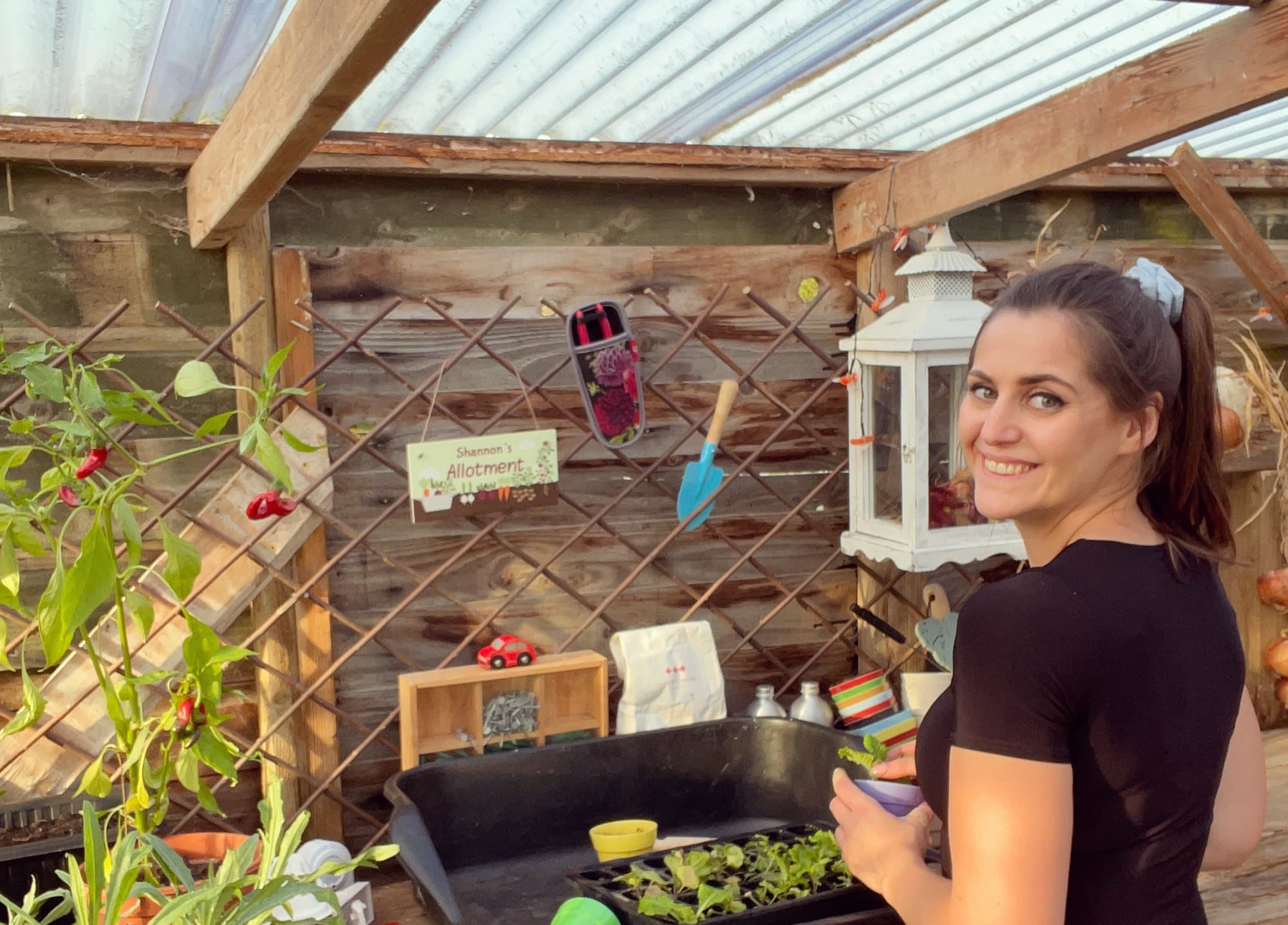
Known online as Organic Allotment Girl, Jenny Thompson is an organic allotment grower and gardener who practices the no-dig method. In 2021, Jenny opened a small-scale flower farm in Dartmoor and is now working as an Assistant Kitchen Gardener at The Riverford Field Kitchen – but she still actively updates her online followers about her own allotment. I spoke with Jenny about her love of allotment gardening and her career to-date. Imagery in this article is provided courtesy of Jenny Thompson. How Did You First Get Into Gardening & Allotment Growing? “My background is in hospitality, so I have always had a love of food,” Jenny explains. “Learning to grow just felt like a natural progression, especially when I realised I could save so much money by growing my own herbs in pots on the front porch. “My work as a General Manager was pretty full-on and it was only after becoming a mum that my partner suggested I should get an allotment. I found the early stages of motherhood hard and my allotment improved my wellbeing massively. “I took to it like a duck to water and loved the feeling of creative control I had over a piece of land. I devoured all the books I could about organic gardening and was lucky enough to attend an intensive weekend market gardening course with Charles Dowding where I learnt about no-dig. I was sold.” What Does Gardening Mean To You? “Growing has taught me so much,” she says. “It has taught me patience, how to appreciate nature, an understanding of the seasons, as well as a respect for soil and the microorganisms that live in it.” You’ve Recently Opened Your Own Flower Farm. Can You Tell Us More? “I have been given a wonderful opportunity to further my love of growing and rent a small patch of disused land on a beautiful family farm,” Jenny shares. “The design for the farm came from my Permaculture Design Certificate that I studied with the Apricot Centre in Dartington. “Because I have taken on this project in my spare time, I felt that flowers were an easier crop to manage compared to vegetables over just a couple of days a week. “If a vegetable flowers we have messed it up, but if a flower flowers I can harvest it and sell it! I also love how happy flowers make people.” What’s Next For You & Organic Allotment Girl? “I am planning to spend more time on my flower farm, but I am also thrilled to have started a new job with The Riverford Field Kitchen as an Assistant Kitchen Gardener – growing food, flowers and herbs for their onsite restaurant.” What Advice Would You Give To Those Who Are Thinking About Starting An Allotment? “The most important thing to understand is that the main goal of having an allotment is not to supply yourself with vegetables,” says Jenny. “That sounds crazy, right? “The thing is, having an allotment yields so much more than just vegetables and if all you focus on is the output of food versus the input you put in, you might be disappointed. “There are countless other benefits including a connection to nature, continual learning and improved wellbeing. My tips would be to create a space where you feel happy to spend time – make sure you have a nice sitting area and means to make a cup of tea. “Don’t get overwhelmed, little and often is always best. “Also, don’t be shy with the flowers – they will make you smile and attract the beneficial insects you need.”
Learn more
Kim Stoddart's Small Changes That Gardeners Can Make To Help The Environment
Since 2013, Kim Stoddart has been writing about climate change gardening for publications such as The Guardian, going on to co-author ‘The Climate Change Garden’ in 2019. This book has now been republished by Cool Springs Press, with Kim teaching courses for the RHS alongside its rerelease. I spoke with Kim to better understand her passion for climate-friendly growing. Imagery in this article has been provided with permission by Kim Stoddart. How Did You First Get Into Gardening? “I’ve loved the natural world from a young age and started gardening as an apparently somewhat moody teenager,” shares Kim. “I used to love experimenting with what I could get to grow in my parents’ garden and spotting and photographing the wildlife within.” Can You Tell Us About Your Book, ‘The Climate Change Garden’ And How It Came About? “I’ve been writing about a more climate change savvy and resilient form of gardening for publications such as the Guardian since 2013,” she says. “My gardens were subject to extreme flooding and it set me on a journey of discovery to find solutions to help shore up the defences in our gardens. “My press writing led to a meeting with Sally Morgan, my co-author, back in 2018. “We first published the book with corporate support through my social enterprise Green Rocket and a new, updated, global guide was published by the Quarto Group in February 2023.” What Small Changes Can Gardeners Make To Help The Environment? “So many gardeners I meet on the courses I run are unconfident about their abilities, even highly experienced gardeners, feeling guilty that their gardens don’t look like those they see on the TV or social media,” Kim explains. “There’s so much pressure on gardeners without all the challenges in the world right now, like the cost of living crisis and climate change, that I think it’s important to start with a reminder that gardens and gardening haven’t always looked like this. “They haven’t always been full of work, expense and expectations of grandeur. “It’s great buying things and getting excited about new tools, seeds or plants, but the more that we can weave in some upcycling and homemade products, the more confident and empowered we are likely to feel. “For example making some of your own compost or mulches out of leaf mould, grass clippings, comfrey or woodchips can help plants to thrive. Oiling and sharpening secateurs and repurposing an old pot are all part of the solution and can help us to make better use of what we have. “You can’t beat the feeling of creatively transforming a waste item into something incredibly lovely for the garden. Growing some of your own food all year round is also a really positive action as it helps reduce plastic waste. “Gardening without the use of pesticides and chemicals is also important. “Boosting biodiversity above and below ground is also an incredibly important part of the solution for us all moving forwards with climate change to help build resilience in our outside spaces.” Do You Have Any Upcoming Projects That You’d Like To Share? “As mentioned above, my co-authored ‘The Climate Change Garden’ book has just been republished by Quarto. It includes lots of solution-focused advice for building resilience in keeping with the natural world. “I also run lots of courses around the UK, including at my training gardens in Wales, on becoming low-cost, climate change savvy and growing your own food. “I’m also running community climate change garden design projects and many more initiatives to help people build resilience for the future.” You can find more information on these projects on Kim’s website. What’s One Final Piece Of Advice You Would Give To Any Gardeners? “Know that we are all in this together; us gardeners, our friends, neighbours and local communities,” says Kim. “We are living through incredibly stressful times and little acts of kindness and support matter. “Whether it’s passing on a few plants or swapping seeds and advice, the more we can reach out locally, the better it will be for the future, people, places and planet.”
Learn more
Isabelle Palmer: Designing London City Gardens As ‘The Balcony Gardener’
A specialist in designing small spaces, Isabelle Palmer, perhaps better known as ‘The Balcony Gardener’, has been designing city gardens around London since 2009. Having published three books on balcony gardening and with several appearances on TV shows like Love Your Garden, Isabelle has established herself as one of the UK’s leading designers. I spoke to Isabelle about her career and her ambitions for the future. Images in this article have been provided with permission from Hardie Grant publishing. How Did You First Get Into Gardening? “I used to have an apartment with two very small balconies and I wanted to create a lush, green, verdant space of my own,” shares Isabelle. “I wanted somewhere I could enjoy and sit outside surrounded by plants. I wanted to make a garden of my own, albeit incredibly small. “I started looking for products that would help me with small space gardening (having little prior gardening knowledge) and that would fit in with my modern aesthetic inside my home. I wanted the balcony to be an extension of my indoor space, but I couldn’t really find anything in that field. “This kickstarted it all for me, as I couldn’t find stylish products at a reasonable price point. I started up an online business that sold readymade window boxes and mini gardens along with pots, furniture and accessories for small spaces delivered straight to your door. “My shop was my initial entry into gardening and it just kind of developed from that. I then wrote some books and discovered that people really wanted a sort of bespoke element to things. “It’s fundamentally about trying to transform a small space into everything you would feel in a real garden adding a little bit of ‘wow’ factor. I love designing small spaces because you can create an instant garden in a short space of time ready to enjoy– I’m really impatient, so having to wait for years for a garden to mature can be frustrating! “What could be better than creating a wonderful small garden in just a day?” What Is Your Process For Designing? “For me, colours and textures are a real starting point for a container to a larger space,” she says. “What type of greens, what palette I want and the colour aspect are all very important parts of my design process. Colour is really important because it is what gives the garden its harmonious atmosphere and vibrancy. “From that, I progress to the types of plants that will fit in the aspect the space faces, such as if it’s sunny or shaded.” Do You Have Any Golden Rules For Designing Gardens? “My focus is on containers,” says Isabelle. “You can introduce smaller plants and leave them to mature, but putting larger, more mature plants, from the start creates a better display from the beginning. That gives you a sense of a flourishing lush embodiment you would see in larger gardens and creates that oasis. Image by Jacqui Melville “I place more plants in the pot than you would do in the ground. “I also really prioritise watering in any container garden. It doesn’t matter if it’s not a hot sunny day in the summer, you really need to water potted plants. “Don’t place your plants under a canopy, let them access rain when it does fall. Use the element of rainfall to help you.” What Are Some Of Your Career Highlights? “It’s been 12 years so I have experienced many exciting and fulfilling projects along the way! I was clearing out my office the other day and I found all of these forgotten references that I had completely forgotten about. “In 2013, I undertook quite a few projects for the Chelsea fringe along with the front window display for Anthropologie, which always transform into something around the festival. I really enjoyed that process because it was nearer to the start of my career when I had no expectations. “There are so many other things, though. My job changes constantly and evolves, so the opportunities that have afforded me are far greater than the expectations I had for this career. I don’t think anyone expected me to write three books! That’s another definite highlight.” Has Gardening Shaped Your Outlook On Life In Any Way? “Oh yeah,” she laughs. “Gardening is like food for the soul. I’m never happier than when I’m in the garden or creating a new display. It’s a type of meditation for me, as I really zone out of everything going on in my life. “Especially in today’s hectic world, as I enter into the garden, it all goes away.” What’s Next For You? “In September, I’m going to study at Kew for a year,” shares Isabelle. “I’ve decided to expand my botanical and horticultural knowledge with the benefit of having some time now my daughter is older. “After that, I will be coming back to carry on with what I do. I think expanding my knowledge will help me to take the balcony garden to the next level. “I never know what’s in front of me, which is exciting.” What Would You Say To Those Wanting To Try Garden Design? “I wouldn’t have ever thought about doing gardening when I was younger, but I think it’s a cooler career to go into now as there is a younger generation involved. “There are so many different aspects of gardening now. Garden design is an amazing career to grow in and it plays a really important role in people’s lives. “If you’re outdoors and enjoy the space too, it’s a real bonus. You also get to be really creative. So, 100% go for it.”
Learn more
Mark Lane: 'Sustainability, Biodiversity And Accessibility Are Core [To] My Practice'
Mark Lane is a TV Presenter and award-winning Landscape Designer who has worked on a range of shows including BBC Morning Live and Gardener’s World – and most recently designed BBC Morning Live’s Budget Friendly Garden at RHS Hampton Court in 2023. He also regularly presents coverage of the Chelsea Flower Show on the BBC and has written countless gardening columns for publications such as The Guardian and The Sunday Telegraph. I speak to Mark about the origins of his career and some of his favourite memories of his career in gardening. Note that images in this article are provided with permission from Mark Lane. How Did You First Get Into Gardening? “I first got into gardening when I was a young boy,” shares Mark. “I remember following my grandparents around in the garden. “My grandad used to grow vegetables at the end of the garden and would teach me how to look after the soil, how to plant things, how to care for the plants, how to take cuttings and how to sow seeds. “My grandmother was a flower arranger, so she taught me about colour, shape, form and texture and how to put them all together. Obviously, at the time, I had absolutely no idea that it would stick with me for years to come, I was probably only 5 or 6! “I always cherish those lovely moments that I had with my father’s parents. “On my mother’s side, my grandparents’ garden was just full of roses. As kids, all we ever wanted to do was go outside and play, but my grandmother used to get us going out there to crush the aphids with our fingers and pick up the leaves that had black spot on them. “I have such fond memories of being with all of my grandparents in the garden.” From That, What Led You To A Career In Horticulture? “I became interested in landscapes whilst I was studying Art History at University College London” Mark explains. “There was always a love of nature present during my time there. “I then went into publishing and dealt with a lot of landscape architects throughout my time as the Publishing Director for The Royal Institute of British Architects. From this, I really got to learn about the importance of how these two things, art and nature, work together. “Later on I became the Managing Director of Thames & Hudson and we started publishing lots of gardening books. I was the commissioning editor on these and absolutely loved it. I worked with people like Christopher Lloyd, Beth Chatto and many other leading horticulturists. “Unfortunately, in 2000, I was in a car crash and I had to rethink my career path because I didn’t want to travel into London every day. My publishing company were amazing, they kept my job open until I decided what I wanted to do. “Throughout my rehabilitation, I got very lucky, as there was a Horticultural Therapist based where I was recovering. She used to take me outside and I was able to sow some seeds. “She was obviously focusing on how I was moving and breathing, but all I was focusing on was the flowers and the warmth on my face from the sun. For those 10-15 minutes each day, I forgot about everything else and just focused on that. “I got home one day and my husband encouraged me to look into doing something more creative combined with my love of gardening and plants. I wasn’t convinced, but I started looking around online for some online courses I could do. “Shortly after I started up Mark Lane Garden Designs Ltd and from that, television, presenting and everything else just sort of came along.” Do You Have A Process For Designing Gardens? Is There Anything You’re Particularly Inspired By? “I’m very much inspired by the landscape and the architecture, so I’m very lucky that in most of my projects there is a really beautiful property attached to the space I’m designing. “I want to also make sure that the garden fits in with the landscape around it. I like to go and look around the garden to see what’s growing nearby. If I can, I use those plants or cultivated versions of those plants in the garden, so it’s almost like a seamless connection between the garden and the landscape. “For me, it’s about trying to find the most sustainable ways of creating a garden that hopefully will be used for many years to come. It also needs to be rich in biodiversity. “With me also being in a wheelchair, I focus on making the spaces accessible and ensuring that they can be used for many years to come with regards to the people who own it. “None of us knows what’s going to happen, so it’s worth encouraging the clients to think at those early stages about accessibility and how long they want to live at that property. “Sustainability, biodiversity and accessibility are the core parts of my practice.” Do You Have A Favourite Memory Of A Garden You’ve Designed? “There was one garden that surrounded an old 18th-century house,” shares Mark. “It was huge and surrounded by trees. “That gave me the idea to create a woodland glade garden because there were no visible boundaries in terms of walls and fences, so it looked like the garden just went on and on. “It was one of those spaces that I really wish we got to finish, but sadly the client ran out of money. “Having said that, every garden is special for me because we are creating these outdoor spaces for clients that can be completely varied. That’s why I love it so much. “These spaces will hopefully be used for many years to come, so they’re all special in their own way.” What Are Your Standout Career Moments? “Doing the RHS BBC Morning Live Budget Friendly Garden was a great one to do, especially with the cost-of-living crisis, as it was a great way of showing people that gardening is good for us and our pocket if we just think about things in a slightly different way. “I planted a tree at The Eden Project for The Queens Green Canopy, which I felt very lucky to do. “I also obviously loved meeting Christopher Lloyd, as he was a real hero of mine when it came to planting and plant combinations. I almost became completely tongue-tied because I was in so much awe! “I think, on a day-to-day basis, the first time I covered Chelsea for the BBC was something that will stick with me forever.” Do You Have Any Upcoming Projects You’d Like To Share? “I’m working with the charity SENSE on their beautiful property TouchBase Pears,” he says. “It comes with quite a large site, so we are turning most of it into an accessible garden. “We want it to become a guide for those who are also looking to make accessible spaces. Funding is one of the main issues with the client being a charity, but they’ve just managed to raise enough to get started, so that will be amazing and hopefully change a lot of people’s lives for the better. “I work with and am an ambassador for the charity Thrive and they attend and hold sessions at TouchBase pear, so getting people with disabilities together through gardening to positively change people’s lives is something I am proud to be a part of. “I’m also working with the Actor Rory Kinnear to start a garden for a home he set up for those with severe disabilities. “It’s about making it a playful space that is still suitable for adults, which will hopefully make such a difference to the lives of the people who live there.” What Advice Would You Give To Aspiring Gardeners? “Just keep trying,” says Mark. “That’s the beauty of gardening, we all learn from our mistakes. “Start with smaller plants. It’s a lot cheaper and, before you know it, they’ll fill out your garden and it will look amazing. “Incorporate gardening into your life and you’ll feel so much better. “For aspiring designers, just go for it. We really need young people to come into the industry and horticulture. Garden designing is an incredible career to have. Yes, 70-80% of your time will be spent at your computer coming up with the designs, but the other time you’re out meeting people and discovering new trends. “No day is ever the same, which is why I love it so much. You get such a reward from seeing your client smile and knowing you got it right. Just keep at it.”
Learn more
Charles Dowding: His Standout Career Moments And Advice For Aspiring Gardeners
Charles Dowding is best known for being one of the leading pioneers of no-dig gardening, which he has been practising since the early 1980s. He has written several best-selling books on organic gardening and the no-dig method, having spent years tending to a market garden, a small farm in France and more recently, on farmland in Somerset. I spoke with Charles very briefly to explore his early life and plans for the future. Please note that the images in the article were provided with permission from Charles Dowding. How Did You First Get Into Gardening? What Does It Mean To You? “I got into gardening through a desire to eat tasty, fresh vegetables,” he explains. “It shapes everything in my life and teaches me all the time.” When Did You First Start To Practice No Dig Gardening? “In 1982, as I was inspired by weeds and how they grow,” says Charles. “I was seeing too many on organic holdings and saw the potential of mulching from this.” What Are The Benefits Of No Dig? “Less time and effort is required in the garden and the soil improves all the time. It also leads to better moisture retention and drainage, fewer weeds and healthier plants.” What Are Some Of The Best Vegetables For Growing At This Time Of Year? “There are too many to list,” says Charles. “I love how growing your own leads to a full appreciation of the changing seasons and different flavours.” Do You Have Any Standout Career Moments? “Appearing on Gardeners World with Geoff Hamilton in March 1989 was amazing. My first book appearing March 2007 was a huge highlight, too. The first of my videos to reach a very large audience, ‘Fourth Summer at Homeacres’, appeared in August 2016. It has over 5 million views to this day. “Finally, I will always be proud of the worldwide enthusiasm for my No Dig book.” What’s Next For You? “I have a new website coming in either August or September 2023,” he shares. “It will feature an interactive and worldwide no-dig map! “I’m also going on a trip to Chile and Buenos Aires, where I will be giving many workshops.” What Advice Would You Give To Aspiring Gardeners? “Start small and be true to your understanding,” Charles says. “Follow your gut feelings in the garden.”
Learn more
Guerrilla Gardener Karen Liebreich's Practical Advice For Aspiring Horticulturists
Karen Liebreich is the Director of the voluntary project Abundance London and Co-Founder of the Chiswick Flower Market – work for which she was awarded an MBE for services to Horticulture in 2013. Her book, ‘The Family Kitchen Garden’, was highly commended following its release in 2009, offering actionable inspiration for edible plants to feed the whole family. I spoke to Karen about these projects and how her love for horticulture began. Please note that the imagery shown in this article is provided courtesy of Anna Kunst. Where Did Your Passion For Horticulture Come From? “When we were children, there was a semi-wild public garden on the corner of our road where we used to play,” explains Karen. “One day, the neighbour moved his fence forward and claimed it as part of his own garden. “My father removed the fence and then my brother and I began to look after the area. We planted spare plants and looked after the garden. “Fifteen years ago, when the 17th-century walled gardens at Chiswick House were going to be developed into a retail outlet, we formed a local group to save them. “Before I really knew it, I was running a 2-acre kitchen garden, welcoming hundreds of school children and other volunteers. The experience pushed my interest in gardening to an obsessional level!” How Has Gardening Changed Your Outlook On Life? “For me, gardening is about trying to create beauty and space for nature,” she says. “If there’s a day when I can’t get outdoors I feel wrong. Gardening for me is all about small acts of defiant beauty.” What Led You To A Career In Horticulture? “I’m not sure you can call it a career, since nearly everything I do in horticulture is unpaid! “In my ‘real life’ I have a PhD in history, I’ve written several non-fiction books (only one of which, so far, is on gardening), I’ve made TV films and I’ve created and sold a publishing company. “The career in horticulture has been driven by seeing pockets of degradation and litter that should, by right, be small gardens of biodiversity and flowers.” Can You Tell Us More About Abundance London? “Abundance London is a small organisation with charitable aims that started off harvesting gluts of fruit in west London,” Karen shares. “From there, we began to create school orchards and vegetable gardens, then we began guerrilla gardening and creating community art projects which partner beautifully with gardening. “We now look after 15 pocket gardens and advise other would-be guerrilla gardeners. “Three years ago, with a team of other local residents, we set up the Chiswick Flower Market, a very successful monthly Sunday market that attracts thousands of people to the best of horticulture, with a special focus on sustainability and locally-grown flowers.” Do You Have Any Memorable Moments From Your Work In The Horticultural Industry? “When I now look at the beautiful and productive Kitchen Gardens at Chiswick House (for which I received an MBE), I am very proud we managed to save it,” she says. “Not many environmental battles end in such a satisfying victory! “More recently, a couple of us created a wild garden on a few cracked tarmac corners that used to be a dumping ground for old washing machines and mattresses. Now it’s a lush beautiful garden humming with insects; we only weed it twice a year and it is stunning. “The day we held the first Chiswick Flower Market, just at the end of the lockdown, and thousands of people came and queued down the road was also memorable. Everyone had a fantastic day. “The traders made the most money they had ever made, the visitors went home laden with plants and we went to the pub to watch ourselves on the ten o’clock TV news!” What Are You Currently Working On? “I’m working on a book to inspire others to start greening their environment and start planting into the cracks. We also have a project to ‘green’ the car park where we hold the flower market which will involve planting rain gardens and trees – and installing benches so our high road can become beautiful, green and prosperous.” Do You Have Any Advice For Aspiring Horticulturists? “You are unlikely to make a fortune, but at least you will know why you are bothering,” says Karen. “Creating beauty while providing spaces for biodiversity and nature is what we should all be doing.”
Learn more
Juliet Sargeant And 30 Years Designing Gardens: These Are Her Highlights And Teachings
Juliet Sargeant is an RHS Gold medal-winning Garden Designer and the founder of the Sussex Garden School. After pivoting from her early career in medicine, Juliet has spent more than 30 years designing beautiful but practical gardens – with a clear aim to connect people with the natural world. I was lucky enough to speak with Juliet to explore her career highlights, her unique garden design process and her future plans with Sussex Garden School. Please note that the imagery used in this article has been provided by Maria Scard. How Did You First Get Into Gardening? “I enjoyed gardening as a child, starting when I was about 6 years old,” Juliet shares. “My mum gave me a corner of the garden that I could make into a rockery because this was in the 70s when they were all the rage! “I bought seeds and made a little water feature. Since then, I’ve just always enjoyed being outside. “I was young when there was a big drought in the summer of 1976 and we had fantastic success with tomatoes that year. I remember the wonderful feeling of growing them and seeing them ripen. “That’s where it all started for me.” From That, What Led You To A Career In Garden Design? “It wasn’t my first career. I started in medicine and spent a few years practising as a doctor. “I always regretted giving up creative subjects to do medicine, so when I got an opportunity to redirect my career to something more creative, I thought it would be nice to combine this with my interest in the outdoors. “Garden design just seemed to fit the bill.” What Does Gardening Mean To You? “For me, it’s all about connecting with the wider landscape,” says Juliet. “I see the garden as a link to the natural world. “The garden is a private space, but it is an opportunity for us to investigate nature in a less threatening and manageable way. It’s really easy to step outside your backdoor and potter about, but you are also stepping into nature when you do this, even though it is more tamed. “With my own clients, I find that they mainly live busy lives and think that they don’t get to spend enough time in nature. I love watching them slowly build a connection with nature as they spend more time in their gardens – it’s a lovely process.” Do You Have A Specific Process For Designing Gardens? “I always start with quite an in-depth conversation with my clients,” she explains. “There are all the practical things that they need the garden to do for them and then there are the more aesthetic considerations to talk about. “During these conversations, I also get a flavour of their existing relationship to nature and the landscape and whether they are looking to change that at all. Very often, people will ask how they can spend more time outside. “They might want a space to relax outside or a space for their children. It’s those subtle ways in which people want to connect with the landscape that I try to address in the design. “I really try to make it an engaging process for my clients so by the end of the process, they are really excited and curious about the new way they can use their land.” Can You Share More About The Sussex Gardening School? “I’ve been designing gardens for about 30 years and I’ve been teaching for around 25. For a long time, I was teaching at various colleges and I always thought that I would love to have more freedom around the subjects that I cover and to do things in my own way. “What I’m really interested in is not just garden design, but the whole creativity that comes about when people spend time outside. This could be painting, poetry, prose or design. “I think that nature is inspiring and can move us to be creative, so I wanted to give people an opportunity to work with other creatives in nature to explore this creativity more. “We go to nice places and do classes on pressed flower art, mosaics, amongst other things. “It is a gathering together of creative people who are inspired by landscapes. I think it’s nice to bounce ideas off each other and to see all the different approaches of creative minds.” Do You Have Any Standout Career Highlights? “There are too many to choose from,” says Juliet. “I’ve had two really amazing opportunities to build gardens at RHS venues. I had a garden around 20 years ago built at RHS Wisley, but more recently at RHS Bridgewater in Salford. “I designed the new Blue Peter garden which is really special, as I love knowing that people can go and visit it whenever they like.” What’s Next For You? “With the Sussex Garden School, we currently do day workshops, but we are also going to launch shorter half-days which will give more people the opportunity to come. “We are going to host two events in one day that will be linked, so people can come for just one or do the full day. There will be quite a few of them in the future which will hopefully be more accessible for people. “On the design side, we’re doing a couple of public projects at the moment. “One of them is a pocket park in Woolwich which is going to be a memorial garden to Commonwealth soldiers, so we are currently in the planning stages of that.” What Would You Say To Those Thinking Of Giving Gardening A Go? “With gardening it can seem like there are a lot of rules,” she says. “Actually, plants have a tremendous drive for staying alive, like most of us. “It’s very difficult to get it drastically wrong, so it really is something that is worth having a go at. “Start off with plants that people tell you will be easy to grow and try to enjoy it. This early success will hopefully mean that you’ll be bitten by the bug!”
Learn more
Podcaster Jane Perrone: 'Don’t Be Put Off If You Have Killed The Odd Houseplant'
Jane Perrone is a Journalist and Houseplant Expert who has written for a range of publications including The Guardian (where she worked as their Gardening Editor) and RHS ‘The Garden’ Magazine. In 2017, Jane started the first-ever podcast on houseplants, On The Ledge – which now has almost 270 episodes – and she has also published her own houseplant book: Legend Of The Leaf. I spoke with Jane to discover where her love of houseplants started and how this passion has shaped her life and career. Where Did Your Love For Houseplants And Indoor Growing Begin? “A lot of people will talk about the pandemic as their first encounter with houseplants, but for me, it was when I was a small child,” says Jane. “I just had an inbuilt fascination for plants and was constantly asking from a young age to sow seeds and to have plants of my own. “My parents had some houseplants and we also had a garden of our own. My dad was a self-taught gardener and had an allotment, so it was in my system. “Simply, it was something I did from a young age and it grew from there.” What Led You To A Career In Horticulture? “I always wanted to be a journalist,” she explains. “I didn’t really think of horticulture as a career, probably because it didn’t occur to me that that was something that I could do. “I went into news journalism and got a job working at The Guardian doing the breaking news reports. After I had my first child, I was quite burnt out from this. “The job of Gardening Editor came up which seemed like a really nice change of pace. I was obviously a really enthusiastic gardener and had just also written a book about allotments for The Guardian. I got it and spent 8-9 years doing that job. “It was wonderful because I was able to combine a personal passion for plants with my career in journalism. It wasn’t an intentional move, but it worked out really well.” How Did Your Podcast ‘On The Ledge’ Begin? “The podcast has been going for over 6 years now. I’d previously done a podcast for The Guardian on gardening, so when that came to an end I was really sad because I loved doing it. “That’s when I first thought to myself that I should make my own podcast with a focus on houseplants. At that time in 2017, houseplants were rising in popularity. I wanted to be the first houseplant podcast and indeed I was. “I think I also just wanted someone to talk to about plants and my family wasn’t interested! It gave me an excuse to talk to really interesting people. “It just kind of went from there and now here we are, 268 episodes later.” Do You Have A Favourite Episode? “It was quite early on, but the episodes where I visited James Wong’s flat were really amazing and I still think about them a lot,” shares Jane. “However, there have been so many amazing episodes that were so powerful. “Episode 164 with Travis Cooper was really fun too. We ended up doing a kind of group therapy session! It was an interesting chat that extended way beyond plants which is what I love about the podcast. I learnt so much from that episode. “In fact, every episode brings something new. When I look back now, I can’t quite believe that I’ve done so many. Some of them are done remotely, but the ones that are done in person where I actually go and visit the guests are really special because you get to see someone’s collection.” Has Gardening Shaped Your Outlook On Life In Any Way? “I think it teaches you resilience because even the most experienced gardener will have things go wrong for them. You come to realise that you can’t control everything. “There will be all sorts of things that happen that are outside of your control, so you learn to take a step back and focus on the successes. It gives you an appreciation for plants that some people just don’t have. “It’s a cliché, but we are so reliant on plants for so many things and growing them really opens your eyes to this fact.” Can You Tell Us A Little About Your Book That Was Released Earlier This Year – ‘Legends Of The Leaf’? “I take a look at each houseplant featured holistically, looking at where it grows in the wild, how it has been used in history and its portrayal in art and culture,” says Jane. “At the end of each chapter, there is a care guide that takes what has been taught throughout and applies it to the houseplant setting. “It is quite a geeky book, but there’s a really good story about each of the plants in there, as well as a good care guide.” Do You Have Any Exciting Upcoming Projects Coming Up? “I have created a box of houseplant care cards that are coming out in October called ‘Houseplant Gardener In A Box’, which is a set of 60 cards and a booklet. “Each card has one plant on it and a profile which you can flick through and get ideas for plants for your home. They also feature beautiful illustrations that you can have on display. “Other than that, I’m continuing the make my podcast and send out my weekly newsletter, The Plant Ledger, which goes out every week. I try to cover stuff going on in the houseplant world in that, which makes a fun change.” What Would You Say To Those Who Are Thinking About Buying Their First Houseplant? “Don’t be put off if you have killed the odd houseplant in the past,” says Jane. “We’ve all done that – I still lose plants over the winter! “If you get a new plant, put it somewhere you’re going to look at all the time so you can see if there are any issues or if it starts to change. This way, you can do something about it straight away. “Observe them closely and find out a bit about how they like to grow in the wild, as that will help you to find the right spot for them in your home and take care of them correctly.”
Learn more
Author Naomi Slade: 'Garden In A Way That Suits You And Grow Things That Make You Happy'
Naomi Slade is a Gardener, Author and Consultant with over 25 years of experience. She has published eight books to date; her series of illustrated monographs includes best-selling ‘Hydrangeas’, ‘An Orchard Odyssey’ and ‘RHS The Winter Garden’, which is set to be released in September 2023. She is a columnist and prolific journalist, contributing regularly to print and online publications, including The Telegraph, The Guardian and Gardens Illustrated. I spoke to Naomi to hear more about her career in her own words. All imagery featured in this guide is provided courtesy of Naomi Slade. When Did You First Start Gardening? “I have pretty much gardened forever,” says Naomi. “I come from a long line of plant lovers and my earliest memories include being fascinated by tulips that were as tall as I was, the sharp smell of pinched-out tomato shoots in my Grandfather’s greenhouse and picking daisies in the park with my father when I was really tiny. “Actual practical gardening started when I was about 4 years old when I sowed some radishes with my uncle. “They came up so incredibly fast and were harvested so soon that it seemed like a miracle and I have never looked back from that point.” How Did You End Up In A Horticultural Career? “I never really set out to have a career in horticulture, it kind of happened by accident,” she explains. “When I was younger, I was inspired by David Attenborough and Gerald Durrell, and I also wanted to present science programmes. “I am a naturalist at heart, so I studied Biology and Ecology as that seemed to be heading in the right direction for me – although I never wanted to be a lab scientist. “I did all sorts of things after I graduated, everything from being a tour guide to pulling pints, organising gigs and various minor publishing roles, but then I landed a job organising shows and events for a gardening magazine and it was like coming home! “Suddenly, I was surrounded by interesting people, learning a lot and travelling around the country, and it was the springboard for many of the things I have done since.” How Has Gardening Changed Your Outlook On Life? “I am not sure that gardening has had the chance to change my outlook on life, as it is something that has been fundamental to who I am for as long as I can remember. “It is not an interest, so much as part of my identity,” says Naomi. “However, I do find that it does provide a perspective on life that transcends the human condition. It is a connection to the rest of the world at a visceral level. “Things grow, mature and die, landscapes change and evolve, seeds sprout and plants perk up after water. “It is a slow pulse that counteracts all the busyness and, when life gets a bit intense, pottering around in the garden, walking outdoors or looking at plants always makes me feel better and happier.” What Is Your Favourite Time Of Year To Be In The Garden? “I like all the seasons and if you stop to look, there is always something going on in the garden,” shares Naomi. “Still, there is particular excitement about that moment when winter turns into spring. It almost happens in a split second. “There is a sudden increase in green, a sense of energy and a real feeling that the plants are gathering themselves together to race into the year ahead.” What Would You Say To Those Thinking Of Giving Gardening A Go? “I think that gardening is the sort of thing that finds people in their own way and in their own time,” she says. “In that sense, it is quite personal, and although it can seem full of rules and the right ways of doing things, in reality, much of this can be absorbed as you go along. “The key thing is to garden in a way that suits you and grow things that make you happy. “If something is new to you, do a bit of research, give it a go and enjoy the process – there is almost nothing that can’t be made better by plants!” What’s Next For You? “I’ve got several exciting projects in the pipeline, which I hope to be able to reveal later in the year, but the next big thing is the launch of my new book in September! “It is called ‘RHS The Winter Garden’, published by Dorling Kindersley, and it is a thorough look at using and enjoying the garden in what is often a rather forgotten season. “It’s been on my want-to-write list for ages, so I am thrilled that it will finally see the light of day, and as well as covering topics such as planting for structure, extending the cutting garden, and how best to use light, it is packed with gorgeous pictures, so hopefully it will be really inspiring.” All of Naomi’s books are available on her website and she will soon be taking pre-orders for signed copies of RHS The Winter Garden.
Learn more