Chives are a culinary herb closely related to onions, garlic, leeks and other alliums.
“My favourite plant in my garden has to be the chives I have split and moved with me for 36 years because potato salad without chives is just wrong,” says Katherine Crouch, a Garden Designer.
They are relatively easy to grow and can be used in a wide range of ways in your kitchen.
They are useful in a garden too – helping in organic pest control.
Harvesting this common herb is one of the easiest garden jobs around.
In this guide, we share the basic things you should remember when harvesting chives.
When To Harvest Chives
Chives can be harvested as soon as the long, hollow leaves grow to a reasonable height, which is typically from early summer onwards.

They will then continue to grow over the summer and will flower before they die back in autumn, before returning the following spring.

You can continue to harvest chives little and often throughout the summer months and into autumn – and keep cutting leaves from your chives plants until they begin to die back in the autumn.
Harvesting The Leaves
To harvest chive leaves, simply take some gardening scissors and cut off the hollow leaves around 2cm or so from the base.
You can harvest a whole clump at once or, if you only need a few chives at a time, take a few at a time from around the edges of a clump.

The more you harvest, the more new leaves will regrow.
However, you will need to wait a few weeks for new chives leaves to grow tall enough to harvest once more.
Harvesting The Flowers
If you only take a few chive leaves from around the edges of a plant, then the plant should still flower if it is happy and healthy in its location.
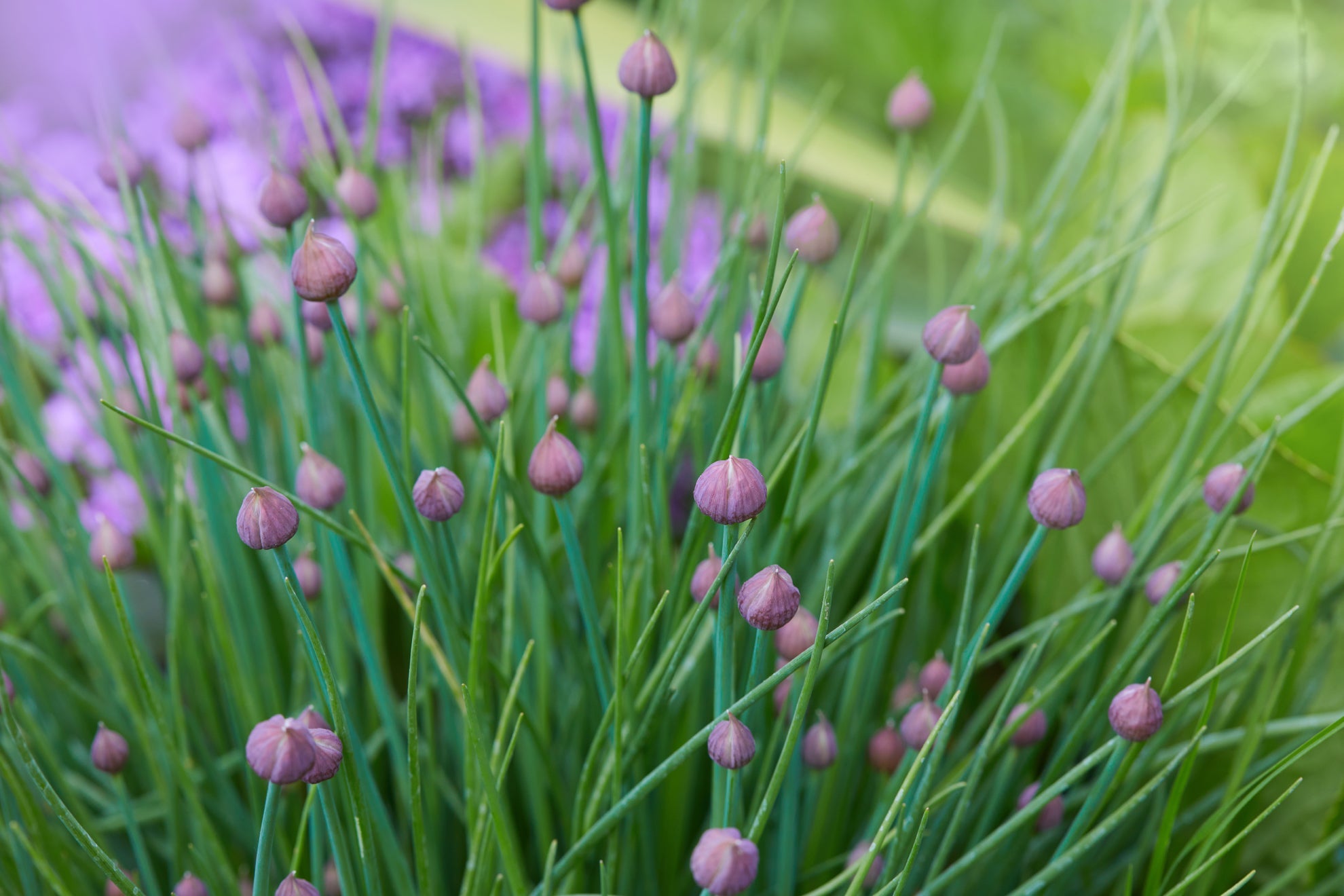
Just before they fully open, you can harvest the flowers too.
Simply snip these off and you can use them in salads or as a garnish.
If you wish to continue to harvest the leaves, then you should remove flowers either through harvesting, or by removing faded flowers if you have not used them all.
It is important to remove the flowers if you want to make sure that the plant continues to produce new leaves.
However, remember that flowering chives can also be useful for growing in the garden.
Leave some for the bees and other pollinators and the other beneficial insect life that they attract.
“Chives, or Allium schoenoprasum, are great ornamental plants as well as edible herbs,” shares Colin Skelly, a Horticulturist with almost 15 years of experience.
“Its flowers are a resource for a range of pollinators; a tasty treat for you and the non-human residents in your garden.”
Using & Storing Chives
Try to harvest chives as and when you need them and as close to when you require them as possible.

They don’t fare all that well once they are cut and are best used right away.
If, however, you would like to store some chives to cook in recipes later in the year, you could consider chopping some chives and freezing these in ice cubes of water that you can then use as needed.