IN THIS GUIDE
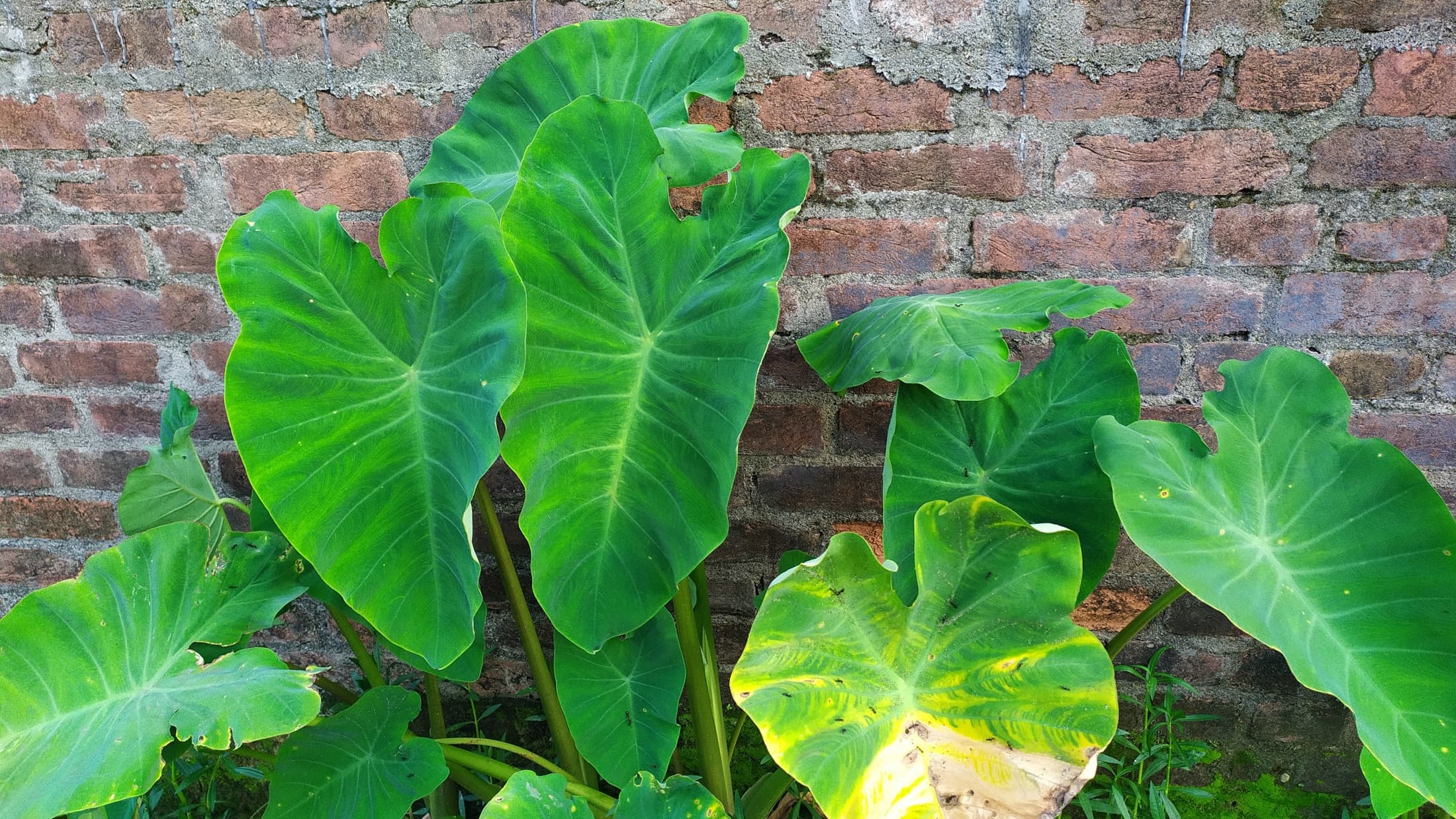
For big impact and impressive and exotic foliage, Colocasia – or ‘Elephant Ears’ as they are better known, will certainly make a statement in the garden.
With large and jungle-like foliage being all the rage at the moment, these plants are right on trend and look magnificent when grown here in the UK.
Also commonly known as ‘Taro’, Colocasia are tuberous perennials that originate from South East Asia.1

A big impact plant, they can grow to nearly 2m tall and wide and will draw attention wherever they are grown.
Producing large arrow or heart-shaped leaves, often with prominent veins running through them, they look so spectacular you just want to touch them!
However, in this country, they tend to be grown for ornamental purposes, rather than culinary.
Overview
| Botanical Name | Colocasia esculenta |
| Common Name(s) | Taro; Elephant Ears |
| Plant Type | Perennial |
| Native Area | Central Asia |
| Hardiness Rating | H7 |
| Foliage | Evergreen |
| Flowers | White or yellow bell-shaped flowers when mature |
| When To Plant | May, June, July, August, September |
| Flowering Months | April |
| When To Prune | May, June |
Hailing from tropical Asia, it is not surprising that they prefer a moist and warm environment and can even be grown on flooded land, but can also grow well under certain conditions, here in the UK.
Often used as a statement plant, they look equally spectacular when grown in a border or container and can suit a variety of planting schemes and styles.
Colocasia Plant Care
Originating from warmer climates, Colocasia does have some rather specific growing requirements – but this does not mean that they’re out of reach for gardeners here in the UK:
Planting Outdoors
They can either be planted out after the last risk of any frost, usually late around May to June, given a head start by potting up in spring indoors, or grown year-round as a house plant.
Colocasia can sometimes be bought as semi-mature plants, but are more often than not bought as tubers.

To grow outdoors, colocasia tubers can be planted directly into the ground as summer begins.
They are best planted shallow, in a warm and sheltered spot, with the growing tip of the tuber just protruding above the soil surface.
“Colocasias are water hungry and thrive around the edge of ponds,” shares Colin Skelly, a Master Horticulturist.
“I have grown Colocasia in a pond, with roots submerged but the crown about 5cm above the water level.
“The plants thrived and the algal blooms that normally affected the pond in summer did not occur, probably because the Colocasia utilised the nitrogen and phosphorous in the water.”

Water and mark with a label or stake, so as not to step on them by accident.
As hungry plants, it is worth adding some well-rotted manure or garden compost to the planting hole to give the soil a boost.
Water well on planting and continue to do so throughout the summer.
Common Problems
Slugs & Snails
The young soft leaves of colocasia can be, unsurprisingly, rather tempting to slugs and snails.
To give new plants the best chance, it is best to keep them when young in a slug-free environment where possible and only plant or move them outside when they are of a fairly substantial size.

Slug and snail controls can include, picking off by hand, especially at night with a torch when they come out, using barriers such as copper tape or wool pellets and using traps.
Encouraging predators including birds and frogs can be surprisingly effective as well.
Glasshouse Whitefly
Glasshouse whitefly can be a particular problem when growing colocasia in a greenhouse, conservatory or as houseplants.
The sap-sucking bugs are 2mm long and thus visible to the naked eye and often leave behind a sticky honeydew substance.
They are often not a problem on outdoor plants as the bugs prefer warm conditions.
It is wise to check plants for whitefly from spring onwards, as a small number are far easier to control than a large infestation.

Controls can include increasing ventilation where possible and quarantining new plants for a few weeks to check for signs of whitefly, before introducing them to a greenhouse or other houseplants.
For severe infestations, insecticidal soaps can be used.
However, with a short action time, they may have to be used repeatedly as per their instructions.
Even though unlikely to be an issue with colocasia plants, sprays should not be used when the plants are in flower due to the danger to pollinators.
References
1. Colocasia. (n.d.). Kew Royal Botanic Gardens. Retrieved March 14, 2023, from https://powo.science.kew.org/taxon/urn:lsid:ipni.org:names:331172-2