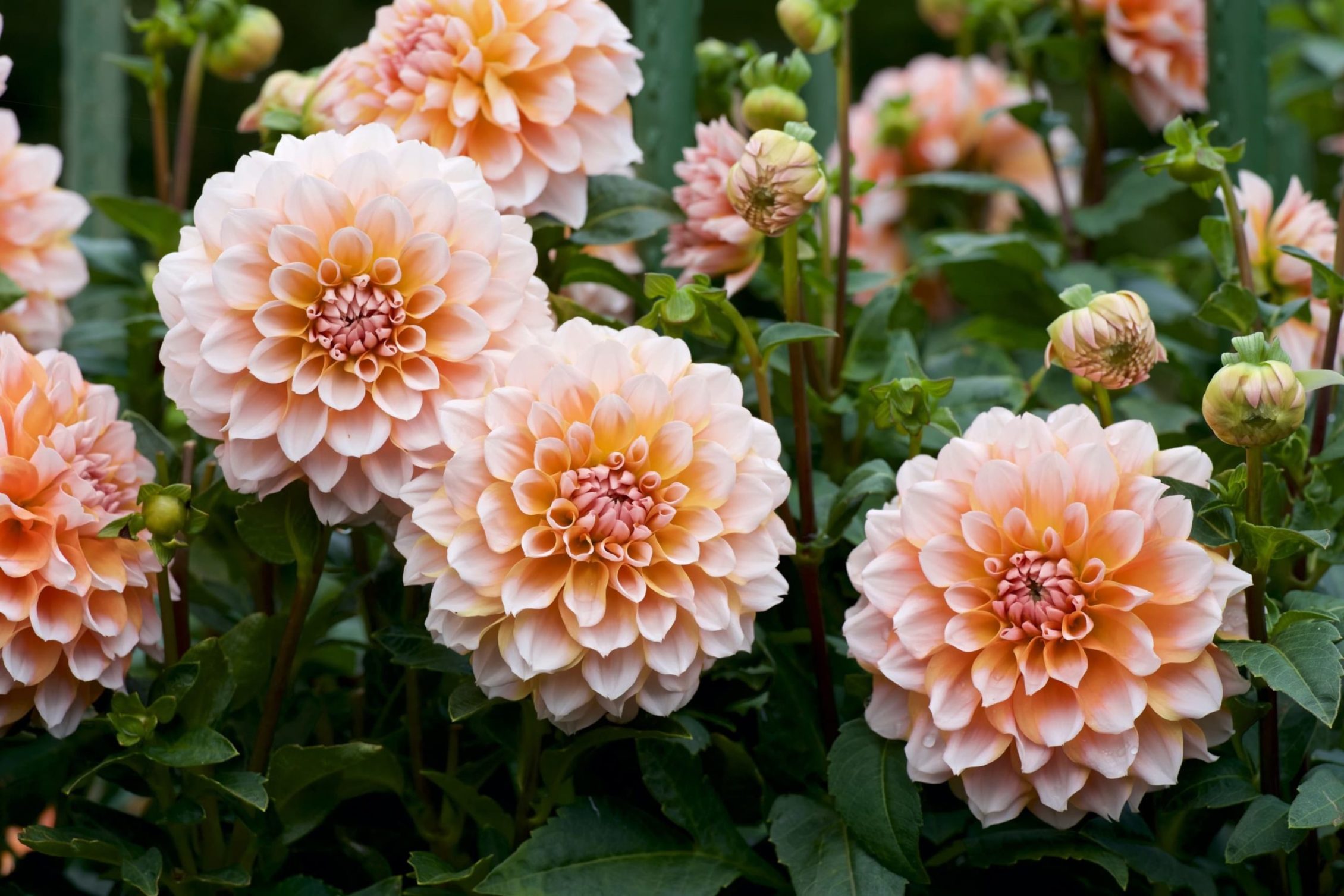
Dahlias are varied flowering plants that are favourites for many gardeners.
They come in a huge range of shapes, sizes, growth habits and hues – so no matter what you are looking for when it comes to your garden design, you may well find a dahlia that suits.
“My favourite plants at the moment are Dahlias,” shares Ben Raskin, an expert Horticulturist.
“In my old garden, I couldn’t grow them because of slugs, but I’m enjoying them at the moment in my new garden.”
We’ve interviewed FOUR dahlia specialists to understand the insider secrets to growing and caring for these fascinating plants, including:
- Jack Gott – Owner of plant nursery JRG Dahlias.
- Elaine Patullo – Owner of Dachshund Dahlia Plant Nursery.
- David Hall – Director at Halls of Heddon.
- June Nash – Secretary for The National Dahlia Society.
“Dahlias are such a rewarding plant with a vast range of colours, forms and sizes, with just about every colour but blue!” says David.
“They can be grown in pots though are better in the garden. They flower over a long period from mid-July, even a bit earlier depending on the varieties used, and they will flower right up to the frosts.”
Overview
| Botanical Name | Dahlia |
| Plant Type | Perennial |
| Native Area | Mexico & Central America |
| Hardiness Rating | Various |
| Foliage | Herbaceous |
| Flowers | Varied |
| When To Sow | April, May, June |
| Flowering Months | June to September (some varieties will flower until the onset of autumn frosts) |
Dahlias are related to sunflowers, daisies, chrysanthemums and zinnia, being members of the Asteraceae family.1
There are 42 species of dahlia, and many hybrids and sub-species are also commonly grown as garden plants.2
Their flowers and forms can vary considerably – dahlias can range in height from just 30cm or so to more than 6ft.
“I am a huge dahlia fan,” shares Edible Bristol’s Sara Venn.
“I love their blooms and how appealing they are to polliantors.”

Most dahlias are not highly scented, but usually attract pollinators through their bright colours.
They can be found in most shades – excepting blue.

The flowers are composite, with central disc florets surrounded by ray florets.
Though some describe the florets as ‘petals’, each is actually a flower in its own right.
Why Grow Dahlias?
“Dahlias are easy to grow and brighten any patio, border, allotment or field!” says Elaine, owner of Dachshund Dahlia Plant Nursery.
“Every dahlia is unique, the range of shapes and colours is amazing and the fact pollinators love them too makes them even more appealing.”
Dahlias are prized for their attractive, showy flowers, but the reasons to grow them vary depending on which cultivar or cultivars you choose to grow.
Single flowers are best for pollinators (bees and beetles are the main pollinating species for this genus).

More complex or double blooms are less wildlife friendly, but can often create impressive visual effects.
“Dahlias have no boundaries and there are so many different sizes, shapes and colours that there is a dahlia for every garden, from a small front yard to a stately home,” says June.
“They flower for such a long season, from late summer to the first frost, and in the autumn when there is little else in flower, dahlias add so much colour to the garden and they are easy to grow.”
Large and showy, taller dahlias can often be stand-outs and key features in a planting scheme, while shorter cultivars can be great for container growing or for the front edge of beds or borders.
David Hall also notes that they are being grown more often to be used as a cut flower, as they are very much ‘cut and come again’ perennials.
“Photographing dahlias in late summer is always special, with their rich deep colours and textures,” shares award-winning garden photographer Andrea Jones.
But there is another, more interesting and unusual reason why you might want to grow dahlias in your garden.
You may be surprised to learn that dahlias are actually not only an ornamental but also an edible crop!

As mentioned above, dahlias are a relative of the sunflower; they are also related to the Jerusalem artichoke.
The petals of the flowers are edible, and you can also eat dahlia tubers.
This was common knowledge to the native peoples of southern Mexico, who cultivated this plant as a crop.
The tubers vary in taste depending on the cultivar or variety, and the soil in which they were grown.
Heirloom varieties (such as D. pinnata ‘Yellow Gem’ for example) tend to be more flavoursome than more modern hybrids bred for huge, fluffy blooms.

Some can be quite bland – but others taste somewhat like chestnuts or yacon, some like spicy apple, celery root or even carrot.
So dahlias can be a great plant choice for companion planting in a vegetable garden, not just because they can attract pollinators and other beneficial insects, but also because they can be an edible crop in their own right.
Note: take care if you plan on eating dahlia tubers. These plants will store any chemicals you use on your garden in their tubers, including any synthetic fertilisers or pesticides.
Of course, we recommend that you always garden organically and never use these harmful products in your garden, so this should not be an issue.

Choosing Dahlias
When choosing dahlias, you should of course consider whether you are growing them purely for their ornamental value.
If you want to eat them, and would like them to attract pollinators and be beneficial for wildlife in your garden, you will need to take those things into account when choosing a cultivar or cultivars to grow.

When talking about their appearance, dahlias are divided into 14 classification groups by the National Dahlia Society:
- Anemone flowered dahlias.
- Ball dahlias.
- Cactus dahlias.
- Collerette dahlias.
- Double orchid dahlias.
- Fimbriated dahlias.
- Formal decorative dahlias.
- Miscellaneous dahlias.
- Paeony dahlias.
- Pompom dahlias.
- Semi-cactus dahlias.
- Single flowered dahlias.
- Star dahlias.
- Waterlily dahlias.
Thinking about the different flower choices available can help you to decide which one may be right for your particular garden plans.
“I love growing single-flowered dahlias because they attract beneficial insects and pollinators,” shares Garden Designer Ann-Marie Powell.
“I think that singles are a bit truer to nature and they look much more natural to me.”
Of course, you will also need to consider the height to which the cultivar you are considering will grow.

This will determine where best to place the plants in reference to the environment and other plantings around.
But largely speaking, which dahlias you choose to grow will be a matter of personal aesthetic preference.
Where To Grow Dahlias
“Dahlias do best in the open ground, in a sunny aspect and with well-drained soil,” explains David – and we agree!
All dahlias like a sunny site, ideally with space between them and neighbouring plants.

Dahlias like a relatively fertile soil that is rich in organic matter; moist yet relatively free-draining soils are ideal.
Where the climate allows tubers to remain in the ground over the winter, it is best to plant them in lighter, more free-draining soils.
Though dahlias can grow in heavier clay, the tubers can suffer in the colder and soggier conditions.

If you do have a heavier soil, or live in a colder area, you will likely need to lift the tubers in autumn or grow them in pots year-round.
Dahlia Plant Care
Irrigation
Dahlias need to be watered well in hot and dry weather.
It is best to water deeply once a week rather than watering little and often, as the latter can encourage shallower root formation and less resilient plants.
“Don’t let the soil get too dry, but also make sure the soil is well-draining so the plants do not get waterlogged,” says Jack Gott, the owner of JRG Dahlias (with over 50 years of experience growing dahlias).
See more expert guidance in our watering guide.
Staking

Remember, taller dahlias will need staking or some other form of support.
Often, you will not need to buy supports but can make your own using long branches or canes from your garden, or reclaimed materials that might otherwise be thrown away.
Late Season Care
“Regular deadheading will help prolong flowering, unless, of course, you fancy collecting some of your own seeds,” says David.
Deadhead weekly to encourage plants to produce more flowers – cut back the stems to a leaf node.
“Dahlias is simple once you can tell new flower buds from spent flowers,” shares Dan Ori, a Master Horticulturist.
“This may sound easy if you have never looked closely at a spent Dahlia flower, but they sometimes resemble flower buds, so be careful when pruning.”
Of course, you may also wish to harvest dahlias for cut flowers through the summer season.

As autumn wears on, dahlias will typically start looking more and more tatty; flowering will slow down as the temperatures fall.
At the end of the season, you will, if you live in warmer regions with free-draining soil, be able to leave tubers in place.
But mulch well with a dense layer of bark chip, straw or compost to protect the tubers from the cold.
In all other situations, cut down the stems and dig up the tubers. See our guidelines for overwintering to use your tubers again the following year.
Take care of the tubers and you can enjoy your dahlias year after year.
References
1. Sunflowers, Daisies, Asters, and Allies (Family Asteraceae). (n.d.). iNaturalist. Retrieved March 14, 2023, from https://www.inaturalist.org/taxa/47604-Asteraceae
2. Species Dahlias. (n.d.). The American Dahlia Society. Retrieved March 14, 2023, from https://www.dahlia.org/docsinfo/species-dahlias/