

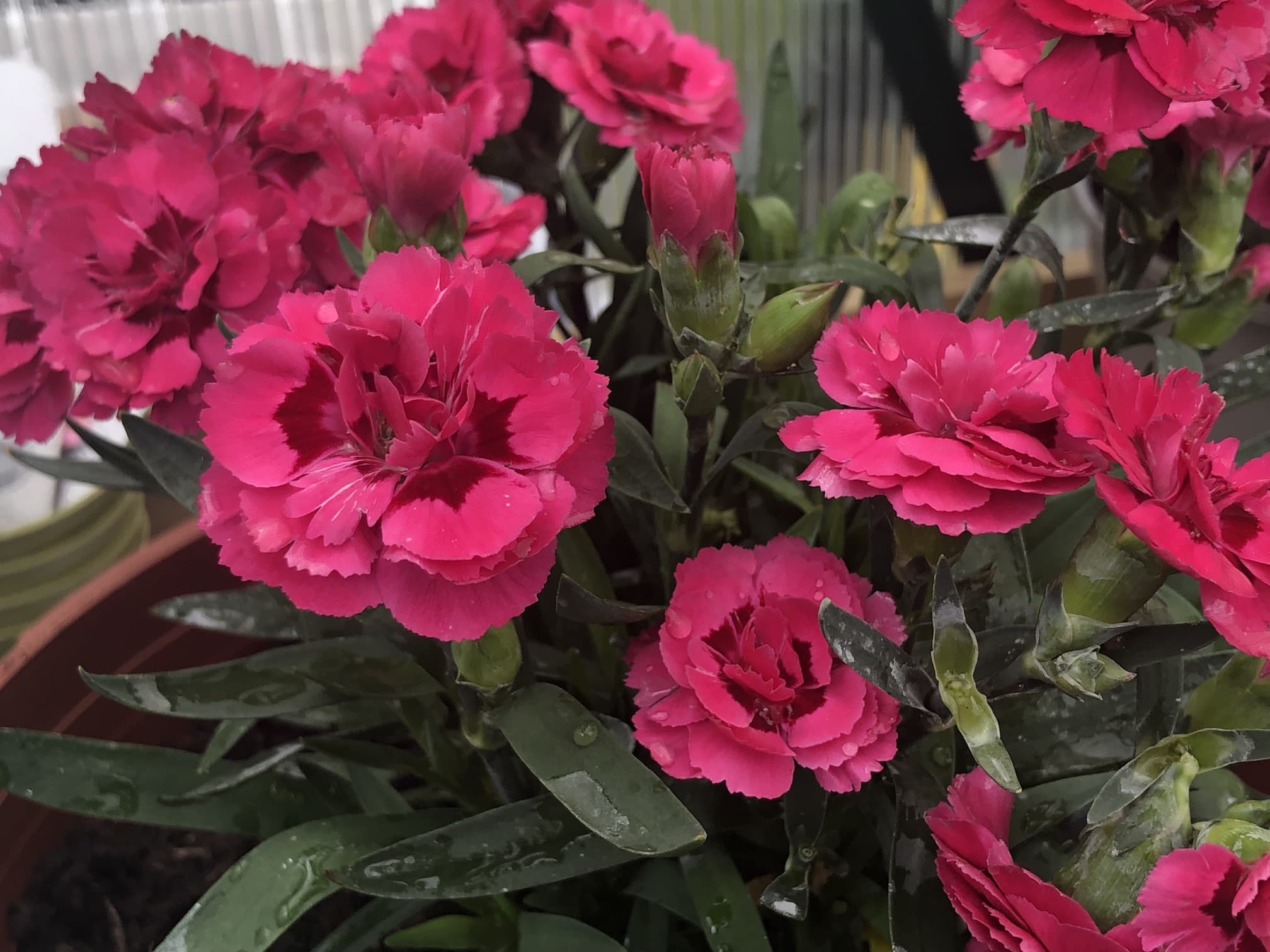
Dianthus is a varied genus of flowering plants which includes many garden favourites.
The most popular Dianthus to grow in the UK are those known as ‘garden pinks’.
They are known as pinks not for their hue, but rather for the serrated edges which make the flowers look as though they have been trimmed with pinking shears.
| Difficulty | Easy |
| Equipment Required | Secateurs, gloves (optional) |
| When To Deadhead | June – September |
There are a huge variety of pinks to choose from – and you might also grow other popular Dianthus, such as florist’s carnations, and Sweet William.
Many pinks and other Dianthus (excepting some old-fashioned varietals) can be coaxed into a second flush of flowers by deadheading.
To deadhead Dianthus:
- Wait for the initial Dianthus blooms to die back.
- Examine the stems for new buds.
- Cut back to remove the spent blooms.
- Feed the plant with a potassium-rich feed to encourage further blooms.
Below you will find a more detailed description of this simple process:
1) Wait For Dianthus Blooms To Die Back

Dianthus are often used for cut flowers.
If you are harvesting your blooms to use in your home, then deadheading may not be necessary.
However, if you have enjoyed the blooms in the garden rather than cutting them, then you should wait for the first flowers to die back before you deadhead.
Of course, the precise timing for this job will depend on the specific type of Dianthus and the variety that you have chosen to grow, and when it will be expected to bloom.
2) Examine Stems For New Buds
On some types of Dianthus, buds may already be present on the stems when the first flowers fade.
So before you deadhead to remove the spent flowers, you should take a good look at the stems to ensure that you do not cut off any buds and deprive yourself of these future flowers.
3) Remove Spent Flowers

Where buds are present, cut back to just above a bud.

Where there are no buds, cut back to just below the first set of leaves.
“The best tool I have found for working with Dianthus is Micro Snips,” shares Horticulturist Dan Ori.
“The whole tool is about 10cm long at most so they are less likely to damage other flower buds while you are working on the plant.”

4) Feed Your Deadheaded Dianthus

This next step is really the most important one.
In order to encourage the plant to bloom with a second (and sometimes even a third) flush of flowers, it is important to feed it to keep it in the best possible health.
After deadheading, it is the best idea to feed the plant with an organic liquid plant feed.
This should be similar to the type of liquid feed used for tomatoes – a feed which is high in potassium, which should encourage good flower formation.

Deadhead once more after the second flush of flowers at the end of the season in autumn, also removing any leaves which look straggly.
Lightly trim the foliage in order to encourage fresh growth and to slow the process of the plants sprawling and becoming woody at the base.
Dianthus tend not to live all that long – but care for them correctly and they should flower over five or six years or so.



