IN THIS GUIDE
Mint seems to be a little bit like Marmite, in that people really like it, or despise it completely.
Whilst we get that the distinct flavour doesn’t always work in the contexts it’s used in, don’t write mint off completely just yet.
In fact, growing your own fresh mint at home will put you in control of how you employ minty flavours in your cooking and tea making.
“I love growing mint, although you have to be careful with it,” shares Danny Clarke, TV Presenter & Horticulturist.
“Mint smells lovely and is very tactile.

“There are so many varieties of mint that will give you so many different scents – it might surprise you. They can smell like chocolate, coffee – all sorts!”
In this guide we’ll equip you with the knowledge required to get a vibrant mint bush blooming in your garden.
You’ll be able to grow it, care for it, resolve any common issues and, most importantly, harvest the tasty leaves to be deployed in your kitchen whenever you need.
Overview
| Botanical Name | Mentha |
| Common Name(s) | Mint |
| Plant Type | Perennial Herb |
| Native Area | Europe, Africa, Asia, Australia, North America |
| Hardiness Rating | H5-H7 |
| Foliage | Deciduous |
| Flowers | White or pinkish flowers |
| When To Sow | March, April, May, September, October, November |
| Flowering Months | May, June, July, August, September, October, November |
The word mint broadly refers to the plant family Lamiaceae, which contains pretty much every herb you can think of.1
Oregano, thyme, rosemary, sage, basil, marjoram, and even lavender are just a handful of the aromatic herbs you’ll find in the family tree, for example.
Zooming in a little bit, though, through the subfamily Nepetoideae, the tribe Mentheae, down to the genus Mentha, we find the plants that most people are probably thinking of when they say ‘mint’.2

“I love growing herbs but mint is definitely my favourite,” shares Debi Holland, a Garden Writer.
“I grow vast amounts of Moroccan mint in my garden. Actually, it runs wild with little intervention from me but I use it most days to make homemade tea!
“My other favourite is chocolate mint which is absolutely sublime and I am on a mission to bulk up my plant to make lots of tea.”
It’s not fully understood what distinguishes the different species in the family, but there are 24 different species in existence.3
What is known, however, is that spearmint and peppermint are probably the two most common types in the culinary context.
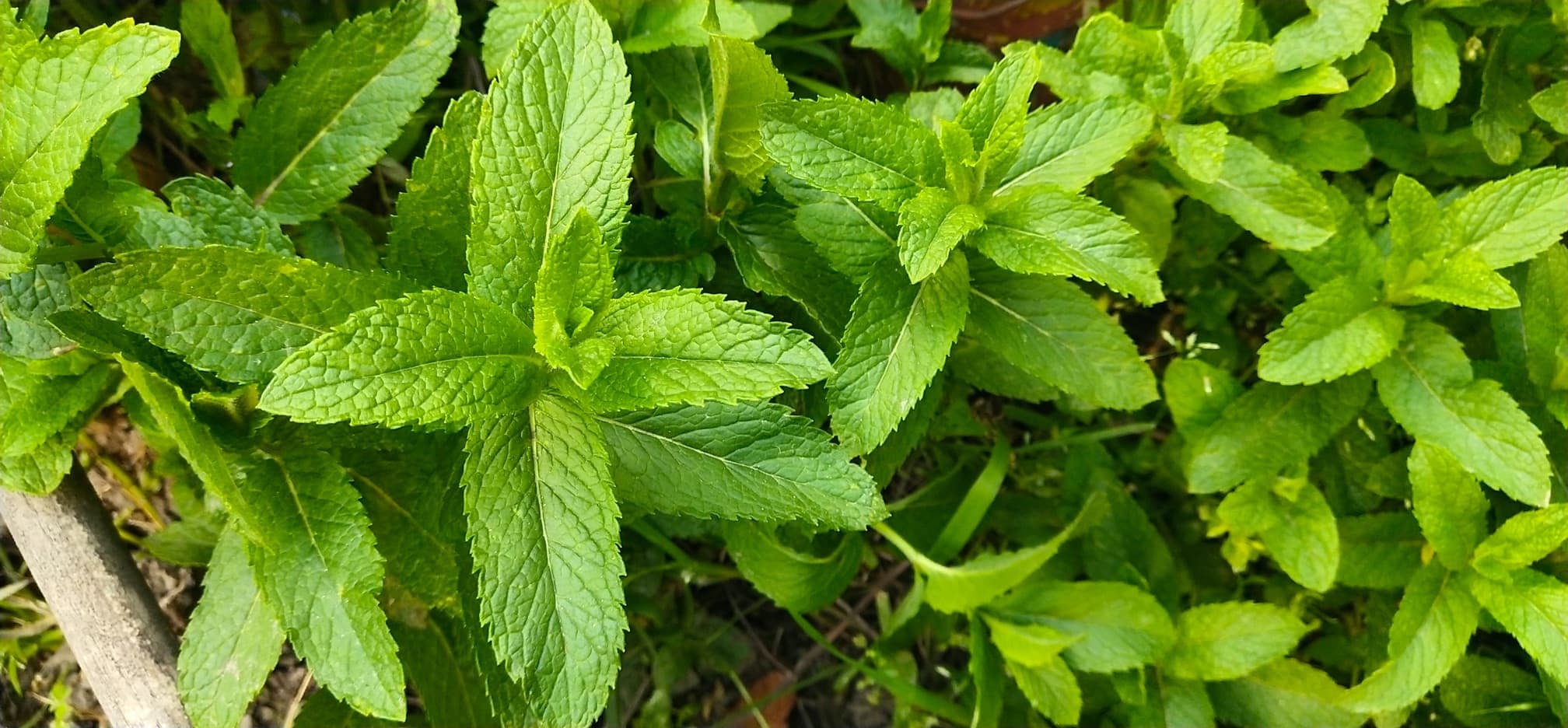
Spearmint (Mentha spicata), which also goes by the names common mint, lamb mint, garden mint, and more – originally hails from Europe and southern Asia, but is now naturalised in many parts of the world.4

Peppermint (Mentha x piperita) is a hybrid between spearmint and another species called water mint (Mentha aquatica).5
Like spearmint, it has spread from its roots in Europe to central Asia to cover most of the world.6
These two types are most commonly used in food and drink, to make essential oils, as a source of menthol, and much more.
How To Grow Mint
Now you’ve seen just how versatile and widespread mint is, both geographically and culturally, you’re probably itching to get some growing in your garden.
First up…
(Three) Growing Options
Transplanting

The most common option by far when growing mint is to buy a young plant in a container and transplant it to your garden.
This is quick, cheap, and easy, and gives you a good shot at a strong and healthy plant.
Propagating Cuttings
You can grow mint from cuttings, too.
Simply trim 5-8cm from a mature plant and leave in a glass of water out of direct sunlight.
After a week or so it’ll sprout roots, ready for transplanting into soil.
Growing From Seed

If you’re looking to grow from seed, this is possible as well – if maybe a little more fiddly. Mint seeds are tiny.
We recommend sprinkling seeds thinly onto the soil surface, then covering with about half a centimetre more soil, as this is far less tricky than trying to individually plant tiny seeds.
Then you’ll need to thin out the seedlings once they germinate, which should take about two weeks.
When they grow big enough to have two true leaves, harden them off and prepare them for planting out.
Where To Grow Mint
When choosing a spot for your mint, keep in mind that this is a very ambitious plant.
Left unsupervised it will spread far and wide via underground roots, quickly becoming unruly and threatening other nearby plants, as Danny explains:
“I wouldn’t plant it straight in the ground because it can act like a weed and take over your space.
“The best thing would be to put that in a pot.”

As Danny says, many gardeners opt to grow mint in pots, keeping its enthusiastic roots carefully separate from nearby soil.
If you’re especially keen on planting mint into the ground, you can use a common gardening hack to do so whilst still discouraging unruly growth.
To do this, find a big bucket, cut the bottom out of it (or buy a bottomless bucket in the first place), bury it into the soil, and grow your mint inside.
The wall of the bucket will keep roots in place, and if a couple of inches of the bucket are left above ground, this will keep intrepid surface shoots in check as well.

You’ll also want to keep different types of mint apart from each other, as this proximity can lead all varieties involved to lose their distinctive scents and flavours.
Keeping a decent amount of space between different mints will keep them vibrant and characteristic.
Watering
Mint is a thirsty plant and will require lots of watering.
This is especially applicable in hot and dry weather.
Fertilising
Use fresh compost for each new mint plant to give it the best access to the nutrients required for healthy growth.
“When these nutrients deplete after a few months, mint plants can be given a balanced fertiliser feed once a month to keep the fresh growth coming ready for harvesting,” shares Master Horticulturist Roy Nicol.
While it’s not technically fertilising, this tip does involve soil, and so fits well into this section.

If your mint plant isn’t thriving, remove it from its container along with the soil, then separate the plant from the soil, split the root ball in two, and repot one half in the same container with new compost.
The other half can be planted elsewhere, increasing next year’s mint quota.
Cutting Back
Each summer, some of the shoots on your mint plant will flower.
To encourage the best growth next season, trim the flowered shoots down to a few centimetres above the surface of the soil.
Common Problems
Mint is massively widespread which suggests it must be fairly resilient and able to take care of itself, however there are a things to look for when growing your own:
Aphids
New growth in the spring can often attract aphids which distort the leaves and leave black deposits.
Ladybirds will often take care of these pests but if it’s too early in the season for them, aphids can be wiped off the mint leaves.
Fungal rust
This fungal infection leaves yellow or orange blemishes on the stems and leaves of a plant, and can cause a lot of damage if left unchecked.
As the fungus spreads through spores, the best course of action is to dig up and destroy severely infected plants.

While it may seem drastic, this prevents the spores from infecting other plants, and it is a less destructive course of action in the long run.
Also take a thorough look over young mint plants if bought from a shop.
It’s unlikely but definitely possible to buy a plant that’s already infected, so try to avoid this.
Mint beetle
Not every plant regularly draws the attention of a beetle so often that it’s named after it!
Mint beetles, small and green, definitely evoke their eponymous plant, however.

Their tendency to feed on mint plants, and to let their larvae do the same, can lead to damage if left unchecked.
Thankfully, the beetles are big enough to easily be seen with the naked eye.
Simply remove any beetles or eggs as and when you notice them.
The mint beetle is a relatively new pest to the UK and so far most sightings have been in Southern England.
References
1. Lamiaceae (mint family). (n.d.). Native Plant Trust: Go Botany. Retrieved March 21, 2023, from https://gobotany.nativeplanttrust.org/family/lamiaceae/
2. Subfamily Nepetoideae. (n.d.). iNaturalist United Kingdom. Retrieved March 21, 2023, from https://uk.inaturalist.org/taxa/520502-Nepetoideae
3. Mentha. (n.d.). Plants of the World Online. Retrieved July 17, 2023, from https://powo.science.kew.org/taxon/urn:lsid:ipni.org:names:30016176-2
4. Spearmint – Mentha spicata. (n.d.). Kew Royal Botanic Gardens. Retrieved March 21, 2023, from https://www.kew.org/plants/spearmint
5. Heberling, M. (n.d.). Peppermint: A Hybrid Herb for the Holidays. Carnegie Museum of Natural History. Retrieved March 21, 2023, from https://carnegiemnh.org/peppermint-a-hybrid-herb-for-the-holidays/
6. Mentha × piperita. (n.d.). Plants of the World Online. Retrieved July 17, 2023, from https://powo.science.kew.org/taxon/urn:lsid:ipni.org:names:450969-1#:~:text=The%20native%20range%20of%20this,The%20hybrid%20formula%20is%20M