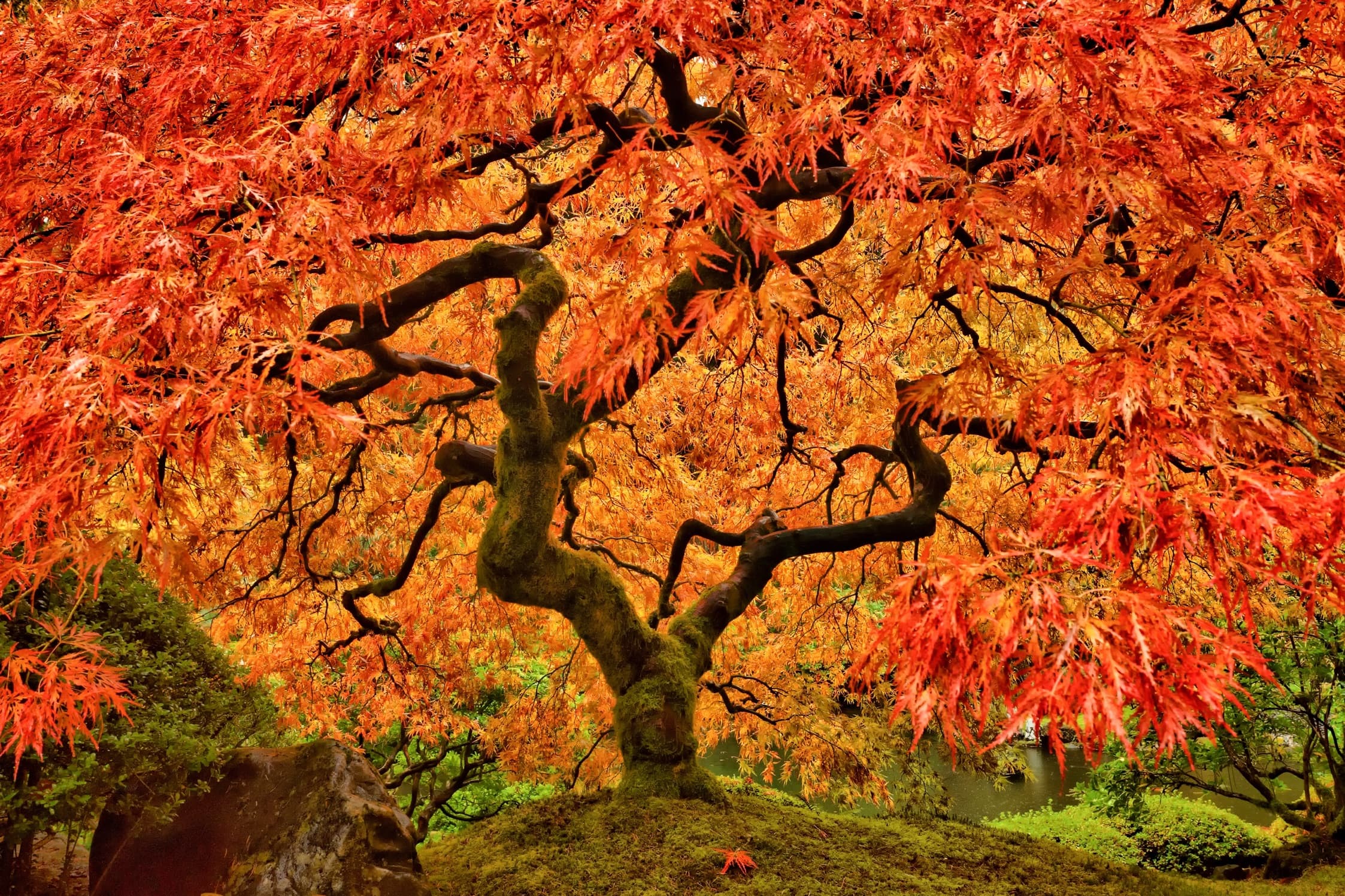
Japanese maples are small, deciduous maple trees with decorative foliage, known particularly for their spectacular display of bright red and orange-coloured leaves in the autumn months.
There are a variety of Japanese maples of all different shapes, sizes and leaf colours, so you can select one which will best suit your space.
They make for a great way to add colour and interest to your garden throughout the year.
Across each of our Acer guides, we have collaborated with Agustin Coello-Vera, Chairman of The Maple Society.
“Maples are entrancing trees with the ability to fascinate many people and are of interest throughout the year,” says Agustin.
Japanese maple can be grown outside in the UK – or, as the tree is small and slow-growing, it’s well-suited to container growth.
To add an oriental feel to your garden, accompanied by a burst of flaming red, orange and gold every autumn, read on for our best Japanese maple growing tips, for everything you need to know about caring for this colourful tree.
Overview
| Botanical Name | Acer palmatum |
| Common Name(s) | Japanese Maple |
| Plant Type | Tree |
| Native Area | Japan; East Asia |
| Hardiness Rating | H6 |
| Foliage | Paired, often palmately-lobed leaves, often vibrant foliage, especially in autumn |
| When To Sow | January, February, March, October, November, December |
| Flowering Months | March, April, May |
| When To Prune | January, December |
Japanese maples (Acers) are slow-growing trees originating from Japan and other parts of Asia.
The red cultivars are particularly popular in Europe, and all colours are frequent additions to oriental-style gardens.
Most Japanese maple trees grow to a maximum of 2m in height – although there are some varieties that can reach up to 10m.
Due to their small size, Japanese maples are ideally suited to smaller gardens, borders and containers.

There are hundreds of cultivars of Japanese maple.
Leaf colour varies dramatically across cultivars – new leaves can be anything from lime green to pink or purple, whilst autumn colouring ranges from yellow and orange, to bright red and burgundy.
Other names for Japanese maple include red emperor maple and palmate maple (so-called after the shape of the leaves).
Habitat & Growing Conditions
The native habitat of the Japanese maple is, unsurprisingly, Japan – as well as parts of Korea, where it grows in a temperate climate.1
“The popular Japanese maples come from an area with rich, acid, sandy soils where it rains a lot throughout the year,” explains Agustin.
“The closer your growing conditions are to those conditions, the happier your Japanese maples will be.”
“Japanese maples are hardy but should be grown in sheltered non-waterlogged sites,” argues Horticulturist Dan Ori.

“They will often tolerate a range of soil conditions but prefer slightly acidic moist soil.
“As my soil is alkaline I grow my Japanese Acers in containers using peat-free ericaceous compost and water with rainwater to keep the soil pH acidic, I top dress a 5cm (2inch) layer of fresh ericaceous compost each autumn or spring.”
Most cultivars favour a shaded or partially shaded growing location, although some sun is required for redder varieties.
The tree can tolerate and grow in most soil types, including sand and clay, although it prefers soil with a high content of organic matter.
“There is a difference between tolerating with lots of help and years to adapt, rather than thriving from the moment it is planted,” says Dan Ori.
“Japanese Acers will tolerate most soil types but only really do well in acidic moist but not wet soil.”
How To Grow A Japanese Maple
You can buy Japanese maple as grafted trees from garden centres and online retailers.
If you’re seeking a specific variety, specialist growers and flower shows often have a more extensive range.

Look for healthy-looking, colourful foliage, with no brown tips to the leaves, or obvious signs of pests.
You can also grow Japanese maple from seeds, however, you should be aware that they will not grow true to their cultivar.
Planting
Japanese maples are most often grown from grafted trees, although it is possible to grow them from seed.
The best time to plant them is from October to March.
Exposure
Although they are hardy plants, they do best when placed in sheltered spots, out of strong winds with some dappled shade.

You can grow Japanese maple in your garden borders, or in a container – a container has the advantage of allowing you to move the tree between sunny and shaded areas.
However, be aware that you will need to re-pot every couple of years.
Japanese Maple Care
Trees growing in a container will also need to be lifted off the ground and the roots covered over winter, to protect them from frost (trees growing in the ground should not require any protection).
The roots require plenty of space to grow, so try not to position Japanese maple too close to other plants; although they like to spread out, the roots don’t go deep – you should plant with the roots no more than 3cm below the surface of the soil.
Watering & Feeding
Water the tree regularly when first planted, particularly over the first summer.
Continue to water during periods of dry weather, or if growing your tree in a container.

Add organic fertiliser and mulch to the soil annually in spring, to encourage moisture retention and aid growth (do not allow the mulch to touch the trunk, as this can cause it to rot).
FAQs
Should My Japanese Maple Be Given Full Sun Or Shade?
Most cultivars of Japanese maple prefer dappled shade.
There are some exceptions – cultivars with bright red and purple leaves need access to full sun in order to develop their deep colouring.

Poor autumn colouring can also be a sign your tree is not getting enough sunlight.
Make sure to research what your chosen cultivar needs before planting.
When Should You Plant A Japanese Maple?
The best time to plant a Japanese maple is during the winter months, from October to March.
This allows the roots of the plant to become established whilst the tree is in its winter dormancy period.
What Should I Do If My Japanese Maple’s Bark Starts Splitting?
Bark splitting is a fairly common problem for Japanese maples, as they have thin bark.
Splitting can be caused by animals, or by unfavourable environmental conditions – for example, overexposure to sunlight, cold winds, or cold temperatures in late spring, after the tree has begun expanding for the growing season.
“Japanese maples should always be grown in a sheltered position to minimise leaf scorch and splitting of stems and branches,” advises Dan Ori.
“Splitting problems can occur when frosted plants and hit by the early morning sun.”
If your Japanese maple’s bark starts splitting, you should firstly prune away any damaged bark on its branches.

If your tree is healthy, it will hopefully recover by itself, in time. If not, you should consult an Arborist for professional advice on how to proceed.
To help prevent bark splitting, try to plant your Japanese maple in a sheltered spot, and keep it sufficiently watered and mulched, especially during dry periods.
References
1. Acer palmatum Thunb. (n.d.). Kew Royal Botanic Gardens. Retrieved March 9, 2023, from https://powo.science.kew.org/taxon/urn:lsid:ipni.org:names:927504-1