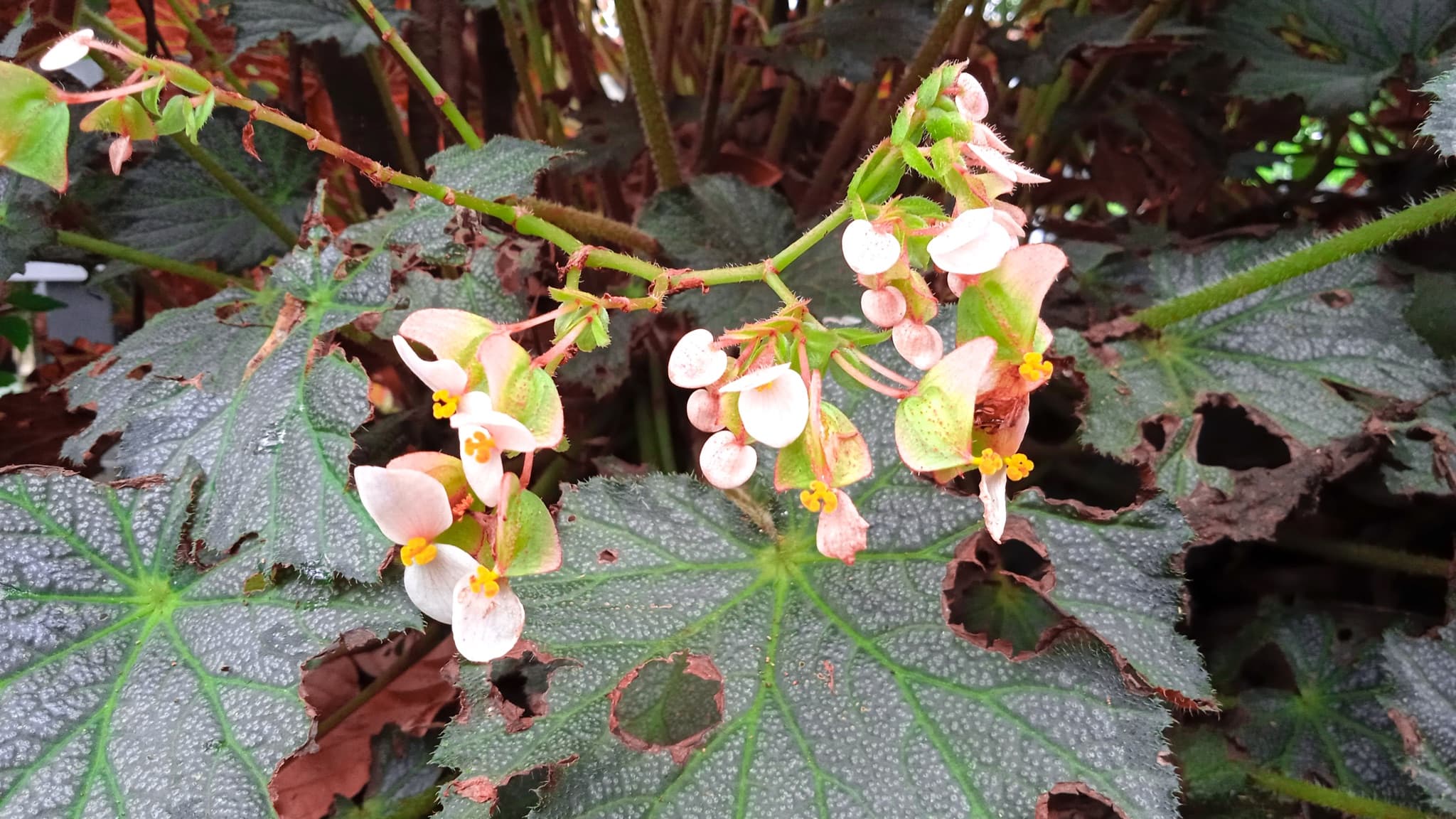
Originally from South and Central America, Africa and southern Asia, begonias have delighted British gardeners for hundreds of years.
And with over 2,000 species to choose from, in a multitude of colours, it’s no wonder this plant has become so popular.1
With different species growing from 0.1-0.5m in height, there’s a begonia for every garden, regardless of space or size.
They also flourish indoors, so there really is an option for everyone.

Another reason begonias are so favoured among gardeners is that they are so easy to care for.
These plants need very little attention, however, one thing you must not forget about is deadheading.
| Difficulty | Easy |
| Equipment Required | Gloves, secateurs (or snips) |
| When To Deadhead | September |
Why Deadhead Begonias?
Technically, you don’t need to deadhead begonias as they naturally drop their flowers.

That said, removing dead and wilted flowers will help your begonias bloom in abundance, help your plant produce more stems and just make everything look a bit more neat and tidy.
“Pinching off dead or damaged flowers will help to keep your begonia plant looking attractive,” explains Janeen Randle, President of the Melbourne Begonia Society.
When To Deadhead Begonias
Your begonia’s flowers will all start to die out towards the end of September, or when the first frost hits, so you will definitely need to deadhead then.
But, throughout the blooming period, if you see any dead or wilted flowers, it’s important to start deadheading to increase further flowering.
How To Deadhead Begonias
Deadheading your begonias is quick and easy:
- Examine your begonias every couple of days, looking out for wilted, discoloured or dead flowers.
- Once you notice flowers that need to be deadheaded, don your gardening gloves and, if you wish to use them, grab a pair of secateurs.
- Take hold of the stem about 1.5cm down from the flower.
- Either pinch the stem so you can break off the flower, or make a cut at that point with your secateurs. If there is a new bud growing beneath the dying flower, be sure to cut above it.
- Dispose of the flowers. Leaving them at the base of the plant can encourage diseases.
- Keep an eye on your begonias throughout summer – and repeat this process when needed.

As mentioned above, “it is imperative that you do not leave dead flowers and leaves that have dropped around your begonia plants, as they can harbour disease,” Janeen explains.
“If you want larger flowers, particularly with tuberous begonias, remove the female blooms.”
You will find you will need to deadhead your begonias more frequently as summer progresses because every time you snap off a flower, 2 new stems will begin to grow and flower.
Horticulturist Colin Skelly advises: “Once you’ve mastered the technique, consider sourcing a pair of snips (in-between scissors and secateurs).”
“They are more agile and should speed you up if you have many plants to deadhead.
“But, from experience, mind your fingers when you start using a new (and usually sharper) tool!”
Deadheading will allow your begonias to channel their energy into growing fuller and more healthily.
Just take care not to snip too close to the flower head as this will prevent new stems from growing and will make the plant look barren and ugly.
References
1. Begonia L. (n.d.). Kew Royal Botanic Gardens. Retrieved March 28, 2023, from https://powo.science.kew.org/taxon/urn:lsid:ipni.org:names:327437-2#children