Acers can often be relatively easy plants to grow and make great trees for many gardens.
However, if you would like to grow an Acer tree where you live, the most important thing is choosing the right location in which to do so.
You must select the growing position carefully and provide the right environmental conditions or your Acer will fail to thrive.
One of the most common issues seen by those growing Acers is brown leaves, which is often known as leaf scorch.
“Brown leaves are a sign that the tree is not happy,” explains Agustin from The Maple Society.
“This could be caused by many different environmental conditions, including too little or too much water and too much sun.
“Some pests and diseases will also result in leaf browning.”

Maple leaves turning brown is typically an issue which arises due to environmental stresses.
In short, it can be caused by:
- Frost and cold conditions impacting your Acer.
- Drying winds and growing your Acer tree in a position that is too exposed.
- Intense sunlight getting to your Acer leaves.
- Issues with watering your Acer tree.
Read on for more detail about each of these reasons and for some advice on prevention.
What Is Leaf Scorch?
When Acer leaves turn brown on the tips, curl up or begin to shrivel, we call this leaf scorch.
Leaf scorch happens whenever, for one reason or another, the leaves are losing moisture more quickly than water can be taken up through the roots.

Acer leaves may naturally turn brown as part of their natural abscission process, when they lose their leaves in autumn.
However, what we are talking about here is when leaves turn brown during a part of the year when they would not naturally do so.
The 4 main reasons for this include:
1) Frost Damage
If there is a late cold snap in the spring, new Acer growth may be damaged by the cold conditions.

Though these are generally hardy trees, the new growth will be more tender.
As long as the maple is not in too exposed a location, it should recover once the weather warms.
2) Drying Winds

Even if there is no frost, a maple in an exposed location may also become damaged by winds, which dry the foliage out quickly and make it difficult for the plant to obtain the moisture it needs.
Moving the Acer to a less exposed location or planting wind-breakers could help prevent the problem from happening again.
3) Sun Damage
If Acer leaves turn brown in summer, this could be due to intense sun and heat which increase the speed of moisture loss from the foliage.

Placing an Acer where it gets some light shade during mid-summer at the hottest part of the day could help prevent browning for this reason.
4) Water Problems
Maple leaves may also turn brown due to issues with waterlogged soil or environmental conditions which do not allow excess water to drain away, as this can lead to root rot.
Make sure that you water regularly to keep the conditions moist throughout the summer, but ensure excess water can drain away freely.
Yellowing Leaves
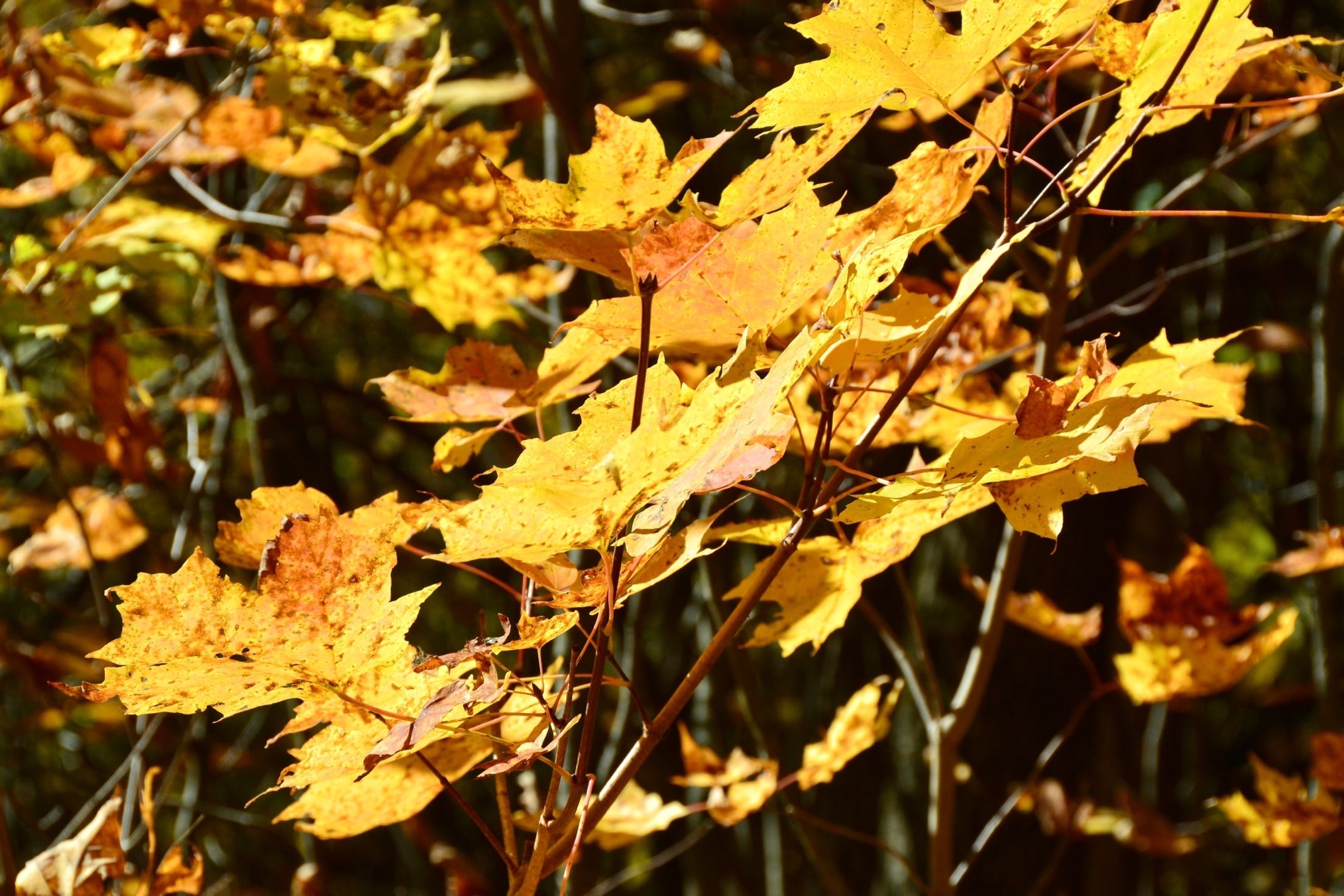
What if your leaves are turning yellow or are off colour and it is not autumn?
According to qualified Horticulturist Dan Ori, “this could be due to disease, pest attack, exposure to cold, conditions too dry, conditions too wet, too much sun, or it could also be something called Chlorosis which is a nutrient deficiency common in Japanese maples grown in high pH (alkaline) conditions.”
“To mitigate Chlorosis in Acers caused by high pH, repot or top-dress with ericaceous compost and water with rainwater if possible.”