IN THIS GUIDE
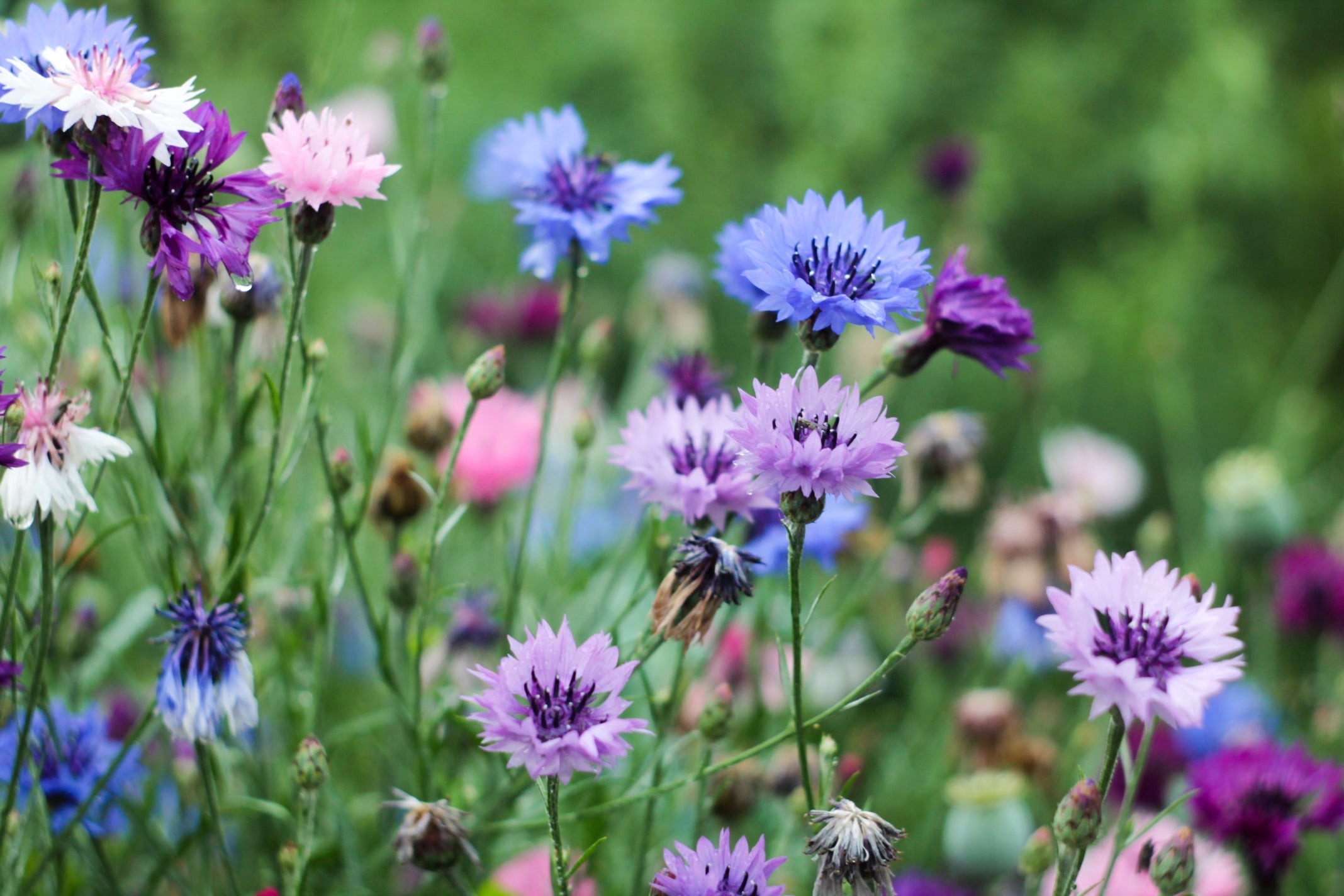
Cornflowers are popular plants for beds, borders and wildflower meadows.
They are incredibly easy and low-maintenance annuals to grow in your garden and are wonderful for the wildlife with whom you share your space.
Cornflowers are simply sown in spring, directly where they are to grow.
Commonly, they are sown alongside other annual meadow plants like corn, marigolds, and poppies to create an annual meadow display.
You can also directly sow them as companion plants in a vegetable garden.
| Difficulty | Easy |
| Equipment Required | Seeds, a rake |
| When To Sow | March-May or September |
When To Sow

The seeds should be sown in spring or at the end of September.
However, I would recommend that cornflower seeds should be directly sown where they are to flower in March or April.
1) Prepare The Site
If you are interested in creating an annual meadow area or you are sowing wildflowers in your garden, you might have to sow seeds every year even though many of the plants self-seed.
These planting schemes produce stunning displays of colour throughout 3-4 months of the year.
You will need to make sure that you have a clear and weed-free area in full sun.

“Fork the soil to the depth of the fork’s tines to ensure good drainage and then lightly rake back level,” says Peter Lickorish, a Lecturer on Horticulture at Bedford College.
“The cool blues, purples and white tones of cornflowers can be lifted by planting colours that sit opposite them in the colour wheel, such as yellows and oranges.
“Californian poppies fit this scheme and so do Eremurus, the foxtail lily, which could be planted bare-root into the same soil conditions as cornflower, at the same time as spring sowings.
“Alternatively, select a mixed seed pack or a variety of cultivars.”
2) Sow The Seeds

If you are sowing cornflowers as part of a more ordered bed or border, you might like to sow the seeds in rows.
However, in most cases, cornflowers look best when broadcast over an area and covered over lightly using a rake.
“Tamp down the soil with the back of the rake to ensure good consolidation,” advises Peter.
Should you wish you can also grow cornflower seeds in propagation trays, though this is usually not necessary.

Remember, you might use a cornfield annual meadow mix, with cornflowers mixed with other seeds.
“If there is a lot of grass in the seed mix, a poorer soil is best, to restrict grass growth,” Peter adds.
3) Keep The Soil Moist
Make sure that you keep the soil moist during dry spells until seeds germinate and while planting is young.

Other than this, cornflowers will require little care.
In ornamental beds or borders, you can stake tall, wiry cultivars in exposed locations, and deadhead in summer to prolong the period of blooming.

However, in general, you can simply watch and enjoy through the summer months then leave flowers to set seed towards the end of the season as a feast for garden birds.