IN THIS GUIDE
Lilac (Syringa vulgaris) is an excellent choice of shrub for many gardens.
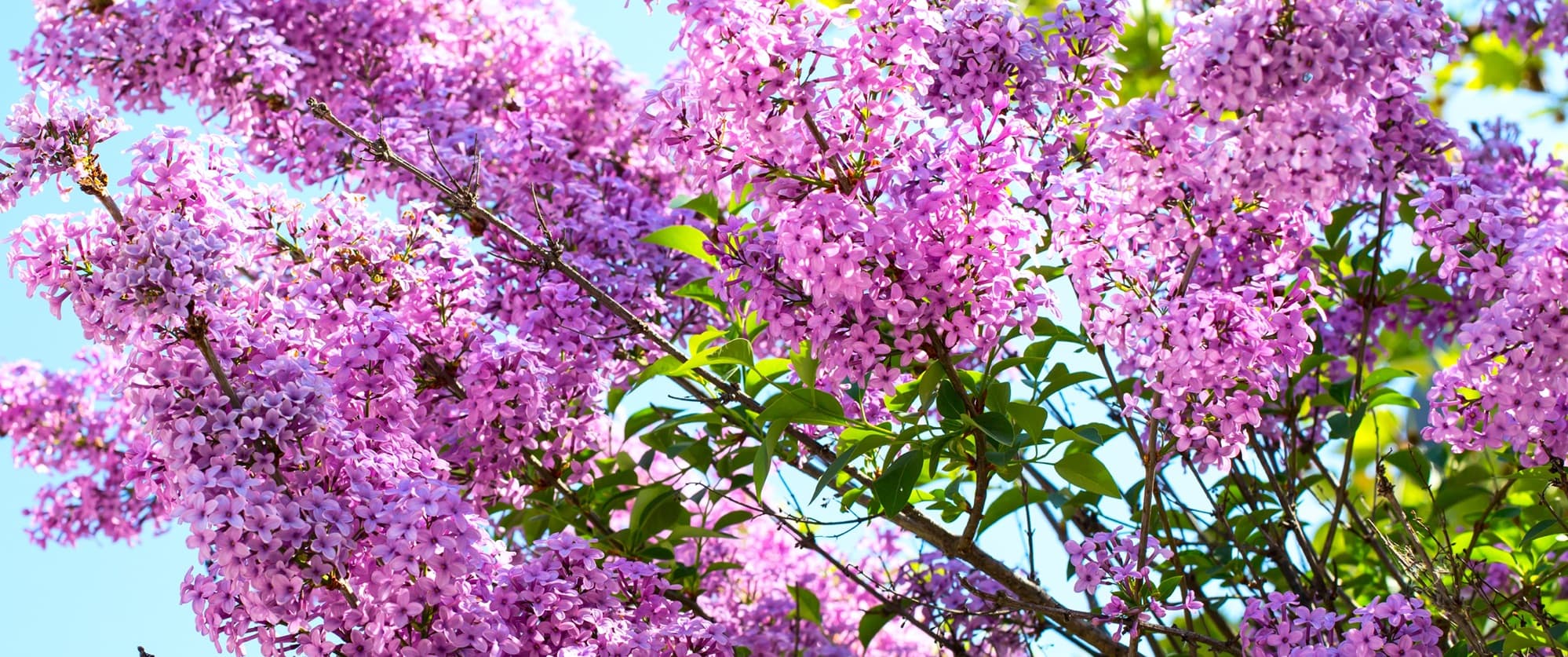
It is an attractive ornamental commonly grown for its showy blooms of pinkish, purple or white flowers that emerge for a short period in the late spring or early summer – just before roses and other summer flowers come into bloom.
“Syringa vulgaris is a deciduous shrub that provides some of the most fragrant flowers that are known for attracting bees, butterflies and other pollinators,” adds Anca Panait, a Garden Designer.
“It can also be used as a small tree in the garden by pruning the lower branches.”
For these guides, we sought advice from David Gressley – a Board Member with the International Lilac Society and the Vice President of the US division.
“Over 2,000 lilac cultivars are named for early botanists, ordinary and state people, places and events that can be arranged in a contrasting colour array to best accentuate their hue,” explains David, when discussing his fascination with the lilac genus.
Overview
| Botanical Name | Syringa vulgaris |
| Common Name(s) | Lilac |
| Plant Type | Shrub |
| Native Area | Balkans |
| Hardiness Rating | H6 |
| Foliage | Simple (sometimes pinnate) leaves |
| Flowers | Conical panicles; usually coloured lilac, pink or white |
| When To Sow | March, April, May, June, September, October |
| Flowering Months | May |
The common lilac is in the Oleaceae or olive family.1

It is native to the Balkan peninsula, where it naturally grows on rocky hills.2
It is now widely cultivated in the UK and around the world, and has been naturalised in some parts of Europe and North America, though is not regarded as an aggressive or invasive species.
Today, there are many different names and cultivated varieties to choose from.
Why Grow Lilac?

Though it blooms for just a short period of time in late spring or early summer, we would still highly recommend growing lilac in your garden.
While these shrubs are in flower, their beautiful pink, pale purple or white flowers are truly beautiful and they will effuse a lovely scent out around your garden.
What is more, even when the flowers are done for the year, the shrubs themselves will continue to add architectural height and structure to your outside space.

The flowers won’t just be great for you, they are also fantastic for attracting bees and other pollinators such as butterflies and moths to your garden.
This definitely makes them a good choice for a wildlife-friendly garden, especially when combined with other plants that bloom at different times of year, or over a longer period.
The flowers can also be a useful yield and can also be used in projects inside your home.

You can make an essential oil, or an infused oil that can be used in perfumery, and in a range of natural DIY cleaning or beauty products.
The flowers can also be used to yield a natural green dye, green and brown dyes can also be derived from the leaves, and a yellow-orange natural dye from the twigs.
The wood from the lilac is also used for pens, bowls and other small-turned projects, and small carved items.
Common Varieties

There are many cultivars of S. vulgaris to consider in the UK, including:
- ‘Andenken an Ludwig Späth’
- ‘Firmament’
- ‘Katherine Havemeyer’
- ‘Madame Lemoine’
- ‘Mrs Edward Harding’
- ‘Primrose’
- ‘Sensation’
- ‘Vestale’
- ‘Alba’ (White)
- ‘Maréchal Foch’ (White)
When choosing a lilac, your primary consideration is likely to be aesthetics, and the colour and variation of the blooms.
Most will have similar growth habits, though a few are more compact in form and a little less vigorous than others.
If you are looking for a smaller plant, ‘Red Pixie’ could be a good choice to consider.

This is not only suitable for a small garden, it could also be grown successfully in a large pot.
One thing to note is that in this article we are referring to S. vulgaris (common lilac) but there are actually a few other species within this genus to consider.
Some examples include:
S. emodi

More commonly known as ‘Himalayan lilac’.
S. emodi ‘Aureovariegata’

A large deciduous shrub growing up to 5m tall, with tubular white flowers and variegated leaves.
S. meyeri ‘Palibin’

Known as ‘Korean Lilac’ – this species has purple-pink flowers.
This option is another compact lilac, great for small spaces or container growing.
Where To Grow Lilac
“To provide proper care for your lilac shrub, start by choosing an optimal site location to encourage good plant health,” says David.
Lilac prefers and warm and sunny position, though it can also do well in dappled shade.
It is best to make sure that the location will get at least 6 hours of sun each day.
It is hardy to zone H6 in the UK.

The ideal place to grow lilac is in a deep, fertile and well-drained loam.
However, this is a plant that can succeed in most soils, including chalk.
“Because I have an acidic soil I can’t grow lilacs, which is a real shame because I’d grow a few if I could,” shares Colin Skelly, a Horticultural Consultant.
“I’ve tried but they look so unhappy that I can’t put them through it any more.
“I have to wait until I visit regions such as the Cotswolds with chalky soils to enjoy the splendours of lilacs.”
The one thing to note is that it does not perform at its best in acidic soil conditions.
Lilac is very useful as part of an informal, wild, mixed hedgerow or in a traditional border, where it will be great for adding height and structure at or close to the back of the bed.
References
1. Syringa vulgaris – Common Lilac. (n.d.). Plant Facts. Retrieved March 21, 2023, from https://plantfacts.osu.edu/pdf/0247-1083.pdf
2. Common Lilac (Syringa vulgaris). (n.d.). iNaturalist. Retrieved March 21, 2023, from https://www.inaturalist.org/taxa/83072-Syringa-vulgaris