

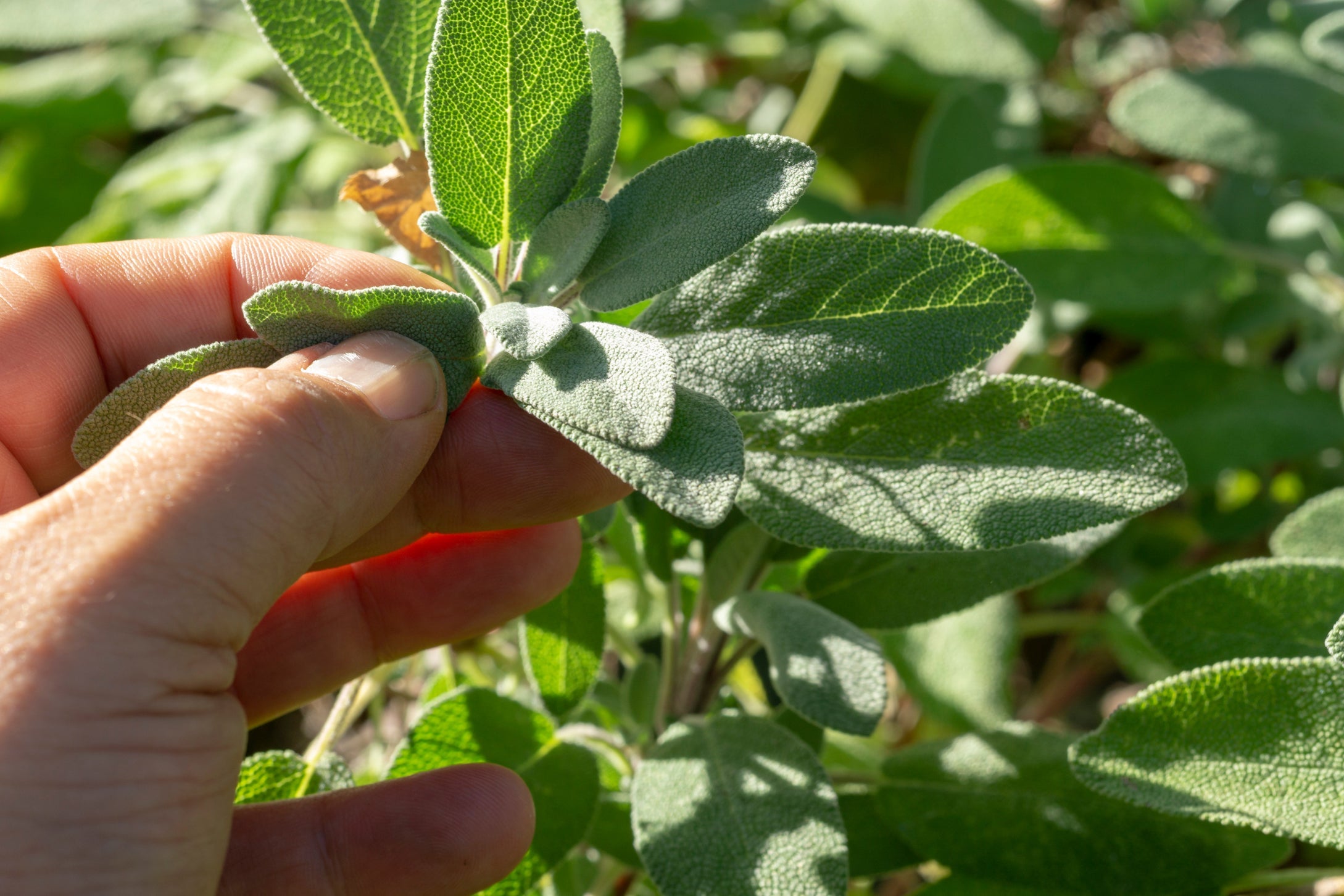
Prized for its culinary and aromatic properties, sage (botanically known as Salvia) is a popular herb from the same family as mint and marjoram.
As well as flavouring meat and poultry, it can be a great addition to buttery sauces and squash dishes.1
It’s accustomed to Mediterranean climates but will flourish just as well on a sunny windowsill, so it makes sense to have a plentiful supply on hand in any kitchen.
Easy to grow, it’s also incredibly simple to harvest, but you’ll still want to follow a few basic steps.
We’ve laid these out for you below:
- Lay off harvesting your plant in the first year.
- Prune regularly to prevent woody stems.
- Harvest for immediate use whenever necessary.
- Harvest for storage if you need a regular supply to hand, but make sure to store it appropriately for longevity.
- Allow time for your plant to recuperate before harvesting again.
If any of those stages sound confusing to you, we’ll cover each one in more detail below – and will reveal exactly when is the best time to harvest your sage plant…
| Difficulty | Easy |
| Equipment Required | Pruning secateurs or scissors (optional) |
| When To Harvest | Spring or summer preferred |
When To Harvest Sage
Sage is a hardy perennial which produces leaves all year round.
However, it is advisable to only harvest leaves in the spring and summer, before it blossoms.
After flowers appear, the foliage can lose its aroma somewhat and, what’s more, harvesting later in the year can spell trouble for the long-term well-being of your plant.
1) Don’t Harvest In Year One
If growing a sage plant from seed, you can expect to see the first mature leaves appear on the stem within around two and a half months of sowing.
However, it’s advisable to leave the plant alone for the first year to allow it time to fully establish itself.

If you can’t hold off that long, it’s entirely possible to harvest some foliage in its first spring and summer.
Just be sure to do so lightly, or you may compromise its long-term health.
2) Prune Regularly
As with many other plants, sage will benefit from regular pruning.
That’s because it has a tendency to become too woody, diverting too much attention to the growth of its stems and flowers and not enough to the leaves for which it’s famed.
“My sage plants tend not to become too woody because it’s a herb I harvest quite regularly in summer,” shares Horticultural Consultant Colin Skelly.
“Even so, I tend to replant every 3-5 years from cuttings, which take quite easily.
“This ensures that the plant does not lose vigour. I find that this happens in my garden with sage because the soil is quite fertile and moist (not very Mediterranean).”

If allowed to become woody, you may find that the plant will need to be replaced after a few years.
The best way to avoid this outcome is to prune back longer stems, especially after flowering, to keep them in shape and divert their energies back towards the foliage.
3) Harvest For Immediate Use
If you’re planning to use fresh sage leaves in your cooking immediately, you can simply pluck them from the stems with your fingers.
It’s possible to select either mature or baby foliage; the latter is often more popular because it’s said to have a stronger aroma and flavour.

The best time to harvest your sage leaves is on a clear day when humidity levels are low.
Wait for the dew to have dried off the leaves completely, as this will ensure that the oils contained within them are at an optimum level.
4) Harvest For Storage
If, on the other hand, you intend to harvest your sage and store it for later use, you can use your pruning scissors to cut entire stems around 15-20cm in length.
Bundle them together and secure them with twine or an elastic band, then hang them upside down to dry.
Once dried, the bundle should be stored in an airtight jar or another container.

It’s also possible to store sage in the fridge or freezer.
You can do this with both individual leaves or entire stems, though all foliage should be placed in a ziplock plastic bag wherever you plan to store it.
Fridge specimens will stay fresh for a few days, while freezer ones are good for months.
5) Allow Recuperation Time
Sage will withstand quite vigorous harvesting, but you should always be sure to leave a few stalks with plentiful leaves intact.
This will allow the plant to continue to photosynthesise and ensures it can bounce back stronger than before.

It’s also a good idea to give your sage plant time to recuperate during the autumn and winter months.
Since it produces leaves all year round, you can theoretically harvest them whenever you want.
However, it’s a better strategy to harvest in advance and store the leaves as outlined above to give the plant its longest life possible.
References
1. Sage. (2022, June 10). BBC Good Food. Retrieved March 24, 2023, from https://www.bbcgoodfood.com/glossary/sage-glossary



