IN THIS GUIDE
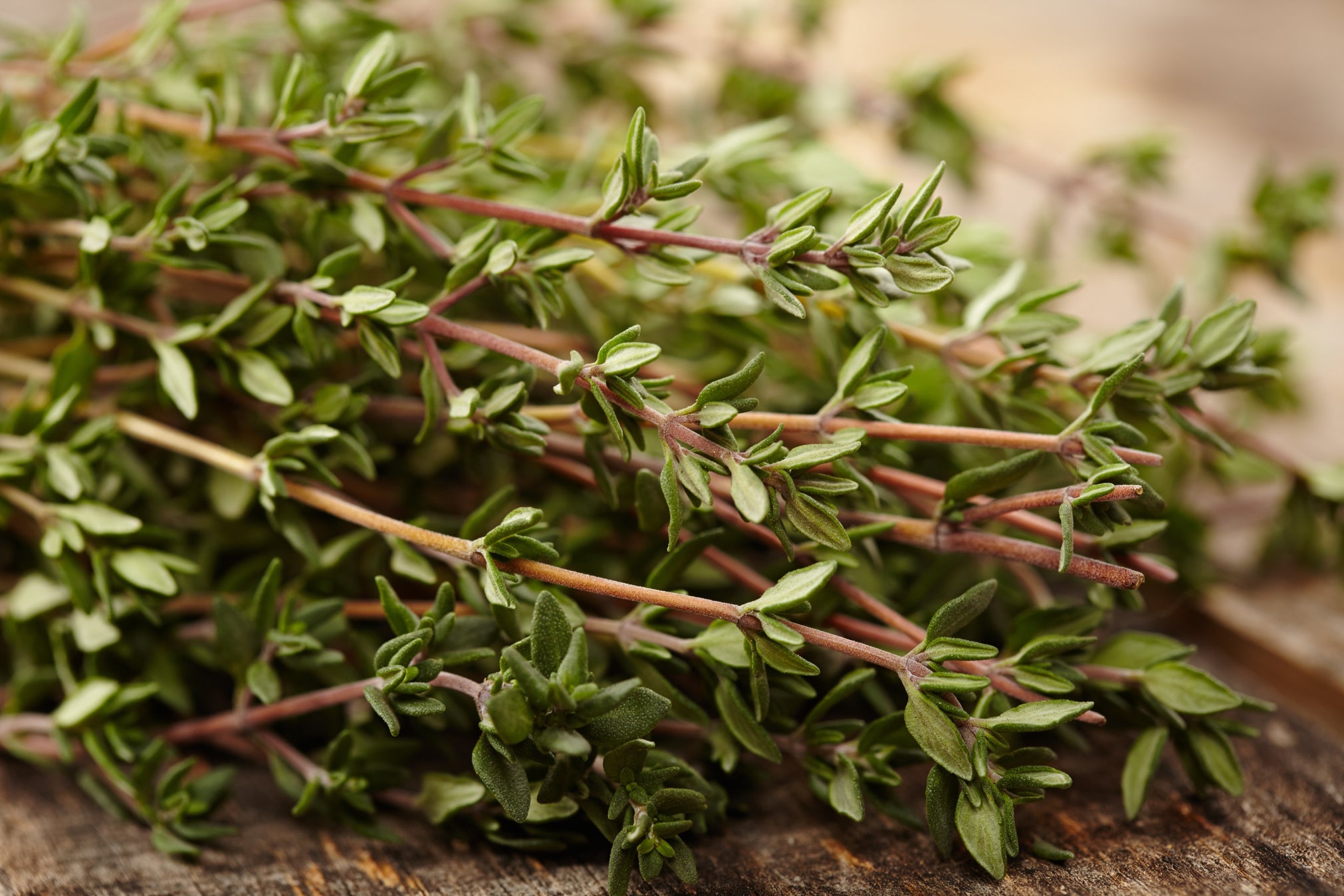
Thyme is an evergreen perennial herb that is an extremely useful plant both in the garden and in the kitchen.
In the garden, it is a great companion plant, drawing in a range of beneficial wildlife, serving as a good ground cover and helping with organic pest control.
In the kitchen, it has a wide range of culinary uses.
There are several different cultivars to consider, including variants with a lemon flavour and variegated plants.
There are also more upright and prostrate forms, which are useful in different locations in a garden.
To learn all about harvesting thyme, keep reading.
When To Harvest
The leaves and stems of thyme can technically be harvested all year round.
However, the flavour of the herb is best in the summer months, before it flowers, so I’d recommend harvesting between June and August.

The herbs will have the best essential oil content when harvested in the morning of a sunny day after the dew has dried.
If you have grown thyme from seed, it is best to wait until the second year before you begin to harvest, to make sure that the plant has established itself well.
However, if you have bought some thyme in pots to plant, then you can typically begin to harvest from it right away.
How To Harvest
Use a pair of scissors to snip fresh green shoots from the plant as required.
Make sure that you always leave around 12cm of woody material at the base of the plants so they can continue to grow well.
Harvest shoots evenly so that the plant does not become imbalanced or lose its attractive appearance.

Harvest regularly to keep the plants bushy, compact and producing new leaves.
Let thyme plants flower in your garden.
Although the flavour is not as good after flowering, the plants can still be used, and the flowers bring many benefits to garden ecology.
Thyme Uses
Fresh thyme can be used in the kitchen in a range of different ways.
The stems can be used whole and the leaves can be ground and used as a herb that stands up well and retains its flavour in cooking.
Unlike many other herbs, thyme retains its flavour well when dried.

If you would like to dry thyme for later use then it should definitely be harvested in the summer, before the plant flowers.
To dry the thyme, hang it in bunches in a warm, dark and well-ventilated location.
“Another option, as with other herbs, is to chop and then freeze in ice cubes,” says Colin Skelly, a Master Horticulturist.
“These can then be put straight into drinks or even for cooking during the winter months. For cooking, you can freeze using olive oil rather than water.”
Once it is fully dried, it can be placed into air-tight jars and moved into storage.