Tours

Exploring Yorkshire Himalayan Garden & Sculpture Park With Head Gardener Joel Dibb
IN THIS GUIDE History Of The Park Layout & Plantings Sculptures In The Garden How To Visit The Park Nestled in the heart of the North, the Yorkshire Himalayan Garden and Sculpture Park is a vibrant haven for plant enthusiasts and art lovers alike. Renowned for housing the region’s largest collection of rhododendrons, azaleas, and magnolias, this 45-acre oasis offers much more than its stunning flora, as scattered throughout the garden are over 100 open-air sculptures. I had the pleasure of speaking with Joel Dibb, the park’s Head Gardener, who shared his insights into the garden’s standout features. History Of The Park “The house was purchased in 1996 and came with a 20-acre garden at the time,” shares Joel. “Hosta Bank was the first area to get developed by the owners, which was planted out with some rare and unusual rhododendrons. “Some varieties are almost extinct in the wild, so it’s great to have them here.” “In the early 2000s, Magnolia Lake was created,” he continues. “The lake gets its name from the magnolia trees and sculpture that lies in the middle of the water. “Leopard Valley was next in development and that features quite a lot of hybrid rhododendrons, which is quite interesting because you can see how the owner’s interest in rhododendrons grew over time. “The Arboretum is around 20 acres and was planted in about 2016, so that’s really new and exciting.” Layout & Plantings “Along the edge of Magnolia Lake, we’ve planted out a lot of Primula candelabras, which are doing really well here in June,” Joel shares. “They are a Himalayan plant and complement the long grass that they grow in. The hostas also do well around the lake edges, which is a testament to the amount of frogs we get, as they keep the slugs away. “We’ve got a national collection of Rhododendron fortunei subsp. and some of those are still in flower in early June. “The Himalayan blue poppies are always eye-catching at this time of year, which is another bonus.” “In the arboretum, we’ve got an oak tree called King Alfred’s Oak. That grew from an acorn collected from King Alfred’s Oak at Blenheim Palace, so is quite a unique specimen. “We’ve actually got 52 different types of oak trees in the arboretum as they are great for wildlife.” Sculptures In The Garden “The sculptures here all have their own special spot in the landscape and suit the location that they’re in – nothing looks out of place,” explains Joel. “We’ve got a huge variety of sculptures and ‘The Magpies’ is one of them. The interesting thing about this sculpture is that it is made from gardening equipment. “One of the latest sculptures in the garden is called ‘Bursting from the Slumber’. It’s made up of around 1,300 ceramic poppies cascading down the hillside. “Each poppy has been made by an individual, so it was nice to work with the local community and get art and gardening combined to create this masterpiece throughout the valley.” How To Visit The Park “When you come to the park, you do feel like you’re in the Himalayas,” muses Joel. “It’s peaceful and is the perfect place to experience nature, relax and enjoy the tranquillity it brings.” For more information on visiting the Yorkshire Himalayan Garden and Sculpture Park for yourself, head over to their website.
Learn more
Discover Prospect House Gardens With Cathy Kitchingman - In Her Own Words
IN THIS GUIDE Prospect House The Beautiful Borders Cathy’s Favourite Plants For Shade Visiting The Garden Prospect House is home to a private garden full of luxurious plantings, shady borders and ancient trees. The almost one-acre private garden is also used by the owner of the house, Cathy Kitchingman, with her business partner Georgina Bordewich, to run garden workshops throughout the year via A Bright Prospect. Watch the video below for a full garden tour or read on to discover the garden in Cathy’s own words. Prospect House “I have lived at Prospect House since 1999, but I have only recently become much more passionate about gardening,” shares Cathy. “The house itself originally dates from the 1750s, so it’s a Georgian house. The garden was re-landscaped in 2003, and since then I’ve probably changed every border as my passion for plants has developed. “Each border has a theme as every area of the garden has different needs and requirements for the planting.” The Beautiful Borders “This is the pink border and in it we’ve got some beautiful Chaerophyllum which is a really lovely wispy plant that looks beautiful with the alliums,” Cathy continues. “In the shade of a beautiful walnut tree, the Persicaria bistorta ‘Superba’ seems to work well, so I’ve added some other cultivars such as ‘Red Dragon’, which looks rather nice with it. “We’ve left the Dogwood in this season because I like the foliage and the variegated leaf. We do thin them a little, but they flower as well, so I think it’s rather nice to just leave those. “Further down the path we have got the wisteria coming out from the pergola. It’s a very old, well-established wisteria that was planted in 2003. “There are three of those in total.” Cathy’s Favourite Plants For Shade “Some of the borders on one side of the garden are much more shaded because we’ve got these very old Scots Pine trees and a huge Beech tree,” Cathy explains. “We’ve had to adapt the planting and work out what actually survives here, so we’ve planted Rosa rugosa, which are really vigorous Roses. “I believe it is one of the only Roses that grows in such shade. We’ve also got ferns and sweet woodruff as a ground cover, which looks nice with the white of the Rose. “We have lots of edging plants in the form of Heuchera and Geraniums. “The star of the show is the Tree Peony, which is a really old plant. It is short-lived, but absolutely gorgeous.” Visiting The Garden “I personally find the garden very peaceful,” says Cathy. “I wish more people would come into gardening to find that solace. That’s probably why I do it really. I have a passion for the plants and the quiet offered in a garden.” To visit the garden at Prospect House, head over to the National Garden Scheme’s website.
Learn more
Combermere Abbey: A 1,000 Acre Estate And Home To The World's Only Fruit Tree Maze
IN THIS GUIDE Restoration Of The Gardens The Fruit Tree Maze The Pleasure Gardens Visiting Combermere Abbey Combermere Abbey, located on the border between Cheshire and Shropshire, is a 1,000-acre estate and home to the world’s only fruit tree maze. This maze is not the only attraction, as the site is also home to pleasure gardens and a gothic Knot Garden. I visited in early May and spoke with the estate’s owner, Sarah Callander Beckett about the history, design and hidden features of these spectacular gardens. Restoration Of The Gardens “This house and its gardens have been in my family – the Crossley family – since 1919,” shares Sarah. “I took it on in 1992 after I came back from quite a long stint working overseas and I began pulling it back together again, as it was a little lost. “The gardens had not been terrifically developed at all and the walled gardens were completely abandoned. “There were too few people to look after them before I took over and there was no longer a need for the vegetables and fruit that would have previously serviced the house. “As a result of this, the walled garden was the first area that we began to restore.” The Fruit Tree Maze “The six-acre walled garden is home to several unique features,” Sarah begins. “In 1993, we were introduced to Randoll Coate, a Maze Designer who came on a visit to Combermere. It was thanks to Randoll that we now have a fruit tree maze in the walled garden. “It’s the only one of its type in the world. It’s made up of apples and pears – and along the walls it has apricots, peaches and quince. From the air, it is in the shape of an eye.” “What I hadn’t thought about really was that I was going to get fruit off these trees,” she jokes. “We collect about a thousand kilos of fruit every year that gets pressed and put into the breakfast hampers for our wedding guests.” The Pleasure Gardens “The pleasure garden was something that was planted in the late 1800s and was originally for the guests of the house to walk up to after lunching or being in the house,” explains Sarah. “The previous Viscount travelled extensively and planted up some rather wonderful trees, so we have some fantastic old Wellingtonia specimens, a cedar of Lebanon and a Swamp Cypress. “More recently, we have built a small pavilion in honour of my mother who died three years ago, which is surrounded by a small selection of Magnolia species. “At this time of year, we have lots of Rhododendrons in flower, the most noticeable of which is a bright pinky-crimson colour. “These always uplift the spirit of the garden after quite a long (and wet) winter like the one we’ve had this year.” Visiting Combermere Abbey “We do have a lot to take care of here, as the walled gardens are forever evolving,” says Sarah. “We’re looking at ways of making them a bit more sculptural and less burdensome for the team to look after. “Seeing people enjoy them is my number one reason for spending the time and money in these gardens. “It’s so important to let the public enjoy them and get the benefits from being outside in these beautiful spaces.” To discover more about the gardens at Combermere Abbey, you can visit their website.
Learn more
The Secrets Of Cobble Cottage Gardens: A Small Garden That Packs A Mighty Punch
IN THIS GUIDE History Of The Garden Plants In The Garden In May John’s Best Kept Secret Visiting Cobble Cottage At the heart of a small village in North Yorkshire lies Cobble Cottage, a private garden owned by John Hawkridge & Barry Atkinson. The stunning garden is small in size but packs a mighty punch, with hundreds of plants creating a jungle-like effect amongst the busy planting schemes that envelop the paths you walk through. I visited the garden and spoke with John, who was kind enough to show me around and share some of his favourite features of the garden at Cobble Cottage. Watch the full video tour here: History Of The Garden “We’ve been living here for 33 years now,” shares John. “When we first moved, the garden was completely grass, there was no pond, just a tarmac drive, so it was a good garden to start from and be able to put our own stamp on. “The first thing I did in the space was build a pond. I spent weeks digging, it now is 3 feet deep, and it goes right across the garden. “Rather than having a path at the other side, we’ve got stepping stones across it, which is in keeping with the other winding passageways around the garden.” Plants In The Garden In May “Up on the lawn we’ve got a real mixture of different plants,” says John. “There’s cornus, azaleas, and alliums, which have all done really well this year. There’s also cow parsley, which I love, because it is airy and light, and at this time of year, it seems to float over the other plants. “In this garden, you’ve got to look up as well as down because there are some fantastic trees, such as the acers. I love the shape and colour of the leaves of these plants. “We’re only in mid-May, but the highlights in the garden at this time of year have to include the roses, which have started earlier than usual. The ‘Desdemona’ rose smells particularly wonderful. “Heucheras are another passion of mine. I love the colours and the different textures and shades of the leaves. “The biggest collection in the garden has to be hostas, as we go from the minis to the larger-leaved varieties, which people don’t always tend to see.’ John’s Best Kept Secret ‘The most rewarding thing about the garden is growing something that shouldn’t be growing here, like the Abutilon,” he shares. “I once saw it growing in a garden near Helmsley and was told that it shouldn’t be growing in the north of England because, I mean, the climate 20 years ago was different. “The owner actually gave me a cutting from her tree. I think I’m now on to the third generation of that family, because they’re not long-lived, but they are quite easy to grow cuttings from. “Every time a new cutting comes up and flowers, it is so rewarding and I shall never ever forget the owner saying ‘try it’.” Visiting Cobble Cottage “People return year after year to see how the garden has progressed,” explains John. “It’ll never stand still and is always evolving, so it’s great to share it and make money for many wonderful charities.” If you want to find out more about visiting Cobble Cottage, head over to the National Garden Scheme website to discover when they are next open.
Learn more
Rediscovering The Walled Garden At Helmsley With Executive Director June Tainsh
IN THIS GUIDE Helmsley’s Mixed History The Famous Laburnum Arch Volunteering At Helmsley Visiting The Garden In 1996, Alison Ticehurst, a local nurse, opened up the doors to Helmsley Walled Garden which was – at that time – lying completely dormant. The garden, which was originally created in the 18th century, had been abandoned after the First World War, and it wasn’t until this accidental rediscovery that it was restored. The five-acre garden that can be found behind those same doors today is full of beautiful garden rooms and two national plant collections. Join June Tainsh, the Executive Director at Helmsley, as she takes us on a tour of the garden to explore its rich history, thoughtful plantings and its national collections. Helmsley’s Mixed History “Helmsley Wall Garden was originally the kitchen garden for Duncombe Park House, so it provided all the fruit, vegetables and cut flowers for the house,” shares June. “Like many walled gardens in the UK, it was left abandoned after the First World War, when lots of the gardeners went away to war and didn’t come home. “As there were no longer people to do the work, the garden was left to go to ruin. “It was rediscovered by a lady called Alison Ticehurst, who pushed open a gate and came across this abandoned garden that was just full of weeds, nettles and thistles, with no trace of any of the plants that would have been here. “The layout is the one thing that is original, so the paths of the garden are the original paths and the dipping pond in the centre is the original dipping pond.” The Famous Laburnum Arch “We are asked constantly, when is the Laburnum arch in flower?” June jokes. “Well, it’s in flower right now, along with the Alliums, which creates a really amazing colour combination. “We also have a wisteria arch. One of the loveliest views in the garden is where you’ve got the combination of the alliums, the wisteria and the laburnum all together. “We have an iris border that stretches right from one end of the garden to the other, and that’s just coming into flower as well now. “In that border, they are all bearded irises and come in an array of beautiful colours.” Volunteering At Helmsley “I have a real passion for the impact of gardening on individuals and the well-being of individuals,” shares June. “We have four volunteering sessions every week and we can have up to 14 volunteers in each session. We have a total of 105 volunteers involved with the garden. “Volunteering is the backbone of the gardens. “It’s not so much about what we need them to do, it’s what they want to do and what they enjoy, and that’s what we encourage them to get involved with.” Visiting The Garden “We want to encourage people to try some of the things that we’ve created here in their garden, as all of the garden is manageable by volunteers and that means that people can recreate what we’re doing,” she says. “We’re not doing anything that’s desperately challenging or precious, but the standard of horticulture is really high. “People can see what we do and how we do it and maybe take that home with them as well.” You can visit the Helmsley Walled Garden website for more information if you’d like to visit the gardens this summer.
Learn more
Traversing Scape Lodge: The Sloping NGS Garden 1,000ft Up In The Pennines
IN THIS GUIDE Gardening On A Slope Eight Hundred Potted Plants Areas Of The Garden Visiting Scape Lodge Set 1,000 feet up in the Pennines, Scape Lodge is the highest garden in the UK that can be visited as part of the National Garden Scheme. Not only that – this garden is built upon extreme slopes that have been joined together by unique gravel paths and rocky edges since Elizabeth and David Smith moved here in 2012. I spoke to Elizabeth and David about gardening on a slope, as well as the highlights and challenges they come up against in their distinctive garden. You can watch the full garden tour below: Gardening On A Slope “We’ve not gone for the ‘build a big wall and make a flat area approach’, as most of the beds deal with the slopes,” shares Elizabeth. “We’ve put little rocks in to hold things and we’ve got a lot of Alchemilla mollis, which has a lovely matted root system that helps the slope to hold on to the bank. “Thinking beyond creating flat areas is really important and sloping beds work quite well.” “There is no sense of something being at the back of the border and hidden,” adds David. “Most of the garden is visible all of the time thanks to the slope.” Eight Hundred Potted Plants “We also have around 800 potted terracotta plants in the garden,” reveals David. “I particularly like hand-thrown British terracotta and I’m always looking for a pot I’ve not come across before to add to my collection,” Elizabeth shares. “We keep a display of pots on the terrace and the deck around the house so there is always something visible from our windows when we are inside. “We keep the colour scheme the same all year, so it’s always a creamy-yellow and blue. That way, you can change things in and out throughout the seasons.” Areas Of The Garden “I like succulents, which need some help to get through the winter up here, so they all have to go inside,” explains Elizabeth. “We have two cold frames, including an upright one, for housing the tender things in the winter. This one doesn’t have any heat, but we’ll put bubble wrap and a blanket over it if it gets really cold. “We also have a greenhouse that houses a permanent collection of succulents on the shelf in little pots.” “In the kitchen garden, we’ve built box beds,” she continues. “The advantage is that everything gets its own sunlight when it’s on the hillside. You can also create washes of colour that you can’t in a flat bed.” Visiting Scape Lodge “I think people when they come and visit they’re really surprised as to what has managed to survive up here in the Pennines,” jokes David. “It’s about having a garden that’s in tune with its place.” “I like the garden to have an atmosphere of being cared for, which I think it does, as it’s just a really nice place to be,” Elizabeth says. More information and the opening dates for Scape Lodge can be found on the NGS website.
Learn more
Pilmoor Cottages With Owners Wendy and Chris Jakeman: The Garden With Its Own Railway
IN THIS GUIDE The Miniature Railway Japanese Inspired Elements Exploring The Garden Visiting The Garden Pilmoor Cottages are home to a private garden in Yorkshire that has its own railway running through the 2 acres of land. Yes – you can ride on a train that takes you around the property and the stunning gardens that its owners, Wendy and Chris Jakeman, have spent years creating. I travelled to visit this unique garden for myself at the start of April. The Miniature Railway One of the biggest features of this garden is the railway which runs alongside a real railway track, which has been in operation since 1843, as Wendy explains: “The garden was a British Rail property with workers living in all the cottages and we bought it in 1975. Chris has done up the houses one after the other and we’ve both gardened it together.” “I’ve always had an interest in model railways ever since childhood,” says Chris. “As I grew up, I got the opportunity and had space in this garden to put one in, so I built one! “When you travel around the garden on the train, you’re going quite slow, so you notice things you maybe wouldn’t see when you’re just walking past.” Japanese Inspired Elements Chris and Wendy have spent years planting up their garden into distinguished areas and their love for a certain style is evident throughout, as Chris shares: “I’ve got an interest in Japanese-style gardening and I’ve recently created a gravel garden that is an homage to that.” In the plantings throughout the garden, there is a real love for Japanese plants and combinations on display. There are plenty of Acers throughout the space, as well as a waterfall – which is the last thing you see as you head into the tunnel from riding the train. Exploring The Garden In April, there was plenty to see at Pilmoor Cottages, with many plants looking their best and flowering well. “The blossoms are out on the Prunus and there’s a couple of Pieris that are very nicely coloured,” shares Wendy. “Crown Imperials are just about coming towards the end of their flowering period and the herbaceous borders are just starting to liven up,” adds Chris. “There’s a dozen apple trees in the garden that were all here when we came to the property,” he continues. “I’ve had to do some drastic pruning to a lot of them, as really old apple trees grow quickly as they don’t have the dwarfing rootstocks.” The main borders in the garden have been designed for autumn colour, but there’s plenty of colour in spring to see too, such as heathers, camassias and more acers. Visiting The Garden “When I stopped full-time work, we started to go and visit the NGS gardens on the weekend,” shares Chris. “Eventually we thought maybe we could open our own garden, so we did, and we love it.” If you’re interested in visiting Pilmoor Cottages to see the unique railway and beautiful plantings, Chris and Wendy are opening up the garden through the National Garden Scheme on the 27th May 2024. For more information on future open days and to book your tickets, head over to the NGS website.
Learn more
Touring Cheshire's Bridgemere Show Gardens With Eight RHS Award Winners
IN THIS GUIDE Bernard’s 44 Year Tenure Exploring The RHS Show Gardens When Best To Visit Bridgemere Nestled at the heart of Cheshire, Bridgemere Show Gardens is composed of 15 individual garden rooms and has existed as a public garden since the 1980s. Eight of the gardens at Bridgemere are, in fact, recreations of Gold or Silver Gilt-winning show gardens that were displayed at RHS Tatton Park, Chelsea and Hampton Court Flower Shows. I spoke with the Head Gardener, Bernard Porter, to discuss the 44 years he has spent working at Bridgemere, his favourite garden rooms, and the impact the gardens have on visitors. Watch the full garden tour with Bernard here: Bernard’s 44 Year Tenure “I’ve actually worked at Bridgemere for 44 years,” Bernard begins. “After I had spent 29 years on production, the previous owner, Mr Ravenscroft, asked me if I’d come and sort the garden out and I’ve been in here ever since. It’s a pleasure to work here. “Originally the garden used to just be a display in the middle of where the garden centre is now. “In the early 1980s, Mr Ravenscroft decided to move up here and a couple of years later, we started doing Chelsea Flower Shows. “He planned to bring every garden we did back and reinstate it here so the public could come and see it.” Exploring The RHS Show Gardens “Everybody makes a beeline for the Cottage as soon as they get to the garden,” explains Bernard. “It was the RHS garden we won the most awards with. We won a gold medal, best in show, and an award for plant excellence. This garden was the first time I worked at Chelsea, so it’s a bit of a special garden to me. “My favourite plant in here is the lilac that’s at the edge of the space. Lilacs have really gone out of fashion, but every garden should have a lilac in it somewhere because they smell beautiful.” “The Victorian garden was originally built by Mr Ravenscroft for Chelsea but he couldn’t get the ground space to do it as it is here,” he continues. “We started gardening down this end of the garden back in 1990 and it features a huge display of around 8,000-10,000 tulips throughout the spring. “As soon as, as soon as the tulips are over, we replace all of those with lots of varieties of dahlias.” “There’s a lot of people love the Down Memory Lane garden,” he says. “They’ll go sit in there for hours and it can be quite emotional. It was designed by someone that works for Blue Diamond in memory of her dad who had Alzheimer’s, so it provokes a lot of memories for people. “It looks more like a little allotment garden, than a show garden, but it won a Silver Gilt medal at Hampton Court, which was quite an achievement.” When Best To Visit Bridgemere “I think you can walk around the garden at any time of the year, whether it be December or July, and always find something in flower,” shares Bernard. “If somebody walks in and looks up and through the gate, they’ll see that I’ve got the most perfect office in the world. “Once you become a gardener, you just become obsessed with gardening. Plants become more important than people.” To find out more about Bridgemere Show Gardens and visit for yourself, head over to their website.
Learn more
Visiting The Ancient Trees At Parvey Lodge Garden: A 3 Acre Space In The Heart Of Cheshire
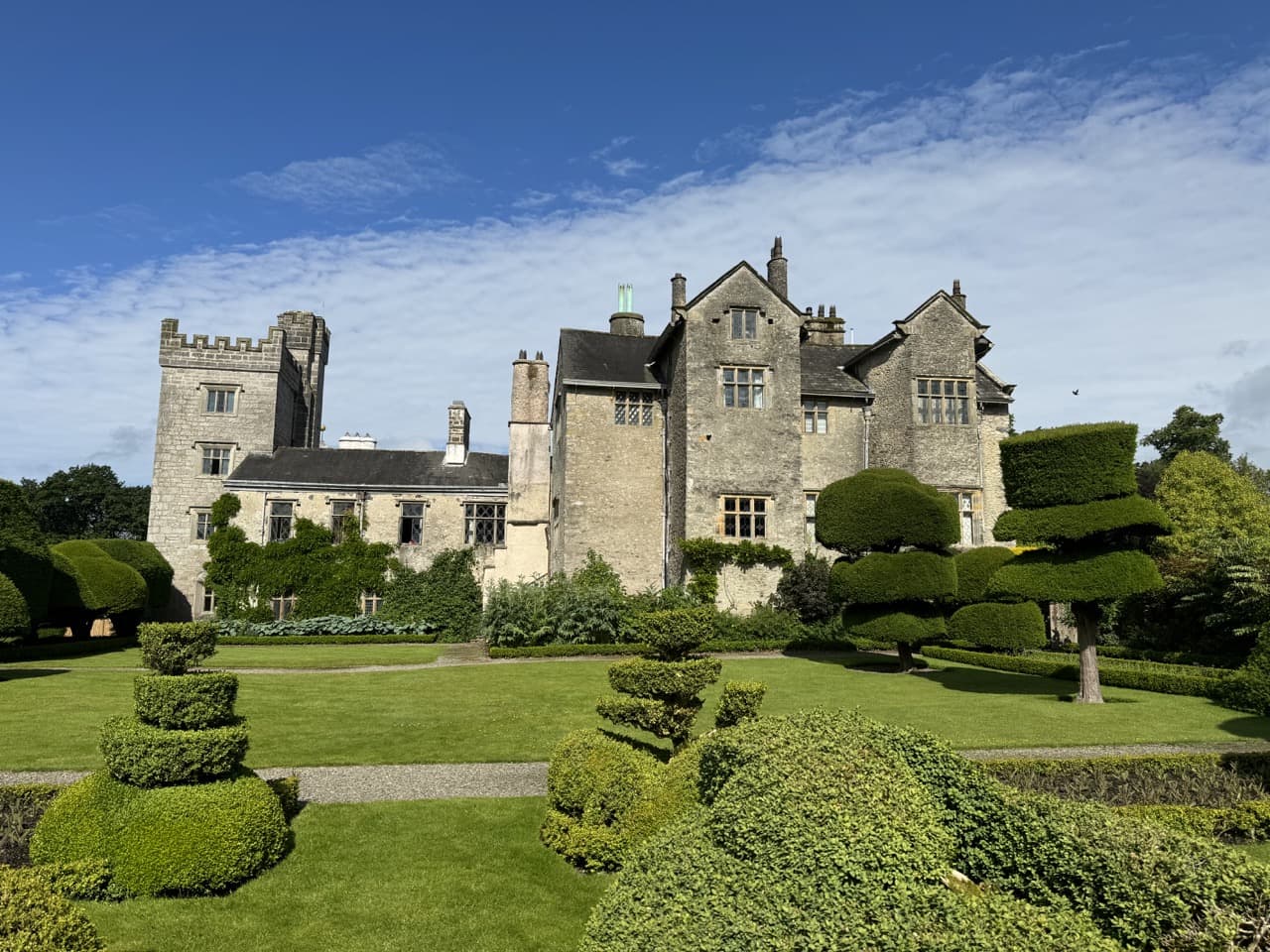
IN THIS GUIDE Ancient Victorian Trees The Gardener’s Pride And Joy Visiting Parvey Lodge Nestled within the heart of Cheshire lies the stunning three-acre Parvy Lodge, a private garden with lots to offer. Several trees thriving in the garden have stood for centuries, dating back to the Victorian era and even earlier. In mid-April, I had the pleasure of visiting the garden and speaking with Tanya Walker, the owner of Parvy Lodge. She guided me through the grounds, drawing my attention to some of the garden’s most remarkable features. Ancient Victorian Trees “The formal garden that you can see around me was developed many years ago and is home to many magnificent old trees,” shares Tanya. “The first and most notable one is the Himalayan cedar, which was very popular in Victorian times. “We have lots of Acer trees and they’re scattered all around the garden, which provides a beautiful colour. “You can see lots of cherry trees throughout the garden too and some of them are still in bloom in April. “We have a beautiful orchard in the secret garden where there are several fruit trees too.” The Gardener’s Pride And Joy “Our box hedges are the pride and joy of my gardener,” Tanya explains. “He has 28 box to shape in the shape of a ball and we also have a hedge in the shape of a train, which definitely it’s worth visiting and seeing. “There was a family who came here and they said their granddad owned the land and the house in 1930 and planted the box, so it has survived for years. “I hope they see this and know it’s still there and is being very well looked after.” “The orchard is the oldest part of the garden,” she continues. “It’s the home of two pears, seven apple trees and two Victoria plums. “We also have a little vegetable patch filled with bulbs and some crops, such as wild strawberries, which are great for jam. Behind that, we have the most beautiful espaliered apple trees.” “The Secret Garden is surrounded by big trees that have been standing for the past two to three centuries,” Tanya adds. “They provide a home for many many bird species which frequent the garden. “We also create piles of sticks that are used as hedgehog and bug houses, which is a great way to incorporate even more wildlife into the space.” Visiting Parvey Lodge “The most rewarding thing for me is to be able to share the garden with the other people,” says Tanya. “Last year alone, we raised £2,400 for the NGS and we have started opening for various other local charities. “We are happy to be contacted by other charities that need any support.” To find out more information or to arrange a visit to Parvey Lodge, head over to the NGS website.
Learn more