IN THIS GUIDE
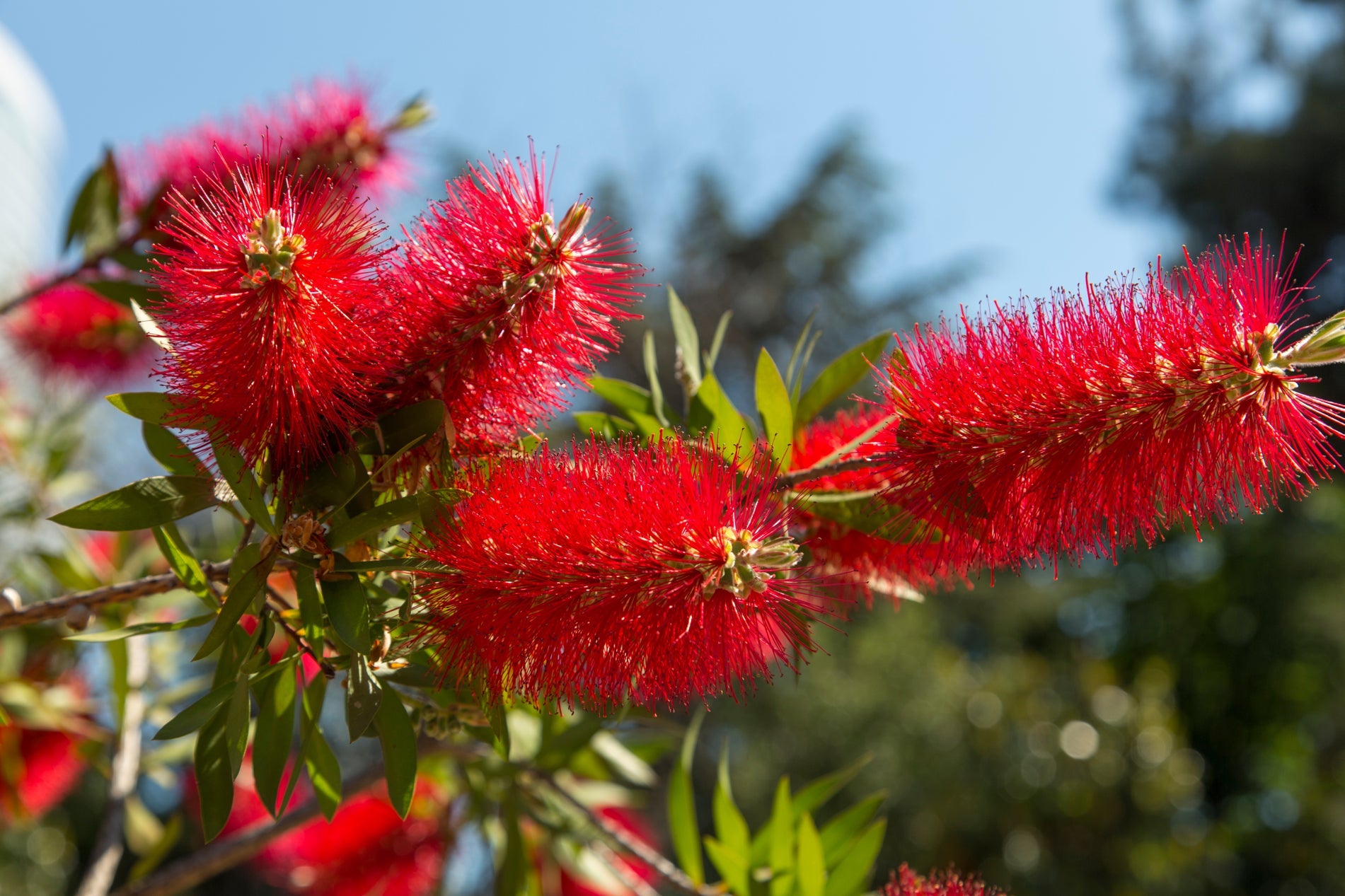
Callistemon ‘Splendens’ is a cultivar of Crimson Bottlebrush which has received an RHS Award of Garden Merit.1
If you are looking for an interesting shrub to grow in your garden, this could be an interesting option to consider if you have a sheltered spot that tends to receive plenty of sun.
Overview
| Botanical Name | Callistemon ‘Splendens’ |
| Common Name(s) | Crimson Bottlebrush |
| Plant Type | Shrub |
| Native Area | Australia |
| Hardiness Rating | H3 |
| Foliage | Evergreen |
| Flowers | Crimson flower spikes like bottle brushes |
| When To Plant | May or June (for the best results) |
| When To Prune | August or September |
Callistemon citrinus, also known as Melaleuca citrina, is a plant in the myrtle (Myrtaceae) plant family that is native to Eastern Australia.2
The plant’s showy and impressive red flower spikes make it a firm favourite in gardens far beyond its native environment.

One interesting thing to note is that the leaves of this plant are sometimes used as a tea substitute, and a tea made with the leaves is said to have a pleasant and refreshing flavour.3
Splendens is the best cultivar of this plant to grow in the UK, as it is somewhat hardier and better suited to growing conditions in our climate.
How To Grow Callistemon ‘Splendens’
Crimson bottlebrush is best planted in May or June but can be planted out at any time of year.
It can be grown in containers, in a greenhouse or polytunnel or outdoors in the most sheltered and mildest of UK gardens.
When deciding where to place this plant, it is very important to take into account the requirements mentioned below.

This is a plant which requires warm and sheltered conditions.
‘Splendens’ is somewhat hardier than the species type, but will still need to be treated gently and it cannot cope with heavy or prolonged exposure to frost.
Ongoing Care
Aspect
Even over the summer, this plant will require a mild and sheltered spot in full sun with the protection of a warm south or west-facing wall.
The warmer, sunnier and more sheltered a position you can provide, the better this plant will perform and the more impressive the flowers will be.
Soil Requirements
In a very sheltered and mild garden, this shrub can be planted in the ground in clay, loam or sandy soil which is moist yet free-draining.
It will thrive in either an acidic or neutral pH level, but it cannot be grown in highly alkaline conditions.

Most typically, however, this is a shrub that will be grown in a large container, so that it might be taken undercover for the winter months.
When growing this plant in a container, it will be essential to make sure that you choose a suitably moisture-retentive compost that will also allow excess water to drain away.
This is not a plant which can tolerate waterlogged soil.
Pruning
C. citrinus ‘Spendens’ is in RHS Pruning Group 8.
Like other evergreen shrubs, it is typically best pruned immediately after flowering but should not be over-pruned.

Prune lightly after flowering by removing any material that is dead, damaged or diseased.
After pruning, add mulch around the plant for moisture retention and slow-release fertility.
Overwintering
Crimson Bottlebrush ‘Splendens’ is H3 hardy in the UK.
This means that it can cope with brief dips down to -5°C, but will survive outdoors year-round in only the mildest, most southern and protected gardens in the British Isles.

Usually, if grown in colder regions of the UK, it will need to be moved into an unheated greenhouse or frost-free undercover structure over the winter months, though it can be kept outdoors over the summer.
Propagation
This shrub is best propagated by means of semi-hardwood cuttings, which should be taken towards the end of the summer or early autumn.
The tip of the cutting should be soft, while the lower end should be firm and hard.
Take healthy shoots in the morning for the best results.
Cut just below a leaf and aim for cuttings around 10-15cm in length.

Dip the ends in rooting hormone for best results, then immediately pot them up around the edges of pots filled with a free-draining medium.
Water well and allow the excess to drain away, then cover the pots and place them in a warm and light position that is out of direct sunlight.
‘Splendens’ cuttings may take some time to root but should be ready to plant out by late spring the following year.
Common Diseases & Problems
Since these plants are typically grown under cover, at least during the winter, they can be prone to typical greenhouse problems like scale insects, mealybugs and red spider mites.
Brown leaves can be a sign of a number of issues, with the most common causes being:
- Temperatures which are too low or fluctuate too extremely.
- Excessive water – overwatering or waterlogging.
- Root rot – a disease more likely if there has been a problem with waterlogging.
- Other fungal problems – which can affect the plant when it is not grown in ideal environmental conditions.
References
1. Ornamental AGM Plants July 2021. (n.d.). Royal Horticultural Society. Retrieved March 13, 2023, from https://www.rhs.org.uk/plants/pdfs/agm-lists/agm-ornamentals.pdf
2. Crimson Bottlebrush (Melaleuca citrina). (n.d.). iNaturalist United Kingdom. Retrieved March 13, 2023, from https://uk.inaturalist.org/taxa/77976-Melaleuca-citrina
3. Callistemon citrinus. (n.d.). PFAF. Retrieved March 13, 2023, from https://pfaf.org/user/Plant.aspx?LatinName=Callistemon+citrinus