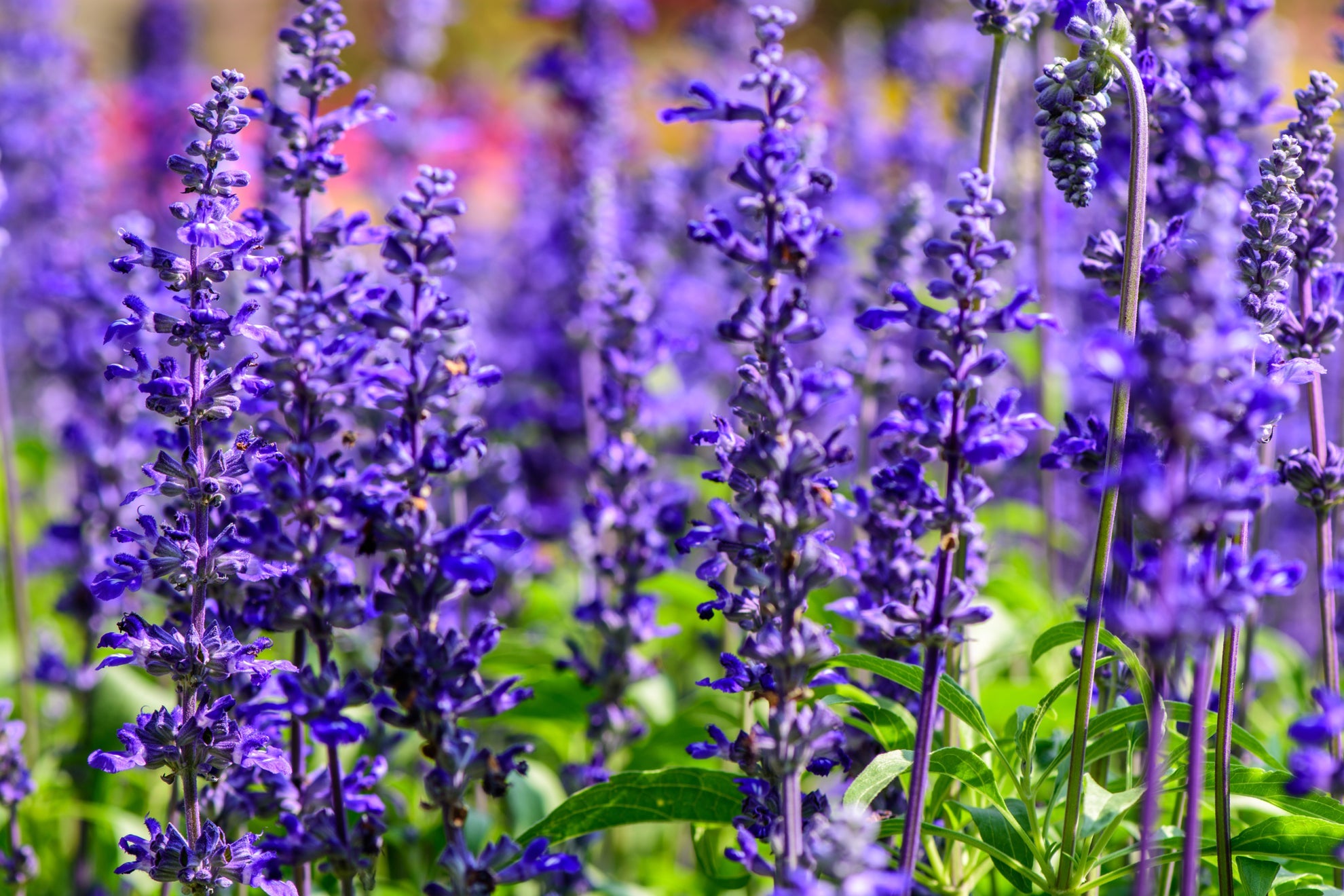
Salvias can be a wonderful choice for a UK garden.
These wildlife-friendly plants can, when cared for correctly, bloom for a long period over the summer months and sometimes even beyond.
Deadheading is one of the jobs to undertake if you are growing these plants in your garden.
“You should tip prune your salvias regularly to keep them bushy,” says Lyndi Garnett, one of the founding members of The Victorian Salvia Study Group.
As Lyndi says, deadheading is important for salvias because it will encourage the plants to put their energy into producing new flowers and blooming over a longer period, rather than going to seed.

Of course, if you want to collect seeds from your salvias then you should not deadhead too zealously – and should allow them to enter their seed-producing phase.
However, if you would rather enjoy their flowers over a longer period, then keep reading.
1) Prepare Your Tools

Whenever you are deadheading or pruning, it is very important to make sure that your tools are sharp and clean.
Blunt tools can cause damage to plants and, if you do not practice good hygiene in the garden, they can inadvertently spread disease.
Make sure you have some sharp, clean secateurs ready for this job.
2) Wait For Blooms To Fade
Salvias tend to start to bloom in May or June and can bloom right through the summer if you deadhead them.
If you don’t, then the flowers will bloom only until around midsummer before they go to seed, although you can deadhead at different times of the year too:
“Generally, salvias can be deadheaded at any time of the year, but they must be pruned at least once, ideally twice a year,” says Lyndi.

In the middle of summer, you should check over your salvias and look for any flowering stalks that are turning brown.
The brown colouration will begin at the base of the flowering area and work its way upwards.
Once around 70-80% of the blooms on a flowering spike have faded and turned brown, it is time to consider deadheading by removing that particular flowering stem.
3) Deadhead Spent Flowering Stems

Cut off any spent flowering stems where the stem meets the highest set of leaves on the plant.
Cut through the stem at this point with your clean and sharp secateurs.
New flowering stems should usually grow off the sides of the existing stems.
You may wish to repeat this process over the summer to ensure as long a blooming period as possible.
“Don’t cut them back in autumn!” warns Vicki Weston, owner of Weston’s Salvias.
“Although the plants will look a bit bare in the deepest parts of winter, wait until you can see green shoots at the very base of the plant, then you can tidy back and deadhead to a neat shape.
“You’ll have to be patient with some but they will all shoot.”
4) Feed In Mid-Summer

“Remember to feed and mulch your plants after any kind of pruning,” says Lyndi.
Feed your salvia with an organic, potassium-rich liquid plant feed in the middle of the summer, especially when growing in containers.
This will help increase the chance of further blooms and keep your plants as healthy as possible.