With their extravagant colourings, reliably long blooming seasons and evergreen foliage, Salvia ‘Hot Lips’ are hot property in summer gardens and ornamental borders.
Not just a pretty face, ‘Hot Lips’ will also entice plenty of bees and butterflies into your home through its intoxicating nectar.
The aroma given off by its blossoms is irresistible to humans too, so plant it near a bench or path to take full advantage.
Best of all, it’s easy to cultivate and fairly hardy against the British winter, so it’s an ideal option for beds, borders or any other spot in your garden that you wish to liven up with some energy and activity.
Overview
| Botanical Name | Salvia x jamensis |
| Common Name(s) | Salvia ‘Hot Lips’ |
| Plant Type | Perennial Shrub |
| Native Area | North America |
| Hardiness Rating | H5 |
| Foliage | Evergreen |
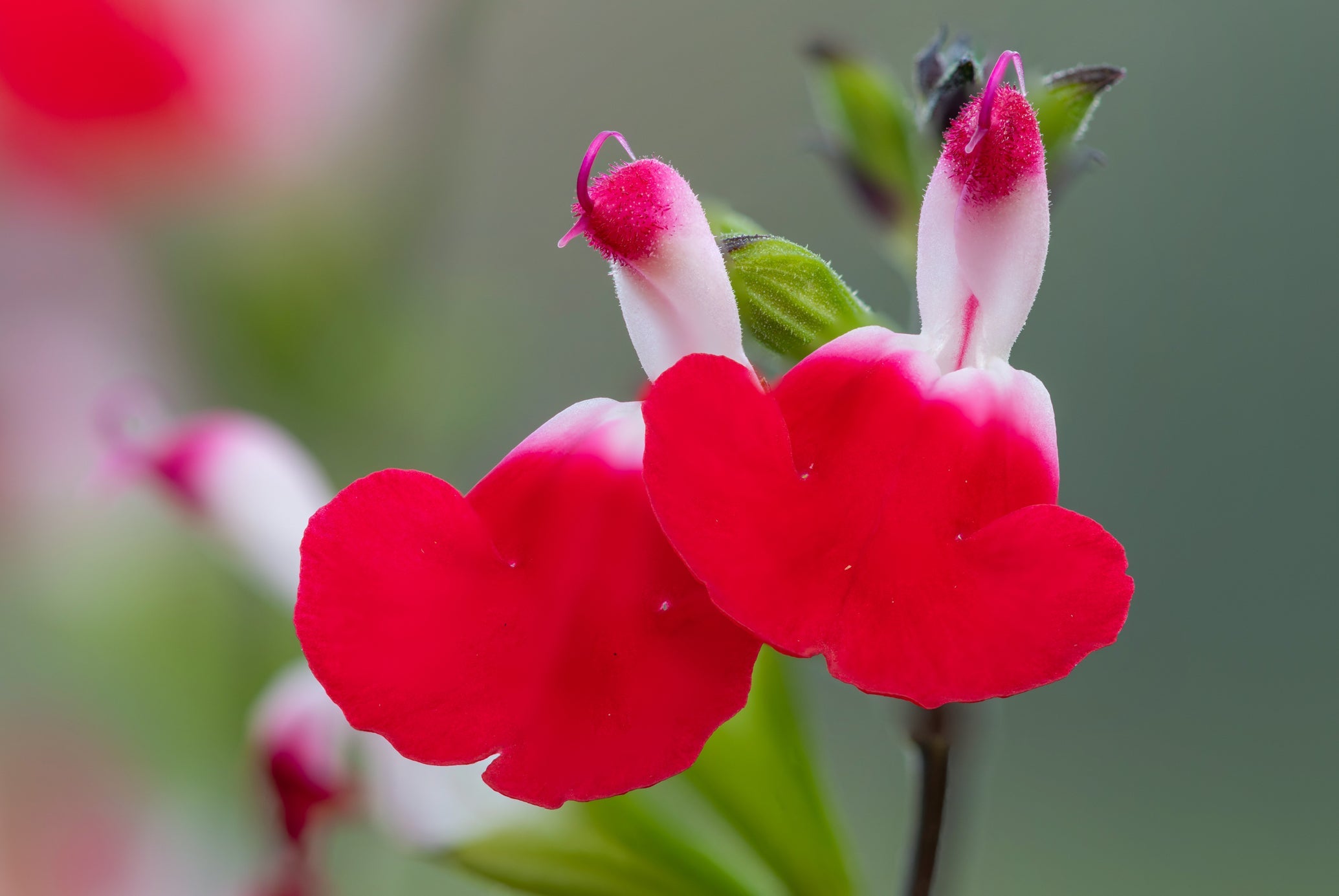
| Flowers | Large, open-mouthed racemes of red-and-white bicoloured petals, which can be entirely red or white in some climates |
| When To Plant | May-June |
| When To Prune | September-October |
‘Hot Lips’ is a member of the salvia genus, which is also known as ornamental sage and is prized for its extensive blooming periods and vibrant colour palette.
It is a particularly spicy specimen, with its open-mouthed petals a beautiful combination of red and white.
At certain times of the year or in certain regions of the country, you may notice that the flower is entirely one colour or the other, though a mixture is more common.

In any case, it’s a great addition to almost any location you place it, often acting symbiotically with other plants to prevent blights such as black spot and mildew.
What’s more, its status as a member of the sage family means its foliage and flowers are actually edible and are sometimes used as a garnish for salads, cocktails or other dishes and drinks.1
Some people say its taste is slightly reminiscent of blackcurrant, though you might have to use a little bit of imagination to arrive at that conclusion.
Planting Guidelines
As its name suggests, ‘Hot Lips’ performs at its best when the temperature rises.
It’s not overly fussy about the soil used as long as it’s moderately fertile and has good drainage.
Plant in a hole deep enough to submerge the root ball if transplanting from a pot.
Space plants at least 30cm apart to allow the roots to develop properly.
Hardiness
‘Hot Lips’ is generally hardy enough to survive the British winter, though it may succumb to frost in particularly cold years.

Insure against that by taking cuttings at the end of summer or taking potted specimens indoors when the mercury drops.
Preferred Aspect
‘Hot Lips’ prefers as much sun as possible, so plant it in a south-facing aspect in a sheltered location.
Partial shade may be tolerable but is not advisable.
The front or middle of garden borders is the best place for it.
Soil Requirements
The plant isn’t too demanding with regards to the type or acidity of the soil it’s planted in, though good drainage is a must.
It doesn’t enjoy getting its feet overly wet or dry, so take precautions to ensure it’s never waterlogged or parched.
Plant Care
Most varieties of salvia will survive just fine without too much in the way of TLC, though particularly cold parts of the country can spell trouble for them.

Just follow the guidelines below and you should enjoy an impressive display of blooms year after year.
Winter Care
If you live in an extremely cold and wet part of the British Isles, it’s good practice to use horticultural fleece or organic mulch to insulate the roots.
Alternatively, you can just bring potted plants indoors during the colder months.
“If you live in a cold part of the country, you can also dig up plants growing in the ground in autumn before the first frosts and either divide or pot the whole clump into a large pot,” shares Colin Skelly, a Horticultural Consultant.
“Water well, cut back the foliage and keep in a cold greenhouse over winter. It will be ready to plant back outside the following late spring.”
Pruning
Strictly speaking, it’s not 100% necessary to prune salvias at all.
If you are going to do so, it’s advisable not to prune too early, since this could jeopardise the plant’s survival in the case of a harsh frost.

Instead, wait until it has begun to show new growth in spring before pruning back by a third.
In blooming season, be on the lookout for wilted blooms to deadhead in order to encourage longer and more prolific flowering throughout the entire period.
Propagation
As mentioned above, it’s a good idea to take cuttings to provide insurance in case it falls victim to a severe winter.
You can do so in spring before it flowers with softwood tip cuttings or in late summer with semi-ripe cuttings.
Whichever type you favour, it’s best to take the cutting in the morning when the plant is at peak hydration.

Select a healthy stem and cut just above a leaf node, aiming for the cutting to be around 5-10cm in length.
Dip the cut end of the cutting into the rooting mixture and plant it in a 15cm pot filled with compost and perlite.
Cover with a plastic bag and keep warm and moist for the first few weeks of its life, until it has begun to take root.
Companion Planting
Salvia ‘Hot Lips’ will look incredible alongside any flowering perennial border plants, with alliums, antirrhinums, dahlias, echinacea, penstemons, rudbeckias and verbenas just some of the options on offer.

Underplanting them alongside roses makes for another complementary display since the salvias will begin flowering just as the roses finish.
Meanwhile, you could also pair them up with other salvia cultivars, such as S. greggii ‘Royal Bumble’ or S. ‘Dyson’s Joy’.
Common Problems
Salvia ‘Hot Lips’ is generally disease-free and can even ward off potential blights from neighbouring plants.

However, its aesthetic qualities mean it is a common target for pests such as leafhoppers, rosemary beetles, slugs and snails.
References
1. Ask Mr. Smarty Pants. (n.d.). Lady Bird Johnson Wildflower Center – the University of Texas at Austin. Retrieved March 24, 2023, from https://www.wildflower.org/expert/show.php?id=5859