Growing

Thin Stalks On Your Rhubarb? Your Plant Might Need Dividing Or Fertilising
IN THIS GUIDE 1) A Lack Of Nutrients 2) The Plant Is Immature 3) It Needs Dividing 4) Harvesting Incorrectly 5) Flowering & Going To Seed References Rhubarb is a perennial vegetable that is widely grown for its sweet and vibrant stems for culinary purposes. Part of the Polygonaceae family, rhubarb is thought to originate from Siberia and China, which is why it can sometimes struggle when grown in our very different climates.1 One of the most common issues gardeners can experience when growing rhubarb is the production of thin, rather than thick stalks, which can be caused by a number of factors: A lack of nutrients from the soil. If the plant is young or immature. Older plants that need to be divided. From being harvested incorrectly. The stems flowering and going to stem. We explain each of these reasons with solutions down below. 1) A Lack Of Nutrients Rhubarb plants are hungry feeders, so if they are not given the correct nutrients they may fail to thrive – and ultimately produce thin stalks. In autumn or early spring, a general-purpose fertiliser or mulch of well-rotted manure or organic matter can be applied thickly around the crown of the plant, which will give it a boost for the growing season ahead. Rhubarb prefers moist, but free-draining soil and will struggle if grown in compacted soil prone to waterlogging. 2) The Plant Is Immature Newly planted rhubarb may produce weak and thin growth early on and should not be harvested until they are suitably established and able to handle being picked from. To encourage a strong and vigorous plant for many years to come, it is advisable to leave new plants or divisions to settle and bulk up for at least 2 years before taking a harvest. 3) It Needs Dividing Rhubarb plants are generally tough and can live in excess of 10 years. However, over time they may become congested and produce weak stems, which is an indication that they should be divided. It is generally recommended that rhubarb plants are divided every 4-5 years to replace older specimens and maintain plant health. 4) Harvesting Incorrectly When rhubarb stalks are harvested can also have a bearing on the stem thickness and size, as over-harvesting can weaken the plant and subsequent crop. Harvesting stems from established plants can generally be performed from early spring until early summer. Although it might be tempting, cropping after June should be avoided to encourage a healthy harvest in the following years. 5) Flowering & Going To Seed Although unusual, rhubarb plants can produce flowering stalks during the summer months which need to be swiftly removed. These flowering stems, if given time, will go to seed and use up the plant’s precious energy, causing it to weaken and potentially produce a poor future harvest. To remove the flowers, simply cut the flowering stems at the base with a clean and sharp knife. References 1. Rhubarb (Rheum species): the role of Edinburgh in its cultivation and development. (2017). Retrieved March 23, 2023, from https://www.rcpe.ac.uk/sites/default/files/jrcpe_47_1_lee.pdf
Learn more
'Get The Balance Right With Rhubarb' - Dan Ori On Yellowing Leaves And Their Causes
IN THIS GUIDE Nutrient Deficiencies Waterlogged Soil Temperature Watering Rhubarb is a hardy perennial vegetable that is commonly grown for its delicious and vibrant stems. However, even though it is generally easy to grow and care for, gardeners can face some challenges when growing it as it is not native to the UK. One of the most common problems gardeners can experience when growing rhubarb is yellow leaves. This article will consider the possible causes of why rhubarb leaves turn yellow, what can be done to prevent this and any remedial action that can be taken. Nutrient Deficiencies Rhubarb plants are hungry feeders and yellowing leaves can sometimes suggest a lack of nutrients and minerals in the soil necessary for it to thrive. A thick annual mulch of organic matter or well-rotted manure applied in early spring is highly recommended, especially when growing rhubarb on poor soils, as well as an application of a general-purpose fertiliser. However, it is important to note that when applying a layer of mulch, you need to be careful not to cover the crown of the plant, as this can lead to crown rot and more serious issues. Waterlogged Soil Rhubarb grows best on moist but free-draining soil and will struggle if grown on a compacted site or an area that is prone to waterlogged soil, which can potentially lead to foliage yellowing. “The trick is to get the balance right with Rhubarb,” says Horticulturist Dan Ori. “It needs moist soil to crop well but it doesn’t do well in waterlogged soil, as the crown will often rot.” If your garden has compacted soil, it can be made workable and suitable for growing rhubarb by digging it over and adding organic matter such as homemade compost or well-rotted manure. It is worth noting that rhubarb can also grow well in a large pot or container as not only can the growing medium be mixed to suit the plant, but it can be moved into the best spot for it to grow. With regards to the aspect of where to grow rhubarb, it prefers a sheltered and south-facing site that will receive full sun. Rhubarb can be grown in partial shade, although may struggle if it does not receive enough direct light. Temperature Rhubarb is a hardy plant with a rating of H5, indicating that it can withstand winter temperatures down to as low as -10-15°C. Rhubarb originates from colder climates and actually requires a cold period of temperatures around 0°C for a couple of months in order to produce healthy foliage and stems the following season. Although low enough winter temperatures are unlikely to be a problem for most parts of the UK, it is worth noting that this may be an issue for much milder and coastal regions. Watering Yellowing leaves and wilting can often be an early sign of either over or under-watering rhubarb. Rhubarb requires moist but not overly wet soil and thorough watering of the roots during hot and dry spells is advised, as underwatering can lead to reduced and even a complete halt of all growth. However, overwatering can also be harmful as it can lead to crown rot and waterlogged soil. As a general rule, it is recommended to allow the top 2-4cm of soil to dry out before watering again and to avoid watering if the soil is already damp.
Learn more
7 Companion Plants To Grow With Rhubarb That Are Mutually Beneficial
IN THIS GUIDE 1) Strawberries 2) Garlic 3) Beetroot 4) Brassicas 5) Beans 6) Sage 7) Asparagus References While it might technically be classed as a vegetable, the sweetness of rhubarb stalks make it a delicious ingredient in pies, preserves and other saccharine dishes.1 It’s no surprise then that it’s a common sight in vegetable patches around the country. Although it’s perfectly acceptable to grow rhubarb alone, you might find it beneficial to partner it with one or more companion plants. That’s because they can offer symbiotic advantages to one another, including pest deterrence, pollinator attraction, soil improvement and growth stimulation. With that in mind, here’s a rundown of some of the 7 best companion plants to position alongside your rhubarb specimens to ensure mutual benefits for both. 1) Strawberries Strawberries and rhubarb don’t just go well together in your favourite sweet pie recipe – they’re also bosom buddies in the vegetable patch, too. That’s because the former help to provide ground cover and deter weed growth, while the latter offers shade from the strongest rays of the sun. They can be harvested at more or less the same time too, simplifying the whole process. 2) Garlic The leaves of rhubarb plants are positively adored by leaf beetles and their large surface area makes them a beacon to these dangerous critters, who also feed on their stems. The high sulphur content found in garlic can keep the beetles and other unwanted pests, such as weevils and ants, from compromising the health of your plant and stealing your stems.2 3) Beetroot On the one hand, the complimentary red-and-green colouring of beetroot and rhubarb is an attractive combination in the garden itself. However, it’s not just a marriage based on cosmetic appeal, as rhubarb provides much-needed shade for the beetroot plants below. 4) Brassicas This is one arrangement where the rhubarb is doing all the heavy lifting. Smaller varieties of these leafy greens (such as baby kale or kohlrabi) can shelter from the sun under rhubarb’s ample foliage. 5) Beans The bean and rhubarb combo is a perfect example of Mother Nature working in harmony. Beans can help to elevate levels of nitrogen in the soil, which is superb news for rhubarb since they require a lot of nutrients.3 6) Sage Sage is a helpful herb to plant alongside your rhubarb patch for a couple of different reasons. For starters, its fragrant blooms will draw the attention of pollinators, as well as attract predatory insects which are beneficial in wiping out unwanted infestations of parasitical ones. Meanwhile, the long roots of sage can break up the soil and aerate it, stimulating rhubarb growth. 7) Asparagus Like sage, asparagus also likes to ‘stretch its legs’ in the soil and its long roots can help to improve circulation and encourage root movement in terrain that has become compacted, heavy or waterlogged.4 What’s more, both are perennials which can be harvested around the same time, meaning they’re a great low-maintenance double act. References 1. Team, G. F. (n.d.). Rhubarb. BBC Good Food. Retrieved March 23, 2023, from https://www.bbcgoodfood.com/glossary/rhubarb-glossary 2. Plata-Rueda, A., Martínez, L., Santos, M. H. D., Wilcken, C. F., Soares, M. A., Serrão, J. E., & Zanuncio, J. C. (2017). Insecticidal activity of garlic essential oil and their constituents against the mealworm beetle, Tenebrio molitor Linnaeus (Coleoptera: Tenebrionidae). Scientific Reports, 7(1). https://doi.org/10.1038/srep46406 3. UK’s first measurements of nitrogen added by legumes to a crop production system. (n.d.). The James Hutton Institute. Retrieved March 23, 2023, from https://www.hutton.ac.uk/news/uk%E2%80%99s-first-measurements-nitrogen-added-legumes-crop-production-system 4. Growing Vegetables: Asparagus . (2021, December 7). University of New Hampshire. Retrieved March 23, 2023, from https://extension.unh.edu/resource/growing-vegetables-asparagus-fact-sheet
Learn more
Planting Winter Cropping Potatoes You Can Grow To Enjoy For Christmas Dinner
IN THIS GUIDE Plant Them In July Or August 1) Choose Your Potatoes 2) Find A Suitable Location 3) Plant Your Tubers 4) Earth Up Potatoes 5) Remove & Compost Dead Foliage 6) Keep Tubers In Pots Until Required Potatoes are a staple crop for many home growers, and most will plant tubers in spring to harvest in summer or autumn. However, what many do not realise is that if you have an undercover growing area such as a greenhouse or polytunnel, you can enjoy not only stored maincrop potatoes for your Christmas dinner – but also potentially delicious new potatoes too. Christmas cropping potatoes are the first or second early potato varieties that are planted not in the spring, but in mid-late summer or autumn. These potatoes will create a crop of new potatoes that you can harvest over the festive period. In order to be able to grow potatoes late into the year, you will generally require an undercover growing area. However, this job may also be possible in some more sheltered and warmer parts of the UK if you use cloches, row covers or other forms of protection. If you would like to grow fresh potatoes for Christmas, here is what you need to do: Choose a variety of potatoes (such as ‘Charlotte’ or ‘Maris Peer’) to grow and source your seeds. Select a suitable location for your potatoes. Plant your potato tubers into the container you have chosen. Earth up your tubers, and ensure that frost-free conditions are maintained. Once foliage dies down in late autumn, remove and compost this, leaving tubers in place. Keep the tubers safe in their pots until the festive season. Difficulty Medium Equipment Required Pots, greenhouse or polytunnel When To Plant July-August Plant Them In July Or August When precisely you plant Christmas cropping potatoes will depend on where you live and the conditions to be found there, and when the first frosts are expected. Generally speaking, this is a job that you undertake either in the second half of July or in August. Here in Scotland, I tend to get a better crop if I plant Christmas cropping potatoes close to the end of July, while for growers in most of England, August planting in a polytunnel or greenhouse is typically recommended. 1) Choose Your Potatoes My favourite potatoes for Christmas cropping are ‘Charlotte’ and ‘Maris Peer’, but any first-early or second-early potato varieties can be used. It is important to note that you cannot simply take summer-harvested tubers and replant these. The tubers go through a long period of dormancy after harvesting so they will not grow. What you need to do is either purchase cold-stored potato tubers from a commercial vendor in the summer or hold back tubers purchased in spring by keeping them in a cool light place throughout the warmer months. The latter is more difficult because these held-back tubers will develop long and rather fragile shoots, which can get aphid problems and must be checked often for issues. I sometimes hold back some tubers to plant but have experienced mixed results. 2) Find A Suitable Location Once you have chosen a variety and sourced the seed potato tubers, you need to decide where to plant them. As mentioned above, growing new potatoes for Christmas will usually involve undercover growing in a greenhouse or a polytunnel or, at the very least, giving outdoors-grown plants more protection to keep them frost-free in autumn. Container growing is generally the easiest option, since containers won’t take up much space in your growing areas and can be protected more easily as the weather grows cold. There are a number of different container options to consider. You can use large pots, barrels, buckets, sacks or grow bags. I use large reclaimed buckets to grow my Christmas-cropping potatoes, placing these outdoors and then moving them into my unheated polytunnel which, with added thermal mass, stays frost-free in all but the most extreme of winters where I live. 3) Plant Your Tubers Once you have decided on a container for your Christmas cropping potatoes, place a little of your growing medium in the base (around 15cm deep), then place your tubers on top. Cover them over with another 15cm or so of the growing medium so your containers are around 1/3 full. Any peat-free multipurpose potting mix will be fine, and I use a homemade mix of 1/3 loam soil, 1/3 compost and 1/3 leaf mould. I also lay the tubers on a bed of comfrey leaves, to provide additional nutrients upon planting. A rough guideline to follow when deciding how many potatoes to place in a container is that you should allow 10L of capacity for each tuber you plant. So, in a container with a 50L capacity, you can place 5 seed potatoes. Using this as a rule of thumb can help you determine spacing, but use common sense as well. 4) Earth Up Potatoes Once shoots emerge from the top of this growing medium, you will gradually ‘earth up’ the potato plants as they continue to grow, just as you do when growing potatoes in the ground. Remember to water consistently, watering at the base of the plants rather than from above, for best results. Don’t allow the growing medium to dry out but avoid waterlogging. To give potatoes a boost you can also consider watering with an organic liquid plant feed. I use a seaweed liquid feed or compost tea when watering around 3 times over late summer and early autumn. The most important thing, however, when growing new potatoes for Christmas, is to make sure that the area where you are keeping your potatoes remains frost-free. Taking steps like increasing thermal mass and adding insulation can help keep an unheated undercover growing area free from frost as winter approaches. 5) Remove & Compost Dead Foliage In late autumn, the foliage on your potato plants will die back. Once this happens, remove and compost this material (as long as it is disease free). 6) Keep Tubers In Pots Until Required The tubers should remain safe below the surface in your containers. However, look out for squirrels, rodents or other pests, and where necessary, cover the tops of the containers to make sure no one gets to the tubers or unearths them before you do. When you want to harvest, you can just delve into the container to find potatoes to harvest if you need only a few at a time, or you can tip out the whole container and harvest the tubers from within it all at once for a special festive meal. “I have never grown potatoes for Christmas but growing in a container in my greenhouse looks like a viable option,” shares Master Horticulturist Colin Skelly. “I may need some metal mesh to keep out the mice as they would definitely take an active interest.”
Learn more
8 Radishes Including Summer Varieties (Harvested Sooner) And Winter Types
IN THIS GUIDE Summer Varieties 1) ‘Cherry Belle’ 2) ‘Scarlet Globe’ 3) ‘French Breakfast’ 4) ‘Sparkler’ Winter Varieties 5) Chinese Radish 6) ‘Black Spanish Round’ 7) ‘China Rose’ 8) ‘Miyashige’ References Radishes are broadly divided by season of harvest and by shape and size. Summer radishes are distinctly smaller than winter radishes and are ready for harvest much sooner. Summer Varieties Summer varieties are broadly divided into ‘globe’ which are the familiar round varieties and the ‘icicle’ types with elongated shapes. Summer radishes are not only easy to grow, they are especially quick-growing vegetables so that within several weeks the gardener’s efforts yield results that are edible and tasty! As such, summer radishes are an excellent choice as an ‘entry level’ vegetable for the gardening beginner, or to get kids started on growing veggies. Because summer radishes are small in size and so quick to crop, they are an ‘in-between’ vegetable in more ways than one: First, their size allows them to be planted in between rows of other, larger vegetables – and in small, unused patches of the vegetable garden, to fill in the gaps. Second, because they can be harvested in about four weeks, they can be sown and enjoyed in between the points in time that an earlier vegetable has been harvested and a later one is yet to be sown and grown. All of the following summer radishes are cultivars of R. sativus – ‘Small Radish’ or ‘Western Radish’. 1) ‘Cherry Belle’ An heirloom variety and one of those that defines radish to European eyes, being little, round and red. It is succulent with a relatively mild flavour. Among summer radishes, it is also relatively forgiving if picked a little late. One of the fastest-growing summer radishes, it is ready to be harvested in only three weeks when it is about 2.5cm wide. 2) ‘Scarlet Globe’ Aptly described by its name, it is not too different from ‘Cherry Belle’ except for being just a little bigger, and good for harvest in about four weeks at an average size of about 3cm. It too is succulent with a relatively mild flavour. But another difference is that it is not an heirloom variety but is an RHS Award of Garden Merit recipient.1 3) ‘French Breakfast’ Really does originate from France and in some parts of France it is actually enjoyed as a snack, though maybe not for morning breakfast!2 This heirloom variety has a cylindrical shape, is a bright red above while the lower third or merely the lower tip is white. It is big for a summer radish with a length averaging 6cm. It is a mild but flavourful variety that is ready for harvest in about four weeks. 4) ‘Sparkler’ In appearance may be thought of as a mix of ‘Scarlet Globe’ and ‘French Breakfast’ – it is about the same shape and size as the former with the colouration of the latter, being a bright red with the lower third or only the tip being white. It is crunchy and mild in taste, and is considered one of the earliest summer radishes that can be sown. Ready in about four weeks; recipient of the RHS Award of Garden Merit. Winter Varieties Larger winter radishes are usually called Daikon, but it is incorrect to refer to all winter types by this term as there are also Chinese winter varieties and the Black Spanish variety. On the other hand, winter radishes have their own singular strength and standout charm, for how many other flavourful and culinary vegetables will keep growing and be good for harvest through the cold and grey Decembers and Januaries, the dead of winter! Furthermore, just when you would like a bit of spicy zing to your winter dishes, there’s that flavourful radish you had sown back in October! 5) Chinese Radish AKA: ‘Longipinnatus’ or ‘Mooli’ A daikon, perhaps the classic daikon. It is dirty white and ungracefully cylindrical in shape. Typically about 40cm long, it can attain lengths of 50cm+ when allowed to mature. As it grows, about a third of this radish is above the soil’s surface. It is on the mild side for a winter radish but does not have the light mouth-feel of summer radishes. It is used throughout East Asia and South Asia in a vast variety of savoury dishes, further to which condiments, pickles and such are also made from it. 6) ‘Black Spanish Round’ A radish with a reputation. It has a definite kick, rather like a horseradish – it is spicy, perhaps too spicy for some. Another elongated form is also cultivated; it is not quite as spicy. Both kinds are often as black as coal from the outside and as white as snow inside. The round variety is a proper heirloom plant, going back to the 16th Century. Not properly round, it is lumpily round or pear-shaped. Ready to harvest when it is about 10cm wide in 60-70 days, even by winter radish standards this one keeps well. It is best used in savoury, spicy soups and dishes. 7) ‘China Rose’ A variety from China that is rose-red in colour. This daikon is cylindrical, rather tube-like, in shape. It grows to 15-20cm in length and 5cm in diameter so it is on the small side for a winter radish. Making up for it, this one is flavourfully spicy rather than overly so. As such, it can be enjoyed raw with Spanish or Tex-Mex foods but this versatile daikon can also be used for making soups, stocks and stews. It is ready for harvest in right around eight weeks. 8) ‘Miyashige’ Hails from Japan. It is off-white and carrot-shaped, typically growing to 35-40cm long and 7-7.5cm in diameter. It is ready to be pulled up in 50-60 days when it has not reached its full size. Not spicy but quite mild, this radish is succulent and flavourful. A great choice if you want to try Japanese or Korean cuisine at home, this radish is also a versatile one as it can be sliced raw into salads, quickly sauteed, or pickled and stored. “If, like me, you find strong spices have you reaching for jugfuls of water, you are safest regarding winter radishes as a culinary vegetable, with ‘Miyashige’ being the only one to eat raw,” shares Master Horticulturist Peter Lickorish. “I also have a preference for the narrow varieties, simply because they can be packed in a little tighter. “That said, cramming too tightly will often lead to bolting, so go by the recommended spacing on a seed packet.” References 1. Raphanus sativus “Scarlet Globe.” (n.d.). Royal Horticultural Society. Retrieved March 23, 2023, from https://www.rhs.org.uk/plants/119407/raphanus-sativus-scarlet-globe/details 2. Damrosch, B. (2011, April 20). The French Breakfast radish makes a handy snack. Washington Post. Retrieved March 23, 2023, from https://www.washingtonpost.com/lifestyle/home_garden/the-french-breakfast-radish-makes-a-handy-snack/2011/04/12/AF6E8uBE_story.html
Learn more
8 Salad And Wild Rocket (Arugula) Varieties: From The Garden To The Kitchen
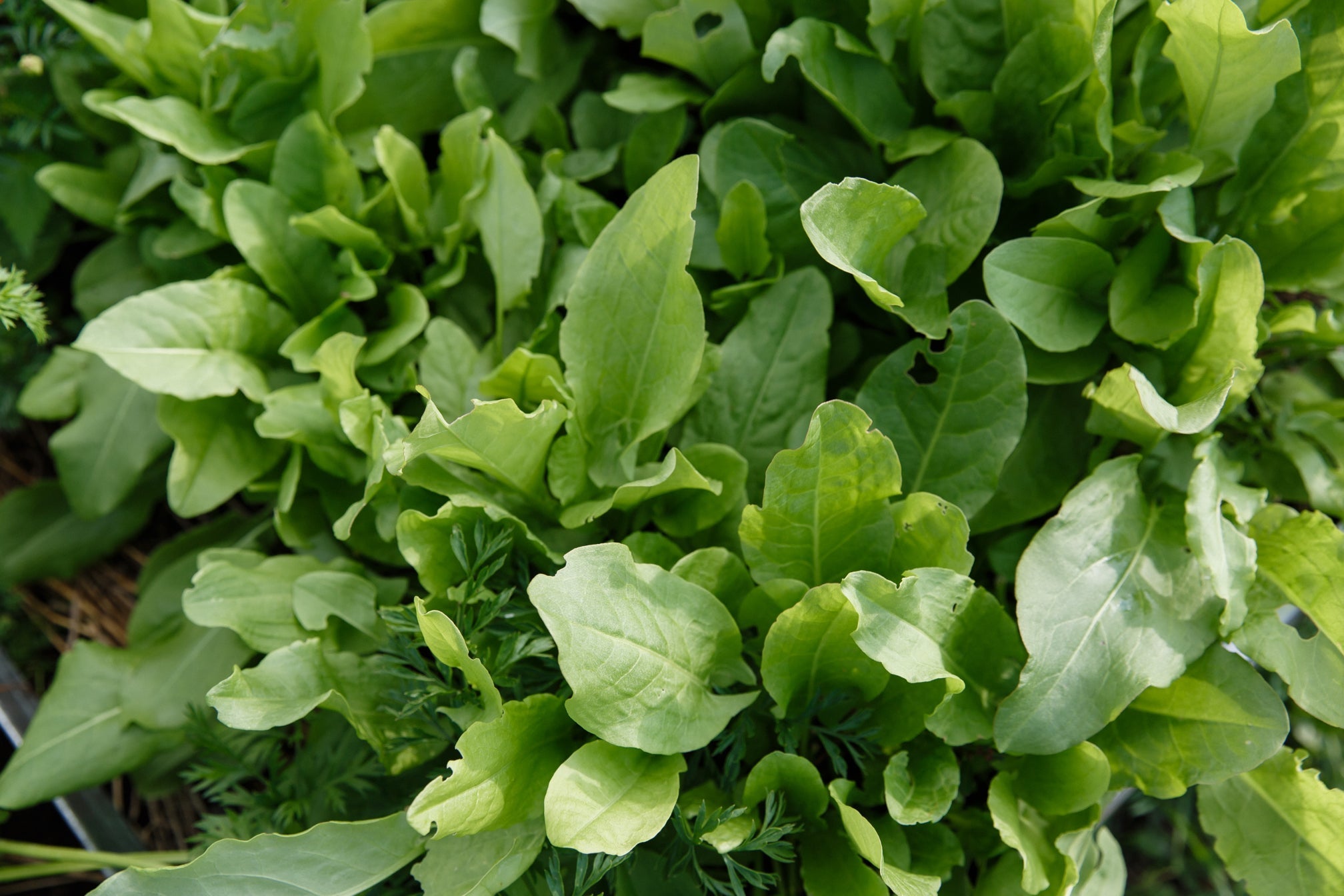
IN THIS GUIDE 1) Salad / Garden Rocket 2) Wild Rocket 3) Salad Rocket ‘Uber’ 4) Salad Rocket ‘Esmee’ 5) Salad Rocket ‘Pronto’ 6) Wild Rocket ‘Olive Leaf’ 7) Wild Rocket ‘Giove’ 8) Wild Rocket ‘Wasabi’ Over the past decade or so Rocket has – for want of a better term – ‘rocketed’ in popularity in the United Kingdom, and keeping pace with the demand, an increasing number of cultivars have come on the market. These differ not only in their sharpness and pungency but even in their respective flavours. As a result the general rule of Wild Rocket being sharper and more peppery than Salad Rocket no longer holds true because one or two cultivars of Wild Rocket have fairly smooth, mild flavours while a few varieties of Salad Rocket are rather spicy and zingy. Varieties of both Rockets grow from 25-80cm high. One general rule that does hold true is that for any given variety, the younger and smaller the leaf and the earlier the harvest, the more tender the leaf and its texture and the sharper but ‘lighter’ and more subtle the flavour. The later the harvest and the more mature and bigger the leaf, the rougher the texture of the leaf and the more pungent and more developed but also the ‘heavier’ its flavour. 1) Salad / Garden Rocket Has bright, light green leaves that are gently scalloped. They are also ‘gently’ peppery with a mild spiciness or tartness. Flavour-wise they are not intense but pleasant, but they must be used relatively fresh otherwise they lose their pleasant pepperiness and develop a harsh taste and texture. “Salad Rocket remains my favourite of all the cultivars I have tried because I am not a fan of super-peppery Rocket,” shares Master Horticulturist Colin Skelly. “Eat when picked fresh, as it does not keep well and loses its kick fast.” 2) Wild Rocket The dark green leaves are very deeply parted and serrated. In taste they are peppery and pungent in addition to which they also have a spicy aroma. Flavour-wise this natural variety’s leaves have a tingling intensity, and cut leaves retain their freshness and sharpness for longer than those of Salad Rocket. 3) Salad Rocket ‘Uber’ Has heavily- and sharply-parted mature leaves that are closer to those of Wild Rocket than to Salad Rocket. Their medium greyish-green colour too is unlike that of Salad Rocket. But in taste they are not very far from Wild Rocket, as Salad Rocket ‘Uber’ has a mild and refined flavour. 4) Salad Rocket ‘Esmee’ Has bluish-green leaves which are heavily parted and sharply serrated. In view of ‘Esmee’ Organic’s ‘medium’ sharpness and its balance, it is perhaps the best variety for inclusion of raw leaves in salads, whether comparing fresh young leaves or mature leaves to the equivalent of other varieties. 5) Salad Rocket ‘Pronto’ Has bright, almost shiny, green leaves that are moderately parted. The leaves are distinctly peppery and their sharpness or pungency falls squarely between Salad Rocket and Wild Rocket. All three properties, flavour, colour, and shape of the leaves makes ‘Pronto’ especially attractive for salads. 6) Wild Rocket ‘Olive Leaf’ A remarkable outlier in the Wild Rocket family. Neither its leaves nor its flavour are anything like those of Wild Rocket! But ‘Olive Leaf’ is indeed a member of that family because it is a perennial but its slightly-scalloped light, bright green leaves are closer to those of Salad Rocket. The aromatic leaves’ flavour is peppery yet nuanced. 7) Wild Rocket ‘Giove’ Has narrow, parted, and serrated leaves of a deep, medium-green shade. Going against ‘family principles,’ in taste ‘Giove’ ranks among the subtlest, having the mildest of pepperiness. In fact, it has a proper leafy-green taste and texture, with a hint of sweetness. Great for light salads. 8) Wild Rocket ‘Wasabi’ Has brilliant emerald green leaves that are narrow and serrated but not parted. In taste ‘Wasabi’ is actually very much like its namesake, being not only peppery but having an intense pungency. It can be used as a substitute for Wasabi in Japanese cooking.
Learn more
Pests And Diseases Ravaging Your French Beans? Try These Control Options
IN THIS GUIDE 1) Slugs And Snails 2) Birds 3) Aphids 4) French Bean Rust 5) Halo Blight French beans, both climbing and dwarf, are widely grown here in the UK and usually without too many problems for the home gardener. However, there are some pests and diseases that can not only hinder, but destroy a potential crop of beans if swift action is not taken. The most common issues gardeners experience when growing French beans include: Slugs and snails Birds Aphids French bean rust Halo blight See our guidelines for dealing with each of these common problems below. 1) Slugs And Snails Slugs and snails can be a real issue for young French bean plants, especially during wet conditions, and can decimate a bed of seedlings overnight. Leaving behind their tell-tale slime tracks, slugs and snails feast on bean foliage and can cause irreparable damage. There are several control options available to protect against these French bean pests, but a combination of several can often prove most effective, along with only planting out strong robust plants. Barrier controls essentially place a substance around the bean plant which these troublesome gastropods don’t like to climb over. From copper tape to crushed eggshells and gravel, they are easily available and include sustainable options. “From personal experience and many studies conducted, it has been discovered barriers of copper tape, crushed eggshells and gravel are ineffective in controlling gastropod (slug and snail damage). “I use a layer of petroleum jelly around the base of my plants and remove the bottom few leaves to control slugs and snails on my beans.” Encouraging slug and snail predators such as frogs, toads and hedgehogs into the garden can also be beneficial as they will reduce their numbers by eating them. Removing slugs and snails by hand at night under torchlight can be surprisingly effective as well, as vast numbers can quickly be collected. 2) Birds Some birds can be a real problem when growing French beans, especially the common pigeon, which eats the leaves and soft growing tips of bean plants. The only effective way of preventing bird damage is to net the plants, especially when the beans are young or when growing dwarf varieties. The netting does need to be supported by hoops or canes though, as they will even land on the netting to get at the foliage underneath. 3) Aphids Black bean aphids or blackflies are only small at up to 2mm in length and can be tolerated in small numbers, but larger infestations can cause stunted growth and poor harvests. Commonly found on the growing tips and underside of the leaves, the aphids leave behind a sticky honeydew that often attracts ants. If low levels of aphids start to increase, control measures can include squishing by hand, spraying them off with a hose gun attachment and encouraging aphid predators into the area, such as ladybirds and hoverflies. “Some aphids on my bean plants don’t particularly bother me, as the plant can normally handle them, but if you want to help prevent some colonisation of aphids, you can pinch off the tips of new growth as the plant comes into flower,” advises Master Horticulturist Dan Ori. “This removes the most attractive food source for the aphids.” 4) French Bean Rust Rust is a fungal disease spread by spores that can affect both runner and French beans, resulting in poor growth and leaf drop. Often encouraged by wet conditions, rust begins as pale spots develop on the tops of the leaves before covering both sides in tiny black pustules – finally leading to the leaves dying and falling from the plant. Rust, thankfully, tends to affect beans later on in the season, which hardly affects the bean crop. However, if rust is spotted early on in the summer it is advisable to remove any affected foliage and destroy it, rather than adding it to a home compost system, to prevent contagion. As a fungal disease, it is important not to save and store any seed from French bean plants affected by rust to prevent any future issues. 5) Halo Blight Halo blight, aptly named due to the yellow halo that forms around small brown blotches that appear on the foliage, is a bacterial disease that can affect French bean varieties. Transmitted by seed, if halo blight is confirmed or even if suspected, then no beans should be saved to sow from the affected plant. If halo blight appears on a few plant leaves it is recommended to try removing only the affected leaves. “Halo blight is one very good reason to use annual crop rotation when growing vegetables, and I recommend not saving seed but starting again, with fresh shop-bought seed the next year,” adds Dan. However, if the plant is badly affected, then its entire removal and disposal are advisable, along with avoiding growing beans in the same location for several years.
Learn more
Here's An A-Z List Of 59 Leafy Green Vegetables To Grow
IN THIS GUIDE 1) Amaranth 2) Anise Hyssop 3) Beet Greens 4) Bellflower 5) Black Mustard 6) Bomdong 7) Borage 8) Cabbage 9) Carrot 10) Celtuce 11) Chard 12) Charlock 13) Chaya 14) Chicory 15) Choy Sum 16) Collard Greens 17) Dandelion 18) Endive 19) Escarole 20) Fennel 21) Gai Lan 22) Garden Cress 23) Garden Nasturtium 24) Garden Sorrel 25) Gynura 26) Iceberg Lettuce 27) Jersey Cabbage 28) Kale 29) Katuk 30) Komatsuna 31) Lagos Spinach 32) Lamb’s Quarters 33) Maca 34) Malabar Spinach 35) Mallow 36) Moringa 37) Musk Mallow 38) Mustard Greens 39) Napa Cabbage 40) Orange Daylily 41) Pak Choi 42) Palsingat 43) Pokeweed 44) Quinoa 45) Rapini 46) Red Cabbage 47) Red Leaf Lettuce 48) Rocket 49) Romaine Lettuce 50) Savoy Cabbage 51) Shiso 52) Smooth Sowthistle 53) Spinach 54) Sweet Violet 55) Tatsoi 56) Turnip 57) Welsh Onion 58) Wild Leeks 59) Wild sorrel References Leafy greens go great with so many dishes, whether it’s a tasty salad of mixed lettuce and rocket leaves, or some spinach stirred through a curry to add flavour and colour. While there are common leaves you’re probably used to, there are tons of others that you may not even have heard of. “In my garden, I grow early potatoes, onions, climbing French beans, lettuce, spring onions, asparagus, just to name a few,” shares Alan Titchmarsh, Garden Broadcaster. In this article we’ve rounded up an exciting array of leafy greens for you to try, so whether you’re looking for a specific one or just looking to learn what options are out there, read on. Here are 59 exciting leafy greens for you to try: who knows, maybe you’ll find your new favourite. 1) Amaranth BOTANICAL NAME: Amaranthus COMMON NAME(S): Amaranth / Amour Flower HARDINESS RATING: H2 FLOWERING SEASON(S): Summer / Autumn SUNLIGHT: Full Sun SOIL PREFERENCE: Chalk, loam, sand; Any pH EXPOSURE: Sheltered Although it can’t be eaten raw, this vegetable is similar to spinach when boiled and is great with butter. Once sacred to the Aztecs, it’s now well-loved for its rich taste.1 2) Anise Hyssop BOTANICAL NAME: Agastache foeniculum (Pursh) Kuntze COMMON NAME(S): Anise Hyssop HARDINESS RATING: H3 FLOWERING SEASON(S): Summer / Autumn SUNLIGHT: Full Sun SOIL PREFERENCE: Chalk, loam, sand; Any pH EXPOSURE: Exposed / Sheltered As the name suggests, this plant has a liquorice flavour. You can eat the flowers and the leaves can be eaten cooked or raw. 3) Beet Greens BOTANICAL NAME: Beta vulgaris COMMON NAME(S): Common Beet HARDINESS RATING: H3 SUNLIGHT: Full Sun / Part Shade SOIL PREFERENCE: Any soil type; Any pH EXPOSURE: Sheltered Similar flavour profile to a lot of other leafy greens but a little sweeter, and with a distinctive red hue like the beetroot fruit. 4) Bellflower BOTANICAL NAME: Campanula COMMON NAME(S): Bellflower HARDINESS RATING: H5 FLOWERING SEASON(S): Summer SUNLIGHT: Full Sun / Part Shade SOIL PREFERENCE: Chalk, loam, sand; Any pH EXPOSURE: Exposed / Sheltered Although Bellflower is not technically a vegetable, it works well as a garnish and is a point of interest if foraged with your own hand. 5) Black Mustard BOTANICAL NAME: Brassica nigra COMMON NAME(S): Black mustard / grocer’s mustard HARDINESS RATING: H6 FLOWERING SEASON(S): Summer / Autumn SUNLIGHT: Full Sun SOIL PREFERENCE: Any soil type; Alkaline / Neutral pH EXPOSURE: Exposed / Sheltered You’ve probably tried mustard and maybe use mustard seeds in your cooking, but you can eat the leaves of the plant too! “I grow mustard as a salad crop as it adds a nice peppery tang to salads,” shares Master Horticulturist Colin Skelly. “Watch out if the crop runs to seed as it will become very hot to taste!” Black mustard leaves go great in salads. 6) Bomdong BOTANICAL NAME: Bomdong COMMON NAME(S): Spring Cabbage HARDINESS RATING: H5 FLOWERING SEASON(S): Spring / Summer SUNLIGHT: Full Sun / Part Shade SOIL PREFERENCE: Any soil type; Any pH EXPOSURE: Exposed / Sheltered An early spring cabbage, Bomdong is often used in Korean cooking as a component of kimchi. 7) Borage BOTANICAL NAME: Borago officinalis COMMON NAME(S): Borage / Tailwort HARDINESS RATING: H5 FLOWERING SEASON(S): Summer SUNLIGHT: Full Sun / Part Shade SOIL PREFERENCE: Any soil type; Any pH EXPOSURE: Exposed / Sheltered You can forage borage – isn’t that fun to say? – in spring and summer. The leaves have a delicate, cucumber-like taste and go well with salads. 8) Cabbage BOTANICAL NAME: Brassica oleracea COMMON NAME(S): Cabbage HARDINESS RATING: H5 (changes with variety) FLOWERING SEASON(S): Summer / Autumn SUNLIGHT: Full Sun / Part Shade SOIL PREFERENCE: Any soil type; Any pH EXPOSURE: Sheltered There are many types of cabbage, and it’s perhaps the most famous brassica. You’ll likely already know how versatile they are and how tasty they can be when cooked well. 9) Carrot BOTANICAL NAME: Daucus carota COMMON NAME(S): Carrots / Wild Carrots HARDINESS RATING: H2 FLOWERING SEASON(S): Summer SUNLIGHT: Full Sun SOIL PREFERENCE: Chalk, loam, sand; Alkaline / neutral pH EXPOSURE: Exposed / Sheltered In the same family as coriander, parsley and other herbs, it’s obvious why carrot greens are on this list. 10) Celtuce BOTANICAL NAME: Lactuca sativa COMMON NAME(S): Common Lettuce / Celtuce HARDINESS RATING: H2 FLOWERING SEASON(S): Summer SUNLIGHT: Full Sun SOIL PREFERENCE: Any soil type; Any pH EXPOSURE: Exposed / Sheltered It’s usually the stems that are used in cooking, but the leaves of celtuce are good too.2 Just check that they’re fresh enough to use, as often the time taken to import can make them wilt. 11) Chard BOTANICAL NAME: Beta vulgaris subsp. cicla var. flavescens COMMON NAME(S): Chard / Swiss Chard HARDINESS RATING: H3 FLOWERING SEASON(S): Spring / Summer SUNLIGHT: Full Sun / Part Shade SOIL PREFERENCE: Any soil type; Any pH EXPOSURE: Sheltered A classic leafy green, with a characteristic red stem and red-purple colouration in the leaves. 12) Charlock BOTANICAL NAME: Sinapis arvensis COMMON NAME(S): Charlock / Corn Mustard HARDINESS RATING: H7 FLOWERING SEASON(S): Spring / Summer / Autumn SUNLIGHT: Full Sun SOIL PREFERENCE: Any soil type; Any pH EXPOSURE: Exposed / Sheltered Charlock is also called field mustard or wild mustard, this but it isn’t eaten as commonly these days. It was used as a famine food during the Great Famine of Ireland. 13) Chaya BOTANICAL NAME: Cnidoscolus chayamansa COMMON NAME(S): Chaya / Tree Spinach HARDINESS RATING: H3/H4 FLOWERING SEASON(S): Summer / Autumn SUNLIGHT: Full Sun / Part Shade SOIL PREFERENCE: Any soil type; Any pH EXPOSURE: Sheltered It’s recommended to boil this leafy green before eating, as the raw leaves are not ready to eat.3 14) Chicory BOTANICAL NAME: Cichorium intybus COMMON NAME(S): Chicory HARDINESS RATING: H5 FLOWERING SEASON(S): Summer SUNLIGHT: Full Sun SOIL PREFERENCE: Chalk, loam, sand; Any pH EXPOSURE: Exposed / Sheltered Chicory is used for flavourings and you can even make a coffee-like drink from the ground plant. The leaves are edible too. 15) Choy Sum BOTANICAL NAME: Brassica parachinensis COMMON NAME(S): Bok Choy / Chinese Cabbage HARDINESS RATING: H5 FLOWERING SEASON(S): Summer SUNLIGHT: Full Sun / Part Shade SOIL PREFERENCE: Any soil type; Alkaline / Neutral pH EXPOSURE: Exposed / Sheltered Also called Chinese flowering cabbage, the leaves of this plant are popular in Chinese cooking – especially in stir-fries. 16) Collard Greens BOTANICAL NAME: Brassica oleracea var. viridis COMMON NAME(S): Collard HARDINESS RATING: H4 FLOWERING SEASON(S): Spring SUNLIGHT: Full Sun / Part Shade SOIL PREFERENCE: Any soil type; Any pH EXPOSURE: Exposed / Sheltered A mainstay of southern US cuisine, collard greens are similar to cabbage and kale. The tough stem is best removed before cooking. 17) Dandelion BOTANICAL NAME: Taraxacum officinalis COMMON NAME(S): Dandelion HARDINESS RATING: H7 FLOWERING SEASON(S): Summer / Autumn SUNLIGHT: Full Sun / Part Shade SOIL PREFERENCE: Any soil type; Any pH EXPOSURE: Exposed / Sheltered Although dandelions are considered a weed, their leaves can be used in all sorts of things. They get more bitter as they age so prioritise young leaves for cooking.4 18) Endive BOTANICAL NAME: Cichorium endivia COMMON NAME(S): Endive HARDINESS RATING: H3 SUNLIGHT: Part Shade SOIL PREFERENCE: Any soil type; Any pH EXPOSURE: Sheltered Endive is great raw or cooked. Crispy raw endive works well in salads and the mellower flavour when cooked makes it a great garnish. 19) Escarole BOTANICAL NAME: Cichorium endivia ‘latifolium’ COMMON NAME(S): Escarole / Curly Endive HARDINESS RATING: H3 SUNLIGHT: Part Shade SOIL PREFERENCE: Any soil type; Any pH EXPOSURE: Sheltered When eaten raw, escarole is similar to endive, and it also loses bitterness when cooked. More common in Italian cooking than British. 20) Fennel BOTANICAL NAME: Foeniculum vulgare COMMON NAME(S): Common Fennel / Fennel HARDINESS RATING: H5 FLOWERING SEASON(S): Summer SUNLIGHT: Full Sun / Part Shade SOIL PREFERENCE: Any soil type; Any pH EXPOSURE: Sheltered The fennel bulb is most commonly used in cooking, in fact, you’ll often buy it with the leaves removed, but the leaves are also tasty. 21) Gai Lan BOTANICAL NAME: Brassica oleracea COMMON NAME(S): Kai Lan / Chinese Broccoli / Gai Lan HARDINESS RATING: H5 FLOWERING SEASON(S): Summer SUNLIGHT: Full Sun SOIL PREFERENCE: Any soil type; Alkaline / Neutral pH EXPOSURE: Exposed / Sheltered Gai lan is also known as Chinese broccoli and behaves in quite a similar way. The stalks and florets are most commonly eaten but you can also eat the leaves. 22) Garden Cress BOTANICAL NAME: Lepidium sativum COMMON NAME(S): Garden Cress HARDINESS RATING: H7 FLOWERING SEASON(S): Spring / Summer SUNLIGHT: Full Sun / Part Shade SOIL PREFERENCE: Clay or loam; Any pH EXPOSURE: Exposed / Sheltered Cress leaves may be tiny but they’re distinctly edible and pack a characteristically peppery punch. 23) Garden Nasturtium BOTANICAL NAME: Tropaeolum majus COMMON NAME(S): Garden Nasturtium / Indian Cress HARDINESS RATING: H3 FLOWERING SEASON(S): Summer / Autumn SUNLIGHT: Full Sun SOIL PREFERENCE: Chalk, loam, sand; Any pH EXPOSURE: Exposed / Sheltered This plant’s name means ‘nose twister’ – a nod to the peppery punch they pack. Its flowers, leaves and seeds are all edible. 24) Garden Sorrel BOTANICAL NAME: Rumex scutatus COMMON NAME(S): Garden Sorrel / French Sorrel HARDINESS RATING: H7 FLOWERING SEASON(S): Summer SUNLIGHT: Full Sun / Part Shade SOIL PREFERENCE: Any soil type; Any pH EXPOSURE: Exposed / Sheltered Spicy when raw and mellower when cooked, sorrel goes great as a garnish. 25) Gynura BOTANICAL NAME: Gynura aurantiaca COMMON NAME(S): Gynura / Purple Velvet Plant HARDINESS RATING: H1B FLOWERING SEASON(S): Winter SUNLIGHT: Part Shade SOIL PREFERENCE: Loam; Any pH EXPOSURE: Sheltered Also known as longevity spinach, these leaves can be eaten raw, made into tea, and more. 26) Iceberg Lettuce BOTANICAL NAME: Lactuca sativa ‘Iceberg’ COMMON NAME(S): Iceberg Lettuce / Crisphead HARDINESS RATING: H2 SUNLIGHT: Full Sun SOIL PREFERENCE: Any soil type; Any pH EXPOSURE: Exposed / Sheltered Does the iceberg lettuce need any introduction? These little leaves find their way into pretty much every salad in the country. 27) Jersey Cabbage BOTANICAL NAME: Brassica oleracea longata COMMON NAME(S): Jersey Cabbage HARDINESS RATING: H7 FLOWERING SEASON(S): Summer / Autumn SUNLIGHT: Full Sun / Part Shade SOIL PREFERENCE: Any soil type; Alkaline / Neutral pH EXPOSURE: Exposed / Sheltered This variety of cabbage is native to the Channel Islands, hence the name. Eat raw or cooked as with any cabbage. 28) Kale BOTANICAL NAME: Brassica oleracea COMMON NAME(S): Kale HARDINESS RATING: H7 FLOWERING SEASON(S): Summer / Autumn SUNLIGHT: Full Sun SOIL PREFERENCE: Any soil type; Alkaline / Neutral pH EXPOSURE: Exposed / Sheltered A favourite amongst many, kale has made quite a reputation for itself in recent years. It’s easy to see why though: it’s delicious. 29) Katuk BOTANICAL NAME: Sauropus androgynus COMMON NAME(S): Katuk HARDINESS RATING: H3 FLOWERING SEASON(S): Summer / Autumn SUNLIGHT: Full Sun / Part Shade SOIL PREFERENCE: Clay, loam, sand; Any pH EXPOSURE: Sheltered Popular in Asia cooked or raw, katuk is one to get to know due to the tastiness of its leaves.5 30) Komatsuna BOTANICAL NAME: Brassica rapa var. perviridis COMMON NAME(S): Komatsuna / Japanese Mustard Spinach HARDINESS RATING: H3 FLOWERING SEASON(S): Summer SUNLIGHT: Full Sun SOIL PREFERENCE: Clay, loam, sand; Any pH EXPOSURE: Sheltered Japanese mustard spinach is a brassica variety that’s especially popular in Japan and Taiwan. It lends itself to a wide variety of dishes. 31) Lagos Spinach BOTANICAL NAME: Celosia argentea var. argentea COMMON NAME(S): Efo Shoko / Lagos Spinach HARDINESS RATING: H2 FLOWERING SEASON(S): Summer / Autumn SUNLIGHT: Full Sun SOIL PREFERENCE: Chalk, loam, sand; Any pH EXPOSURE: Sheltered Efo Shoko is a leafy green that’s especially popular in, you guessed it, Nigerian cuisine. 32) Lamb’s Quarters BOTANICAL NAME: Chenopodium album COMMON NAME(S): Lamb’s Quarters / Bacon Weed / Common Goosefoot HARDINESS RATING: H7 FLOWERING SEASON(S): Summer / Autumn SUNLIGHT: Full Sun / Part Shade SOIL PREFERENCE: Any soil type; Any pH EXPOSURE: Exposed / Sheltered Another plant that’s considered a weed in a lot of circles, lamb’s quarters, or white goosefoot, is edible if you rinse the powdery residue from the leaves.6 33) Maca BOTANICAL NAME: lepidium meyenii COMMON NAME(S): Maca / Peruvian Ginseng HARDINESS RATING: H6 FLOWERING SEASON(S): Summer SUNLIGHT: Full Sun / Part Shade SOIL PREFERENCE: Clay, loam, sand; Any pH EXPOSURE: Sheltered Maca leaves hail from South America and are best cooked before being consumed. 34) Malabar Spinach BOTANICAL NAME: Basella alba COMMON NAME(S): Malabar Spinach / Ceylon Spinach HARDINESS RATING: H1C FLOWERING SEASON(S): Summer / Autumn SUNLIGHT: Full Sun SOIL PREFERENCE: Clay, loam, sand; Any pH EXPOSURE: Sheltered This variety can be eaten raw, boiled, steamed, fried and more. 35) Mallow BOTANICAL NAME: Malva sylvestris COMMON NAME(S): Mallow / Common Mallow HARDINESS RATING: H5 FLOWERING SEASON(S): Summer / Autumn SUNLIGHT: Full Sun SOIL PREFERENCE: Any soil type; Any pH EXPOSURE: Sheltered The seeds and leaves of mallow are edible, making this a firm favourite for foragers. 36) Moringa BOTANICAL NAME: Moringa oleifera COMMON NAME(S): Ben Nut / Ben Oil Plant / Moringa HARDINESS RATING: H2 FLOWERING SEASON(S): Summer / Autumn SUNLIGHT: Full Sun SOIL PREFERENCE: Clay, loam, sand; Acidic / Neutral pH EXPOSURE: Exposed / Sheltered You can eat moringa leaves raw as well as in a range of other ways. 37) Musk Mallow BOTANICAL NAME: Malva moschata COMMON NAME(S): Musk Mallow HARDINESS RATING: H5 FLOWERING SEASON(S): Summer / Autumn SUNLIGHT: Full Sun SOIL PREFERENCE: Any soil type; Any pH EXPOSURE: Exposed / Sheltered Closely related to mallow as the name suggests, this species’ leaves can also be eaten raw or cooked. 38) Mustard Greens BOTANICAL NAME: Brassica juncea COMMON NAME(S): Chinese Mustard / Mustard Greens HARDINESS RATING: H6 FLOWERING SEASON(S): Summer / Autumn SUNLIGHT: Full Sun SOIL PREFERENCE: Any soil type; Alkaline / Neutral pH EXPOSURE: Exposed / Sheltered Even though other uses of the plant are most common, boiling up a bunch of mustard greens is a tasty addition to any plate. 39) Napa Cabbage BOTANICAL NAME: Brassica rapa subsp. pekinensis COMMON NAME(S): Napa Cabbage / Celery Cabbage HARDINESS RATING: H5 FLOWERING SEASON(S): Summer SUNLIGHT: Full Sun / Part Shade SOIL PREFERENCE: Any soil type; Alkaline / Neutral pH EXPOSURE: Exposed / Sheltered This cabbage grows frequently in China and is commonplace in their cuisine, and can often be found in imported vegetable aisles. 40) Orange Daylily BOTANICAL NAME: Hemerocallis fulva COMMON NAME(S): Common Orange Daylily / Eve’s Thread HARDINESS RATING: H7 FLOWERING SEASON(S): Summer SUNLIGHT: Full Sun / Part Shade SOIL PREFERENCE: Any soil type; Any pH EXPOSURE: Exposed / Sheltered While the most common part to eat is the flower, if you cut the outer leaves off, you can eat the more pleasant lily leaves inside. 41) Pak Choi BOTANICAL NAME: Brassica rapa subsp. chinensis COMMON NAME(S): Bok Choy / Pak Choi HARDINESS RATING: H3 SUNLIGHT: Full Sun SOIL PREFERENCE: Chalk, loam, sand; Alkaline / Neutral pH EXPOSURE: Sheltered This leaf is a good gateway ingredient when learning to cook Asian cuisine. It’s readily available, easy to cook and, most importantly, delicious. 42) Palsingat BOTANICAL NAME: Claytonia perfoliata COMMON NAME(S): Miner’s Lettuce / Palsingat / Cuban Spinach HARDINESS RATING: H7 FLOWERING SEASON(S): Spring / Summer SUNLIGHT: Full Sun SOIL PREFERENCE: Any soil type; Any pH EXPOSURE: Sheltered This plant has lots of names: miner’s lettuce, spring beauty, winter purslane and others. It was eaten by miners to prevent scurvy and can be used in cooking, but is not as flavourful as some greens.7 43) Pokeweed BOTANICAL NAME: Phytolacca americana COMMON NAME(S): Pokeweed / American Nightshade HARDINESS RATING: H7 FLOWERING SEASON(S): Summer / Autumn SUNLIGHT: Full Sun / Part Shade SOIL PREFERENCE: Chalk or loam; Any pH EXPOSURE: Sheltered Be careful when eating pokeweed, as its berries should not be consumed!8 44) Quinoa BOTANICAL NAME: Chenopodium quinoa COMMON NAME(S): Puinoa HARDINESS RATING: H4 FLOWERING SEASON(S): Summer / Autumn SUNLIGHT: Full Sun SOIL PREFERENCE: Chalk, loam, sand; Any pH EXPOSURE: Sheltered Quinoa is most famous as a grain, but the leaves are edible as well. 45) Rapini BOTANICAL NAME: Brassica ruvo COMMON NAME(S): Rapini / Italian Broccoli HARDINESS RATING: H5 FLOWERING SEASON(S): Summer / Autumn SUNLIGHT: Full Sun SOIL PREFERENCE: Any soil type; Alkaline / Neutral pH EXPOSURE: Exposed / Sheltered This plant has bitter leaves which make it less popular than some other greens, but the leaves, buds and stems are all edible. 46) Red Cabbage BOTANICAL NAME: Brassica oleracea var. capitata f. rubra COMMON NAME(S): Red Cabbage HARDINESS RATING: H5 SUNLIGHT: Full Sun / Part Shade SOIL PREFERENCE: Any soil type; Alkaline / Neutral pH EXPOSURE: Sheltered You’ve probably seen red cabbage pickled in jars. This leafy ‘green’ is versatile and tasty, despite the fact it isn’t actually green. 47) Red Leaf Lettuce BOTANICAL NAME: Lactuca sativa COMMON NAME(S): Red Leaf Lettuce HARDINESS RATING: H2 FLOWERING SEASON(S): Summer SUNLIGHT: Full Sun SOIL PREFERENCE: Any soil type; Any pH EXPOSURE: Exposed / Sheltered Another popular lettuce with many cultivars, you’ll recognise this veggie from supermarket salad mixes. 48) Rocket BOTANICAL NAME: Eruca vesicaria subsp. sativa COMMON NAME(S): Garden rocket HARDINESS RATING: H4 FLOWERING SEASON(S): Summer SUNLIGHT: Full Sun / Part Shade SOIL PREFERENCE: Any soil type; Any pH EXPOSURE: Exposed / Sheltered Rocket’s peppery quality makes it a great addition to salads and dishes where you want to bring a bit of gentle heat and fire. 49) Romaine Lettuce BOTANICAL NAME: Lactuca sativa var. longifolia COMMON NAME(S): Romaine Lettuce / Cos HARDINESS RATING: H3 SUNLIGHT: Full Sun / Part Shade SOIL PREFERENCE: Any soil type; Any pH EXPOSURE: Sheltered Romaine lettuce, also called cos, is yet another popular lettuce variety that you’ll find in salads and other dishes. 50) Savoy Cabbage BOTANICAL NAME: Brassica oleracea var. sabauda COMMON NAME(S): Savoy Cabbage HARDINESS RATING: H7 FLOWERING SEASON(S): Summer / Autumn SUNLIGHT: Full Sun / Part Shade SOIL PREFERENCE: Any soil type; Alkaline / Neutral pH EXPOSURE: Exposed / Sheltered Savoy can be eaten raw or cooked, although it’s definitely most popular cooked. Boil or fry up with a bit of butter, and you’ll love it – I promise! 51) Shiso BOTANICAL NAME: Perilla frutescens var. crispa COMMON NAME(S):Beefsteak Plant / Shiso / Curly Perilla HARDINESS RATING: H3 FLOWERING SEASON(S): Summer SUNLIGHT: Full Sun / Part Shade SOIL PREFERENCE: Any soil type; Any pH EXPOSURE: Sheltered Perilla frutescens is popular in Korean food. 52) Smooth Sowthistle BOTANICAL NAME: Sonchus oleraceus COMMON NAME(S): Common Sowthistle / Hare’s Coleswart HARDINESS RATING: H7 SUNLIGHT: Full Sun SOIL PREFERENCE: Any soil type; Any pH EXPOSURE: Exposed / Sheltered If you’re foraging, smooth sowthistle is a good thing to look out for as it’s a safe thing to eat.9 53) Spinach BOTANICAL NAME: Spinacia oleracea COMMON NAME(S): Spinach HARDINESS RATING: H4 SUNLIGHT: Full Sun / Part Shade SOIL PREFERENCE: Any soil type; Any pH EXPOSURE: Sheltered A plant that needs no introduction, raw spinach leaves are great in salads, and cooked spinach goes with anything. 54) Sweet Violet BOTANICAL NAME: Viola odorata COMMON NAME(S): Sweet violet / English Violet HARDINESS RATING: H6 FLOWERING SEASON(S): Winter / Spring SUNLIGHT: Full Sun / Part Shade SOIL PREFERENCE: Any soil type; Any pH EXPOSURE: Exposed / Sheltered You can eat the flowers and the leaves of the violet plant. Like nasturtiums, it’s always intriguing to see a flower on your plate! 55) Tatsoi BOTANICAL NAME: Brassica rapa subsp. narinosa COMMON NAME(S): Tatsoi / Rosette Pak Choi HARDINESS RATING: H5 SUNLIGHT: Full Sun SOIL PREFERENCE: Any soil type; Alkaline / Neutral pH EXPOSURE: Exposed / Sheltered Here’s another Asian variety of brassica, closely related to the popular pak choi. These dark green leaves can be eaten raw or cooked. 56) Turnip BOTANICAL NAME: Brassica rapa subsp. rapa COMMON NAME(S): Turnip HARDINESS RATING: H6 SUNLIGHT: Full Sun SOIL PREFERENCE: Any soil type; Alkaline / Neutral pH EXPOSURE: Exposed / Sheltered Everyone’s tried a turnip, usually with a roast, but did you know you could also eat the leaves?10 Fry up with a bit of oil for the best taste. 57) Welsh Onion BOTANICAL NAME: Allium fistulosum COMMON NAME(S): Welsh Onion / Ciboul HARDINESS RATING: H3 FLOWERING SEASON(S): Summer SUNLIGHT: Full Sun / Part Shade SOIL PREFERENCE: Any soil type; Any pH EXPOSURE: Exposed / Sheltered The leaves of the Welsh onion are edible raw or cooked and, as you might expect, have a gentle oniony flavour. Great when you want something more subtle than actual onion. 58) Wild Leeks BOTANICAL NAME: Allium porrum COMMON NAME(S): Leek / Wild Leek / St. David’s Lily HARDINESS RATING: H4 FLOWERING SEASON(S): Summer SUNLIGHT: Full Sun / Part Shade SOIL PREFERENCE: Any soil type; Any pH EXPOSURE: Exposed / Sheltered You can eat the leaves of a wild leek as well as the bit we’d usually consider the leaf. Take care when harvesting as the plant has a long growth cycle that you can unintentionally disrupt. 59) Wild sorrel BOTANICAL NAME: Rumex acetosa COMMON NAME(S): Sorrel / Wild sorrel HARDINESS RATING: H7 FLOWERING SEASON(S): Summer SUNLIGHT: Full Sun / Part Shade SOIL PREFERENCE: Chalk, loam, sand; Acidic / Neutral pH EXPOSURE: Exposed / Sheltered Sorrel has a flavour slightly reminiscent of citrus, making it a great way to bring a fresh zesty dimension to salads and dishes when used as a garnish. The 59 greens in this list are a great sampling of the leafy greens available, and we recommend investigating recipes for the ones that pique your interest. Who knows – maybe you’ll find your new favourite ingredient! References 1. Amaranth – May Grain of the Month. (n.d.). The Whole Grains Council. Retrieved March 20, 2023, from https://wholegrainscouncil.org/whole-grains-101/grain-month-calendar/amaranth-may-grain-month 2. Anderson, P. (2019, October 12). Cooking with celtuce: the supermodel of vegetables. The Guardian. Retrieved March 20, 2023, from https://www.theguardian.com/food/2019/oct/13/cooking-with-celtuce-the-supermodel-of-vegetables 3. Chaya – High Nutrition Perennial. (n.d.). US Aid. Retrieved March 20, 2023, from https://pdf.usaid.gov/pdf_docs/PA00K93C.pdf 4. Brooks Vinton, S. (2018, August 28). How to Eat Dandelions. FoodPrint. Retrieved March 20, 2023, from https://foodprint.org/blog/how-to-eat-dandelions/ 5. Katuk. (2015). FGCU Food Forest: Plant Database. Retrieved March 20, 2023, from https://www.fgcu.edu/cas/communityimpact/foodforest/files/katuk-ada.pdf 6. Lamb’s Quarters and Orach. (2021, March 31). FoodPrint. Retrieved March 20, 2023, from https://foodprint.org/real-food/lambs-quarters/ 7. Miner’s lettuce (Claytonia perfoliata). (n.d.). RikenMon’s Nature Guide. Retrieved March 20, 2023, from https://www.nature-guide.info/display/details.aspx?lang=en&id=1249 8. Pokeweed. (n.d.). WebMD. Retrieved March 20, 2023, from https://www.webmd.com/vitamins/ai/ingredientmono-220/pokeweed 9. Bonetto, D. (2020, May 12). How to identify and use sow thistle, the perfect edible weed. Wild Plants: Foraging, Food, Art and Culture. Retrieved March 20, 2023, from https://www.diegobonetto.com/blog/how-to-identify-and-use-sowthistle-the-perfect-edible-weed 10. Ware, M. (2017, May 18). Everything you need to know about turnip greens. Medical News Today. Retrieved March 20, 2023, from https://www.medicalnewstoday.com/articles/285961
Learn more
10 Broad Bean Varieties Selected For Taste, Productiveness And Hardiness
IN THIS GUIDE 1) V. faba ‘The Sutton’ 2) V. faba ‘Monica’ 3) V. faba ‘Witkiem’ 4) V. faba ‘Eleonora’ 5) V. faba ‘Bunyards Exhibition’ 6) V. faba ‘Super Aquadulce’ 7) V. faba ‘Aquadulce Claudia’ 8) V. faba ‘Meteor’ 9) V. faba ‘Masterpiece Green Longpod’ 10) V. faba ‘Crimson Flowered’ References Broad Beans are not only widely-grown and consumed around the world, they are among the easiest vegetables to grow in home veg gardens – they do not even need regular watering let alone fertilising. Underneath we present an initial five varieties that are selected for taste, productivity, and easy sowing and growing in spring: 1) V. faba ‘The Sutton’ An Old-English dwarf variety, ‘The Sutton’ is one of the best varieties on several counts for hobbyist gardeners. As the plants grow to only about 40cm with a similar spread, they need less space than other varieties, as Master Horticulturist Colin Skelly explains: “The short stature of this broad bean makes it ideal for growing on a windy site. “Whilst taller cultivars may be vulnerable to wind damage, ‘The Sutton’ can be grown without staking. “Its small size also makes it the perfect option for a small garden.” Yet they are very productive and their numerous pods are 12-14cm in length with each having typically six tasty beans. It even bears among the most fragrant and prettiest flowers of all Broad Beans. Recipient of the RHS’s Award of Garden Merit.1 2) V. faba ‘Monica’ Three huge draws make this variety well worth growing. From a spring sowing it is possibly the fastest to producing pods; at least it is one of the fastest – and it is also very productive. Finally, it is ideally-suited to spring and summer sowing; pods have 5-6 fat, juicy beans. Young beans are especially tender and well-suited for adding uncooked to salads and such. 3) V. faba ‘Witkiem’ This variety is one of the hardiest ones and tolerates freezing conditions so it is perfect for sowing as early as February to be rewarded with fresh beans in spring.2 It is a productive variety as well. Each of its rather short, chunky pods contain, usually, five white beans which are more plump than most and also tasty. Recipient of the RHS’s Award of Garden Merit. 4) V. faba ‘Eleonora’ This is a spanking new variety and an excellent one – it is fairly fast-growing. The plants are on the short side and are sturdier and more erect than most which makes them well suited for windswept locations. Each pod has about five biggish white beans, which are remarkably flavourful. This variety also stores well and can be home-frozen for winter. 5) V. faba ‘Bunyards Exhibition’ That this heritage variety is still with us after being developed in the Victorian times is a tribute to its merits. It is especially fuss-free to grow and is sought-after in kitchens that need the finest-quality Broad Beans, known to be sweetish. Each pod has 6-7 beans. The plants are tall, growing up to 1.2m. Underneath we present a further five varieties; these are primarily selected for hardiness and for a couple of different and distinctive attractions. 6) V. faba ‘Super Aquadulce’ If you live in a cold region and/or want to sow seeds outdoors in autumn or in February, this heritage variety ought to be your top choice. It is possibly the hardiest Broad Bean – besides being hardy it is also very productive. The plant is on the tall side and can grow to about 1m. 7) V. faba ‘Aquadulce Claudia’ Another very hardy variety and related to the preceding one, it is ideal for cold regions. Like its sibling variety it bears pods about 25cm long with each one containing about 6 beans. The beans are tastier than most. The plant is quite tall, growing from 1-1.5m. Recipient of the RHS’s Award of Garden Merit. 8) V. faba ‘Meteor’ Though not a great variety for the best-tasting mature beans, it is probably the quickest to produce pods from a spring sowing (hence the name). It is also comparatively hardy so it can be sown in March and in autumn as well. As for the quality, if pods are harvested early and the beans are eaten young, then they are tender and tasty. Another recipient of the RHS’s Award of Garden Merit. 9) V. faba ‘Masterpiece Green Longpod’ Can’t be beaten for the length of the ‘longpod’ or the number of beans as each pod is usually packed with 6, sometimes 7, green beans. The pods are long but thin so the beans too are thin but are tender. A great choice for home-freezing Broad Beans to have in the dark days of winter. RHS’s Award of Garden Merit. 10) V. faba ‘Crimson Flowered’ To go all in on the ornamental value of the flower you could opt for this heritage variety. The blossoms are a deep magenta-crimson that add splashes of intense colour to a veg garden – or any garden. The beans are just as good as any variety, though, so no worries there. This is a tallish variety that will grow over 90cm and can approach a full 1m. References 1. Vicia faba “The Suttons.” (n.d.). Royal Horticultural Society. Retrieved March 13, 2023, from https://www.rhs.org.uk/plants/107295/vicia-faba-the-sutton/details 2. Vicia faba “Witkiem” – Manita. (n.d.). Royal Horticultural Society. Retrieved March 13, 2023, from https://www.rhs.org.uk/plants/142926/vicia-faba-witkiem-manita/details
Learn more