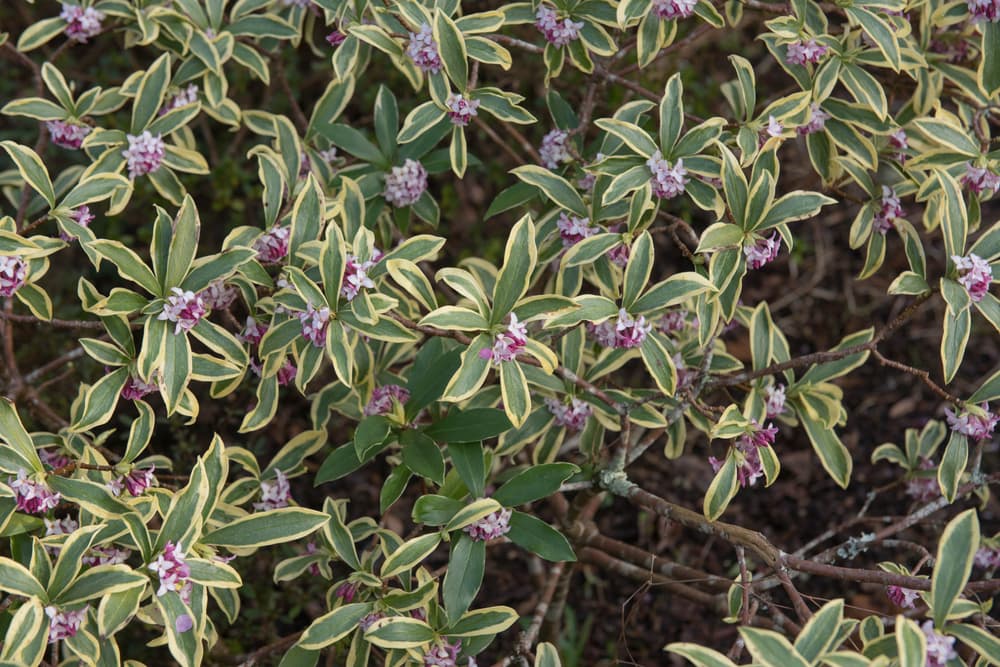
Plants in the Pieris family are evergreen shrubs, known for their ornamental foliage and their exciting red, white, and green aesthetic.
They’re native to parts of Asia, North America and Cuba.
Over the years, though, this plant has become a popular addition to British gardens, and it’s easy to see why: It’s attractive, it’s different, and it’s not overly fussy about where it grows.
“Pieris ‘Forest Flame’ arose as a hybrid at Sunningdale Nurseries, an accident of history like many hybrids that go on to become popular cultivars,” says Master Horticulturist Colin Skelly.
“‘Forest Flame’ are usually popular because they are robust and attractive garden plants.”

If you’re interested in growing Pieris ‘Forest Flame’ in your garden, we’ve written this guide with you in mind.
After reading, you’ll be equipped with the knowledge you need to get a Pieris ‘Forest Flame’ thriving in your garden.
You’ll be able to enjoy its joyous displays of red, white, and green whenever you need a pick-me-up.
Overview
| Botanical Name | Pieris ‘Forest Flame’ |
| Common Name(s) | Pieris ‘Forest Flame’; Andromeda; Fetterbush |
| Plant Type | Shrub / Hedging |
| Native Area | North America |
| Hardiness Rating | H5 |
| Foliage | Evergreen (the young leaves are bright red; then transform from pink to green) |
| Flowers | Cream, bell-shaped |
| When To Sow | June, September |
| Flowering Months | April, May, June |
| When To Prune | March, April, June |
Pieris ‘forest flame’ is the common name for Pieris floribunda, one of seven types.
Other species include P. cubensis, P. formosa, P. japonica, P. nana, P. phillyreifolia and P. swinhoei.
While all Pieris are known for their red, white, and green, ‘Forest Flame’ is slightly darker than others.
It’s a large evergreen shrub that will bring red flowers in spring, fading into pink, cream, and then green throughout the year.
How To Grow Pieris ‘Forest Flame’
Pieris ‘Forest Flame’ has received the Award of Garden Merit from the Royal Horticultural Society (RHS), indicating its suitability for growth in British gardens.1

This means the plant is a great choice for budding gardeners who want something attractive and rewarding, without being too much of a challenge to grow.
Growing Benefits
Pieris ‘Forest Flame’ is fairly easy to grow if you cater to its needs.
The plant takes between 10 and 20 years to reach its full height, which will usually clock in around 2.5-4m.
In terms of spread, you should expect about 1.5-2.5m at full maturity.

‘Forest Flame’ is one of the bigger Pieris plants, meaning you may prefer a smaller variety if you’re working with a more compact garden space.
This plant is a beacon for bees, and its pollen-rich flowers will attract plenty of these buzzing boys to your garden.
In my opinion, this is an asset rather than a drawback: Bee populations are in decline, and they especially struggle in urban environments, meaning they need as much help as they can get!
Bees won’t sting unless very provoked, and watching them go about their buzzy business is a relaxing, almost therapeutic way to spend time in your garden.
When To Plant
In autumn or early spring, dig a small hole in your garden about the size of the container your Pieris is growing in.

Then transfer the plant across, pat down with soil, water gently, and leave to settle in.
Where To Plant
Pieris plants like to grow in full sun or partial shade.
They’re happy with any aspect except north-facing, and prefer to be sheltered.
One area where ‘Forest Flame’ is fussy, is soil pH.
This plant will only thrive in acidic soil, so take special note and ensure your flowerbed contains the right type of soil.
The RHS recommends this plant for borders and beds, low-maintenance banks and slopes, informal patio areas, courtyards, containers, and more.
In short, it lends itself well to a wide variety of settings.
Plant Care
Watering
Pieris ‘Forest Flame’ needs a hand to get established, and this is when you’ll be watering it most often – every week or so.

Once established, the plant is much happier to do its own thing, and will only need your help during particularly dry spells.
During heatwaves, drought, or just hot British summer, water regularly.
Make sure not to overwater your ‘Forest Flame’ – this could end up dousing it!
Soil Nutrition
Adding pine needle mulch can help to keep the soil acidity low and conserve soil moisture.

Common Pests
There’s only a tiny handful of plants that attract zero pests, and sadly ‘Forest Flame’ isn’t one of them.
This plant is prone to a few pesky visitors who can cause varying degrees of damage. Here’s what to look for and how to hopefully avoid –
Pieris Lacebug
This critter is so fond of Pieris, that it’s named after it.
And despite only making its first UK appearance in 1998, it’s become a mainstay in our gardens ever since.2
The lacebug is easily identifiable by the delicate lacy pattern on its wings.
You may notice the bugs directly, or you may see the evidence of their visit: coarse mottling, bleached yellow leaves, leaf drop, and brown spots on the leaf underside.

If you suspect an infestation, try first to encourage natural predators like birds, ladybirds, and wasps.
Each will be tempted to eat the lacebugs, hopefully nipping your infestation in the bud.
Should pest control not work, there is a selection of pesticides available that can help.
Be careful not to spray pesticides onto flowering plants, as this can cause harm to bees and pollinators that visit.
Phytophthora
This blight causes root rot which, as you can probably guess, wreaks havoc on plants.
Once this fungal organism takes hold of a root, there’s no way to save the plant.
At this stage, you have to destroy it and replace the soil to prevent further spread.
Prevention, then, is the cure. You want to make sure your soil is well-drained, as phytophthora thrives in damp, water-logged soil.

The symptoms are similar to those of waterlogging and drought, so it can be hard to distinguish definitively.
Wilt, dieback, and fading foliage are all indicators that your plant may have a case of phytophthora.
Leaf Spot
Another fungal infection, this time causing brown blemishes or ‘spots’ on leaves.
Again, overly moist soil is a high-risk factor, as is moisture remaining on the leaves themselves.
To reduce the risk of leaf spot, water the soil rather than the entire plant.
If you can’t help watering the whole plant (with a hose, for example) then do it early in the morning – this will give the leaves time to dry off throughout the day.

If your ‘forest flame’ does get hit with leaf spot, you can choose to use organic treatment or harsher fungicides.
Heed our earlier warning about not damaging pollinators!
This is an attractive and rewarding plant that brings a veritable medley of colour to any outdoor space, and it’s easy to make it thrive in a British backyard.
We wish you the best of luck with your new Pieris!
References
1. Pieris “Forest Flame.” (n.d.). Royal Horticultural Society. Retrieved March 22, 2023, from https://www.rhs.org.uk/plants/95172/pieris-forest-flame/details
2. Pieris lacebug. (n.d.). Royal Horticultural Society. Retrieved March 22, 2023, from https://www.rhs.org.uk/biodiversity/pieris-lacebug