

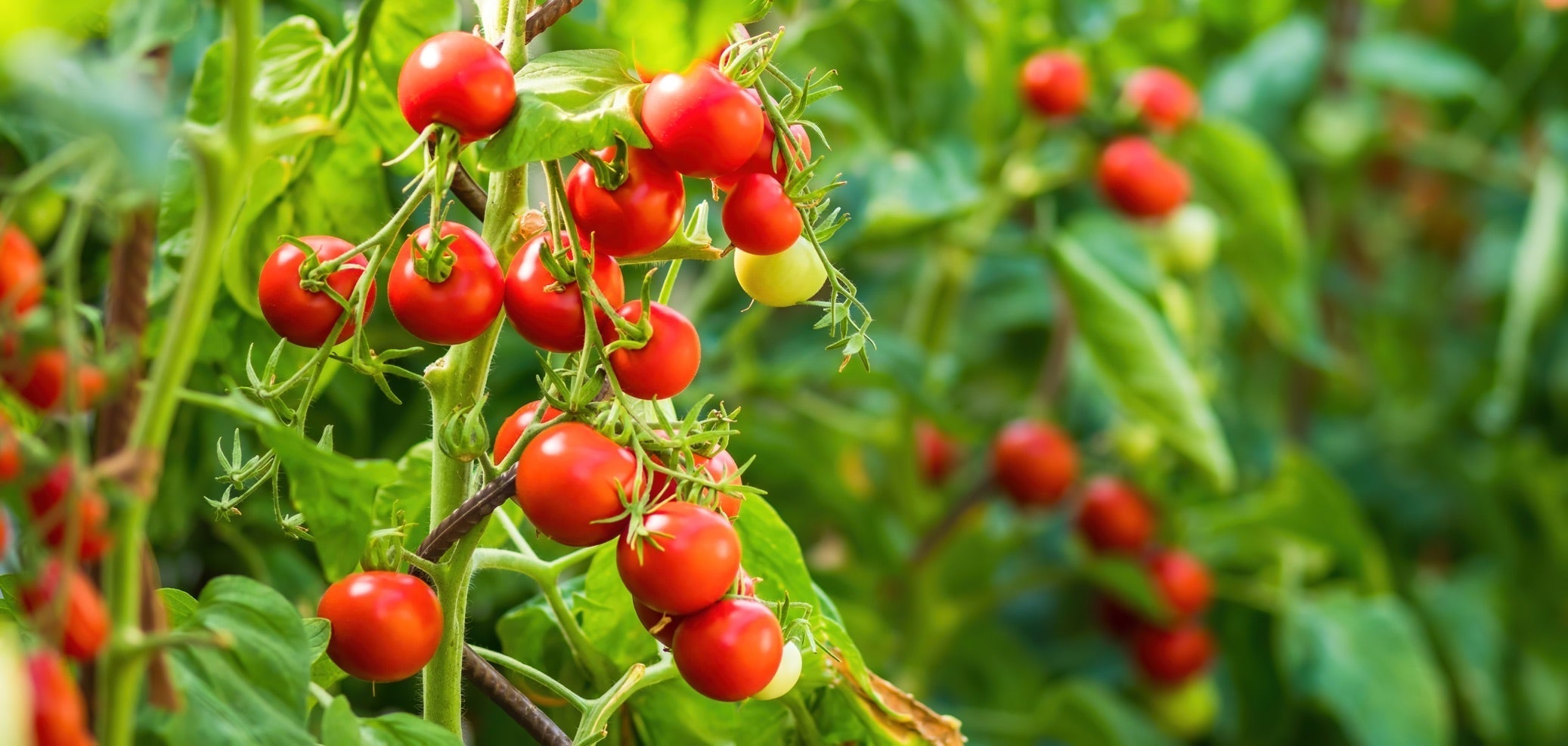
Tomatoes are a popular crop for those who love to grow their own at home.
They can grow outside in much of the UK in summer, but will often do best in a greenhouse or polytunnel.
When growing tomatoes, there is a lot to think about to ensure a good yield, but one important consideration is feeding.
Tomato plants are relatively ‘hungry’ plants, so you need to make sure that you provide optimal nutrition for these plants throughout the growing season.
Feeding tomatoes comes down to three key ideas in an organic garden:
- Providing a healthy soil or growing medium through adding organic matter as mulch. For optimal yields, there are a few different mulches to consider.
- Companion planting to provide nutrients to growing tomato plants and to keep them as healthy as possible.
- And providing plants with a boost by using an organic liquid plant feed during the flowering and fruiting period.
1) Mulching When Planting Out

In a healthy organic garden, everything comes back to the soil or growing medium.
When planting out tomatoes in the soil, it is best to ensure that the location already has soil that is as healthy and fertile as possible.
Ensuring a healthy soil in your garden beds and growing areas means thinking about protecting the fragile web of life that healthy soil contains.
The no-dig method is beneficial because it allows the soil to flourish without too much disturbance.1

This approach involves minimising any digging or tilling, keeping a living root in your soil as much as possible, and regularly adding a top dressing to the surface of the soil to protect it.
So – feeding tomatoes begins with building healthy soil, or choosing a fertile growing medium when growing in containers.
Early in the season, when you plant out your tomato plants, they need a balanced mulch that can provide slow release fertility, as well as conserving soil moisture and reducing weed growth.
I recommend adding a homemade compost or well-rotted manure around the plants upon planting.
2) Mulching When Plant Begins To Set Fruit

When tomatoes flower and begin to form fruits, I also like to add an additional mulch around the plants (surrounding but not touching the stems).
At this stage of their growth, tomato plants need plenty of potassium.2
You can add this with a mulch of the leaves of plants (like comfrey or Chenopodium album, for example) that are good at accumulating potassium in their tissues.

These leaves will break down on the soil surface or growing medium and return their nutrients to your garden.
Depending on the composition of your soil or growing medium, you might also like to add additional things to this mulch, to provide other nutrients and micro-nutrients.
Calcium deficiency can cause blossom end rot in tomatoes, so to counter this, add calcium-rich plant matter to the mulch you prepare.
3) Companion Planting

Another thing to think about for healthy tomato plants is other plants you might grow alongside tomatoes that might aid them – through improving environmental conditions, adding fertility, and helping with organic pest control.
Planting legumes or other nitrogen-fixing plants close to tomatoes early in their growth can be beneficial.
Some of the nitrogen fixed by these plants is used by the plants themselves, but some may be made available in the soil for the uptake of other plants close by.

You might also simply plant tomatoes in an area recently vacated by a winter/spring legume crop, such as peas or broad beans, for example.
While not strictly for adding fertility, but rather for ensuring healthy tomato plants in general, other companion planting is important too.
For example, consider adding basil or borage, and garlic or spring onions around tomato plants.
4) Feeding With An Organic Liquid Feed

During flowering and fruiting, especially when growing tomatoes in containers, it can also be helpful to ensure potassium levels by feeding tomatoes with a potassium-rich organic liquid feed, which will deliver nutrients more quickly than a mulch and give plants a boost.
It is important not to feed with a liquid feed that is too high in nitrogen, as this can encourage leafy growth at the expense of flowers and fruit.

Instead, choose a commercial organic tomato feed, which has been specially formulated.
“I recommend formulations that include seaweed extract for the best results,” shares Horticulturist and Consultant Dan Ori.
“You can also use tomato feed on most other flowering plants, so you won’t be wasting a bottle if you only have a few tomato plants.”
Or, ideally, make your own organic potassium-rich liquid plant feed using comfrey or other dynamic accumulator plants that are good at gathering potassium from the soil.

Steeping these plants in water will allow you to make a liquid feed to give your tomato plants a boost.

You can feed tomatoes with a comfrey tea or similar every couple of weeks or so through the fruiting and harvesting period.
References
1. What kind of plot? The no dig plot. (n.d.). Royal Horticultural Society. Retrieved March 27, 2023, from https://www.rhs.org.uk/advice/grow-your-own/allotments/allotment-styles/no-dig-alternatives
2. Qihou, H., Weijie, J., Hongjun, Y., & Ming, W. (n.d.). Effects of potash applied at different growth phases on tomato yield and quality in greenhouse. International Society for Horticultural Science. Retrieved March 27, 2023, from https://www.actahort.org/books/944/944_5.htm



