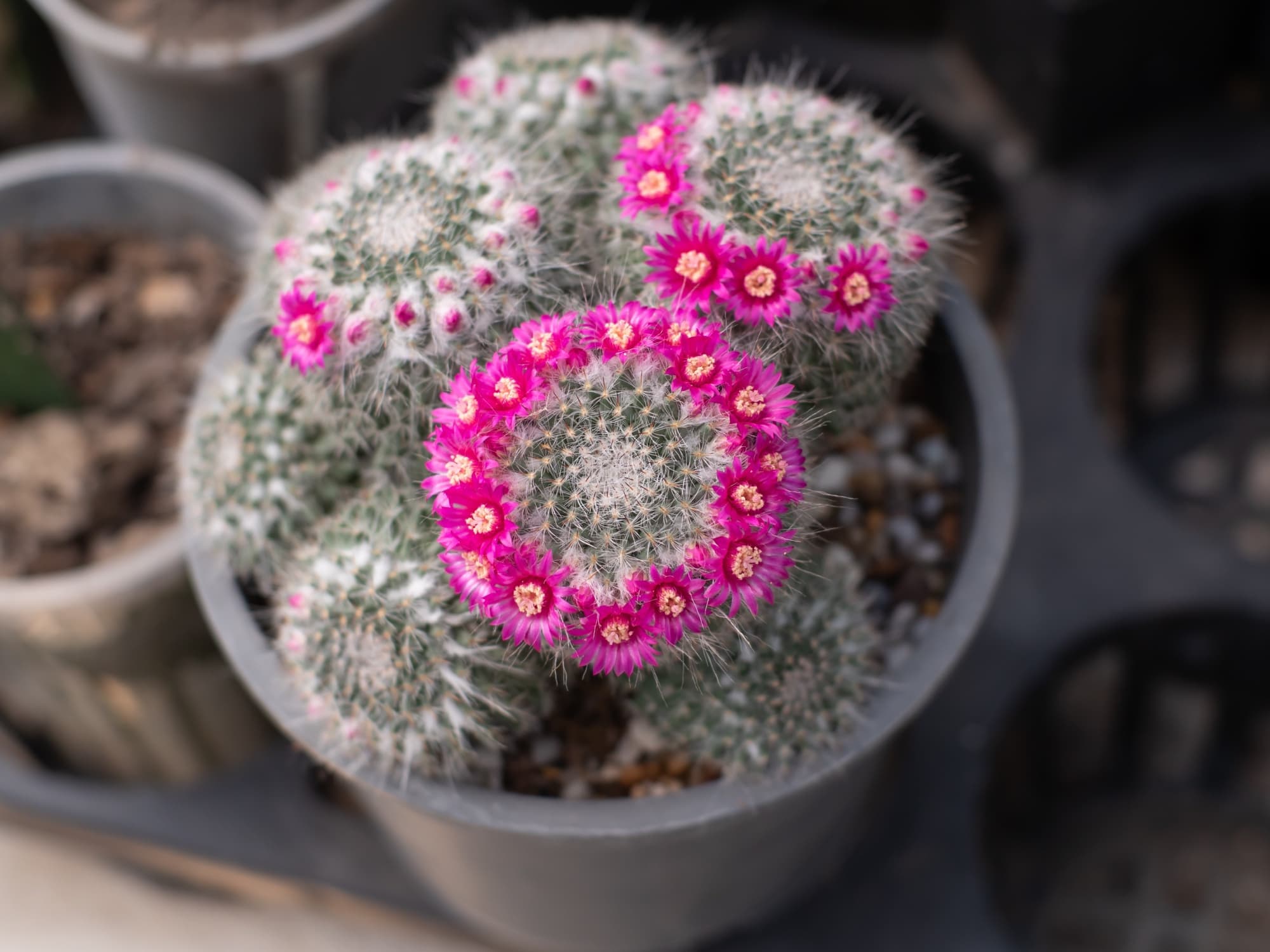
Mammillaria is a family of cacti, with around 200 species and varieties.1
These are popular houseplants in temperate climates like the UK, which is far from their native range.
“My absolute favourite cacti has to be mammillaria,” shares David Ennals, Owner of Coach House Cacti.
“The patterns of spination make them very attractive and most forms are low-growing, bunching plants which produce rings of small flowers, usually from April through to May.”
Overview
| Botanical Name | Mammillaria |
| Common Name(s) | Pincushion Cacti |
| Plant Type | Cacti |
| Native Area | Mexico and the South-Western US |
| Hardiness Rating | H2 |
| Foliage | Evergreen |
| Flowers | Funnel-shaped flowers |
| When To Plant | Year-round undercover |
This is a large and diverse genus, with species that differ quite a lot in their appearance and features.
The variations along with what can be extremely attractive flowers make a number of these cacti popular with those who enjoy growing cacti and succulents in their homes.

Many of the Mammillaria cacti are considered to be among the easiest cacti to grow.
However, not all are easy to grow and some within this genus are said to be among the most difficult cacti to cultivate.
How To Grow Mammillaria
When it comes to growing Mammillarias, as when growing any other cacti or succulents, the key is to make sure that you provide the right growing conditions for these plants.

These are typically plants that are grown inside the home or in a heated greenhouse, though some are suited to outdoor summer cultivation in an area that receives low rainfall.
Growing Conditions
Temperatures are a key consideration when thinking about where pincushion cacti will be able to grow.
These plants tend to be H2 hardy, which means that they can cope with low temperatures of 1-5°C but cannot withstand freezing temperatures.
This generally means that they must be grown indoors or under cover in most parts of the UK.

“Ideally, these plants should be kept between 5-10°C throughout the winter months as they enter a period of dormancy,” explains David.
When grown indoors, they need bright, filtered light in an area with low humidity.
Soil Preference
These plants are cacti, so looking at their natural native habitat gives us all the clues we need to understand the conditions that they require when it comes to the growing medium.
Mammillaria requires a cactus potting compost for the best results as this will be formulated to give them the free-draining conditions that they require.
“I recommend not using multipurpose or moisture-retentive composts (high percentage peat or coir),” shares Dan Ori, a Master Horticulturist.
“I make my own peat-free mix, but there are lots of good cacti composts available from garden centres and online retailers.”
Mammillaria Care Guidelines
Mammillaria cacti can be, as mentioned above, some of the easiest cacti to cultivate as houseplants.

However, it is important to understand that some species can be much pickier and harder to grow.
Sunlight
Most of the time, these plants require bright light with some filtration to protect the plants from the hot sun in summer.
It is important to make sure that they get enough light or certain problems can begin to creep in.
Watering
While these cacti are in active growth, they should be watered moderately and care should be taken to allow excess water to drain away freely to avoid excess saturation of the growing medium.
“Water throughout the growing season but only after the compost has dried out,” David says.
“Use half-strength tomato fertiliser every 4 waterings.”

During the winter dormancy period, it is important not to water excessively.
In fact, these cacti won’t need much water at all over the coldest part of the year and the growing medium should be allowed to dry out almost entirely.
“Keep them dry during the winter in a cool, frost-free room or well-insulated greenhouse,” adds David.
Propagating
Some Mammillaria can be propagated by seed, which should be sown in the early spring (March or early April).
You will likely need a heated propagator, as the seeds require temperatures between 19-24°C for successful germination.

A somewhat easier way to propagate new pincushion cacti is by means of offsets.
The offsets produced around the base of the cacti can often be separated and potted up independently in their own separate containers, where they can then expand your collection of cacti and continue to grow.
Common Problems
Most of the problems that arise when growing these cacti are caused by an issue with their environmental conditions.
Like many other plants commonly kept indoors as houseplants, Mammillaria can also be attacked by mealybugs and other pests.
Mammillaria Varieties
Many Mammillarias are available to purchase by the home grower.
Some that have been given an Award of Garden Merit by the RHS (indicating a high level of suitability to grow in the UK) are:
M. bocasana

M. candida

M. compressa

M. elongata

M. geminispina

M. hahniana

M. petersonii

M. plumosa

M. pringlei

M. surculosa

This is by no means every available option, but these AGM-awarded cacti are among the best options to consider if you would like to grow this plant in your home.
References
1. Mammillaria (Pincushion Cactus). (n.d.). North Carolina Extension Gardener Plant Toolbox. Retrieved May 4, 2023, from https://plants.ces.ncsu.edu/plants/mammillaria/