Growing

Sue Hunter On Pruning Holly: Be Selective With Young Plants; Use Hat-Racking For Older Ones
IN THIS GUIDE Why Prune Holly? When To Prune Holly How To Prune Holly How Far Can You Cut Holly Back? What To Keep In Mind What About Holly In Containers? Left to their own devices, most holly varieties will grow into a large tree shape. The maximum height will vary between varieties, with some able to reach fifteen metres or more. Prune it, however, and you can sculpt your holly tree into completely different shapes. Whether a boxed hedge or something approaching a topiary, holly lends itself well to being shaped and pruned. Why Prune Holly? Holly, left alone, will grow into a traditional tree shape “Holly is versatile in the garden and landscape – there is a species of holly for every situation,” claims Sue Hunter – President of the Holly Society of America. This versatility also extends to their pruning needs. Some holly varieties grow to over fifteen metres high, meaning that they become quickly unruly – especially if they’re in an area of your garden where a giant tree won’t fit with the aesthetic. Pruning is a great way to keep your tree in check, and to force its natural tendencies to comply with your aesthetic demands. Doing this properly won’t damage the plant, so make sure to read the following sections carefully. They’ll teach you what you need to know to keep your holly under control without causing any damage. When To Prune Holly Deciding when to prune comes down to finding the balance between convenience and the plant’s stage in its lifecycle. The consensus is that late spring, around April, is the best time, as the plant is most receptive to pruning, and the outdoor conditions are conducive to the job. “Winter berries will also have been eaten by birds by this time, so leaving pruning until the spring will help them,” adds Roy Nicol, a Master Horticulturist. Pruning too late in the year can increase the risk of new shoots being young when the first frosts hit, leading to stunted ongoing growth. Although it’s undeniably festive, pruning in these conditions is best avoided Pruning too early means you have to spend hours out in the cold fighting with a spiky bush, which isn’t our idea of fun. “Besides, the same issue arises where new growth is damaged by late frosts and sets the plant back at the start of the new season,” Roy says. Beyond those constrictions, you have a lot of flexibility with timing, but spring is favourite. How To Prune Holly Now you’ve got an idea of the best time to prune a holly tree, you need to know how to do it. There’s a little more to it than taking secateurs to the plant and going wild: you want to prune in a way that encourages new growth while respecting old growth, and avoiding damage to either. The received wisdom is to prune stems rather than leaves, and to do this as close to a flowering bud as possible. Doing so will encourage the bud to grow, and is the quickest way to facilitate new growth on your holly tree. Bear in mind that, according to Sue, pruning holly with shears is not always to best idea: “Over time, shearing causes irregular growth within the branching structure of the plant which causes dieback from the inside out.” How Far Can You Cut Holly Back? “Younger hollies respond well to selective pruning as they grow, whilst old, established hollies respond well to a more drastic type of pruning called ‘hat-racking’,” explains Sue. “Hat-racking is where most of the branches are reduced to one-third to one-half their original size and it is almost always performed during the winter dormancy.” Theoretically, you can prune back very hard, although bear in mind that the stems on the inner part of the tree may have much less growth than the outer ones. This is because, over time, they’ll have received less sunlight than the outer branches, meaning fewer buds and fewer leaves. So, if you’re pruning back hard, you may encounter parts of the tree with relatively small amounts of growth. If these formerly inner branches become outer ones on your newly-pruned configuration, the tree may look more barren and bare than it did before. This isn’t necessarily a problem, as these branches will start to put forth buds and leaves over time. You just have to accept that your holly tree may not look as healthy as it once did. “It can take two growing seasons for a Holly which has been hard-pruned to cover itself in foliage again, but it’s worth the wait, as the shrub will then be the desired shape and size and can be selectively pruned more regularly to keep it that way,” adds Roy. What To Keep In Mind Most holly is sharp! If you’ve ever trodden barefoot on a dried holly leaf, you’ll know just how painful their spikes can be. And obviously taking pair of secateurs to your holly tree involves putting your hands, arms, and even face very close to their treacherous barbs. When pruning holly, make sure to wear the relevant gear. This obviously includes thick gloves, but we recommend wearing long sleeves and long trousers, too. Some gardeners advise wearing goggles when pruning holly, too. This may seem excessive, and you might feel like a bit of a wally heading into the garden in full protective clothing, but avoiding a spike in the eye is worth the risk to your street cred! Of course, if you’re growing a variety like Golden King whose leaves are wonderfully smooth, you can probably leave the riot gear indoors. What About Holly In Containers? One of the appealing things about holly is that it grows well in containers, making it a great ornamental plant for balconies, patios, and even indoor settings. Growing holly in containers requires more pruning, however, so don’t put those gloves away just yet. When growing holly in a container you’ll want to prune it annually at first, gradually switching to twice a year in most cases once the plant is ready for it. And you’ll know when it’s ready, as it will take two prunes a year to keep it in the condition that one used to take.
Learn more
"There's More Than Just Bluebells" - Choosing 12 Blue Coloured Wildflowers For The Garden
IN THIS GUIDE 1) Bluebell 2) Harebell 3) Cornflower 4) Chicory 5) Field Scabious 6) Common Forget-Me-Not 7) Sweet Violet 8) Viper’s Bugloss 9) Bugle 10) Sea Holly 11) Meadow Clary 12) Spiked Speedwell References Create a mesmerising daydream in blue in your own garden with these twelve blue-coloured wildflowers for the garden. There’s nothing quite like a touch of blue to make the colours in your garden pop and really bring it to life. Whether you want to introduce random pockets of blue into the overall palette, concentrate it in one area or aim for a completely blue theme in your outdoor space, the UK offers plenty of wildflowers to satisfy your needs. “There are a number of blue native wildflowers that make good garden plants and are also suitable for meadows,” says Horticultural Consultant Colin Skelly. “Many have become scarcer due to industrial agricultural practices, so gardens provide a good opportunity to boost their numbers whilst you enjoy them.” Here are a dozen of the prettiest blue-coloured wildflowers out there, guaranteed to spruce up your garden’s colour scheme and bring some joie de vivre to your space. 1) Bluebell BOTANICAL NAME: Hyacinthoides non-scripta PLANT TYPE: DECIDUOUS BULB HARDINESS RATING: H6 UK NATIVE: YES FLOWERING SEASON: SPRING It’s surely the first thought that springs to anyone’s mind when discussing blue wildflowers, so we might as well get it out of the way early on. With its iconic bell shape, delicately curved petals and folkloric connotations, bluebells are a favourite among any flower lover. A perennial bulb, bluebells bloom from April onwards and prefer shade and humidity to thrive. They’re found throughout the UK but concentrated more densely in the woodlands of England, while the British variety should not be confused with its Spanish counterpart.1 The difference between the two is that the flowers on UK bluebells droop to one side, while their Latin cousins stand more upright.2 Bring some fairy magic into your garden with these beauties! 2) Harebell BOTANICAL NAME: Campanula rotundifolia PLANT TYPE: HERBACEOUS PERENNIAL HARDINESS RATING: H7 UK NATIVE: YES FLOWERING SEASON: SUMMER Sometimes referred to as Scotland’s answer to the bluebell, the harebell is not actually related to its more illustrious counterpart. It goes by a variety of other monikers, too, including Witch’s Bell, Cuckoo’s Shoe and Old Man’s Shoe – and the old man being referred to here is none other than the devil himself.3 It’s also connected with true love in some folklore. Whatever name it goes by, the harebell is a deceptively robust little specimen. Its drooping bells and paper-like petals might give it the appearance of a fragile flower, but the harebell is actually a hardy little plant that can survive well as long as it’s given the conditions it requires. It does best on dry grasslands exposed to the elements, such as windswept shorelines or bare hills. 3) Cornflower BOTANICAL NAME: Centaurea cyanus PLANT TYPE: DECIDUOUS ANNUAL HARDINESS RATING: H6 UK NATIVE: YES FLOWERING SEASON: SPRING / SUMMER Blue, blue, electric blue – cornflowers are striking enough to give your garden the gift of sound and vision. In fact, their flowers are so vibrant that they even have a colour named after them! The most expensive sapphires are ‘Cornflower blue’, which is testament to the value placed upon this stunning shade of flower. The species is so named because it is commonly found in croplands across the UK (especially central and southern England), often rising proudly above the arable produce surrounding it. Indeed, the fact that cornflowers can surpass a metre in height means they’re best placed next to a fence or other border, while they thrive best in slightly sandy soils that are not too dense. 4) Chicory BOTANICAL NAME: Cichorium intybus PLANT TYPE: Herbaceous Perennial HARDINESS RATING: H5 UK NATIVE: NO FLOWERING SEASON: SUMMER The pastel blues found on the petals of a chicory plant can be a lovely addition to any garden. Not only will it spruce up a sunny border or add a flash of colour to a sea of foliage, but it’s also a huge draw for pollinating insects. This means that it’s ideal for encouraging biodiversity into your garden and returns the best results when planted in tandem with species like viper’s bugloss (see below). Chicory plants perform well in dry and dusty sites, which is why it’s often seen at the side of busy roads where conditions are arid. To replicate a similar environment at home, plant it in sandy soil or that containing traces of chalk or limestone. It’s a tallish variety, growing to well over half a metre in size, so bear that in mind when choosing a location for it among your other florae. 5) Field Scabious BOTANICAL NAME: Knautia arvensis PLANT TYPE: Clump-Forming Perennial HARDINESS RATING: H7 UK NATIVE: YES FLOWERING SEASON: SUMMER / AUTUMN Another species which is often found at the roadside, Field Scabious are perhaps more lilac or lavender than outright blue. Having said that, they can certainly complement an azure colour scheme and bloom exceptionally well; a single plant can produce up to 50 flowers, while the fact that their blooming period lasts so long makes them attractive to bees and other pollinators. Field Scabious are easily identifiable by their spindly stalks with oversized, pompom-like flowers growing atop of them. 6) Common Forget-Me-Not BOTANICAL NAME: Myosotis arvensis PLANT TYPE: SHORT-LIVED PERENNIAL HARDINESS RATING: H7 UK NATIVE: YES FLOWERING SEASON: SPRING / SUMMER Prolific on arable terrain, the common forget-me-not (sometimes known as field forget-me-not) is actually deemed a weed by farmers who wish to clear their lands.4 Just one look at its small, blue (and sometimes pink) flowers will make you question how something so pretty could ever be thought of as a nuisance, but its name soon reminds that not everyone sees it that way. Indeed, the forget-me-not was christened due to the fact that it was often viewed as a symbol of love, so hopeful suitors would gift them to their beloved to ensure they remained close in their memory. It has incredible longevity and ingenious methods of seed dispersal – when rubbed up against, the small seedpods will cling to clothing, before being dropped in other locations in which they can germinate afresh. This flower will grow easily in cultivated land. 7) Sweet Violet BOTANICAL NAME: Viola odorata PLANT TYPE: Rhizomatous Perennial HARDINESS RATING: H6 UK NATIVE: YES FLOWERING SEASON: WINTER / SPRING Another one that leans more to the purple end of the spectrum, sweet violets can grow in both blue and white varieties, as well. They favour woodland and hedgerows, providing offshoots of bright colour in among the foliage. While they’re found throughout the UK, their distribution is not as widespread in Scotland, Wales and northern England. Sweet violets have a long and interesting history with regard to the romantic connotations that various civilisations and cultures have attached to them. The ancient Greeks, for example, extracted their essence to make perfume, while the Romans did the same to produce wine.5 8) Viper’s Bugloss BOTANICAL NAME: Echium vulgare PLANT TYPE: Deciduous Biennial HARDINESS RATING: H7 UK NATIVE: YES FLOWERING SEASON: SUMMER There’s no mistaking this fearsome but fascinating flower. So named for its serpentine appearance, Viper’s Bugloss is characterised by its tall, thick and hairy stems, vivid blue blooms and coarse petals surrounding a brilliant red stamen which flicks out like a snake’s tongue. Bees, butterflies and other pollinating insects can’t get enough of it. It thrives well in chalky soil and flowers in the summer months, at which time it will bring an unmistakable charm to your backyard. 9) Bugle BOTANICAL NAME: Ajuga reptans PLANT TYPE: EVERGREEN PERENNIAL HARDINESS RATING: H7 UK NATIVE: YES FLOWERING SEASON: SPRING / SUMMER This evergreen perennial plant will continue to grow all year round, but comes to life in the spring. In April, its dense undergrowth of dark green leaves will shoot forth great spikes of blue flowers, complemented with purple highlights, adding colour, texture and variety to any background which it adorns. It’s a low-growing ground cover plant, so bear that in mind when it comes to planting. The bugle is found all over the UK, preferring woodlands, meadows and hedges as its preferred habitats. Damp conditions are what it loves most, so soil that is rich in organic matter should see it prosper. 10) Sea Holly BOTANICAL NAME: Eryngium maritimum PLANT TYPE: Clump-Forming Perennial HARDINESS RATING: H5 UK NATIVE: YES FLOWERING SEASON: SPRING / SUMMER In appearance, Sea Holly resembles something like a combination between its Christmas namesake and Scotland’s national flower, the thistle. In actuality, it’s related to neither! Even more surprisingly, it’s actually an unlikely member of the carrot family.6 It’s immediately identifiable by its tall stems, spiky leaves and bluish-green, pin-cushion-like flowers. In 2002, the sea holly was nominated as the flower for the city of Liverpool, most likely due to its widespread appearance along the Wirral.7 It favours sandy dunes and shorelines, meaning it’ll do best in free-draining soils exposed to lots of sunshine. Bear in mind, though, that those leaves can be quite sharp to the touch, so planting it well away from paths is advisable! 11) Meadow Clary BOTANICAL NAME: Salvia pratensis PLANT TYPE: Herbaceous Perennial HARDINESS RATING: H7 UK NATIVE: NO FLOWERING SEASON: SUMMER Easy on the eye, meadow clary has tall stems with clumped offshoots of brilliant blue flowers. It used to be widespread throughout the British Isles until the middle of the last century, when a change in agricultural practices saw it crowded out by other plants. It is now classified as a near threatened species and is only found in 21 native locations around the UK.8 It’ll fare best in soil with chalk or limestone content that’s open to the sun, while its petals give off a very pleasant aroma when crushed. 12) Spiked Speedwell BOTANICAL NAME: Veronica spicata PLANT TYPE: Clump-Forming Perennial HARDINESS RATING: H4 UK NATIVE: YES FLOWERING SEASON: SUMMER With long stems, jagged leaves and extensive spikes of vivid blue-purple flowers tapering towards their apex, spiked speedwell is an excellent border plant that draws the eye with its vibrancy and size. The flower of the historic Welsh county of Montgomeryshire (or Maldwyn), spiked speedwell is found scattered in isolated pockets throughout England and Wales.9 As for cultivation, it’s a fairly hardy species which can fare well in most soil types, though best results will be witnessed when situated in well-drained terrain. It prefers full sun but can also thrive in south-facing areas of the garden, while it blooms from July to September. References 1. Bluebell (Hyacinthoides non-scripta). (n.d.). Woodland Trust. Retrieved March 13, 2023, from https://www.woodlandtrust.org.uk/trees-woods-and-wildlife/plants/wild-flowers/bluebell/ 2. Titford, K. (2018, March 1). How to tell a native bluebell from the rest. Berkshire, Buckinghamshire & Oxford Wildlife Trust. Retrieved March 13, 2023, from https://www.bbowt.org.uk/blog/kate-titford/how-tell-native-bluebell-rest 3. Harebell. (n.d.). Plantlife. Retrieved March 13, 2023, from https://www.plantlife.org.uk/uk/discover-wild-plants-nature/plant-fungi-species/harebell 4. Distribution and biology of field forget-me-not in the UK. (n.d.). AHDB. Retrieved March 13, 2023, from https://ahdb.org.uk/knowledge-library/distribution-and-biology-of-field-forget-me-not-in-the-uk 5. Sweet violet. (n.d.). Plantlife. Retrieved March 13, 2023, from https://www.plantlife.org.uk/uk/discover-wild-plants-nature/plant-fungi-species/sweet-violet 6. Apiaceae (umbellifers), wildflowers of the Carrot family. (n.d.). First Nature. Retrieved March 13, 2023, from https://www.first-nature.com/flowers/~apiaceae.php 7. Sea Holly (Eryngium maritimum). (2008, September 13). Geograph. Retrieved March 13, 2023, from https://www.geograph.org.uk/photo/909824 8. Conservation of Britain’s biodiversity: Salvia pratensis L. (Lamiaceae), Meadow Clary. (n.d.). Walsonia. Retrieved March 13, 2023, from https://archive.bsbi.org.uk/Wats22p405.pdf 9. Veronica spicata: Spiked Speedwell. (n.d.). NBN Atlas Wales. Retrieved March 13, 2023, from https://wales-species.nbnatlas.org/species/NBNSYS0000004105
Learn more
Yes, You Can Grow An Avocado Stone Indoors - But Here's Why May Never Bear Fruit
IN THIS GUIDE 1) Know Your Avocado 2) Preparation 3) Germination 4) Potting 5) Patience! 6) Pay-off? References The avocado is a delicious fruit jam-packed with healthy fats and nutrients. While a little tricky to grow in the UK, it’s not impossible – though your plant may never bear fruit. Native to Central America, the avocado plant (Persea americana) thrives in hot, humid and sunny climes. “I come from California where the plants are so different from here in the UK,” shares Alley Marie Jordan. “I grew up planting avocado seeds and watching them grow.” In the right conditions, they can grow up to a whopping 20m in height… but the UK is definitively not an environment conducive to those conditions. “Growing avacados is great fun and an ideal project for children,” shares Colin Skelly, Master Horticulturist. “It’s a longer game than simply sowing cress, but checking the water and the wonder when the seed finally opens is brilliant for engaging little people. “Unfortunately, our seedling at home succumbed to going out into the garden in summer but there’s always next time!” While it does require careful attention, a warm home and a stack load of patience, it’s not actually that challenging an endeavour once you get the hang of it. For any budding horticultural enthusiasts keen to try their hand at growing this colourful plant, here’s a step-by-step guide to bringing an avocado plant to full maturity from the seed. Happy growing! 1) Know Your Avocado While it is possible to coax a standard Hass avocado that you’d find in your local supermarket to life from its seed, this strain of the species is pretty much guaranteed that it will never bear fruit for you. That’s because Hass avocadoes are more comfortable in the sultry climes of Southern California, so a switch to the British climate won’t bring much more than attractive foliage.1 As mentioned above, fruit-bearing avocado plants in the UK are rare – but not unheard of. If you are intent on encouraging your stone to eventually bear fruit, source a variety of the plant that’s hardier in nature and can withstand colder temperatures. Despite also being bred in the scorching conditions of Florida, the Brogdon avocado is a more resilient type and can handle temperatures near freezing.2 2) Preparation The next step is to prepare your avocado stone for the journey it is about to undergo. Very carefully remove it from the fruit and clean it of any mushy residue, ensuring you don’t damage it or remove the brown skin from its surface. It may help if you soak the stone in a cup of cold water for a few minutes, before gently brushing off any fruit which may cling to its surface. Next, locate which end of the seed is up and which is down. The top is where the sprouts will shoot from and is generally pointier in appearance, while the bottom will spread roots and has a flatter contour. Top = pointy, bottom = flat You need to know which is which so that you can position it correctly for the next step of the process. 3) Germination Now, you want to encourage the stone to germinate. The best way to do this is to pierce it on four sides with cocktail sticks, creating a kind of scaffolding which will suspend the avocado in your chosen receptacle. A glass or a plastic cup makes a great option for this, since it’s transparent and you can visibly see when the seed is beginning to sprout roots. With the stone skewered, place it atop a cup filled with water so that the bottom of it is completely submerged, but the top is open to the air (as demonstrated above). Over time, the water will become dirty and must be changed regularly (every five days or so) to prevent the spread of bacteria, mould and fungal growth. Eventually, you will notice the brown skin on the outer surface of the seed slough off, while a tiny crack will appear at its apex and spread all the way down to the bottom. From the bottom, a teensy taproot will emerge, potentially branching into multiple prongs as it grows. This taproot must never be allowed to dry out or become unsubmerged! The whole process varies from plant to plant, but generally takes at least two months to occur. 4) Potting As the taproots appear at the bottom of the stone, so too will a sprout make its entrance from the top. When this sprout has turned into a stem around six inches tall, cut it back down to half its size to encourage new growth. When it reaches six inches in height once more, it’s time to transplant it to soil. Place it in a pot with a diameter of around 10 inches with plenty of soil that is rich in humus, leaving the upper surface of the stone exposed. Position your plant in a location that receives plenty of sunlight, since avocadoes thrive in warm conditions. In the summer, it’s okay to leave them outdoors, but you must bring your babies inside as soon as the temperature begins to drop. Water the plant frequently, treating it to an occasional soak, but ensure the soil doesn’t become saturated. If the leaves begin to turn yellow, that’s a sure-fire sign that you’ve overwatered the plant. In that case, leave it to dry out completely for a few days before watering again. 5) Patience! Now it’s time to play the waiting game! Cultivating an avocado plant to a fruit-bearing stage requires a lot of patience and careful maintenance, so keep an eye on its progress on a regular basis. Once the stem reaches a foot in height, you should pinch out the upper foliage, thus encouraging it to grow more offshoots and become a bushier specimen. Repeat that process every time the plant gains another six inches in height. It’s likely that you might encounter a pest problem over the course of your plant’s life, since mites, aphids, flies and other bugs all can’t get enough of their brilliant green leaves. If you do find you have a pest infestation, wash all the critters off the plant with a hose, then spray it with a combination of warm water, a small amount of washing up liquid and a teaspoon of neem oil. This will ensure they don’t return – but if they do, simply repeat the process until they have been vanquished. 6) Pay-off? As we said at the outset, it’s a very tall order to produce fruit from an avocado houseplant, though it can certainly be accomplished. Even if you are successful, it will take years to reap results; the quickest turnaround you can expect is three to four years, but some plants don’t bear fruit for 10 or even 15 years, while others never do! As such, it’s a long game that you’ve engaged in. If your plant does begin to bear fruit, it will require pollination. To facilitate that process, it’s a good idea to grow several trees all at once, since they can provide pollinators with easy crossover options. But even if you do manage to pull off the remarkable feat of enticing avocados from your homegrown plant, remember that they will not resemble the fruit from whence the original stone came in the slightest! Store-bought avocadoes are cultivated in industrial farms, where everything from the ambient conditions to the branches themselves are minutely controlled. All the same, you should still have plenty of fun growing your avocado stone to full maturity regardless. References 1. California Avocado Society. (n.d.). California Avocado Society. Retrieved March 9, 2023, from https://californiaavocadosociety.org/mother-hass-tree.html 2. Evaluation Of Cold-Hardy Avocados In Florida. (n.d.). Proc. Fla. State Hort. Soc. Retrieved March 9, 2023, from https://www.avocadosource.com/Journals/FSHSP/FSHSP_VOL_83_PG_382-386_1970.pdf
Learn more
Bugs On Your Houseplants? Here's 6 Common Types To Help You Identify Them
IN THIS GUIDE Types Of Houseplant Bugs 1) Thrips 2) Leafminers 3) Beetles 4) Whiteflies 5) Spider Mites 6) Aphids Getting Rid Of Plant Pests Preventative Measures The Best Defence Is A Good Defence References Plenty of pests can wreak havoc on your carefully-tended houseplants. Such abuse is dispiriting and can cause untold, permanent damage to your plants but, thankfully, there are steps you can follow to remove and, more importantly, prevent such pests. Your beautiful houseplant is their tasty supper In this guide we’ll look at the most common houseplant bugs you’re likely to come across in the UK, steps to prevent them taking hold, and steps to remove infestations should they occur. Types Of Houseplant Bugs There are several main contenders – a variety of minibeasts that threaten UK houseplants with their presence. You may notice slugs and snails missing from our list. This is deliberate, as often these slimy fellows will stay outside. 1) Thrips What are they? Small insects that suck sap from the leaves of plants, leaving damage in their wake. What do they look like? Winged insects about 2mm long, with light hair on the wings. Likely colours include pale yellow, brown, or black.1 Signs of their presence: You’ll notice dull, discoloured leaves with black spots. White flecks on flowers can also indicate presence. 2) Leafminers What are they? A family of pests that burrow into leaves to get at the nutrients inside. Their presence looks worse than it is. What do they look like? Because there are so many pests in this category, appearance varies. Also, the damage they cause is a better diagnostic than the aesthetic qualities of the bugs themselves. Signs of their presence: Tunnel-like burrows on leaves, often brown, and possibly with black excrement left behind.2 3) Beetles What are they? Another vast family of insects containing hundreds of thousands of distinct varieties – some of whom like to live on and eat houseplants. What do they look like? Beetles have hard wing cases, a line down the middle, and antennae, but there’s so much variation between species that there’s no fixed answer for this question. Signs of their presence: Beetles will be visible to the naked eye, and will likely create holes in the leaves they feed on. 4) Whiteflies What are they? Sap-sucking flies damage plants by stealing their nutrients and leaving damaging excrement.3 What do they look like? Small and white, with translucent wings. Often you’ll see them in large groups. Signs of their presence: Easily visible clusters of flies, evidence of sticky and sugary excrement on leaves, general poor leaf health. 5) Spider Mites What are they? One of many mites feed on sap sucked from leaves. Over-feeding can cause leaf damage and death, if left unchecked. What do they look like? Small bugs, about 1mm in length, translucent bodies whose colour depends on the variety. Signs of their presence: Mottled leaves, white cast skins or egg shells visible, silk web on plants, and discoloured leaves. 6) Aphids What are they? Yet another sap-sucking pest whose colonies damage plants they decide to take up residence upon. What do they look like? Small and greeny-yellow, ranging in size from 1mm to just shy of a centimetre. There are many varieties, meaning exact size and colouration can vary.4 Signs of their presence: Visible clusters of insects, stunted growth, mouldy leaves, cast skins, and sometimes ants are an indication of aphids nearby (the two share a symbiotic relationship). Getting Rid Of Plant Pests Bugs are perseverant and tenacious, and they’ll probe for gaps in your defences no matter how well-laid they are. When this happens, you have to ramp up the attack. Here’s what to do. Make A Decision How attached are you to your infected plant? Although it may seem harsh, getting rid of plants you’re not overly attached to can often be the easiest way to resolve an infestation. If the thought of throwing your plant out fills you with rage, that’s a good indication that persevering with the following steps is the best course of action. If it doesn’t, consider getting rid and moving on. Isolate! As soon as you notice pests on a houseplant and you decide to save it, isolate the plant. Move it away from your other plants and keep them separate until you’re confident you’ve removed the problem completely. This step will prevent pests spreading themselves enthusiastically around all of your plants. Be Persistent Sadly, getting rid of pests can be quite a long haul, as they’re unlikely to give up their ill-gotten gains without a fight. Steel yourself and know that they will be gone eventually. Evaluate The Damage When pests take hold, they won’t necessarily infect the whole plant straight away. If some leaves are infected, remove and destroy them. Keep an eye on the plant for a couple of weeks afterward to see whether any lingering individuals establish another infestation: If so, repeat the process. Pick Off Any Pests That Are Big Enough Although it’s icky, manually removing pests is an effective way to reduce their hold on your houseplant. Pinch them gently and remove if they’re big enough. If not, use a cotton bud dipped in disinfectant, or tweezers, or something similarly able to scrape them away. Ideally you’ll want to squash the pests and throw them in the bin. A magnifying glass can help with this job Spray Your Plant With Non-Pesticides Spraying with water can help with physically removing pests, and mixing some insecticidal soap into the water can boost effectiveness. These soaps are available from gardening stores, and are specially formulated to discourage insects. “Insecticidal soap is the only method I use other than hand picking pests,” says Master Horticulturist Colin Skelly. “Observation is key and, if caught early, will work very effectively. Conditions in the home provide the conditions for houseplant growth but also for pest population growth, so timeliness is essential. “Repeat spray 2-3 times at 5-7 day intervals making sure to spray under leaves as well as on top and leaf axils.” Spray Your Plant With Pesticides If the previous steps haven’t helped to alleviate your infestation, more drastic measures must be taken. Pesticides are potent chemicals designed to kill and remove pests, but beware: Their potency increases the risk of damage to your houseplant. Always follow instructions and use pesticides carefully. There are various pesticides available, each intended for use with specific types of pest. For this reason we can’t include usage directions, but each product will include detailed instructions on the packaging. Make sure to follow these for safety reasons. Preventative Measures With most things in life, taking preventative measures is often more effective and painless than waiting until things hit a crisis point to take action. The same is true with preventing houseplant bugs. There are a few simple steps you can take to reduce the risk of infestation. Where possible, incorporate these into your regular plant-care routine. Hopefully pests will be discouraged and will turn their attention elsewhere, leaving your plants to thrive. Establish A Perimeter Pests are often brought in with plants, but they can find their own way in, too. If you have windows and doors open regularly to let fresh air in, try to use screens and barriers to keep pests out. Listen To Your Plants’ Needs Pests are most likely to take hold when your plant is vulnerable. Giving them the right amount of sunlight and water, and the right conditions to thrive, will help your plant to grow big and strong, thereby lowering the risk of infestation. Inspect Newcomers This point applies to plants you’ve just bought from a garden centre, and to those you’re bringing in from a summer spent outdoors. Both have the potential to bring pests from their old home and into yours. With plants that are new to you, check the entire plant for signs of pests. Give the leaves, stalks, and flowers a once over. If you find anything, keep the plant outside or in quarantine until you’ve taken eliminatory steps. For plants you’re bringing indoors after a summer outing, you’ll need to check the soil too. Opportunist pests can take root (pardon the pun) and sneak indoors to wreak havoc. Here’s what you’re looking for during an inspection – Pests hanging out on the bottom of leaves. They may be quite small, so a magnifying glass is helpful in spotting them early. Blemishes or mottling on leaves. Holes in leaves. Quarantine Keeping new plants away from others for a few weeks is a surefire way to ensure there are no pests. Sometimes an inspection like the one in the previous step will miss small or particularly well-hidden pests: Quarantine is a way to force them to show themselves before any other plants can be affected. Water The Soil, Not The Plant This ties back to our second point of listening to your plants’ needs. Sometimes when watering, people liberally apply water to the plant itself with the hope that it’ll trickle down into the soil. Where possible, avoid this. Especially indoors, where there’s less likely to be enough sunlight for the water to evaporate away. Moist, soggy leaves are an inviting prospect for pests, and represent an easily avoidable vulnerability. Water the soil directly, or bottom water by allowing water to drain up through holes in the bottom of your plant pot. Use Store-Bought Soil If you’re repotting, use bought compost rather than soil scooped up from your garden. This greatly reduces the chance of bringing in pests from tainted soil, and has the bonus benefit of ensuring more reliable nourishment for your plant. The Best Defence Is A Good Defence Remember, preventative measures are almost certainly more effective than remedial ones. Keeping your plants in good condition, respecting their needs, and taking steps to reduce the risk of infestation should hold pests at bay. If they do find their way in, whether through a window, on a new plant, or hidden deep in the soil, pests can be contained. While it’s frustrating and dispiriting, all that’s required is perseverance and the right steps taken at the right time. We hope our guide to the types of UK houseplant bugs and what to do about them has been useful. If you’re reading to learn how to remove an existing pest problem, we wish you all the best in doing so. References 1. What do thrips look like? (2011, November 18). The Australian Museum. Retrieved March 27, 2023, from https://australian.museum/learn/species-identification/ask-an-expert/what-do-thrips-look-like/ 2. Leafminers (vegetables). (n.d.). Wisconsin Horticulture. Retrieved March 27, 2023, from https://hort.extension.wisc.edu/articles/leafminers-vegetables/ 3. Whitefly. (2018, May 11). Agriculture and Food. Retrieved March 27, 2023, from https://www.agric.wa.gov.au/pest-insects/whitefly 4. Aphids. (n.d.). Wisconsin Vegetable Entomology. Retrieved March 27, 2023, from https://vegento.russell.wisc.edu/pests/aphids/
Learn more
A Horsetail Infestation Is Difficult To Control - Here Are 5 Solutions To Consider
IN THIS GUIDE What Is Horsetail? Why Is Horsetail Problematic? How To Identify Horsetail How To Control Horsetail 1) Removing Shoots 2) Mulch The Area 3) Mow Any Horsetail In Your Lawn 4) Digging Up As Much As Possible 5) Consider The Use Of Weed Killer Horsetail FAQs References Horsetail is an invasive weed that can cause a lot of damage and disruption in British gardens. Although it’s not an unattractive plant, horsetail has fast-growing underground stems which let it spread quickly and take deep hold, making it difficult to keep under control. We’ve written this guide for people facing a horsetail infestation. Our hope is that the information here will help you to get things under control again! What Is Horsetail? Firstly, it’s important to know that while horsetail and mare’s tail are often used interchangeably, they’re actually two distinct plants. Horsetail is Equisetum arvense, a perennial plant that grows on land. Mare’s tail, on the other hand, is Hippuris vulgaris, an aquatic plant. Horsetail is native to arctic regions and parts of the northern hemisphere. It’s actually considered a “living fossil” given that its relatives are estimated to have occupied the Earth around 350 million years ago!1 This perennial weed forms dense clusters of dark green foliage that can take resources and nutrients from other plants, causing damage. One of the main reasons the plant is so hard to control is that the roots (or rhizomes) can penetrate up to two metres below the ground! Far out of reach of most herbicides. The plant reproduces through its rhizome network or through spores, both of which make it tricky to control.2 When you’re dealing with a plant that can reproduce through sections of root that have been cut, it becomes more difficult to remove the plant entirely from your garden. Why Is Horsetail Problematic? To be considered a weed, a plant must be unwanted, hard to keep at bay, and in competition with desired plants for the resources and nutrition available in your garden. Horsetail ticks all of these boxes with vigour. Once established in your garden, horsetail has a tendency to crowd out other plants. Then, even when you cut it back or attempt to uproot it, there are rhizomes waiting deep underground, far out of reach, ready to rear their heads once again.3 Not only that: Because this plant burrows so deep, it’s able to spread between gardens far underground, beneath even the deepest of fences. In short, there’s good reason that horsetail is known as one of the most fearsome weeds we face in the UK! How To Identify Horsetail The first step in controlling and killing horsetail is making sure that you’re actually dealing with horsetail: Horsetail grows anywhere from 0.1-1m in height. The plant is characterised by side shoots that branch out from segment joints, and by spore cones with a distinctive brown colouration. These cones are about half a centimetre in diameter. How To Control Horsetail If you’re unfortunate enough to have a horsetail infestation, you have a few options. Note that some UK councils have reporting programs in place to monitor the presence and spread of horsetail in the local area. If you live in a place whose council collects this information, make sure to let them know.4 They may even be able to provide information or help with controlling the spread. 1) Removing Shoots The temptation when you see horsetail popping through the ground may be to cut it back. Try to resist this, if possible. Because of the deep underground rhizome network, cutting back at ground level can cause more harm than good, as cut segments can regrow into more weed, effectively compounding the problem. The Royal Horticultural Society (RHS) note that over a period of many years, trimming back surface-level horsetail may lower the severity of an infestation. However it’s not ideal as a solution in the short or long-term. 2) Mulch The Area Regular mulching is associated with reduced levels of horsetail, although as with removing shoots, this must be done on a long-term basis to deliver optimum benefits. 3) Mow Any Horsetail In Your Lawn If you see horsetail coming through your lawn and you haven’t yet arranged a method to remove it completely, you can prevent it from growing too large by mowing regularly. This is definitely a measure designed to control, rather than remove horsetail, though. 4) Digging Up As Much As Possible While you’ll never remove an entire plant once it’s fully established, you can weaken growth by repeatedly digging up as much as you can reach. The damaged underground roots will most likely sprout again and pop back up, making this something like a game of whack-a-mole, but you may be able to curtail the worst of the growth. “Removing shoots, mulching, mowing and digging up are all methods that will reduce horsetail over time,” shares Colin Skelly, a Master Horticulturist. “In my experience, turning over a horsetail-infested area to grass and mowing provides the best control as it regularly removes the foliage, weakening the plant to the point of elimination over time.” 5) Consider The Use Of Weed Killer Horsetail will respond to treatment with weed killer, but the deep rhizomes may cause problems still more. Unlike some weeds which can be eradicated in one year through the correct application of weed killer, horsetail may require a prolonged campaign spanning several years. Each successive treatment is likely to further weaken the rhizome network, with the cumulative damage hopefully offsetting any recovery the plant is able to achieve between treatments. Here are some things to bear in mind when using weed killers to control horsetail – Bruise the roots of the plant first to weaken the membrane and encourage higher absorption of weed killer. This will help the weed killer to reach more of the plant, and to cause more damage. Try to use a weed killer that won’t damage surrounding grasses. This will encourage grass to spread into the area recently vacated by horsetail, increasing the amount of competition and reducing its ability to re-establish itself. Horsetail FAQs With such a fearsome reputation, there are a lot of questions and a lot of misinformation around horsetail. In this section we’ll address a couple of these questions, to make sure you’re working with the very best information. Can Vinegar Kill Horsetail? No, vinegar cannot kill horsetail. This is quite possibly an old wives tale, but sadly it’s not one of the ones that holds truth. Horsetail is so vast and sprawling that the mild acidity of vinegar is nowhere near enough to cause the level of damage required to kill the plant. Can You Dig Up An Entire Horsetail? While it’s theoretically possible to dig up horsetail, the amount of work required almost certainly renders this option unsuitable. The rhizomes of the plant spread out far and wide underground, up to depths of around two metres, meaning that you’d have to dig up an enormous amount of soil to get anywhere close. And that’s not taking into account outward growth – potentially reaching into other gardens, under structures, and so on. Unless you’re planning to excavate your entire garden and start again from scratch, we really don’t recommend considering this option. Should You Trim Horsetail? Although trimming horsetail back won’t do anything about the underground part of the problem, the technique can be used to keep the plant in check. Horsetail grows fairly quickly so you may find yourself doing this quite often, but it’s a good way to protect against unruly horsetail above the ground. References 1. Nice, G., & Sikkema, P. (2007, May 24). The Ancient Horsetail. Purdue University. Retrieved March 17, 2023, from https://www.extension.purdue.edu/extmedia/ws/ws-29-w.pdf 2. Distribution and biology of horsetail in the UK. (n.d.). AHDB. Retrieved March 17, 2023, from https://ahdb.org.uk/knowledge-library/distribution-and-biology-of-horsetail-in-the-uk 3. Burrill, L., & Parker, R. (1994, July). Field Horsetail and Related Species. Maine: Gov. Retrieved March 17, 2023, from https://www.maine.gov/dacf/php/gotpests/weeds/factsheets/horsetail-nw.pdf 4. Report a Horsetail weed problem. (n.d.). Preston City Council. Retrieved March 17, 2023, from https://www.preston.gov.uk/article/2250/Report-a-Horsetail-weed-problem
Learn more
Bougainvillea To Weigela: Here's 20 Marvellous Shrubs With Pink Flowers
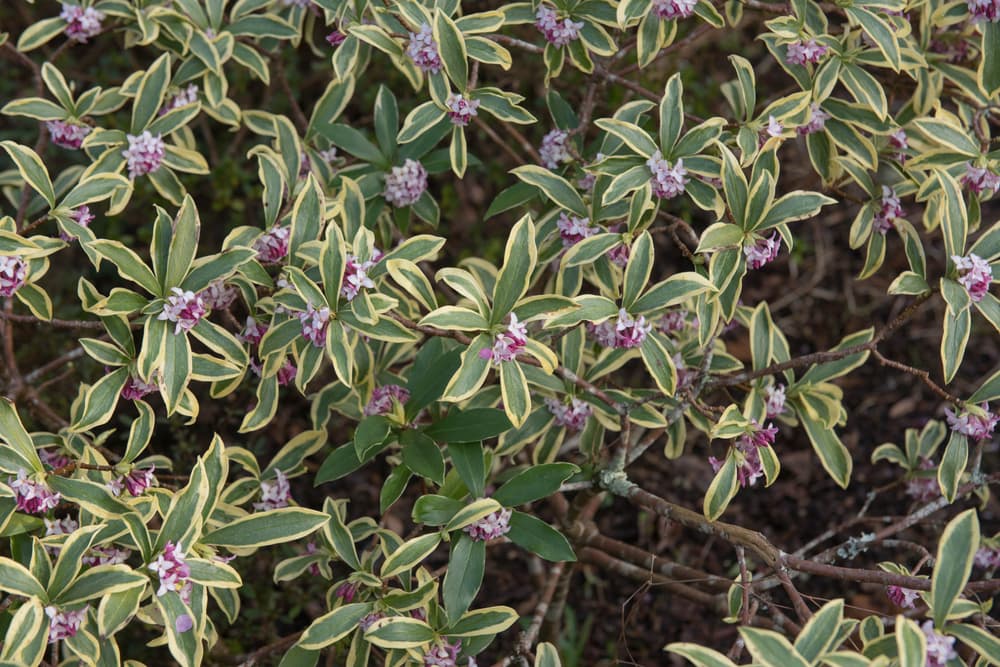
IN THIS GUIDE 1) Rose 2) Bougainvillea 3) Sandcherry 4) Azalea 5) Hydrangea 6) Lilac 7) Buddleja 8) Clematis 9) Winter Heather 10) Magnolia loebneri 11) Rhododendron ‘Dreamland’ 12) Loropetalum chinense 13) Judas Tree 14) Chaenomeles 15) Daphne 16) Weigela 17) Hibiscus 18) Elder 19) Deutzia 20) Pink Forsythia Tickled Pink References Pink needs no introduction. It’s easy to see why a gardener would want to bring as much of this colour into their garden as possible. It’s the colour most often associated with such traits as charm, sweetness, romance, politeness, femininity, and more – and the natural world is replete with stunningly beautiful pink bloom.1 “Pink is a hugely popular flower colour for gardens,” shares Master Horticulturist Colin Skelly. “It can harmonise with reds and purples or contrast with green, yellows or light blues, giving the option to utilise foliage colour in a contrasting scheme.” We’ve written this guide to help you find the best shrubs with pink flowers. After reading, you’ll have a list of candidates to bring this iconic colour to your garden with vigour. Each of the shrubs below will grow comfortably in British gardens. Some have received the Royal Horticultural Society’s Award of Garden Merit, too, indicating particular suitability to our climate. We’ll mark these shrubs throughout the piece.2 Now, let’s begin. The best shrubs with pink flowers to grow in the UK: 1) Rose BOTANICAL NAME: ROSA HARDINESS RATING: H6 SIZE: 1.5 X 1M RECOMMENDED PINK VARIETIES: ‘Gertrude Jekyll’, the Damask rose, ‘Princess Alexandra of Kent’, ‘Frantasia’, apothecary’s rose Roses are one of the world’s favourite flowers. They make a fine addition to any garden, and a healthy rose bush is often something of a feather in a gardener’s cap. This flower comes in all shapes and sizes, too. There are ground-cover roses, rambler roses, climbing roses, “roses with exceptional fragrance” and, of most interest here, shrub roses. While each variety of rose has its own in-depth history and rich story to tell, we can’t go into that here. What we can say is that within the shrub rose category you’ll find plenty of proudly-pink options, including ‘Gertrude Jekyll’, ‘Princess Alexandra of Kent’, ‘Frantasia’, Apothecary’s Rose and more. 2) Bougainvillea BOTANICAL NAME: BOUGAINVILLEA HARDINESS RATING: H2 SIZE: 1.5 X 8M RECOMMENDED PINK VARIETIES: ‘Elizabeth Angus’, ‘Don Mario’, ‘Temple Fire’, ‘Miami Pink’, ‘Gloucester Royal’ Although native to South America, bougainvillea has made a big impact since its arrival on British shores. The distinctly-summery blooms seem to spill forth, throwing many different shades of pink into whichever room or garden they’re planted in. This shrub flowers in summer and autumn, and will grow to a fairly respectable size of 4-8m high by 1-1.5m wide. Bougainvillea will thrive best in sun, with shelter from the harvest summer rays. In terms of hardiness, you can grow it outside in summer. Bougainvillea is regarded as a fairly fussy plant to grow, however, so it may not be ideal for fledgeling gardeners. 3) Sandcherry BOTANICAL NAME: Prunus × cistena HARDINESS RATING: H6 SIZE: 1.5 X 1.5M RECOMMENDED PINK VARIETIES: ‘Crimson Dwarf’ With rich pink-red leaves and delicate white-pink flowers, it’s almost possible to not count sandcherry as pink. But when taking the average of the overall picture, pink does shine through. We’ve included this shrub because of its distinct colour profile, and because of the beautiful flowers that will spring forth in spring. As a recipient of the RHS Award of Garden Merit, sandcherry is more a welcoming prospect for newer gardeners than bougainvillaea. The plant will do well in full sun or partial shade, will tolerate any aspect, and can make do either exposed or sheltered. It’s not fussy with soil, either, favouring chalk, clay, loam, or sand. As long as you don’t over-water, you should have few problems with sandcherry. It’ll grow to a height and spread of about 1-1.5m over a timespan of 10-20 years. A long wait, to be sure, but remember it will be beautiful throughout! 4) Azalea BOTANICAL NAME: AZALEA HARDINESS RATING: H6 SIZE: 2.5 X 2.5M RECOMMENDED PINK VARIETIES: Swamp Azalea Just like the humble orange, azalea is named after its colour. Or is it the other way round..? As with the rose, there are many pink varieties of azalea that will make an impact in your garden—from the subtle pink-white swamp azalea, sporting its star-shaped flowers and nectar-covered tendrils, through to the rich pink rose-flowered “Amoenum”. 5) Hydrangea BOTANICAL NAME: HYDRANGEA HARDINESS RATING: H6 SIZE: 1.5 X 1.5M RECOMMENDED PINK VARIETIES: ‘Magical Colourdream’, ‘Salsa Pink’, ‘Red Bull’, ‘Beni-Gaku’ The hydrangea is a fascinating flower. While varieties come in many colours, those with pink or blue leaves change colour depending on the acidity of the soil they’re planted in! Generally, acidic soil puts forth blue flowers, neutral gives mauve, and alkali soil gives pink. This means that if you’re looking for a pink hydrangea shrub for your garden, you’ll want to take special care that your soil acidity levels are correct. For a surefire burst of pink, look for the ‘Magical Colourdream’ variety, which will grow to 1.5 x 1.5m over a period of 5-10 years. It’ll do well in partial shade, facing any direction except south, and prefers clay or loam soils. Your bright pink bouquet will be forthcoming in summer. Remember there are many other varieties, however. 6) Lilac BOTANICAL NAME: SYRINGA HARDINESS RATING: H6 SIZE: 2.5 X 1.5M RECOMMENDED PINK VARIETIES: ‘Pink Perfume’, ‘Red Pixie’, ‘Belle De Nancy’, ‘Dark Purple’ While lilacs are famously purple, some varieties pack a pink punch. Amongst them is lilac ‘Pink Perfume’, whose pink flowers stay in bloom from spring through to autumn. This isn’t a plant for gardeners in a rush: It’ll take between 10 and 20 years to reach full size. Once there, though, it demands your attention. Expect a height of up to 2.5m, and a spread of up to 1.5. The ‘Pink Perfume’ lilac is hardy down to -20°C, practically guaranteeing survival in UK gardens. It enjoys full sun, any aspect except north-facing, and isn’t fussy on soil composition (it won’t enjoy acidic soil, though!) 7) Buddleja BOTANICAL NAME: BUDDLEJA HARDINESS RATING: H5 SIZE: 2.5 X 2.5M RECOMMENDED PINK VARIETIES: ‘Fascinating’, ‘Pink Delight’, ‘Hot Raspberry’, ‘Sugar Plum’ There are many types of buddleja, and not all of them are pink. The ones that are pink, though, look phenomenal. One such variety is buddleja davidii Fascinating, which sports bushels of bright pink flowers from July to September, and grows to a height of up to 2.5m. The plant thrives in sunlight, likes well-drained soil, and is renowned for attracting butterflies and other pollinators. A word of caution if you go for buddleja: This plant needs a lot of pruning! Left to its own devices, it can become fairly unruly. 8) Clematis BOTANICAL NAME: CLEMATIS HARDINESS RATING: H6 SIZE: 2.5 X 1M RECOMMENDED PINK VARIETIES: ‘Nelly Moser’, ‘Abundance’, ‘Pink Champagne’, ‘Pink Fantasy’ The flowers of the ‘Nelly Moser’ Clematis variety are a sight to behold. The petals burst forth from a centre filled with dark red tendrils, and each has a bold core of dark pink that fades gracefully into white. This type of shrub can also be trained to climb walls and other vertical surfaces, opening up a range of options for your garden. Reaching a full height of up to a whopping 2.5m, and a width of about 1m, Clematis will be a significant presence in your garden. It enjoys partial sun, well-drained soil, and can thrive down to -15°C. 9) Winter Heather BOTANICAL NAME: ERICA CARNEA HARDINESS RATING: H6 SIZE: 0.5 X 0.5M RECOMMENDED PINK VARIETIES: ‘Pink Spangles’, ‘Rosalie’ Heathers come in a wide variety of colours, but the pink ones are perhaps most iconic. Originally hailing from the Alpine mountains, heather has now become commonplace in UK gardens. This is because it’s attractive, fairly easy to grow, and not too fussy in terms of soil conditions. To grow heather in your garden you’ll need a sunny location with peaty, well-drained soil. As with clematis, heather will do just fine down to about -15°C. Heather’s pink bloom comes out earlier in the year than other shrubs in our list, meaning you can combine it with other plants to keep a pink theme going in your garden for even longer. These flowers will usually bloom from January to April, all being well. 10) Magnolia loebneri HARDINESS RATING: H6 SIZE: 8 X 8M If you’re looking for flowers with an intriguing shape, then look no further. Magnolia’s starry two-tone petals – bright pink on the bottom, light pink on top – really make a statement. This plant likes a sunny spot with well-drained soil, and is in the same hardiness category as the previous two. It’ll bloom from April to May which, while short, pairs nicely with winter heather to provide pink foliage in your garden from January. Over a period of 20+ years, magnolia loebneri will grow to a maximum size of about 8m square. 11) Rhododendron ‘Dreamland’ BOTANICAL NAME: Rhododendron ‘Dreamland’ HARDINESS RATING: H5 SIZE: 1.5 X 1M What a whimsical name! This plant’s delicate pink definitely evokes something dreamlike, and it’s not hard to see why it’s a firm favourite in British gardens. While many shrubs in our list have vibrant, bright pink flowers, the R. ‘Dreamland’ offers something a lot more gentle. This pink is calm and mellow, able to make a statement of its own without relying on boldness. R. ‘Dreamland’ flowers from May to June, continuing the January – May chain that heather and magnolia manage. It’s just as hardy and prefers to grow in a spot with partial sun and peaty soil. The maximum size you’re likely to get for your shrub is a metre squared. 12) Loropetalum chinense HARDINESS RATING: H4 SIZE: 2.5 X 2.5M RECOMMENDED PINK VARIETIES: ‘Fire Dance’, ‘Burgundy’ This shrub’s hearty pink tones are something special, occupying a part of the pink spectrum that not many other plants can pull off. Combined with their slightly grey-green leaves, the overall aesthetic is a treat to behold. Lorepetalum likes partial sun and peaty soil, and will flower between March and April. Quite a short window, but that’s more than made up for by the vibrancy and aesthetically pleasing colour palette. 13) Judas Tree BOTANICAL NAME: Cercis siliquastrum HARDINESS RATING: H5 SIZE: 8 X 12M Some plants have names that invite more questions than they answer, and ‘Judas tree’ is a fine example. While we’re not able to elucidate you on the origins of the name, we can assure you that the beautiful clusters of pink flowers will bring joy to your garden every time they bloom. This plant will do well in sun or partial shade, and isn’t fussed at all by soil type. It’ll reach a whopping 3m tall and 1.5m wide over ten years. (Also, the observant amongst you may have noticed that the Judas tree is just that. A tree. We’ve included it in our list of pink shrubs because it’ll make a fine addition to any garden which heavily features pink.) 14) Chaenomeles BOTANICAL NAME: Chaenomeles HARDINESS RATING: H6 SIZE: 2.5 X 4M RECOMMENDED PINK VARIETIES: ‘Pink Storm’, ‘Pink Lady’ 15) Daphne BOTANICAL NAME: DAPHNE HARDINESS RATING: H4 SIZE: 1.5 X 1.5M RECOMMENDED PINK VARIETIES: ‘Odora’, ‘Pink Fragrance’ 16) Weigela BOTANICAL NAME: WEIGELA HARDINESS RATING: H6 SIZE: 0.5 X 0.5M RECOMMENDED PINK VARIETIES: ‘Pink Poppet’, ‘Sonic Bloom’, ‘Snippet Dark Pink’ 17) Hibiscus BOTANICAL NAME: HIBISCUS HARDINESS RATING: H5 SIZE: 2.5 X 1.5M RECOMMENDED PINK VARIETIES: ‘CHIFFON PINK’, ‘PINK GIANT’ 18) Elder BOTANICAL NAME: SAMBUCUS NIGRA HARDINESS RATING: H6 SIZE: 8 X 4M 19) Deutzia BOTANICAL NAME: DEUTZIA HARDINESS RATING: H5 SIZE: 1 X 1M RECOMMENDED PINK VARIETIES: ‘YUKI CHERRY’, ‘STRAWBERRY FIELDS’, ‘PERLE ROSE’ 20) Pink Forsythia BOTANICAL NAME: Abeliophyllum HARDINESS RATING: H6 SIZE: 1.5 X 2.5M RECOMMENDED PINK VARIETIES: ‘Roseum’ Tickled Pink Pink is one of our favourite colours to see in a garden. We think that the shades and tones that Mother Nature creates are so much more beautiful than anything man-made, and that you’d be remiss not to incorporate at least a couple of pink shrubs into your garden. The plants in this list run the gamut of size, span, shade of pink, and season of bloom. “Also, think about the shade of pink and type of flower when combining with other flowers or foliage,” adds Colin. It’s our hope that by including a wide variety, we’ve given you the best springboard to figure out which pink plants to plant out in your backyard. And remember: This list is far from exhaustive. So if the pink shrubs in our list don’t tickle your fancy, keep looking! There’s bound to be something out there that suits your personality, your budget, and your garden space. As always, happy gardening! References 1. Cherry, K. (2022, November 14). The Color Psychology of Pink. Verywell Mind. Retrieved March 24, 2023, from https://www.verywellmind.com/the-color-psychology-of-pink-2795819 2. See RHS Award of Garden Merit (AGM) plant, fruit & veg award winners. (n.d.-b). Royal Horticultural Society. Retrieved March 24, 2023, from https://www.rhs.org.uk/plants/trials-awards/award-of-garden-merit
Learn more
Growing Pieris 'Forest Flame': Popular As Robust And Attractive Garden Plants
IN THIS GUIDE Overview How To Grow Pieris ‘Forest Flame’ Plant Care Common Pests References Plants in the Pieris family are evergreen shrubs, known for their ornamental foliage and their exciting red, white, and green aesthetic. They’re native to parts of Asia, North America and Cuba. Over the years, though, this plant has become a popular addition to British gardens, and it’s easy to see why: It’s attractive, it’s different, and it’s not overly fussy about where it grows. “Pieris ‘Forest Flame’ arose as a hybrid at Sunningdale Nurseries, an accident of history like many hybrids that go on to become popular cultivars,” says Master Horticulturist Colin Skelly. “‘Forest Flame’ are usually popular because they are robust and attractive garden plants.” If you’re interested in growing Pieris ‘Forest Flame’ in your garden, we’ve written this guide with you in mind. After reading, you’ll be equipped with the knowledge you need to get a Pieris ‘Forest Flame’ thriving in your garden. You’ll be able to enjoy its joyous displays of red, white, and green whenever you need a pick-me-up. Overview Botanical Name Pieris ‘Forest Flame’ Common Name(s) Pieris ‘Forest Flame’; Andromeda; Fetterbush Plant Type Shrub / Hedging Native Area North America Hardiness Rating H5 Foliage Evergreen (the young leaves are bright red; then transform from pink to green) Flowers Cream, bell-shaped When To Sow June, September Flowering Months April, May, June When To Prune March, April, June Pieris ‘forest flame’ is the common name for Pieris floribunda, one of seven types. Other species include P. cubensis, P. formosa, P. japonica, P. nana, P. phillyreifolia and P. swinhoei. While all Pieris are known for their red, white, and green, ‘Forest Flame’ is slightly darker than others. It’s a large evergreen shrub that will bring red flowers in spring, fading into pink, cream, and then green throughout the year. How To Grow Pieris ‘Forest Flame’ Pieris ‘Forest Flame’ has received the Award of Garden Merit from the Royal Horticultural Society (RHS), indicating its suitability for growth in British gardens.1 This means the plant is a great choice for budding gardeners who want something attractive and rewarding, without being too much of a challenge to grow. Growing Benefits Pieris ‘Forest Flame’ is fairly easy to grow if you cater to its needs. The plant takes between 10 and 20 years to reach its full height, which will usually clock in around 2.5-4m. In terms of spread, you should expect about 1.5-2.5m at full maturity. ‘Forest Flame’ is one of the bigger Pieris plants, meaning you may prefer a smaller variety if you’re working with a more compact garden space. This plant is a beacon for bees, and its pollen-rich flowers will attract plenty of these buzzing boys to your garden. In my opinion, this is an asset rather than a drawback: Bee populations are in decline, and they especially struggle in urban environments, meaning they need as much help as they can get! Bees won’t sting unless very provoked, and watching them go about their buzzy business is a relaxing, almost therapeutic way to spend time in your garden. When To Plant In autumn or early spring, dig a small hole in your garden about the size of the container your Pieris is growing in. Then transfer the plant across, pat down with soil, water gently, and leave to settle in. Where To Plant Pieris plants like to grow in full sun or partial shade. They’re happy with any aspect except north-facing, and prefer to be sheltered. One area where ‘Forest Flame’ is fussy, is soil pH. This plant will only thrive in acidic soil, so take special note and ensure your flowerbed contains the right type of soil. The RHS recommends this plant for borders and beds, low-maintenance banks and slopes, informal patio areas, courtyards, containers, and more. In short, it lends itself well to a wide variety of settings. Plant Care Watering Pieris ‘Forest Flame’ needs a hand to get established, and this is when you’ll be watering it most often – every week or so. Once established, the plant is much happier to do its own thing, and will only need your help during particularly dry spells. During heatwaves, drought, or just hot British summer, water regularly. Make sure not to overwater your ‘Forest Flame’ – this could end up dousing it! Soil Nutrition Adding pine needle mulch can help to keep the soil acidity low and conserve soil moisture. Common Pests There’s only a tiny handful of plants that attract zero pests, and sadly ‘Forest Flame’ isn’t one of them. This plant is prone to a few pesky visitors who can cause varying degrees of damage. Here’s what to look for and how to hopefully avoid – Pieris Lacebug This critter is so fond of Pieris, that it’s named after it. And despite only making its first UK appearance in 1998, it’s become a mainstay in our gardens ever since.2 The lacebug is easily identifiable by the delicate lacy pattern on its wings. You may notice the bugs directly, or you may see the evidence of their visit: coarse mottling, bleached yellow leaves, leaf drop, and brown spots on the leaf underside. If you suspect an infestation, try first to encourage natural predators like birds, ladybirds, and wasps. Each will be tempted to eat the lacebugs, hopefully nipping your infestation in the bud. Should pest control not work, there is a selection of pesticides available that can help. Be careful not to spray pesticides onto flowering plants, as this can cause harm to bees and pollinators that visit. Phytophthora This blight causes root rot which, as you can probably guess, wreaks havoc on plants. Once this fungal organism takes hold of a root, there’s no way to save the plant. At this stage, you have to destroy it and replace the soil to prevent further spread. Prevention, then, is the cure. You want to make sure your soil is well-drained, as phytophthora thrives in damp, water-logged soil. The symptoms are similar to those of waterlogging and drought, so it can be hard to distinguish definitively. Wilt, dieback, and fading foliage are all indicators that your plant may have a case of phytophthora. Leaf Spot Another fungal infection, this time causing brown blemishes or ‘spots’ on leaves. Again, overly moist soil is a high-risk factor, as is moisture remaining on the leaves themselves. To reduce the risk of leaf spot, water the soil rather than the entire plant. If you can’t help watering the whole plant (with a hose, for example) then do it early in the morning – this will give the leaves time to dry off throughout the day. If your ‘forest flame’ does get hit with leaf spot, you can choose to use organic treatment or harsher fungicides. Heed our earlier warning about not damaging pollinators! This is an attractive and rewarding plant that brings a veritable medley of colour to any outdoor space, and it’s easy to make it thrive in a British backyard. We wish you the best of luck with your new Pieris! References 1. Pieris “Forest Flame.” (n.d.). Royal Horticultural Society. Retrieved March 22, 2023, from https://www.rhs.org.uk/plants/95172/pieris-forest-flame/details 2. Pieris lacebug. (n.d.). Royal Horticultural Society. Retrieved March 22, 2023, from https://www.rhs.org.uk/biodiversity/pieris-lacebug
Learn more
'Cosmos Is An Absolute Must For Me' Says Ann-Marie Powell - Here's How To Grow Them
IN THIS GUIDE Overview Why Grow Cosmos? Choosing Cosmos How To Grow Cosmos Cosmos Care References Cosmos are excellent flowers for ornamental and wildlife-attracting gardens, or even for your vegetable plot. These flowering plants are extremely popular in British gardens – and with good reason. “Cosmos is an absolute must for me and my garden,” says Garden Designer Ann-Marie Powell. “I grow it every single year without fail.” It is a common garden plant in temperate climes and is therefore often referred to as garden cosmos. Overview Botanical Name Cosmos Common Name(s) Mexican Aster; Garden Cosmos Plant Type Annuals / Perennials Native Area North & South America Hardiness Rating H3 Foliage Thin, wiry green leaves Flowers Large, colourful outstretching petals with clustered centres that are typically yellow When To Sow March, April Plant Out April, May Flowering Months June, July, August, September, October Deadheading Months Throughout flowering season Cosmos can be herbaceous perennials or annuals; the species in this genus are native to North and South America – with Kew listing 35 accepted species.1 Most of the species grown in the UK are varieties or cultivars of either C. bipinnatus or C. sulphureus. C. bipinnatus Garden cosmos, C. bipinnatus, is a half-hardy annual, though it is common for the plants to self-seed in many situations and so it is common for them to return over a number of years. Cultivated varieties come in a range of hues, from white, through pink, to deep purple – this is a common garden plant for the UK. C. sulphureus Another cosmos common in UK gardens is C. sulphureus, ‘yellow cosmos’. This is another half-hardy annual with flowers in many warm sunlit colours of yellow, orange and red. Their height can vary considerably, and there are some dwarf forms. C. atrosanguineus The perennial C. atrosanguineus (otherwise known as ‘chocolate cosmos’) is not reliably hardy in UK gardens, but can be overwintered successfully in some areas – provided the base of the plant is covered with a 15cm thick mulch of straw, dry leaves, or other such material to protect it from the cold. It is safest to grow these plants in pots and bring indoors over winter, or overwinter cuttings. It has fragrant flowers, with a similar aroma to chocolate. Why Grow Cosmos? Of course cosmos of the types mentioned above are great ornamental plants – chosen for their attractive blooms that can really brighten up a garden. You can not only enjoy the blooms in your garden, but also inside your home, as these can also make excellent cut flowers. But aesthetics are not the only reason cosmos could be a good idea where you live. The main reason why cosmos can be a wonderful garden plant is that the flowers are in bloom for a relatively long period, and are great for attracting a wide range of beneficial insects to your garden. They will attract bees, butterflies and other pollinators; whilst also attracting predatory insects like ladybirds and hover-flies which eat aphids and other pest species and help to keep their numbers in balance. The plants themselves are also rarely troubled by pests or disease, and so can be a very useful plant for those who want to enjoy a relatively low-maintenance garden. They can thrive easily even in relatively difficult growing conditions, and as you will find out below, there are plenty of places you could potentially plant them. Things are made even easier by the fact that when they are grown in the right conditions, annual cosmos will often readily self-seed – so you can sow them once and expect them again the following year without any extra work on your part. You can also very easily collect the seeds from open-pollinated cosmos to sow yourself the following year. Note, however, that hybrid cultivars will not usually be ‘true to type’, so what the seeds will grow into can be something of a lottery. One final thing to note is that if you choose organic seeds, and cultivate your flowers without the use of harmful pesticides or fertilisers, the pretty petals of C. sulphureus flowers can also be eaten.2 They can be added to brighten up a mixed summer salad. Choosing Cosmos There are, as mentioned above, a wide range of varieties and cultivars of cosmos to choose from. Cosmos bipinnatus ‘Picotee’ C. bipinnatus and C. sulphureus provide many of the flowers that are most commonly grown in UK gardens. Some cosmos to consider are: C. bipinnatus ‘Apollo White’ C. bipinnatus ‘Xanthos’ C. bipinnatus ‘Apollo Carmine’ C. bipinnatus ‘Apollo Pink’ C. bipinnatus ‘Sensation Pinkie’ C. bipinnatus ‘Rubenza’ C. bipinnatus ‘Dazzler’ C. bipinnatus ‘Picotee’ C. bipinnatus Sonata Series C. sulphureus ‘Ladybird’ (Mixed) Of course, there are plenty more options to choose from, including the perennial chocolate cosmos. ‘Sulfur yellow’ Cosmos If you are looking to take advantage of the plant’s ability to attract and benefit pollinators, then single-flower type cosmos are best, though there are also double-flowered cultivars to consider for ornamental blooms. How To Grow Cosmos Soil Requirements Cosmos will grow well in most typical garden soils, as long as they are in full sun, and as long as the ground does not get too damp and waterlogged. Though they can cope with relatively dry and low-nutrient soils, they will not like a very dry, very poor site – and they certainly won’t thrive in heavy, wet soils. As long as the soil is moist but free-draining and there is full sun, your plants should do well – just keep them out of shade. Remember, these plants are native to much warmer climes. If you do have heavy soil or struggle to find a suitable spot, it is also worthwhile considering that you can also grow shorter cultivars in containers. Companion Planting In terms of companion planting, cosmos can be a great choice for scattering throughout or around the edges of your vegetable plot. Since they attract pollinators, they can often work well for polyculture planting schemes – perhaps alongside other great flowers for your kitchen garden including marigolds, calendula, borage, nasturtiums etc. Cosmos look great in many ornamental schemes, especially, arguably, in meadow-style planting – perhaps alongside Verbena bonariensis, Nicotiana, and wispy ornamental grasses, for example. Cosmos can also work well with other showy blooms like dahlias, or zinnias, for instance, in an ornamental border or planter. From Seed Cosmos seeds are sown in spring. You can direct sow the seeds where they are to grow from later in spring, or you can start them in soil blocks, plugs, modules or small pots filled with free-draining seed compost in early spring. See our guide to sowing for more information. Planting Out If you do sow in pots, pot on the seedlings as soon as they are large enough to handle, then plant them out in late April or May after the last frost date in your area. If you are growing taller cultivars, these should ideally be grown in a more sheltered position; even where they are, they may still require staking or some other form of support. In order to avoid damage to root systems, it is a good idea to have supports in place before you plant out your cosmos. In certain areas, it may also be a good idea to provide slug protection for young plants just after they are planted out. Long term, the best way to control slugs in your garden is to boost natural biodiversity and encourage plenty of the wildlife that eats them. Cosmos Care As mentioned above, cosmos are relatively low-maintenance plants and will require little care. Often they can bloom from June right through to the first frosts in autumn. Watering They will only need watering in dry conditions, and should flower over a long period with little work. Note: remember that if you are growing in containers rather than in the ground you will usually need to water your plants more frequently. Feeding In order to ensure that the cosmos you are growing flower well, it can be a good idea to feed them with an organic liquid plant feed a few times during the summer months, though this is not an absolute necessity and often cosmos will flower pretty well without any such intervention. Deadheading As with many other flowering plants, it is also a good idea to deadhead regularly in order to keep the plants flowering over as long a period as possible. Of course, you can also take the blooms to use as cut flowers in your home, and perhaps even, if you are growing organically, harvest a few of the petals for salads. Overwintering At the end of the season, as seeds form, you can leave the plants to self-seed naturally, or you can collect the seeds from annual cosmos varieties to plant next year. If you are growing the perennial chocolate cosmos, then you can divide the tubers. As mentioned above, these will need winter protection, and in cooler and more northern areas, it may be best to lift the plants for storage over the winter months, so they can be overwintered indoors. When you lift the plants for storage, this would be a good time to propagate the mature specimens by tuber division. Propagating The chocolate cosmos, Cosmos atrosanguineus, can be propagated by basal cuttings,” says Master Horticulturist Peter Lickorish. “These are harvested in the spring as new growth appears. “Thoroughly water the plant about an hour beforehand. “Then take a third of the new shoots, and cut cleanly to soil level with a knife or secateurs. Place them immediately, half their length deep, in pots of moist compost. “Given regular watering, a cool position indoors out of direct sunlight, they should root within a couple of weeks.” By now, you should see more clearly why cosmos can be such great (and pretty easy) flowers to grow, and perhaps you will consider growing some in your garden. References 1. Cosmos. (n.d.). Kew Royal Botanic Gardens. Retrieved March 14, 2023, from https://powo.science.kew.org/taxon/urn:lsid:ipni.org:names:8410-1 2. Cosmos Edible Flowers. (n.d.). Nurtured in Norfolk. Retrieved March 14, 2023, from https://nurturedinnorfolk.co.uk/product/cosmos-edible-flowers/
Learn more
17 Types Of Thistles With Native, Naturalised And Even Edible Options
IN THIS GUIDE Why Grow Thistles In Your Garden? Native / Naturalised Thistles 1) ‘Scottish Thistle’ (Onopordum acanthium) 2) Spear Thistle (Cirsium vulgare) 3) Melancholy Thistle (C. heterophyllum) 4) Creeping Thistle (C. arvense) 5) Meadow Thistle (C. dissectum) 6) Marsh Thistle (C. palustre) 7) Woolly Thistle (C. eriophorum) 8) Slender Thistle (Carduus tenuiflorus) 9) Musk Thistle (C. nutans) Other ‘Thistles’ & Thistle-Like Plants 10) Carline Thistle (Carlina spp.) 11) Common Knapweed (Centaurea) 12) Blue Sow Thistle (Cicerbita alpina) 13) Globe Thistles (Echinops) 14) Milk Thistle (Silybum marianum) 15) Globe Artichoke (Cynara scolymus) 16) Cardoon (C. cardunculus) 17) Sea Hollies (Eryngium) References Thistles are flowering plants characterised by their sharp prickles – some are common weeds but many can be great additions to UK gardens. Sometimes, the word ‘thistle’ is used to refer only to specific genera – Cirsium, Carduus and Onopordum. And sometimes it is used more broadly to refer to a wider range of prickly flowering plants. However you define the term, thistles can be very useful and attractive plants for your garden. Even those commonly considered to be weeds can be great choices to consider. We will begin by discussing a number of native or naturalised thistles that could be grown in UK gardens. Then we will go on to discuss other plants referred to as thistles or thistle-like plants that you might want to grow in your garden. Why Grow Thistles In Your Garden? The first and most important thing to recognise is that some of the plants listed below can be rather thuggish – they can be invasive plants and can quickly become irritating weeds if you do not take care.1 However, all of the thistles or thistle-like plants on this list are also excellent for wildlife – so it is well worthwhile considering giving them some space in a wildlife-friendly garden. Thistles of different types are important nectar sources for pollinators.2 When we are too zealous in getting rid of thistles or are reluctant to give them space in our gardens, we risk diminishing biodiversity and contributing to the loss of many important pollinator species. The spear thistle ranked in the top ten for nectar production in a survey carried out here in the UK, and this and other thistles are valued by bumblebees, for example, for their high nectar production.3 Thistles are also important for a range of lepidoptera, and are a favourite nectar source for several native butterflies, including the ‘painted lady’.4 Thistle seeds are also an important food source for finches and other seed-eating birds.5 You might be surprised to learn that thistles can also be a human food source. A number of thistles and thistle-like plants have edible uses and can also provide other yields in an abundant and productive garden. Native / Naturalised Thistles 1) ‘Scottish Thistle’ (Onopordum acanthium) Onopordum acanthium While it is likely to be one of the common plants that spring to mind when you think of the thistle, this national emblem of Scotland, chosen by Sir Walter Scott, is not actually a native plant.6 It is believed to have been introduced in Europe pre-16th century and has now naturalised in many areas. Though vigorous and often considered a weed, it can still be a useful plant, in flower from July to September and noted for attracting wildlife. The flower buds can be cooked and eaten, though are a little fiddly, and stems (with rind removed) can be boiled like asparagus or rhubarb. 2) Spear Thistle (Cirsium vulgare) C. vulgare The spear thistle, common thistle or bull thistle is the most likely candidate for the true Scottish thistle. This is also abundant in Scotland and native throughout much of the UK. This also has great benefits for wildlife, and has limited culinary uses. The root can be cooked and is somewhat akin to Jerusalem artichoke – and the flower buds can also be cooked and eaten. The dried flowers can also be used as a rennet substitute in cheese making.7 Though it can be a pernicious weed, eating the weeds can be a great way to deal with them while retaining natural biodiversity in your garden. 3) Melancholy Thistle (C. heterophyllum) C. heterophyllum A plant found in upland pastures in the north of the UK, it is common to see it in hay meadows, open woodlands and along streams and woodland verges. It could be another thistle to include in your garden. Unlike other thistles, it does not have prickles. Its leaves have a dense white felt underneath and it has single purple, thistle-like flowers. 4) Creeping Thistle (C. arvense) C. arvense This is the most common thistle species in the UK and is frequently found on disturbed and cultivated ground.8 It spreads very quickly and is often considered a weed, but like the other thistles mentioned, it has great benefits to wildlife. Its seeds are an important food source for garden and farmland birds. Like other thistles, these too have historically been viewed as a human food source.9 5) Meadow Thistle (C. dissectum) C. dissectum The meadow thistle is an herbaceous perennial that is small and slender, without large spines on its leaves. It is a short thistle, up to around 80cm in height, with single pinky-purple flowers. And is commonly found on damp meadows and grassland. It could find a place in a similar habitat in your garden if you are in Southern England, South Wales or Northern Ireland. 6) Marsh Thistle (C. palustre) C. palustre The marsh thistle or European swamp thistle is a tall thistle that produces a lot of nectar for a wide variety of pollinators.10 It thrives in damp ground such as wet fields, marshes or stream banks. Typically the multiple flowers of this plant are purple though white flowers are sometimes also found. 7) Woolly Thistle (C. eriophorum) C. eriophorum This is one somewhat more scarce species of thistle that is found mainly in Southern England. It prefers chalk or limestone grasslands and will do well in these conditions in a southern garden.11 The woolly flower heads of this type of thistle are unmistakable. The reddish-purple flowers top spiny bracts that are covered in ‘white wool’. 8) Slender Thistle (Carduus tenuiflorus) Carduus tenuiflorus The slender thistle, also known as the seaside thistle, occurs naturally occasionally in the UK, mainly in coastal regions. It occurs very infrequently inland. It is quite tall, and bears small pinking flower heads in compact clusters of 3 or more. This is a thistle for coastal gardens with free-draining soil. A similar and more widespread species is Carduus crispus, the welted thistle, which is found in several areas of the UK, south of Edinburgh. 9) Musk Thistle (C. nutans) C. nutans The musk thistle is found throughout the UK but is most common in England and Wales. It is a common species of chalky soil and so could be a useful garden plant if you have this soil type where you live.12 It is common to see this plant on roadside verges or rough grassland, and it could be a good choice for a wilder, less tended part of your garden. Other ‘Thistles’ & Thistle-Like Plants 10) Carline Thistle (Carlina spp.) Carlina spp. The Carline thistle produces distinctive brown-and-golden flower heads that resemble a seeded thistle. This spiny biennial plant thrives on dry, chalk grassland in England and Wales. They create interest over a long period, the flower heads look like a thistle that has gone to seed, but they are actually in full flower. And the dead heads then persist, often through winter to the following spring. 11) Common Knapweed (Centaurea) Common Knapweed Common knapweed is frequently found on all sorts of grasslands around the UK. It has thistle-like purple flower heads and like the true thistles described above, attracts a wide range of wildlife including many native butterfly species including common blues, marbled whites and meadow browns.13 It can be a great flowering plant to naturalise in your lawn. 12) Blue Sow Thistle (Cicerbita alpina) Cicerbita alpina A rare native of Scotland, the blue sow thistle is a perennial hardy to UK zone 4. It thrives in partial or dappled shade and prefers moist soil, and the limited sites where it grows in Scotland are at the edge of its native range. It is a protected species in the UK – if you live in the Highlands then perhaps you could be involved in conservation efforts by cultivating this flowering thistle-like plant. Even in other areas, it can make a good garden plant. 13) Globe Thistles (Echinops) Echinops Echinops is a genus known commonly as ‘globe thistles’. They have spiny foliage and blue or white flower heads in a spherical shape. Echinops such as the blue globe thistle E. bannaticus can be excellent choices for garden plants. They will do best in a well-drained soil in full sun but will tolerate most soils in full sun, or light shade. Try E. bannaticus ‘Star Frost’, E. bannaticus ‘Taplow Blue’, E. ritro ‘Vietch’s Blue’ or E. ritro ‘Arctic Glow’. These are all great pollinator plants and also beautiful ornamental plants for a garden. 14) Milk Thistle (Silybum marianum) Silybum marianum Milk thistles, also called blessed Mary’s thistles, blessed thistles or lady’s thistles, are robust perennials that form rosettes of large, spiny leaves veined with white, and purple flower heads. Native to the Mediterranean, they can grow in a UK garden in full sun, in poor to medium fertile, well-drained soil that has neutral or mildly alkaline pH. It also potentially has a number of edible uses, though in nitrogen-rich soil it can accumulate nitrates, so care should be taken.14 15) Globe Artichoke (Cynara scolymus) Cynara scolymus If you were intrigued by the edible possibilities of some of the thistles listed above then you will likely be very interested in growing globe artichokes in your garden. Cynara are thistle-like plants that find a place in many edible gardens. C. scolymus is the common edible globe artichoke. The edible portion of the plant is of course the flower bud before the flowers come into bloom. There are a number of edible cultivars that can be grown in the United Kingdom. Artichoke hearts are a delicacy common in Italy and other countries, and the leaves covering the choke are also edible. 16) Cardoon (C. cardunculus) C. cardunculus The ancestor of the globe artichoke, the cardoon or ‘wild artichoke’ is another option to consider. “Solely on ornamental merit, the Cardoon has great presence in the garden,” says Master Horticulturist Colin Skelly. “Even when not in flower, its large silver foliage is a great foil for many other perennials.” The stems of cultivated varieties are also used as food around the Mediterranean, and this is also a source for a rennet substitute used in cheese making. The leaf stalks look like large celery stems. They can be steamed or braised and have an artichoke like flavour with a little bitterness. 17) Sea Hollies (Eryngium) Eryngium Finally, no discussion of growing thistles in the UK would be complete without some discussion of the group of thistle-like plants called Eryngium. These spiny perennials are dramatic and architectural in form and some look superficially like thistles. They can be great garden plants which can be used to great effect in many garden schemes. Eryngium, also called sea hollies, will thrive in a very free-draining soil, sometimes even soils that are lacking in nutrients. They do best in full sun. Avoid planting them in rich soils, or in the shade. Some Eryngium to grow in the UK include: E. giganteum E. bourgatii E. pandanifolium E. x tripartitum E. x oliverianum Like the other thistles and thistle-like plants mentioned above, Eryngiums not only look beautiful but can also help you to create a wildlife-friendly garden. This list is by no means an exhaustive one. But considering the above should help you find a place for thistles and thistle-like plants in your garden. Whether you want a native thistle, or something to add drama to your garden without getting out of control, you should be able to find the right plants to place in the right positions where you live. References 1. Thistle management and control. (n.d.). Suffolk Wildlife Trust. Retrieved March 27, 2023, from https://www.suffolkwildlifetrust.org/thistle-management-and-control 2. Life on a spear thistle. (2020, August 7). Alan Watson Featherstone. Retrieved March 27, 2023, from https://alanwatsonfeatherstone.com/life-on-a-spear-thistle/ 3. Memmott, J. (n.d.). Quantifying nectar resources from the flower to the national scale. Retrieved March 27, 2023, from https://www.agriland.leeds.ac.uk/news/documents/4_JaneMemmottnectarresources.pdf 4. Thistles, foodplant of caterpillars of teh Painted Lady Butterfly in Britain. (n.d.). Butterfly Friendly Wildflowers From Ladyburn Native Plant Nursery. Retrieved March 27, 2023, from https://www.caterpillarfoodplants.com/thistles.html 5. Vanover, L. (2022, December 13). 3 Types of Seeds and Feeders Birds Love Best. Birds and Blooms. Retrieved March 27, 2023, from https://www.birdsandblooms.com/birding/attracting-birds/feeding-birds/three-seed-types-birds-love-best/ 6. Scotch Thistle. (n.d.). National Records of Scotland. Retrieved March 27, 2023, from https://www.nrscotland.gov.uk/research/archivists-garden/index-by-plant-name/scotch-thistle#:~:text=The%20plant%20we%20know%20as,accepted%20as%20a%20national%20emblem. 7. Rylander, S. (2021, June 11). A Brief History of Cheesemaking with Thistle Rennet. The Cheese Professor. Retrieved March 27, 2023, from https://www.cheeseprofessor.com/blog/thistle-rennet-cheesemaking 8. Creeping thistle. (n.d.). The Wildlife Trusts. Retrieved March 27, 2023, from https://www.wildlifetrusts.org/wildlife-explorer/wildflowers/creeping-thistle 9. Cirsium arvense. (n.d.). PFAF Plant Database. Retrieved March 27, 2023, from https://pfaf.org/user/plant.aspx?LatinName=Cirsium+arvense 10. Hicks, D., Ouvrard, P., Baldock, K. C. R., Baude, M., Goddard, M. A., Kunin, W. E., Mitschunas, N., Memmott, J., Morse, H., Nikolitsi, M., Osgathorpe, L. M., Potts, S. G., Robertson, K., Scott, A. M., Sinclair, F., Westbury, D. B., & Stone, G. N. (2016). Food for Pollinators: Quantifying the Nectar and Pollen Resources of Urban Flower Meadows. PLOS ONE, 11(6), e0158117. https://doi.org/10.1371/journal.pone.0158117 11. Woolly thistle. (n.d.). Cumbria Wildlife Trust. Retrieved March 27, 2023, from https://www.cumbriawildlifetrust.org.uk/wildlife-explorer/wildflowers/woolly-thistle 12. Musk thistle. (n.d.). The Wildlife Trusts. Retrieved March 27, 2023, from https://www.wildlifetrusts.org/wildlife-explorer/wildflowers/musk-thistle 13. Common Knapweed or Black Knapweed. (n.d.). Norfolk Wildlife Trust. Retrieved March 27, 2023, from https://www.norfolkwildlifetrust.org.uk/wildlife-in-norfolk/species-explorer/plants/common-knapweed-or-black-knapweed 14. Milk Thistle (Blessed Thistle, Mary Thistle). (n.d.). Tortoise Table Plant Database. Retrieved March 27, 2023, from https://www.thetortoisetable.org.uk/plant-database/viewplants/?plant=447&c=6#.ZCGG2OzML0o
Learn more