Growing


14 Brilliantly Yellow Forsythia Varieties Including Multiple RHS Award Winners
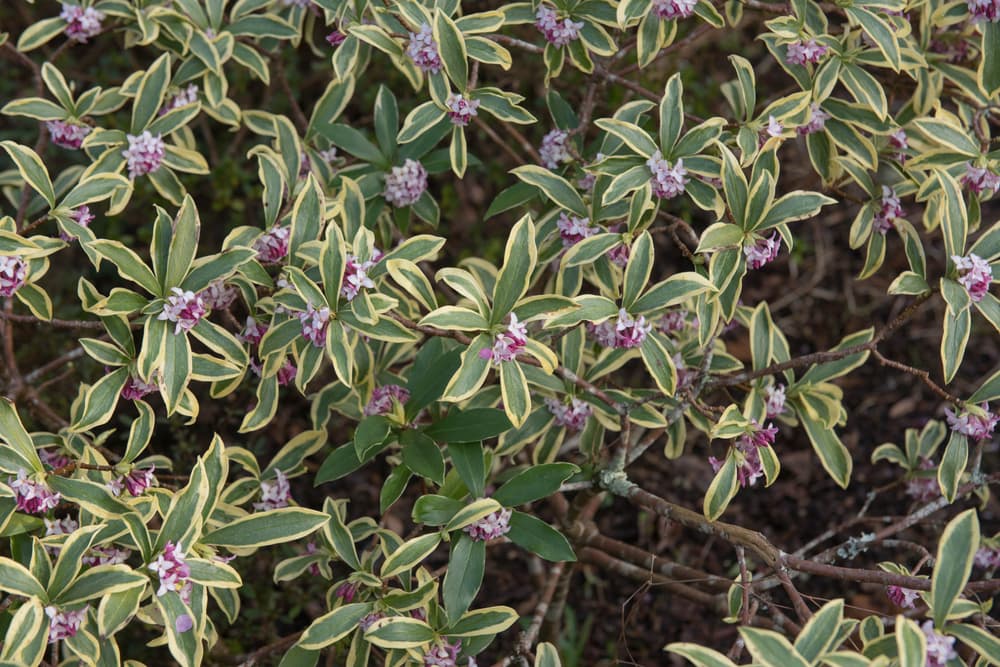
IN THIS GUIDE 1) F. x intermedia ‘Meadowlark’ 2) F. x intermedia Week End ‘Courtalyn’ 3) F. x intermedia ‘Lynwood Variety’ 4) F. ‘Courtasol’ 5) F. x intermedia ‘Kolgold’ 6) F. x intermedia ‘Goldrausch’ 7) F. koreana 8) F. ovata ‘Tetragold’ 9) F. ‘Fiesta’ 10) F. ‘Show Off Starlet’ 11) F. suspensa ‘Nymans’ 12) F. europaea 13) F. x intermedia ‘Spectabilis’ 14) Abeliophyllum distichum Variety Origins References Forsythia has quite an interesting distribution. It has eleven species of which ten are native to Southern and Eastern China, Japan, and the Koreas, and only one is native to Europe, specifically Albania and the Carpathians.1 In China they are found growing wild along streams. Underneath we evaluate fourteen Forsythia varieties – then offer some background on the origins of each. 1) F. x intermedia ‘Meadowlark’ An American cultivar. Its deep-yellow flowers fall away earlier than many other species but the buds are hardy down to near-freezing. It is even more pest- and disease-resistant than other Forsythia varieties, and that’s saying something. It reaches a height just shy of 3m and has about the same spread. 2) F. x intermedia Week End ‘Courtalyn’ A popular and widely-available variety. The branches are stiffly erect; reaching a height of right around 2m and a similar spread, it’s a perfect medium-sized shrub. It has lance-shaped leaves on its slender, erect branches and in spring, each branch is covered with beautiful bright golden blooms that are each around 3cm across. It blooms profusely through spring. 3) F. x intermedia ‘Lynwood Variety’ “F. x intermedia ‘Lynwood Variety’ is the cultivar that I most often plant and its reliability and large flowers are reflected in its AGM status,” says Colin Skelly, Horticulturist Consultant. “I typically use these at the back of mixed borders, but some of the smaller cultivars present the opportunity to use them in new ways. It’s always a school day in the garden!” This variety of forsythia is also a moderately large shrub, growing up to 2.5m in height and width. Another popular and widely-available variety. Its branches too are stiffly upright. It reaches a height of 2-3m while the flowers are closer to 4cm. It is a profuse bloomer and is recognised for its vigour with the RHS’s Award of Garden Merit. 4) F. ‘Courtasol’ A smaller variety, reaching only 1m in height with a spread up to 1.5m. The smallish flowers are a pale bright hue of yellow. It is a profuse bloomer and is noted for being one of the first Forsythia varieties to start blooming, sometimes even from late winter. It too is a recipient of the RHS’s Award of Garden Merit. 5) F. x intermedia ‘Kolgold’ Another small variety, reaching about 1.5m both in height and spread, seldom reaching 2m. This relatively new cultivar is a profuse bloomer, producing flowers 2.5-3cm across. This variety stands out for the deep golden-yellow hue of its flowers. 6) F. x intermedia ‘Goldrausch’ A smallish variety with a height and spread between 1-2m. Its habit is distinctly fountain-like, so to speak. This German cultivar is notable for its characteristics of producing blooms on old wood, flowering a little later than most other varieties, and also keeping its flowers a little longer. It is one of the most reliable and trouble-free varieties. 7) F. koreana A forsythia with upright shoots that grows to around 2m tall, this option can be semi-evergreen and will frequently retain its leaves through winter after the second year. As indicated by its name, this is a native of Korea. Its large flowers are a vivid yellow-golden shade but on this species, the foliage is just as showy. The leaves are darker than other varieties and are serrated. Furthermore, they display a striking white ‘latticework’ on their surfaces and they turn purple in early autumn! 8) F. ovata ‘Tetragold’ A cultivar from the Korean species of Forsythia that grows relatively fast but is a small size, topping out at 1.5m in both height and width – and sometimes less. It has a dense, bushy habit and produces large flowers of a golden-yellow hue. It is one of the earliest varieties to bloom and its buds are also hardier than other varieties. 9) F. ‘Fiesta’ One of the more spectacular varieties as the foliage nearly steals the show from Forsythia’s celebrated yellow bells. Another small variety that also reaches a maximum height and width of 1.5m, it has a bushy, mounded shape. As a smaller and more compact cultivar, it also lends itself to container growing. The flowers are a deep yellow colour. The leaves have cream and yellow blotches usually at the centres but sometimes at the edges. 10) F. ‘Show Off Starlet’ This variety barely reaches 1m in height and spread. In fact, it is a dwarf variety that is dense and bushy. It is a relatively recent American cultivar. The flowers are of a bright yellow hue but it’s their awesome profusion that makes this variety a ‘starlet’ as branches can and do get covered with blooms from end to end. 11) F. suspensa ‘Nymans’ Also a ‘show-off’ but for entirely different reasons. Large and spreading, this deciduous shrub grows to around 3m in height and width, sometimes even as much as 4m. Usually 3m and not infrequently 4m tall with a similar width, it’s definitely one of the larger shrubs on this list. The flowers too are of a stunning size of 4.5cm. While the foliage is dark, the flowers are unusually gentle in both hue and ‘habit’: they are a soft, pale yellow, and are nodding and pendant. This variety blooms after virtually all other varieties. 12) F. europaea One the last species on our list, is also the last Forsythia to start blooming, has a relatively unkempt habit, is probably the least profuse, and certainly has the least showy blooms. As one may expect, it is not very popular. Yet it deserves a mention because it is anamolous in every way, including being unique as the only Forsythia species to be native to Europe. Also, it is becoming quite rare. 13) F. x intermedia ‘Spectabilis’ A dramatic shrub that can grow up to 3m tall and 2m wide, this forsythia has elongated, toothed leaves which occasionally have 3 lobes. In early to mid-spring it bears a profusion of beautiful golden yellow flowers 2-3cm across. No wonder, then, that this is one of the most popular early-spring flowering shrubs here in the UK. 14) Abeliophyllum distichum While all forsythias are yellow-flowered, it is worth mentioning this deciduous shrub, which is related to the forsythia and resembles it in a number of ways – except in its flowers which, rather than being yellow, are pale pink to pure white. These flowers open in late winter or early spring – even earlier than the flowers of true forsythias. Grow in full sun in well-drained soil, in a sheltered position. Variety Origins Forsythia have been cultivated in Chinese gardens for centuries; equally, they are a frequent and important element in Japanese Gardens. F. suspensa was introduced from Japan to Great Britain in the 1850s by way of the Netherlands.2 F. suspensa is also called the ‘Weeping Forsythia’ because of the tendency of its branches and boughs to bow and droop, and sough in the wind. In fact, they are used in European gardens for this very feature where they are trained to ‘weep’ over a boundary wall or a trellis. The origin of most cultivars is F. x intermedia. This is a hybrid that was the result of combining the above-mentioned two species over a century ago. It bears flowers of a rich yellow hue and bears them more profusely than either of the parent species. This hybrid has an upright habit but with gracefully arching branches. References 1. Forsythia viridissima. (n.d.). Kew Royal Botanic Gardens. Retrieved March 16, 2023, from https://powo.science.kew.org/taxon/urn:lsid:ipni.org:names:608903-1 2. Johnson, O. (2022). Forsythia suspensa. Trees and Shrubs Online. Retrieved March 16, 2023, from https://treesandshrubsonline.org/articles/forsythia/forsythia-suspensa/
Learn more
12 Show-Stopping Scabiosa Varieties (Both Species And Hybrids) In A Range Of Colours
IN THIS GUIDE Annual Scabiosa Perennial Scabiosa 1) S. triandra 2) S. graminifolia 3) S. farinosa 4) S. atropurpurea ‘Black Knight’ 5) S. caucasica ‘Miss Willmott’ 6) S. atropurpurea ‘Chile Black’ 7) S. caucasica ‘Fama White’ 8) S. purpurea ‘Ebony and Ivory Mixed’ 9) S. atropurpurea ‘Fire King’ 10) S. columbaria ‘Flutter Rose Pink’ 11) S. columbaria ‘Butterfly Blue’ 12) S. caucasica ‘Fama Deep Blue’ Almost all Scabiosa species and varieties are upright herbaceous plants. Before sharing some of our favourites, it’s worthwhile bearing in mind that there are some significant differences between perennial and annual Scabiosa types: Annual Scabiosa Scabiosa atropurpurea and its varieties are annuals though they often self-seed. Their flowers are a little smaller than those of S. caucasica but have a wider variety of colours and hues, including purples and crimson. As a general rule, S. atropurpurea varieties’ flowers’ colours range from purples to crimsons through near black. S. atropurpurea varieties in the main have a bushy habit. Perennial Scabiosa S. caucasica and its varieties are perennials. Their flowers come in fewer colours than S. atropurpurea varieties but they are up to 8cm across. S. caucasica and many of its varieties have a clumping or mat-forming habit. Perhaps counterintuitively, varieties of S. atropurpurea (which are annuals) reach heights of 85cm to 1m whereas varieties of S. caucasica (which are perennials) reach heights of 30-50cm. Underneath we present an even dozen Scabiosa varieties which include both species and hybrids, and a fantastic range of colours from white through near-black. 1) S. triandra A Southern European species whose leaves are bright green and linear, among the narrowest in Scabiosa species. The rounded bloom is a gentle shade of lilac and adding to its charms is its scent which is very attractive to bees and butterflies. Its longish flowering season runs from June through September. 2) S. graminifolia Also native to Southern Europe, and its linear leaves are so long and narrow that their shape coupled and the plant’s clumping habit combine to make this species resemble a patch of grass! The colour of the solitary and spaced-apart flowers, which exhibit the characteristic pincushion, is the palest and gentlest tone of lilac. 3) S. farinosa Native to the South-Western part of Africa. It is a long-lived herbacious perennial that often develops woody stems. Though a 60cm tall perennial, it has a mounding habit. Its pincushion flowers attract large numbers of butterflies and bees, and are of a pale, delicate tone of pink or purple, and are not infrequently virtually white. 4) S. atropurpurea ‘Black Knight’ Flowers from June through August, and its thrilling flower draws butterflies, bees, and birds. But it will also draw and hold human eyes by virtue of its deep maroon hue, verging on black in the centre on some blooms. The white ‘pins’ in the maroon ‘pincushion’ make for a stunning contrast. “S. atropurpurea ‘Black Knight’ is the Scabiosa that I grow most often,” shares Colin Skelly, a Master Horticulturist. “I find that it combines well with grasses and other perennials in naturalistic plantings. It really is great for pollinators and great for the human eye, creating little jewels of colour.” 5) S. caucasica ‘Miss Willmott’ Bears flowers that can have an irregular or ragged appearance. They are among the largest of all Scabiosa with many blooms between 7-8cm across. The shade varies from a Pearl White through Creamy White to Pure White. It is a recipient of the RHS’s Award of Garden Merit. 6) S. atropurpurea ‘Chile Black’ Has lovely bright bluish-green foliage and bears flowers on erect, long stalks. This variety produces profuse blooms, they have that classic pincushion shape, they have a wonderful scent, and as for the colour, it is truly striking as it ranges from maroon to a startling black. 7) S. caucasica ‘Fama White’ A clumping variety that bears flowers on long, upright stalks. These are double flowers that often present a pleasing, symmetrical appearance. Outliers in size, blooms can reach even 9cm. The flowers are pure white and often the stamens too are pure white (though sometimes they are cream-yellow) giving the flower a two-toned appearance. 8) S. purpurea ‘Ebony and Ivory Mixed’ Having presented two near-black and two white varieties, we may as well do both black and white in one shot. The flower has the dome-like shape shared by many S. purpurea varieties but among all flowerdom, this is surely one of the most remarkable varieties because one and the same plant produces maroon-black and white blooms side by side, delivering awesome visual impact. This one is a ‘talking point’ in the garden. 9) S. atropurpurea ‘Fire King’ A real visual delight. The foliage of this bushy plant is a deep lush green which is the perfect backdrop to the dramatic bloom. Exhibiting a perfect disk and ‘dome,’ the florets have somewhat thicker than usual lobes, and the hue is a rich shade of crimson to burgundy that is a stunning complement to the foliage. 10) S. columbaria ‘Flutter Rose Pink’ A dwarf variety that reaches only 35cm and is of a mounding, bushy habit. However, it’s all about the flowers with this variety. It has both a long flowering season, blooming all summer long, and a delightful propensity to bloom profusely. Topping it off are the flowers, which are more radially-shaped than most, and of a charming baby pink hue. 11) S. columbaria ‘Butterfly Blue’ Also quite a short variety with fern-like foliage and a mounding habit. It too boasts a very long flowering season and also blooms profusely. Its flowers attract even more butterflies and bees than other varieties. The small, 5cm flower is fuller with more densely packed florets than ‘Flutter Rose Pink’ and is of a lavender hue tending to blue. 12) S. caucasica ‘Fama Deep Blue’ Another ‘Fama’ variety with flowers that are similarly symmetrical, and similarly shaped and sized as ‘Fama White’ described above but with a couple of differences. This variety attracts butterflies and bees like there’s no tomorrow. As for the obvious difference, its colour is usually purple but sometimes an astonishing true blue colour of an azure tone.
Learn more
8 Notable Camassia Varieties With Striking Flowers On Frothy Racemes
IN THIS GUIDE 1) C. leichtlinii 2) C. leichtlinii subsp. suksdorfii Caerulea Group 3) C. cusickii 4) C. quamash 5) C. scilloides 6) C. leichtlinii ‘Sacajawea’ 7) C. leichtlinii subsp. leichtlinii ‘Alba’ 8) C. leichtlinii ‘Semiplena’ Other Notable Varieties References Camassia species are native to a north-south swath of land in North America extending from the Rockies in the east to the Pacific in the west, and another north-south swath from Ontario down to Texas all the way east to the Atlantic coast.1 Camassia’s greatest concentration and diversity is in Oregon.2 In their native habitat, Camassias sprout and spread in sunny prairies and flatlands, but also along streams and other wetlands, being partial to moist regions. They are also seen on mountainsides and hilly areas. As an American-native flowering bulb, Camassia is something of a rarity as most flowering bulbs tend to originate from Europe. Camassia, well-bred and reserved, has not made any serious moves to colonise, or naturalise itself in, foreign lands. It has seen a deserved rise in popularity in the British Isles where it is slowly but steadily gaining traction with gardeners who are looking for something off the beaten track. This denizen of the American prairies is just hardy enough in most of the United Kingdom at a Hardiness of H4. Here are nine interesting varieties to grow: 1) C. leichtlinii Probably the most floriferous of the species. It is also one of the tallest considering that spikes top out at 1.3m. Its leaves are strap-like and not as narrow as those of the other species. Its flowers are a rich purple and it grows wild from British Columbia down to California. It is the most cultivated among the 6 species. 2) C. leichtlinii subsp. suksdorfii Caerulea Group Also bears purple flowers but of a pleasant, mid-tone hue; it too can reach about 1.3m. This is one of the most widely available and popular varieties. 3) C. cusickii Probably the most leafy of the species. It too is one of the tallest as spikes can reach 1.3m. The flowers’ tepals are especially narrow, almost wispy. They are of a cool, pastel tone of lilac often shifted to blue – it is a native of Oregon. 4) C. quamash Has the most extensive range; it grows in a large swath of western North America. It reaches a height of not much more than 30cm, while its foliage is comparatively limp. “I have grown Camassia quamash successfully in pots,” says Colin Skelly, a Master Horticulturist. “Whilst most will struggle for moisture in summer and look messy when the foliage is dying down, this smaller species makes a good partner for a later flowering perennial in a pot.” The flowers are a saturated tone of purple. 5) C. scilloides One of the less-desired species and it is the only one that is native to the eastern half of North America. Though certainly not as sought after as the Western species, its creamy white or lilac-tinged flowers on frothy racemes are quite pleasant. Among the notable cultivars are those with flowers of an especially rich or unusual colour, double or distinctly large flowers, and variegated foliage. 6) C. leichtlinii ‘Sacajawea’ The flowers are off-white or vanilla white, whereas the foliage is variegated, exhibiting white edging. 7) C. leichtlinii subsp. leichtlinii ‘Alba’ ‘Alba’ is striking for the fullness of its flowers and their (very) creamy white colour. It is mid-height at about 80cm. 8) C. leichtlinii ‘Semiplena’ ‘Semiplena’ bears creamy white or yellowish-white double-form flowers. Other Notable Varieties ‘Blue Danube’ bears flowers of an especially deep purple-blue colour. ‘Blue Heaven,’ on the other extreme, has flowers that are the palest tone of baby blue. ‘Pink Star’ bears flowers with thick tepals of a very pale salmon-pink tone. ‘Electra’ produces flowers that are a ‘normal’ shade of purple but these blooms are large! All of the above are cultivars of C. leichtlinii. References 1. Camassia quamash. (n.d.). The University of Texas at Austin. Retrieved March 13, 2023, from https://www.wildflower.org/plants/result.php?id_plant=caqu2 2. Davis, A. (2018, May 29). Determining the Influence of Nutrition and Temperature on the Growth and Development of Camassia spp. Oregon State University. Retrieved March 13, 2023, from https://ir.library.oregonstate.edu/downloads/sq87c049c
Learn more
English Lavender Growers Share Their Secrets - 'The Most Important Factor Is Positioning'
IN THIS GUIDE Overview Varieties Planting Lavender English Lavender Care References English Lavender is a true stalwart of gardens here in the United Kingdom – and for good reason. With its wonderful fragrance, beautiful purple-blue flowers and ability to draw in pollinators galore, it is a great plant for any garden. Given the right conditions and some simple care, it is easy to grow and will last for years. “When I first started gardening, I loved lavender because it is an easy plant to grow in a window box and gives you a lot for your money,” shares Isabelle Palmer. We teamed up with four British lavender growers to help complement our growing advice: Nick & Lyndsay Butler – Owners of The Lavender Fields. Patrick Fairweather – MD of Fairweather’s Nursery. Julia Snowball – Head Gardener at Yorkshire Lavender. Charlie Byrd – Owner of Cotswold Lavender. “Lavender is such a beautiful plant that flowers for a long period, providing not only colour but also aroma and texture to a garden and the countryside,” says Nick. Overview Botanical Name Lavandula angustifolia Common Name(s) English Lavender / Common Lavender Plant Type Shrub Native Area Mediterranean Europe Hardiness Rating H5 Foliage Evergreen Flowers Purple or blue flowers When To Plant April – May Harvesting Months July – August When To Prune March – May or September – November English Lavender, or Lavandula angustifolia as it is botanically named, is part of the Lamiaceae family and not a herb as it is often thought of, but a shrub.1 “Lavender is a very special shrub with a long history of cultivation in this country,” says Julia. “It’s a plant which benefits us all with its calming scent and culinary properties, and it is a fantastic plant for the environment as the bees love it!” Rather confusingly, English lavender is not actually native to the UK but originates from the warmer Mediterranean.2 It does, however, cope rather well with our climate, especially in the south of the country. “Our soil is very stony so it was important to find a crop that suited our soil type,” says Charlie, when discussing why he started growing lavender on his farm. “Our farm is nearly 1,000 feet above sea level, which makes quite a difference to our climate. On average we are 2-3°C cooler than nearby towns because of the altitude. “Lavender has really thrived here and has been an interesting crop to grow.” A hardy and drought-tolerant shrub, it can tolerate temperatures down to -10to -15°C, unless grown in heavy soil prone to water-logging. Varieties The most well-known varieties of English lavender are L. angustifolia ‘Hidcote’ and L. angustifolia ‘Munsted’. Both widely grown in the UK, they are hardier than the English hybrids such as L. × intermedia and their French and Spanish counterparts L. stoechas – thus a more reliable choice for growing here, especially in the north of the country. Both ‘Munsted’ and ‘Hidcote’ are relatively compact varieties growing to an eventual height of roughly 50cm. The main difference between the two is that the slightly larger ‘Hidcote’ produces a darker purple flower compared to ‘Munsted’, which is lighter in colour and less compact. Other English lavender varieties are available and can include those which produce pink and even white flowers in summer. Planting Lavender Where To Plant “The most important care factor is positioning,” say the Butlers. “Lavender likes to be in full sun and will not thrive in the shade.” English lavender grows well when planted directly into the ground or in a pot or container, and thrives in sunlight, so a south or west-facing spot is ideal. Lavenders in general are rather fussy when it comes to the soil though. “Wet feet kill lavender quicker than anything, so good drainage is essential,” explains Charlie. “Soils here at the farm drain naturally, which is one of the reasons we chose to grow lavender. On clay soils, it is important to mix sand or grit into the soil to create an open soil structure.” With this in mind, they require a free-draining mix that is not too acidic and will seriously struggle to make it through the year if planted in soil with poor drainage. When preparing a site to plant English lavender, gravel or horticultural grit can be added to the bottom of the hole and potting mix to increase drainage levels, mimicking its Mediterranean origins as far as possible. In really wet areas, planting on a small mound or ridge can prove beneficial as well. How To Plant English lavenders are readily available during the spring and are most commonly sold in 1-3L pot sizes, ready to plant out. However, smaller lavender plug plants have become more widespread and are a cheaper way of buying larger quantities of plants, yet will need to be grown on first before planting out. English lavender can grow up to 0.5m in height with a 1m spread, so need to be spaced accordingly when planting out. English lavender can be a great plant for an informal low hedge in the garden. If planting for a hedge, it is advisable to space the plants 30-45cm apart depending on the variety. To give new plants the best chance of establishing, it is strongly recommended to plant them out in spring when the soil is warming up and they have the summer months to settle in and grow before the winter arrives. When planting, plant at the same depth as they were previously in their pots. “Once planted in the ground, lavender will need watering for the first few weeks,” explain the Butlers. “Once the roots have taken, you should not need to water the plant, even during the dry season.” English Lavender Care If the aspect and soil conditions are right for lavender, then they need little ongoing care. “Lavender is a Mediterranean plant, so try to give it conditions as close as possible to its natural home,” explains Julia. “The plants prefer a sunny location with well-drained, poor, sandy soil and they do not like to be overwatered.” Watering & Feeding Once established, lavender will need little watering, unless when grown in a pot or container, which will dry out more quickly. Lavender doesn’t tend to be a hungry plant as they like nutrient-poor soil, so feeding isn’t usually required, as Charlie shares: “It’s important not to overfeed lavender. “Don’t let them grow too big too quickly, as they will not be strong enough to support themselves when their foliage gets wet in the summer.” Overwintering Plants in containers or pots are more susceptible to hard frost due to their lack of insulation. Therefore, it is advisable to provide a bit of protection to any containerised plants if severe weather is forecast. Pots can either be brought in to overwinter under a porch or in an unheated greenhouse, which will not only provide some protection from low temperatures but the cold rains as well. Pruning English lavender tends to only need an annual prune, which can either be done in spring or autumn. However, if pruned in the autumn, they can look a bit neater over the winter months. “Pruning is ideally done at the end of the summer after the plant has finished flowering and before the cold weather sets in,” say the Butlers. Once flowered, the flower stalks and about 3cm of green growth can be taken off. “In early September as soon as flowering has finished, I use a sharp pair of shears or, in the case of extensive low hedging, a sharp hedge trimmer, to cut back the lavender as described,” shares Master Horticulturist Roy Nicol. “The plant then has time over the autumn to grow fresh foliage which looks good and protects it over winter.” Lavenders do not easily regrow from old wood, so some green growth must be left on for the plants to regrow well. Lavender plants tend to live for an average of 10-15 years, although some may live considerably longer. Over time, the plants can become leggy, especially if not pruned correctly, but thankfully, lavender is easy to propagate from cuttings, so replacements are not difficult to provide. Common Pests & Diseases English lavender tends to be fairly problem-free if given the right conditions. That being said, they can be rather susceptible to the rosemary beetle, which is unfortunately now widespread here in the UK.3 The rosemary beetle and their larvae feed on the foliage of rosemary plants, but also on thyme and lavender. The shiny green and purple beetles are easy to spot on the leaves, which they can reduce in length to virtually nothing. Yet the damage done is often small in comparison to the size of the plant and is of little aesthetic or health consequence. For this reason, is it encouraged to tolerate small numbers and pick them off by hand if necessary. However, pesticides are available if needs must, but can prove more effective when applied to the larvae rather than the adult beetles. References 1. Lavandula angustifolia. (n.d.). Missouri Botanical Garden. Retrieved March 21, 2023, from https://www.missouribotanicalgarden.org/PlantFinder/PlantFinderDetails.aspx?taxonid=281393&isprofile=1&gen=Lavandula 2. Lavandula angustifolia (English lavender). (n.d.). Native Plant Trust: Go Botany. Retrieved March 21, 2023, from https://gobotany.nativeplanttrust.org/species/lavandula/angustifolia/ 3. Rosemary beetle. (n.d.). The Wildlife Trusts. Retrieved March 21, 2023, from https://www.wildlifetrusts.org/wildlife-explorer/invertebrates/beetles/rosemary-beetle
Learn more
Propagating Buddleja: Grow New Plants From Either Softwood Or Hardwood Cuttings
IN THIS GUIDE When To Propagate 1) Prepare The Plant & Tools 2) Take The Cutting 3) Plant The Cutting 4) Cuttings Care 5) Change The Regimen 6) Pot On Or Transplant Outdoors Buddleja is among the most floriferous plants you can find, producing oodles of those tiny flowers in dense spires and thick panicles which attract butterflies by the score. Another great thing about buddlejas is that they are among the easiest plants to grow from cuttings. It must be said though, that while the vast majority of species and cultivars are easy to grow from cuttings, a few are not quite as easy. You can rely on Buddleja davidii and its cultivars – the most common and popular ones – to reward your efforts. Difficulty Easy Equipment Required Gardening gloves, pruning shears When To Take Cuttings July and August You can grow buddleja from cuttings by following the steps outlined below. When To Propagate April through May is the best time to propagate buddleja from softwood cuttings, while during July and August propagation should be done from semi-hardwood cuttings. However, virtually all buddleja varieties can be propagated from semi-hardwood cuttings while only some can be propagated from softwood cuttings. Therefore, our focus is on the former method. Whichever method you choose, buddlejas are not only floriferous, but they are also long-blooming, flowering from summer into autumn. 1) Prepare The Plant & Tools Before you begin, disinfect your secateurs’ blades with diluted rubbing alcohol or diluted bleach, or even with hand sanitiser. Start by generously watering the donor plant early in the morning on a bright, clear day in July or August. Take a small pot that has drainage holes and fill it with 50% perlite, grit and sand, and 50% peat-free cuttings compost. Water it all through. 2) Take The Cutting Locate a branch from the current year’s growth with a stem that is green and turning greyish or brownish along its lower part and is at least 15cm long. Using secateurs, cut off this branch as if pruning it. Trim this cutting from the bottom so that it is about 12cm long. What’s important is to cut it just below a node as that is where roots will emerge from. Trim off the leaves starting from the base and leave behind the top 3 leaves. “Another technique to try is hardwood cuttings, which can be taken when you would normally prune the plant, around February or March,” explains Peter Lickorish, a Horticultural Lecturer and Gardening Technician. “Taking a section of straight stem that is 30cm in length, trim it so there is a bud or node at the bottom of the cutting and one at the top. “Discard any leaves that are clinging on and insert it between half and two-thirds deep in a tall pot of compost or moist, but free-draining soil. “You could add sand if extra drainage is important and cuttings should root within 2-3 months and can be transplanted in the autumn. “ 3) Plant The Cutting Though buddleja cuttings root very readily, it won’t hurt if you dip the bottom of the cutting in rooting hormone powder or in cinnamon powder and honey. Use a pencil or dibbler to make a hole in the planting medium in the pot, and insert the cutting to one-third of its length into the hole. Gently firm up the medium all around the cutting so that it is well-supported and stable. Water it so that the soil is wet all through. 4) Cuttings Care Place the pot near a window or in a shaded spot outdoors. As a general rule, cuttings should get several hours of indirect or filtered sunlight but not any direct sunlight, however, such niceties are not strictly necessary for buddleja cuttings. If indirect or filtered sunlight would be a hassle, then direct morning sunlight will be fine. Push 3 canes around the edges of the pot, then put a polythene bag with a few tiny holes over the pot and tie or tape it to the outer edge of the pot. This will simulate the humid conditions needed for the cutting to germinate. Water every morning so that the medium stays damp. Also, remove the polythene bag on alternate days for 20-30 minutes. The cutting may start to bend, but as long as it has not shrivelled, there is no reason to worry. 5) Change The Regimen After about 4 weeks, the cutting will have developed roots, but do not make any changes until you see foliage forming on the cutting. When you see tiny leaves emerging, it’s time to make a few changes. At this point, take off the plastic bag. Slowly decrease the frequency of watering and then gradually decrease the amount of water. At the same time, start giving the new little plant a little direct sunlight and keep increasing its exposure to sunlight but, again, buddlejas don’t really need much TLC in this area. You could just shift the pot directly to a location in partial shade. 6) Pot On Or Transplant Outdoors After about 6 weeks, the plant should be potted on into a suitably sized pot or be transplanted into the garden. Be aware that buddlejas grow dramatically in size, so if you pot on, choose a pot that the plant won’t quickly outgrow. Equally, it may sit too wet in a pot more than double the size of what it has come from.
Learn more
Remove Faded And Withered Buddleja Panicles - It's The Secret To More Flowers
IN THIS GUIDE 1) Pinch Off Selected Flowers 2) Deadhead Entire Panicles 3) Cut Back In Summer Buddleja is among the most rewarding flowering bushes you can grow. The foliage is a deep green and the leaves have a crisp, starched look. As for the tiny flowers, they are borne in marvellous abundance on panicles and spikes that are sometimes weighed down by the sheer profusion of their flowers! These little flowers’ hues fall in the pink-purple spectrum with some whites and yellows. The little floral clusters put on a thrilling colour show from early summer and carry on into early autumn, drawing troupes of fluttering butterflies in the process. But there’s a little secret to promoting that floral colour show: deadheading. If you cut off withered flowers, the plant channels its resources toward fresh floral growth rather than seeds in its spent blooms. Deadheading is one of the easier gardening tasks but you need to know just what to do, and when. This process is explained in detail for you below. Difficulty Easy Equipment Required Gardening gloves, pruning shears, bypass loppers, secateurs When To Deadhead June-August 1) Pinch Off Selected Flowers Through the summer, buddleja flowers will bud, bloom, fade, and wither. When you see faded or withered flowers, pinch, rub or pluck them off. You will notice that usually a small cluster of tiny flowers near the base of the panicle or spike fade and wither at about the same time. This makes it easier to remove all the faded and withered little blooms in one go, as Master Horticulturist Peter Lickorish explains: “Removing this cluster means the tip of the panicle looks more decorative, as will smaller clusters of flowers either side of the main panicle.” 2) Deadhead Entire Panicles As the season progresses, the panicles and spikes that you have previously cleaned up will have fewer and fewer little flowers, of which some have now faded and withered. You may also see a panicle or spike on which many or most of the blooms are gone. In either case, there is little to be gained by removing small clusters of flowers. When you see the types of fading, withering panicles described above, it is time to deadhead. Follow the stem down from the panicle to the uppermost leaves. About 1cm above these leaves, cut off the stem with pruning shears or secateurs. 3) Cut Back In Summer Mature plants can be cut back in mid-season to stimulate fresh growth and the second round of blooms, especially if you have not progressively deadheaded. “It should be noted that this will not always allow for more flowers, especially if autumn falls early,” shares Peter. Smack dab in the middle of summer, after the plant has produced that colour show, you can do a summer cutback. “Panicles of flowers on buddlejas often come in threes,” explains Peter. “The middle one flowers first, then the two side panicles. “Cutting out first the middle panicle, when it finishes, then the two side panicles to just below their base can encourage further, smaller panicles to follow, giving each one in the sequence the space it needs.” Using pruning shears, prune shoots and young branches. Using bypass loppers, cut back larger branches by 30-50% of their lengths. Do not disturb the main stem and water the plant well after the cutback.
Learn more
Why Climbing And Rambling Roses Need Different Pruning Treatment To Normal Types
IN THIS GUIDE Why Should You Prune Climbing Roses? What Happens If You Don’t? When To Prune Climbing Roses Routine Pruning Pruning Neglected & Overgrown Climbing Roses Aftercare Climbing roses are an ideal option for adding architectural intrigue and irresistible colour to a vertical surface – but they do require training and pruning. This is to ensure that they maintain a healthy and aesthetically pleasing form, as well as continue to flower prolifically each year. “Climbing and rambling roses need different treatment to normal roses,” Stewart from Pocock’s Roses explains. While some people entertain notions that pruning is a difficult endeavour, it needn’t be. In fact, as long as you stay on top of your pruning duties and follow the instructions laid out below, you should find that pruning your climbing rose plant is no more challenging than any other routine horticultural task. Why Should You Prune Climbing Roses? The main reason for pruning climbing roses is aesthetics. These plants are not self-clinging and will require a support system to hold them up, such as a trellis or a network of horizontal twine or wire to which they can be affixed. “Climbers, once established, which can take 2-3 years, need some of the oldest stems to be removed to promote new supple growth to tie into the shape you want,” says Ben Stirton, the nursery manager at Country Garden Roses. But it’s not enough to just set and forget your climbing rose plant. They also require regular maintenance to make sure their arrangement is neat and tidy and they’re as happy and healthy as can be. By trimming back the side shoots of your plant once a year and reaffixing stems to the support structure behind it you will encourage the plant to grow in the direction you wish. This makes for a more visually pleasing plant and allows you to ensure the vertical surface that the roses are climbing has good coverage. Of course, the health of the plant is every bit as important as its image, and pruning helps to redirect resources away from dead or extraneous stems towards new growth. For these reasons, it is advisable to deadhead roses regularly during the blooming season and prune back the side shoots once a year. What Happens If You Don’t? If you don’t prune back climbing roses because you’re too busy, physically incapable of doing so or simply forget, don’t worry. It’s not the end of the world and probably not even the end of your plant, but it will almost certainly result in a less impressive display. In aesthetic terms, it’s likely that your rose branches will become congested and jumbled, leading to weak stems and poor bloom yields. With more energy being devoted to twiggy growth, the plant will have less in reserve for blossoms. Given that roses are prized primarily for their pretty flowers, this can render their cultivation slightly pointless. More concerningly, an overgrown climbing rose plant can see branches cross over one another and inhibit the flow of nutrients to their extremities. This can prompt dieback in some areas of the plant and weaken its overall health, making it more vulnerable to fungal infections and diseases. With that in mind, it’s just good practice to give your plant the best opportunity to thrive and produce consistently stunning displays by pruning it regularly. When To Prune Climbing Roses For starters, it’s important to remember that all new plants need time to establish themselves. This means that you shouldn’t prune climbing roses for the first two or three years of their life, because doing so could jeopardise their long-term development. Like most roses, established plants should be pruned in wintertime. “Training and pruning climbers in late September to November is good,” says Philip Harkness, owner of Harkness Roses. Indeed, the only type of rose which shouldn’t be pruned while dormant is the rambling rose, which unfortunately can resemble the climbing rose quite strongly. To differentiate between the two, simply note their blooming times. Rambling roses just produce a single tranche of blossoms, normally around June, while climbing roses will repeat flower all through the summer. The reasons why you should prune climbing roses in winter are twofold: On the one hand, a plant which is not overcrowded with flowers and foliage will represent an easier and more accessible canvas upon which you can work. On the other, pruning while dormant facilitates the plant’s regeneration the following spring when it can divert resources to the parts which require them most. Routine Pruning As mentioned above, deadheading is essential to ensure you get the maximum yield during the blooming season. You should keep a close eye on your plant and swoop in to remove old blooms after they have flowered to encourage new ones to replace them. However, this alone is not sufficient to maintain a healthy and impressive-looking plant. The following steps should be followed once per year, during late autumn or early winter once the plant is in hibernation for the colder months. Remember to always wear thick protective gloves and goggles to keep your hands and face safe from the vicious thorns of the plant. 1) Cut Away Dead Branches Identify any diseased, dying or dead branches and cut them off at the base. This will ease the congestion of branches and prevent the plant from expending any resources on useless endeavours. 2) Find Weak Offshoots Look for weak offshoots which will be unable to support blooms and prune these back all the way to the main stem, as well. Again, this is to conserve the plant’s energy and nutrients for the parts which will benefit most from them. 3) Prune To Improve Growth Now it’s time to prune the plant to improve its growth going forwards. You’ll want to leave the main, thick stems which sprout from the plant’s base alone altogether. Instead, search out the side shoots which grow off from these stems, as Chris Styles from Style Roses shares: “For climbers, leave the main, trained stems on the plant but cut back anything old & gnarly to the base every few years to trigger some new main shoots,” he says. “Cut back side shoots coming off the main trained stems in winter to a couple of inches.” When pruning a side stem, you should leave around 5cm remaining of the stem, which should contain 4-5 healthy buds. The incision should occur just above a bud which is pointing in the direction that you wish the plant to grow. For example, avoid cutting above a bud which is facing the path, a bench or the end of the support structure, since this will only encourage growth in that direction. 4) Tie To Support Structure After pruning, you will notice that the support system is bare in some places where you have removed dead, dying, diseased or weak stems and that there are new, strong stems which remain unattached. You can solve both of these problems by tying the new stems to the newly vacant areas on your support structure. You can do this using twine or flexi ties. In both cases, it’s advisable to wrap around the support structure first and the plant second, in order to avoid damaging the latter and improve the overall stability of the structure. And voila! The pruning is complete and the plant will flourish once more when springtime rolls around. Pruning Neglected & Overgrown Climbing Roses If you are tending climbing roses which have been neglected and become overgrown as a result, a more vigorous approach is required. You will essentially be following the aforementioned steps, but with a more ruthless remit. Firstly, all dead and dying shoots must be removed as a matter of course. You should then look to attack the main framework of stems more aggressively, cutting back some of the woodier branches right back to the base. Leave around 6 healthy stems which can be affixed to the support structure. Dead stumps at the base of the plant must be thoroughly sawed off to leave them flat. Any hollows can collect rainwater, which increases the chances that your plant will suffer from rot. You should also thin out the remaining branches by pruning back their own side shoots to within one-third of their original length. This will encourage branching and lead to a healthier and more shapely plant going forwards. “O am often called upon to revive ailing climbing roses,” shares Master Horticulturist Colin Skelly. “Often, this is the result of a lack of pruning, leading to a mass of tangled stems and a poorly flowering rose. “Pruning out a third of the oldest stems and pruning back side stems to one-third of their length is a good rule of thumb. This will get you back to a starting point for ongoing annual pruning that will produce neat free flowering climbing roses.” Aftercare The above steps should be practised on an annual basis to ensure your plant remains in robust condition. Deadheading, pruning and training will demand your attention for each year the plant is in your care. Additionally, you can give the plant a boost with artificial assistance. Each spring, sprinkle granular rose fertiliser on the soil and cover it over with a 5cm layer of organic mulch. This will ward off fungal infections and enhance the plant’s overall wellbeing.
Learn more
Poppy Plant Care Needn't Be An Exact Science, But These Tips Can Help Them Thrive
IN THIS GUIDE Overview How To Grow Poppies Planting Plant Care References There are many different poppy species, but in this article, we focus on the remembrance poppy, or common poppy: Papaver rhoeas. The common poppy is a wonderful annual flower to consider growing in your garden. Though its blooms are fleeting, they are wonderful for pollinators and are a great choice for wildlife gardens and annual wildflower meadows. In this guide, you will learn how to grow these flowers on your own property and will be able to enjoy plenty of their cheerful blooms. Overview Botanical Name Papaver rhoeas Common Name(s) Poppies Plant Type Annual Native Area Africa, Asia and Europe Hardiness Rating H7 Foliage Deciduous Flowers Red When To Plant March-June The common poppy, also known as the red poppy or Flanders poppy and by a range of other local names, is a hardy annual flower. It was extremely common in cornfields and around farms before the advent of herbicides and the use of agricultural chemicals.1 It is still moderately common across much of the British Isles and is found in the wild and in many gardens. Poppies of this type are a common addition in wildflower mixes for annual meadow schemes or wildlife gardens. The poppy is well known as a symbol of remembrance for fallen soldiers, as poppies proliferated on the battlefields of the First World War.2 The famous First World War poem ‘In Flanders Fields’ cemented this connotation by poignantly describing the poppies growing over the graves.3 Of course, poppies are also worn on Remembrance Day in the UK.4 How To Grow Poppies Common poppies are very easy to grow. Poppy seeds are usually best sown between March and May, depending on location, and are best direct sown where they are to grow. They can also be direct sown in early summer or in autumn when they are to bloom. Planting The most important things to remember when choosing where to plant poppies are sunlight and soil. As long as their environmental requirements are met, they should thrive and can self-seed readily if given the opportunity. Poppies are wonderful in many different types and styles of garden. They can easily be sown as part of an annual wildflower meadow, incorporated among other flowering plants in an informal border, or even among herbaceous perennials in a more formal border scheme or a cut flower garden. Poppies work wonderfully well alongside Centaurea cyanus, Centranthus ruber, Achillea millefolium and Anthriscus sylvestris, as well as in schemes with meadow or ornamental grasses. Depth & Spacing Papaver rhoeas and other annual and biennial poppies seeds are usually simply scattered over the top of well-prepared soil. The seed does not need to be covered over and broadcasting will usually achieve a good spread. Container Growing Poppies can also be grown in containers, either on their own or with other annuals to create beautiful and wildlife-friendly summer displays in a small garden. If you do not have much space in your garden, planting up some mini meadow containers could be a great idea. Plant Care Poppies do not require a lot of ongoing care – the key is to choose the right spot to grow them in the first place. Soil Requirements Field poppies require sand, loam or chalky soil which is free-draining or a potting mix which provides suitably free-draining conditions. These plants are unfussy about soil pH. Before broadcasting the seeds, the growing area should ideally be prepared by raking to a fine tilth. Preferred Aspect Field poppies can be grown in a location with any aspect, as long as they are in full sun. Some other poppies cope with or prefer partial shade, so make sure you are well aware of the needs of the particular poppies you would like to grow. Watering Spray the raked soil with water before sowing the seeds, and give the area water if it is particularly dry for a prolonged period. Usually, however, rainfall will be sufficient and field poppies will not require any additional care. Fertilising Field poppies do not need any fertilisation and should thrive in most soils without any additional input from you. Common Pests & Diseases Poppies are not usually troubled by a wide range of pests and diseases, though they can sometimes be troubled by aphids. These are easy to keep in check through planting, which attracts predators, like ladybirds and lacewings, to keep their numbers down. Mildew can occasionally take hold, though this is rarely a serious issue. Pluck and destroy any seriously infected material to reduce its spread. Collecting Poppy Seeds Collecting poppy seeds is very easy, so once you have some poppies growing, it will be easy to propagate and grow more. You might not need to collect the seeds at all, since they proliferate through self-seeding when happy in a certain location. However, if you would like to collect seeds to sow elsewhere, you simply need to wait for the seed heads to form. Then, just as they open and before they disperse the seeds, you can collect them, place them in a paper bag, and then transfer the seeds to an envelope for storage. Propagation Poppies are propagated by seed, as mentioned above, or can simply be left to self-seed, and will frequently naturalise so even though they are an annual, they can continue to pop up in your garden over a number of years. Poppy seeds can remain dormant in the soil and still remain viable many years later. Resowing With Other Annual Meadow Plants If field poppies fail to flower, this may be because the soil is too fertile or too damp. There may be an excess of nitrogen which encourages leafy growth at the expense of flowers. If you sow field poppies as part of a wildflower mix and they fail to come up the following year, this may be because they have been outcompeted by other species. It may be necessary to resow annual meadow seeds over a few years until a natural balance is established. “Papaver rhoeas thrives in disturbed environments such as agricultural fields where annual ploughing brings seeds to the surface and creates bare soil for them to germinate, grow quickly, flower and set seed,” says Master Horticulturist Colin Skelly. “If the ground is disturbed again, the poppy seed in the ground will again repeat the cycle. However, if the ground is left to grow then perennial plants will take over and the annual poppies will decline until the ground is disturbed again. “If you want annual poppies in your meadow every year then you need to create some bare ground every year to either allow a seed bank to germinate or sow some fresh seed.” References 1. Leech, C. (2015, August 18). A Flower to Remember. The Metropolitan Museum of Art. Retrieved March 23, 2023, from https://www.metmuseum.org/blogs/in-season/2015/a-flower-to-remember 2. Pruitt, S. (2020, May 21). The WWI Origins of the Poppy as a Remembrance Symbol. HISTORY. Retrieved March 23, 2023, from https://www.history.com/news/world-war-i-poppy-remembrance-symbol-veterans-day 3. In Flanders Field. (2021, January 18). The Royal British Legion. Retrieved March 23, 2023, from https://www.britishlegion.org.uk/get-involved/remembrance/about-remembrance/in-flanders-field 4. Why We Wear Poppies On Remembrance Day. (n.d.). Imperial War Museums. Retrieved March 23, 2023, from https://www.iwm.org.uk/history/why-we-wear-poppies-on-remembrance-day
Learn more
How To Plant And Grow A Fig Tree (And Why They're Not Suited To Every Garden)
IN THIS GUIDE Overview Common Varieties Growing From Seed Planting Ongoing Care Harvesting References Fig Trees are not necessarily suited to every garden and are not the easiest fruit to grow at home, but they can be very rewarding additions in a suitable spot. Growing your own figs at home could be a wonderful new string for your gardening bow. In this guide, we will help you decide whether a fig tree is right for you, and if so, which options you might consider. Overview Botanical Name Ficus carica Common Name(s) Fig Tree Plant Type Fruit Tree Native Area Mediterranean and West Asia Hardiness Rating H4 Foliage Deciduous When To Plant September – November Harvesting Months August – September When To Prune February Figs are the fruits of Ficus carica, a small tree which is native to the Mediterranean region and western Asia, but which is commonly cultivated in warmer temperate regions and other climate zones.1 The edible fig is believed to have been one of the first plants cultivated by human beings – grown even before humans grew agricultural crops like wheat, barley and legumes.2 It is commonly prized for its edible fruit, but is also used as an ornamental garden tree. Common Varieties Some of the most common F. carica varieties include: ‘Brown Turkey’ This is the most popular type for outdoors growing in the UK. ‘Brunswick’ Another popular hardy variety that is suitable for UK cultivation. ‘Chelsea’ ‘Chelsea’ can be found near Chelsea Bridge, fruiting reliably outdoors, with good cold hardiness. ‘Ice Crystal’ This variety does have small sweet fruits, but it is usually grown for its ornamental foliage. ‘Madeleine des Deux Saison’ Suited to hotter gardens in the south, where this variety can fruit in June and September. ‘Violette de Bordeaux’ ‘Violette de Bordeaux’ is a hardy fig from the gardens of Versailles. There is also a dwarf mutation of this type called ‘Little Miss Figgy’ than can be grown in large pots on a patio. Other varieties include: ‘Sultane’ ‘Panachee’ ‘Doree’ ‘Dalmatie’ Growing From Seed Fig trees are usually purchased and planted, but it is also possible to grow a fig tree from seed. Just remember that supermarket figs are likely not to be suitable for UK cultivation, and also that it will take up to 3 years before your fig tree starts to bear fruit. Seeds must be soaked for 24 hours prior to planting. Once the seeds are fully hydrated and have developed a small white root, plant into a suitable free-draining potting mix, around 2cm deep. Water regularly and keep moist and warm, and new growth should emerge within a couple of weeks. Keep the young sapling in a warm and sunny area, fertilising and watering regularly, and plant out into the final growing position once the tree is well established at around 40cm tall. Planting The best time to plant fig trees is in autumn, between September and November, so that the tree can establish roots before cold weather sets in. However, you can also plant in the early spring. Fig trees should be planted either in deep holes in the ground or in containers. Be sure to note the care requirements below when choosing a suitable spot. Some more tender varieties should be grown in an unheated greenhouse or conservatory in the UK, while hardier varieties will cope outside across much of the UK. How To Plant Figs actually do best and bear the most fruit when their roots are restricted. It can be a good idea to create a bund underground when growing figs in the garden to keep the roots from expanding outwards. You can use reclaimed paving slabs or blocks to line the planting hole or use a root control bag. Part filling the planting hole with well-rotted manure or other organic material and rubble can also help with root restriction. Ongoing Care Fig trees are borderline hardy for many UK gardens, so it is important to choose the right place for them and to care for them correctly. Sunlight Fig trees need a warm spot and as much sun as possible to do well here in the UK. A sheltered spot close to a south-facing wall can be ideal. Soil Requirements Figs will grow well in chalk, loam or sandy soil which is moist but well-drained or free draining. They require a fertile environment with plenty of organic matter and will do best in soil with an alkaline or neutral pH. Watering Keep your fig tree well watered, especially when growing in a container. Keep the medium or soil moist yet not waterlogged throughout the summer months. Fertilising Apply an organic mulch upon planting and replenish that mulch annually each spring. This will help conserve soil moisture, suppress weeds, and slowly fertilise the tree. It is also a good idea to feed the tree weekly, especially when growing in a container, once fruits start to appear, with a high-potassium organic liquid plant feed. Container Growing If growing in a container, choose a suitable large and deep pot, and make sure that there is good drainage. Make sure that excess water can drain away from the base. Fill the container with John Innes No. 3 or a homemade equivalent potting mix. Pruning Fig trees should be pruned in winter each year to keep their growth in check, and to remove any dead, damaged or diseased material. This should be done while the tree is dormant, over the winter months. I find that February is usually a good time to prune. Do not prune once the sap has risen, as these will ‘bleed’ when cut at other times. “Figs can be pruned as fans on a south-facing wall to optimise the warmth and light reaching the branches,” Master Horticulturist Colin Skelly says. “These will need to receive summer pruning to restrict their growth. Figs produce an irritant sap from the cut stems. “From bitter experience, make sure you wear protective long sleeves and gloves when pruning.” Simply remove some older, thicker branches down to the base to open up the canopy to let light through to ripen the fruits. Figs can also be fan-trained against a sunny south-facing wall to make the most of your space. Overwintering While figs grown in the UK are somewhat hardier types, they will still often need some protection over the winter months in chillier gardens and more northern areas. This is especially true while the trees are still young. You can protect outdoors trees with fleece or other coverings, back straw around branches, or move container-grown fig trees under cover into a cool shed or greenhouse that remains frost-free. Propagation Fig trees can be propagated by seed, or by means of hardwood cuttings. Harvesting Figs can produce more than one harvest a year in warmer climes, but most of the time, only one of these crops will ripen in the UK – which will be ready to harvest in September or October. Tiny little figs formed in autumn will develop to provide a harvest next year, but those that formed in spring and early summer that have not ripened by October will not do so. These should be removed in late autumn. References 1. Common Fig. (2003, January 1). Science Direct; Elsevier BV. https://doi.org/10.1016/b0-12-227055-x/00463-6 2. Noble Wilford, J. (2006, June 1). Figs Believed to Be First Cultivated Fruit. The New York Times. Retrieved March 15, 2023, from https://www.nytimes.com/2006/06/01/science/01cnd-fig.html
Learn more