IN THIS GUIDE
Daphnes are small or medium shrubs which can work well in many gardens.
These are plants that some people believe are fussy and a little challenging to grow, but as long as you understand where they thrive and what they need, you should not find them too difficult.
Overview
| Botanical Name | Daphne |
| Common Name(s) | Daphne |
| Plant Type | Shrub |
| Native Area | Asia, Europe & Northern Africa |
| Hardiness Rating | H4-H6 |
| Foliage | Deciduous / Evergreen |
| Flowers | Varies |
| When To Plant | March-April |
| When To Prune | June-August |
Daphne is a genus containing a wide range of evergreen and deciduous shrubs.
It is in the Thymelaeaceae plant family and is native to Asia, Europe and the north of Africa, and many are grown in gardens and are popular decorative plants.1
Daphne shrubs can vary significantly in size and appearance.
Upright species can grow to 1.5m or so in height, while others remain far smaller and will even grow rather happily in containers.

Daphne usually flowers in late winter or early spring.
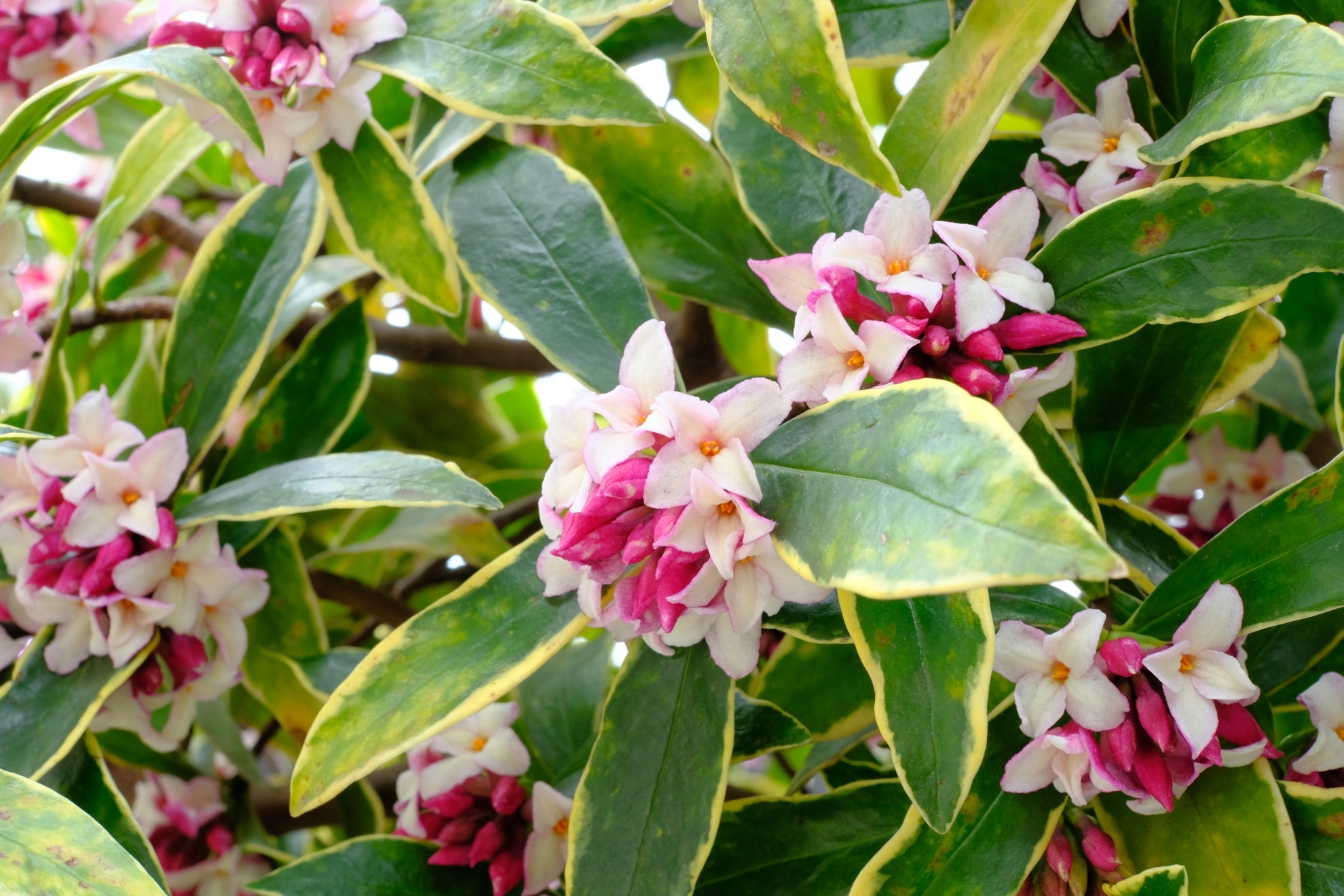
Evergreen varieties tend to have greenish-white or yellow flowers, while deciduous types tend to produce pink blooms.
However, most types have fragrant flowers, which is a definite added benefit to growing a daphne shrub.
Common Varieties
Some common daphne varieties to consider include:
D. bholua

“Daphne bholua flowers in mid-winter which is lovely for bees that are around at that time of year,” shares Sue Fisher, a Garden Designer.
Try ‘Jacqueline Postill’ (pictured above) or ‘Darjeeling’.
D. x burkwoodii

‘Somerset’ is my favourite Burkwood variety.
D. cneorum

A top variety is ‘Eximia’.
D. laureola

D. mezereum

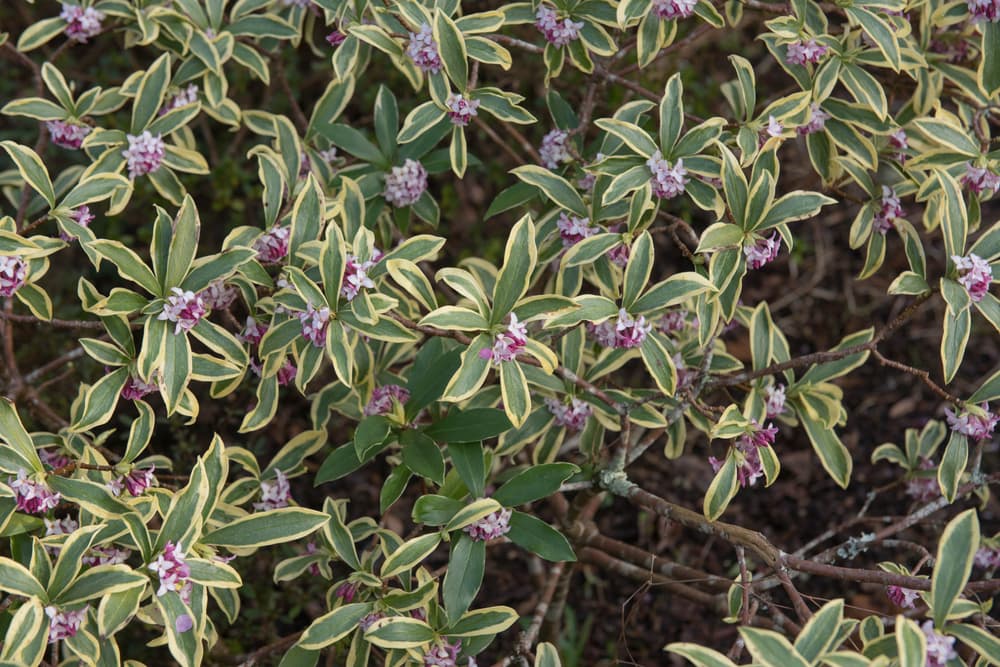
D. odora

(Grow ‘Aureomarginata’ for lovely flowers).
D. x transatlantica

Try ‘Eternal Fragrance’ (pictured above) or ‘Pink Fragrance’.
Planting Daphne
Larger daphne shrubs work well towards the back of a border, while smaller daphne might be positioned more to the front.
These are naturally woodland shrubs, which can help inform the position where they will be most at home.
Smaller daphne shrubs often work well in rock gardens or alpine houses, but they are fussier types which are a little harder to grow.
“To enjoy the blooms and fragrance of your Daphne, I recommend planting it somewhere you will be walking past when it’s in flower,” suggests Horticultural Consultant and Instructor Dan Ori.

“Too often, we hide away winter flowering Daphne in borders that only receive our attention in the summer.”
Follow these guidelines to plant your young daphne shrubs:
- Dig a hole which is at least half again as wide as the pot the daphne was in, which is the same depth as the plant’s previous container.
- Soak the plant and the hole thoroughly, then place the plant in the hole. Turn it to the preferred orientation.
- Refill the soil or growing medium around the plant.
When To Plant
Daphnes are best planted out in March or April to get them off to the best possible start.
“If you have struggled with getting a Daphne to grow in your garden you could try ‘Jacqueline Postill’ or ‘Aureomarginata’, as I have found these easier to get established,” adds Dan.
Daphne Shrub Care
Daphne has a reputation for being somewhat challenging to grow successfully, but as long as these shrubs are positioned carefully and not disturbed, they can flower pretty reliably.

Here are some notes to help you understand the environmental conditions that these plants require:
Aspect & Light
Some varieties will be fine in full sun, but others will prefer a position in a dappled or light shade.
Growing in the dappled shade below deciduous trees is usually the best option.
Preferred Soil
Daphnes prefer moist yet free-draining soil which is neutral or alkaline in pH.
Moist soil types will suit, but if you have heavy clay soil, it may be better to grow daphne in a raised bed or container.
Temperature & Humidity
Daphne vary in their tolerance of cold and their winter hardiness.
Some are H4 hardy, while some can be quite a lot tougher, with a hardiness rating of H6.
While these will all usually make it through the winter in the UK, many will benefit from generous mulching to protect the roots and a cover of horticultural fleece or similar during prolonged periods of cold weather.
Growing From Seed
Growing daphne from seed is challenging, time-consuming and can often have poor success rates, even for more experienced gardeners.

I’d recommend either propagating through cuttings or purchasing daphne plants.
Propagating
Semi-ripe cuttings can be taken in late summer and usually root fairly successfully.
So, if you admire a daphne in a friend’s or neighbour’s garden, this is a good way to obtain one of the same for your own displays.
Container Growing
Smaller daphne can be grown in containers as long as they are large enough to accommodate the roots.

Make sure that the container allows for free drainage, and fill it with a suitable free-draining yet moisture-retentive medium.
Watering
Water regularly during dry spells, but take care not to overwater.
Daphnes are not tolerant of wet and cold roots, or of extreme drought.
Remember that plants in pots will need to be watered more frequently.
Fertilising
Daphnes do not usually require additional fertilisation.
The use of enriching organic mulches should suffice to meet their nutritional needs in most cases.

Upon planting and each spring, spread a good quality compost or well-rotted manure around your plant.
Then, each autumn, add a thick layer of autumn leaves or other carbon-rich mulch to protect the roots.
Pruning
Daphnes do not usually require any pruning at all.
Harvesting a few flowering branches for use in cut flower arrangements will usually suffice.
If you wish, you can remove stems for aesthetic reasons in the summer, but this is not often necessary.
Common Problems
Root rot caused by poor drainage, high rainfall or overwatering is one of the most common issues encountered.
Sometimes, this may be caused by environmental conditions alone, though sometimes in those conditions, fungal problems like honey fungus and phytophthora root rot can take hold, as well as other fungal issues and virus infections.
References
1. Two members of the family Thymelaeaceae. (2012, March 10). University of Washington Botanic Gardens. Retrieved March 14, 2023, from https://botanicgardens.uw.edu/about/blog/2012/03/10/march-2012-plant-profile-two-members-of-the-family-thymelaeaceae/