Growing

Gardener Chris Lee Shares 25 Indoor Trees To Brighten Your Living Spaces
IN THIS GUIDE 1) Dragon Tree 2) Yucca 3) Norfolk Island Pine 4) Rubber Plant 5) European Olive 6) Calamondin Orange Tree 7) Corn Plant 8) Money Tree 9) Fiddle Leaf Fig 10) Umbrella Tree 11) Swiss Cheese Plant 12) Parlor Palm 13) Dumb Cane 14) Benjamin Tree 15) Burmese Fishtail Palm 16) Bird of Paradise 17) Kentia Palm 18) Cast Iron Plant 19) Elephant Ear 20) Golden Pothos 21) Elephant’s Foot 22) Rose Painted Calathea 23) Coconut Palm Tree 24) Bay Tree 25) Southern Washingtonia References Plants and greenery breathe vigour and energy into indoor spaces. They’re a great way to bring a room to life, and to bring that little sprinkling of nature to cut through the man-made factors that can begin to feel a little bit oppressive. If you live somewhere with no private outdoor space, incorporating plants and indoor trees can be the only way to invite nature in, so it’s deeply important to make the right choices. In this guide, we’ll introduce twenty-five indoor trees to make a fantastic addition to any indoor space. “The naturalist E.O. Wilson coined the term biophilia (or love of living things) that we seem to possess, even if we aren’t always conscious of it,” explains Colin Skelly, a Horticultural Consultant.1 “That’s why you feel good when surrounded by plants and wildlife. Indoor trees are a great immersive way to draw on this innate positive feeling.” Whether you’re struggling to find room amongst your hundreds of other houseplants, or you’re a budding interior designer looking for their very first piece of indoor nature, there’ll be something in this list to align with your needs. 1) Dragon Tree BOTANICAL NAME: Dracaena marginata HARDINESS RATING: H1B BEST ROOMS: BATHROOM / KITCHEN SUNLIGHT: BRIGHT, INDIRECT LIGHT SOIL: ANY; MOIST; WELL-DRAINED WATERING: ONCE PER WEEK Let’s start with the indoor tree from the picture above, distinctive with its pinnacle of spiky leaves sporting the distinctive Dracaena tricolor pattern. Each leaf has a band of colour framed by green, with different varieties offering white or red. While this tree can flower, it’s unlikely to do so indoors. It’ll also reach a far more diminutive height: probably around a maximum of 6 feet indoors as opposed to 20 feet and above if left to its natural devices. Dragon trees like bright but indirect light, and need to be in well-draining soil. Try to find a spot with indirect sunlight, as they are prone to scorching. Water regularly, although make sure the top half of the soil is dry before doing so. This can take a couple of weeks, so bear in mind that the definition of “regularly” varies between plants. While dragon trees will probably be alright with the humidity levels in your house, you can give the leaves a spritz every once in a while to add a little moisture. 2) Yucca BOTANICAL NAME: Yucca elephantipes HARDINESS RATING: H2 BEST ROOMS: LIVING ROOM / DINING ROOM SUNLIGHT: BRIGHT, INDIRECT LIGHT SOIL: LOAM OR SAND; MOIST; WELL-DRAINED WATERING: ONCE PER WEEK; LESS IN WINTER This tree has a lovely exotic profile, adding a nice tropical feel to any room. The thick, deep green leaves lilt lazily to give a relaxed energy, and the thick trunk raising them away from the ground gives a distinctly tree-like appearance that not all indoor trees actually manage to achieve. The care requirements for this tree make it great for gardeners with less experience. It requires less watering than the dragon tree, and it will make do with lower quality soil as well. In fact, one of the easiest ways to damage a yucca is by overwatering it, so be careful! During the hotter months you may need to move your yucca outside to a spot with partial shade. When doing so, make sure to weigh down the container or put into a heavier pot. This will prevent gusts of wind from potentially knocking the plant over. The yucca’s maximum size is bigger than what will fit comfortably into most of our houses, although it takes such a long time to grow to this size that it won’t be a problem for a while. You’ll need to repot every few years as the plant grows. 3) Norfolk Island Pine BOTANICAL NAME: Araucaria heterophylla HARDINESS RATING: H1C BEST ROOMS: LIVING ROOM / BEDROOM SUNLIGHT: DIRECT LIGHT SOIL: ANY; MOIST; WELL-DRAINED WATERING: ONCE OR TWICE PER WEEK; BENEFITS FROM MISTING The Norfolk Island Pine is native to – you guessed it – Norfolk Island. This territory flies under the radar of most people, unless they’re Australians looking for a local holiday or, more likely, gardeners looking for a nice houseplant. The plant itself boasts the evergreen needle appearance you’d expect of a pine, the needles in dense and appealing clusters. Where most indoor trees bring an air of the tropical or the exotic, Araucaria heterophylla brings something a little more rugged and rustic, perhaps bringing to mind something Scandinavian. Your Norfolk Island Pine will do best in full sun or partial shade, with a few hours of direct sun being tolerated. Water every week or so, and let the top section of soil dry before adding any more. In terms of humidity, slightly higher than average household humidity is preferred. Give your plant the occasional spritz to make up for lower-than-ideal humidity. 4) Rubber Plant BOTANICAL NAME: FICUS ELASTICA HARDINESS RATING: H1B BEST ROOMS: LIVING ROOM / DINING ROOM SUNLIGHT: BRIGHT, INDIRECT LIGHT SOIL: ANY; MOIST; WELL-DRAINED WATERING: ONCE PER WEEK The rubber plant is a popular choice for people looking to spruce up their interior design. The thick green leaves provide a nice shot of colour, and their care regime is undemanding. As with some other indoor trees, the F. elastica grows to fairly lofty heights out in the wild, but it will stay within manageable limits when grown indoors. Over time as the size increases, you may find yourself needing to stake or otherwise support the branches to keep them steady. The best spot for your F. elastica will have a good amount of indirect sunlight. You only need to water when the top half of the soil is dry, and overwatering is a common source of damage – so take care! Repotting should be done every year for a young plant, and roughly every three years thereafter. You can tell when a young plant needs repotting because the roots will be bound. Big leaves mean this plant is prone to collect dust, so give them a wipe down with a damp sponge if they get too dusty. 5) European Olive BOTANICAL NAME: Olea europea HARDINESS RATING: H4 BEST ROOMS: CONSERVATORY (PATIO IN SUMMER) SUNLIGHT: FULL SUN; AS MUCH LIGHT AS POSSIBLE SOIL: ANY; WELL-DRAINED WATERING: ONCE PER WEEK If you often find yourself in conflicts and arguments, why not ensure a constant supply of olive branches to extend to people? Or, far more likely, why not choose this indoor tree as an attractive and distinctive way to liven up your drab indoor space? Olive trees love plenty of sunlight, and will do best with at least a few hours per day. Think about it: these are trees that grow naturally in stunning Italian and Greek sunshine, so you’ll need to make certain concessions based on the warm and glamorous lifestyle they’re used to. The tree will reward you, though. Their captivating clusters of miniature leaves come in a striking grey-green colour, bringing something a little different to the rich and exotic greens we’ve seen previously. It’s quite unlikely that your olive tree will actually bear fruit – something to keep in mind. Some ornamental varieties are unable to do so, while others require time outside in the right conditions to bud. So if you’re looking for home-grown olives, you’ll need to do a little extra research. Keep in frequent but indirect sunlight and water when the top of the soil is wet. Repot when the root ball is getting a little restricted to give your plant the best chances for a long life. 6) Calamondin Orange Tree BOTANICAL NAME: Citrus mitis HARDINESS RATING: H3 BEST ROOMS: CONSERVATORY (PATIO IN SUMMER) SUNLIGHT: DIRECT SUNLIGHT SOIL: LOAM-BASED POTTING MIX; MOIST; WELL-DRAINED WATERING: AS NEEDED; ONCE OR TWICE PER WEEK We really love this one. What’s more adorable than a plant that puts forth tiny oranges each year, and brings with it a charming and refreshing citrus scent? Also let us clarify: these aren’t tiny oranges, technically; they’re mandarins combined with kumquats. While this isn’t the type of plant you’d expect to see thriving in UK growing conditions, the saplings can be encouraged to have a long and healthy life if kept indoors and looked after well. Perhaps the main draw of this plant is its scent: refreshing and orangey, and a lovely extra sensory contribution to your home. When it’s in bloom, the calamondin will catch the eye (and nose) of any guests, and is guaranteed to be a talking point. Indoors these trees require temperatures above 13°C and will appreciate being fertilised each spring. Keep the soil moist but only water when the top couple of centimetres are dry, and don’t overwater. Give the plant direct sunlight each day for a few hours if possible, and if you have the space, move outside for a few hours a day in spring. Calamondin can actually tolerate spending summer outdoors entirely if you live in the right climate – we recommend double-checking this before doing so, however, as misjudging can harm growth. 7) Corn Plant BOTANICAL NAME: Dracaena fragrans HARDINESS RATING: H1B BEST ROOMS: KITCHEN SUNLIGHT: FILTERED, INDIRECT LIGHT SOIL: ANY; MOIST; WELL-DRAINED WATERING: EVERY TEN DAYS The corn plant is an interesting-looking indoor tree. It’s got a thick green stem with beige markings – looking almost like slash marks – which then give rise to smaller offshoots from which leaves fan gently out. It definitely shares an exotic aesthetic with plants featured earlier in this list, and would look great alongside a yucca, for example. The exotic visual appeal has ensure the persistent presence of corn plants in the interior decorator’s arsenal for many decades, and it’s easy to see why. While the plant has nothing to do with the corn you find in barbecues and salads, the name derives from the tuft of leaves at the top of the plant which, as somebody noted when choosing the name, look a little like the tuft atop field corn. This indoor tree can grow up to 15m tall in natural conditions, but in a container will most likely peak around 1.5-1.8m, making them ideal home companions. 8) Money Tree BOTANICAL NAME: Crassula ovata HARDINESS RATING: H2 BEST ROOMS: KITCHEN / LIVING ROOM SUNLIGHT: BRIGHT, INDIRECT LIGHT SOIL: LOAM-BASED POTTING MIX; WELL-DRAINED WATERING: EVERY TEN DAYS Native to South American climates, Crassula ovata is said to bring good fortune and prosperity. Thankfully it also has incredibly attractive foliage and is well suited to growing as an indoor tree. To care for your plant, keep it in indirect but bright light and water infrequently. 9) Fiddle Leaf Fig BOTANICAL NAME: Ficus lyrata HARDINESS RATING: H1B BEST ROOMS: LIVING ROOM / BRIGHT BATHROOMS SUNLIGHT: MOSTLY BRIGHT, INDIRECT LIGHT SOIL: ANY; MOIST; WELL-DRAINED WATERING: ONCE PER WEEK Fiddle Leaf Fig is an African native that is actually considered invasive in some areas.2 However, you needn’t worry about that if you’re looking to grow this in the UK, as the plant can’t survive outside of the home in our relatively colder climate. This plant can grow to a significant size so it looks really impressive in a living space or bathroom that receives plenty of bright light. 10) Umbrella Tree BOTANICAL NAME: Schefflera arboricola HARDINESS RATING: H1C BEST ROOMS: NORTH FACING SUNLIGHT: BRIGHT, INDIRECT LIGHT SOIL: LOAM-BASED COMPOST; MOIST; WELL-DRAINED WATERING: INFREQUENTLY; WHEN DRIED OUT Schefflera is commonly grown as an indoor tree here in Britain but in its native environment of New Guinea it can be found in many habitats. The plant is an epiphyte, which means it often grows on a host tree; sometimes quite high up.3 For the best results when growing indoors, choose a north-facing spot in your home, water infrequently and use loam-based compost with regular fertilisation. 11) Swiss Cheese Plant BOTANICAL NAME: Monstera deliciosa HARDINESS RATING: H1B BEST ROOMS: LIVING ROOM / DINING ROOM SUNLIGHT: BRIGHT, INDIRECT LIGHT SOIL: ANY; MOIST; WELL-DRAINED WATERING: ONCE PER WEEK Monstera is most widely known for its interesting perforations that give it a resemblance to its namesake ‘Swiss Cheese’. This is another indoor tree whose origins can be tied back to the rainforests of South America, where it uses its aerial roots to climb into tree canopies.4 For this reason, it’s always beneficial to provide your plant with a centralised moss pole, allowing it to climb and grow bigger. As it grows (and provided the plant has access to enough bright but indirect light) you’ll notice perforations opening up on the foliage, giving this plant incredible character. Monstera that are well-cared-for can grow quite large, so choose a spot with plenty of room. 12) Parlor Palm BOTANICAL NAME: Chamaedorea elegans HARDINESS RATING: H1A BEST ROOMS: BEDROOM / KITCHEN SUNLIGHT: MEDIUM OR LOW, INDIRECT LIGHT SOIL: ANY; WELL-DRAINED WATERING: EVERY ONE OR TWO WEEKS Chamaedorea elegans is the archetypal houseplant – extremely tolerant of neglect, loves well-drained soil and prefers a quiet corner of the home. Keep the plant in a low light environment for the best results – direct sunlight should always be avoided. Waterlogging will stunt your plant’s growth so be sure only to water when the plant is well dried-out – usually this means every one or two weeks. 13) Dumb Cane BOTANICAL NAME: Dieffenbachia HARDINESS RATING: H1A BEST ROOMS: LIVING ROOM SUNLIGHT: BRIGHT, INDIRECT LIGHT OR FULL SHADE SOIL: ANY; MOIST; WELL-DRAINED WATERING: EVERY ONE OR TWO WEEKS Another South-American native, Dieffenbachia is a low-maintenance tree that is perfectly suited to indoor growing conditions. Bright, indirect light is preferred, but the plant is equally as happy in part or full shade, which makes it an ideal houseplant.5 The plant will often develop interesting, variegated leaves which can make it an ideal talking point when situated in a living area of the home. 14) Benjamin Tree BOTANICAL NAME: Ficus benjamina HARDINESS RATING: H1C BEST ROOMS: ANY SUNLIGHT: BRIGHT, INDIRECT LIGHT SOIL: ANY; MOIST; WELL-DRAINED WATERING: ONCE PER WEEK The Benjamin Tree, or ‘Weeping Fig’ as it is commonly known, is an indoor tree with small rubbery leaves and drooping branches. It is usually best grown in a consistent area of the house, as large-scale changes to its environment can cause stress, causing the plant to drop its leaves.6 In its native landscape the plant actually produces red and orange fruits that turn black – but you are unlikely to see these when growing the plant indoors in the UK. 15) Burmese Fishtail Palm BOTANICAL NAME: Caryota mitis HARDINESS RATING: H1C BEST ROOMS: LIVING ROOM SUNLIGHT: BRIGHT, INDIRECT LIGHT SOIL: LOAM-BASED POTTING MIX; MOIST; WELL-DRAINED WATERING: EVERY 10 DAYS The next indoor tree on our list is the Burmese Fishtail Palm, a native of Tropical Asia that has interesting, fan-like foliage. The tall, clustering palms look fantastic in a living space alongside home furniture decor. Use a loam-based potting mix such as John Innes and keep the soil well-drained for optimal results. 16) Bird of Paradise BOTANICAL NAME: Strelitzia reginae HARDINESS RATING: H1B BEST ROOMS: LIVING ROOM / KITCHEN SUNLIGHT: FULL LIGHT SOIL: ANY; MOIST; WELL-DRAINED WATERING: DRY OUT BETWEEN WATERING; BENEFITS FROM MISTING 17) Kentia Palm BOTANICAL NAME: Howea forsteriana HARDINESS RATING: H1A BEST ROOMS: CONSERVATORY SUNLIGHT: DAPPLED LIGHT SOIL: LOAM-BASED POTTING MIX; WELL-DRAINED WATERING: ONCE PER WEEK 18) Cast Iron Plant BOTANICAL NAME: Aspidistra HARDINESS RATING: H3 BEST ROOMS: NORTH FACING SUNLIGHT: BRIGHT, INDIRECT LIGHT SOIL: ANY; MOIST; WELL-DRAINED WATERING: EVERY 10 DAYS 19) Elephant Ear BOTANICAL NAME: Alocasia zebrina HARDINESS RATING: H1A BEST ROOMS: BATHROOM / KITCHEN SUNLIGHT: MEDIUM, INDIRECT LIGHT SOIL: LOAM-BASED POTTING MIX; MOIST; WELL-DRAINED WATERING: ONCE PER WEEK; BENEFITS FROM MISTING 20) Golden Pothos BOTANICAL NAME: Epipremnum aureum HARDINESS RATING: H1B BEST ROOMS: KITCHEN / LIVING ROOM / BEDROOM SUNLIGHT: BRIGHT OR MEDIUM, INDIRECT LIGHT SOIL: ANY; MOIST; WELL-DRAINED WATERING: ONCE PER WEEK 21) Elephant’s Foot BOTANICAL NAME: Beaucarnea HARDINESS RATING: H1C BEST ROOMS: LIVING ROOM / KITCHEN SUNLIGHT: BRIGHT, INDIRECT LIGHT SOIL: ANY; WELL-DRAINED WATERING: EVERY 1-2 WEEKS 22) Rose Painted Calathea BOTANICAL NAME: Calathea rufibarba HARDINESS RATING: H1A BEST ROOMS: BATHROOM / KITCHEN SUNLIGHT: BRIGHT, INDIRECT LIGHT SOIL: ANY; MOIST; WELL-DRAINED WATERING: REGULARLY; KEEP SOIL DAMP 23) Coconut Palm Tree BOTANICAL NAME: Cocos nucifera HARDINESS RATING: H3 BEST ROOMS: CONSERVATORY / SOUTH-FACING KITCHEN SUNLIGHT: FULL SUN SOIL: ANY; MOIST; WELL-DRAINED WATERING: ONCE PER WEEK; BENEFITS FROM MISTING 24) Bay Tree BOTANICAL NAME: Laurus nobilis HARDINESS RATING: H4 BEST ROOMS: KITCHEN / CONSERVATORY SUNLIGHT: FULL SUN OR PART SHADE SOIL: ANY; WELL-DRAINED WATERING: ONCE PER WEEK 25) Southern Washingtonia BOTANICAL NAME: Washingtonia robusta HARDINESS RATING: H1C BEST ROOMS: CONSERVATORY / SOUTH-FACING KITCHEN SUNLIGHT: FULL SUN SOIL: LOAM-BASED POTTING MIX; WELL-DRAINED WATERING: EVERY 10 DAYS References 1. Rogers, K. (2023, June 13). Biophilia hypothesis. Encyclopedia Britannica. Retrieved June 27, 2023, from https://www.britannica.com/science/biophilia-hypothesis 2. Datiles, M., & Acevedo-Rodrígue, P. (2014). Ficus lyrata (fiddle-leaf fig). CABI Compendium. https://doi.org/10.1079/cabicompendium.24125 3. Chadburn, H. (n.d.). The “umbrella plant” in New Guinea. Kew Royal Botanic Gardens. Retrieved March 20, 2023, from https://www.kew.org/read-and-watch/umbrella-plant 4. Monstera (Monstera deliciosa). (n.d.). NYBG. Retrieved March 20, 2023, from https://libguides.nybg.org/monstera 5. Dieffenbachia. (n.d.). University of Florida: Institute of Food and Agricultural Sciences. Retrieved March 20, 2023, from https://gardeningsolutions.ifas.ufl.edu/plants/houseplants/dieffenbachia.html 6. Ficus benjamina. (n.d.). North Carolina Extension Gardener Plant Toolbox. Retrieved March 20, 2023, from https://plants.ces.ncsu.edu/plants/ficus-benjamina/
Learn more
Rounding Up 15 Of The Best Dracaena ‘Dragon Plants’ With Chris Lee
IN THIS GUIDE The Dracaena Genus 1) D. fragrans ‘Massangeana’ 2) D. fragrans ‘Lemon Lime’ 3) D. surculosa ‘Florida Beauty’ 4) D. draco 5) D. marginata 6) D. reflexa ‘Variegata’ 7) D. fragrans ‘Warneckei’ 8) D. marginata ‘Tricolor’ 9) D. deremensis ‘Warneckii’ 10) D. fragrans ‘Compacta’ 11) D. ‘Janet Craig’ 12) D. fragrans ‘Golden Coast’ 13) D. fragrans ‘Ulises’ 14) D. fragrans ‘White Jewel’ 15) D. trifasciata ‘Snake Plant’ Enter The Dragons References On the island of Tenerife there sits a tree by the name of El Drago Milenario which, according to legend, is a thousand years old. And while we acknowledge there’s debate about the veracity of that number, there’s no denying that this is a truly ancient tree.1 El Drago Milenario – The Millennial Dragon Tree Weighing in around 150 tons, soaring to a height of nearly 21m, and boasting over 300 branches, this is a formidable tree. It’s so big that a special ventilation chamber was installed inside to keep air flowing to the centre and to prevent fungal growth. Truly, an inspirational plant. The Dracaena Genus El Drago Milenario is a Dracaena draco, a species in the genus Dracaena, in which you’ll find many distinctive and characteristic plants and trees well-suited to growing in the UK, despite their exotic appearance. With several centuries and several hundred tons under its belt, El Drago Milenario could be considered the patriarch of the genus Dracaena. And while no plant you grow will likely ever reach a similar size or age, you can incorporate the family’s striking aesthetic into your home or garden. “If growing outside, watch out for unseasonal drops in temperature as this can easily damage a Draceana,” shares Master Horticulturist Colin Skelly. “When I worked in a very mild Cornish coastal garden, a D. draco survived outside for five years and began to look happier as it established. “Sadly, a drop in temperature to -5ºC one winter killed the plant. Warming winter temperatures are allowing more experiments with half-hardy plants outdoors in the UK but they are vulnerable to even short spells of frost.” We’ve rounded up fifteen of the best Dracaena ‘dragon plants’ for UK gardeners: 1) D. fragrans ‘Massangeana’ COMMON NAME: CORN PLANT PREFERRED LIGHT: BRIGHT BUT INDIRECT (CAN BURN IN FULL SUN) WATERING: WHEN DRIED OUT; DO NOT OVERWATER TYPICAL INDOOR HEIGHT: 1.5 – 2 Metres This variety boasts variegated leaves blending rich green and white, in the distinct shape of swords. Though this plant does not flower often, you may catch a glimpse of a distinctive yellow bloom followed by orange berries. ‘Massangeana’ is a popular houseplant, thanks to its size, but will grow to heights of around 4m if grown outside. It’s worth noting at this point that the enormous stature of El Drago Milenario is far from typical of plants in this genus! This variety also exemplifies the exotic confidence that Dracaena plants will bring to any space. Their thick brown stems and bold leaves have the visual clout to act as a centrepiece just as much as an accent. For best results outdoors, grow somewhere in full sun, with any aspect except north-facing. Keep sheltered from the worst of the elements, and bring indoors during cold spells. 2) D. fragrans ‘Lemon Lime’ PREFERRED LIGHT: MEDIUM, INDIRECT (DON’T PLACE IN FULL SUN) WATERING: WHEN DRIED OUT; KEEP WELL-DRAINED; DO NOT OVERWATER TYPICAL INDOOR HEIGHT: 1.5 – 2 METRES Here we have another houseplant-sized Dracaena, this time sporting slightly lighter green in its still-variegated leaves. It’s from the dazzlingly bright leaves that the plant takes its name, incidentally – they bring to mind citrus. As with ‘Massangeana’, ‘Lemon Lime’ can be kept at a diminutive size with regular pruning, making it suitable for smaller containers. Left to grow, it will reach heights of around 1.5-2m. For best results, keep your ‘Lemon Lime’ in a spot with medium sun. Common to Dracaena, ‘Lemon Lime’ is prone to scorching or browning if it receives too much or too little sun, respectively. 3) D. surculosa ‘Florida Beauty’ Like a mix between a forest canopy and the night sky COMMON NAME: SPOTTED DRACAENA PREFERRED LIGHT: BRIGHT BUT INDIRECT (DON’T PLACE IN FULL SUN) WATERING: WHEN DRIED OUT; KEEP WELL WATERED IN SUMMERTIME TYPICAL INDOOR HEIGHT: 0.5 – 1 METRES Where ‘Massangeana’ and ‘Lemon Lime’ have variegated stripes of green and white, the ‘Florida Beauty’ has captivating white mottling on its matte-green leaves. When choosing a houseplant for its visual appeal, you can’t go far wrong with this variety: It will complement other plants around it whilst standing out from the crowd thanks to its distinctive aesthetic. The leaves of this Dracaena unfurl from stems that are somewhat different to other plants in this genus, giving it another point of interest compared to its cousins. Like Lemon Line, this plant will do well in a spot with some sunlight. Avoid drafts and constant sun to prevent damage, and make sure to keep the soil well-watered to promote healthy growth. 4) D. draco COMMON NAME: DRAGON TREE / DRAGON’S BLOOD TREE PREFERRED LIGHT: FULL SUN (PROTECT FROM HARSH SUNLIGHT) WATERING: WATER FREELY TYPICAL INDOOR HEIGHT: 1.5 – 2 METRES Harking back to El Drago Milenario at the start of this piece, let us now introduce D. draco. This tall tree with spiky green foliage atop an unbranched trunk is distinctly exotic. And on average, it grows to around 4-8m: far more manageable than the gargantuan Milenario. You’ll notice that the dracos above sit comfortably in pots. While their maximum likely height is several metres, it will take your plant a few years – maybe even a decade – to get to that point, meaning you can keep it inside for the interim. Keep your draco in bright but indirect light, and water when you’re sure the soil is nearly dry, and this plant will reward you with a very pleasing aesthetic. There’s good reason that the dragon tree is a common and popular houseplant, after all! 5) D. marginata COMMON NAME: MADAGASCAR DRAGON TREE PREFERRED LIGHT: FULL SUN (PROTECT FROM HARSH SUNLIGHT) WATERING: WHEN DRIED OUT TYPICAL INDOOR HEIGHT: 1.5 – 2 METRES This member of the Dracaena genus brings another visual quirk to distinguish it from the variously mottled or variegated leaves we’ve seen so far. With this plant, you’ll notice streaks of red running up either side of each leaf. Thanks to its resilience (it is commonly referred to as being “nearly indestructible”), this plant is highly recommended for people new to keeping houseplants. If you keep this plant in full sun or partial shade, and keep it watered regularly, you’ll be rewarded with resilient growth and an attractive plant. 6) D. reflexa ‘Variegata’ COMMON NAME: SONG OF INDIA PREFERRED LIGHT: FULL SUN (PROTECT FROM HARSH SUNLIGHT) WATERING: WATER FREELY TYPICAL INDOOR HEIGHT: 1.5 – 2 METRES This plant also goes by the name ‘variegated song of India’, which we think is wonderfully evocative, and goes some way toward capturing the exoticism that plants in the Dracaena genus encapsulate. Part of the appeal of having house plants is that they provide a visual element that’s so frequently missing from interior design. That organic, alive something that a space can feel so empty without. By integrating plants like the variegated song of India, you bring a little of this life and vitality into your home. The green leaves framed by thick shocks of white invite the eye and, while we may be pushing the analogy a little bit here, bring to mind distant landscapes and cultures. What better way to liven up your living room! 7) D. fragrans ‘Warneckei’ COMMON NAME: STRIPED DRACAENA PREFERRED LIGHT: BRIGHT BUT INDIRECT (DON’T PLACE IN FULL SUN) WATERING: WHEN DRIED OUT; KEEP WELL-DRAINED; DO NOT OVERWATER TYPICAL INDOOR HEIGHT: 1.5 – 2 METRES Another white and green variegated variety, the ‘Warneckei’ has an almost modern aesthetic thanks to its bold lines and striking, dark colouration. As a centrepiece in a room with a modern design element, this houseplant would look fantastic. If you decide the ‘Warneckei’ is right for you, you’ll want to grow in indirect but bright sunlight – much like the other Dracaena plants in this list. Check that the top layer of soil is dry before watering, too, as over-watering is likely to cause root rot: A malady that’s hard to come back from! 8) D. marginata ‘Tricolor’ COMMON NAME: THREE COLOURED MADAGASCAR DRAGON TREE PREFERRED LIGHT: BRIGHT BUT INDIRECT (CAN BURN IN FULL SUN) WATERING: WATER FREELY TYPICAL INDOOR HEIGHT: 1.5 – 2 METRES The name ‘Tricolor’ hints at a certain property of this plant. Can you guess what it is? If you guessed “it has three colours,” then give yourself a point. This variety combines the red, white, and green we’ve seen variously distributed across other varieties in the list. And wow, doesn’t it look stunning? For a houseplant that truly catches the eye and draws attention, look no further than ‘Tricolor’. Contrasting the vibrant reds of this variety with the assorted greens in the usual houseplant palette is a way to bring another exotic flavour to your indoor space, and another demonstration of the versatility and visual excellence of the Dracaena family. 9) D. deremensis ‘Warneckii’ COMMON NAME: VARIEGATED STRIPED DRACAENA PREFERRED LIGHT: MODERATE, INDIRECT LIGHT WATERING: WHEN DRIED OUT; KEEP WELL-DRAINED; DO NOT OVERWATER TYPICAL INDOOR HEIGHT: 1.5 – 2 METRES 10) D. fragrans ‘Compacta’ PREFERRED LIGHT: MODERATE, INDIRECT LIGHT WATERING: WHEN DRIED OUT; DO NOT OVERWATER TYPICAL INDOOR HEIGHT: 1 – 2 METRES 11) D. ‘Janet Craig’ PREFERRED LIGHT: BRIGHT BUT INDIRECT (DON’T PLACE IN FULL SUN) WATERING: WHEN DRIED OUT; KEEP WELL-DRAINED; DO NOT OVERWATER TYPICAL INDOOR HEIGHT: 1 – 2 METRES 12) D. fragrans ‘Golden Coast’ PREFERRED LIGHT: BRIGHT BUT INDIRECT (CAN BURN IN FULL SUN) WATERING: WHEN DRIED OUT; DO NOT OVERWATER TYPICAL INDOOR HEIGHT: 2 – 2.5 METRES 13) D. fragrans ‘Ulises’ PREFERRED LIGHT: MOSTLY SHADE WATERING: WHEN DRIED OUT; KEEP WELL WATERED IN SUMMERTIME TYPICAL INDOOR HEIGHT: UP TO 3 METRES 14) D. fragrans ‘White Jewel’ PREFERRED LIGHT: MOSTLY SHADE WATERING: WHEN DRIED OUT; DO NOT OVERWATER TYPICAL INDOOR HEIGHT: 1 – 2 METRES 15) D. trifasciata ‘Snake Plant’ COMMON NAME: SNAKE PLANT PREFERRED LIGHT: MODERATE, INDIRECT LIGHT WATERING: WHEN DRIED OUT; KEEP WELL-DRAINED; DO NOT OVERWATER TYPICAL INDOOR HEIGHT: 0.75 – 1 METRES Enter The Dragons We hope that our list has inspired you to incorporate a Dracaena ‘dragon plant’ into your interior design plans. These plants are visually captivating, generally fairly easy to look after, and undeniably exotic, making them a great way to bring a little je ne sais quoi into your space. One of our favourite things when choosing houseplants is exploring the subtle variety available between members of the same plant family. Having a few dragon plants in your home will keep a consistent visual theme running through the space, while allowing you to play with colour, size, and even leaf patterns. Done well, this is an intriguing and alluring way to retain visual interest within and between rooms. We wish you the best in finding the right dragon plant for your needs, and we’d love to see what you come up with! References 1. Thousand-year-old dragon tree. (n.d.). Cabildo De Tenerife. Retrieved March 15, 2023, from https://www.tenerife.es/portalcabtfe/en/discover-tenerife/que-ver/el-drago-milenario
Learn more
Growing Ficus Elastica ‘Rubber Plant’ - They Add A Lot Of Colour To A Home
IN THIS GUIDE Overview Why Grow A Rubber Tree? How To Grow A Rubber Plant Rubber Tree Care Common Problems References If you or your friends keep houseplants, it’s very likely that you’ve seen at least one Ficus elastica in your life. This popular plant is ideal for growing at home thanks to its distinct and attractive aesthetic, its resistance to pests, and its general low maintenance requirements. Overview Botanical Name Ficus elastica Common Name(s) Rubber Tree, Rubber Plant, India Rubber Plant Plant Type Houseplant / Tree Native Area East Himalaya to North Malaysia Hardiness Rating H1B Foliage Evergreen Flowers Inconspicuous When To Sow (Indoors) Year-Round Flowering Months May, June When To Prune February, March F. elastica is the botanical name for a plant more commonly known as rubber plant, rubber tree, Assam rubber, India rubber fig, and many other names. According to records from Kew, its native range spans much of South East Asia and Southern China.1 Confusingly, another plant called Hevea brasiliensis also goes by the names ‘Rubber Tree’ and ‘Rubber Plant’; this species is the primary source of natural rubber. Why Grow A Rubber Tree? F. elastica ticks many of the boxes that houseplant enthusiasts look for: It’s pretty to look at, boasting thick rubbery leaves that hold a lot of colour. There are a variety of shades and colours available, from greens through to burgundies. It’s not too big. While the plant can grow over 20 metres tall in its natural habitat, a houseplant will clock in around a metre. It’s easy to look after, requiring no special treatment and fairly infrequent watering. It’s unlikely to attract pests, meaning there’s less scope for things to go wrong. It’s easy to clean – if yours are liable to get dusty, F. elastica’s strong leaves lend themselves well to a gentle rubdown. Easy enough to appeal to beginners, but versatile and attractive enough to remain appealing to even the most seasoned experts. How To Grow A Rubber Plant Buying a mature rubber plant is probably the most popular way of incorporating one into your squadron of houseplants, and they’re fairly cheap to buy from most gardening shops. If you’re feeling adventurous, though, they’re not too challenging to grow from seeds or cuttings. Growing From Seed Unlike many seeds, you don’t need to bury a rubber plant seed in soil to get it growing. Instead, leave it in a tray or container in indirect sunlight, and spritz it a few times a day to keep it moist. You can place a light cloth over the seed whilst you spritz it to ensure better coverage. Once the seed has sprouted, usually after a week or so, you can relocate it to a pot. Aim for loam-based compost, and continue to keep the seedling in indirect light while it builds strength. Be gentle when moving the seedling as it will be very delicate. Growing From A Cutting Taking a cutting from a mature plant is a great way to get a new rubber plant. “Houseplants are more often sold as plants than seeds, so cuttings might be the best way to add to your plant collection, especially for Ficus, which roots quite readily,” shares Colin Skelly, a Horticultural Consultant. “If your plant is growing happily then your cuttings should grow well in the same position until they are large enough to move elsewhere.” You’re looking to cut about 10cm of the stem from the mother plant; taking care to make sure there are 2 or 3 leaf nodes on the stem (a node is a section where the leaf joins the stem). Then, you need to plant the stem in soil mixed with rooting medium. Plant up to half of the stem below the soil, with all the leaves above the surface, then water the soil, cover the plant with plastic and leave it to grow. After a couple of weeks the stem will have rooted beneath the soil. When the roots are between 3-5cm long, it’s safe to relocate the plant to a bigger pot – again, be gentle! Rubber Tree Care Fertilising For optimal condition, give your rubber plant a dose of liquid fertiliser every couple of weeks during the spring and summer months. Check the label of the fertiliser you use to ensure the correct dilution, as you don’t want to overfeed your plant. Watering One of the most common causes of rubber plant problems is over-watering, so read this section carefully. Rubber plants only need watering when the soil begins to feel dry. Poke a finger an inch or so into the soil and water when things are starting to feel dry. Don’t wait until it’s bone dry, and don’t water when the soil is clearly moist, either. You should only keep rubber plants in pots with sufficient drainage – this gives water ample opportunity to be absorbed into the plant, while allowing excess water to drain away. Pruning As we mentioned earlier, in the wild, rubber plants can grow to enormous heights exceeding 20-30m. Unless you live in an equally enormous house, it’s unlikely you’ll want your plant to reach full height. Thankfully, pruning rubber plants is easy – simply trim the top off of your plant when it reaches the desired height. You can also tidy up leaves further down the plant, cutting them back to keep things looking orderly. Ideally you’d do this in the spring and summer months, but if you have a sudden desire to prune in the other seasons, your plant will be able to recover. Common Problems In the watering section we mentioned that over-watering is one of the most common issues. Here’s what else to look for in a rubber plant – Losing Leaves Wilting, damaged, and dying leaves are the main symptom of over-watering. If you’re seeing this, water less frequently, remind yourself when to water, and consider repotting your plant into dryer soil. Pests When grown under glass, rubber plants are prone to mites, scale bugs, mealy bugs, and other pests. These critters can cause various mayhem to plants, often involving feeding on the sap inside their leaves. With a pest infestation it’s likely you’ll be able to see eggs, excrement, or the bugs themselves with the naked eye. The first step is to remove them by hand and gently clean the leaf – then give it a few days and see if the problematic visitors return. If so, you’ll want to move on to pesticides – choosing a product that discourages ongoing visits whilst avoiding damage to your plant. There are a variety of products available, ranging in strength and price. References 1. Ficus elastica. (n.d.). Kew Royal Botanic Gardens. Retrieved March 15, 2023, from https://powo.science.kew.org/taxon/urn:lsid:ipni.org:names:60458499-2
Learn more
Grow A Laburnum Tree For An Incredible Display Of Cascading Yellow Flowers
IN THIS GUIDE Overview Planting Habitat & Growing Conditions Care & Growing Tips Pruning Laburnum Tree Common Problems Uses Of Laburnum Wood Sourcing Laburnum References Laburnums are small ornamental trees with intensely green foliage. The flowers are even more ‘intense’ in their own way. Bright golden-yellow links, as if in a chain, tumble and dangle in and from the crown of Laburnum trees in thick, dense clusters, presenting a stunning sight in summer. Indigenous to Southern Europe, the ‘Golden Chain Tree’ is also prized for its high-grade wood.1 Laburnums are deciduous trees and they attain heights of 5-8m, with 7m-and-change being a common height. This genus has only three accepted species and several cultivars of which one has become predominant and is so renowned that it is identified by the single word, ‘Vossii’.2 The three species’ leaves have somewhat different colours, and they also vary as to whether they are smooth or hairy on the underside. All species’ leaves are trifoliate – that is, each leaf is made up of three leaflets. Such leaves are also called ternate leaves. The leaflets are lanceolate to ovate and are 2 to 3 centimetres. Overview Botanical Name Laburnum Common Name(s) Laburnum Vulgare, Laburnum x Watereri, Golden Chain/Rain Tree Plant Type Tree Native Area Europe Hardiness Rating H6 Foliage Deciduous Flowers Bright yellow pea-like flowers When To Sow September, October Flowering Months May, June When To Prune February, March Though the summer show does not last very long at all, there is a show and the flowers are the stars of the show, which is a spellbinding one. For about a fortnight – three weeks if you are lucky – the tree produces thick, lush bunches of flowers that appear inter-connected. These racemes dangle from the branches or cascade or tumble over whatever architectural structure branches have been trained against. The hue ranges from a bright, cheery yellow to a deep, golden yellow. This is why Laburnum is also called ‘Golden Chain Tree’ Racemes vary in profusion, density and length by variety of Laburnum. On the species, the lengths of the racemes range from 12 to 25cm. However, on the most popular and beautiful of the cultivars, the aforementioned ‘Vossii’, or L. × watereri ‘Vossii’, they reach an amazing length of 60cm. Call them ‘showstoppers.’ The flowers are highly scented; however, the scent is an interesting and perhaps a heady one rather than a sweet perfume. Left alone, Laburnum will grow to be a small, highly-branched tree. It can be pruned and trained to grow as a shrub, or as an erect tree with a branchless trunk and a heavy crown. Besides requiring some pruning, Laburnums are susceptible to quite a number of pests and diseases. As such, it is a high-maintenance plant. Planting Laburnums should be planted in spring, preferably mid or late spring. Laburnums are curiosities because they are average small trees for eleven months of the year but for nearly one month they are an ‘A+’ in ornamental value. They are sometimes planted in neat rows. They are commonly trained so that the branches grow over an arch or any wall, or grow flat over a lattice roof of a pergola so that in flowering season it creates a golden-chain ceiling. “The garden at RHS Wisley has a Laburnum pergola that for many years suffered from late frosts damaging the early summer flowering display,” explains Horticultural Consultant Colin Skelly.3 “The curator, Matthew Pottage, tasked the garden team with staying at the garden at night during late frosts and lighting fires under the pergola to keep the frost away from the flower buds. “It worked, so if this is a problem in your garden, you know what to do!” These small trees often benefit from a sheltered location, especially in cold and blustery regions. As their roots are non-invasive, they can be grown right beside all kinds of structures, such as a patio or boundary wall.4 The exact hue of the racemes vary not only by species but also as the flowers mature Habitat & Growing Conditions As natives of Western and Southern Europe Laburnums prefer cooler climes and are not exactly tolerant of high heat or humidity. They are also not tolerant of frigid weather, as may be inferred by their Hardiness Zones. Laburnum is classified as H6 by the RHS; making it hardy in all regions of the UK. Cool summers and moderate winters are ideal for Laburnums. In colder climates or regions that do not get sunny and hot in the summer, Laburnums should get full sun. Otherwise, they should be protected from the midday and afternoon sun. Latitude also dictates where you should grow a Laburnum. Up in County Ross it should be grown in full sun; down in Gibraltar, in part sun. Care & Growing Tips Laburnums are best planted in autumn. Young trees need support and should be staked. Though these trees are not fussy about soil, start them off with some compost or manure. Laburnums grow well in any soil as long as it is not too acidic or too alkaline; pH slightly alkaline to slightly acidic soil will do just fine. A good loam mix is ideal. Soil should be very well drained; above all, Laburnums will not tolerate waterlogged soil. Mature plants should be watered once a week or very lightly twice a week. Though Laburnums are fairly drought-tolerant, in hot climates the soil should be kept moist in spring and summer. It may be fertilised every spring with an organic 10-20-10 or a rich compost. Pruning Laburnum Tree Laburnums can be grown as a bushy shrub, a fastigiate tree, and anything in between. It depends on how you prune and train it. If you would like to grow the relatively unusual Laburnum shrub, on the young tree cut back the leader but let the secondary stems grow. If you would like it to grow tall and erect, prune all secondary stems. In either case, when it is a sapling you will need to stake it. When to prune, though? Some experts opt for late-summer when the flowering season is over and the tree is growing and full of life. Others propose winter when the tree is dormant and growth is at a halt. However, we know when not to prune Laburnum. Do not prune in spring or early summer as the tree will ‘bleed’ and it will be susceptible to infections. What you should ‘prune’ are the seed pods, and for dual reasons at that. To begin with, they are not exactly decorative. More importantly, they draw away the vigour of the tree. Common Problems All Laburnum varieties are very prone to pests and diseases. Pests include snails, aphids, mealybugs, and leaf miners – all three, Lepidoptera, Diptera, and Hymenoptera. Diseases include canker, twig blight, leaf spot, powdery mildew, and silver leaf. At least most deer will steer clear of Laburnum – most, but not all! Obviously, Laburnums are not low-care trees. You will need to learn about treatments and counteracting organisms such as beneficial nematodes, lacewings, and mealybug destroyers. Infestations like powdery mildew and twig blight can just about only be resolved by cutting off affected parts of the tree with sterilised pruning implements. L. Watereri ‘Vossii’ Uses Of Laburnum Wood In general, Laburnum trunks yield a high-quality wood, and L. alpinum heartwood is one of the most sought-after woods. It is very hard, has an appealing yellowish-brown colour, is very shiny and can be polished to a lovely sheen. With such a list of attributes is it any wonder that this wood is described as ‘highly prized’? Laburnum arch L. alpinum wood, particularly the heartwood, is one of the top choices for cabinet-making and parquetry. Flutes, recorders, and bagpipes used to be made almost exclusively with Laburnum wood, and these musical instruments are still made from this wood, among others. Sourcing Laburnum L. × watereri ‘Vossii’ is widely available and is very easy to find in nurseries and garden centres. The three species are also available, though at a more limited number of nurseries. Specialist nurseries offer one or two of the old, established cultivars and one or two newer ones. References 1. Laburnum (Genus Laburnum). (n.d.). iNaturalist United Kingdom. Retrieved March 20, 2023, from https://uk.inaturalist.org/taxa/51811-Laburnum 2. Laburnum × watereri “Vossii.” (n.d.). Royal Horticultural Society. Retrieved March 20, 2023, from https://www.rhs.org.uk/plants/44171/laburnum-x-watereri-vossii/details 3. RHS Garden Wisley. (n.d.). Royal Horticultural Society. Retrieved July 3, 2023, from https://www.rhs.org.uk/gardens/wisley 4. Gilman, E., & Watson, D. (n.d.). Laburnum spp. US Forest Survey. Retrieved March 20, 2023, from https://hort.ifas.ufl.edu/database/documents/pdf/tree_fact_sheets/labsppa.pdf
Learn more
Growing Lemon Trees: Choose A Greenhouse Or Conservatory For Regular Fruit
IN THIS GUIDE Overview Why Grow Lemons? How To Grow A Lemon Tree Lemon Tree Care Harvesting Common Problems References If life gives you lemons, you make lemonade – everyone knows that. But what if life hasn’t given you lemons? In this instance, you have to take it upon yourself to grow your own lemons. This way you’ll have a steady supply of the tangy citrus fruit we all love so much – yours to do whatever you want with, lemonade or not. Overview Botanical Name Citrus x limon Common Name(s) Lemon Tree Plant Type Tree Native Area South Asia Hardiness Rating H2 Foliage Evergreen Flowers White or pink-tinged blossom When To Sow Year-Round (move outside in June; bring indoors in September) Flowering Months Year-Round When To Prune February, June, July, August The word ‘lemon’ refers to the familiar yellow fruit, and to the small evergreen tree that gives rise to it. Both are native to India and other parts of South Asia but have since journeyed around the world to be commonplace almost everywhere.1 This tree grows well in the UK despite its warmer origins, and is a popular choice for British gardeners looking to bring an exotic feel into their home or garden. Why Grow Lemons? Admittedly, a lemon tree probably isn’t on the top of your list of characteristically British plants. And that’s OK. Part of the fun of gardening is trying new things, exploring different influences, and creating exciting combinations. “One of my favourite plants would have to be my lemon tree,” says Laura from The 3 Growbags. “It flowers and fruits all year round, the flowers smell gorgeous, as do the crushed leaves, and a freshly picked lemon is just one of life’s perfect things.” A lemon tree framed by some typically British plants like hydrangeas, honeysuckle, or forget-me-not creates an interesting and rewarding aesthetic. And not only that: the fruit you’ll harvest from your lemon tree is almost reason enough to grow one. Lemons are delicious. While very few people can tolerate lemon by itself, the juice, flesh, and zest feature in thousands of recipes from around the globe, including sweet and savoury. Growing a lemon tree guarantees you easy access to the culinary delights offered by this citrus superhero. How To Grow A Lemon Tree Right, let’s get down to the practicalities of growing a lemon tree in your garden. This section will explore the wheres, whens, and hows of lemons. Outdoors Growing This type of tree is more sensitive to cold than other fruit trees, and to other citrus trees. In fact, growing outside in the UK is generally not recommended unless you’re able to ensure that your plant won’t be subjected to frost – a tough ask in most regions! For that reason, most people that grow lemon trees outdoors tend to overwinter them in either a greenhouse or conservatory. Choosing a south-facing aspect best positions the tree to enjoy sunlight and the warmer temperatures that accompany it. Lemon trees aren’t fussy with soil type, but will appreciate a position with good drainage. Mildly acidic soil is best, but it’s not a disaster if you plant your tree in a spot with different pH levels. Indoors Growing With an expected height of around 1.5m, these trees are definitely a viable size to grow indoors. Growing indoors gives you more control over the soil as well, meaning you can provide your lemon tree with the perfect conditions. To recap: that’s moist, well-drained, slightly acidic soil. A temperature range of 13-21°C is optimal. Indoors, it’s easy enough to rig up some specialised growing lamps to supplement the natural light they receive over winter. Pollination If you’re growing outdoors, bees and other pollinators will take on the task of pollinating your lemon tree. Grow indoors, however, and you either need to pollinate yourself (fiddly: not typically recommended!) or move your plant outside for a spell during summer. Pollination is a vital part of the fruiting process, so if you’re aiming for a big citrus bounty, make sure to factor this in. Planting Our recommendation would be to buy and grow an established lemon tree, as this gives you all the benefits without the need to grow from seed, which can be fiddly. Lemon trees from seed also take over a decade to start fruiting – so prepare yourself for the long haul! If you opt for an already-established plant, you can buy them in containers from garden centres and other plant shops, and it’s just a case of transplanting into your garden or moving the pot into your house. Growing From Seed If you decide to grow a lemon tree from seed, however, here’s how to do it – Allow the seeds to dry for a couple of weeks. Plant into potting soil to a depth of 2-3cm. Use cling film or a similar transparent plastic to cover the pot: This seals the heat in. Place the pot in a spot with plenty of sunlight. Wait until there’s at least 15-30cm of growth before planting out. After reading this section, maybe you’re wondering whether you can grow a lemon tree from a seed taken directly from a lemon? The answer is yes! You’ll want to find a plump, tasty lemon. Remove and thoroughly wash the seeds, making sure to dislodge all flesh: the sugar inside can cause damage to your seed by providing ideal conditions for fungal growth. While the first step with bought seeds is to dry them out, seeds taken directly from a lemon should be planted straight away to best facilitate growth. Lemon Tree Care Once your seeds are planted, you’ll want to keep them in ideal conditions to maximise the chance of germination. Here’s how to do that – Aim for four hours or more of direct sunlight every day. Aim for temperatures of 15-21°C. You should see growth within a few days to a week. If not, this may mean that your seeds haven’t germinated, and that you might need to try again. Once you see growth, remove the plastic cover and move to a position with more light, if possible. Once they begin to establish, you can move your lemon sapling to larger pots containing potting medium. Fertilising with high-potassium fertiliser every few weeks will provide your lemon tree with optimal nutrition and stimulate healthy growth. Transplanting Lemon trees should be planted slightly higher than the surrounding soil, so dig a hole that’s a little less deep than the root ball. Place the lemon tree in the hole, cover over, then water lightly and leave to establish. If leaving outside over winter (not recommended) be vigilant and cover the base of your lemon tree with fleece or other similar garden material on particularly cold nights. While lemon can tolerate UK weather, extreme cold will cause damage, and maybe even kill it. So keep a lookout! Feeding This citrus is a ‘fussy eater’, requiring regular nitrogen compost from late spring to early autumn, and winter feed tailored specially to citrus. “Typically, citrus feed is sold as two distinct products, usually as a powder to be mixed in a watering can,” shares Horticultural Consultant Colin Skelly. “There is a feed for autumn and winter and one for spring and summer with different balances of nutrients. “Follow the instructions for amounts and dilutions, as you can easily cause more harm than good with too much.” Ask at your local garden centre if you’re unsure which type to use – they’ll be able to point you in the direction of the ones most beneficial to your plant. Pruning Citrus trees generally don’t need much pruning, but your lemon tree will benefit from a little TLC. You can prune back crowded branches with secateurs, or pinch the end of particularly enthusiastic branches to slow them down. Harvesting Once your tree is mature it will start to fruit. Lemon boasts a long harvest season as well, with fruit available between July and April. With such a long harvest period it’s often best to only pick lemons as and when you need them, as they’ll remain healthy and fresh if kept on the tree. Common Problems We’ve already written about insulating the base of your lemon tree during cold snaps, as extreme cold can damage or kill the plant. You also need to water carefully, as over-watering is a frequent cause of issues for lemon trees. Make sure water can drain away, and that the plant is in a position which allows excess water on leaves to evaporate away. Lemon is generally easy to grow, making it a great all-rounder for budding British gardeners. Whether you grow indoors or outdoors, from seed or from a container, a lemon tree will make a fine addition to your garden credentials. References 1. Lemon. (n.d.). New Crop Resource Online Program. Retrieved March 21, 2023, from https://hort.purdue.edu/newcrop/morton/lemon.html#Description
Learn more
20 Robust Patio Fruit Trees And Plants Recommended By Garden Designers
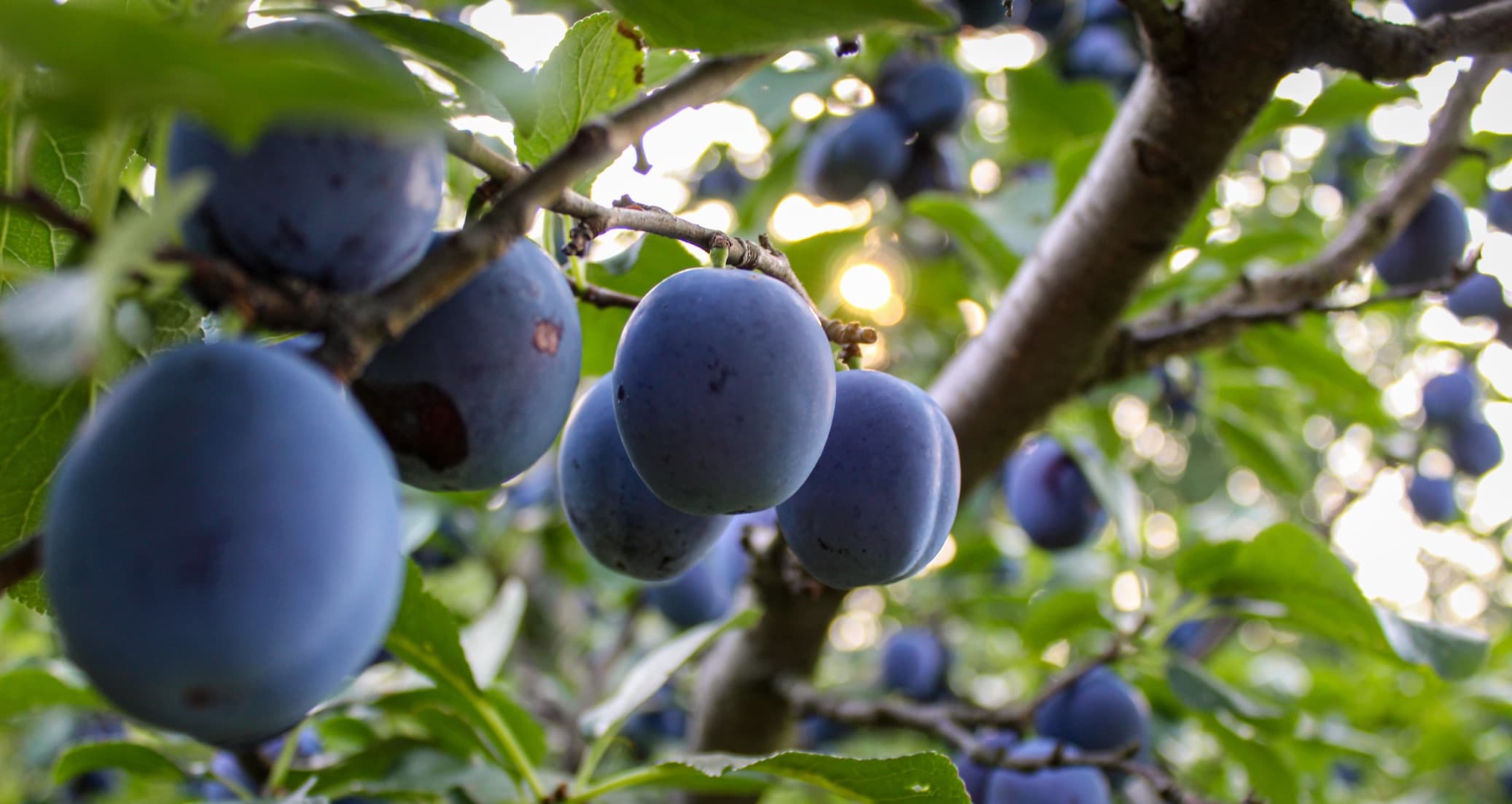
IN THIS GUIDE 1) Apple 2) Pear 3) Plum 4) Cherry 5) Quince 6) Mulberry 7) Apricots 8) Peaches 9) Figs 10) Citrus Trees 11) Raspberries 12) Grapes 13) Kiwi Fruit 14) Gooseberries 15) Blackcurrants 16) Redcurrants 17) Blueberries 18) Cranberries 19) Honeyberries 20) Strawberries Bare-Root Vs Pot Grown Choosing Patio Fruit Trees Patio fruit trees, fruiting canes, fruiting vines and fruit bushes can provide abundant yields for a small space gardener. If you want to grow at least some of your own food this year, dwarf fruit trees or other fruiting plants that can be grown in containers on a patio are a great place to start. Growing these perennial options often involves a lot less work than tending an annual vegetable garden – and once the trees are established, you should get a reliable yield not just for one season but over a number of years. “Every garden patio needs a tree and you can grow it in a pot if you need to because it gives you the possibility of moving things around.,” shares Flo Headlam, Garden Designer and Presenter. “If it is a fruit tree, you’ll get blossom in the spring, fruit that follows, and autumn colour. “Alternatively, a seasonal deciduous tree keeps you in touch with the seasons which is great.” Many fruit trees are easy and relatively trouble-free to grow in the UK. And when they are grown on dwarfing rootstocks, they can take up a lot less space than you might imagine. When you plan and make the right choices, you can grow an abundant fruit-producing garden in a surprisingly small amount of space. “I’ve got lots of soft fruit trees and plants growing in my garden,” shares Designer Ann-Marie Powell. “Even though my children hate gardening, they like eating straight from the fruit trees!” Below, you will find a list of fruit trees that can potentially make great patio fruit trees in the UK. But remember, the type of fruit is just one of the things to think about. You also need to think about the variety, and the rootstock on which it is grown, in order to make the right decision for you. 1) Apple BOTANICAL NAME: Malus domestica HARDINESS RATING: H6 PREFERRED POSITION: FULL SUN OVERWINTER INDOORS: NO Apples are definitely one of the most popular choices for temperate climate gardens. They need fertile soil or growing media which is neither prone to waterlogging nor particularly free draining. Dessert apples need full sun, ideally, while cooking/cider or crab apples can cope with less sun and can often cope well in a more shaded spot. Apple trees (depending on variety) fruit within a few years, provided they don’t encounter any growing issues. When growing apples as patio fruit trees, often, extreme dwarfing rootstocks are used. One example in the UK is called M27, while dwarfing rootstocks called M9 and M26 are also commonly utilised – so these are the ones to look out for. “My recommendation for a robust rewarding small patio tree would be an M26 Cox orange pippin self-fertile apple,” shares Dan Ori. “It should survive if you forget to water it for one week, it can deal with the cold, it doesn’t need pollinators and the fruit tastes good.” 2) Pear BOTANICAL NAME: Pyrus communis HARDINESS RATING: H6 PREFERRED POSITION: FULL SUN OVERWINTER INDOORS: NO Pear trees can be great trees to plant in many regions of the UK. Pear trees will do well in sheltered and sunny spots that are not prone to frost and do well as individual specimen trees or as part of a larger garden system. Depending on the variety, the tree you plant as a sapling in the dormant season will fruit within a few years and can continue to fruit reliably, in the right conditions, for many years. One interesting thing to note about patio pear trees is that they often come on rootstocks that are not even from a pear. They are frequently grafted onto quince rootstocks (such as Quince C) to keep them small. Sometimes an additional third section of a pear variety that works well with the rootstock from the quince is spliced in. Quince C is also used for a number of other fruit trees to be grown in containers. 3) Plum BOTANICAL NAME: Prunus domestica HARDINESS RATING: H5 PREFERRED POSITION: FULL SUN; SHELTERED SPOT OVERWINTER INDOORS: NO Plum trees are also an excellent and popular choice for UK gardens. They will tend to fruit prolifically in fertile and moist yet free-draining growing conditions. Some varieties can be grown in containers, while others will grow much larger. You must check whether the plum you buy is self-fertile as sometimes you will need more than one plum tree to get fruits. Related damsons and gages are also worth considering. You should note that there are no extreme dwarfing rootstocks for plum as there are for apples. But semi-dwarfing rootstocks (‘Plumina’, ‘Pixy’ and ‘VVA-1’ for example) are available. These help to limit the size of the trees where this is required and their growth will be further restricted when they are grown in containers. 4) Cherry BOTANICAL NAME: Prunus avium HARDINESS RATING: H6 PREFERRED POSITION: FULL SUN OVERWINTER INDOORS: NO With beautiful blossoms and lovely fruits, cherry trees are also popular and good choices for UK gardeners. There are two main types – sweet cherries and sour cherries. Sweet cherries sometimes require a companion for fertilisation, while sour cherries are typically self-fertile. Sweet cherries require a sunny spot, while sour cherries are more tolerant of shade. Cherry trees can be kept smaller through the use of the ‘Gisela 5’ rootstock. And again, their growth can be restricted by growing them in containers, and through careful summer pruning. 5) Quince BOTANICAL NAME: Cydonia oblonga HARDINESS RATING: H5 PREFERRED POSITION: FULL SUN; SHELTERED SPOT OVERWINTER INDOORS: NO Quinces are a more unusual option to consider. They have a high level of pectin which makes them ideal for making a range of jams and jellies and other preserves. Quince can be grown in many UK gardens, even in northern areas when placed in a sheltered and sunny position – against a south-facing wall for example. As mentioned above, you can get dwarfing rootstock for quince, which is used not only on these trees but on pears and other patio fruit trees too. 6) Mulberry BOTANICAL NAME: Morus nigra HARDINESS RATING: H6 PREFERRED POSITION: FULL SUN; SHELTERED SPOT OVERWINTER INDOORS: NO Mulberries are already small trees, and you can restrict their growth further by growing them in containers. Growing these fruits can be a great option because the fruits are difficult to source in stores, and also because mulberry leaves are also an additional edible yield. 7) Apricots BOTANICAL NAME: Prunus armeniaca HARDINESS RATING: H4 PREFERRED POSITION: FULL SUN; SHELTERED SPOT OVERWINTER INDOORS: NO (MAY NEED FROST PROTECTION) Apricots thrive in moist and fertile soil, though it must be well-drained and ideally slightly alkaline. They will not tend to thrive in colder regions or in locations where the soil is shallow or lacking in nutrients. In the right conditions, however, they can be grown in the ground or in containers, which, as with peaches, can allow them to be grown where the season in shorter and temperatures lower. Hand pollination may be necessary for successful fruit formation. Wavit, a plum rootstock, is sometimes also used for apricots. 8) Peaches BOTANICAL NAME: Prunus persica HARDINESS RATING: H4 PREFERRED POSITION: FULL SUN; SHELTERED SPOT OVERWINTER INDOORS: NO (MAY NEED FROST PROTECTION) Peach trees will need protection from frost in cooler climes but will do well in a sunny, sheltered spot and can be grown in containers which would allow them to be brought inside in the winter. Make sure containers are of sufficient size – at least 45cm across, and you must choose a dwarfing variety. In more southerly, sunny and sheltered gardens, peaches can thrive when trained against a wall. Hand pollination may be necessary for fruit to form. Peach patio fruit trees are also sometimes also grown on ‘Wavit’ rootstock. 9) Figs BOTANICAL NAME: Ficus carica HARDINESS RATING: H4 PREFERRED POSITION: FULL SUN; SHELTERED SPOT OVERWINTER INDOORS: NO (MAY NEED FROST PROTECTION) Fig trees also need warmth and plenty of sunlight. In more northerly and chillier climes, certain hardy fig varieties can be grown outdoors in a suitable spot. In some colder areas, even less hardy figs can be grown in containers, as long as they are brought inside or given protection in the winter months. Figs will actually fruit better if grown in containers, since this will help to restrict foliage and root growth and encourage the trees to focus on fruit production. 10) Citrus Trees BOTANICAL NAME: Various HARDINESS RATING: Various PREFERRED POSITION: FULL SUN; SHELTERED SPOT OVERWINTER INDOORS: YES Citrus fruit is mostly grown in warmer climes. However, fruits like oranges, limes and lemons can be grown in containers in the UK as long as they are brought into a heated greenhouse or indoors over the winter months. No matter what type of citrus tree you would like to grow, it is possible to find examples of almost all varieties suitable for container growing. In addition to considering the trees mentioned above, there are other fruiting perennial shrubs and canes to consider growing on your patio. These might not be technically classified as ‘trees’, but can be grown just as effectively. These include: 11) Raspberries BOTANICAL NAME: Rubus idaeus HARDINESS RATING: H6 PREFERRED POSITION: FULL SUN; SHELTERED SPOT OVERWINTER INDOORS: NO The best way to grow raspberries and other cane fruits in containers is to choose (or make) a container of at least 75-litre capacity. Then create a wigwam with 3-5 supports and plant one bare root plant per support in winter. Be sure to tie in the canes as they grow, and prune over time to maintain fertility. 12) Grapes BOTANICAL NAME: Vitis vinifera HARDINESS RATING: H5 PREFERRED POSITION: FULL SUN; SHELTERED SPOT OVERWINTER INDOORS: NO Choose a container of at least 60-litre capacity and you should also be able to successfully grow a grape wine in a small garden or on a patio. Just remember that the vine will need support and something to climb as it grows – so place the container against a trellis or fence. 13) Kiwi Fruit BOTANICAL NAME: Actinidia deliciosa HARDINESS RATING: H4 PREFERRED POSITION: FULL SUN; SHELTERED SPOT OVERWINTER INDOORS: NO (MAY NEED FROST PROTECTION) Kiwi fruits need a sheltered sunny position, ideally against a south- or west-facing wall or fence. They can be grown in containers of at least 60-litre capacity. Note that you will need a male and a female unless you choose a self-fertile variety. 14) Gooseberries BOTANICAL NAME: Ribes uva-crispa HARDINESS RATING: H6 PREFERRED POSITION: FULL SUN OR PART SHADE OVERWINTER INDOORS: NO Gooseberries are an excellent choice for growing in pots, and will do well even on a more shaded patio, as these are one of the more shade-tolerant fruits. Unlike many other fruiting plants, they will usually fruit well even without full sun. 15) Blackcurrants BOTANICAL NAME: Ribes nigrum HARDINESS RATING: H6 PREFERRED POSITION: FULL SUN OR PART SHADE OVERWINTER INDOORS: NO Blackcurrants are also a little more tolerant of light shade than other fruits, and can also do very well in containers. Choose a container at least 45-50cm in diameter and repot in late winter every 2-3 years. 16) Redcurrants BOTANICAL NAME: Ribes rubrum HARDINESS RATING: H6 PREFERRED POSITION: FULL SUN OR PART SHADE OVERWINTER INDOORS: NO A similar container can also be used to grow redcurrants. These too will tolerate some shade, but will fruit better, with sweeter currants, if planted in the sun. 17) Blueberries BOTANICAL NAME: Vaccinium corymbosum HARDINESS RATING: H6 PREFERRED POSITION: FULL SUN OR PART SHADE OVERWINTER INDOORS: NO Blueberries are another great choice for pots. Since blueberries need acidic conditions, growing in containers is the best way to grow them if you do not have acidic soil where you live. Remember to use ericaceous compost to fill your containers. 18) Cranberries BOTANICAL NAME: Vaccinium subgen. oxycoccus HARDINESS RATING: H6 PREFERRED POSITION: FULL SUN OR PART SHADE OVERWINTER INDOORS: NO Grow cranberries in pots that are at least 35cm in diameter. Though since they have shallow roots, that extend typically no more than 15cm into the growing medium, depth is not as important. Remember, however, that these are bog plants, so the growing medium must be kept moist. A self-watering container could therefore work well. 19) Honeyberries BOTANICAL NAME: Lonicera caerulea HARDINESS RATING: H7 PREFERRED POSITION: FULL SUN OR PART SHADE OVERWINTER INDOORS: NO Honeyberries are another more unusual fruit to grow on your patio. This is an edible member of the honeysuckle family and taste like a mix between a blueberry, a grape and a plum. Simply plant up in a container 4cm in diameter wider than the pot it came in, then pot up as required. 20) Strawberries BOTANICAL NAME: Fragaria HARDINESS RATING: H6 PREFERRED POSITION: FULL SUN; SHELTERED SPOT OVERWINTER INDOORS: NO Of course, last but not least, you could go for this tried and trusted favourite. Strawberries are, of course, another fruit that is very easy to grow on your patio in pots or other containers. These are not the only choices, of course, but they should give you a place to start when trying to choose the right, fruitful options for you, your family, and where you live. Bare-Root Vs Pot Grown Fruit trees are typically bought as either bare-root or pot-grown examples. As you can no doubt guess from the name, pot grown examples come in containers. Bare-root trees are, as the name suggests, delivered out of pots, with their roots bare. Patio fruit trees (along with many fruit trees commonly purchased for gardens) are usually grafted trees. This means that they are ‘Frankenstein’ trees, made up of a rootstock (the base section with root system) and a scion (the top section). The rootstock typically determines the size, vigour, disease resistance and hardiness of the tree, while the scion determines the abundance, characteristics and taste of the fruit. Understanding this can help you to make the best choices when it comes to choosing patio fruit trees for you. Rootstocks are typically categorised in reference to the size of tree they make. You can find: Standard (full size) Semi-dwarfing (somewhat smaller, often ideal for mid-sized gardens) Dwarfing (suitable for step-overs and trees grown in pots, for example). Of course, it is the last of these three, the dwarfing rootstocks that are usually used on trees marketed and sold as ‘patio trees’. When choosing a fruit tree, try not to just go for the varieties that are commercially grown in your area. Consider also the wider range of interesting heritage varieties that will do well where you live. Heritage varieties can taste a lot better than ordinary store-bought fruits. They may just have not been suitable for large-scale commercial use due to their being bruised easy, or not storing well, for example. It is very important that we retain as much diversity as possible in our food, and keeping heritage fruit tree varieties alive is one great way to play your part in your garden. “I am keen on planting fruit trees because we need to plant more of them, they give us fruit and they are great for pollinators,” shares Sara Venn, the Founder of Edible Bristol. “There’s really nothing to be scared of, but lots of people are afraid of planting trees, especially in pots.” Choosing Patio Fruit Trees Before you decide which patio fruit trees and other fruiting plants to buy, there are a number of things to consider. You need to consider: The climate in your area and general weather conditions. Whether your patio area is sunny or rather shaded throughout each day and throughout the year. How much rain it receives, and how windy or sheltered the location is. (The micro-climate in your particular garden.) How much care and attention you are willing/able to give your new trees/ plants. Which fruits you and your family actually enjoy eating. Whether the fruit trees you are considering need a pollination partner. (Some trees can self-pollinate while others will need to be purchased along with another tree in order to produce fruit.) The eventual size of the patio fruit tree or other fruiting plant you are growing. It is also worth thinking about whether or not growing in containers is the right thing for your space. In certain cases, in-ground growing may be a better option – in some small gardens, fruit trees can be grown in the ground and trained against a wall or fence to make the most of the space, for example. Step-over apple trees, pleached trees and other small fruiting plants can also be squeezed in as bed or path edging, as a type of fencing, or between other elements in your garden – this could be another way to make the most of your space. Remember, trees and other plants grown in containers will typically need more watering than those grown in the ground. The most common reason why these trees are lost is due to issues in this regard. Fertility is also something that will have to be more closely monitored when plants are being grown in pots or containers. So if you are looking for a low-maintenance scheme, then container growing may not always be the best option for you.
Learn more
20 Dwarf And Small Trees That Don't Mind Being Confined To Pots
IN THIS GUIDE Considerations 1) Citrus 2) Conifers 3) Fig 4) Flowering Dogwood 5) Japanese Maple 6) Olive 7) Privet 8) Starry Magnolia 9) Sweet Bay 10) Witch Hazel 11) Creeping Blue Blossom 12) Camellia 13) Crab Apple 14) Juneberry 15) Lilac 16) Yoshino Cherry ‘Ivensii’ 17) Cider Gum 18) Sycamore 19) Mexican Orange Blossom 20) Flamingo Willow Bring the great outdoors into your own garden or terrace with one or more of these potted trees. For those with a smaller garden – or perhaps just a balcony or terrace – it might seem like the allure of trees is out of reach…but thankfully, there are plenty of smaller types perfect for planting in a pot. Indeed, potted trees are not only space-efficient, but they lend themselves well to ease of maintenance and relocation. “Pots are always a great idea in small gardens, as they give you the opportunity to change the feel and look of a space numerous times throughout the season,” shares Gardener Elliott Beveridge. That’s especially handy for more tender varieties, since they can be easily moved indoors when the temperature begins to drop. Considerations Be sure to select a tree that will thrive in the climate, light exposure and soil moisture of your garden, patio or terrace. You should also look out for “dwarfing” varieties of trees, since these will flourish well within the confines of a pot. Having said that, it’s likely that you’ll still have re-pot the tree to ensure its roots don’t become overcrowded in the limited space available to them. (Alternatively, you can simply prune the roots back and repot the tree in the same receptacle with fresh soil). Here are twenty ideal choices for containers: 1) Citrus HARDINESS RATING: VARIES; AVOID LOW TEMPERATURES MAX HEIGHT: VARIES PREFERRED SOIL: LOAM-BASED PREFERRED ASPECT: FULL SUN; SHELTERED FRUITING MONTHS: VARIES Citrus trees make a great option for growing in a pot with ample dimensions, so take your pick from limes and lemons, oranges and tangerines, mandarins and kumquats. Not only can they furnish your kitchen cupboards with some delicious treats, but their slender trunks, lush green foliage and brightly coloured fruit add zest and zing to any backdrop they adorn. Of course, you should be mindful that citrus trees are very susceptible to colder temperatures, but choosing a dwarf variety that will flourish in a pot means that they can be moved inside with the minimum of fuss. You should also ensure they receive plentiful nutrition throughout the year; one tell-tale sign that a citrus tree is lacking in nitrogen is a yellowing of their leaves, so be on the lookout for such an occurrence and take steps to remedy it with the appropriate fertiliser. 2) Conifers HARDINESS RATING: MOSTLY H6/H7 MAX HEIGHT: VARIES PREFERRED SOIL: LOAM-BASED; SLIGHTLY ACIDIC PREFERRED ASPECT: ANY RECOMMENDED VARIETY: Chamaecyparis lawsoniana ‘Minima Aurea’ Due to the fact that they bear leaves (often in the form of needles) all year round, conifers are an excellent, low maintenance option for sprucing up your displays whatever the season. Again, it’s advisable to choose a dwarf or slow-growing variety, since failure to do so will almost inevitably result in the tree outgrowing its pot before too long. Having said that, there are plenty of such options to choose from, including cypress, fir, juniper, pine and many more. Conifers require very little care throughout their lifespans. Simply plant them in a pot with well-draining soil and they’ll fend for themselves, but they will need watering, particularly in dry spells. They enjoy full sun and will benefit from annual fertilisation if the soil is of poor quality, but that last step is not a necessity in the majority of cases. You can plant them in pairs for a classy aesthetic, or even line up a row of them to create a shaded screening for additional privacy. 3) Fig BOTANICAL NAME: Ficus carica HARDINESS RATING: H4 MAX HEIGHT: 4M PREFERRED SOIL: SLIGHTLY ALKALINE PREFERRED ASPECT: FULL SUN; SHELTERED FRUITING MONTHS: AUTUMN There’s something about the spindly trunks, gnarled branches and drooping leaves of a fig tree that brings to mind the deliciously lazy languor of a Mediterranean courtyard in the full heat of summer. Why not recreate that aesthetic in your own home? Pick an edible fruit-bearing variety and you’ll even have some succulent produce to supplement your salads and desserts. As is to be expected, fig trees perform best in warm climates with lengthy summers, but you can make them work in slightly cooler climes, as well. Just ensure they receive as much sun as possible and water them like there’s no tomorrow and you should still reap the fruits of your labour. You should, however, remember that a potted fig tree is likely to reach a smaller height and produce fewer and less juicy fruits than those grown in the ground. “For a pot, I can recommend Ficus carica ‘Brunswick’, ‘Brown Turkey’ or ‘White Marseilles’, as you won’t need pollinators for these varieties,” shares Master Horticulturist Dan Ori. 4) Flowering Dogwood BOTANICAL NAME: Cornus florida HARDINESS RATING: H5 MAX HEIGHT: 8M PREFERRED SOIL: SLIGHTLY ACIDIC PREFERRED ASPECT: FULL SUN OR PART SHADE FLOWERING MONTHS: SPRING With their striking white or pink flowers that blossom every springtime, flowering dogwoods are one of the most visually impressive items on this list. Unfortunately, they’re also one of the highest maintenance options out there. Although it’s certainly possible to successfully grow a flowering dogwood tree in a pot, it might take a little more time, care and attention than other alternatives. That’s because flowering dogwood has complex root systems which grow at an alarming rate and an insatiable thirst for water. You can give yourself a head start by selecting the largest receptacle to plant it in that your available space allows, but even so, you’ll want to prune back the roots or upgrade to a larger pot on a fairly regular basis. You can also reduce the amount of watering that the plant requires by layering the topsoil with an organic mulch, which will help it to retain moisture. Having said that, flowering dogwood will still require a substantial amount of irrigation. 5) Japanese Maple BOTANICAL NAME: Acer palmatum HARDINESS RATING: H6 MAX HEIGHT: 8M PREFERRED SOIL: SLIGHTLY ACIDIC PREFERRED ASPECT: FULL SUN OR PART SHADE; SHELTERED FLOWERING MONTHS: SPRING FRUITING MONTHS: AUTUMN Japanese maples come in all shapes, sizes and colours, from the tiny bonsais which offer majestic spectacles in miniature, to their larger, looser leaved relatives. Whichever species you plump for, you’ll be guaranteed a gorgeous display of coloured foliage which positively shimmer in the right light. For best results, pick a weeping variety and prune it into your desired shape to create the aesthetic that you’re after. Even larger varieties of Japanese maple never grow to a huge height, making them a perfect choice for a potted plant on your balcony, terrace or garden. They’re a creature of moderate inclinations, so place them in full sun in cooler parts of the country and partial sun in hotter regions. They also don’t cope well in strong winds, so try to position them in a sheltered location if at all possible. “I recommend watering with rainwater over tap water when possible as rainwater is acidic and will help maintain an acidic soil pH, as opposed to tap water that has an alkaline pH,” shares Dan. “However, tap water is better than no water.” 6) Olive BOTANICAL NAME: Olea europaea HARDINESS RATING: H4 MAX HEIGHT: 8M PREFERRED SOIL: ANY PREFERRED ASPECT: FULL SUN FLOWERING MONTHS: SUMMER Continuing the Mediterranean theme started with figs above, olive trees are another sultry and stylish addition to a patio. The fact that their roots penetrate to far shallower depths than other trees of a similar size means that if you plant them in a large enough container at the outset, you may never need to repot them throughout the entirety of their life cycle. Although the fruit might be the major selling point for some people, it can create an oily mess if left to drop from the branches onto a patio or, even worse, a carpet, so keep an eye on them when the olives look ripe. 7) Privet BOTANICAL NAME: Ligustrum ovalifolium HARDINESS RATING: H4-H6 MAX HEIGHT: 4-8M PREFERRED SOIL: ANY PREFERRED ASPECT: FULL SUN OR PART SHADE FLOWERING MONTHS: SUMMER FRUITING MONTHS: AUTUMN Are there any amateur topiarists in the house? If so, a privet might be the perfect tree for you. The stubby trunks and dense foliage of these deciduous plants make them an excellent canvas upon which to exert your artistic abilities by trimming them into pyramids, globes or pillars. Alternatively, you could plant several privets in a row to create a dense hedge, which not only offers privacy, but can act as a highly effective sound barrier, as well. Potted privets require much the same treatment as they would when planted in the ground. Primarily, they demand good drainage in the soil, since they will quickly succumb to waterlogged roots. They enjoy full to partial sun and should be transplanted to a larger container every few years, or when their roots have outgrown their receptacle. Transplanting can usually be managed at any time of the year without any adverse effects to their growth. 8) Starry Magnolia BOTANICAL NAME: Magnolia stellata HARDINESS RATING: H6 MAX HEIGHT: 1.5-2.5M PREFERRED SOIL: ANY PREFERRED ASPECT: FULL SUN OR PART SHADE; SHELTERED FLOWERING MONTHS: SPRING The drooping delicacy of the floral blossoms on a magnolia tree make them quite the impressive addition to any outdoor setting. Unfortunately, the sheer size of most magnolia varieties make them unsuitable for planting in a pot, but starry magnolias are one of the few exceptions to that rule. Even so, these beautiful trees can still grow up to four metres in height, so stay on top of your pruning duties to ensure it doesn’t grow too big. Speaking of which, it’s imperative that you choose a container that’s several sizes larger than the initial root ball of the plant, since all magnolias like to spread out and occupy their space as much as they can. You should ensure that the soil remains moist but not saturated, so adequate drainage at the bottom and regular mulching at the top will help your starry magnolia to reach its full potential. 9) Sweet Bay BOTANICAL NAME: Laurus nobilis HARDINESS RATING: H4 MAX HEIGHT: 8-12M PREFERRED SOIL: ANY PREFERRED ASPECT: FULL SUN OR PART SHADE FLOWERING MONTHS: SPRING FRUITING MONTHS: AUTUMN RHS AWARD OF GARDEN MERIT As notable for its aromatic leaves (which can complement a range of culinary dishes) as it is for its aesthetically pleasing appearance, sweet bay is a small and slender tree that lends itself well to potting. Like the privet mentioned above, the dark green foliage of bay can be easily trimmed into conical or spherical shapes to create a nice accent to your existing exterior décor. What’s more, those offshoots can then be hung up to dry and used to flavour stews, soups and curries. Potted bay trees do best when given plentiful light and water, but they don’t react well to the most extreme rays of the sun in hotter environments. But water it well on a consistent basis and protect it from the most sweltering of afternoons (a rare occasion in the UK, we know) and you’ll be rewarded with an end product that’s as practical in the kitchen as it is easy on the eye. 10) Witch Hazel BOTANICAL NAME: Hamamelis HARDINESS RATING: H5 MAX HEIGHT: 4M PREFERRED SOIL: SLIGHTLY ACIDIC PREFERRED ASPECT: FULL SUN OR PART SHADE FLOWERING MONTHS: WINTER RECOMMENDED VARIETIES: ‘Diane’, ‘Jelena’, ‘Vesna’ For a slightly unusual aesthetic in your garden, a potted witch hazel might just be a left-field option that’ll spice up your display. They’re characterised by their highly distinctive floral blossoms, which take the form of a dark red sphere bearing long, thin yellow petals. That stunning spectacle, coupled with witch hazel’s trademark fragrance, make it a perfect choice for placing on a patio or decked area where the colours will complement the backdrop and the scent can reach your nostrils every time you step outside. Although these bewitching plants are often regarded as being more difficult to cultivate, they lend themselves fairly well to potting. That’s because they can tolerate most soil types, react well in both full and partial sunshine and require only moderate watering. Left to their own devices, they’ll soon outgrow the dimensions of their pot, but if you take the time to prune them back on a regular basis, they’re easily kept in line. 11) Creeping Blue Blossom BOTANICAL NAME: Ceanothus thyrsiflorus var. repens HARDINESS RATING: H4 MAX HEIGHT: 1.5M PREFERRED SOIL: SLIGHTLY ALKALINE PREFERRED ASPECT: FULL SUN; SHELTERED FLOWERING MONTHS: SPRING / SUMMER RHS AWARD OF GARDEN MERIT 12) Camellia BOTANICAL NAME: CAMELLIA HARDINESS RATING: H4 MAX HEIGHT: 4M PREFERRED SOIL: SLIGHTLY ACIDIC PREFERRED ASPECT: FULL SHADE OR PART SHADE; SHELTERED FLOWERING MONTHS: SPRING AGM RECOMMENDED VARIETY: ‘SPRING FESTIVAL’ 13) Crab Apple BOTANICAL NAME: Malus sylvestris HARDINESS RATING: H6 MAX HEIGHT: 12M+ PREFERRED SOIL: ANY PREFERRED ASPECT: FULL SUN OR PART SHADE FLOWERING MONTHS: SPRING FRUITING MONTHS: AUTUMN 14) Juneberry BOTANICAL NAME: Amelanchier lamarckii HARDINESS RATING: H7 MAX HEIGHT: 8-10M PREFERRED SOIL: SLIGHTLY ACIDIC PREFERRED ASPECT: FULL SUN OR PART SHADE FLOWERING MONTHS: SPRING FRUITING MONTHS: SUMMER RHS AWARD OF GARDEN MERIT 15) Lilac BOTANICAL NAME: Syringa pubescens HARDINESS RATING: H6 MAX HEIGHT: 2.5M PREFERRED SOIL: SLIGHTLY ALKALINE PREFERRED ASPECT: FULL SUN FLOWERING MONTHS: SPRING AGM RECOMMENDED VARIETY: ‘MISS KIM’ 16) Yoshino Cherry ‘Ivensii’ BOTANICAL NAME: Prunus × yedoensis HARDINESS RATING: H6 MAX HEIGHT: 8M PREFERRED SOIL: ANY PREFERRED ASPECT: FULL SUN FLOWERING MONTHS: SPRING RECOMMENDED VARIETY: ‘IVENSII’ 17) Cider Gum BOTANICAL NAME: Eucalyptus gunnii HARDINESS RATING: H5 MAX HEIGHT: 10M+ PREFERRED SOIL: SLIGHTLY ACIDIC PREFERRED ASPECT: FULL SUN; SHELTERED FLOWERING MONTHS: SUMMER RHS AWARD OF GARDEN MERIT 18) Sycamore BOTANICAL NAME: Acer pseudoplatanus HARDINESS RATING: H7 MAX HEIGHT: 8M PREFERRED SOIL: ANY PREFERRED ASPECT: FULL SUN OR PART SHADE FRUITING MONTHS: AUTUMN RECOMMENDED VARIETY: ‘Brilliantissimum’ 19) Mexican Orange Blossom BOTANICAL NAME: Choisya ternata HARDINESS RATING: H4 MAX HEIGHT: 2.5M PREFERRED SOIL: ANY PREFERRED ASPECT: FULL SUN; SHELTERED FLOWERING MONTHS: SPRING / AUTUMN RECOMMENDED VARIETY: ‘SUNDANCE’ 20) Flamingo Willow BOTANICAL NAME: Salix integra ‘Hakuro-nishiki’ HARDINESS RATING: H5 MAX HEIGHT: 2.5M PREFERRED SOIL: ANY PREFERRED ASPECT: FULL SUN FLOWERING MONTHS: SPRING AWARD OF GARDEN MERIT
Learn more
5 Best Trees That Can Be Planted Close To A House, With Advice From Roy Nicol
IN THIS GUIDE How To Grow Trees Near Structures 1) Birch 2) Hawthorn 3) Apple 4) Pear 5) Plum Growing A Tree Near Your House References If you’re one of many Brits with a modestly sized garden nestled neatly alongside your house, then this article is for you. We’ve rounded up a selection of trees that can be safely planted next to a house, letting you take full advantage of your garden and enjoy the full visual splendour of a tree, rather than just shrubs, bushes, and flowers. Before we start: it’s important to clarify that the advice here is given on an informational basis. Always consult a professional surveyor if you have any doubts. Some people will balk at the idea of putting a tree too close to your house. “Won’t the roots come up through the living room floor?” they’ll say. “Or what about in a storm?” they’ll continue. “You’ll be asleep, then next thing you know you’ll hear an enormous crash and wake up to a tree in your bedroom.” To these people we say, “leaf it out!” – trees and homes can exist in happy harmony, as long as you take the relevant precautions. So, if you’ve got your mind set on a very proximal arboreal neighbour for your home, read on. Each of the trees in this list will grow near your house without causing any unwanted destruction. How To Grow Trees Near Structures Before we dive in, here are a few guiding principles when planning to grow a tree near your house, or similar structure – In general, tree roots cover an area between two to three times as wide as the tree’s profile above ground.1 Trees shed their leaves, and these can be a pain to clean up. Especially if they clog your drains: make sure you’re prepared for the reality of this job before making any decisions. Clay soils are most susceptible to subsidence issues with trees grown near to buildings.2 You may need to cut sections of your tree back to sculpt its growth in a way that presents less risk to your home. Professional surveyors can assist with this task. There are many more factors to consider when planting a tree near your home than we can cover in this article. Speak to your council, your landlord (or your insurer, if you’re the property owner), and your neighbours to ensure you don’t encounter any easily avoidable problems. Now we’ve got that out of the way, let’s take a look at some trees that can do well near structures. 1) Birch Tall and thin: It’ll fit right in These trees work well near to houses and other structures thanks to their relatively narrow profiles – instead of blooming forth in spherical growth, a birch’s leaves retain something closer to a triangular shape. 2) Hawthorn There are many types of hawthorn, some trees and some shrubs, and many of which sport stunning white blooms in spring. Aesthetically, they’ll look great alongside a building. They’re a good choice in practical terms, too, thanks to their relatively diminutive size when compared to some other trees. Hawthorns make popular nesting trees for birds.3 If you’re an avid birdwatcher this could be a good sell for this type of tree – if you’re someone who doesn’t like to be woken up by a chorus of chirping at sunrise, it may be the opposite. “In my role as a professional gardener, I have encountered local authority planning issues for proposed buildings close to established hawthorn,” shares Roy Nicol, a Master Horticulturist. “I would therefore recommend this is checked with insurers before planting as the recommended distance from buildings for hawthorn is 10m.” 3) Apple Now we get to our favourite section of this article: the tree that put forth edible fruits. Pick one of these, and very soon you could be the local neighbourhood purveyor of pie. All you need to do is head into your garden, scoop up the fruity windfall, bake a selection of pies, clear a prime bit of windowsill, and you’re good to go. Getting back to the practical matters at hand, however, apple trees aren’t too difficult to grow. They enjoy full sun and good shelter: Ideal for a position near to a house. Growing an apple tree from seed will take a good many years, but they’re easy to grow from saplings, potentially shaving a few years off the time required to reach full height. Just keep your eyes peeled for local neighbourhood rascals scrumping your apple harvest. 4) Pear If the thought of warding off children desperate to scrump your annual apple supply is too much to handle, why not opt for a pear tree instead? Everyone knows pears aren’t as desirable a fruit, so the kids will inevitably direct their thievery toward a neighbour foolish enough to grow apples. Pear trees also thrive in sunny, sheltered spots. A patch of garden will make an ideal home for this fantastic fruit-bearing tree. 5) Plum If you’d rather something more exotic, something that lends itself better to jams and chutneys than pies, then a plum tree might be the right choice for you. Plums do well if the young trees are trained against a wall or fence, meaning that they can work well very close to a house. If you don’t have the luxury of even a modest-sized garden – perhaps you’ve only got an alleyway to work with, for example – then this might be a good option. As with apples and bears, plums like well-drained soil in full sun. Growing A Tree Near Your House A tree doesn’t need to be miles away from your house There we have it: A short and sweet introduction (especially the last three) to the trees that lend themselves well to growth near to your house. If you take the time and care to choose a suitable spot, the trees in this list should flourish without causing any long- or short-term damage to your property, your fences, or your neighbours’ properties. When deciding which tree(s) to grow near your home, we do advise precaution. It’s a big decision, potentially lasting many years into the future, so it’s best not to rush. References 1. Tree Anatomy 101. (n.d.). Iowa State University: Natural Resource Stewardship. Retrieved March 27, 2023, from https://naturalresources.extension.iastate.edu/forestry/tree_biology/101.html 2. Swelling and shrinking soils. (2021, August 16). British Geological Survey. Retrieved March 27, 2023, from https://www.bgs.ac.uk/geology-projects/shallow-geohazards/clay-shrink-swell/ 3. Hawthorn (Crataegus monogyna). (n.d.). Woodland Trust. Retrieved March 27, 2023, from https://www.woodlandtrust.org.uk/trees-woods-and-wildlife/british-trees/a-z-of-british-trees/hawthorn/
Learn more
These Pine Tree Types Can Be Grown Anywhere From The Highlands To The New Forest
IN THIS GUIDE 1) Scots Pine 2) Douglas Fir 3) Noble Fir 4) Norway Spruce 5) Western Hemlock 6) Corsican Pine 7) Sitka Spruce 8) Lodgepole Pine 9) Eastern Hemlock 10) Bosnian Pine 11) Dwarf Mountain Pine 12) Weymouth Pine 13) Schwerin’s Pine 14) Japanese White Pine 15) Stone Pine 16) Mexican Yellow Pine 17) Japanese Red Pine 18) Monterey Pine 19) Bhutan Pine 20) Golden Scots Pine Identifying A Pine Tree Watch Out For Pines! References A pine tree is a coniferous tree with long needle-shaped leaves. Some don’t stop growing until they’re 150 years old and can live up to 1,000 years.1 The biggest pine tree recorded is the Ponderosa Pine, at a jaw-dropping height of 268.35 feet!2 For those who prefer something a little smaller, the Siberian dwarf pine is native to North-East Asia and grows up to 3m in height with compact branches. On the whole, plants in the Coniferous family tend to have leaves that don’t fall off. However, as with all rules, there are a few exceptions to this, which we’ll highlight throughout this post. The majority of pine trees are native to the Northern Hemisphere, and most countries have their own native species of pine. In this article, we take a look at twenty types of pine tree that can be grown in the UK. Although not all are native to the United Kingdom, there are plenty of beautiful examples of pine tree that can be found throughout Britain – from the Scottish Highlands all the way down to the New Forest. So, let’s start our pine tree exploration! 1) Scots Pine BOTANICAL NAME: Pinus sylvestris HARDINESS RATING: H7 UK NATIVE To begin, it seems appropriate to start the list with one of the ‘backbones’ of the pine ecosystem: the Scots pine. After the Ice Age, this species of pine tree spread into northern Scotland.3 While native to Europe and Asia, today it can be mainly found in the Scottish Highlands, and the Pinus sylvestris is now known as Scotland’s national tree.4 The Scots Pine lives up to 300 years and can grow as tall as 36m in height.5 It supports many species of insect, and it produces egg-shaped cones with small prickles. For some notable Scots pines worth visiting, start by taking a trip to Muirward Wood in Perthshire to visit the ‘King of the Forest’. This tree has the largest trunk in the UK, with a 6m wide trunk and 31m height.6 There’s also the ‘Twin trees of Finzean’ to visit, where two trees formed a natural arch to create an ‘H’. 2) Douglas Fir BOTANICAL NAME: Pseudotsuga menziesii HARDINESS RATING: H6 Named after Scottish botanist David Douglas, the first seed of the Douglas fir was sent from North America to the UK in 1791.7 However, its botanical name – Pseudotsuga menziesii – stems from its original discovery by Archibald Menzies in 1791. With a lifespan of up to 500 years, the Douglas fir has been grown in the UK for over two hundred years. Today, the tallest of the species can be found in Reelig Glen in Inverness – with a whopping 64m in height – that’s more than 220 feet!8 The leaves of the species are flat and soft, and are relatively small with a maximum length of 4cm. And, when crushed, the needles give off a strong citrus-like smell. It’s regarded as the best of edible conifers because of this – perfect for adding to cups of tea! As a conifer, the Douglas fir is no exception when it comes to growing pines. The male flowers are pollen cones up to 3cm in size, and the female flowers grow up to 10cm long in size. 3) Noble Fir BOTANICAL NAME: Abies procera HARDINESS RATING: H7 With its native roots in Washington and Oregon, the Noble Fir – Abies procera – was introduced to the UK by the previously mentioned David Douglas.9 The noble fir is striking – it’s regularly used for Christmas Trees in places like Denmark, and across Europe to create wreaths. Interestingly, its scientific name – Abies procera – literally means ‘tall’, and this is particularly apt as the noble fir can grow up to 45m in height.10 Its needles grow upwards at right angles to the branch. It also grows in the traditional ‘Christmas tree’ shape with a narrow crown, and tends to grow in places with high altitudes. To find your nearest noble fir, there are a few notable examples of this species throughout the country. From the 40m fir at Heaven’s Gate in Longleat Forest to the 55m fir in Big Trees Walk, there are some spectacularly tall and striking examples of Noble firs throughout Britain.11 4) Norway Spruce BOTANICAL NAME: Picea abies HARDINESS RATING: H7 For us Brits, the Norway spruce is the epitome of the Christmas tree fir. This is the most commonly selected species of pine that makes its way to living rooms across the country throughout December! The Norway spruce is native to Europe – and, as the name suggests, Norway – and was widely planted in Britain at the end of the 19th century.12 With a lifespan of 200 years, some of those planted during this period are still alive today and can reach heights of up to 40m.13 The reddish-brown cones of the Norway spruce are unique, with long cones that tend to hang down rather than up. Its timber is tough, making it the perfect material for indoor building work. It has also earned the name ‘violin wood’, due to its sound transmitting properties. As it was planted so vastly, the Norway spruce has roots throughout the UK as it was originally planted for forestry. If you’re looking for your nearest spruce, look out for square-shaped needle-like leaves with fine white speckles. You’ll also be able to identify them through their unique shape, and their downward-growing red-brown crones. 5) Western Hemlock BOTANICAL NAME: Tsuga heterophylla HARDINESS RATING: H6 RHS AWARD OF GARDEN MERIT The Western Hemlock is another example of a Northern American pine which has made its way to Britain!14 In 1852, botanist John Jeffrey introduced the Western Hemlock to British shores, and today it’s one of the most common conifers in the UK.15 One of the most interesting facts about this species of pine is that its needles, when crushed, smell like grapefruit! It shares the ‘Hemlock’ part of its name with the herb hemlock due to the shared scent. The needle-like leaves are soft to the touch, flat and have characteristic white bands underneath them. The species also comes with some mild controversy over its scientific name – Tsuga heterophylla. During Queen Victoria’s reign, she asked for the name to be changed to Tsuga albertiana for her husband, Albert.16 However, while it stuck for a while at the time, its original name is now more commonly used. The Western Hemlock is often used for building due to its ability to firmly hold nails, and it can grow up to heights of 50m during its 500+ year lifespan.17 To identify your nearest Western Hemlock, look out for the ‘randomly arranged’ needles and widespread leaves and branches. If you’re on the hunt for a Western Hemlock near you, it’s generally grown in local parks and sometimes in private gardens. 6) Corsican Pine BOTANICAL NAME: Pinus nigra subsp. laricio HARDINESS RATING: H7 Native to Corsica – as the name suggests – the Corsican pine is a species of black pine. It’s characterised by its straight trunk and light branches and can live for up to 500 years. Originally, it came to the UK in 1759 and was used for railway sleepers.19 Today, it’s often used for telegraph poles, although it’s not known for its durability. Known as part of the P. nigra subsp. laricio, it grows best as timber in the south and the east of the UK, where there are marginally lower levels of rainfall and higher volumes of sunshine. Due to its characteristics, however, there has been a huge shift in the importance of the Corsican pine which shouldn’t be underestimated. Research by the Forest Commission has found that due to global climate change forecasts, the Corsican pine may thrive in warmer climates and that an expansion of its growth is particularly important over the next 30 years.20 If you’re looking for your nearest Corsican pine, look out for one in your nearest park, churchyard or local large gardens! You’ll also be likely to find birds nearby, as a wide range of bird species feed on their seeds. 7) Sitka Spruce BOTANICAL NAME: Picea sitchensis HARDINESS RATING: H7 As the fifth-largest conifer in the world, if you live in Scotland, the Sitka Spruce is the most common pine species that you’ll find in a forest near you.21 Its name stems from Sitka in Alaska and it originates from North America. The main reason for the popularity of the Sitka is not just its fast-growing speed (up to 1.5m each year) but because of the versatility of its timber. Incredibly, the commercial wood industry rests on the success of Sitka trees, as Sitka timber can be used for paper, boat-building, construction, pallets, packaging, and more. It’s also not too picky on where it grows – and can even grow successfully in poor soil. With a whopping 600-year lifespan, the Sitka grows up to 100m in height and is often found in UK forests. 8) Lodgepole Pine BOTANICAL NAME: Pinus contorta HARDINESS RATING: H6 RHS AWARD OF GARDEN MERIT The Lodgepole pine stands tall at up to 50m in height.22 With its distinctive slim shape and high branches, the Lodgepole pine – Pinus contorta – often loses its lower branches as it matures.23 While native to North America, the lodgepole has a rich history. Its name stems from the use of the straight poles of the tree to support the lodges of Native Americans. Today, the species covers over 50 million acres in North America.24 Back in the UK, the Lodgepole pine graced our shores in 1855, and because of its tolerance to poor soil, it quickly became a useful timber crop in Britain – especially in Scotland. One of the most interesting facts about this species is that its cones need high temperatures to open and release seeds, which is why many believe that the Pinus contorta won’t be here forever. To find your own Lodgepole pine, there are plenty to be seen in Scotland and the north of England. For a particularly notable example, take a look at the 26.5m tall Lodgepole pine in Errol Park, Errol.25 If you want to sneak a peek at the 50m species, you’ll need to nip across the pond to North America. 9) Eastern Hemlock BOTANICAL NAME: Tsuga canadensis HARDINESS RATING: H7 10) Bosnian Pine BOTANICAL NAME: Pinus heldreichii HARDINESS RATING: H6 RHS AWARD OF GARDEN MERIT 11) Dwarf Mountain Pine BOTANICAL NAME: Pinus mugo HARDINESS RATING: H7 RHS AWARD OF GARDEN MERIT 12) Weymouth Pine BOTANICAL NAME: Pinus strobus HARDINESS RATING: H7 RHS AWARD OF GARDEN MERIT 13) Schwerin’s Pine BOTANICAL NAME: Pinus × schwerinii HARDINESS RATING: H7 RHS AWARD OF GARDEN MERIT 14) Japanese White Pine BOTANICAL NAME: Pinus parviflora HARDINESS RATING: H7 RHS AWARD OF GARDEN MERIT 15) Stone Pine BOTANICAL NAME: Pinus pinea HARDINESS RATING: H4 RHS AWARD OF GARDEN MERIT 16) Mexican Yellow Pine BOTANICAL NAME: Pinus patula HARDINESS RATING: H4 RHS AWARD OF GARDEN MERIT 17) Japanese Red Pine BOTANICAL NAME: Pinus densiflora HARDINESS RATING: H7 UK NATIVE 18) Monterey Pine BOTANICAL NAME: Pinus radiata HARDINESS RATING: H5 RHS AWARD OF GARDEN MERIT 19) Bhutan Pine BOTANICAL NAME: Pinus wallichiana HARDINESS RATING: H6 RHS AWARD OF GARDEN MERIT 20) Golden Scots Pine BOTANICAL NAME: Pinus sylvestris ‘Aurea’ HARDINESS RATING: H7 RHS AWARD OF GARDEN MERIT Identifying A Pine Tree Spotting conifers is straightforward, but how can you tell the difference between a Pine, Fir or a Spruce tree? Well, pine trees have a few distinctive features to look out for. These include: The needles of pine trees grow in clusters from a single point – most often in clusters of 2, 3 or 5 The needles are usually longer than those on other conifers The branches on pines are generally upturned and there are fewer branches on a pine tree The cones hang towards the ground, rather than in an upward direction as firs do. Watch Out For Pines! While the word ‘pine tree’ may spring to mind messy Christmas trees, walks in the park or pine cones, there are a wide range of pine trees and various species to be found throughout the UK. While only the Scot’s pine (P. sylvestris) is native to the UK, non-native pines may hold the key to the future of our wildlife, environment and timber production. For those readers who live in Scotland, many of the most spectacular versions of each of these examples can be found on your doorstep! For everyone else, take a stroll to your local public park to see what you can find – one such example is the traditional Christmas tree, the Norway Spruce. Happy pine tree hunting! References 1. The UK’s oldest tree. (2018, June 28). Woodland Trust. Retrieved March 22, 2023, from https://www.woodlandtrust.org.uk/blog/2018/06/the-oldest-tree-in-the-uk-how-long-do-trees-live/ 2. Riggs, K. (2017, February 21). Oregon Forest Home for World’s Tallest Living Pine Tree. USDA. Retrieved March 22, 2023, from https://www.usda.gov/media/blog/2011/12/08/oregon-forest-home-worlds-tallest-living-pine-tree 3. Smout, C. (2014). The History and the Myth of Scots Pine. Scottish Forestry Trust. Retrieved March 22, 2023, from https://www.scottishforestrytrust.org.uk/userfiles/file/projects/p13-243%20inaugural%20rsfs%20annual%20lecture/scots%20pine.pdf 4. The national tree. (2014, January 30). Botanics Stories. Retrieved March 22, 2023, from https://stories.rbge.org.uk/archives/10267 5. The Famous Scots Pine at Loch of the Lowes. (2019, May 30). Scottish Wildlife Trust. Retrieved March 22, 2023, from https://scottishwildlifetrust.org.uk/2019/05/the-famous-scots-pine-at-loch-of-the-lowes/ 6. Scots pine. (n.d.). Forestry and Land Scotland. Retrieved March 22, 2023, from https://forestryandland.gov.scot/learn/trees/scots-pine 7. Douglas fir. (n.d.). Forestry and Land Scotland. Retrieved March 22, 2023, from https://forestryandland.gov.scot/learn/trees/douglas-fir 8. Four of Britain’s tallest trees in glen near Inverness. (2014, March 25). BBC News. Retrieved March 22, 2023, from https://www.bbc.co.uk/news/uk-scotland-highlands-islands-26729935 9. Noble fir. (n.d.). Forestry and Land Scotland. Retrieved March 22, 2023, from https://forestryandland.gov.scot/learn/trees/noble-fir 10. Christmas Tree – Abies procera. (n.d.). North Carolina Extension Gardener Plant Toolbox. Retrieved March 22, 2023, from https://plants.ces.ncsu.edu/plants/abies-procera/common-name/christmas-tree/ 11. Tall trees trail at Blackwater. (n.d.). Forestry England. Retrieved March 22, 2023, from https://www.forestryengland.uk/blackwater/tall-trees-trail-blackwater 12. Norway Spruce (Picea abies). (n.d.). Woodland Trust. Retrieved March 22, 2023, from https://www.woodlandtrust.org.uk/trees-woods-and-wildlife/british-trees/a-z-of-british-trees/norway-spruce/ 13. Norway spruce. (n.d.). Forestry and Land Scotland. Retrieved March 22, 2023, from https://forestryandland.gov.scot/learn/trees/norway-spruce 14. Western Hemlock (Tsuga heterophylla). (n.d.). Woodland Trust. Retrieved March 22, 2023, from https://www.woodlandtrust.org.uk/trees-woods-and-wildlife/british-trees/a-z-of-british-trees/western-hemlock/ 15. Western Hemlock. (2014, February 5). Glasgow Botanic Gardens. Retrieved March 22, 2023, from https://glasgowbotanicgardens.co.uk/projects/national-tree-collections-of-scotland/tree-trail-online/11-western-hemlock/ 16. D, C. (2020, October 9). Western Hemlock Tree – Tsuga Heterophylla. GraftinGardeners Ltd. Retrieved March 22, 2023, from https://www.graftingardeners.co.uk/western-hemlock/ 17. Western hemlock. (n.d.). Forestry and Land Scotland. Retrieved March 22, 2023, from https://forestryandland.gov.scot/learn/trees/western-hemlock 18. Corsican Pine or Black Pine. (n.d.). Woodlands.co.uk. Retrieved March 22, 2023, from https://www.woodlands.co.uk/blog/tree-identification/corsican-pine-or-black-pine/ 19. Steven, H. (1934, April 1). Corsican Pine In Great Britain. Oxford Academic: Forestry. Retrieved March 22, 2023, from https://academic.oup.com/forestry/article-abstract/8/1/14/523587 20. Broadmeadow, M., & Ray, D. (2005, June). Climate Change and British Woodland. Forest Research. Retrieved March 22, 2023, from https://cdn.forestresearch.gov.uk/2022/02/fcin069-2.pdf 21. Sitka spruce. (n.d.). Forestry and Land Scotland. Retrieved March 22, 2023, from https://forestryandland.gov.scot/learn/trees/sitka-spruce 22. Lodgepole pine. (n.d.). Forestry and Land Scotland. Retrieved March 22, 2023, from https://forestryandland.gov.scot/learn/trees/lodgepole-pine 23. Pinus contorta | lodgepole pine. (n.d.). Royal Horticultural Society. Retrieved March 22, 2023, from https://www.rhs.org.uk/plants/13066/pinus-contorta-lodgepole-pine-beach-pine/details 24. Report on the Heath of Colorado’s Forests. (2002). Lodgepole Pine Forests. Retrieved March 22, 2023, from https://static.colostate.edu/client-files/csfs/pdfs/06fhr.pdf 25. Lodgepole Pine in the garden of Errol Park in Errol, Scotland, United Kingdom. (2013). Monumental Trees. Retrieved March 22, 2023, from https://www.monumentaltrees.com/en/gbr/scotland/perthandkinross/10765_errolpark/
Learn more