Growing

Seed-Sown Phlox Are Typically Annual Types - Grow Yours Using These Steps
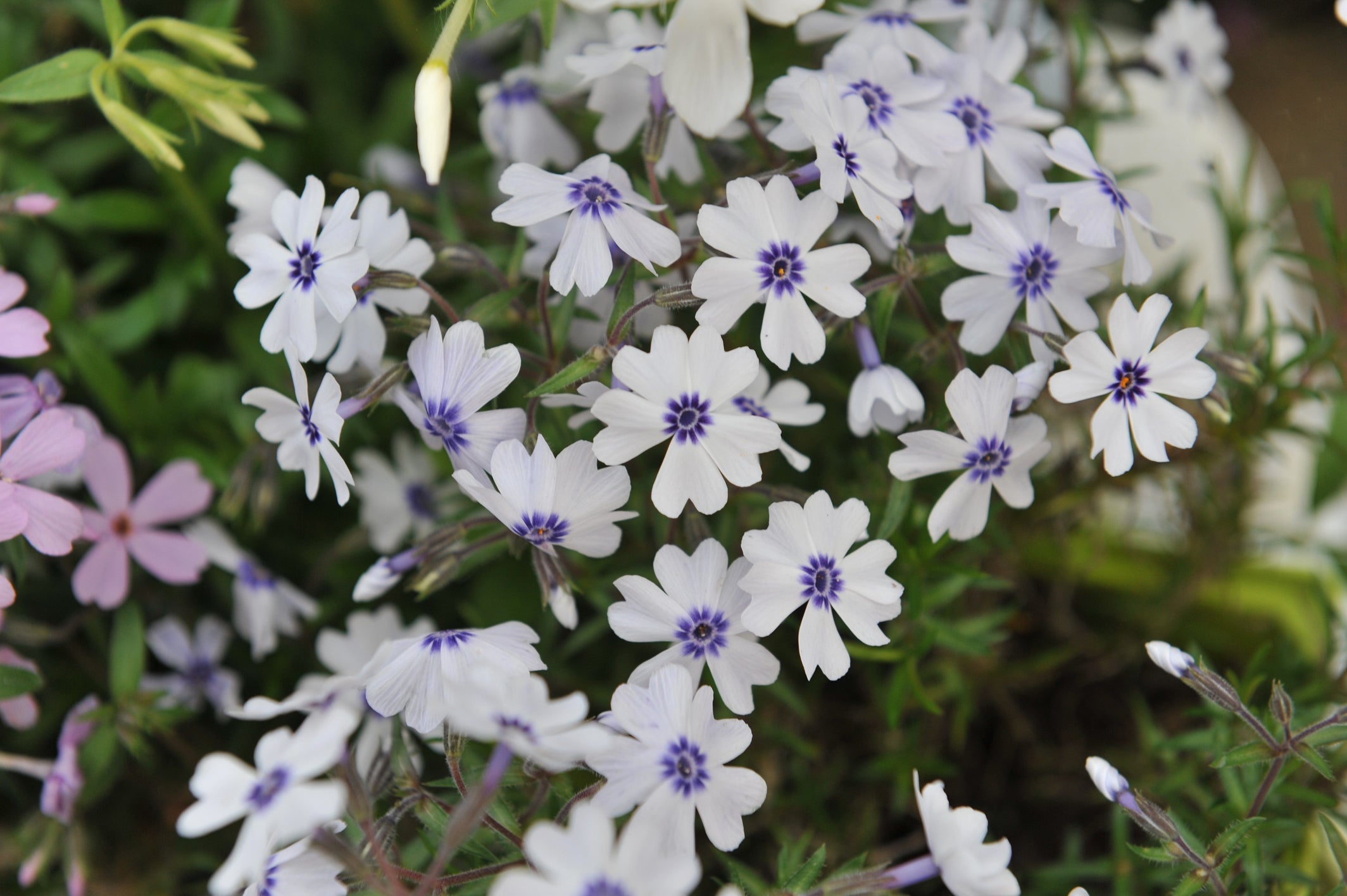
IN THIS GUIDE When To Sow Phlox 1) Sow In Seed Trays Indoors 2) Choose An Outdoor Location 3) Plant Out Seedlings 4) Aftercare With their herbaceous build, cheerful blossoms and easy-going nature, phlox are dependable and delightful additions to any border or bed. Blessed with an abundance of aromatic flowers (in a variety of colours) come summertime, they’re sure to brighten up your display. Aside from their aesthetic charms, phlox’s other strong suit is their low-maintenance requirements and their relative hardiness to the Great British elements. “Perennial Phlox are so easy to propagate from stem or root cuttings, so seed-sown Phlox would typically be annual Phlox, typically grown for containers, bedding or cut flowers,” says Colin Skelly, Master Horticulturist. Best of all, you can coax them to life from seeds fairly easily, as long as you make sure you stick to the following steps: Sow phlox in seed trays indoors or under glass – usually around mid-April Prepare their outdoor location for transplanting Plant out in your desired location Care for your new plants to help them establish themselves For those who require a little more guidance at each stage of the process, we’ve gone into further detail for all of them below. Difficulty Easy Equipment Required Seed trays, compost, small trowel, border fork, organic matter/peat moss, general-purpose fertiliser When To Sow April When To Plant Out June When To Sow Phlox While it is possible to sow phlox seeds straight into the ground outdoors, the intemperate climate in many parts of the UK means it’s a risky business. For that reason, we recommend planting in a greenhouse, conservatory or another indoor setting to allow the seeds to germinate. If doing so, it’s best to sow the seeds in mid-April, since this will afford them plenty of time to develop. If you’d rather go straight outdoors, it’s imperative you wait until after the last frost has passed. Anytime in June should be fine. 1) Sow In Seed Trays Indoors Prepare a seed tray with good quality compost that allows for excellent drainage, since the seed must remain moist but not waterlogged in order to germinate properly. Plant your phlox seeds at a depth of around a third of a centimetre since they still require sunlight to germinate. Place the container in a sunny spot, free from cold and keep moist for six to eight weeks until the seeds have sprouted. 2) Choose An Outdoor Location Phlox love the sun, so a spot which enjoys full exposure is ideal. A partially shaded area may suffice at a push, but phlox which are deprived of sun too much may be scrawny and produce less impressive blooms. Depending on the cultivar selected, phlox grows to between 45cm all the way to well over 1.5m so select the location based on that. For most smaller varieties, the front of a border is perfect. Leave about 25cm between each plant. 3) Plant Out Seedlings Once your seeds have sprouted and the final frost of the year has passed, it’s time to move your phlox outdoors. Dig a hole using the trowel and work the soil thoroughly with a border fork to ensure good drainage, adding organic matter if necessary. Place the phlox seedling in the hole, making sure its roots are completely covered, then gently firm the soil down around it. Scatter more organic mulch over the top to give it the best chance of establishment and water thoroughly. 4) Aftercare Although resilient little creatures, newly planted phlox don’t tolerate drought well, so continue to water them in times of dry and hot weather. Otherwise, natural precipitation should suffice. You can give them a boost by administering a weekly feed of general-purpose fertiliser, while regularly deadheading throughout the flowering season should prolong their blooms.
Learn more
Phlox Can Be Propagated At Any Time Of Year - Just Follow One Of These Two Methods
IN THIS GUIDE 1) Taking Stem Cuttings 2) Taking Root Cuttings If you like purples and pinks, phlox is for you. This immensely-popular flowering plant produces abundant blooms through summer into early autumn. Versatility is a special trait of this plant: its wide variety of habits and heights permit it to be used for a large number of garden purposes, from filling a nook in a rockery to creating a tall rear-bed backdrop. But Phlox plant’s versatility extends to how they can be propagated. Difficulty Easy Equipment Required Gardening gloves, shovel, gardening trowel, gardening fork, sharp knife When To Propagate Spring or Autumn-Winter (depending on method) You can get new phlox plants through propagation during all four seasons of the year in two different ways: Taking stem cuttings Taking root cuttings These methods are explained in more depth below. 1) Taking Stem Cuttings Propagating Phlox from stem cuttings is best done in spring. A basal cutting of about 10cm without any buds will serve the purpose well. Trim the lower leaves leaving behind a few fresh or emerging leaves at the top. Prepare a small pot with a medium of light, sandy loam, and wet it thoroughly. The pot should have drainage holes. Insert the cutting up to a good 4cm or so into the medium and firm up the loam around it. Water the cutting. The pot should be sited where it gets plenty of indirect light but not any direct sunlight. Water the cutting daily in moderation for about five weeks by which time the cutting should have taken root. A week or two later it should be transplanted to appropriate soil in a location where it gets partial sun. 2) Taking Root Cuttings This technical method of propagating phlox is carried out from mid-autumn to early winter when the plant has gone into dormancy. “A clump of Phlox can produce hundreds of root cuttings,” says Master Horticulturist Colin Skelly. “I can definitely be guilty of propagating more plants than I need and can use. This is great if you can give them away to friends and family, but there are limits!” New plants created from root cuttings will produce flowers after two years: Prepare small pots with John Innes No. 1 or young plant compost to plant the root cuttings in. Choose a mature, healthy plant and carefully dig it up. It is a good idea to wash the roots. Choose 2-3 roots that are fleshy and vigorous, and that are half a centimetre in thickness; cut them close to the crown. As soon as you do so, re-plant the dug-up plant without undue delay and water it. Keeping the correct vertical orientation of the roots, cut them into sections of 5-8cm with the cut at the lower end being at an angle (45-60° to the horizontal). Insert the roots into the prepared pots, angled cut downwards and the upper end just underneath the soil surface. Lay a very thin layer of grit and give the pots a light watering. Place the pots in a cold frame in partial sun and continue to water lightly. In late spring you should see shoots emerging from the root cuttings.
Learn more
Pinch Off Spent Phlox Flowers To Make It Even More Floriferous Say Horticulturists
IN THIS GUIDE 1) Pinch off Spent Flowers 2) Cut Fading Flower Stems 3) Cut Back In Autumn As floriferous and long-blooming as phlox is, you can make it even more floriferous and long-blooming by deadheading your phlox plants. Phlox varieties number in the many hundreds and occur in an amazing array of heights and habits. All of them except the creeping, mat-forming types should be deadheaded. The first phase of deadheading will begin early on in the flowering season, whereas the second will start about three weeks into the flowering season. Both are done on an ongoing basis. The third ‘phase’ is to be done in autumn after the flowering season is over. The process is explained in more detail below. Difficulty Easy Equipment Required Secateurs, Gardening Shears When To Deadhead June-August, then October-November 1) Pinch off Spent Flowers On any given terminal cluster of flowers, a few flowers will wilt early even as some buds are yet to open. To maintain a neat and fresh look about your plant, when you see spent blooms, remove them. Pinch the stalk of the spent flower between your thumb and forefinger and pluck it off where it attaches to the stem. When doing so, you may need to steady the stem with the other hand. 2) Cut Fading Flower Stems As the flowering season progresses, many flowers on a terminal cluster will be fading and withering, over and above the individual ones you had pinched off earlier. I find it’s good practice during the flowering season to do a quick weekly run-through of your plants to spot fading, withering clusters. Deadhead such a fading floral cluster by cutting off its stem right from the base with secateurs. Deadheading will not only spruce up your plant but will also trigger fresh blooms. 3) Cut Back In Autumn By September, perhaps even October at the latest, the blooming season will draw to a close. Shortly thereafter, you should cut back your phlox plants so that they can bloom beautifully again the following year. In the October-November timeframe, cut back the plant to the ground using gardening shears. “I find that Phlox paniculata cultivars are some of the tougher perennial stems,” shares Colin Skelly, a Horticultural Consultant. “I leave it until it really starts to degrade in January or February, as I like to leave dead plant material in the garden as a wildlife resource as long as possible. “By the time I’m making my last cutback, new growth is emerging.” This super-hardy plant will ‘come again’ in the spring.
Learn more
Transplant Perennial Phlox In Spring (After The Last Frost) Advise Horticulturists
IN THIS GUIDE 1) Choose A Suitable Location 2) Make The Soil Mix 3) Dig A Planting Hole 4) Prepare The Plant 5) Move To New Location Phlox are among British gardeners’ favourite garden standards and there are as many reasons for this as there are varieties of the plant. No matter what the reasons and the variety, phlox produces oodles of little flowers in terminal clusters for three months or more. The salver-shaped five-petalled flowers radiate a simple, uncomplicated charm and the plant itself is uncomplicated, requiring little care. Phlox plants are most commonly bought in bare-root form or as potted plants from both brick-and-mortar garden centres and online nurseries, which means that after you get your little companions you’ll need to set them up in your garden. It’s not difficult at all but I’d advise that you transplant phlox in spring after the last frost. “Typically, you’ll find perennial Phlox for sale in the spring rather than autumn as it enters dormancy,” says Horticultural Consultant Colin Skelly. “You can plant any divisions from existing Phlox clumps in autumn or you can pot them on and follow the instructions given in this article in spring.” You can transplant phlox by following the steps outlined below: Difficulty Medium Equipment Required Gardening gloves, shovel or spade, flat plastering trowel Preferred Aspect Full sun, sheltered or exposed 1) Choose A Suitable Location Regardless of the variety, it is best to site phlox in full sun. Though partial shade will do as well for some varieties, several hours of sunlight are required for these plants to produce a profusion of blooms and also for them to stay healthy. Though phlox is fully hardy, avoid northern exposure if you can help it. 2) Make The Soil Mix Unfussy Phlox will do well in any type of moderately-fertile loam mix that drains well. Different forms and habits of the plant have their own particular preferences but a loam composed of roughly equal parts sand, chalk, and clay amended with some organic compost will work very well. Phlox’s flexibility extends to soil pH. Though slightly acidic to neutral soil is preferred, most phlox will make do in any soil pH except extreme acid or alkaline. 3) Dig A Planting Hole Eyeball the bare-root plant or the size of the pot of the potted plant, as the case may be. Dig a hole that is about as deep as the plant’s root system, and about one-and-a-half times as wide. Use the soil mix partially to fill in the hole. Pre-water this planting area. 4) Prepare The Plant Remove the potted plant, soil and all, by trying to loosen the soil and inserting a flat trowel around the inner edge of the pot and pushing from the drainage hole. Removal of the whole soil ball sometimes becomes easier if you thoroughly pre-soak it, otherwise, you can simply break the pot. Remove the covering or wrapping from the bare-root plant and soak the roots in water for 5 minutes. If the plant has been in a pot too small for longer than it should have been, it will have become root-bound or the roots will be constricted. If this is the case, shake out the soil and spread out the roots. For a bare-root plant, gently shake out the roots to loosen them. 5) Move To New Location Grasping the plant from the base of the main stem, place it in the hole such that the top of the root system is at the same plane as the ground. Try to spread out the roots. Backfill the hole with the prepared soil. Make sure that the soil level is the same as it was for the potted plant (or a touch lower). Firm up but do not pack in the soil, and give the plant a good watering. Treat your new phlox to a helping of balanced granular fertiliser, but be careful to avoid the central roots of the plant.
Learn more
Multiply Your Phlox Plants By Dividing Them Every 4 Years - Horticulturists Show How
IN THIS GUIDE When To Divide Phlox 1) Prepare Pots Or Re-Planting Holes 2) Water And Loosen The Ground 3) Dig Up The Plant 4) Vertically Divide The Plant 5) Re-Plant The Divided Sections Fragrant phlox are wonderfully versatile flowering plants that you can use for patio pots, rear borders, mass plantings, and much more, depending on the particular variety and its height and habit. In view of phlox’s many merits, you will surely want another plant. Fortunately, there’s an easy and surefire way to multiply your phloxes: plant division. Difficulty Medium Equipment Required Gardening gloves, garden mattock or hand-pick, shovel or spade, sharp knife, watering can When To Divide Spring or Autumn In fact, as these plants grow and mature, they form congested clumps so dividing them around every four years will also help spread their blooms out across your garden. When To Divide Phlox Phlox should be divided in spring or autumn, with the middle of these seasons being best. As a general rule, in spring re-plant divided sections in open ground, and in autumn, in pots. “Phlox will spread out as a circle, eventually leaving a bare hole in the middle,” says Master Horticulturist Colin Skelly. “To keep Phlox vigorous and prevent it from becoming too big or spreading where you don’t want it, dig up the entire clump and replant the wanted section in the desired position. “I replant in the ground in autumn or spring, as autumns are now mild enough to allow root growth before the worst winter weather. Any additional plants that you want to keep can be planted into pots.” You can divide phlox plants by following the steps below: 1) Prepare Pots Or Re-Planting Holes Prepare pots or holes for re-planting divided plants and till the soil if planting in open ground. A well-balanced loam with a slightly acidic to neutral pH is ideal. Pots should have drainage holes and soil should drain very well. Pre-water the planting area or pots. 2) Water And Loosen The Ground You may want to wear gardening gloves at this point. To be able to lift the plant with minimal stress to it, soak the soil around it and work it loose. Do so by jabbing the ground with a garden mattock or hand-pick, or even a gardening fork. Be sure to stay away from the roots. Depending on the size of the particular plant of this very diverse genus, you should start anything from 10-30cm away from the main stem. Pull away the soil as it is loosened so as to expose the roots. 3) Dig Up The Plant Depending on the size of the plant and its root system, go around the plant with a shovel or a spade, pushing downward and prising up the plant from below the roots. Gently grasp the plant around its centre, gently jiggle it to work it loose, and with an assist from the shovel or spade, lift it up, roots, soil and all. 4) Vertically Divide The Plant Divide the plant vertically into two to four equal sections. The number of sections you make depends on the size of the plant and its root system. Separate the stems, first pull apart the upper roots near the crown as well as you can. After you’ve done this, cleanly cut downwards through the remaining roots with the knife. 5) Re-Plant The Divided Sections The new clumps should be re-planted promptly. Re-plant in the holes or pots you have readied, being sure to keep the soil line of the new sections the same as it was in the parent plant. To stay on the safe side, keep the soil level barely to the top of the main root. Backfill and firm up the soil, and give the newly-planted sections a good watering.
Learn more
African Daisies Showing Signs Of Debilitation? This Is Probably The Cause
IN THIS GUIDE 1) Aphid Infestation 2) Downy Mildew 3) Root Rot 4) Wilting And Dieback The majority of osteospermum varieties are tender perennial evergreens and are usually grown as annuals in most regions of the UK. These small plants’ simple, merry flowers, wide-open and disk-shaped, almost startle the observer with their refreshing innocence, especially the ones in white and pale tones which are exactly what very many varieties produce. African Daisies in the main are pest-resistant and disease-free plants. Only a handful of problems and issues affect them in most British climates and even these can be precluded under optimal growing conditions. The four main issues that gardeners in the UK need to be aware of are outlined underneath. Aphid infestation Downy mildew Root rot Wilting and dieback See guidelines for dealing with each of these common problems below. 1) Aphid Infestation Aphids are tiny sap-sucking pests of which there are many sub-species but all of them have two attributes in common: they breed very rapidly and they can be destructive. As terrifying as they may sound, aphids are not very difficult to control, especially if the infestation is detected early or before these pests have colonised your plants. The first course of action is to tolerate aphids and allow the wildlife in your garden to control aphids, which are predated by ladybirds and blue tits among others. After all, they may not cause significant damage to affected plants. The next best approach is to wipe aphids colonies off plants by hand. If all else fails, organic pesticides containing natural pyrethrum or plant oils such as Rapeseed Oil can be used which are less likely to affect larger insects such as ladybirds. For detailed information please see our gardening guide on aphids. 2) Downy Mildew Downy Mildew is not exactly uncommon in rainy England. This is because this air-bourne fungal disease that infects foliage thrives in wet weather and is promoted by damp foliage. Downy Mildew, manifesting as unsightly discolourations and blotches on the upper leaf surface and obvious grey mould on the lower leaf surface, cannot be treated with consumer-class fungicides. However, it seldom proves fatal and can be avoided with a bit of effort. Head off downy mildew by watering at soil level or watering before 10am – preferably both! Absolutely do not get the foliage wet in the evenings. If an Osteospermum does get this disease, cut off and destroy the affected parts, keep the foliage dry at all times, and ensure that the plant has good air circulation and gets ample sunlight. 3) Root Rot African daisies originated in the veldt of South Africa and they flourish in the light, sandy, and friable soils of their native habitat. Also, the soil they grow in must drain very well and not be waterlogged. Clayey soils, compacted soil, too much organic material, and damp ground, conversely, are not well tolerated by this plant. Such conditions may well bring about root rot, which is very difficult to spot, or even cause other, follow-on fungal diseases. If your osteospermum shows signs of debilitation (stunted plants with low vigour and which wilt easily) and your soil is of the type described above, your plant may well have root rot. “Affected plants can be identified by digging them up and washing the roots,” shares Master Horticulturist Roy Nicol. “If they are dark coloured and soft, these parts can often be cut away and if sufficient white healthy roots remain the plant can be replanted in its favoured soil conditions described above.” 4) Wilting And Dieback The wrong type of soil, overwatering, or consistently damp soil may cause, not only root rot, but, a serious disease which will manifest in African daisies as wilting and even dieback. This disease is Verticillium wilt. Though uncommon, it can and does affect African daisies. Unfortunately, there is no consumer-class treatment for this soil-borne fungal disease that attacks the roots and then clogs up the plant arteries. If Osteospermum plants have Verticillium wilt, they must, sadly, be uprooted and destroyed. “Care should be taken not to spread infected soil around the area or on tools,” adds Roy. “Plants affected by this fungus can be identified by cutting a section of a woody stem and checking if a circle or part-circle of brown marks are visible, this is the die-back of the water-carrying vessels (xylem) in the plant.” Plants susceptible to this disease should not be grown in soil known to be infected with the Verticillium fungus.
Learn more
Sow African Daisies In Mid-April To Give Them Plenty Of Time To Germinate
IN THIS GUIDE When To Sow African Daisies 1) Prepare The Seeds & Soil 2) Plant In Pots Indoors 3) Prepare For Transplantation 4) Transplant Outdoors 5) Osteospermum Aftercare Also known as the African daisy, Osteospermums are an ideal choice for brightening up borders with their long-lasting blooms right through summer and into autumn. Available in a wide variety of colours, sizes and petal shapes, they’re also adept at bringing bees and butterflies to your garden. Plus, they’re minimal fuss to coax into life from seed, providing you follow these simple steps: Prepare the seeds and compost for sowing. Plant in pots or a sowing tray indoors – usually around 6 weeks before the last frost in your area. Cultivate your seedlings. Transplant them outdoors after the last frost has passed. Follow ongoing care guidelines, like keeping them well watered during periods of drought. If you require a little more in-depth information on each of those steps, we’ve laid them out in greater detail for your convenience below. Difficulty Easy Equipment Required Individual pots or seed trays, seed compost, trowel When To Sow April When To Plant Out June When To Sow African Daisies Although it’s theoretically possible to plant osteospermum seeds directly into your garden, their African origins and the Great British climate means it’s not recommended. For best results, allow them to establish themselves in a greenhouse or inside your home before transplanting outdoors. Seeds sown into indoor containers can be done in mid-April, which will give them plenty of time to germinate and grow. They can then be transplanted outdoors from late May to early June. 1) Prepare The Seeds & Soil To ensure the seeds are fully hydrated, place them on a wet paper towel or cloth for several hours prior to planting. You can also submerge them in a glass of water if you prefer as the seeds are not too small, but be careful not to leave them too long or they may drown. Meanwhile, fill your containers with seed compost, making sure the mixture is not too densely packed. 2) Plant In Pots Indoors Place the seeds onto the surface of the seed compost and cover very lightly with vermiculite or sieved seed compost. You can sow more than one seed in a pot, but picking them apart at a later date may damage the roots and as such, individual potting is preferable. You can see in the image below that I used a propagation tray, with room for 8 separate plug plants to grow: Cover the pots or trays with the clear plastic cover that may have come with the pot or tray or use perforated clingfilm to retain warmth and moisture, but allow ventilation. Place in a warm location, ideally 15°C, out of direct sunlight. Water as required, ensuring that the seedlings become neither parched nor waterlogged. 3) Prepare For Transplantation Once the seeds have sprouted and are beginning to establish themselves, the clingfilm or plastic cover should be removed and you can gradually introduce them to lower temperatures to allow them to acclimatise accordingly. Depending on the location in which they are positioned, this could take the form of opening a window or moving them into a colder room (or even outdoors) for an hour at a time. Take care to ensure they are not overwhelmed by the change in the thermometer. 4) Transplant Outdoors After at least three leaves of foliage have emerged on your osteospermum, the plant is ready to move completely outdoors. If more than one specimen has been planted in a single pot, exercise extreme caution when untangling their roots and separating the plants. Choose a sunny spot with free-draining, fertile soil and at least some shelter from the elements. “To avoid issues such as root rot, it’s beneficial to improve the soil structure by mulching around the plant as over time, earthworms and other soil life will incorporate this into the soil and create a well-structured free-draining soil,” shares Horticultural Consultant Roy Nicol. Plant them at intervals or 20-25cm to allow their roots to spread out and water abundantly at first. 5) Osteospermum Aftercare Several days after transplanting outdoors, you can pinch the stems to stimulate growth laterally rather than vertically. You can also administer a layer of mulch to improve the soil and prevent weeds from growing in the vicinity of the plant. Check out some of the beautiful flowers I was able to grow from seed in my outdoor beds: Once established, osteospermums are fairly hardy plants (although generally won’t surviving hard frosts) and shouldn’t require too much maintenance if you’re happy for them to die back at the end of Autumn. Water them only in prolonged periods of dry weather and deadhead to prolong blooms for as long as possible.
Learn more
Try Cutting Back Your Osteospermum In Late Spring Or Autumn For More Flowers
IN THIS GUIDE When To Prune 1) Prepare Your Tools 2) Cut Back In Late Spring Or Autumn 3) Watch Out For Fading Blooms 4) Deadhead Regularly Osteospermum boasts beautiful daisy-like flowers in a variety of different colours, earning it the nickname African daisy. Its long-lasting blooms and relative hardiness make it an ideal choice of perennial plant for British beds and borders. Though the plant will flower reliably even in poorer quality soil and when left to its own devices, you can extend its blooming season and ensure it retains an aesthetically pleasing shape by pruning it regularly. The process is a straightforward one and simply consists of the following steps: Prepare your tools (pruning shears or secateurs are most important). Cut back your Osteospermum in early spring or early autumn. Keep an eye out for spent or fading blooms in summer. Deadhead any spent blooms regularly. For more information on each of those stages, check out our detailed explanations below. Difficulty Easy Equipment Required Gardening gloves, pruning shears or secateurs, cloth, isopropyl alcohol When To Prune Cut back in early spring or early autumn, deadhead throughout summer When To Prune It’s advisable to cut back your osteospermum plant in early spring or autumn, or even at both times if you wish to encourage fuller growth. However, doing so on at least one occasion is imperative in preventing your plant from becoming overly tall and leggy. It’s also a good idea to deadhead your African daisy throughout the blooming season since this will divert its energies away from seed production towards blossoming. 1) Prepare Your Tools It’s vital that you ensure the tools you use are free from blight or disease. As such, you must clean them thoroughly before and after use each time. To do so, soak a cloth in isopropyl alcohol and rub the blades of your pruning shears to remove any impurities. “It’s important to keep secateurs and shears clean by removing resin on a regular basis using a proprietary resin remover or cleaning eraser, and to keep them sharp using sharpening tools designed for this task,” says Master Horticulturist Roy Nicol. “This will ensure clean cuts which will heal more readily – much better for the health of the plant.” 2) Cut Back In Late Spring Or Autumn In order to maintain an aesthetically pleasing structure for your osteospermum’s growth, you should cut it back in late spring. Use the shears to cut back the plant to at least half its original height, taking care to leave several leaf clusters on each stem. Remove all cut foliage and dispose of it away from the plant to prevent the spread of disease. You may repeat the process in autumn if you wish to instigate fuller growth. 3) Watch Out For Fading Blooms It’s important to ensure that your plant devotes its energies to the areas which need them most. This means discouraging seed production when we’d like the plant to be generating more flowers. Identify flower heads that are beginning to turn brown in the centre or suffer from drooping petals, since these are the ones which must be removed in order to maintain a healthy plant and prolong the blooming season. 4) Deadhead Regularly Having identified the blooms in need of attention, you should use the shears to cut back the offending party to where it joins the stem. If all blooms on a stem are on their way out, you can cut back the entire stem to where it joins the main plant, leaving a small rosette of leaves to ensure further growth. Remember to remove all discarded foliage and dispose of it far from the plant. Deadheading should be undertaken as often as possible, but at least once a week during summertime.
Learn more
Winter Approaching? Give Osteospermum The Best Chance At Survivial
IN THIS GUIDE 1) Take Summer Cuttings 2) Move Potted Plants Indoors 3) Prune Back Prior To Winter 4) Fertilise & Mulch Osteospermums are vibrant and vivacious plants which will bring some much-needed colour to your beds and borders throughout summer and into autumn. Of course, they’re not known as the African daisy for no reason, so many varieties will struggle to withstand the extremes of the British winter. However, that doesn’t mean that all is lost. From taking cuttings and replanting them the following year to giving your existing specimens the best possible chance of making it through the colder season, there are several things you can do to provide winter care for osteospermum. We’ve outlined the main ones below: Take summer cuttings. Move potted plants indoors. Prune back prior to winter. Fertilise and mulch. For those who’d appreciate some further guidance on overwintering their osteospermum plants, we’ll take a closer look at each of those instructions in more detail. Difficulty Easy Equipment Required Gardening gloves, pruning shears, cloth, isopropyl alcohol, organic mulch 1) Take Summer Cuttings The most surefire way to guarantee you can enjoy osteospermum blooms throughout the next year is to equip yourself with a store of reserve plants. You can do this by taking softwood cuttings during summer when the plant is in full growth. Look for healthy offshoots to snip off, then plant them in potting soil. Osteospermum roots quite easily and grows extremely fast, so you should be able to see mature growth within a matter of months. “Keep these young plants under cover, before planting later in the following spring,” says Peter Lickorish, a Horticultural Consultant. 2) Move Potted Plants Indoors The next best thing you can do to protect your osteospermum plants after planning for life without them is to move potted varieties indoors. For best results, relocate your container osteospermum into a greenhouse, conservatory or other indoor setting and treat them as you would other house plants. However, you have to be mindful that doing so may encourage the spread of disease, so stay on top of damaged or diseased foliage and remove any fallen leaves and flowers immediately. 3) Prune Back Prior To Winter If your African daisies are planted outdoors, they may have to take their chances in the British winter. You can give them the best shot of survival by pruning them back to remove congestion and improve ventilation among the leaves, as well as conserve their energies for the struggle ahead. “Pruning before winter is risky and should be done carefully to avoid having the opposite effect,” says Peter. “The aim should be to remove tall stems which may make the plant prone to damage and wind-rock and any weak growth which may rot. “This is done whilst leaving enough foliage to act as a blanket. Some of this foliage will be sacrificed to the frost and may soon blacken or die, but it could still protect lower shoots from frost or snow damage. “You will therefore need to prune again in late spring, to remove any damaged growth.” Always be sure to clean your pruning tools thoroughly before and after use, by scrubbing them with a cloth soaked in isopropyl alcohol. This will eliminate the chance of cross-contamination or disease infection. 4) Fertilise & Mulch Other steps you can take to bolster their chances of coming back next spring include administering a slow-release fertiliser to the soil surrounding the plant in autumn. This will give the fertiliser plenty of time to break down and allow the roots to absorb it gradually, fortifying the plant for winter. Placing a layer of organic mulch over the surface of the topsoil is also a good idea. A thin layer of bark will help insulate the plant’s roots and prevent the growth of weeds for the duration of the colder months. “Feeding ahead of winter is a delicate art,” Peter adds. “You don’t want the plant to grow too fast towards the end of the season or soft new growth will fall at the first frost. That rules out having too much nitrogen in the feed and using large quantities of any fertiliser. “Potassium has been shown to improve cold-hardiness in some plants, acting a little like anti-freeze. “For application, wait until the flowering has finished otherwise you could encourage a mass of flowering up until winter, which would exhaust the plant’s precious energy reserve.” Of course, it should be remembered that even following all of these steps cannot guarantee that your plant will survive a harsh British winter. Osteospermums do not like temperatures below -5°C, so the most reliable and recommended way to bring them back the next year is to treat them like annuals and take cuttings for replanting.
Learn more