Growing

Try One Of These Osteospermum Varieties For Pastel Coloured Daisy Flowers
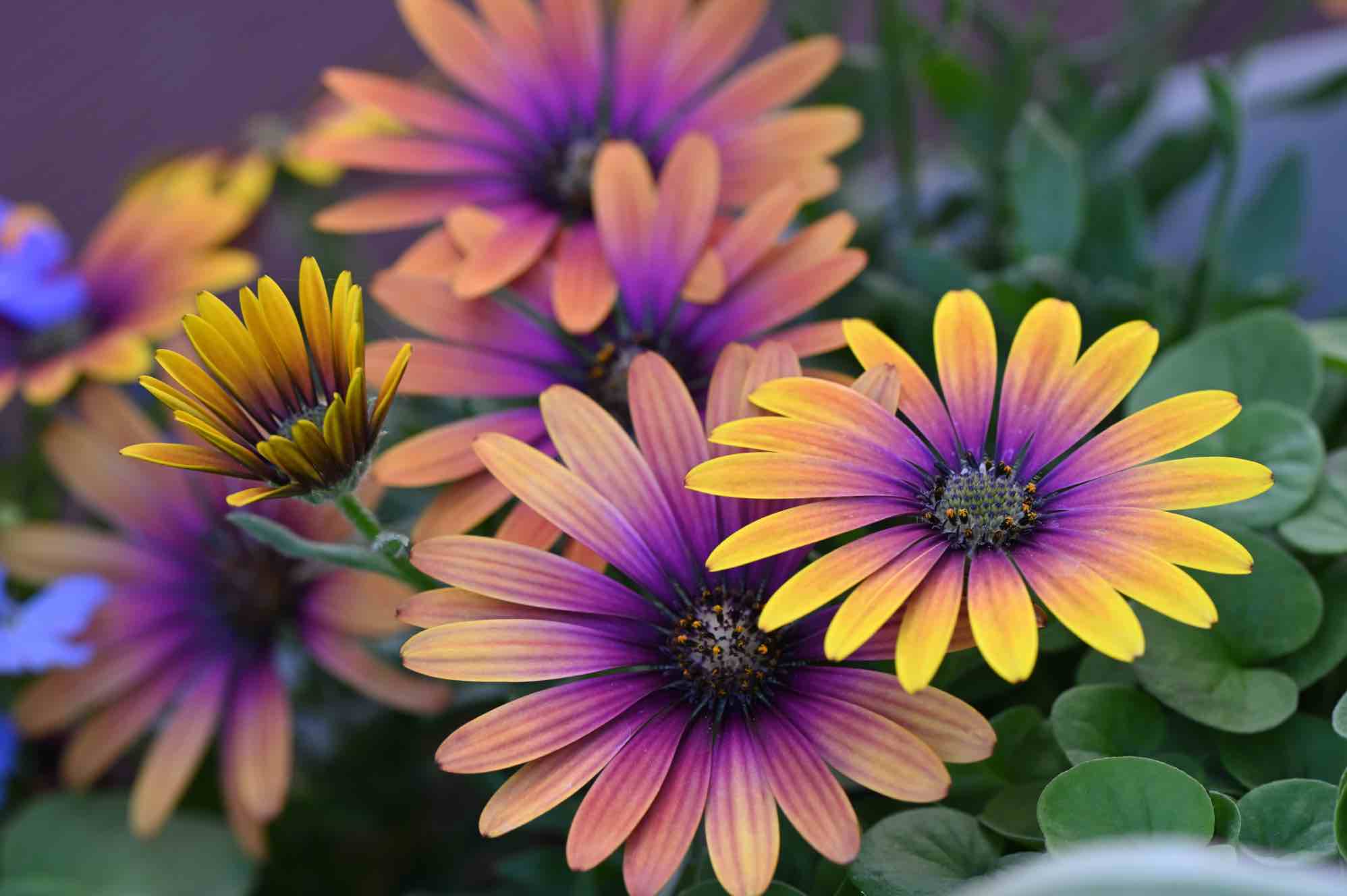
IN THIS GUIDE 1) O. ecklonis 2) O. ‘Sunny Mary’ (Sunny Series) 3) O. ‘White Pim’ 4) O. ‘Weetwood’ 5) O. ‘Stardust’ 6) O. ‘Erato Purple’ (Erato Series) 7) O. ‘Sunny Gaia’ 8) O. ‘Buttermilk’ 9) O. ‘Serenity Sunshine Beauty’ 10) O. ‘Purple Sun’ 11) O. ‘Akila White Purple Eye’ (Akila Series) 12) O. ‘Snow Pixie’ 13) O. ‘Cannington Roy’ 14) O. ‘Lady Leitrim’ 15) O. ‘Tresco Purple’ 16) O. ‘Blue Eyed Beauty’ Dizzying Diversity References Everyone loves daisies and that’s just what Osteospermum is – a bushy little plant with those wide-open disk-shaped daisies. These lovely little wildflowers originate from the warm savannah and grassland of South Africa. Not surprisingly, therefore, these are frost-tender plants with the vast majority having a hardiness rating of H3 and a few others even less than that. Until very recently African daisies were not all that diverse in floral colour: barring a few varieties in bright or saturated tones, most of them came in soothing, low-key shades of pinks, purples, and white, plus a few yellows. Of late, cultivars boasting vibrant tones and bicoloured or gradated flowers have entered the market. African Daisies will make for a merry front border and are also excellent choices as little companions to fill gaps between statelier specimen plants. All of my favourite picks in this article are H3 hardy, will grow in chalk, loam or sand, and will do well in any soil pH. Without further ado, here are sixteen stunning osteospermum varieties: 1) O. ecklonis COMMON NAME(S): African Daisy FOLIAGE: Evergreen FLOWERS: white FLOWERING SEASON(S): Summer EXPOSURE: Sheltered SIZE: 0.5-1m in height, 0.5-1m spread Why not begin with this species plant, that is almost twice as tall as the others on this list, growing up to 1m. Even its variably-shaped leaves are 8-10cm long making African daisies a giant among its species. The 5-8cm flowers are white, though they do have a darker shade of blue-purple if you care to look underneath. 2) O. ‘Sunny Mary’ (Sunny Series) COMMON NAME(S): African Daisy ‘Sunny Mary’ FOLIAGE: Evergreen FLOWERS: Pink and purple FLOWERING SEASON(S): Summer / Autumn EXPOSURE: Sheltered SIZE: 0.1-0.5m in height, 0.1-0.5m spread Continuing with those rule-proving exceptions, this one’s a cultivar that falls squarely in the middle of the height range at about 30cm. However, ‘Sunny Mary’ breaks the mould in floral shade: the classic daisy flowers occur in bright, even vivid tones, from pink through magenta to purple. It is also notable for flowering all summer long. 3) O. ‘White Pim’ COMMON NAME(S): African Daisy ‘White Pim’ FOLIAGE: Evergreen FLOWERS: White FLOWERING SEASON(S): Spring / Summer / Autumn EXPOSURE: Exposed / Sheltered SIZE: 0.1-0.2m in height, 0.1-0.5m spread At the opposite end of the scale to both of the above selections, this variety is ultra short in height and produces white flowers. O. ‘White Pim’ has a mat-forming habit and attains a height of only 10-20cm. The pure white flowers, with a purplish flush on the undersides, are not exactly big at 6cm, but they begin blooming from late spring and continue into autumn. This variety has been awarded the RHS Award of Garden Merit. 4) O. ‘Weetwood’ COMMON NAME(S): African Daisy ‘Weetwood’ FOLIAGE: Evergreen FLOWERS: White FLOWERING SEASON(S): Spring / Summer / Autumn EXPOSURE: Exposed / Sheltered SIZE: 0.1-0.5m in height, 0.1-0.5m spread ‘Weetwood’ is an African daisy of bushy habit, rising to about 35cm, and bearing hard white flowers about 6cm wide and with a golden-yellow disk. It has some foliage interest by virtue of its distinctly greyish-green leaves and also has a long flowering season starting in late spring and finishing up in autumn. This variety has also received the RHS Award of Garden Merit. 5) O. ‘Stardust’ COMMON NAME(S): African Daisy ‘Stardust’ FOLIAGE: Evergreen FLOWERS: Pink FLOWERING SEASON(S): Summer / Autumn EXPOSURE: Sheltered SIZE: 0.1-0.5m in height, 0.1-0.5m spread ‘Stardust’ is about 40cm tall and produces full-looking flowers that are quite striking in chalky but bright tones of mauve through purple, centred with a contrasting yellow disk. They start appearing in early summer and wind up in early autumn. 6) O. ‘Erato Purple’ (Erato Series) COMMON NAME(S): African Daisy ‘Erato Purple’ FOLIAGE: Evergreen FLOWERS: Purple and orange FLOWERING SEASON(S): Summer / Autumn EXPOSURE: Exposed / Sheltered SIZE: 0.1-0.5m in height, 0.1-0.5m spread Breaking the mould, this proprietary cultivar has a hard-to-categorise habit – technically bushy, ‘Erato Purple’ is of a billowing form that makes this daisy a top choice for a hanging basket. The foliage is in a rich, intense hue of dark green but it is outdone by the unusual, spectacular flowers which are of a deep, intense hue of magenta-purple with an orange centre. 7) O. ‘Sunny Gaia’ COMMON NAME(S): African Daisy ‘Sunny Gaia’ FOLIAGE: Evergreen FLOWERS: BURGUNDY FLOWERING SEASON(S): Summer / Autumn EXPOSURE: Sheltered SIZE: 0.1-0.5m in height, 0.1-0.5m spread Back to ‘orthodox’ heights and habits but staying with vibrancy, this newer cultivar has bright green foliage in a perfect clump-forming habit, and reaches up to 30cm tall. The flowers of ‘Sunny Gaia’ have a satiny sheen that enhances their rich, saturated purple-burgundy tone. They bloom from early summer clear into mid-autumn. 8) O. ‘Buttermilk’ COMMON NAME(S): African Daisy ‘Buttermilk’ FOLIAGE: Evergreen FLOWERS: Yellow FLOWERING SEASON(S): Spring / Summer / Autumn EXPOSURE: Exposed / Sheltered SIZE: 0.1-0.5m in height, 0.1-0.5m spread Dialling back on the intensity, ‘Buttermilk’ is a well-heeled cultivar that will make a brilliant contrast with the one above, for its 7cm flowers are a pale, buttery yellow, with its petals emerging virtually white. These flowers are centred by a brownish-purple disk. The long flowering season gets underway before summer begins and finishes after it ends. It has been awarded the RHS Award of Garden Merit. 9) O. ‘Serenity Sunshine Beauty’ COMMON NAME(S): African Daisy ‘Serenity Sunshine Beauty’ FOLIAGE: Evergreen FLOWERS: Orange and yellow FLOWERING SEASON(S): Summer / Autumn EXPOSURE: Exposed / Sheltered SIZE: 0.1-0.5m in height, 0.1-0.5m spread Doubling up on the colour yellow, this cultivar is of much more recent vintage and its brand of yellow is a spanking bright hue. In fact, ‘Serenity Sunshine Beauty’ displays gradated petals that start bright yellow at the base and finish a rich orange at the tips, living up to its name. This bushy variety reaches up to 25cm high and blooms through summer into early autumn. 10) O. ‘Purple Sun’ COMMON NAME(S): African Daisy ‘Purple Sun’ FOLIAGE: Semi-Evergreen FLOWERS: Orange and purple FLOWERING SEASON(S): Summer / Autumn EXPOSURE: Exposed / Sheltered SIZE: 0.1-0.5m in height, 0.1-0.5m spread This relatively new proprietary cultivar is another one that features gradated flowers, with the difference in that they are verily tri-coloured. Petals start purple near the centre and transition to pink with the outer half a soft, glowing apricot-orange. ‘Purple Sun’s lovely blooms are produced from early summer to early autumn. It rises to about 30cm. 11) O. ‘Akila White Purple Eye’ (Akila Series) COMMON NAME(S): African Daisy ‘Akila White Purple Eye’ FOLIAGE: Semi-Evergreen FLOWERS: Blue, purple and white FLOWERING SEASON(S): Summer / Autumn EXPOSURE: Exposed / Sheltered SIZE: 0.1-0.5m in height, 0.1-0.5m spread Another late cultivar, this biennial’s stunning flower has a purple-blue disk surrounded by a magenta shadow which transitions into pure white petals. ‘Akila White Purple Eye’ is a floriferous variety and produces very full flowers all through summer. It grows to about 45cm in height and has a similar spread. 12) O. ‘Snow Pixie’ COMMON NAME(S): African Daisy ‘Snow Pixie’ FOLIAGE: Semi-Evergreen FLOWERS: Yellow and white FLOWERING SEASON(S): Spring / Summer / Autumn EXPOSURE: Sheltered SIZE: 0.1-0.5m in height, 0.5-1m spread Another cultivar that produces a stunning flower that is well and properly pure white centred with a pale, bright yellow disk, making for a classic daisy. ‘Snow Pixie’ is a very popular vintage model that rises to about 40cm. It produces its elegant, simple flowers through summer into early autumn and is the most versatile and multi-purpose variety. 13) O. ‘Cannington Roy’ COMMON NAME(S): African Daisy ‘Cannington Roy’ FOLIAGE: Evergreen FLOWERS: Purple and white FLOWERING SEASON(S): Spring / Summer / Autumn EXPOSURE: Exposed / Sheltered SIZE: 0.1-0.5m in height, 0.5-1m spread Growing to only about 20cm tall, this diminutive variety has nearly twice the spread of its height. ‘Cannington Roy’ flowers are of uniquely warm-cool tones that span light pink, mauve, and purple, changing in shade as they age. Though they are just 5cm wide, they start coming before summer begins and continue well after it finishes. 14) O. ‘Lady Leitrim’ COMMON NAME(S): African Daisy ‘Lady Leitrim’ FOLIAGE: Semi-Evergreen FLOWERS: Pink and white FLOWERING SEASON(S): Spring / Summer / Autumn EXPOSURE: Sheltered SIZE: 0.5-1m in height, 0.5-1m spread This time-honoured cultivar still enjoys tremendous popularity, for good reason: its 6-7cm flowers open white and gradually develop a pink-purple flush, especially at both ends of the petals, making for a particularly stylish daisy. Adding to the merits of ‘Lady Leitrim’, it begins blooming in late spring and ends sometime in autumn. It has received the RHS Award of Garden Merit. 15) O. ‘Tresco Purple’ COMMON NAME(S): African Daisy ‘Nairobi Purple’ FOLIAGE: Evergreen FLOWERS: Purple FLOWERING SEASON(S): Summer / Autumn EXPOSURE: Sheltered SIZE: 0.1-0.5m in height, 0.1-0.5m spread A well-known cultivar whose many synonyms reflect its widespread popularity, it grows to about 30cm and has a similar spread. ‘Tresco Purple’ boasts intensely-coloured flowers that are of a vibrant magenta-purple hue and are centred with a violet disk. They are produced from the beginning of summer to the beginning of autumn. 16) O. ‘Blue Eyed Beauty’ COMMON NAME(S): African Daisy ‘Blue Eyed Beauty’ FOLIAGE: Semi-Evergreen FLOWERS: Blue, yellow and purple FLOWERING SEASON(S): Spring / Summer EXPOSURE: Exposed / Sheltered SIZE: 0.1-0.5m in height, 0.1-0.5m spread Boasting virtually a tri-coloured flower, ‘Blue Eyed Beauty’ even manages to combine complementary colours. The plant has a height and spread of about 40cm and blooms through the summer. The gorgeous flowers feature a chocolate disk with petals that are bright yellow for the most part but are wine-purple near the centre. This cultivar holds Plant Breeder’s Rights (PBR) meaning it cannot be propagated without the owner’s permission. Dizzying Diversity Some shrub species such as O. ecklonis reach a height of 1m but in contrast, the subshrub O. ‘Cannington Roy’, like O. ‘Snow Pixie’, grows to only 15cm – merely 5cm more than the length of O. ecklonis’s leaves! Talking of leaves, the diversity within Osteospermum extends even to that part of the plant. The leaves are lanceolate or ovate, with toothed or entire margins, depending on the species or cultivar. Furthermore, one and the same species, for example, O. ecklonis, can put out leaves of different morphologies! O. barberiae As a general rule, toothed leaves indicate a hardy variety – such varieties, rather than growing upright, usually spread along the ground forming clumps. The African Daisy has about 70 species and an increasing number of cultivars; indeed, the Royal Horticultural Society lists over 900 varieties.1 Many of these varieties are notable not only for the ray florets but even for the central disks which sometimes provide a fine contrast to the rays setting them off or sometimes are of deep or metallic colours that are attractive in their own right. Some varieties have bicoloured disks; others have rays in gradated shades. This humble daisy spoils both gardeners and florists for choice as it can light up a flower bed just as well as a floral arrangement. References 1. A. (2017, April 26). Production Guidelines for Four Crops—Osteospermum, Angelonia, Calibrachoa & Ornamental Sweet Potato (Ipomoea batatas). Center for Agriculture, Food, and the Environment. Retrieved March 22, 2023, from https://ag.umass.edu/greenhouse-floriculture/fact-sheets/production-guidelines-for-four-crops-osteospermum-angelonia
Learn more
9 Varieties From The Diverse Callistemon Genus You Should Consider Growing
IN THIS GUIDE 1) C. citrinus ‘Splendens’ 2) C. citrinus ‘Mauve Mist’ 3) C. citrinus ‘Perth Pink’ 4) C. citrinus ‘White Anzac’ 5) C. viminalis ‘Little John’ 6) C. viminalis 7) C. viridiflorus ‘Violaceus’ 8) C. pallidus 9) C. salignus For a shrub that originated in Australia, quite a number of varieties can be found in the United Kingdom. “Callistemon are half-hardy with a H3 on the RHS hardiness scale,” shares Colin Skelly, a Horticulturist with almost 15 years of experience. “This makes them perfect for coastal gardens with milder winters but vulnerable to the lowest winter temperatures across much of the UK. “They can be planted in conservatories, glasshouses or pots to move back inside in the winter.” Here is a selection of my favourite Bottlebrush varieties, which also shows off the diversity in the Callistemon genus: 1) C. citrinus ‘Splendens’ ‘Splendens’ is the most popular and well-established variety. It has a loose habit in nature and grows to a small tree of 3-6m with a spread of about 3m. It is so popular because it is both very floriferous and has a very long flowering season, covering spring and summer. Its brushes are bright red, varying from scarlet to crimson. 2) C. citrinus ‘Mauve Mist’ This variety is considered more of a spreading, bushy shrub as its spread may well be greater than its height of typically 3m. It flowers for two or three months in the summer and is valued for the special hue of its 10cm brushes, which are a pinkish or light mauve hue. 3) C. citrinus ‘Perth Pink’ ‘Perth Pink’ is a small shrub growing only to a height and spread of 1.5-2m. An attractive feature is that young leaves are pink-red. This variety blooms unpredictably and variably – you may get vivid rose-pink brushes in spring, summer, or autumn. 4) C. citrinus ‘White Anzac’ ‘White Anzac’ is possibly the most unusual cultivar because its brushes are pure white. It may be a large shrub or a small tree with a maximum height and spread of about 3m. The foliage is a bright green with a silvery sheen and this variety flowers from late spring to early summer. 5) C. viminalis ‘Little John’ This variety is rather unlike its big and brawny namesake, who was Robin Hood’s staunch companion, for it is a dwarf that reaches heights of only 40-70cm. It is a shrub of a naturally rounded form that flowers during summer, producing brushes of an intense blood red to crimson hue. 6) C. viminalis Also known as ‘Weeping Bottlebrush’, this variety is a large shrub, spreading and bushy, or a small tree from 6-8m depending on how you wish to prune and develop it. It has light, silvery green leaves only 3-5cm long. Its special feature is that branches and flowers are pendent and droopy and it also produces long brushes that are a scarlet red colour. 7) C. viridiflorus ‘Violaceus’ This is a medium-sized shrub of about 1.5m with a similar spread that has arching branches and a compact habit. It has greyish-green leaves of only about 3cm and dense brushes of up to 8cm in length, which have an unusual and delightful lilac to mauve hue. 8) C. pallidus ‘Lemon Bottlebrush’, as it is commonly known, is known for its citrusy scent and its brushes that vary from cream to a lemon-yellow shade. This variety is a medium-sized shrub of 2-4m in height and a spread to match. Its leaves are greyish-green and not as narrow as most other varieties. 9) C. salignus Callistemon salignus has an additional colour interest as its leaves emerge red and stay red for quite a long time, eventually turning a deep shade of green. Depending on how you develop it, it is a large shrub or medium tree ranging in size from 5-12m. It bears a profusion of brushes from late spring to the middle of summer that are of light but bright yellow hue.
Learn more
Growing Callistemon: The Frost-Tender Ornamental Trees From Australia
IN THIS GUIDE Overview How To Plant Where To Plant Plant Care Pruning References Some Callistemon or ‘Bottlebrush’ varieties have certain charming qualities, such as a citrusy scent, reddish leaves, and pulling in hummingbirds, but they all have that one special feature: flowers. Usually bright red, bottlebrushes seem to have been created straight from Mother Nature’s factory. Callistemons are large shrubs or small trees that can be grown outdoors in the UK’s milder regions. Overview Botanical Name Callistemon Common Name(s) Bottlebrush Plant Type Shrub Native Area Australia Hardiness Rating H2/H3 Foliage Evergreen Flowers Flowering bottlebrush spikes that are usually red, but can come in a range of colours When To Plant May and June When To Prune April and May (or after flowering) You may remember how amused you felt when you first saw red bottlebrushes sticking out of a little tree, and if you haven’t seen such a sight yet, well, prepare to be amused at this fascinating member of the Plant Kingdom. ‘Bottlebrush’ is a small ornamental tree, technically a shrub, whose species fall under Genus Callistemon or Genus Melaleuca. Both Genus belong to the Myrtle Family (Myrtaceae) which includes myrtle, eucalyptus, and clove trees, among others.1 These plants, as charming as they are amusing, are native to Australia and one or two nearby Melanesian islands.2 So how can we grow Callistemon in the UK? As it happens, most Callistemon species inhabit Australia’s Eastern belt which is known for its temperate to sub-tropical climate.3 Unfortunately, species as well as cultivars are frost-tender and cannot tolerate hard frosts below -5°C. Though all bottlebrush species are classified as shrubs, some have the form of shrubby plants while others develop into small trees with proper trunks. An example of the former is Callistemon viridiflorus or Melaleuca virens while an example of the latter is C. viminalis or M. viminalis. Both forms are highly ornamental. Though 2-6m are common heights for these shrubs and trees, they can be as small as 60cm and as tall as 10m. How To Plant Callistemon can be grown from seed, propagated from semi-hardwood cuttings, or bought as potted plants. Plants grown from seeds may or may not turn out to be of the particular species you think you have sown as bottlebrushes hybridise very freely. The tiny seeds should be sown in mid to late spring. They may be started in dampened potting soil and should be scattered on top of it and not sown at all deeply. The container should be placed in full daylight, be it indoors, and kept in a warm place. Seeds should be watered every two days and the soil should be kept consistently moist. They will germinate in 2-3 weeks. Callistemon varieties are also available as young plants in containers and are popular with home gardeners in this form. If the variety allows, you may be able to keep the shrub or tree in a container, should you wish to do so. What you will need to do is prune it so that it will not exceed the height and spread allowable for the container. Where To Plant Callistemon varieties are frost-tender with hardiness ratings of H2 or H3 (up to -5°C). They can be grown outdoors in only the mildest regions of the United Kingdom. If you live in a region that is H4 or colder, you will need to grow bottlebrush trees in a greenhouse. You can still grow bottlebrush shrubs in a planter so that it can be brought indoors for the winter, assuming you have enough space in a room for a large shrub. Callistemon is not the type of plant that can be grown for ornamental purposes in the northern parts or colder regions of the UK and we recommend against the casual gardener trying to do so as it may not end well. Of course, it is another matter if you are an experienced gardener who has a heated greenhouse. Plant Care Sunlight In simplified terms, bottlebrush is a creature of sun; in the United Kingdom it should be sited in full sun. It should preferably be in a south-facing location while north-facing locations must be avoided. It must also be in a sheltered location as it needs protection from cold winds and stiff breezes. Soil Requirements The best soil for bottlebrushes is a light, friable, moderately-fertile sandy loam with minimal clay content, amended with some compost or peat down to about 30cm. It should drain very well, so you may want to make a raised bed, lay a layer of gravel or incorporate some perlite in the soil. This ericaceous plant needs an acidic soil pH but can tolerate neutral soils. Watering Though bottlebrushes can cope with dry soil they are not drought tolerant. They should be watered regularly so that the soil stays moist. Feeding Mature Bottlebrush shrubs and trees may be fertilised annual in early-mid spring. A balanced fertiliser meant for flowering trees and bushes can be used but the overall size of these plants varies very widely by species and as a result of pruning, so make sure to use the right amount of fertiliser. If you have observed excessive foliar growth and comparatively fewer flowers the previous year, then instead of balanced fertiliser use a 0-10-20 or similar fertiliser. Winter Care If your shrub or tree is outdoors, then you must evaluate whether or not it is sure to survive winter by checking its hardiness rating. Common Problems Though outdoors bottlebrushes are relatively pest-resistant and disease-free, in a greenhouse they may succumb to the usual pests including mealybugs, scale insects, and glasshouse red spider mites. Transplanting To transplant, dig a hole that is as deep as the plant’s root system and twice as wide. The soil should be of the kind described above; pre-dampen the soil. After removing the plant from the pot ensure that it is not root-bound, and if it is, try to spread out the roots. Place it in the hole and backfill it such that the soil line is exactly as it was in the container. Though the soil level may come a little lower on the stem, it should not be any higher. Pack in the soil well and give the plant a good watering. Pruning A good time to prune Callistemon is immediately after the flowering season is over. “The subsequent new growth will then form the flowering shoots for the following year,” shares Master Horticulturist Roy Nicol. How you prune your plant will depend on whether you want to grow it as a shrub or a tree. To Grow As A Shrub To prune a young plant to grow as a shrub, allow it to put out shoots and branches initially. Pinch off any strong stem that shows signs of becoming a leader. Cut back all the stems by one-third. This will encourage fresh growth and a bushier form. Keep an eye out for strong stems that threaten to run away and for straggly growth. This type of strict pruning regimen will result in a well-balanced multi-stemmed bush. To Grow As A Tree To prune a young plant to grow as a tree, choose a strong leader and prune shoots and branches that are competing with it. Also, prune shoots that emerge close to the base of the incipient trunk. Initially allow 2-4 new branches to develop that are well spaced, are on different sides of the tree, and are at an acceptable upward angle. Prune once a season to maintain an attractive balance and spacing between the branches and a well-shaped, even crown. Other than that, during the flowering season deadhead regularly for appearance and also flower production. References 1. Bottlebrush. (n.d.). Standford: Robert Seigel. Retrieved March 13, 2023, from https://web.stanford.edu/~siegelr/flora/bottlebrush.html 2. Bottlebrush – Callistemon –. (n.d.). Australian National Herbarium. Retrieved March 13, 2023, from https://www.anbg.gov.au/callistemon/ 3. Australia’s climate – drivers, variability and extremes |. (n.d.). CoastAdapt. Retrieved March 13, 2023, from https://coastadapt.com.au/australias-climate-drivers-variability-and-extremes
Learn more
Clematis Pros Share 100 Years Of Growing Experience In This Ultimate Guide
IN THIS GUIDE Overview Common Varieties Planting Clematis Ongoing Clematis Care References Clematis is said to be the queen of all climbers – there is clematis available to suit many different spots and a huge array of different options to choose from. Learn more about these climbers and how to grow them in this guide. For this guide we interviewed FIVE professionals with over 100 years of Clematis growing experience between them! Our experts include: Ken Black – Membership Secretary of the British Clematis Society and a member of the International Clematis Society. Marcel Floyd – Owner of Floyds Climbers and Clematis. Peter Skeggs-Gooch – Owner of specialist nursery Thorncroft Clematis. Fraser Wescott – Owner of Walled Garden Nursery, a clematis specialist. Fiona Woolfenden – Secretary of the International Clematis Society. We feel privileged to have been able to learn so much from these four specialists – and we’re excited to share what we learned below. “What I love about clematis plants is that they come in all shapes and sizes, from little nodding bells to large saucer-shaped flowers in a myriad of colours,” says Marcel. Overview Botanical Name Clematis Plant Type Climber Native Area Asia Hardiness Rating H5/6 Foliage Various Flowers Various When To Plant March-April or September-October When To Prune Varies based on cultivar (usually after flowering) Clematis, a genus within the Ranunculaceae family, has nearly 400 different species, and many garden hybrids have been developed from these species.1 This cultivation has produced a huge range of options for gardeners, and there are now clematis with huge variations which suit a range of different conditions. “Clematis is the most versatile genus I know,” argues Ken Black. “By selecting varieties from different groups, they will extend range of colour and height to any garden and provide flowers throughout the year, even in the depths of winter.” Clematis has become prized for its ability to scramble up walls, fences, trellis and other support structures, and many are well-known ornamental plants. The horticultural classification of clematis is a complicated thing. But generally, clematis is divided into small-flowered groups, and both early and late large-flowered groups. “This is a genus that has varieties growing to only a few inches or monsters attaining 20-30 feet in a season,” says Fraser. “There is a clematis for all seasons and all situations.” The large-flowered groups are extremely popular in gardens. These are mostly believed to be hybrids involving crosses of C. lanuginosa, C. patens and C. viticella. Common Varieties “There are so many clematis varieties that there’s something for almost every place you can think of in the garden,” says Peter Skeggs-Gooch. “Their versatile nature and abundance of colours mean we have a lot of options when it comes to fulfilling our gardening needs.” More than 80 different clematis varieties have gained the RHS Award of Garden Merit. Here are some common varieties to consider which have received this accolade: Small-Flowered Clematis ‘Abundance’ (Viticella) ‘Arabella’ (Integrifolia) ‘Bill MacKenzie’ (Tangutica) C. montana var. grandiflora ‘Constance’ ‘Elizabeth’ ‘Etoile violette’ ‘Freckles’ ‘Markham’s Pink’ ‘Tetrarose’ Early Large-Flowered Clematis ‘Daniel Deronda’ ‘Fujimusume’ ‘Ken Donson’ ‘Marie Boisselot’ ‘Mrs Cholmondeley’ ‘Mrs George Jackman’ ‘Nelly Moser’ ‘Niobe’ ‘The President’ ‘Wesselton’ Late Large-Flowered Clematis ‘Blekitny Aniol’ ‘Comtesse de Bouchard’ ‘Ernest Markham’ ‘Gillian Blades’ ‘Gipsy Queen’ ‘Jackmanii’ ‘Jacqueline du Pre’ ‘Polish Spirit’ ‘Prince Charles’ ‘Zohapbi’ “The plant I couldn’t live without would have to be my Clematis ‘Wisley’,” shares Janice Shipp, Garden Writer. “It’s a beauty and every year I’m amazed by how big it gets and how many flowers it has. I can sit on my rocking bench and admire it for weeks on end and I would really miss it if it wasn’t there.” For those just starting out with growing clematis, Peter has some apt suggestions: “There is one group of clematis that are very forgiving and excellent for beginners…” “They are called the ‘Viticella’ and they are late summer flowering and very prolific in the quantity of flowers they produce, they also require less attention than many clematis because of their natural vigour. Ken Black agrees: ‘Ville de Lyon’ “Viticellas can be planted in a variety of garden situations and they come in many different shades, size and shape of flower. “They are fairly disease resistant and when hard pruned each spring, down to about 3 feet, will provide an abundance of flowers.” “Viticella group Clematis are a firm favourite of mine in the garden,” says Horticulturist Colin Skelly. “The first Clematis I ever grew was ‘Etoile violette’ and it is still going strong despite being moved a few times. “Once established, they are simple to grow and prune and give plenty of floral rewards with minimal effort.” Planting Clematis “Clematis are often portrayed as all having the same habits and growing needs, but this is not true,” says Ken Black. “They originate from many parts of the world largely, though not exclusively, from the northern hemisphere. “Access to information about what conditions are best suited to each group is therefore important if you want to get the best out of this wonderful range of plants.” Most Clematis will grow best in a sunny or partly shaded spot and will not flower as well in a deeply shaded location. The idea is usually to keep the roots cool and moist, so a position which allows for light shade at ground level but provides plenty of sun for the growing plant is usually ideal. However, there are cultivars which can be chosen to suit any spot, be it a shady wall, or one that is particularly bright and sunny. Herbaceous types usually require a position in full sun, and some clematis, including winter and spring flowering types, need a sheltered position since they are not so hardy. Of course, climbers like clematis will need some kind of support, be it other plants, a free-standing trellis or other structure, or a support structure on a wall or fence. It is important to think about how you will support your clematis before you decide where exactly to place it. We’ll discuss your options for supporting climbers like clematis a little later in this guide. Many clematis also work well in containers. How To Plant The first stage in planting clematis is preparing your planting area and supporting structures. You need to be aware of the growing requirements of your clematis (covered below). “A good depth is required to accommodate a couple of forks full of rotted compost or manure and to allow the root ball of the clematis to be planted about 2-3 inches deeper than the original level in its pot,” explains Peter from Thorncroft Clematis. Clematis is planted somewhat differently depending on what type you are growing. Large-flowered types are planted with the top of the rootball 5-7.5cm below the surface of the soil. This can be beneficial in allowing the plant to recover if infected with clematis wilt and it encourages the growth of new shoots from below ground level. Other clematis types are planted with the top of the rootball only just below the surface of the soil. Whichever type of clematis you are planting, it is important to make sure, when planting close to a wall or fence, that the planting hole is beyond the rain shadow of the structure, as Ken Black explains: “When planting a clematis to grow up a wall, don’t plant it too close to the structure because the base of the wall will be dry and the clematis will not receive enough moisture. Plant it at least 3 feet away.” If you are planting clematis to climb a tree or shrub, it is best to plant it on the side from which winds most frequently approach. That way, the climber’s stems will be blown towards the trunk or branches rather than away from them. Clematis should usually be placed at least 1.2m away from the base of the supporting plant to avoid excessive competition for nutrients and water. When growing clematis in pots, remember to think about support and make sure that if the support is in the container, the container is large and heavy enough that it will not be knocked or blown over. Photo of Clematis ‘Evipo099’ part of a Chelsea Gold Medal exhibit by Thorncroft Clematis in 2019. Any clematis containers should be at least 45cm in depth and width. Plant your clematis in the container with a peat-free, soil-based potting compost. Ongoing Clematis Care Soil Conditions Clematis can tolerate a wide variety of soils and soil conditions, but they will tend to thrive most when planted in a deep, fertile, and moist but free-draining soil or medium. “There are a lot of clematis varieties with fine root systems, and they can be prone to ‘wetting off’ in the winter,” explains Peter. “Soil drainage can also be important for certain cultivars, so you should pay close attention to the root system when you take the pot off and, if the roots are very fine and fibrous, then free-draining conditions will be preferred.” If your soil is not optimal (if it is heavy clay, for example) or very light and sandy, adding plenty of organic matter prior to planting will help yield better results. Light Requirements Clematis will vary in their light requirements. As mentioned above, some are better in sun and some in partial shade, though flowering will always tend to be diminished in deep shade. As a general rule of thumb, remember that it is usually best to keep the roots in light shade and allow the plants to grow in full sun. This is important when growing in containers as well as growing in the ground, so add other low-growing companion plants around the base or add mulches to keep the roots cool. Watering Clematis tend to be rather fussy about soil moisture and will suffer if the soil or growing medium is allowed to dry out. Make sure that you water well, especially during dry periods until plants are well established. Remember that clematis growing in containers will need to be watered more frequently than those growing in the ground. When watering clematis, make sure that you give the plants a deep soaking. The soil or growing medium should be thoroughly soaked to around 30cm in depth. For plants growing in the ground, this might represent at least four watering cans worth of water per square metre. Thinking about how you will harvest rainwater to meet watering needs is a very good idea when growing these thirsty plants. Temperature & Humidity Clematis vary in their temperature requirements as some are hardier than others. However, most clematis plants will appreciate a warm and sheltered spot, with relatively high humidity, especially around the base of the plants. Mulching For Cool Roots Marcel from Floyd’s Climber & Clematis thinks that creating shade at the base of clematis’ roots is one of the most important care factors, as this helps to keep the roots cool. Mulching is one way to do this. A garden compost, well-rotted manure, or leaf mould can be ideal, since these will not only keep roots cool and help conserve moisture but will also provide slow-release nutrients to the plants. Fertilising In addition to adding organic mulch around the base of the clematis for fertility, it is also a good idea to add a potassium-rich organic fertiliser around the base of the plant in early spring each year to encourage good flowering, as Ken explains: “Feeding is optional, but the quality and number of flowers can be improved by providing additional nutrition.” Container-grown clematis should also be fed with a multi-purpose organic liquid feed during the spring and summer around once a month. Supporting Support is important for clematis plants and choosing the right option can help you achieve the best and most pleasing results. There are many options which are both practical and aesthetically appealing. For example, you might grow clematis: Up an existing tree or shrub Against a wall or fence On a wall, fence-mounted, or free-standing trellis Over an archway, arbour, pergola or other garden structure Up a pillar or obelisk Some climbing clematis can twine naturally around their supports, but it is a good idea to carefully tie in the stems to your support to make sure they are secure and spread out more evenly over the structure and flower better. Use natural twine and secure the stems using a loose figure of eight knots. Pruning Different types of clematis require different pruning care, as Ken reminds us: “Each year I am invited to talk with garden clubs and one of the most common issues raised is pruning. This is not a difficult subject if you know the name of a clematis. “Too often, however, the plant label has been lost and the name is forgotten.” Vigorous growers and early-flowering species generally need no pruning at all, though occasionally tangled growth may need to be thinned or removed. Early flowering large-flowered clematis types are generally pruned lightly in the dormant period to improve their structure. Late-flowering large-flowered clematis is also usually pruned during the dormant period, and the current season’s growth is generally pruned back to a pair of buds. If you are unsure about which pruning group your clematis falls into, you can follow this simple rule: If clematis bloom before June, do not prune. “By remembering this, you are not going to cut off the buds of a clematis that is about to flower early in the year and has formed its buds before becoming dormant for the winter,” explains Ken. “Any clematis that should flower from June onwards will still do so even if you might have been more heavy-handed than you need to have been.” If they bloom later, prune in late winter (I find that February is the best month to do so). Propagation Clematis can be propagated from semi-ripe cuttings taken between spring and late summer. In warm and humid conditions they should usually root within a couple of months. These cuttings should be potted up into individual pots the following spring and should flower within two years. Clematis with long, flexible stems can also be propagated by layering (looping stems below the soil to encourage new roots to form on the buried sections). After 1-2 years, new roots should have formed and the stems can be severed from the parent. References 1. Clematis. (n.d.-c). Plants of the World Online. Retrieved May 9, 2023, from https://powo.science.kew.org/taxon/urn:lsid:ipni.org:names:329401-2#children
Learn more
Strawberries Are A Great Introduction To Fruit Growing - These Gardeners Share How
IN THIS GUIDE Overview Strawberry Types Planting Plant Care Harvesting Rotating Strawberries are a great crop for both beginners and more experienced gardeners and are also one of the best fruits to grow in your garden. There are a wide range of different strawberries that you can grow. “I’ve got alpine strawberries growing in my garden, which are so useful because they cover the ground so you don’t get the weeds in, but you also get the harvest,” shares Garden Designer Humaira Ikram. In this article, we will focus on Fragaria x ananassa, the typical garden strawberry, though it is worth noting that there are other strawberries you could try which like very different growing conditions and can thrive where ordinary garden strawberries will not. Overview Botanical Name Fragaria x ananassa Common Name(s) Garden Strawberry Plant Type Perennial Fruit Native Area Cultivated Hardiness Rating H6 Foliage Deciduous Flowers White or pink When To Plant March-May or July-October Harvesting Months June-September When To Prune August-September Before we delve a little deeper and help you pick the right strawberries for your garden, it is worthwhile first discussing a little exactly why growing strawberries can be such a great idea. Strawberries are a great introduction to fruit growing. They are one of the easiest perennial crops to grow, and are one of the UK’s favourite fruits. Their sweet, delicious flavour makes them a firm favourite with kids and adults alike. Strawberry Types As mentioned above, in this article, we will focus on the most commonly grown strawberries – Fragaria x ananassa. These garden strawberries are for full sun, while others like F. vesca work well in partial or dappled shade. Garden strawberries are commonly subdivided into several types depending on when they fruit. There are early season, mid-season and late season varieties. There are also a few ever-bearing varieties and a few day-neutral ones. Early, mid and late season varieties are sometimes also referred to as ‘June bearing’ types. Their fruiting period is far more condensed, unlike day-neutral and ever-bearing plants. Though depending on the location and climate, and whether they are early, mid or late season, they can be ready to harvest any time in June or July. Ever-bearing strawberries (which include some F. x ananassa cultivars) are not truly ever-bearing, but they can offer 2-3 harvests per year between June and August. Day-neutral varieties are much rarer, but these genuinely can fruit from June right through to late summer in mild-warm conditions. “I’m often asked what my favourite strawberry is to grow,” shares Master Horticulturist Peter Lickorish. “Whilst pineberries, white, pineapple-flavoured strawberries, are quirky and fun, I am a big fan of the strawberry cultivar ‘Pegasus’. For me, it balances the desirable traits of disease resistance, size, sweetness and good cropping. “It is a late June-bearing variety crowned with the RHS Award of Garden Merit.” Planting Where To Grow Strawberries can be grown in even the smallest of spaces, so if you have a tiny garden or just a sunny windowsill, you will still be able to give it a go. They can be grown in their own dedicated beds, in mixed perennial beds or borders, as path or bed edging, or in containers, no matter how much space is available. Garden strawberries need a sunny, sheltered site, with moist yet free-draining, reasonably fertile soil. A good quality loam soil enriched with plenty of organic matter is ideal. If growing in containers of some kind, these should be filled with a growing medium which can retain moisture while also draining moderately freely. If you have decided to plant strawberries in the ground, then the first decision you will have to make after cultivar selection is whether you will grow from seed, from runners, or from bare root or pot-grown plants. Growing From Seed Growing from seed is possible, but it is certainly not the easiest option to choose. Growing from seed is usually only an option taken for certain ever-bearing garden strawberry cultivars (and other strawberry types like alpine strawberries or wild strawberries which do not send out runners). The seeds are often refrigerated in damp material such as vermiculite for a few weeks immediately prior to sowing to improve germination rates, and the young strawberry plants need a lot of initial care and will not fruit in their first year. Hybrid varieties will not come true from seed, so our advice is to simply purchase some strawberry runners or young strawberry plants to start growing them at home. Growing From Bare Root Runners or the young plants which come from them can also be ordered or purchased and planted out as bare root plants in September-October, or in April. Pot grown strawberry plants can also be purchased and planted out between April and June. Plant Care Strawberries are easy to grow and care for, but it is important to make sure that you have the basics in place. Here are some key things to bear in mind when it comes to strawberry care and growing: Preferred Soil Remember that strawberries prefer moist yet free-draining soil. They do best in soil which is reasonably fertile too so it can meet their nutritional needs. Make sure that you mulch well around your strawberries to retain moisture, add fertility and, during the fruiting period, keep fruits up and off the soil so they do not rot. The mulch used around the fruiting period should be relatively dry and their namesake straw is a good option. Watering & Feeding It is important to think about water needs when deciding where to grow your strawberries. You need to be able to water strawberry plants well throughout the growing season, especially during dry spells, when the strawberries are young, and when they are being grown in containers. Make sure you water strawberries from below or ensure that water hits the soil where it is needed and not the foliage or the crowns of the plants or fruits. It is a good idea, for the best yields, to feed strawberry plants regularly from spring onwards with an organic liquid feed which is high in potassium to encourage good fruit formation. A comfrey tea is one great option to consider. Fertility can also be ensured by mulching around the plants and by considering options for companion planting which can help keep strawberries happy and healthy. Weeding When planted relatively closely in the ground (around 40cm or so apart), strawberries should create a good ground cover, which can reduce the incidence of weeds. However, especially while the strawberries are still young, you should weed a little to make sure there is no excessive competition and the strawberry planting area does not become congested or overcrowded. Remember, spacing requirements can vary significantly depending on the growth habits, root systems and nutritional and water requirements of neighbouring plants. Certain companion plants can be planted close to strawberries without having a detrimental effect on growth or yields. Common Problems If you take care of strawberries’ basic environmental needs as discussed above and make sure there is plenty of biodiversity in your garden, you should not have excessive problems with pests or diseases. However, strawberries can be plagued by a number of pests, particularly slugs and snails, birds, and rodents – which all may eat the berries before you get the chance to. Encouraging plenty of natural predation in your garden can help keep pest numbers down but protecting your crop with straw and netting where necessary can also be a good idea. Avoiding wetting the foliage and fruits and keeping strawberries up off the soil with a mulch of straw or similar should help you avoid common fungal diseases such as grey mould or Verticillium wilt. Harvesting Strawberries are ready to harvest, typically, when they are bright red all over. Ideally, you should check over your plants regularly to make sure you harvest at the optimal time. If possible, you should aim to harvest your strawberries on a sunny day, during the warmest part of the day when the fruits will be at their sweetest. Strawberries will not keep very long at all when fresh, so you may wish to consider freezing your harvest or preserving it in another way if you won’t be eating the fruit within a few days. Picking fruit with the calyx and around 1cm of stem intact helps preserve the fruit a little, but it should be removed before freezing or preserving the berries. Rotating One important thing to remember about strawberries is that while they are perennials, which will fruit over a number of years, productivity and yield will begin to drop off after a few years. Plants which are more than three years old will not bear as much fruit. Strawberry plants are generally most productive in their second and third years, after which fruit production will gradually drop off. Accumulation of plant viruses is one reason why fruiting declines and there may be no other signs of these viruses. For this reason, it is a good idea when growing strawberries to rotate out older plants after three years and plant a new bed of strawberries elsewhere.
Learn more
Make Sure You Plant Eucalyptus In Full Sun With Enough Room, Says Horticulturist
IN THIS GUIDE Overview Planting Eucalyptus Eucalyptus Tree Care Common Types References Ranging in size from small shrubs to tall trees, eucalyptus is an evergreen plant hailing from Australia which is commonly associated with its native country and the koala bears who feast upon it. But despite having their roots down under, these impressive specimens have taken to the British climate remarkably well and most varieties available on home shores are considered fairly hardy. They’re a popular choice with gardeners up and down the country for their bluish-grey bark, which peels away in strips to reveal a startling yellow beneath, as well as their blue-green foliage. Their leaves exude a distinctive scent when crushed. Overview Botanical Name Eucalyptus Common Name(s) Gum Tree Plant Type Tree / Shrub Native Area Australia Hardiness Rating H5 (varies by type) Foliage Evergreen Flowers Cone-shaped and grouped together in threes When To Plant May-September When To Prune February-March Planting Eucalyptus Most varieties of eucalyptus require plenty of time to establish themselves before the colder temperatures set in, so planting in spring or summer is recommended. However, there are certain species, such as E. coccifera (or the Tasmanian snow gum) which prefer planting later in the year in September, October and November. If in doubt, check the planting instructions with the nursery or vendor. Positioning Eucalyptus are generally quite forgiving of soil types, as long as the terrain drains effectively. However, they do demand full exposure to the sun and appreciate some shelter from the wind, so a spot next to a fence or wall might be ideal. Most eucalyptus species do perfectly well in pots and containers, too. While a certain degree of care and maintenance will be required in the first few years after planting in order to allow the tree to establish itself in the ground, they can largely be left to their own devices afterwards. Pruning, coppicing and pollarding are all viable means of altering the shape and size of the tree as it develops, though none are essential if the location and conditions in which it is planted are satisfactory. “I have come across many eucalyptus trees that have been planted in positions that are too small for the eventual size of the tree,” says Horticultural Consultant Colin Skelly. “Many species grow very quickly and dominate a space. Coppicing and pollarding are a really good way to retain the tree whilst allowing in more light and moisture. “The juvenile leaves of the new foliage are also very attractive.” Shade Growing Although eucalyptus is a fairly undemanding plant, its one prerequisite for healthy growth is full sun exposure. As such, they are not well suited to growing in the shade. Having said that, there are certain eucalyptus cultivars which can handle partial shade better than others. These include E. crenulata and E. neglecta – but even so, both of these cultivars will require at least some sunlight. Planting Out Plant your eucalyptus in a hole that’s slightly bigger than the root ball, taking care not to disturb the roots when doing so. If planting seeds, use root trainers to establish them initially, before transplanting them into their final position no later than midsummer. Bear in mind the potential height and spread of the species you possess, planting the root ball at an appropriate distance from other plants or buildings to allow for their development. In general, it’s advisable to opt for smaller cultivars, since they will establish themselves more quickly and easily and won’t pose problems in their later life. Eucalyptus does not require enrichment of the soil by manure, since this will only encourage an excess of leafy growth. However, they do appreciate mulching of organic matter around (but not directly next to) the trunk, as well as regular maintenance to rid the area of weeds for the first few years. Supports are to be actively discouraged, since cultivating eucalyptus without the aid of them will instigate stronger root growth. Eucalyptus Tree Care Once established, eucalyptus trees require very little in the way of upkeep. However, very young specimens will certainly benefit from a helping hand, even for several years after their initial planting. Light Exposure to full sun is a must throughout their entire lifespan for most eucalyptus species. Soil As long as good drainage is guaranteed, eucalyptus trees aren’t fussy about the soil beneath their feet. Mulching is recommended for the first few years of their life, but the use of manure is overkill and will result in overly leafy growth. Water Water the seeds or root ball well to facilitate the settling-in process. Until the tree has firmly taken root after a couple of years, watering should only be necessary during dry spells and not at all thereafter. Temperature & Humidity Most varieties of eucalyptus that are cultivated in the UK are fairly resilient against the elements and won’t require mollycoddling during the winter months. Having said that, if your tree is planted in a pot, you might want to move it to a warmer area when the mercury drops. Rather than temperature or humidity, the biggest consideration to keep in mind is waterlogged soil. If your part of the country is particularly prone to excessive rain or snow during winter, you might want to shelter it from the worst downpours. Potted specimens can be raised up on bricks to keep drainage holes clear. Pruning Generally speaking, there’s no need to prune eucalyptus trees, since they are more than capable of looking after themselves. However, those growing the species for ornamental reasons may wish to prune it in order to prevent foliage from reaching maturity, since the juvenile form of the leaves is often considered more attractive. Initial pruning at the beginning of the plant’s life can also be beneficial in shaping its growth. Similarly, you might wish to prune larger species to prevent them from becoming too big for their environs. This can easily be achieved by coppicing or pollarding in springtime. It should not be practised more regularly than every couple of years. Common Types There are over 700 varieties of eucalyptus found in the plants that are native to Australia, but just 15 of those grow outside its borders.1 Here are two of the most popular and commonly found varieties in the UK, both of which have received the RHS Award of Garden Merit (AGM) and can be readily purchased at garden centres around the country: Eucalyptus dalrympleana Capable of growing up to 15m in height and around half of that in spread, E. dalrympleana (or the mountain gum tree, as it is more commonly known) is a fast-growing evergreen tree. It’s instantly recognisable by its grey-white bark which flakes away freely, as well as its drooping, narrow, grey-green leaves. Younger leaves carry a copper tint, while white flowers appear in summer and autumn. Eucalyptus gunnii Also known as the cider gum tree, E. gunnii is slightly larger than E. dalrympleana. It can grow up to 25m in height and 10m in spread, with its peeling cream and brown bark a common sight around the UK. Its foliage begins life rounded and bluish, before developing a thinner and greyer form as it grows. Tightly bunched clusters of small white flowers appear in the summer. References 1. Eucalyptus. (n.d.). Botany Bay Learning Resources. Retrieved March 15, 2023, from https://originsfestival.bordercrossings.org.uk/sites/default/files/2022-05/Eucalyptus.pdf
Learn more
Hosta Growers And Society Members Share Their Secrets Learned Over Many Years
IN THIS GUIDE Overview Choosing Types How To Grow Hostas Hosta Plant Care Common Problems References Super-hardy hostas are a foliage favourite, especially for shady spots. These deciduous perennials are valued for their fascinating foliage, as their leaves may be wavy, bowl-shaped, puckered or ridged. Though their colours include a proper rich ‘leafy green’, they also include creams and yellows, and greyish-bluish green. Many are edged or bordered while others undergo colour changes as the season progresses. If you go for fascinating foliage, have a shady garden, also have heavy soil, and like low-care perennials, hostas are made for you. In this guide, we’ve collaborated with SEVEN hosta specialists, including: John Plant – Owner of specialist nursery Rewela Hostas. Ollie Walker – Nursery Manager at Sienna Hostas. Robert Barlow – Owner of plant nursery North Staffordshire Hostas. Melanie Collins – Partner at Mickfield Hostas. Barry Ankney – Membership Secretary for the American Hosta Society. David Teager – President of the Delaware Valley Hosta Society. Sue Proctor – Owner of specialist nursery Sue Proctor Plants. “Hostas are incredibly diverse in size, leaf shape, colouration, and texture,” says Barry. “Some Hostas grow in mounded shapes, while others are upright vase-shaped plants. Hostas range in size from 5-125cm high. “Leaf shapes vary from slender lance-shaped leaves to those that are more rounded. They can be green, yellow, blue, or a combination of those colours and may have variegated edges or display variegation at their centre.” Overview Botanical Name Hosta Common Name(s) Plantain Lily Plant Type Perennial Native Area China, Japan, North & South Korea Hardiness Rating H7 Foliage Deciduous Flowers Mainly bell-shaped When To Plant March-May and September-November When To Prune December In their native Japan and the Far East, these plants are called Giboshi, but are more commonly known as the Plantain Lily.1 They do share one attribute, though: almost all popular varieties are clump-forming and, therefore, gradually keep spreading. The foliage interest of these plants is amazingly diverse and most gardeners consider the flowers a side attraction or a bonus. “We love growing hostas because they provide colour in the garden all season, from late Spring until the Autumn when they die down, ready to reappear the following year,” says Sue. For several weeks in summer, flowers, usually bell-shaped, are borne in clusters, usually in shades of purple and white. Hostas are vigorous, long-lived plants, explains John Plant, the owner of Rewela hostas, with over 15 years of experience: “There are very few that offer the range of colour, and size of leaves than Hostas. They offer you at least 6 months of interest in the garden each year. “They then go to sleep, but always come up again next year without further cost or care.” Once they’re all set in favourable locations, they will need minimal maintenance while making a rich return of many years of top-notch decorative foliage. Choosing Types “I personally prefer plain-leaved cultivars with interesting habits, like Cutting Edge and Niagara Falls,” says Melanie. “The leaves droop downwards on Niagara Falls and have a piecrust rippled margin. “I love natural-looking garden spaces rather than too much colour, so I love hostas that add to that type of environment rather than clash. “Although I can admire variegated hostas, I am less keen on the brightly variegated cultivars as they can look rather false in a natural setting and look much better as specimens in containers.” Despite Melanie’s preference for plain cultivars, we have put together some of our favourite varieties of hostas which do include brighter cultivars too. How To Grow Hostas Where To Plant “Contrary to popular belief, hostas like more light and less water than most people think,” says Ollie Walker, the nursery manager at Sienna Hostas. “A very dark, wet spot in the garden is actually as bad as a dry and sunny spot. Ideally dappled shade or morning/afternoon sun in moist, free-draining soil is perfect.” Hostas are classic shade garden plants and can be planted in beds or used for garden borders. However, it’s good to keep in mind that they boast an enormous range in height. The smaller varieties are perfect for front borders while the taller ones are just as perfect for the rear and as backdrops. The intermediate height varieties are great for interspersing between flowering plants in a bed or placing in a dedicated shrubbery corner. Miniature varieties make for delightful edging and are just brilliant for rockeries. All hostas plants are very amenable to being planted in pots and containers. When To Plant Though Hostas are tough plants and can be planted at any time of the year, I’d recommend planting them in spring or autumn. How To Plant Hostas are normally bought as potted plants or acquired as bare-root divisions from a clump, and it is in one of these forms that you would be planting a hosta. The planting hole should be about as deep as the rootball but twice its width. Ensure that the plant is not root-bound; if it is, spread out the roots. Place the plant in the hole and backfill it promptly, ensuring that the soil line is the same as it was in the pot. Pat down the soil all around and water well. Hosta Plant Care Hostas are notorious for being easy to grow. Once they are planted in the right spot they will thrive for years without any particular care. Precise instructions on how to grow these plants are given underneath. Light In general, partial shade is very suitable for hostas and they even do quite well in full shade. That said, the ideal type of light for these plants is dappled or filtered sunlight for a few hours a day, as David explains: “While some think of them as shade-loving, they are merely shade tolerant and perform best with some sun, the amount strongly dependent upon their need for water and protection from the hottest sun.” Sun-shade preferences vary by cultivar. “Hostas are shade-tolerant plants, but they still require some sunlight, the amount of sunlight largely depends on their colour, which generally relates to the number of chloroplasts in the plant,” explains Barry. “Blue hostas appear blue because of a wax coating on the leaf. If this wax coating is rubbed off, or burned off by the sun, the leaf looks green. “When caring for hostas with blue colouration, it is important to know that too much direct sunlight will burn away the waxy coating on the leaf that makes the leaf appear blue. “It is best to grow blue hostas in a location where they get some early morning sun followed by a day in the shade.” As a rule, the more yellow the foliage, the more sunlight the plant should get and the more bluish the foliage, the less sun it should get. Soil Hostas generally need a heavyish, rich soil says Robert Barlow, a hosta enthusiast from North Staffordshire Hostas. “Hostas like moisture-retentive soils that are slightly acidic. They do not, however, like to be submerged in water for any length of time.” A mixed loam of sand, chalk and clay tilled to about 15cm deep and amended generously with organic compost or well-rotted organic manure will suit them perfectly. These plants prefer moist soil. If the soil has insufficient clay then some vermiculite should be added to the soil or a layer of organic mulch may be laid to increase moisture retention. Slightly acidic to neutral soil pH works best for these plants. Watering “The single most important thing about successfully growing Hostas is knowing that they love water,” says Barry. “Hostas require at least 2.5cm of water per week to thrive. Hostas will survive with less water, but if you want your plants to thrive, give them plenty of it.” Although their water needs may partially be met by rainfall, watering will usually be required. “Don’t give them a sprinkle of water daily, water once a week during the season and water well,” suggests Melanie. Temperature & Humidity Hostas do not have any particular temperature or humidity requirements, and any given variety should be perfectly comfortable with the temperature and humidity throughout the UK. “Hostas are excellent garden plants that can grow in many garden conditions in climates with winter cold,” says David Teager. “Not merely single-season perennials, they are most beautiful from the time they emerge until the first killing frost.” “Although hardy in the UK climate, hosta leaves emerging in spring may get damaged by frost,” adds Horticulturist Colin Skelly. “Protect by adding a layer or two of fleece if frost is forecast.” Fertilising As long as hostas are rooted in rich, fertile soil, they do not need fertilising. A mulch of organic compost about once a year will be quite sufficient. Otherwise, you can use an organic balanced fertiliser, diluted as appropriate, once each spring. “Don’t be tempted to overfeed your hostas,” says Melanie. “It may help produce extra foliage but often this is at the expense of the plant’s characteristics. Seaweed extracts or tomato feed is good a couple of times a year.” Hostas in containers should be fertilised more often to ensure attractive foliage. For these, apply a balanced liquid fertiliser about every four weeks during spring and summer. “I use a nitrogen liquid feed or pelleted chicken manure,” says Robert, from North Staffordshire Hostas. “Feed your hosta plants a maximum of 3-4 times a year from April. Don’t feed your hostas after July.” Common Problems Generally, hostas are pest-resistant and disease-free plants. Occasionally may they succumb to vine weevil, but this only usually affects potted hostas. “Vine weevils can sometimes be a problem,” shares Sue Proctor. “Adult weevils feed on the edges of leaves and the small notches they cut out of leaf edges are unmistakable. “I use vine weevil nematodes in September and April, concentrating on those areas where there are attacks.” A more serious problem that hostas might face is Hosta Virus X (HVX). To escape this, David Teager suggests that you: make sure to buy hostas from reputable dealers (or shared by knowledgeable friends), and closely observe and handle any new acquisitions to catch any disease before it spreads. Unfortunately, hostas are almost sure to be targeted and chomped on by slugs and snails. Not only does this degrade the aesthetic appeal of the plants, slugs and snails sometimes destroy the foliage to such an extent that young, small, or weak plants die. “The most obvious problem, which everyone lights on, is slugs and snails, as there is nothing more infuriating than having your perfect hosta leaves munched on,” says Melanie. How To Stop Slugs Eating Hostas Slugs have nocturnal habits; they chew up plants in the dead of night and remain out of sight during the day. Therefore, it is difficult to directly eliminate these pests. Even if they were diurnal, slugs are so icky that you may not want to pick them or squash them! “Barriers and beer traps both work well for trapping slugs and snails, but if your garden is overrun, you first need to reduce numbers by going out after dark with a torch to find, catch and dispose of the critters,” says Sue. “A squirt of household ammonia diluted 1:10 with water will kill slugs almost instantly and is more humane than using a pinch of salt.” Another tried-and-trusted method is to put copper strips or copper tape around the plants. A slug’s own slime reacts with copper to give a mild shock to the pest. This method will only protect your plants but will not kill the slugs. Another method is to use a garlic wash, which is a method recommended by the growers from both Rewela Hostas and Sienna Hostas. “A garlic wash is really easy to make,” says Ollie. “Boil 2 full bulbs of garlic in 2L of water until soft, then sieve out the bits to reveal your concentrate. “Dilute 2 tablespoons of this, then water and spray over the top of your plants once a week.” “My hostas used to get eaten to bits until I was introduced to a garlic wash,” shares Gardener Sally Flatman. “I used that religiously last year and now my hostas are completely changed plants!” Alternatively, you could place purpose-built types of nooks or crannies that slugs like to get in or under close to your chewed-up hostas. You can do so using flat rocks, small slabs, or wooden boards. Get out in the early part of the morning to look under them for the pests, and when seen you can get rid of them easily. References 1. Hosta Collecting in Japan. (n.d.). Hosta Library. Retrieved March 17, 2023, from https://www.hostalibrary.org/articles/Japan.htm
Learn more
Ash Dieback Is Now Very Widespread: Play Your Part In Helping To Tackle The Problem
IN THIS GUIDE What Is Ash Dieback? About Ash Trees Identifying Ash Dieback When To Look Out For Symptoms Reporting Ash Dieback Slowing The Spread Do Trees With Ash Dieback Need To Be Felled? References British ash trees are one of our most important native trees, but unfortunately, ash trees are threatened by a fungal disease called ash dieback. Learn more about this issue and what can be done to slow its spread and deal with this issue in this guide. Ash dieback was first found in the UK in 2012 and is now very widespread.1 It poses a threat to ash trees growing in parks and gardens and to natural woodlands and forests. Gardeners can play their part in helping to tackle this serious problem, by taking measures to help slow its spread in affected areas, and by reporting dieback in parts of the UK where it has not already been recorded. Learning more about this problem and how to identify it is the first step in learning how to help. What Is Ash Dieback? Ash dieback, also called Chalara dieback to set it apart from other causes of dieback in ash trees, is a highly destructive disease of ash trees, especially our native common ash, Fraxinus excelsior. The cause of this disease is a fungus called Hymenoscyphus fraxineus, which originated in East Asia.2 This disease is now found in most areas of the UK, though its effects are clearest and most noticeable in those regions of the country in which the fungus was present earliest, and where local environmental conditions allow the fungus to thrive.3 In the UK, the disease was confirmed first in trees growing in nurseries or on recently planted ash trees. However, many cases have now been found in the wider environment. This disease is also established in many other European countries, where it has had devastating effects. As well as affecting our common ash, this disease also affects many other varieties. In 2018, ash dieback was also found on three other ornamental tree and shrub species: mock privet (Phillyrea latifolia), P. angustifolia and Chionanthus virgincus.4 Ash dieback on common ash does have a significant threat to woodland ecology and biodiversity. It also has major impacts on the forestry and hardwood industries. Older trees can survive for some time, but can succumb when exposed for longer. They may also be hit in their weakened state by another pathogen, like honey fungus, which can eventually kill them. About Ash Trees Common ash makes up 12% of the broadleaf woodland of the British Isles and is also common in parks, gardens, hedgerows and roadsides.5 A huge variety of native wildlife benefits from it, and it grows in a wide range of soils and climates. Due to their light and open canopies, ash trees also increase and encourage biodiversity on woodland and forest floors. Ash is also a very important species for its timber, which is used for many different purposes. and some types are quite popular for garden and ornamental use. Identifying Ash Dieback The symptoms of this disease can be seen on the leaves, the stems and on the tree as a whole. Leaves will often begin to turn black, often first blackening along the midrib and leaf base. The leaves which are affected will also wilt. On stems, small lesions or spots will appear on the bark and these can grow to form cankers. In some cases, the disease may circle the stem and kill it in a single season. When the bark is peeled off, the brownish or grey discolouration can be seen, which extends beyond the area of dead bark. Trees that are infected show extensive dieback of branches, shoots and twigs. Often, many shoots which are produced from previously dormant buds can be seen. When To Look Out For Symptoms The optimal time to identify ash dieback is between July and September when blackening and wilting are likely to be seen, and natural seasonal changes will not be mistaken for indications that the disease is present. Some other things that are normal for ash trees are sometimes mistaken for indications of this problem but are not indicative of the disease. Firstly, note that ashes are one of the latest trees to produce new leaves in spring. Often, late flushing may cause people to suspect that the tree is dead or dying, but ash trees may not be in leaf until June. It is only when we reach mid-June that lack of leaves would be a concern. By then, all healthy ash trees are in full leaf. You may also see dark ash keys on the tree after the leaves fall in autumn. These are normal things for ash trees, but people sometimes think they are blackened leaves from a distance. Reporting Ash Dieback Forest Research and country forest authorities want to get reports of chalara ash dieback in areas where it has not yet been reported.6 Ash dieback in Great Britain should be reported through TreeAlert, and ash dieback in Northern Ireland through TreeCheck; both are branches of the gov.uk website.7 These sites require you to upload clear and close-up pictures of the tree’s symptoms. In some cases, you may then be asked to provide more information, and further investigation of the tree in question may be arranged in some cases. Slowing The Spread Ash dieback spreads through spores of the fungus, which can be carried locally for many miles on the winds, but sometimes can even be carried from mainland Europe.8 Government scientists have also concluded that spores only live for a few days, spores come from infected dead leaves between June and September, and that there’s a low chance of dispersal on clothing, or animals and birds.9 Individuals can help slow the spread of ash dieback in areas where the disease is present by making sure that they brush soil and plant matter off their shoes, wheels and clothing before leaving a woodland site – washing these items before they visit another site.10 Car drivers are urged to park on paved areas where possible when visiting woodland sites, and cyclists are asked to wash down bikes before and after taking woodland or forest trails to avoid accidentally spreading chalara ash dieback. Gardeners can also help slow the spread of ash dieback in their area by collecting and deep composting the leaves to prevent the spores from being dispersed and disrupting the fungus’ life cycle. Infected leaves should be covered with 10cm of soil or 15-30cm of other organic matter. The area should then be left undisturbed (other than adding more material on top) for at least a year. “If you are considering getting bark chips from a tree surgeon to help control the spread of tree pests and diseases, it would be wise to ask for no chip from diseased Ash or Elm trees,” adds Dan Ori, Master Horticulturist. Do Trees With Ash Dieback Need To Be Felled? If you have an ash tree in your garden suffering from ash dieback, you may wonder whether it needs to be felled. In most cases, it is best to keep your tree standing if you can, even if it is infected. Tree preservation orders must also still be respected.11 Most trees infected with this disease will sadly die, but scientists have found that a small number ash of trees can tolerate infection.12 A proportion may also become symptomatic but then regain their good health. It is not yet known whether such trees are to be found in the UK ash population, but keeping trees standing is invaluable for research. It may be that tolerant trees can potentially be utilised to breed more tolerant trees for our future. However, safety is a priority, so it is important to observe your ash tree very carefully as the disease proceeds. It may have to be felled if branches look like they are likely to break off and cause damage or injury, or if the trunk is weakened near the base and the tree may fall more easily. Ash dieback is a large ecological problem, but there is hope. Work is being done to selectively breed tolerant trees to replace the ash trees that are lost and gardeners can help by reporting this when it spreads to new areas, and by helping to slow the spread of the disease by managing diseased leaves in their gardens. References 1. Forest Research. (2022, December 13). Ash dieback (Hymenoscyphus fraxineus). Retrieved March 9, 2023, from https://www.forestresearch.gov.uk/tools-and-resources/fthr/pest-and-disease-resources/ash-dieback-hymenoscyphus-fraxineus/ 2. Nielsen, L. R., McKinney, L. V., Hietala, A. M., & Kjær, E. D. (2017). The susceptibility of Asian, European and North American Fraxinus species to the ash dieback pathogen Hymenoscyphus fraxineus reflects their phylogenetic history. European Journal of Forest Research, 136(1), 59–73. https://doi.org/10.1007/s10342-016-1009-0 3. Ash Dieback UK Outbreak. (n.d.). Forestry Commission. Retrieved March 9, 2023, from https://cdn.forestresearch.gov.uk/2022/02/ashdieback_uk_outbreak_map4_10_web_version_may2020-scaled.jpg 4. Better, F. G. C.-. B. L. L. (2018, August 29). Ash dieback alert. Frosts Garden Centres. Retrieved March 9, 2023, from https://www.frostsgardencentres.co.uk/news/24/ash-dieback-alert 5. Forest Research. (2022a, February 16). Woodland area by species. Retrieved March 9, 2023, from https://www.forestresearch.gov.uk/tools-and-resources/statistics/forestry-statistics/forestry-statistics-2018/woodland-areas-and-planting/national-forest-inventory/woodland-area-by-species-broadleaves/ 6. How to report Ash Dieback. (n.d.). Cornwall Council. Retrieved March 9, 2023, from https://www.cornwall.gov.uk/environment/trees-hedges-and-woodlands/tree-and-woodland-management/how-to-report-ash-dieback/ 7. Report a tree pest or disease. (2018, September 26). GOV.UK. Retrieved March 9, 2023, from https://www.gov.uk/guidance/report-a-tree-pest-or-disease-overview 8. Trust, W. (n.d.-a). Ash Dieback (Hymenoscyphus fraxineus). Woodland Trust. Retrieved March 9, 2023, from https://www.woodlandtrust.org.uk/trees-woods-and-wildlife/tree-pests-and-diseases/key-tree-pests-and-diseases/ash-dieback/ 9. Managing ash dieback in England. (2021, June 10). GOV.UK. Retrieved March 9, 2023, from https://www.gov.uk/guidance/managing-ash-dieback-in-england 10. The Tree Council. (2022, July 12). Ash dieback action plan toolkit for local authorities. Retrieved March 9, 2023, from https://treecouncil.org.uk/what-we-do/science-and-research/ash-dieback/local-authority-ash-dieback-action-plan-toolkit/ 11. Ash dieback. (n.d.). Broads Authority. Retrieved March 9, 2023, from https://www.broads-authority.gov.uk/planning/other-planning-issues/trees-and-hedgerows/ash-dieback 12. Ash Dieback Disease: A Guide For Tree Owners. (n.d.). The Tree Council. Retrieved March 9, 2023, from https://treecouncil.org.uk/wp-content/uploads/2020/06/Tree-Council-Ash-dieback-tree-owners-guide-FINAL.pdf
Learn more
10 Unique Bedding Plants Beyond Pansies And Begonias
IN THIS GUIDE Winter-Spring Bedding Displays Summer Bedding Displays Tips For Bedding Displays References Bedding plants are used to create displays in a garden for a particular season of interest. Bedding displays became popular during Victorian times and they are still a common feature in public gardens.1 Bedding plants are also popular with home gardeners seeking to create attractive beds, borders, containers or hanging baskets. Typical bedding plants are extremely popular in the UK, accounting for a large proportion of gardener spending, but which plants you choose, and how you start out with your planting can have a big impact on the aesthetic success of the scheme. The decisions you take will also have a big impact on how sustainable and eco-friendly your gardening efforts will be. Bedding plants are frequently purchased as plugs or young plants. However, it can be a greener option to grow your own bedding plants from seed or cuttings. Taking a more DIY approach can help you avoid contributing to harmful horticultural industry practices, avoid peat, and reduce plastic use in your garden. Thinking beyond pansies and begonias and other common bedding plants and considering more interesting and unusual options could help your garden to stand out, and help you create a more contemporary scheme. Below are 10 suggestions to help you choose bedding plants suited to both winter and summer displays. Of course, these are just a few of my personal suggestions, but they may help you in creating your own beautiful bedding displays. Winter-Spring Bedding Displays Commonly, winter bedding plants chosen for displays will include tried and tested favourites like violas, pansies, polyanthus and primroses. Another more interesting option to consider are foliage plants and shrubs. Here are 3 of my favourites: 1) Erica carnea COMMON NAME(S): Alpine Heath HARDINESS RATING: H6 PLANT TYPE: Perennial shrub FOLIAGE TYPE: Evergreen FLOWERS: Pink, purple and white FLOWERING SEASON(S): Winter / Spring SUNLIGHT: Full Sun / Partial Shade EXPOSURE: Exposed / Sheltered SOIL PREFERENCE: Clay, loam, sand; any pH SIZE: 0.1-0.5m in height, 0.5-1m spread One of our top picks for a winter display is Erica carnea. This winter-flowering, perennial heather will be valuable for bees and will look great throughout the winter months. 2) Brassica oleracea COMMON NAME(S): Ornamental Cabbage HARDINESS RATING: H7 PLANT TYPE: Vegetable FOLIAGE TYPE: Evergreen FLOWERS: Yellow FLOWERING SEASON(S): Summer / Autumn SUNLIGHT: Full Sun / Partial Shade EXPOSURE: Exposed / Sheltered SOIL PREFERENCE: Any soil type; alkaline / neutral pH SIZE: 1-1.5m in height, 0.1-0.5m spread Hardy biennials are popular for summer displays, but some are also ideal for a winter display. Another of our top picks for winter bedding displays are ornamental brassicas. Kales and cabbages, with interesting foliage in greens and purples and pinks, will look wonderful in a display over the coldest months. We’ve been specific and chosen to go with Brassica oleracea, pictured above, as this ornamental cabbage is bound to add delight to your winter displays. “‘Nagoya Red’ has ruffled leaves and a purple centre,” adds Master Horticulturist Peter Lickorish. 3) Chionodoxa luciliae Boiss. COMMON NAME(S): Lucile’s glory of the snow HARDINESS RATING: H6 PLANT TYPE: Perennial FOLIAGE TYPE: Deciduous FLOWERS: Blue and white FLOWERING SEASON(S): Spring SUNLIGHT: Full Sun / Partial Shade EXPOSURE: Exposed / Sheltered SOIL PREFERENCE: Any soil type; any pH SIZE: 0.1-0.5m in height, 0-0.1m spread Bulbs are invaluable in creating late winter and early spring colours in bedding displays. They’re also sold under the botanical name Scilla. There are plenty of early spring bulbs to consider, including snowdrops, crocus, narcissus, anemones, and grape hyacinths. Our top pick for winter bedding displays however is ‘Glory of the Snow’, especially because of the vibrancy of the blue flowers These can be particularly effective in carpet-style bedding displays early in the year. Summer Bedding Displays Summer bedding displays offer, of course, even more exciting options. 4) Tagetes patula COMMON NAME(S): French marigold HARDINESS RATING: H2 PLANT TYPE: Annual FOLIAGE TYPE: Deciduous FLOWERS: Yellow, orange, red and brown FLOWERING SEASON(S): Summer / Autumn SUNLIGHT: Full Sun EXPOSURE: Exposed / Sheltered SOIL PREFERENCE: Clay, loam, sand; any pH SIZE: 0.1-0.5m in height, 0.1-0.5m spread Many half-hardy annuals are amongst the most popular bedding plants for summer displays. Cosmos, Nemesia and Nicotiana are just some of the popular options. One of our favourites is the French marigold, which looks beautiful en mass and provides a range of benefits to pollinators, other plants and wildlife in your garden. 5) Calendula officinalis COMMON NAME(S): Common marigold HARDINESS RATING: H5 PLANT TYPE: Annual / biennial FOLIAGE TYPE: Deciduous FLOWERS: Orange FLOWERING SEASON(S): Summer / Autumn SUNLIGHT: Full Sun / Partial Shade EXPOSURE: Exposed / Sheltered SOIL PREFERENCE: Chalk, loam, sand; any pH SIZE: 0.1-0.5m in height, 0.1-0.5m spread There is also a range of hardy annuals which can be sown directly into your garden in spring. There are many options to consider, including Alyssum, Iberis and Limnanthes. One great choice is Calendula (pot marigold). This is wonderful for bees and other pollinators, should also help attract other beneficial insects to your garden, and looks great over a long blooming period. 6) Myosotis sylvatica COMMON NAME(S): Garden forget-me-not HARDINESS RATING: H6 PLANT TYPE: Perennial FOLIAGE TYPE: Semi-Evergreen FLOWERS: Blue FLOWERING SEASON(S): Spring / Summer SUNLIGHT: Partial Shade EXPOSURE: Exposed / Sheltered SOIL PREFERENCE: Chalk, loam, sand; any pH SIZE: 0.1-0.5m in height, 0.1-0.5m spread Over the summer months, biennials can also make great bedding plants for displays. “Forget-me-not is often treated as a biennial, sown in summer for flowers the following spring,” shares Peter. Hollyhocks, Dianthus, and Erisymum are three popular biennials. One bedding plant I’d like to highlight is Myosotis, more commonly known as forget-me-nots. Forget-me-nots are another excellent option for carpet bedding, producing beautiful blue flowers in spring and summer. They also look wonderful in pots or containers in the garden. 7) Salvia splendens COMMON NAME(S): Scarlet sage HARDINESS RATING: H3 PLANT TYPE: Perennial / annual FOLIAGE TYPE: Deciduous FLOWERS: Red FLOWERING SEASON(S): Summer / Autumn SUNLIGHT: Full Sun EXPOSURE: Exposed / Sheltered SOIL PREFERENCE: Loam or sand; any pH SIZE: 0.1-0.5m in height, 0.1-0.5m spread Many half-hardy perennials are grown in bedding schemes as annuals. Well-known examples include Begonias, Geraniums, busy Lizzies, summer pansies and Lobelia. One which can be a great choice for summer displays is Salvia splendens. Salvias bloom later in the summer and into early autumn and are another great choice for summer bedding displays. They can be combined with other flowers for formal schemes, or with beautiful ornamental grasses and other flowering perennials for bedding displays with a more informal look. 8) Tulipa COMMON NAME(S): Tulip HARDINESS RATING: H6 PLANT TYPE: Perennial FOLIAGE TYPE: Deciduous FLOWERS: Varies FLOWERING SEASON(S): Spring / Summer SUNLIGHT: Full Sun / Partial Shade EXPOSURE: Exposed / Sheltered SOIL PREFERENCE: Clay, loam, sand; any pH SIZE: 0.1-0.5m in height, 0-0.1m spread Summer bedding schemes often start with spring flowering bulbs, which oversee the transition between winter and summer plantings. Hyacinths and alliums are common choices, but perhaps one of the best-known and best-loved bedding plants is the tulip. Tulips, of course, come in a huge range of colours and types, and no matter what type of bedding display you wish to create, mass plantings of tulips can often be a major hit. This may be a tried and tested favourite, but it is one which has stood the test of time. 9) Sedum spectabile COMMON NAME(S): Ice Plant HARDINESS RATING: H6 PLANT TYPE: Perennial FOLIAGE TYPE: Deciduous FLOWERS: Pink FLOWERING SEASON(S): Summer SUNLIGHT: Full Sun EXPOSURE: Exposed SOIL PREFERENCE: Chalk, loam, sand; alkaline / neutral pH SIZE: 0.1-0.5m in height, 0.5-1m spread A number of tender sub-tropical plants are also used as centrepieces for summer bedding schemes. Cannas, or palms, for example, are popular choices. Succulents are hugely popular right now and are often grown as houseplants, but in certain settings, these can also work well in summer bedding schemes. For example, sedums can work very well for green roof or green wall planting displays over the summer months. They can also work well in bed or border planting schemes in the right location, and also look very nice in pots and containers. These can be combined with other succulents such as sempervivum and alpine plants like saxifrages, for example, to create interesting patterns in bedding displays. 10) Juniperus squamata COMMON NAME(S): Flaky Juniper HARDINESS RATING: H7 PLANT TYPE: Shrub FOLIAGE TYPE: Evergreen SUNLIGHT: Full Sun / Partial Shade EXPOSURE: Exposed / Sheltered SOIL PREFERENCE: Any well-drained soil; any pH SIZE: 0.1-0.5m in height, 0.5-1m spread It is also worthwhile considering adding shrubs or grasses which can also work well in containers, or provide a framework for larger bedding displays. Low hedging or box shrubs can work well in creating formal bedding displays and ornamental grasses can work well as centrepieces or break up densely floral designs. Our final bedding pick is a dwarf conifer Juniperus squamata, which can look great in mixed containers, or hold its own in a larger bedding scheme to show other bedding plants off to good effect in your displays. Tips For Bedding Displays Of course, the 10 bedding plants suited to displays that we have listed above only highlight the massive variety of plants which can be integrated into bedding displays throughout the year. When it comes to creating effective and beautiful bedding displays, choosing ornamental plants is just part of the picture. “For bedding displays, especially in pots, a good basis is to aim for thrillers, fillers and spillers,” shares Peter. “I love to throw in a few statement thriller plants, such as dark leaf Cannas, or Cordylines, which can add height and drama to a display and need not be removed with the rest of the planting. “Fillers are the mix of plants that make up the main mix of the display. “If you can get hold of a colour wheel, colours either directly opposite or next to each other usually work best. “Then, in pots, have a spiller to overflow the sides and hang down. “In the open ground, maybe look to have an edging plant such as Jacobaea maritima ‘Silver Leaf.’ For me, this one frames a display nicely.” To further help you in putting together your own bedding plant displays, here are some general tips: Decide upfront which type of bedding display you are going for. Do you want to create a formal scheme with orderly planting, or something more informal, for example? Will planting be looser, or are you aiming for an intricate and intensive carpet bedding design? Try wherever possible to sow and grow from scratch rather than buying in plug or bedding plants. This won’t just be more eco-friendly, it will save a lot of money too. Plant corms, rhizomes, bulbs and tubers in autumn or spring. Sow seeds under cover in late winter or early spring and plant out once all risk of frost has passed. Or direct sow hardy annuals in the ground early in the growing season. Take cuttings to expand your plant collection. Timing is important. Make sure you plant for a succession of blooms over as long a period as possible (which is better for wildlife as well as for you). Deadheading will prolong flowering for most plants. Make clear plans for your display, and make sure you know how many of each type of plant will be required to create the desired effect and cover the available space. Avoid overly ornate schemes with too many flowering plants. Mass or drift plantings of fewer species can sometimes be more effective than schemes that are too busy, with too many different species. Break up ‘old-fashioned’ floral displays with foliage plants to add texture and interest and make your bedding schemes more contemporary in feel. Consider integrating bedding schemes with food production. Gardens can be productive as well as beautiful. Many bedding plants can also be excellent companion plants for annual crops and fruits and vegetables can be attractive too – adding to the appeal as well as the utility of a seasonal display. References 1. Hopper, B. (2021, March 23). Digital Traineeship Blog: Postcards, Public Parks and Carpet Bedding. Garden Museum. Retrieved March 13, 2023, from https://gardenmuseum.org.uk/digital-traineeship-blog-postcards-public-parks-and-carpet-bedding/
Learn more