Growing

'A Long, Arduous Task That Offers Minimal Reward' - Why You Needn't Deadhead Camellias
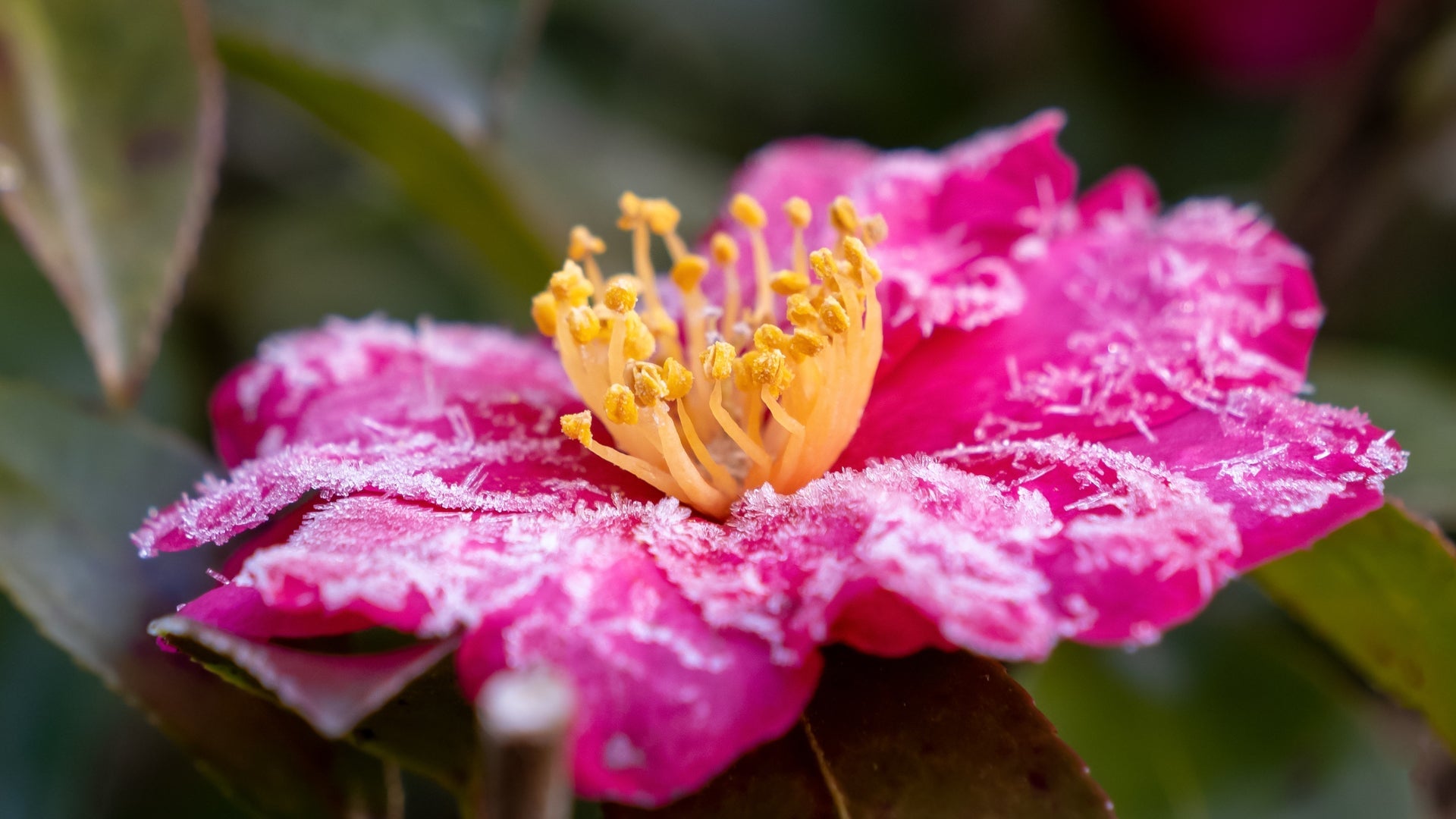
IN THIS GUIDE Do You Need To Deadhead Camellias? How To Deadhead Camellias Camellias are plants that can respond well when lavished with a lot of care, but equally, they can be relatively low maintenance when included out in the garden as part of a mixed perennial planting scheme. One thing you might be wondering about if you grow camellias is whether you should deadhead, and if so, how. Here is all the information you need about deadheading camellias: Difficulty Easy Equipment Required Secateurs (optional) When To Deadhead After flowers fade Do You Need To Deadhead Camellias? Deadheading is one of those jobs in your garden that can take up some time but is often not strictly essential. As Patricia Short (Membership Representative at the International Camellia Society) explains, deadheading can improve the appearance of any plant – and camellias are no exception. However, when it comes to deadheading camellias, busy gardeners should understand that this is not something that you definitely have to do. Deadheading camellias will not improve flowering the following spring, nor will it aid the plant in any important way. However, it can ensure that your plant still looks good even when the flowers fade and begin to brown. “Large camellias will produce hundreds of flowers per plant meaning that deadheading would be a very long, arduous task that offers minimal reward aesthetically,” says Colin Skelly, a Horticultural Consultant. “For smaller camellias, such as those in pots, it might be worth the effort, particularly if they are placed in a prominent place.” If you are someone who loves to keep everything in the garden looking immaculate and you have some extra time on your hands, then you might wish to deadhead camellias. Deadheading will keep the plant looking good and prevent the debris from spreading far and wide. How To Deadhead Camellias Deadheading camellias can be a time-consuming job if you have a larger camellia or even several camellia shrubs on your property, but it certainly is not a difficult one. To deadhead camellias, simply: Take a clean, sharp pair of secateurs, or gardening scissors if you prefer, though you can also simply use a finger and thumb. Using your finger and thumb, snap off each faded flower head where it joins the stem. Take care not to damage buds or developing growth just below the flower. You can place the flowers in your composting system unless they show signs of disease. And the easiest way to display camellias? “Float them” says Patricia. “Camellias’ red and pink blue, but not orange, so if you have a blue bowl, floating them in that is particularly pretty.” As you can see, this is a very easy and simple job, but you really don’t need to make this a priority. If you’re an avid gardener like me, there are plenty of other things to do in your garden that will be a better use of your time.
Learn more
Caring For Delphinium Plants Over Winter - Watch Out For Wetness Rather Than Cold
IN THIS GUIDE 1) Ensure Free Drainage 2) Cut Back Foliage For Winter 3) Move To A Sheltered Spot How you care for delphiniums in winter very much depends on the type of delphinium that you have chosen to grow. Perennial delphiniums are typically H5 or H6 hardy, so they can make it through even extreme winters in UK gardens as long as they are growing in a free-draining spot. The most dangerous thing for delphiniums in winter is not cold, but wet. Delphiniums grown as annuals, also known as ‘Larkspurs’, are the type I usually grow. These will only grow over the summer and will not overwinter to flower the following year. Usually I will simply remove these once the flowering display is over. However, for perennial types which will overwinter: Make sure that perennial delphiniums are in a free-draining spot. Cut back delphinium foliage after the first frosts or in early spring. Move container-grown delphiniums to a sheltered location, protected from winter cold and wet. Read on for a slightly more detailed description of how to care for perennial delphinium in winter: 1) Ensure Free Drainage Delphinium are less susceptible to winter cold damage than they are to the problems associated with water-logging. To keep perennial delphiniums healthy so that they flower again the following year, make sure the roots are in free-draining soil or growing medium, so root rot and other problems associated with water-logging are less likely to occur. “It is, of course, best to grow delphinium if you want to overwinter in free-draining soil, but on occasion, I have improved heavier soils by adding sand and grit during planting and winter mulching,” shares Dan Ori, a Master Horticulturist. 2) Cut Back Foliage For Winter Like other herbaceous perennials, delphinium will die back over winter before producing a flush of new growth the following spring. If you wish to tidy up your beds or borders at the end of the year, you can cut back the leaves after the first frosts. However, it can be a good idea to leave foliage in place over the winter, as though it may look a little untidy, it can be beneficial for wildlife. Leaving dead and dying foliage in place over the winter months gives wildlife a valuable place to shelter during the coldest part of the year. 3) Move To A Sheltered Spot Delphinium growing in containers are more vulnerable than those growing in the ground. The roots of plants in pots are less insulated and can be more prone to cold damage. Therefore, it is a good idea to move perennial delphiniums that are growing in pots to a more sheltered spot for the winter. This should be somewhere they are protected from winter wet as well as from the cold. I often move my delphiniums in containers to a spot in the lee of a wall or fence, which is drier and where excessive rainfall in winter is not as much of a problem. However, it can also be a good idea, especially in wetter regions, to place the dormant plants into a cold frame, polytunnel or greenhouse until the early spring. Roots are less likely to rot if they are placed somewhere where winter rainfall will not be an issue.
Learn more
Sowing Delphiniums: 'Keep Seeds In The Dark Until They Germinate To Improve Rates'
IN THIS GUIDE When To Sow How To Sow Indoors How To Sow Outdoors Delphiniums flower early in the summer and make an attractive contribution to any garden. These plants often reach high into the air, making them truly eye-catching. As a very traditional flower, delphinium has held its place in British gardens for a long time. It’s pretty, there are tons of colours to choose from, and it attracts bees as well as other wildlife. They also look lovely in vases too, so you can trim bits off when the mood takes you and bring them indoors, or, to make yourself extra popular, give them out to friends. Growing delphinium from seed isn’t too challenging, either. Here’s all you need to know about growing delphiniums from seed: Difficulty Medium Equipment Required Seeds, compost, propagation tray When To Sow Indoors January to March; outdoors between June and July When To Plant Out March, April, or May When To Sow Delphiniums are best sown in March or April, just after the last frost and in plenty of time to be ready for flowering season. How To Sow Indoors Here’s how to grow delphiniums from seed indoors: 1) Give Your Seeds A Cold Start Delphinium seeds like a cold start, so pop them in the fridge for about a week before you plan to plant them out. Right before planting, you should take them out of the fridge. Graham Austin from Home Farm Plants recommends keeping the seeds below 15-20°C, as any warm temperatures could disrupt germination. 2) Sow The Seeds If you’re sowing delphinium indoors, you’ll want to start about 8 weeks ahead of the last frost. This will give them time to get established enough for planting out. Fill a seed tray with a layer of compost, and then distribute the delphinium seeds across its surface. Cover the seeds with another very thin layer of compost about 30mm deep. “Keep your delphinium in the dark until they germinate to improve rates”, Graham Austin suggests. 3) Wait For Them To Sprout Delphinium seeds take a few weeks to sprout, so during this time you just need to monitor them. Give the soil a spritz occasionally if it’s drying out, but don’t let the seeds get too wet. 4) Harden Off Your Seedlings Once your delphinium seeds have sprouted and are starting to look strong enough to go out, you’ll need to harden them off. This is a process by which you acclimatise the seeds for their life outdoors. At first, you’ll want to place the seed tray outdoors for a couple of hours a day, then gradually increase this to get them used to longer spells. Choose a sheltered spot so they’re not at the mercy of the weather. 5) Prepare The Flowerbed Delphiniums are famously hungry, so I recommend composting the soil before planting them out. This ensures they’ve got access to the nutrients they need to grow big and strong. 6) Plant Out The Seedlings Once they’ve been hardened off, your delphinium seedlings are ready to start their new life. Carefully move each seedling from the seed tray to its spot outdoors. Leave about 45cm between each seedling so they have space to thrive: this may seem excessive at this stage, but remember, delphiniums are renowned for growing to huge sizes. My take is that it’s much easier to give them the space they need at this stage than to be left wanting later on. How To Sow Outdoors Growing these flowers outdoors right away is possible too. Here’s how to do it: 1) Give Your Seeds A Cold Start This is the same as step one in the previous section: just pop your seeds in the fridge for a week to cool them down. “I have certainly had success with this cold start method for indoor and outdoor sowings,” shares Horticulturist Dan Ori. “This is most likely due to the replication of winter dormancy a seed would encounter outdoors.” 2) Germinate Seeds This is an optional step, but you can give your seeds a little head start by placing them on a wet toilet roll or coffee filter paper and then folding it over the top. Store these pockets somewhere with a bit of light, and after a week or so they should sprout. 3) Sow Directly Into Flower Beds In the early summer months you can sow delphinium seeds directly out into flower beds or your container of choice. Distribute seeds across the soil evenly and cover with about 30mm of soil.
Learn more
End Of Season Delphiniums - Should You Deadhead The Flower Or The Inflorescence?
IN THIS GUIDE When To Deadhead 1) Pinch Off Flowers 2) Isolate The Inflorescence 3) Deadhead 4) Cut Back In Autumn Delphiniums, also known as larkspurs, are deciduous perennials that produce an abundance of tightly clustered flowers on tall spikes and racemes, creating a joyous show of fabulous colour during the height of summer. Deadheading these plants is an important component of plant care, not only because of garden aesthetics but because it redirects the plant’s energy into forming fresh blooms rather than developing seeds. Because delphiniums produce numerous blooms on spikes or racemes, the entry-level gardener may be puzzled as to what to deadhead – the flower or the inflorescence. We’ll guide you on what to deadhead – and how and when. It’s important to remember that, because the blooms are borne on long upright spikes or racemes that emerge from the middle of the foliage, deadheading delphiniums is not as simple or straightforward as deadheading plants that produce individual stalked blossoms. Nonetheless, once you get the hang of it you’ll be able to deadhead larkspurs correctly and efficiently. This process is explained in depth below. Difficulty Medium Equipment Required Gardening gloves, secateurs When To Deadhead July through October as a continuing activity When To Deadhead You should begin to deadhead these plants soon after the first flush of blooms. Thereafter, inspect your plants on a regular basis, I’d recommend every 7-10 days, and deadhead on an as-needed basis. Now you know when to deadhead, here are the 4 steps you need to follow to deadhead your delphiniums: 1) Pinch Off Flowers When you notice a few flowers on an inflorescence wilting or wilted, steady the spike or raceme with one hand and simply pinch off or snap off the flowers with the other hand. 2) Isolate The Inflorescence As the season progresses you will observe that a great number of the flowers have wilted or are withered and spent. For the most part, an inflorescence should be deadheaded from where it emerges from the centre of the plant within the foliage. Hold the spike or raceme with one hand, tilting it a little as necessary, reach downward with the other hand and hook the rear blade of the bypass secateurs around the stalk in question, then slide the secateurs downward to cut it as close as possible to the base where it attaches to the plant. However, on occasion, especially on plants with a bushy habit, you may not want to cut off the entire spike from its base. If you notice that a spike is putting out healthy flowering shoots from its side near the bottom, deadhead it from just above these shoots. 3) Deadhead Take care that the other stalks or stems are not enclosed within the blade along with the one you intend to deadhead. Cut off the inflorescence with a crisp squeeze of the secateurs and pull out. “It is worth considering not deadheading all your flowers, or at least some September blooms, as these can be perfect to harvest seed from to propagate new plants,” shares Dan Ori, a Master Horticulturist. 4) Cut Back In Autumn After the flowering season is over, which is usually around October, you will notice that the plant is withering away. At this time you should cut back the entire plant down to 5-6cm from the ground. It will then come back bigger and better in the spring.
Learn more
20 Delphinium Types With Advice From RHS Gold Medalist Graham Austin
IN THIS GUIDE 1) D. ‘Jill Curley’ 2) D. ‘Elisabeth Sahin’ 3) D. ‘Olive Poppleton’ 4) D. ‘Atholl’ 5) D. ‘Walton Gemstone’ 6) D. ‘Sungleam’ 7) D. ‘Foxhill Nina’ 8) D. ‘Spindrift’ 9) D. ‘Can-Can’ 10) D. ‘Blue Dawn’ 11) D. ‘Kestrel’ 12) D. ‘Langdon’s Blue Lagoon’ 13) D. ‘Blue Nile’ 14) D. ‘Clifford Sky’ 15) D. ‘Galileo’ 16) D. ‘Bruce’ 17) D. ‘Fenella’ 18) D. ‘Michael Ayres’ 19) D. ‘Purple Velvet’ 20) D. ‘Faust’ Delphiniums have flower-laden vertical inflorescences in all kinds of hues and shades that make for a spectacular summer show. These are undemanding hardy perennials that will give the casual gardener much joy year after year. Delightful delphiniums are much-loved by flower-lovers all around the world for their profusion of charming cup-shaped blossoms that are borne on thick spikes, and also on racemes or panicles. Also known as Larkspur, these deciduous perennials exhibit a bushy or columnar habit. They are stately, tall plants, with many varieties attaining heights of 1-2m – sometimes even more. The flowers’ colours are as striking as the plants’ heights. Soft shades of pure white, rich cream, and baby pink at one extreme compete with thrilling hues of rich violet and deep indigo at the extreme end of the spectrum. Also, palmate leaves are so heavily lobed on some varieties that they resemble compound leaves, heightening the attraction of these plants. As delphiniums combine an uncomplicated charm with a symmetric grace, I believe that these flowering plants are among the very few that are ideally suited for all kinds of gardens, from formal gardens of estates to simple cottage gardens in the countryside. “I have often said you could easily have a long border filled with just Delphinium varieties, perhaps one day I will try it!” says Master Horticulturist Dan Ori. “I have had up to 10 types in a long border. I start with the shorter varieties at the front and work backwards, increasing the height. “I also start with the intense and electric colours nearest the point they are first viewed and work along the border, softening the shades and intensity.” When we spoke with Graham Austin from Home Farm Plants (a specialist delphinium nursery in Hemel Hempstead), there were a few notable varieties he chose to share from the 100 or so that he grows at his nursery: “‘Ruby Wedding’, which was bred by a friend of ours, is a unique cranberry colour,” said Graham. “I must also mention ‘Austin’s Dawn Chorus’, which was raised by us at the Nursery. This is a very early flowering delphinium, hence the name ‘Dawn Chorus’.” Moving away from Graham’s favourites, underneath I have listed 20 of my favourite varieties to grow here in the UK. All of my selections have been recipients of the RHS’s Award of Garden Merit and it’s easy to see why. 1) D. ‘Jill Curley’ HARDINESS RATING: H5 FLOWERS: White HEIGHT: 1.5-2.5m Our lead-off variety displays pure white semi-double flowers with an off-white eye on very tall stalks that rise to over 2m. The flowers are not only relatively large at 8cm or more, but they are also abundant on this floriferous variety. 2) D. ‘Elisabeth Sahin’ HARDINESS RATING: H5 FLOWERS: White HEIGHT: 1-1.5m Is an early-to-flower variety rising to heights of up to 1m. It has pure white flowers (even the centre is white!) but for a delicious twist, the occasional bloom exhibits the barest flush of rose-pink or blue! The flowering season is over the spring-summer cusp. 3) D. ‘Olive Poppleton’ HARDINESS RATING: H5 FLOWERS: White and yellow HEIGHT: 1.5-2.5m ‘Olive Poppleton’ completes our treble of whites. This one has whiter than white semi-double flowers adorned with rich golden eyes. The snowy white blooms of this free-flowering variety are borne on spikes on a tall plant of upright habit that grows to about 2m. 4) D. ‘Atholl’ HARDINESS RATING: H5 FLOWERS: White and brown HEIGHT: 1-1.5m Transitioning to black-and-white, ‘Atholl’ has semi-double snow-white flowers with sizeable and conspicuous brown-black eyes, making for a striking contrast. Flowers are borne on spikes up to 1m in length. Though this variety has an upright habit, it is well-branched. 5) D. ‘Walton Gemstone’ HARDINESS RATING: H5 FLOWERS: Silver, grey, purple and white HEIGHT: 1.5-2.5m This variety has particularly light green foliage, but the colour of the semi-double flowers defies precise description. I’d say that they are of a subtle shade of pale greyish-lilac with white eyes, but their tone will seem to shift with the light and the angle. These tone-shifting blooms are about 7cm wide. 6) D. ‘Sungleam’ HARDINESS RATING: H5 FLOWERS: White and yellow HEIGHT: 1.5-2.5m Stiffly erect and about 2m tall, ‘Sungleam’ has 60cm racemes laden with semi-double flowers of a rich creamy shade with buttery flushes and a similarly buttery-yellow eye. The mid-green leaves are heavily lobed and divided, more so than most varieties. 7) D. ‘Foxhill Nina’ HARDINESS RATING: H5 FLOWERS: White and pink HEIGHT: 1-1.5m ‘Foxhill Nina’ grows to only a little over 1m, which is short for a delphinium. Its height makes it most apt for the sweet and demure flowers it bears, which are a soft pink trending to light lavender, and sporting white eyes. These gentle blooms will keep you company plumb in the middle of summer. 8) D. ‘Spindrift’ HARDINESS RATING: H5 FLOWERS: Blue HEIGHT: 1-1.5m Staying with softness and gentility, ‘Spindrift’ also reaches less than 1.5m. It has a bushy habit on which it produces floral spikes. The not-so-big semi-double flowers are a charming shade of a very light, pastel lilac with many petals displaying blue flushes and tints, centred with a white eye. 9) D. ‘Can-Can’ HARDINESS RATING: H5 FLOWERS: Purple and blue HEIGHT: 1-1.5m This is a variety to seek out because it bears fully double flowers that are about 7cm in diameter. While the blooms’ colour varies from light purple to deep purple, many petals are edged or flushed with a rich-blue, adding to its delight. Though its habit is classified as upright, the plant is bushy. 10) D. ‘Blue Dawn’ HARDINESS RATING: H5 FLOWERS: Brown, blue and purple HEIGHT: 1.5-2.5m The flowers of this aptly-named variety are rich-blue, but sometimes of that cool, somewhat steely, tone of blue one sees at daybreak. There’s also a lovely variation: petals frequently display purple flushes and splashes. It is an upright variety that is very tall, attaining a height of over 2m. 11) D. ‘Kestrel’ HARDINESS RATING: H5 FLOWERS: Blue HEIGHT: 1-1.5m An especially vigorous variety, ‘Kestrel’ grows from 1.5-2m tall. Though it has an upright habit, it is also well-branched. That said, the most notable feature is its flower, which is an astonishingly intense, rich hue of mid-blue with random petals displaying flushes and tints of purple. 12) D. ‘Langdon’s Blue Lagoon’ HARDINESS RATING: H5 FLOWERS: White and blue HEIGHT: 1.5-2.5m This variety features flowers of a head-turning shade of blue which is a saturated, almost electric hue. Prominent white eyes accentuate the intense colour. The 7cm flowers are borne on spikes up to 90cm tall. This strong-growing cultivar attains a height of nearly 2m. 13) D. ‘Blue Nile’ HARDINESS RATING: H5 FLOWERS: White and blue HEIGHT: 1-1.5m In this variety, that rises to about 1.5m, the semi-double flowers steal the show. These are of a striking hue of blue ranging from an intense mid-blue to rich purplish blue, often with purple tinges and flushes. These hues are intensified by the conspicuous snowy white eyes. 14) D. ‘Clifford Sky’ HARDINESS RATING: H5 FLOWERS: White and blue HEIGHT: 1.5-2.5m A very tall variety that levels out at about 2m has its height further emphasised by its erect habit and long floral spikes. The 7cm semi-double flowers bloom during mid-summer. They are of a soothing sky blue to lilac shade and sport white eyes. 15) D. ‘Galileo’ HARDINESS RATING: H5 FLOWERS: Blue HEIGHT: 1.5-2.5m This variety’s spikes are richly laden with semi-double blooms of a 7cm width, but most noticeably, they have a marvellous colour. They are of a light but intense sky-blue freely tinged and flushed with light purple. It is an early-flowering variety of mid-height at just shy of 2m. 16) D. ‘Bruce’ HARDINESS RATING: H5 FLOWERS: Purple and brown HEIGHT: 1.5-2.5m ‘Bruce’ grows to about 2m in height and sports particularly interesting foliage on account of its heavily lobed leaves that display a glossy sheen. This cultivar’s racemes are big at just over 1m in length. These bear rich purple flowers with the petals gradating from centre to edge to a slightly darker shade. 17) D. ‘Fenella’ HARDINESS RATING: H5 FLOWERS: Blue HEIGHT: 1-1.5m At only 1.5m tall, ‘Fenella’ is considered the short option where delphiniums are concerned. Even so, the racemes are 90cm long and bear flowers with a brownish eye and of thrilling and unusual shades that range from deep indigo to deep bluish-purple. 18) D. ‘Michael Ayres’ HARDINESS RATING: H5 FLOWERS: Blue and purple HEIGHT: 1-1.5m A special variety that has an upright habit but displays well-branched spikes, rising to just over 1.5m in height. It blossoms in early summer, producing flowers of a rich, royal purple, centred with a dark eye. The flowers are of a lighter shade towards the centre and have a glazed or matte finish. 19) D. ‘Purple Velvet’ HARDINESS RATING: H5 FLOWERS: Blue and purple HEIGHT: 1-1.5m Recognised as especially floriferous, this branching variety produces 80cm spikes. The semi-double blooms are 7-8cm wide. Typically of a brilliant purple hue, flowers are near mauve at the centre but virtually violet at the distal ends. A velvety sheen enhances their charms. 20) D. ‘Faust’ HARDINESS RATING: H5 FLOWERS: Purple and blue HEIGHT: 1.5-2.5m Though it grows to only about 1.8m, this one is a dramatic choice for a specimen plant. For one thing, the leaves are singularly dark and very divided. As for the flowers, they are borne on stiffly erect racemes, and the blooms are of a rich, deep indigo-violet hue that verily holds the eye.
Learn more
17 Favourite Camellias Chosen With Help From The International Camellia Society
IN THIS GUIDE 1) C. japonica 2) C. sasanqua 3) C. chrysantha 4) C. japonica ‘Akashigata’ 5) C. sasanqua ‘Plantation Pink’ 6) C. sasanqua ‘Winter’s Snowman’ 7) C. x williamsii ‘E.G. Debbie’ 8) C. sasanqua ‘Apple Blossom’ 9) C. japonica ‘Nuccio’s Gem’ 10) C. japonica ‘Magnoliaeflora’ 11) C. japonica ‘Margaret Davis’ 12) C. japonica ‘Eleanor Martin Supreme’ 13) C. japonica ‘Higo Okan’ 14) C. japonica ‘Masayoshi’ 15) C. saluenensis 16) C. sinensis 17) C. reticulata References Though Camellias are native to a limited range in the tropical and sub-tropical regions of East Asia and South-East Asia, they have been hybridised in Europe and the United States.1 A century ago Camellia flowers used to be just about the most fashionable in Europe. As popular as Camellia plants still are in many a European country, they are even more popular in the American South and California.2 As a result of their popularity, there are 230 Camellia species, whilst hybrids and cultivars number over 20,000!3 “When asked which is his favourite camellia, my husband always answers: ‘the one I saw last’,” says Patricia Short from the International Camellia Society. “My favourite variety? I couldn’t possibly choose. “I love the different flower forms of camellias, from single purity to formal elegance. Also, some cultivars have a scent, which is a true delight”. Camellia ‘Inspiration’ “I have Camellia ‘Inspiration’ in my own garden as it flowers from January to April and is always covered in flowers every year,” shares Lorraine Summers from Trehane Nursery. “Betty Foy Sanders is striped and that’s lovely as well. San Dimas is a lovely dark red with yellow stamens. C. japonica ‘San Dimas’ “There are too many to choose from!” The most famous species, and the ones from which most hybrids and cultivars descend, are C. japonica and C. sasanqua. Underneath we review these two species plus more varieties chosen for their marvellous blooms. 1) C. japonica Native to Southern China, Japan, and the Koreas, growing in nature on wooded hillsides.4 Its typical height is 5-6m though it can attain much taller heights. The distinctly leathery, glossy leaves are dark green. The showy flowers have a relatively robust look about them; they comprise of six or seven petals and are white or in tones of rose-red. They are 5-9cm in diameter, while some cultivars’ flowers are up to 12 centimetres across. It blooms from the middle of winter to the end of Spring. It is not a profuse bloomer but flowers are relatively long-lasting. 2) C. sasanqua Native to Japan, it too is found in nature on wooded hillsides.5 Its typical height is up to 4m and seldom gets very tall. The serrated leaves are glossy and of a deep-green hue. The flowers, though showy, are less so than those of C. japonica. They have a more delicate look, and the five to eight petals are usually ruffled or fluted. Flowers are 5-7cm in diameter, while some cultivars’ flowers are up to 10cm across. Blooming time is early Autumn to mid-Winter – they are very profuse bloomers but a flower lasts only two or three days. Clearly, C. japonica and C. sasanqua are nature-made complements of one another. Because sub-species and cultivars in the main inherit the parent species’ characteristics, these two species’ derivatives complement each other wonderfully well. 3) C. chrysantha This is not a cultivar but a distinct species that is native to China and Vietnam. Unlike the other Camellias listed below, this one’s as common as hen’s teeth. “Camellia chrysantha is now on my watch list as I’ve never seen it in cultivation before,” shares Colin Skelly, a Horticultural Consultant with over 13 years of experience. “Whilst I like the tried and tested, there’s nothing like trying something rarer and more unusual and watching people try to identify your prize specimen!” If you can find a plant it will extend your garden’s Camellia blooming season clear into April. On top of that, the semi-double flower will introduce possibly the rarest colour for a Camellia to your collection: yellow! 4) C. japonica ‘Akashigata’ A medium-sized shrub though its flowers are anything but. Up to 12cm in diameter, they are among the largest but that is not this plant’s only attraction. The semi-double form flower has a somewhat delicate appearance and is gorgeously coloured; it ranges from pastel pink to deep, rich rose-pink. 5) C. sasanqua ‘Plantation Pink’ Of upright habit and robust appearance, this plant bears single to semi-double flowers whose fragile appearance contrasts with that of the plant. The stamens form a central yellow disk which sets off the soft pink petals. Quite often they are not exactly pink but a tone of bluish-pink that is unusual and highly appealing. 6) C. sasanqua ‘Winter’s Snowman’ The plant is large, the flower fragrant, and the stamens distinctly fewer and less prominent than in most varieties, and often hidden by a folded or ruffled petal. This clever concealment leaves the pure, snowy white of the semi-double flowers to make an even greater visual impact. 7) C. x williamsii ‘E.G. Debbie’ Could just as well be named ‘Pink Perfection’. Carrying a hue that is the very definition of pink and boasting perfect symmetry in its somewhat prim-looking formal double flower, it projects both softness and grace. The upright and neat habit of the plant only adds to the overall perfection. 8) C. sasanqua ‘Apple Blossom’ One of the under-rated Camellia varieties. There is also a C. japonica ‘Apple Blossom’. Against a backdrop of darker-than-usual glossy leaves, the semi-double bloom looks absolutely ravishing. It is of a gradated tone, starting snowy white near the centre, developing pink tinges and tints, and finishing with rose pink at the edges. 9) C. japonica ‘Nuccio’s Gem’ Causes the word ‘perfection’ to come to mind again, or the word ‘stunning’. One scarcely pays heed to the shrub’s height or habit because this formal double is a pure, snowy white from centre to edge. Even an imperfect specimen may deceive you into thinking that you are admiring a flower sculpted from Parian marble. 10) C. japonica ‘Magnoliaeflora’ A cultivar dating from well over a century ago; it is of medium height and spreading habit. The semi-double flowers are among the loveliest; to begin with they present an unusually symmetrical aspect. However, their unique loveliness derives from their very pale pink-purple-blue tones. 11) C. japonica ‘Margaret Davis’ Of upright habit with glossy bronze-green foliage behind a dazzler of a flower. In peony form, it is creamy white with rose-red edging as if stroked with a fine brush, and the red ‘bleed’ into the white makes the bloom even more arresting. This edging is present on all the petals and not just the outer ones. 12) C. japonica ‘Eleanor Martin Supreme’ An exhibit – for those who say that the Camellia flower presents a ‘sculpted’ aspect, Eleanor Martin Supreme shows off the ‘marbling’. This unusual and beautiful American cultivar bears large semi-double bicoloured flowers that display white ‘marbling’ (or dappling) on a rose-pink background – or is it the other way round? 13) C. japonica ‘Higo Okan’ Now if marbled flowers are not your cup of tea but bi-coloured flowers are, try this evergreen shrub, the Camellia of the Samurai. As the stamens are even more numerous and prominent than usual, this single-form flower effectively has a central disk in yellow, snow white petals, and an edging or bordering of varying thickness in shades of hard pink to scarlet. 14) C. japonica ‘Masayoshi’ Another bi-coloured variety but of an entirely different kind. The plant is smallish and compact, and yet again the flowers are at the other extreme, being 12cm wide. Of semi-double form, the flowers display delightful bleeds, flecks, stripings, dapples, and splashes of white on a red background. Other important species include: 15) C. saluenensis ‘Bartley Pink’ 16) C. sinensis ‘Chinsingganzai’ 17) C. reticulata References 1. Camellia japonica. (n.d.-c). Missouri Botanical Garden. Retrieved March 13, 2023, from https://www.missouribotanicalgarden.org/PlantFinder/PlantFinderDetails.aspx?taxonid=287331 2. Bender, S. (2022, November 13). The Complete Guide To Camellias. Southern Living. Retrieved March 13, 2023, from https://www.southernliving.com/garden/camellias 3. Camellia. (n.d.). Kew Royal Botanic Gardens. Retrieved May 2, 2023, from https://powo.science.kew.org/taxon/urn:lsid:ipni.org:names:39017-1#children 4. Camellia japonica. (n.d.-d). Kew Royal Botanic Gardens. Retrieved March 13, 2023, from https://powo.science.kew.org/taxon/urn:lsid:ipni.org:names:828524-1 5. Camellia sasanqua. (n.d.). Kew Royal Botanic Gardens. Retrieved March 13, 2023, from https://powo.science.kew.org/taxon/urn:lsid:ipni.org:names:927409-1
Learn more
Help Your Gerbera Survive Winter In 6 Steps - Acclimatising Is The 'Trickiest Part'
IN THIS GUIDE 1) Dig Up & Repot 2) Acclimatise The Plant 3) Position On A Sunny Window Sill 4) Water Regularly 5) Trim Blooms 6) Plant Outside In Spring References Gerberas make such a happy addition to any garden or home, blooming in almost every shade imaginable, from orange to pink, to blue to white and many colours in between. Their versatility in colour means they pair beautifully with many other plants, although they look particularly gorgeous next to roses, asparagus, lilac, freesias and chrysanthemums. Thanks to their large assortment of colours, gerberas are said to symbolise beauty and cheer – who doesn’t want a bit of that in their garden?1 Whilst gerberas are relatively easy to grow, the real challenge comes in winter. Helping them to survive during the long, cold months is tricky, and not always possible, but it’s certainly worth a go. Here are six essential steps for giving your gerberas their best shot at survival: Difficulty Hard Equipment Required Garden trowel, a pot, high-quality potting mix 1) Dig Up & Repot Gerberas do not like cold weather and will not typically survive temperatures below 5°C, so as soon as it drops below this temperature at night, it’s time to get cracking. Using a garden trowel, gently dig up the plant. Fill a container with good quality potting mix and carefully plant the gerbera into the pot. 2) Acclimatise The Plant Acclimating the plant helps to reduce stress on the gerbera. During the night, I bring the plant inside and then pop it back outside during the day. “I have found this to be the trickiest part of trying to help Gerberas to survive the winter,” says Colin Skelly, Master Horticulturist. “Too quick and abrupt a move can cause harm, so try to make the contrast and inside and outside too sharp, too quick. “I move mine into a cold greenhouse next to an open door, which has given the best results.” After doing this for a while, you can gradually reduce the time it spends outside. Once temperatures drop below 6°C during the day, your gerbera should be permanently living indoors. 3) Position On A Sunny Window Sill You will now want to place your pot or container on a sunny window sill. However, I try to avoid intense, bright light. Overwintering gerberas thrive best in indirect sunlight at a room temperature of around 21°C. 4) Water Regularly Check your gerbera regularly and whenever the top 1.25cm feels dry, it’s time to give it a drink. I find that this will usually be every 3-5 days, but you should keep checking on your gerbera, especially when first tending to it. 5) Trim Blooms Not all gerberas will bloom during winter but, if you do get lucky, be sure to trim the flowers the moment they fade. This will encourage extended flowering and keep the plant looking neat and tidy. 6) Plant Outside In Spring Once the days are warmer, nights are reliably above 5°C and there is no threat of frost, you can return your Gerbera outside. You can either keep it in its pot or replant it in your garden. As previously mentioned, gerberas can be tricky customers in winter and even with the most care taken, they may not survive – but follow these steps and you will be giving them the best chance possible. Good luck! References 1. Gerbera Flower Care Tips and Meanings. (n.d.). Interflora. Retrieved March 16, 2023, from https://www.interflora.co.uk/page/flower-types/gerberas
Learn more
These 10 Beautiful Gerbera Varieties Are Uniform And 'Reliable Performers'
IN THIS GUIDE 1) G. ‘Everlast’ 2) G. jamesonii ‘Festival’ 3) G. ‘Garden Jewels’ 4) G. ‘Garvinea’ 5) G. ‘Garvinea Sweet’ 6) G. ‘Jaguar’ 7) G. ‘Landscape’ 8) G. ‘Revolution’ 9) G. ‘Mega Revolution’ 10) G. Sakata’s Series References Gerbera species number 24 accepted species, in addition to which there are numerous cultivars and many well-established series.1 For all practical purposes, it is the series that have ‘taken over’ in both the home gardening and florist realms of Gerbera growing. For this reason we present several Gerbera series and identify a few recommended varieties in each. We have dispensed with redundant or repetitive words like ‘Gerbera’, ‘Jamesonii’ and ‘Series’ and simply identify each series by its name. “If you buy a named plant from a Series, such as the Mega Revolution series of Gerbera jamesonii, then you know you are buying a plant that has been thoroughly bred for the commercial market, often for cut flowers but sometimes for garden use,” explains Colin Skelly, Horticulturalist and Consultant. “This is usually a sign that the plants will be uniform and reliable performers.” They are presented in alphabetical order with the exception of ‘Mega Revolution’ which follows ‘Revolution.’ 1) G. ‘Everlast’ ‘Everlast’ This variety features semi-compact plants that rise to about 35cm. This series was developed for pot- and container-growing and its varieties are well suited to be treated as houseplants. They bear single flowers that have an especially long vase life, hence the series’s name. They also boast an especially long blooming season from early spring to late autumn. These plants’ hardiness rating is H3. Notable varieties are: ‘Everlast White’ ‘White’ or ‘Amgerbwhi‘ which has snowy white rays which are pink-tinged underneath. ‘Pink’ or ‘Amgerbpink‘ with rich pink to magenta-pink rays. ‘Carmine’ or ‘Amgerbcar‘ that has flowers in proper carmine – a rich, deep red. All have a yellow or orangeish central disk. 2) G. jamesonii ‘Festival’ This was developed by Odense’s Daehnfeldt Seed and commercialised by Japan’s Sakata. This series’s plants produce semi-double flowers. They flower profusely from spring to early autumn but only for one season. On the other hand they are also floriferous and the blooms are on the large side. Many members have a contrasty black or chocolate eye. These compact plants reach heights of only 25-35cm and are especially suited for containers and as they are very tender at only H2 these greenhouse varieties can be treated as houseplants by the hobbyist gardener. ‘Golden Yellow’ is a deep, sunny yellow with a black eye. ‘Apricot’ is a middle orange of a rich hue with a chocolate eye. ‘Neon Rose’ is pink-red with a psychedelic neon tone. 3) G. ‘Garden Jewels’ ‘Fuchsia’ A relatively new series of fully double flowers developed in the United States and offers the hardiest varieties. With a hardiness rating of H5 this is the Gerbera that can be planted outdoors virtually anywhere in the UK. Plants of this series are floriferous, holding several flowers simultaneously, and bloom from spring to autumn. They reach heights of 30-35cm. ‘Red’ has a yellow eye and pure, deep red petals. ‘Fuchsia’ is effectively a bi-colour as off a small dark centre is a ring of intense electric yellow with the rays an equally intense electric pink. ‘Frosted Hot Pink’ ‘Frosted Hot Pink’ has rays of the hot pink colour of its name, with both the main rays and the smaller inner rays having broad white tips. 4) G. ‘Garvinea’ ‘Garvinea’ One of the well-established series and is among the most widely available in the United Kingdom. Plants in this series are very tall, rising to 40-45cm. Plants produce semi-double flowers which are among the smaller ones at 5-6 centimetres while the plants are among the most disease-free. With a hardiness rating of H3 they used to be hardier than other series and other varieties but now have been superseded by genuinely hardy ones. They are valued for their prolonged blooming season; they flower prolifically from early spring until the end of autumn and even beyond. ’Sylvana’ has a yellow disk and pure white rays. ‘Orangina’ has a yellow-orange eye from which radiate rays of a similar or even the same rich yellow-orange hue. ‘Fleurie’ has an orange-red disk and rays of an exciting deep red to crimson shade. 5) G. ‘Garvinea Sweet’ ‘Garvinea Sweet Surprise’ May be considered the ‘improved’ iteration of the ‘Garvinea’ Series. It is similar to the Garvinea series but with a couple of small but significant differences. For Gerberas, this series’s plants are very hardy with some cultivars hardy to H4, and the flowers are usually a little bigger (than ‘Garvinea’) at 7-8cm across. ‘Sweet Memories’ is technically a bi-colour – it has a greenish-yellow eye and while the main layers of rays are soft pink, the smaller inner rays are white producing the effect of a white ring. ‘Sweet Glow’ has a greenish-yellow eye and petals of a solid, intense orange-vermilion colour. ‘Sweet Dreams’ has disks of yellow turning orange and rays of a saturated neon’ish pink. 6) G. ‘Jaguar’ Was specially developed for two features: early blooming and uniformity (that is in bloom size and blooming period across the colours). In the right conditions, these plants will start blooming from early spring and continue into autumn. At 25-30cm tall, they are mid-height varieties suitable for growing in the garden as well as in containers. They have comparatively a proportionally smaller spread at only about 18cm. Plants hold 4-5 flowers at the same time; these are semi-doubles about 9cm wide. They are classified as annuals but are good for Zone H2 so these perennials will be fine if overwintered indoors. Seed packets are sold as mixes and include pastel and bright shades in yellows, oranges, pinks, and reds, plus white. 7) G. ‘Landscape’ Developed to be grown by home gardeners in large containers specifically for the purpose of getting florist-grade cut flowers from your patio that will last for up to two weeks in a vase. This series’s plants are propagated only via tissue culture. Plants are quite tall, reaching heights of about 45 centimetres. For the named cultivars (i.e. not the ‘Glorious’ sub-range) the blooming season is comparatively short, running from only July to October. The flip side is that they bear even 10 flowers simultaneously, and they are stunners, being full doubles that are 12 centimetres across. They are among the most tender of Gerberas, good only to Zone H2. ‘Yellowstone’ has a dark eye and rays of light but bright yellow with the smaller, inner rays providing an amber-golden accent. ‘Redwood’ has a dark eye and very saturated deep orange rays with all of them just tipped with yellow. ‘Everglades’ – a bi-colour, has the smaller, inner rays in an intense magenta pink hue and the larger, outer ones in soft, pastel pink. 8) G. ‘Revolution’ Developed to be a pot-grown series of plants, bred for uniformity of bloom time across the range, and for producing florist-class flowers. These dwarf plants grow to only 15-20cm though comparatively, they are proportionately wider at 25-30cm. They are meant for 5-inch pots. ‘Revolution’ However, for dwarf plants, they produce seriously large semi-double flowers measuring 7-10cm. They bloom from early spring into autumn. At a hardiness rating of H3 this series’s plants are considered half-hardy. ‘Revolution’ comprises over 15 named cultivars. ‘Bicolor Red Lemon’ ‘Bicolor Red Lemon’ has a chocolate centre with the rays being a sparkling lemon yellow at the medial ends, producing the effect of a yellow ring, and rose-red outside. ‘Red with Light Eye’ has a yellow centre and near-red petals of a magnetic vermilion-red. ‘Orange with Light Eye’ has a yellow centre with rays of an intense, saturated orange hue. 9) G. ‘Mega Revolution’ Revolution’s big brother and this series is also meant for pot growing. Its plants have the same characteristics as those of ‘Revolution’ with a few differences. They are a little taller at 15-25cm and correspondingly wider, though they are not considered large plants for Gerberas. It is their semi-double blooms at 12cm that are truly huge, and range from 12-15cm. ‘White with Light Eye’ has a greenish-yellow eye and pure white rays. ‘Orange with Light Eye’ is a middle shade of orange yet is amazingly brilliant and saturated. ‘Deep Rose with Light Eye’ is a most unusual and striking colour that can be described only as fuchsia-magenta-rose-red. 10) G. Sakata’s Series ‘Durora’ Back in the 1970s Sakata of Yokohama had developed and marketed the very first dwarf Gerbera series specifically for pot- and container-growing, the now-discontinued ‘Happipot’. Since then they have developed several other series of which the current ones are ‘Majorette’, ‘Durora’, ‘Festival’ and ‘Festival Mini’. All are meant for pots and containers. Each has its own particular strength, such as large blooms and profuse blooming for ‘Festival,’ early blooming and uniformity for ‘Majorette’, and full double flowers and long vase life for ‘Durora’. ‘Majorette’ ‘Festival Mini’ is quite unique because this series has miniature plants – ‘super-dwarfs’ – meant for 3.5-inch pots. They are a mere 15-20cm with corresponding miniature blooms in different shades of yellow, pink, orange, and red. They are classified as annuals. References 1. Gerbera. (n.d.-b). Kew Royal Botanic Gardens. Retrieved March 16, 2023, from https://powo.science.kew.org/taxon/urn:lsid:ipni.org:names:331624-2
Learn more
Short On Space? You Can Grow Choisya In Pots, But You'll Need A Large Planter
IN THIS GUIDE Can You Grow Choisya In Pots? Choosing A Container Compost Requirements Potting Up Potted Choisya Plant Care References Choisya shrubs can work well in many gardens and are a popular choice, but if space is short or soil is unsuited to these plants, can you grow choisyas in containers? If you’re wondering the same thing, then this article’s for you. Can You Grow Choisya In Pots? The good news is that choisya can work very well in pots. Cultivars vary in their height and spread, and smaller and more compact varieties are best suited to container cultivation. ‘White Dazzler’ for example, is one of the smallest options on offer, growing into neat and compact mounds less than 1m in height and spread, making it a particularly good option if you are looking to grow a choisya in a pot. ‘Royal Lace’ is another compact cultivar well suited to small space and container growing. It is a hybrid cultivar with golden to lime green lacy leaves and white flowers. However, while slower growing and smaller choisyas are ideal for container growing and will require less pruning, other choisyas can also do perfectly well in pots of sufficient size. Choosing A Container Choisya shrubs are usually purchased as pot grown specimens. I find it is typically best to repot the choisya plant that you will grow in a container long term into a container that is just a little larger than the one in which it came. Ultimately, a mature choisya will need a large container, such as a half-barrel or another larger pot or planter. I’ve found that choisya will thrive in terracotta or ceramic pots, with good drainage holes at the base. Remember, these shrubs cannot tolerate water-logging, so good drainage is essential. A heavier pot with good thermal mass is a good idea because it can help to protect a choisya through the coldest months. Compost Requirements When potting up a choisya that will remain in a large pot for the long-term, you should fill it with a loam-based growing medium. The RHS recommends using 2/3 John Innes no. 3 and 1/3 peat-free, multipurpose compost, though you might also make your own homemade equivalent.1 Just remember that the mix for choisya should create conditions that remain reasonably moist while allowing excess water to drain away. Any mix that might promote waterlogged conditions should be avoided. Potting Up Though you can pot them up at any time, choisyas that are potted up in the spring should have the least trouble in establishing successfully. When potting up a choisya, remember to make sure that the shrub is placed in its new pot so that the growing medium sits at the same level on the plant that it was at in the previous pot. Place some of the growing medium in the base of the new container, place the plant, and then gently firm more of the growing medium around the sides. Water it in well but make sure that excess water can drain away. It is also a good idea to place a mulch of good quality homemade compost or other organic matter around the top of the container, but make sure that the mulch is clear of the base of the plant stems, as it could cause rotting to occur. How Many Can You Plant Per Pot? These shrubs work best when planted in their own containers as stand-alone specimen plants, but remember that you can group containers to derive benefits from having plants placed close to one another. Grouped pots may also fare better during the winter months. Potted Choisya Plant Care Choisya in containers should be placed in as sunny and sheltered a spot as possible. While many choisyas can cope with a degree of shade, in most of the UK they will tend to do best when provided with as much sun as possible. Remember, choisyas are typically H4 hardy, meaning that when growing in pots, it is especially important to grow them in as warm and sheltered a spot as possible so that they can survive the winter months. Plants in pots are more susceptible to winter cold and may be more likely to experience frost damage and damage to the roots in a particularly chilly spot or during a particularly severe winter. In some areas, it may be best to move a pot-grown choisya undercover, or into the lee of a wall, during the coldest and wettest part of the year. Water choisya in containers regularly during the settling in period and in dry, warm weather, but take care not to overwater and make sure that excess water can always drain away freely. Reduce watering as the weather cools, and make sure that plants don’t sit in a wet growing medium over winter. In early spring each year, remove the top 5cm of the growing medium from your container and replace it with fresh potting mix. Replenish the mulch of homemade compost or other organic material, again, taking care not to mound this around the base of the plant. If flowering is poor, you can also consider feeding with a potassium-rich organic liquid plant feed in the spring. Pruning is typically carried out in mid-spring, or immediately after flowering if flowering occurs around this time. “When pruning choisyas for aesthetic reasons, make the pruning cut above a node, where the group leaves emerges from the stem, to avoid unsightly bare stems,” says Colin Skelly, a Horticultural Consultant with 13 years of experience, including 5 at The Eden Project. “Ideally, this will be below the leaves of adjacent stems so that the pruning cut will not be obvious. “The stem will regrow and not be noticeable from the point of cutting but this may take a few months. “Try to avoid cutting back further than is strictly necessary to keep a natural shape to the shrub.” Deadheading for aesthetic reasons can be undertaken after the flowers have finished, cutting back faded flowering stems to the next healthy leaf bud. Keep an eye on your choisya and repot or prune to restrict the size if the plant outgrows the container or growth/flowering seems poor. Look out for roots emerging from the holes at the base of the pot. Growing any shrub in a container takes more work and maintenance than growing it in the ground, but growing choisya in containers is not too much of a challenge and I consider them to be an excellent choice for a container garden. References 1. How to grow choisya. (n.d.). Royal Horticultural Society. Retrieved March 14, 2023, from https://www.rhs.org.uk/plants/choisya/growing-guide
Learn more