Growing


Garden Designers Recommend These Plants To Get Privacy In An Overlooked Garden
IN THIS GUIDE Trees For Privacy In An Overlooked Garden Trained Trees Evergreen Or Deciduous? Structures With Climbing Plants For Privacy Privacy Hedging Bamboo Screening Ornamental Grasses Perennial Plants Privacy can be one of the most important things in a city or town garden. It can be awful to feel overlooked – and being able to use your garden fully means it must feel like a safe haven – free from prying eyes. In truth, your neighbours are likely not as interested in what goes on in your garden as you might think, but creating a sense of privacy can be important to make sure you can fully enjoy spending time in your outside space. “I think by having complete privacy, it stops us from talking to our neighbours,” shares Danny Clarke, a Garden Designer and Director of the charity Grow2Know. “There might be parts of your garden where you want to have a bit of privacy, but there also might be parts where you can lower garden hedges so you can speak to neighbours. “I don’t believe we should cut ourselves off entirely from everyone around us. We should try and be more connected as I feel we’ve lost that in the last 30-40 years.” Many people who do desire complete privacy will turn to man-made solutions. They will often build pergolas or garden buildings that create private sanctuaries in a garden. But while these solutions can have their place, when it comes to achieving privacy in a garden, plant choices are key. The appropriate planting will almost always be the solution when it comes to tackling privacy woes. The first and most important thing to consider if you want to enhance a sense of privacy in your garden is sightlines. This is all about considering if people can see you at different spots in your garden, and, crucially, where they can see you from. Some people make the mistake of turning their garden into a fortress, completely surrounded by impenetrable planting. Plants in the right places “The archetypal fortress garden will be surrounded by tall conifers planted in straight lines,” shares Master Horticulturist Colin Skelly. “It certainly provides enclosure but at the expense of any semblance of attractive place-making. “It invariably also creates conditions that are hostile to growing other plants. “Consider employing a skilled gardener or a garden designer to offer advice or designs for your garden space or buy books or take a short course to develop your own knowledge.” But this can make a garden dark and unappealing – a few carefully placed plants can work far better than blanket border screens. “I think if you think first about where you want your garden to be private, then you’ll have a much lovely garden experience, rather than just blocking out all of the sun,” says Ann-Marie Powell, Garden Designer. “There are lots of plants that you can use, it’s all down to personal choice. You’ve got plants like Clematis armandii or, one of my favourite evergreens, Osmanthus aquifolium. There are also things that are scented or you could use bamboo – it depends on your garden.” Plants can offer a huge range of different solutions, whether you would like privacy from the side, or screening from windows that overlook your property from higher up. Trees For Privacy In An Overlooked Garden Smaller trees closer to seating areas can be more effective for blocking sightlines Of course, some of the most useful plants in a privacy improvement scheme are trees. Large, mature trees can block sightlines from above, and make a garden feel more tranquil and private. But whether or not a large mature tree is right for your garden will depend on the size of the space and where exactly the tree would need to be positioned to provide the requisite privacy. A tree to the north of the space, for example, may not be too much of a problem. But in certain circumstances, such as when a tree would have to be positioned to the south, it may create far too much shade – especially in a smaller garden. Unless you wish to embrace a woodland style garden, and shade planting, this might not be the best solution for you. However, even if you are of the opinion that using a tree or trees for privacy will create too much shade, there are some other options to consider. Trained Trees One thing to consider, for example, is a row of columnar fruit trees, or pleached fruit trees to sit above a fence. Trained trees can enhance privacy, and often without casting anywhere near as much shade as a standard form. Another thing to consider is that a small tree positioned close to a seating or outdoor dining area, placed in exactly the right place, can be more effective for blocking sightlines and improving privacy than a much larger tree placed further away. Evergreen Or Deciduous? When choosing trees for privacy, think about whether you require privacy during the summer months only (when you are actually more likely to be using your garden) or really do want to block sightlines throughout the whole year. Deciduous trees can work best for summer privacy, and evergreens will of course remain clad all year. Bear in mind, however, that evergreens can cast deeper shade, and so a mix of evergreens and deciduous trees can often be best for year-round cover. Structures With Climbing Plants For Privacy If your garden is overlooked from above, another thing to consider is creating structures that are not completely covered, but which can be covered with climbing plants that will add a degree of privacy without making you feel too hemmed in, or too separated from the rest of the garden. A porch, pergola or arbour structure can support a range of beautiful climbing plants, which will screen you from view of the windows of neighbouring properties. Again, you need to think about whether you really need year-round cover, or are happy to be shielded from view only when deciduous plants are in leaf. You can choose evergreen perennial climbers which will provide a permanent screening from above, such as Ivy or Parthenocissus, or opt for deciduous perennials like climbing roses, for example, which will be beautiful during the summer, but lose their leaves later in the year. The structure you create might cover a whole seating or dining area, or a simple hammock or bench seat. How large the structures are and where they are positioned will obviously determine which climbing plants you should choose. You might also consider growing annual climbers up a structure of this kind. These might even be edible crops, and help you make the most of every inch of your garden for food production. Edible climbers like runner beans, squashes etc. can also enhance privacy during the summer, while also giving you an edible yield. Privacy Hedging A Willow ‘Fedge’ If you are more overlooked from the side than from above, privacy hedging could be the perfect solution. Many different shrubs and small trees even can be perfect for inclusion in a hedge of this type. Our favoured approach is to create mixed privacy hedges, with a mixture of evergreen and deciduous plants, which are beneficial to wildlife (and to us) in a range of ways, as well as providing the privacy we crave. Remember, the hedge might not need to be positioned along the borders of your garden. Cypress trees Interesting privacy solutions can also involve, for example, placing a hedge along the front of a patio, to divide it from the rest of the garden and block sightlines to a part of the garden where you want to spend a lot of your time. Again, a shorter hedge closer to a seating area could block sightlines more effectively than a much higher hedge further away. Another idea, instead of a hedge, is a ‘fedge’ (Living fence) of willow or similar. This is a cross between a hedge and a fence, which can offer a beautiful way to create a partial screening between your own property and the neighbours, or a busy path or road. Bamboo Screening Bamboo is another plant that can be useful for adding privacy in a garden. There are a wide range of different bamboos to consider for screening in different environments and situations. Bamboo can grow quickly, and won’t necessarily feel as oppressive as a thick border hedge or treeline. Consider carefully which bamboo to choose – some can easily take over a garden before you know it! But the right bamboos in the right places can certainly help you block sightlines and enhance privacy in your garden. Ornamental Grasses Many other tall plants can also effectively block particular sightlines and create screening between gardens, or between garden zones. Taller ornamental grasses can be useful for adding height and structure and blocking your seating, dining or sunbathing area from view. But with their wispy forms, they will often not feel as heavy or oppressive as larger shrubs or trees. Ornamental grasses in privacy schemes pair well with taller prairie planting too. Perennial Plants A prairie or perennial border could be an alternative for a garden border that obscures views without entirely keeping the exterior out. It can be a softer and more delicate border for a garden, or used to edge a patio or area of decking. Using plants to get privacy, rather than relying on man-made fences or walls can stop your garden from feeling too enclosed, while still giving the sense of seclusion and peace you are looking for. In fact, it is worthwhile remembering that plants, unlike a simple wooden fence, for example, will block sound and even smells to a greater degree. So neighbours are not only less likely to see you, they will be a little less likely to hear or smell you too! One final thing to think about is that privacy is not just about sight. Plants help to create a soundscape in your garden, so your garden chats are less likely to be overheard. If you don’t want neighbours to hear you, you should also think about adding a water feature in your garden. With the sound of wind in the leaves, and the babbling sound of water, sound transmission should be less of a concern.
Learn more
Horticulturist Colin Skelly Shares 12 Evergreen Shrubs That Are Perfect For Pots
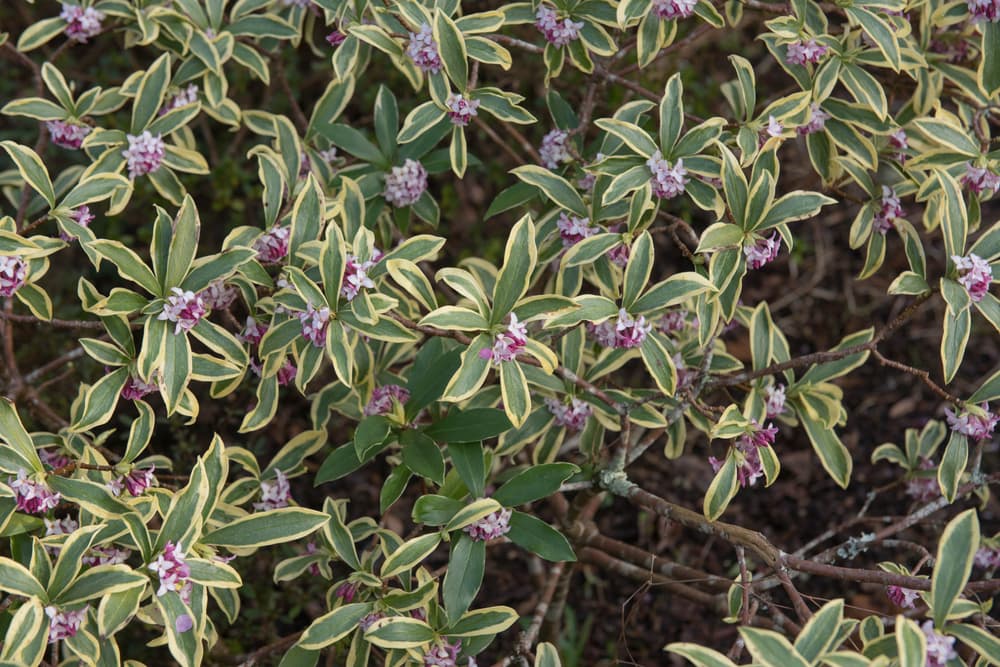
IN THIS GUIDE 1) Aucuba japonica 2) Azaleas 3) Camellias 4) Ceanothus 5) Choisya 6) Cotoneaster 7) Daphnes 8) Heathers 9) Hebes 10) Photinias 11) Skimmias 12) Viburnums References Many evergreen shrubs can work just as well in pots or containers as they do in the ground. But which evergreen shrubs should you choose? You may wonder where to begin when choosing shrubs for a container garden. We’ve developed a list of twelve evergreen shrubs that work very well in containers, and which we believe are amongst the best for pots for you to consider. “Remember to consider the water requirements of shrubs in containers,” adds Master Horticulturist Colin Skelly. “In hot weather, they will need regular watering to maintain good health. Consider the final size of the plant you are selecting with the pot size that you can accommodate. “Remember to look out for smaller cultivars.” 1) Aucuba japonica HARDINESS RATING: H5 PREFERRED ASPECT: FULL OR PART SHADE The first evergreen shrub to consider is the Japanese laurel – Aucuba japonica. This large shrub will be more compact in a pot and has attractive evergreen leaves which can be variegated and little purple flowers which are followed by large glossy red berries. It is H5 hardy, and will work well in a full shade or partially shaded position. 2) Azaleas HARDINESS RATING: MOSTLY H6 PREFERRED ASPECT: FULL SUN OR PART SHADE There are many, many small Azaleas (and Rhododendron) that work very well in a container filled with ericaceous compost or potting mix. Growing these in containers means you can ensure that they have the acidic conditions they need, even when the soil is not acidic in your area. There are options that work well in full sun, or in partially shaded positions, and most are H6 hardy in the UK. 3) Camellias HARDINESS RATING: H5 PREFERRED ASPECT: FULL OR PART SHADE Camellias are another great choice for growing in an ericaceous potting mix. There are several bijou options that are wonderful for containers, and these too will thrive in a lightly shaded position. For environmental reasons, be sure to choose a peat-free ericaceous compost for your pots. These shrubs have beautiful blooms early in the year and most are hardy to some degree. 4) Ceanothus HARDINESS RATING: H4 PREFERRED ASPECT: FULL SUN One of the great things about Ceanothus is that this is a nitrogen-fixing shrub. Another is that they have truly stunning blue flowers that really can make a huge impact in your garden. Be sure to choose the right variety of Ceanothus, as some grow much larger than others. C. griseus spread into a low bushy form, and C. repens also has a low, spreading habit, or can be grown in a container to spread up against a wall or fence. Ceanothus can flower in spring, or in late summer or autumn depending on the variety. It thrives in full sun. 5) Choisya HARDINESS RATING: H4 PREFERRED ASPECT: FULL SUN Choisya (Mexican orange blossom) is another beautiful flowering evergreen shrub to consider. Growing to create dense mounds of evergreen foliage, these will come alive in spring with their white, scented flowers. ‘Aztec Pearl’ is one great small option to consider growing in a container. It is H4 hardy, and will do best in full sun. 6) Cotoneaster HARDINESS RATING: H6/7 PREFERRED ASPECT: FULL SUN OR PART SHADE Cotoneaster is another great option for growing in pots. This glossy evergreen has pretty white flowers followed by red berries loved by birds. Cotoneaster can take a range of different forms. It can be formed into more upright shrubs or tree-like forms, neatly pruned – or it can sprawl out horizontally or up a wall or fence – depending on which type of cotoneaster you choose. Cotoneaster can thrive in full sun or in partial shade and is a very easy plant to grow. 7) Daphnes HARDINESS RATING: H4 PREFERRED ASPECT: FULL SUN OR PART SHADE Daphnes are popular blooming shrubs – and with good reason. Their attractive and showy blooms flower often in late winter, when there are few other flowers around. Dwarf alpine species such as D. arbuscula, D. genkwa and D. cneorum are particularly good for growing in pots. Though there are many Daphnes that will work wonderfully in containers, mostly in moist but free-draining conditions in full sun. Some Daphnes, however, like D. laureola, will even thrive in deep shade. 8) Heathers HARDINESS RATING: H7 PREFERRED ASPECT: FULL SUN Many heathers and heaths in the Calluna and Erica genus will work very well in pots. Bear in mind that heathers and heaths generally require an ericaceous compost, and like acidic conditions. Other than this, they are relatively unfussy and will be good, relatively low-maintenance plants. Choose the right heathers for your container garden and you can enjoy blooms over the whole of the year. Some heathers have not only beautiful blooms but also interesting coloured foliage which alters over the course of the seasons. So if you are looking for year-round interest, heathers are often an excellent choice. 9) Hebes HARDINESS RATING: H4 PREFERRED ASPECT: FULL SUN OR PART SHADE There are many Hebes to choose from for evergreen appeal in your container garden. One delightful option, for example, is ‘Pink Elephant’. This is a hardy plant with attractive green leaves tinged creamy-yellow at the edges, and the whole plant blushes pink, then purplish in cooler conditions. Small white flowers also add additional interest during the summer months. 10) Photinias HARDINESS RATING: H5 PREFERRED ASPECT: FULL SUN OR PART SHADE Photinia ‘Red Robin’ is a popular plant, both in gardens and municipal planting. And some may feel that it is overused. Nonetheless, it is popular for good reason, and we believe it is still a good choice to consider if you want to break up the green in your garden with some lovely reddish hues. ‘Little Red Robin’ is the dwarf cultivar – a good choice for containers. P. glabra ‘Rubens’ is another dense and rounded shrub that you might also consider growing in a pot in a container garden. 11) Skimmias HARDINESS RATING: H5 PREFERRED ASPECT: FULL OR PART SHADE Skimmias are also evergreen shrubs for year-round interest which can work extremely well in containers. Most will thrive in an area with light or partial shade – though there are cultivars for almost any situation. Skimmia japonica female plants will produce berries if grown near a male plant, which adds extra interest after the attractive flowers. S. japonica subsp. reevesiana is a hermaphrodite - meaning it will produce attractive berries over the winter months. 12) Viburnums HARDINESS RATING: H4 PREFERRED ASPECT: ANY Evergreen viburnums are also often top picks for evergreen container gardens. Viburnum tinus, for example, is a great value shrub which can work well in containers in many different positions, including full sun, partial and even deeper shade. It has dark, glossy green leaves, small white flowers, and these flowers are followed by dark bluish-black berries. So this is another great option to consider when growing evergreen shrubs in pots. In this list, we have focused on evergreen shrubs to maximise ornamental appeal. Though of course, many culinary herbs are also evergreen shrubs (or sub-shrubs), and these can also be wonderful to grow in pots. There are plenty of other beautiful evergreen shrubs to consider – so use this only as a starting point when choosing which to grow in your garden.
Learn more
These 75 Evergreen Plants Are Perfect In Pots You Can Move Around The Garden
IN THIS GUIDE Dwarf Conifers For Pots Other Evergreen Trees For Pots Evergreen Shrubs For Pots Evergreen Climbers For Pots Evergreen Grasses For Pots Evergreen Herbaceous Plants For Pots Evergreen Succulents For Pots There are a huge range of evergreen plants for pots to consider – but which options are right for you and your garden? In this article, we will discuss some common and popular evergreen plants which can be grown in containers; perfect for a container garden on your patio or a small garden. Of course, there are also many, many more evergreen plants that can be grown as houseplants here in the UK. “Growing plants in pots is great because you can move them around to refresh your existing space,” shares Garden Designer Kate Gould. “However, most plants in pots need as much room as possible and you are going to have to water, feed and watch them to keep track of pests. “It is a process, but it’s great once you’re into that rhythm.” However in this article, we will focus on plants that can be grown outside for at least some of the year in at least some areas of the British Isles: Dwarf Conifers For Pots Conifers in containers The first type of evergreen plants for pots to consider are conifer trees. Dwarf conifers are restricted by the size of their pots, and can be mini-Christmas tree type shapes, or be interesting bonsai in a range of topiary shapes. Some great conifers for pots to consider include: Abies (True firs) Cephalotaxus (Plum yew) Chamaecyparis (e.g. C. pisifera or C. obtusa) Cryptomeria japonica (Japanese cedar) Cupressus (e.g. C. sempervirens – Italian cypress) Juniperus (Junipers) Picea (Spruces) Pinus (e.g. Mugo pines) Thuja (e.g. T. ‘Mirjam’, T. orientalis ‘Aurea nana’, T. plicata ‘4Ever goldy’ etc.) Tsuga (Hemlocks) It is a popular option to grow these small coniferous trees in containers surrounded by other evergreen perennials and ground cover or trailing plants to create entire landscapes in miniature. Of course they can also be used to add formal structure and symmetry to a space, while they can also work well when placed along a boundary to increase the privacy in a garden, or as part of a windbreak planting scheme. Other Evergreen Trees For Pots Feijoa sellowiana Conifers are not the only evergreen trees that can be grown. In large pots or containers, you can also consider growing other evergreen trees, including, for example: Arbutus unedo (strawberry tree) Citrus (many can sit outside on a sunny patio, for example, during the summer before moving indoors or under cover in winter) Eriobotrya japonica (loquat) Chamaerops / Cordyline / Trachycarpus (hardy palms) Eucalyptus Feijoa sellowiana (Pineapple guava) Ilex (Holly) Laurus nobilis (bay tree) Magnolia grandiflora (bull bay) Olea europaea (olive tree) Quercus ilex (holm oak) Evergreen trees in containers can make a bold statement and can be the focal point of a patio or container garden area. Some, such as strawberry tree, citrus, loquats, pineapple guava and olives may even provide an edible yield of fruits, and bay is a useful culinary herb. Even a small tree placed in the right position in your garden can increase privacy and break sightlines, without casting too much shade. Evergreen Shrubs For Pots Lavender There are also a wide range of evergreen shrubs that can be grown in pots. There are plenty of shrubs that will provide year-round interest, and which can thrive in a container garden. Some interesting options to consider include: Aucuba japonica Azaleas Bamboos Box Camellias Ceanothus Choisya Cotoneaster Daphnes Heathers Hebe Lavenders Photinias Rosemary Sage Skimmias Thyme Viburnums Winter Savory Evergreen shrubs can provide year-round interest, some even flowering or providing beautiful berries over the coldest months. They can also be great for wildlife in your garden. As you can see from the list above, the evergreen shrubs that you can grow include a number of culinary herbs, which can be very useful additions to a patio garden close to your home, since you will be able to come outside and pick some herbs whenever you need some. Some evergreen shrubs – bamboo in particular, can be especially useful as screening and for privacy, since you can grow many of these in containers even where a home is rented or for some other reason you cannot grow plants in the ground. Evergreen Climbers For Pots Ivy A large container placed against a wall, fence or other structure can also be used to grow a number of evergreen climbers. For example, you might consider: Clematis (Evergreen, winter-flowering, e.g. C. cirrhosa) Euonymous fortunei Garrya elliptica (Silk-tassel) Hedera (Ivy) Hydrangea seemannii Parthenocissus (Virginia creeper) Trachelospermum jasmonoides (Star jasmine) Growing climbers and wall shrubs in containers as the base of a wall or fence or other support structure can be a great way to make sure your garden, yard, balcony or patio has an enclosed and welcoming feel, with plenty of greenery about. Plants like ivy can also be grown down from hanging baskets or other hanging containers, in mixed container planting alongside a range of other plants. Evergreen Grasses For Pots Carex in a container Grasses and sedges are also great for adding year-round colour and interest in a container garden. Some great evergreen grasses to grow in pots include: Anemanthele lessoniana Carex Deschampsia Festuca glauca Miscanthus sinensis (e.g. ‘Morning Light’) Stipa tenuissima Larger specimens look great in stand-alone containers, as statement pieces. They can be placed in a row for gentle screening that does not overwhelm the space or overly restrict views of the rest of the garden. Smaller grasses for containers can also look great when planted in containers alongside other evergreen plants. Their soft and flowing forms can break up heavier, denser planting schemes and keep a container garden looking light and soft. Evergreen Herbaceous Plants For Pots Phormium There are also plenty of other herbaceous perennials to consider growing in pots in a container garden. Just some of the interesting evergreens of this type to grow in pots include: Ajuga Androsace Armeria Asplenium (evergreen ferns) Delosperma Dianthus ssp. Erigeon ssp. Fatsia Globularia Heuchera Hepatia Phormium Many alpine plants, for example, create mats of evergreen foliage. While other more sculptural plants like evergreen ferns, fatsia and phormiums, for example, can make an impact – even in somewhat more shaded positions. Including a wide range of different alpines and other perennial herbaceous plants with different shapes, textures and colours can add a lot of interest to your container garden. And the above list represents just a very small fraction of the many different plants that you could choose. Evergreen Succulents For Pots Sempervivum A number of succulents can also be excellent evergreen plants to consider growing in pots. These can be grown as houseplants, but can also often survive outside with winter protection in more sheltered, drier and milder spots. Some of the many succulents to consider include: Aeoniums Agave Aloes Crassula Echeveria Haworthia Kalanchoe Opuntia Sedums Sempervivums “Whilst most succulents will need to be protected from frost over the winter months, Sempervivum are frost hardy and (as long as they are in free-draining compost) can stay outside all year,” shares Colin Skelly, a Horticultural Consultant. Succulents can be great low-maintenance plants for a free-draining and sunny spot. They look at home in many different drier-climate planting schemes, or in containers inside your home. Creating containers with a number of different succulents can lend an exotic vibe to your container garden. We hope you’re feeling inspired to find some year-round greenery for your garden!
Learn more
Tropical Gardens Are Possible In Cooler Climates - Here's 11 Inventive Ideas
IN THIS GUIDE 1) Layered And Lush Planting 2) Consider ‘Food Forest’ Planting 3) Utilise Hardy Palms & Banana Plants 4) Plant Trees For Canopy Cover 5) Favour Plants With Bold, Architectural Foliage 6) Encourage Bright, Exotic Blooms 7) Don’t Neglect Under-Storey Planting 8) Create Winding Pathways Between Dense Planting 9) Consider Adding A Water Feature… 10) …Or Some Other Essential Garden Destination 11) Keep An Open Mind Tropical gardens are lush, green and exotic – and it is possible to create a tropical jungle effect, even right here in the UK. You might imagine that in our far chillier climate, a tropical garden would be an impossibility for British gardeners. Trebah Botanical Gardens, Cornwall But there are a surprising number of plants for a tropical effect that can survive perfectly well (sometimes with winter protection) in many UK gardens. Trebah Botanical Gardens, Cornwall Some are genuine tropical plants, from tropical climates, while others grow in cooler climates similar to our own, but look exotic enough to contribute to that tropical jungle look. And as Simon Goodfellow shares in our tour of the Abbeywood Estate in Cheshire, it’s even possible to achieve that exotic tropical effect in gardens in the north too. Choosing the right plants, and combining those plants in the right ways, is key to successfully achieving this effect in your garden. 1) Layered And Lush Planting In a tropical jungle, layers of dense planting spread from the canopy to the ground cover layer. Dense, lush, diverse planting can definitely help you to get the look you are going for. In the UK, the sun is not as intense as in the tropics, of course. But careful management of the canopy and pruning away lower branches strategically can help you create a range of different eco-zones in layered planting, with some areas of deeper shade and some sunny spots in between. 2) Consider ‘Food Forest’ Planting The layers in a tropical garden are like the layers in a food-producing forest garden. And in fact, it is worthwhile remembering that a tropical feel garden could easily also be a ‘food forest’. A food forest or forest garden is a way of growing food that allows you to work in harmony with the natural world. The goal in a food forest is to mimic the structure of a natural woodland or forest, but to include plants which are beneficial to us, or to the ecosystem as a whole. All forest gardens can provide a bounty of food, and many other resources, in diverse and wildlife-friendly, largely perennial planting schemes. A tropical-feel food forest could also be a place to forage for edibles. Not all plants will have edible yields, of course, but you can include many plants which do. Unfortunately, in the UK, many of the edible plants grown in real tropical climate forest gardens – those actually in a tropical climate – will not thrive over our winters. But that is not to say that you cannot grow plenty of fruit trees, berry bushes, and other edible plants which will give a wonderfully tropical or jungle-like feel. 3) Utilise Hardy Palms & Banana Plants Hardy palms and banana plants can work in many UK gardens, and help to give that instant tropical look. They often take a little work to keep them safe over the winter months, but they can survive happily in many UK gardens. Hardy palms, without a doubt, are the shortcut plants for achieving a tropical garden. Fortunately, there are a number of palms that can be grown in many UK gardens. For example, you can consider: Trachycarpus fortunei (Chusan Palm) Chaemaerops humilis (Dwarf Fan Palm) Sabal minor (Dwarf Palmetto) Butia capitana (Jelly Palm) Phoenix canariensis (Canary Island Date Palm) These can all grow successfully in warm and sheltered UK gardens, in moist yet well-draining soil, though some will require some winter protection. Banana plants are also fantastic shortcuts to achieving that tropical garden look. While some can occasionally be coaxed into providing edible fruit, banana plants are usually grown for ornamental appeal in gardens. Some options to consider for your tropical garden include: Musa x paradisiaca M. basjoo M. Iasiocarpa M. acuminata Ensete ventricosum Since hardy palms and bananas are on the edge of what we can grow in the United Kingdom, these can lend an exotic feel. But it will be easier to create a tropical garden feel if you mix a few of these palms and bananas in with other plants which can grow more comfortably in our climate. “With the exception of Musa basjoo which is hardy, the other Musa plants require care over winter such as dry storing the trunks or keeping semi-dormant in a container in a light, frost-free location,” shares Master Horticulturist Roy Nicol. 4) Plant Trees For Canopy Cover Other unusual (especially evergreen) trees can also be interesting options to consider. Both evergreens and deciduous trees can also provide a range of edible yields. Pineapple guava In a tropical garden design for the UK, I like to mix hardy palms and banana plants with evergreen trees which fill in canopy cover through the garden, and which lend themselves to a jungle-like look. Evergreen trees to consider include: Eriobotrya japonica (Loquat) Feijoa sellowiana (Pineapple Guava) Arbutus unedo (Strawberry Tree) Magnolia grandiflora (Bull Bay) Citrus (in containers, brought indoors during the winter months) There are also plenty of deciduous trees that can look great in a jungle-like tropical garden, including: Ficus carica (Fig) Ginkgo biloba (Ginkgo) Catalpa bungei (Bean Tree) Paulownia tomentosa Tetrapanax papyrifer (Rice-Paper Tree) One final type of plant to consider for the upper tiers of a tropical garden is tree ferns, the most popular type being Dicksonia antarctica (it is usually evergreen, but may be deciduous in colder areas). 5) Favour Plants With Bold, Architectural Foliage Many other plants with bold, large leaves and architectural foliage and form should also be included – even those which grow in other climate zones can blend into the overall garden design and give an impressive tropical look, even in our temperate climate. Once you have decided upon the trees and other tall plants for your tropical garden, the key to creating the right look is choosing plenty of other plants with large leaves, or bold, architectural foliage. Some of our top suggestions for plants of this type are: Bamboos Phormiums Fatsia japonica Gunnera Mahonias Eucalyptus Many Ornamental Grasses Ricinus communis Colocasias Cardoon Rhubarb Hostas 6) Encourage Bright, Exotic Blooms Bright, exotic-looking blooms are also a must. They break up the foliage in a jungle-like garden with splashes of colour – adding a sense of warmth even on the cloudiest of days. Here are some of the amazing blooms that could work well in your tropical garden in the UK: Daylilies Canna lilies Eucomis Hedychiums Arisaema Jasmine Fuchsias Choisya Begonias Pittosporum Erysimum Persicaria 7) Don’t Neglect Under-Storey Planting Don’t forget the ground layer! To really achieve a tropical jungle look in your garden, you need to think about what will spread and grow over the soil below your trees, shrubs, herbaceous plants and flowers. Fill in all the gaps to create microclimates and to get the right look. Finally, remember to think about ground cover plants, to fill gaps and spread out below, among and around the other planting. Some great options for ground cover in a tropical garden include: Ground-Growing Raspberries (Rubus tricolor) Pachysandra Euphorbia amygdaloides Mints (Many!) Ferns 8) Create Winding Pathways Between Dense Planting Have pathways which wind between the dense planting, so you can walk through your tropical garden on a journey of discovery. Creating that jungle feel, even in a small garden, means getting the sense that something wonderful awaits, just round the corner. Obscuring the edges of the space, and making it feel like an environment you can get lost in, can make a small garden feel much bigger than it really is. 9) Consider Adding A Water Feature… Consider adding some water – a pond, stream, or small waterfall feature really can add to that tropical feel. An eco-friendly solution is to use water directed from a rainwater harvesting system, and to use solar-powered pumps. 10) …Or Some Other Essential Garden Destination Whether it is a water feature, or a seating area, for example, remember to create a destination to draw you and your visitors through your jungle scheme to the other end of your tropical garden – to make sure you make the most of the space. 11) Keep An Open Mind Of course, the plants mentioned on this list are just some of the many interesting options to consider. The great thing about tropical, jungle style gardens is that you can pack in so many diverse plants, and create a really lush and abundant feel. If you plan your planting well, you may not only be able to enjoy this style of garden, but also to harvest food from your food forest.
Learn more
These 13 Plants Will Thrive In A Shady Garden Corner, Where Others Might Struggle
IN THIS GUIDE 1) Large ‘Architectural’ Ferns 2) Smaller Evergreen Ferns 3) Climbing Hydrangea 4) Heuchera 5) Cordyline fruticosa 6) Actaea simplex 7) Rhododendron 8) Stinking Hellebore 9) Lobelia erinus 10) Lily Of The Valley 11) Impatiens 12) Mat-Forming Geraniums 13) Hardy Geraniums Beware Heavy Shade References Is it really difficult to grow attractive plant life in shaded garden corners in the United Kingdom with its oft-overcast conditions? No! The good news is that not only can you grow fantastic plants in full shade, you can be spoilt for choice – tiny flowering clumps to huge landscaping ferns, ‘proper’ flowering plants and thick climbing vines…the list goes on. It turns out that some plants can make do with only patchy sunlight and a few don’t need any! Such shade-loving plants are heaven-sent for sitting in those sunless shaded garden corners. Here we identify plant life that will bring as much beauty and joy in those shaded spots as your more conventional plants do in your garden’s sun-drenched areas. What is more, though we list a dozen of shade-loving plants, we also identify a particular garden purpose for each one, so all your shade-garden needs are met. 1) Large ‘Architectural’ Ferns BEST USE: LANDSCAPING AND ARCHITECTURE SUNLIGHT REQUIREMENTS: FULL SHADE RECOMMENDED VARIETIES: ‘OSTRICH’, ‘BRAZILIAN TREE’, ‘ROYAL’ When one talks about shade plants, one has to start with ferns. Ostrich Fern The Ostrich Fern’s (very) large fronds are as if vivid green ostrich feathers that arch and curve this way and that, and sway in the breeze. Besides a preference for shade, this plant needs dry and cool conditions. This fern is one for the landscaper as it attains a height of nearly 2m and a spread of over 1m. Brazilian Tree Fern Tri-coloured Blechnum brasiliense ‘Volcano’ or Brazilian Tree Fern attains an eventual height and spread of about 80cm but it is prized for architectural purposes because of its shape and colour. The outwardly angled fronds form a conical, shuttlecock shape. The newer, inner fronds are a brilliant red, which turn bronze-purple, eventually becoming a rich green on the outer side of the cone. Both of these are deciduous perennials. Ostrich Fern is fully cold-hardy; Brazilian Tree Fern is frost-hardy. Royal Fern Also, check out the giant-sized 4m high Royal Fern. 2) Smaller Evergreen Ferns BEST USE: GREENERY, TEXTURE AND DECORATION SUNLIGHT REQUIREMENTS: FULL SHADE RECOMMENDED VARIETIES: ‘CHRISTMAS’, ‘JAPANESE PAINTED’, ‘HAY-SCENTED’ We suggest three varieties, all of which are fully cold-hardy. Christmas Fern Christmas Fern is an evergreen with intense green leaves which are good sized at about a yard long. It is an easy-care variety that provides year-round colour. It is an excellent choice for greenery, texture, or some robust groundcover at the rear of a shady spot or as a filler. Japanese Painted Fern Japanese Painted Fern is deciduous but is much more decorative and makes for a genuine talking point, and that is because of its foliage. Fronds are silver-green with distinctly reddish stems and midribs. It grows to 45-50cm. Hay-Scented Fern For something a bit different, a third option is Hay-Scented Fern. This deciduous variety’s fronds are appealingly filmy and feathery, and turn a hay-yellow in autumn. To top it off, it wafts a mild scent of freshly-cut hay. Who would have thought that shade-loving ferns would give you such different options? 3) Climbing Hydrangea BEST USE: VERTICAL WALL OR FENCE COVER SUNLIGHT REQUIREMENTS: ANY RECOMMENDED VARIETIES: anomala subsp. petiolaris, Hydrangea viburnoides Several Climbing Hydrangea varieties are among those rare plants that are entirely indifferent to sun or shade. As such, they will provide lush green vertical cover along walls in your shaded garden area. Hydrangea anomala subsp. petiolaris H. anomala subsp. petiolaris is a massive bushy vine that can reach a height of 12m and a spread of about 6m. Hydrangea viburnoides The not-so-big Hydrangea viburnoides still grows to about 6m. The former has ovate bright green foliage, and the latter, darker, elliptic leaves. Deciduous anomala provides a burst of yellow in autumn before shedding its leaves whereas evergreen viburnoides stays green year-round. The former bears thick clusters of insignificant flowers and larger, ‘proper’ white flowers during summer; viburnoides has panicles of small creamy flowers in summer and autumn. Though both grow very well in full shade, H. anomala subsp. petiolaris is fully cold-hardy while Hydrangea viburnoides is (just) hardy. 4) Heuchera Heuchera ‘Silver Gumdrop’ BEST USE: YEAR-ROUND ORNAMENTAL FOLIAGE SUNLIGHT REQUIREMENTS: DAPPLED SHADE RECOMMENDED VARIETIES: ‘ISLA’, ‘SILVER GUMDROP’, ‘GUACAMOLE’ Some Heuchera varieties love full shade and we are lucky to have three wonderfully colourful ones among them. “Heucheras are great in shady spots with variegated leaves and long flower stems, allowing the plants to stand out,” says Colin Skelly, a Horticultural Consultant. “One thing to watch out for is vine weevil, which favours heucheras and will eat through the root systems until the plant dies back. Nematodes work well but need to be applied at recommended timings and soil temperatures.” In ascending order of size, these are ‘Isla’, ‘Silver Gumdrop’ and ‘Guacamole’. The first is about 25cm by about 40cm, the second about 50cm by 40cm, and the third is about 50cm by 60cm – not all that different. What they have in common is that they are fully hardy, and are clump-forming semi-evergreens. ‘Isla’ has scalloped leaves with silvery dapples and purplish ‘trim’. ‘Silver Gumdrop’ has flat scalloped leaves that are silver-grey with purple flushes. ‘Guacamole’ has ruffled leaves of a sparkling lime-green hue. Thus all three exhibit exciting foliage yet all produce a little sideshow in spring and summer: cheery panicles of flowers on upright stems: ‘Isla’s are pink ‘Silver Gumdrop’s are rose red ‘Guacamole’s are white and cream. But, undoubtedly, it is the eye-pulling shapes and hues of the foliage that’s the ‘main attraction.’ Huecherella is also an interesting option, a hybrid form of Heuchera and Tiarella: It’s also worth mentioning the plant works well with hosta – a plant which deserves at least an honourable mention for use in any shaded garden spot: 5) Cordyline fruticosa The Vivid Colours of Cordyline fruticosa’s Foliage BEST USE: SMALL EVERGREEN ‘TREE’ WITH COLOUR SUNLIGHT REQUIREMENTS: LIGHT SHADE RECOMMENDED VARIETIES: FRUCTICOSA Full-shade Cordyline fruticosa is not a tree, strictly speaking, but it ends up looking like one when it attains a height of 4m with an impressive spread of 2m, and as it develops what seems to be a trunk. Though drought-tolerant it is, unfortunately, not cold hardy and in the UK it must be grown in a suitably large planter so that it can be overwintered indoors. The upright habit is accented by a very proportional form. Its lanceolate leaves are themselves quite a sight at 60-plus-cm. The young leaves near the centre are a startling magenta-red, and develop red and green zones and blazes as they gradually become a rich, vibrant green. Come summer, the plant puts out scented pale purplish-white flowers on feathery panicles, and in autumn these form into bright red berries. Thus, this striking small ‘tree’ provides year-round colour, with those red tongues taking centre stage. A native of South-East Asia and Australia, the ‘Good Luck Plant’ is as architectural as it is ornamental. Various cultivars bred for hardiness, colour or height, are available. 6) Actaea simplex The Purple-Bronze Foliage and Flower Buds on Racemes of Actaea simplex ‘Brunette’ BEST USE: DRAMATIC FOLIAGE AND FLOWERS SUNLIGHT REQUIREMENTS: PARTIAL SUN RECOMMENDED VARIETIES: ‘Hillside Black Beauty’, ‘Brunette’, ‘Mountain Wave’, ‘Black Negligee’ Actaea simplex or ‘Baneberry’ varieties are good-sized deciduous shrubs that are fully cold hardy. They have a bushy habit and upright stems. Our selected varieties, underneath, range from nearly 1-2m in height, and 30cm through to a full 1m in spread. What they have in common is their richly-shaded, dramatic foliage. The divided narrow leaves come in dark shades of purple-black, maroon-black, bronze, and chocolate. These intense colours will provide an eye-catching offset to the surrounding greenery. All of them produce thick racemes of florets well above the foliage on tall upright spikes during a respectable flowering season from late summer into autumn. These tiny flowers are scented and, like the foliage, come in slightly different colours: white, cream, rosy white, and light pink. For that shaded spot, try any of ‘Hillside Black Beauty’, ‘Brunette’, ‘Mountain Wave’ and ‘Black Negligee’. 7) Rhododendron BEST USE: EVERGREEN FLOWERING HEDGE / SHRUB SUNLIGHT REQUIREMENTS: DAPPLED / FULL SHADE RECOMMENDED VARIETIES: PONTICUM Though a few hundred Rhododendron varieties are suitable for partial shade, one particularly beautiful variety is best suited to full shade – you don’t even have to worry about it. Rhododendron ponticum R. ponticum is a long-lived evergreen that can hit a massive ultimate height and spread of up to 4m each way – perfect for landscaping, and more so as it is heat tolerant, cold hardy, and evergreen. Notwithstanding its dimensions, R. ponticum is not a tree but a branching shrub that is great to deploy as a screen or a hedge that can be pruned and shaped according to your needs. The thickish rubbery leaves are oval and of a deep, medium shade of green, and stay green year-round. Best of all, in spring it produces dense clusters of very attractive funnel-shaped lily-like flowers that range in colour from pink through magenta to purple. Be aware that R. ponticum is classified as an Invasive Species in the United Kingdom.1 8) Stinking Hellebore BEST USE: EVERGREEN FILLER SUNLIGHT REQUIREMENTS: ANY RECOMMENDED VARIETIES: ‘Yellow Wilgenbroek’, ‘Gold Bullion’ For those shady gaps that you need to fill with dense, brilliant greenery that actually stays green year-round and is very cold-hardy to boot, Stinking Hellebore is a terrific choice. It is also ideal for planting along ridges and verges or for edging along a wall or walkway. ‘Yellow Wilgenbroek’ and ‘Gold Bullion’ are two varieties of choice. Both grow to 50-60cm with a spread that is a little less than the height. They have bushy habits and narrow strap-like leaves. ‘Yellow Wilgenbroek’s have a brilliant rich green hue and ‘Gold Bullion’ is a zesty lime-green that starts out yellow. They are not merely evergreen, they provide additional interest in the gloom of mid-winter to mid-spring by way of drooping, bell-shaped greenish-yellow flowers. 9) Lobelia erinus L. erinus ‘Sapphire’ BEST USE: CASCADING HANGING BASKETS / WALL COVER SUNLIGHT REQUIREMENTS: FULL / PART SHADE RECOMMENDED VARIETIES: ‘Sapphire’, ‘Super Star’, ‘Regatta Lilac Splash’, ‘Waterfall White Sparkle’ If you have a post, beam, or any projection in full shade from which you’d like to hang a basket, what do you put in it? A Lobelia erinus variety, that’s what. Though they are deciduous, frost-tender plants, they provide gorgeous flowing cascades of colour in the dog days of summer and autumn. ‘Sapphire’, ‘Super Star’, ‘Regatta Lilac Splash’ and ‘Waterfall White Sparkle’ are all very compact, trailing varieties. They are so floriferous that at the height of the flowering season the tiny green leaves become virtually invisible. All produce a mass of small flowers with ‘Sapphire’s being violet with a white eye, ‘Super Star’s being white surrounded by blue, ‘Regatta Lilac Splash’s being white and lilac, and ‘Waterfall White Sparkle’s being pure white. In a hanging basket, these varieties produce lovely tumbling, cascades that billow in the wind, be the cascade soothing white or arresting purple. 10) Lily Of The Valley BEST USE: BEAUTIFUL, FRAGRANT FLOWERS / GROUNDCOVER SUNLIGHT REQUIREMENTS: DAPPLED SHADE Lily of the Valley is a cold-hardy deciduous perennial. It grows to about 25cm and quickly forms colonies via rhizomes; as such, it may be a good choice for groundcover. It bears the most perfect of bell-shaped flowers. In spring, abundant numbers of these pure-white to cloudy-white bells dangle and nod from upright racemes. Cultivars with double flowers and blush-pink flowers have been developed. The blooms have a delicate, feminine fragrance that has been a perfume-industry classic for centuries. The white flowers turn into scarlet berries in summer. It will also allow you to gift one of the most expensive cut flowers in the world.2 11) Impatiens BEST USE: FLOWERS FOR BEDS AND CONTAINERS SUNLIGHT REQUIREMENTS: FULL SUN / PART SHADE RECOMMENDED VARIETIES: MANY – SEE BELOW A garden ‘standard’ that is perfect for beds and clay pots, and brings oodles of flowers – that’s Impatiens. This genus includes within its array of varieties several that are shade-loving. They are frost-tender and are grown as annuals. Your choices are: I. walleriana ‘Tempo Series’ I. walleriana ‘Cajun Jambalaya Mix’ I. walleriana ‘Super Elfin’ Series I. ‘Sun Harmony Deep Orange’ I. ‘Sunpatiens Spreading Variegated White’ I. ‘Sunpatiens Compact White Improved’ Though these cultivars share a proclivity for shade and a bushy habit, they are very different otherwise. Their heights range from 25-60cm with equally varying spreads. They also differ in their attractive foliage as it may be a smoky bronze-green, sober dark green, spanking bright green, or even variegated with a central yellow band – and the margin may be smooth, serrated, or heavily toothed, depending on the variety. Though all cultivars are floriferous, a few bear flowers only in summer while others continue to produce them through autumn. They are saucer-shaped with five petals with that trademark distal notch, and occur in pure white, and in innumerable bright and upbeat shades of pink, orange, red, and purple. 12) Mat-Forming Geraniums G. × cantabrigiense ‘Karmina’ BEST USE: FLOWERING GROUNDCOVER SUNLIGHT REQUIREMENTS: FULL SHADE RECOMMENDED VARIETIES: ‘Karmina’, ‘Czakor’ We close with those quintessential shade-loving plants which are such a garden favourite, Geraniums. These plants are so diverse in height and habit that they serve very different garden needs. For our purposes, we divide them into two ‘classes’ and propose three choices for each. All of them are deciduous perennials and all are cold-hardy to some or another extent; however, each is cold-hardy almost throughout the United Kingdom. G. sanguineum var. striatum, G. × cantabrigiense ‘Karmina’ and G. macrorrhizum ‘Czakor’ are very compact, spreading cultivars that reach heights of only about 20cm. All three do well in full shade. Their mat-forming habit means they can be put to use as groundcover. Geranium cantabrigiense ‘Karmina’ Moreover, they are very pretty as groundcover because G. sanguineum has dark, smoky green foliage that is deeply lobed into leaflets while the other two varieties have rounded and lobed leaves of a light, bright green hue. Topping it off, the foliage of the latter two varieties exudes a pleasant scent. All three produce delightful saucer-shaped, five-petalled flowers in and around summer. Wild Geranium ‘Czakor’ G. sanguineum’s are pale lilac-pink with faint veining, ‘Karmina’s are a pretty magenta-purple, and ‘Czakor’ are an intense magenta. These wee little plants also lend themselves to plugging small gaps and being used as companion accents in planters in the shade. 13) Hardy Geraniums BEST USE: FLOWERS FOR BEDS AND CONTAINERS SUNLIGHT REQUIREMENTS: PART SHADE RECOMMENDED VARIETIES: ‘Svelte Lilac’, ‘Julie’s Velvet’ As Geranium × monacense, G. nodosum ‘Svelte Lilac’ and G. nodosum ‘Julie’s Velvet’ are ‘proper’ flowering plants, let’s get down to their blooms right away. The hybrid produces curved, saucer-shaped flowers that are a deep rich purple with a pale central disk, ‘Svelte Lilac’s flowers are more open and disk-shaped and are in a pastel tone of pink-mauve with distinct dark veins, and ‘Julie’s Velvet’s flowers are somewhat bowl-shaped in a purplish hue gradated from pale mauve to intense purple with paler edges and pronounced venation. G. × monacense The petals of the hybrid are pointed at the distal end whereas the other two’s petals are notched. All three are simply gorgeous flowers. G. nodosum ’Svelte Lilac’ These Geranium varieties reach a height of about 40cm but G. monacense has an upright habit, ‘Svelte Lilac’ a bushy habit, and ‘Julie’s Velvet’ a clump-forming one. The first two produce their lovely flowers from late spring to summer and the third throughout summer into early autumn. All three feature lush green foliage, and all are great choices for shaded beds or containers. Beware Heavy Shade Be aware that heavy shade when combined with low air circulation and crowded foliage creates conditions ripe for pest infestations and disease, so do be vigilant for the same and avoid hemming-in plants with other plants. You can – of course – arrange garden statutary, set up outdoor furniture, or simply plunk a daybed in a shaded garden corner but such ideas are not included in this article. By all means, set up daybeds, gnomes, and outdoor furniture in that shaded garden corner but don’t forget the plant life – above you have enough options to fill half a dozen shaded spots! References 1. Forest Research. (2022c, April 13). Rhododendron control. Retrieved March 23, 2023, from https://www.forestresearch.gov.uk/research/management-of-upland-native-woodlands/rhododendron-control/ 2. The Priciest Flowers in the World. (2022, December 14). Floranext – Florist Websites, Floral POS, Floral Software. Retrieved March 23, 2023, from https://floranext.com/the-priciest-flowers-in-the-world/
Learn more
Split Rhubarb To Maintain Plant Health And Vigour - Here's The Simple 6 Step Process
IN THIS GUIDE Why You Might Split Rhubarb When To Split Rhubarb How To Split Rhubarb 1) Prepare The Growing Area 2) Lever Out The Rhubarb Plant 3) Split The Crown 4) Replant The Mature Rhubarb And New Plants 5) Trim Any Dead Foliage 6) Mulch Well Around The Plants Rhubarb is a useful perennial plant which can be split, or divided easily. But why might you want to split a mature rhubarb plant? How and when exactly should you contemplate doing so? In basic terms, rhubarb can be split by: Preparing the new growing area Levering out your existing plant Splitting the crown Replanting the mature rhubarb Trimming any dead foliage Mulching your plants for protection In this simple guide we will walk you through the process in greater depth, and show you just how easy it is to divide existing rhubarb plants in your garden. Why You Might Split Rhubarb Mature rhubarb The first thing to think about if you are considering this process is why you might wish to do so. There are two main reasons why you may wish to split a mature rhubarb plant: To make new rhubarb plants. To maintain health and vigour in an existing rhubarb plant or rhubarb patch. Propagate New Rhubarb Plants First of all, you might wish to divide your rhubarb to create new rhubarb plants for your garden. Splitting an existing rhubarb crown is the easiest way to propagate these perennial plants. The sections which are split away from the mature plant will each grow into a new plant identical to the parent plant from which the division was taken. The plants you propagate from division of an existing rhubarb plant can be used to fill gaps in your garden, or increase your stocks of this useful perennial edible plant. Ease Congestion / Aid A Mature Specimen The second reason to split rhubarb is to overhaul an overly crowded part of your garden, or to improve the health and productivity of an older specimen. You might divide a rhubarb plant, replanting only a portion and moving other sections elsewhere. This can be a good idea where a rhubarb has grown large and outstripped the size of the space available for it. It might be reduced in vigour due to a lack of resources – or it might be competing too much with neighbouring plants and restricting their growth and health. A mature and large rhubarb plant might also start performing worse over time. Dividing the crown to generate new plants can give old plants like these a new lease of life. When To Split Rhubarb It is best to split mature rhubarb plants during the dormant period, sometime between Autumn and very early spring. At this point, there will not be much above-ground growth, and the crowns and roots will be easier to lift and divide. Transplantation shock will also be reduced, and the new plant divisions and existing plant can form strong and healthy root systems before the new growth emerges in the spring. In the UK, November is generally considered to be a good time to split rhubarb plants, though you can also undertake this job throughout the winter where the ground is not waterlogged and remains unfrozen. You can also, if you wish, choose to wait until early spring so you can see where the healthiest new growth is emerging from on the crown. It is generally recommended that you should split mature rhubarb plants every 4-5 years to keep up productivity and keep the plants healthy and strong. How To Split Rhubarb 1) Prepare The Growing Area First of all, when planning to split rhubarb, it is important to think about where the divisions will be going. If necessary, prepare growing areas suitable for them. Add plenty of organic matter. 2) Lever Out The Rhubarb Plant Next, using a garden fork, gently lever the crown of the rhubarb plant out of the soil. Take care not to damage the crown, and try to keep as much of the root rhizomes from below the soil as possible. 3) Split The Crown Carefully split the rhubarb crown into sections, making sure that each section as a shoot and a portion of the root system. Rhubarb crown Usually, you should be able to split apart the crown by hand. However, tougher portions may need to be severed with a spade, or with a sharp bladed implement. If you wish to retain the majority of the mature plant to replace, or if renovating a mature plant, you may wish to simply remove a few small sections around the sides. Rhubarb division If your goal is to maximise propagation and gain as many new plants as possible, you can divide the entirety of the mature crown into smaller sections. 4) Replant The Mature Rhubarb And New Plants If you are retaining the mature plant, replant this to the same depth in the soil as quickly as possible. If you have a series of new plants to place, you should also do so right away. The rhubarb crown sections can be replanted in the soil elsewhere in your garden, or placed in pots or containers where they can grow on. 5) Trim Any Dead Foliage Trim off any dead, trailing foliage from the plants, so that they can concentrate on forming healthy new root systems. 6) Mulch Well Around The Plants Mulch well with organic matter around the plants placed into the soil, so there is plenty of fertility and to make sure the transplantation goes well and plants experience as little shock as possible. “Take care not to cover the crown as this can cause it to rot,” shares Master Horticulturist Dan Ori. Go easy on harvesting from the rhubarb divisions (or forgo harvesting altogether) the following season, so the plants get a chance to establish properly and can provide you with bigger, better harvests over the following years.
Learn more
42 Low Maintenance Plants For Care Free Gardens With BBC Countryfile's Debi Holland
IN THIS GUIDE 1) Black-Eyed Susan 2) Blue Star Juniper 3) Wallflowers 4) Geranium 5) Plantain Lily 6) Hydrangea 7) Iris 8) Japanese Pachysandra 9) Peonies 10) Rose 11) Russian Sage 12) Lilac 13) Holly 14) Californian Lilac 15) Pieris 16) Weigela 17) Strawberries 18) Purple Coneflower 19) Rock Rose 20) Bluebell 21) Spearmint 22) Wild Thyme 23) Clematis 24) False Goat’s Beard 25) Passionflower 26) Foxgloves 27) Cosmos 28) Hebe 29) Butterfly Bush 30) Shrubby Cinquefoil 31) Coral Bells 32) Shuttlecock Fern 33) Japanese Aralia 34) Japanese Anemone 35) Snowdrop 36) Elephant Ear 37) Catmint 38) Camellia 39) Yucca 40) Blue Fescue 41) Cornflower 42) Sneezeweed Keep your backyard beautiful – without putting in the hard yards – with these laid-back and low-maintenance garden plants. There are many reasons why you might prefer a garden filled with plants that don’t require too much in the way of maintenance or tender loving care. Perhaps you struggle with a disability or injury, or maybe advanced years make the labour involved too strenuous. It could be that you need to maintain a property that you rent out to others or only occupy for part of the year, or perhaps you’re new to gardening and just want to get started. “Gardening should not be a chore,” says Garden Writer Debi Holland. “If you are finding it too difficult to cope with looking after all your plants, choose plants that are low maintenance. “Working as a professional gardener, I have limited time for my own garden so I have gradually moved part of my garden over to ferns and tropicals like banana plants which required very little input for the majority of the year other than watering and feeding.” While there are no such things as zero-maintenance plants, there are plenty of options that lend themselves well to those taking a more hands-off approach. “It is certainly achievable to have a low-maintenance garden, but without pouring concrete over your whole garden, there will still be some regular gardening tasks required,” says Horticultural Consultant Dan Ori. “How much gardening is required is normally down to how your garden is landscaped, your selection of plants and how you want your garden to look.” The following list is by no means exhaustive but should give you a good starting point for some ideas of low-maintenance options that offer attractive floral returns for minimal exertion. Below you’ll find a mix of shrubs, perennials and annuals that can help you to cultivate a carefree but captivating garden without the stress or fuss of more needy alternatives. 1) Black-Eyed Susan BOTANICAL NAME: Rudbeckia fulgida PLANT TYPE: PERENNIAL / ANNUAL HARDINESS RATING: MOSTLY H4-H6 RECOMMENDED VARIETY: ‘GOLDSTURM’ (PICTURED) The bright yellow petals of Black-Eyed Susan surround a dark oversized centre in a cheerfully attractive display, blooming in August through to October to add a splash of colour to your garden’s palette later in the year. It works best as a border plant between other species, since it’s quite happy in partial shade. The ‘Goldsturm’ variety is particularly conducive to hands-off horticulture. It’s not so tall that it requires staking, and doesn’t self-propagate at such a rate that division is needed on more than an occasional basis. What’s more, there’s no need to prune seed heads at the end of the season, since birds love to feast on them. While in full bloom, it’ll attract butterflies by the bucketload, as well, making it great for biodiversity year-round. 2) Blue Star Juniper BOTANICAL NAME: Juniperus squamata PLANT TYPE: CONIFEROUS SHRUB HARDINESS RATING: H7 RECOMMENDED VARIETY: ‘BLUE STAR’ (PICTURED) A far more mild-mannered member of the family than some of its other invasive counterparts, ‘Blue Star’ juniper is a perfect evergreen addition to your back garden. The metallic blue needles of its year-round display make it attractive from an aesthetic perspective – especially when the new shoots accentuate its colours with brilliantly bright points of growth – but this low-lying shrub has far more in its locker than just its looks. For starters, it’s resistant to drought, resilient against disease, fends off pests like rabbits or other mammals admirably and doesn’t require serious pruning for it to adopt a pleasing structure. It doesn’t grow above half a metre in height or wider than a full metre in spread, so it never becomes too much of a nuisance – while its ability to cope in almost all soil types makes it a dream for the laid-back gardener. 3) Wallflowers BOTANICAL NAME: Erysimum PLANT TYPE: Perennial / Annual / Biennial HARDINESS RATING: H4 RECOMMENDED VARIETY: ‘BOWLES’ MAUVE’ (PICTURED) A delightful perennial wallflower, Erysimum ‘Bowles’ Mauve’ gives its owners a longer and more vibrant floral display than many other species. Its woody stems bear a carpet of mauve blooms from mid-February onwards (and sometimes even earlier in mild years), not fading away until late summer. In southern parts of the country, it’s even been known to bloom all year round. Erysimum can handle all soil types with relative ease and flourishes in both sun and shade, though it will require some sunlight to keep it healthy. 4) Geranium BOTANICAL NAME: GERANIUM PLANT TYPE: HERBACEOUS PERENNIAL HARDINESS RATING: H7 RECOMMENDED VARIETY: ‘ROZANNE’ (PICTURED) Also known as cranesbill, this hardy geranium is the perfect choice for that shady corner of the garden where nothing else wants to grow. It positively thrives in darker environments and the striking tones of its pink, purple and blue flowerheads will brighten up the dimness of its surroundings with ease. Not that it shies away from the sun, either. In fact, Geranium ‘Rozanne’ is likely to do well wherever you plant it, provided the soil isn’t waterlogged, and it makes a particularly fetching ground cover option at the front of a border. It’s another flower that bees, butterflies and other pollinators can’t get enough of, so planting it liberally in your garden is good for the environment as well as your aesthetic. 5) Plantain Lily BOTANICAL NAME: HOSTA PLANT TYPE: HERBACEOUS PERENNIAL HARDINESS RATING: H7 RECOMMENDED VARIETY: ‘JUNE’ (PICTURED) Hostas are a relaxed or lesser-abled gardener’s best friend. Like the cranesbill mentioned above, they love their shade and revel in moist soil, making them ideal for the persistent precipitation of the Great British climate. They’re generally grown for their eye-catching foliage, with the ‘June’ variety pictured above a perfect illustration of why their broad-leaved, multi-coloured appearance is such a popular choice in gardens around the country. Hostas’ thirsty nature means that they require continual watering when potted, but they should be able to cope outdoors without hardly any attention at all (unless a prolonged period of drought descends on your garden). They’ll do well in all soil types and even draw bees to your garden. 6) Hydrangea BOTANICAL NAME: Hydrangea macrophylla PLANT TYPE: SHRUB HARDINESS RATING: H7 RECOMMENDED VARIETY: ‘ENDLESS SUMMER’ (PICTURED) The delicate petals and pastel tones of mophead hydrangeas mean they are among the most popular varieties of garden flowers in UK homes. However, many varieties require complicated and continual pruning and a complex network of supports in order to achieve the optimum effect – but thankfully not all of them. ‘Endless Summer’ is a more relaxed alternative that offers repeat blooms on both old and new stems. It will bear its beautiful blossoms between July and October and the colour produced will depend largely on the acidity of the soil it is planted in. Having said that, it copes well with almost all soil types and doesn’t mind too much whether it’s placed in full sun or dappled shade – while it also makes a gorgeous cut flower. See our hydrangea growing guide for more information. 7) Iris BOTANICAL NAME: IRIS PLANT TYPE: HERBACEOUS PERENNIAL HARDINESS RATING: H7 RECOMMENDED VARIETY: ‘WHITE CITY’ (PICTURED) ‘White City’ is a bearded iris, meaning it has a so-called “beard” on each of the lower layers of its petals. In this particular specimen, the large, floppy petals start out as pale blue, gently fading to a striking white as the plant matures, while both colours are beautifully complemented by the orange-white beards. While irises can be a bit fussier about the conditions they thrive in (preferring rich soil that’s regularly mulched and full exposure to the sun) – the bonus they offer is secondary blooms later in the year. The first wave will arrive in May and June, before a second coming in September and October will provide your autumnal display with some much-needed panache and pizzazz. 8) Japanese Pachysandra BOTANICAL NAME: Pachysandra terminalis PLANT TYPE: PERENNIAL SHRUB HARDINESS RATING: H5 RECOMMENDED VARIETY: ‘GREEN CARPET’ (PICTURED) On the hunt for some eye-catching ground cover that doesn’t require a whole lot of elbow grease to cultivate? Look no further than Japanese pachysandra (sometimes known as Japanese spurge). This evergreen perennial shrub has lush green foliage that’s topped by dainty white flowers in the springtime, making it a pleasing addition to any bare patch of your backyard. Its predilection for acidic soils and shady conditions makes it a great choice for planting beneath other plants, such as rhododendrons, since they can form a symbiotic relationship with one another. Although it’s just a dwarf shrub at the outset, it grows quickly and densely to form a lavish green carpet that will withstand the paws of rabbits and other small mammals, the hooves of larger deer and even the occasional feet of human traffic. 9) Peonies BOTANICAL NAME: Paeonia PLANT TYPE: HERBACEOUS PERENNIAL HARDINESS RATING: H6 RECOMMENDED VARIETY: ‘Buckeye Belle’ (PICTURED) Perhaps more commonly referred to simply as a herbaceous peony, this enchanting variety provides colourful intrigue throughout the year. It will begin to push up through the soil in early spring, with its stems towering to a height of nearly one metre by the end of the season. In early summer, its sumptuous blood-red flowers begin to blossom, offering a stark contrast to the deep green of its foliage, before withering back all the way down to ground level in the colder months. It’s perhaps a little more demanding than other options on this list, given that it can be a bit fussy in poorer quality soil and insists on enjoying full solar exposure. Its aesthetic qualities – plus the extraordinarily varied nature that they embody – make it well worth that extra little effort. 10) Rose BOTANICAL NAME: ROSA PLANT TYPE: CLIMBING SHRUB HARDINESS RATING: H6 RECOMMENDED VARIETY: ‘A SHROPSHIRE LAD’ (PICTURED) The breath-taking beauty of the rose means that it’s often assumed to be a high-maintenance creature, but that’s not always the case. This climbing cultivar from England can be trained to creep up a fence, trellis or pillar if you wish, but it can also be left to its own devices and will develop into a medium-sized shrub. To make matters even easier, ‘A Shropshire Lad’ even dispenses with most of the thorns that its brethren are so infamous for, so you needn’t worry too much about incurring injuries while handling the plant. Its peachy-pink flowers will blossom throughout the summer, repeat flowering with reliable regularity. The blooms also carry an unmistakably fruity aroma, meaning it’s an olfactory delight as well as a visual one. 11) Russian Sage BOTANICAL NAME: Perovskia atriplicifolia PLANT TYPE: SHRUB HARDINESS RATING: H5 RECOMMENDED VARIETY: ‘RUSSIAN’ (PICTURED) Russian sage is a sight for sore eyes at any time of the year, even in the midst of a desperately cold winter, when its silver-tinged stems will sway in the wind hypnotically. It’s at its best, however, during summer and early autumn. At this time, the bobbing stems are topped by masses of lavender blossoms that will offset other colours in your display with elan. It’s of particular interest to less motivated gardeners due to its ability to thrive even in poor soils, and as long as it’s given enough sun, it’ll flourish without much help. It might be an idea, however, to trim back its stems in late spring in order to fashion its knotty network of boughs into a frame upon which new shoots can grow. Expect it to grow to around one metre in spread and just over the same distance in height, making it ideal for herbaceous borders and gravel displays. 12) Lilac BOTANICAL NAME: Syringa PLANT TYPE: SHRUB HARDINESS RATING: H6 RECOMMENDED VARIETY: ‘Bloomerang Pink Perfume’ (PICTURED) The name of this resilient Syringa does do a pretty good job of explaining the plant’s flowering habits. After producing opulent blossoms of pinky-purple flowers in spring, it comes back and repeats the trick once more in autumn with just as much vim and vigour as it brought to the table the first time around. The other clue in its title alludes to the delicate fragrance that the plant will impart to its surroundings, which is why it’s so popular among UK homeowners. It’s also incredibly easy to grow, even lending itself well to pots and containers. That makes it a strong choice for amateur gardeners or those with less time on their hands, since all it really requires is careful pruning in mid-summer and thorough mulching come spring and it’ll reward you with fantastic floral results year after year. It’s also one of the smaller plants on this list, so it’s appropriate for small gardens where space is at a premium. 13) Holly BOTANICAL NAME: Ilex PLANT TYPE: SHRUB HARDINESS RATING: H6 RECOMMENDED VARIETY: ‘GOLDEN KING’ (PICTURED) 14) Californian Lilac BOTANICAL NAME: Ceanothus PLANT TYPE: SHRUB HARDINESS RATING: H4 RECOMMENDED VARIETY: ‘CREEPING BLUE BLOSSOM’ (PICTURED) 15) Pieris BOTANICAL NAME: PIERIS PLANT TYPE: SHRUB HARDINESS RATING: H5 RECOMMENDED VARIETY: ‘FOREST FLAME‘ (PICTURED) 16) Weigela BOTANICAL NAME: Weigela PLANT TYPE: SHRUB HARDINESS RATING: H6 RECOMMENDED VARIETY: ‘FLORIDA VARIEGATA’ (PICTURED) 17) Strawberries BOTANICAL NAME: FRAGARIA PLANT TYPE: FRUIT HARDINESS RATING: H6 RECOMMENDED VARIETY: ‘ALICE’ 18) Purple Coneflower BOTANICAL NAME: Echinacea purpurea PLANT TYPE: HERBACEOUS PERENNIAL HARDINESS RATING: H5 RECOMMENDED VARIETY: ‘SUMMER COCKTAIL’ 19) Rock Rose BOTANICAL NAME: HELIANTHEMUMS PLANT TYPE: SHRUB HARDINESS RATING: H4 RECOMMENDED VARIETY: ‘COPPERNOB’ 20) Bluebell BOTANICAL NAME: Hyacinthoides non-scripta PLANT TYPE: BULB HARDINESS RATING: H6 RECOMMENDED VARIETY: ‘HISPANICA’ 21) Spearmint BOTANICAL NAME: Mentha spicata PLANT TYPE: HERBS HARDINESS RATING: H7 RECOMMENDED VARIETY: ‘CRISPA’ 22) Wild Thyme BOTANICAL NAME: Thymus serpyllum PLANT TYPE: ALPINE SHRUB HARDINESS RATING: H5 RECOMMENDED VARIETY: ‘CREEPING RED’ 23) Clematis BOTANICAL NAME: CLEMATIS PLANT TYPE: CLIMBER HARDINESS RATING: MOSTLY H5/H6 RECOMMENDED VARIETY: ‘COUNTESS OF WESSEX’ (PICTURED) 24) False Goat’s Beard BOTANICAL NAME: Astilbe PLANT TYPE: HERBACEOUS PERENNIAL HARDINESS RATING: H7 RECOMMENDED VARIETY: ‘SPOTLIGHT’ 25) Passionflower BOTANICAL NAME: Passiflora PLANT TYPE: CLIMBER HARDINESS RATING: TYPICALLY H4-H6 RECOMMENDED VARIETY: ‘APRICOT VINE’ 26) Foxgloves BOTANICAL NAME: Digitalis purpurea PLANT TYPE: ANNUAL / BIENNIAL HARDINESS RATING: H7 RECOMMENDED VARIETY: ‘PRIMROSE CAROUSEL’ (PICTURED) 27) Cosmos BOTANICAL NAME: COSMOS PLANT TYPE: ANNUAL / BIENNIAL HARDINESS RATING: H3 RECOMMENDED VARIETY: ‘SONATA’ SERIES 28) Hebe BOTANICAL NAME: HEBE PLANT TYPE: SHRUB HARDINESS RATING: H4 RECOMMENDED VARIETY: ‘SAPPHIRE’ (PICTURED) 29) Butterfly Bush BOTANICAL NAME: Buddleja PLANT TYPE: SHRUB HARDINESS RATING: H6 RECOMMENDED VARIETY: ‘DARTMOOR’ (PICTURED) 30) Shrubby Cinquefoil BOTANICAL NAME: Potentilla PLANT TYPE: SHRUB HARDINESS RATING: H6/H7 RECOMMENDED VARIETY: ‘GOSCOTE’ (PICTURED) 31) Coral Bells BOTANICAL NAME: HEUCHERA PLANT TYPE: HERBACEOUS PERENNIAL HARDINESS RATING: H6 RECOMMENDED VARIETY: ‘MARMALADE’ (PICTURED) 32) Shuttlecock Fern BOTANICAL NAME: Matteuccia struthiopteris PLANT TYPE: FERN HARDINESS RATING: H5 RECOMMENDED VARIETY: ‘OSTRICH’ (PICTURED) 33) Japanese Aralia BOTANICAL NAME: Fatsia japonica PLANT TYPE: SHRUB HARDINESS RATING: H5 RECOMMENDED VARIETY: ‘VARIEGATA’ (PICTURED) 34) Japanese Anemone BOTANICAL NAME: Anemone × hybrida PLANT TYPE: HERBACEOUS PERENNIAL HARDINESS RATING: H7 RECOMMENDED VARIETY: ‘PAMINA’ 35) Snowdrop BOTANICAL NAME: Galanthus nivalis PLANT TYPE: BULB HARDINESS RATING: H5 RECOMMENDED VARIETY: ‘ATKINSII’ (PICTURED) 36) Elephant Ear BOTANICAL NAME: BERGENIA PLANT TYPE: HERBACEOUS PERENNIAL HARDINESS RATING: H7 RECOMMENDED VARIETY: ‘MARGERY FISH’ 37) Catmint BOTANICAL NAME: Nepeta cataria PLANT TYPE: HERBACEOUS PERENNIAL HARDINESS RATING: H7 RECOMMENDED VARIETY: ‘Citriodora’ 38) Camellia BOTANICAL NAME: CAMELLIA PLANT TYPE: SHRUB HARDINESS RATING: TYPICALLY H4-H5 RECOMMENDED VARIETY: ‘BLACK LACE’ (PICTURED) 39) Yucca BOTANICAL NAME: Yucca PLANT TYPE: SHRUB HARDINESS RATING: TYPICALLY H3-H5 RECOMMENDED VARIETY: ‘VARIEGATA’ (PICTURED) 40) Blue Fescue BOTANICAL NAME: Festuca glauca ‘Blaufuchs’ PLANT TYPE: GRASS HARDINESS RATING: H5 RECOMMENDED VARIETY: ‘ELIJAH BLUE’ (PICTURED) 41) Cornflower BOTANICAL NAME: Centaurea montana PLANT TYPE: HERBACEOUS PERENNIAL HARDINESS RATING: H7 RECOMMENDED VARIETY: SILVER FEATHER’ 42) Sneezeweed BOTANICAL NAME: HELENIUM PLANT TYPE: HERBACEOUS PERENNIAL HARDINESS RATING: H7 RECOMMENDED VARIETY: ‘Moerheim Beauty’ (PICTURED)
Learn more
Don't Throw Out Your Old Christmas Tree Just Yet - You May Be Able To Replant It
IN THIS GUIDE Can You Replant A Christmas Tree After Using It? What Type Of Tree Do I Have? What Is A Containerised Christmas Tree? How To Keep A Containerised Tree Growing How To Dispose Of A Christmas Tree Don’t Let The Bells End References Each year, millions of Christmas trees get sent either to landfill, recycling plants or, heaven forbid, wood chipping machines. What sort of fate is this for their final sacrifice of making your family’s Christmas that little bit more special? Did you know that around 6 million trees are discarded each year?!1 Lots of people wonder whether their tree can be replanted, however. We’ve written this article to address that very question! Can You Replant A Christmas Tree After Using It? The short answer? Yes. The long answer comes with a few caveats, which we’ll run you through now. What Type Of Tree Do I Have? To determine whether it’s possible to plant and grow your Christmas tree, you need to know what type it is. There are two types – Cut Christmas Trees – these are trees that have been grown in the ground, then cut down at the trunk. Sometimes you buy them like this, other times you can cut them down yourself, a nice little festive activity for the family. Containerised Christmas Trees – these trees have been carefully transplanted to a container along with a root system that keeps them alive. As you might expect, cut Christmas trees can’t keep growing. You can take a cutting and use that to start a new tree, but that’s beyond the scope of this article. If you were asking yourself whether a cut tree would grow roots, that’s a no. The telltale marks of a cut Christmas tree, destined to die Put them in water and they’ll just slowly rot, and planting them outdoors will achieve nothing. So, the answer to the question “can you put a cut Christmas tree in soil” is a resounding no, unfortunately. This means that if you want to keep growing your Christmas tree once the festive season is over, you’ll need to go for a containerised tree. What Is A Containerised Christmas Tree? This is a type of Christmas tree that’s been specially conditioned to grow in a container. The idea is that you bring the living tree inside your home near Christmas, then return it outdoors after Christmas to keep growing. “I would tend not to grow trees in pots, as it is a struggle,” shares Tree Expert Ben Raskin. “The exception to this would be Christmas trees, so you can reuse them and bring them in every year. “We are on our 4th year of using the same potted Christmas tree now, which I’m really proud of.” How To Keep A Containerised Tree Growing Being indoors is actually a bit of a shock to the system for a Christmas tree. Think about it: these evergreen trees are used to surviving outdoors in the thick of winter, sometimes spending days at a time under a blanket of snow. So, sitting beside your roaring fireplace (or, more likely, radiator) involves temperatures way above what they’re used to. Too long in this environment can dry them out and, left too long, cause enough damage that they’ll be unable to grow properly (or at all) thereafter. How to balance the need to flaunt your fabulous, tinsel-clad centrepiece with the tree’s survival needs, then? Simple, just follow these tips – Try to keep the heat down in the room the tree lives in. Bring the tree into your house as close to Christmas as possible. Pack down the tree as soon after Christmas as you can bear. They’ll struggle beyond 10-14 days. You’ll be able to tell when a Christmas tree isn’t happy: its needles will start to turn brown, and its overall appearance will start to seem generally more unhealthy. If it’s not too big you can move your tree back outdoors for a little while to recuperate before bringing it in for another festive display. Let the tree guide you. Choose the right tree and you could enjoy it for years to come Keeping your containerised tree growing after Christmas is a great way to enjoy it year after year, and you get the combined benefit of having an attractive new addition to your garden in the interim. Here’s how to keep your containerised tree alive – Don’t bring it indoors too far ahead of Christmas. Move it outdoors as soon after Christmas as possible. Repot into progressively bigger pots as and when the tree’s roots require it. Use John Innes 2 or a similar compost to meet the tree’s nutritional needs. The eventual size of your tree will depend on how and where it’s grown. In a container, the size will be capped by how much the roots can grow. Expect maximum heights of a couple of metres. Grown in the ground, however, you can expect much greater heights, as Master Horticulturist Colin Skelly shares: “If you are going to plant your Christmas tree in your garden, make sure you make a note of the species when you buy it. “Most are Picea abies (Norway Spruce) but Abies nordmanniana (Nordman Fir) is also popular. “Do some research on the final size of the trees and plant them in a spot big enough to avoid having to cut them down at a future date!” After a couple of decades it’s not impossible for a tree to be 30m or more! (Obviously, it’ll be a lot harder to squeeze into your front room at this point). How To Dispose Of A Christmas Tree Many people are quite content to send their Christmas tree to landfill once the occasion has passed – definitely something we’d advise against. If you do decide to get rid of your tree once Christmas is over, there are a few ways to do it responsibly: Most local councils offer some kind of drop-off service where you can take your tree to a park or other public place, and it’ll be picked up at a scheduled time. You can find a composting site and put your tree through a chipper. The resulting green material is great for mulching or adding to compost heaps. Christmas trees make great firewood, so you can always give them a Viking send-off in a big bonfire. If you go for this option make sure it’s a) legal where you live and b) safe! Don’t Let The Bells End There’s nothing quite as festive as a Christmas tree festooned in tinsel, baubles, novelty decorations, candy canes, bows, and myriad other Christmas decorations. Even the hardest Scrooge-like heart will be softened by this display, especially if it’s beside a fire with a medley of presents gathered beneath. And what better way to pay tribute to the tree than to save it from a landfill afterlife, or a fatal appointment with a wood chipper. By replanting your Christmas tree you get to enjoy each other’s company for years – maybe decades – to come. References 1. How much waste does the festive season create? (n.d.). PHS Wastekit. Retrieved March 13, 2023, from https://www.phswastekit.co.uk/blog/posts/20-11-2018/how-much-waste-does-the-festive-season-create
Learn more
Heavy Clay Soil Can Be Difficult - Here's How To Break It Up (And Other Alternatives)
IN THIS GUIDE Do You Really Need To Break Up Clay Soil? Natural Strategies To Break Up Clay Soil 1) Add Organic Matter 2) Fork The Ground 3) Use Plants 4) Plough Furrows / Use Calcium Avoiding Soil Compaction On Clay Soils References Heavy clay soil can be difficult to work with, but use the right strategies and techniques and you can still have a great garden. One important thing to remember is that while heavy clay soils can bring some problems, they can also bring benefits too – each soil type has its pros and cons and clay soil is no different. Some plants out there even love clay soil. The good thing is that even when you have heavy clay soil, you don’t need to break your back digging and breaking it up to create a great garden. Do You Really Need To Break Up Clay Soil? Try No Dig Raised Beds Instead If you are wondering about how to break up clay soil because you want to make a new garden bed then it is important to note that you might not need to at all. Raised bed gardening means not having to worry about heavy clay soil at all. And no dig gardening offers solutions that mean you won’t have to laboriously dig over a new patch. Lasagna beds, hugelkultur mounds, and more traditional raised beds can all be excellent choices when creating new growing areas in your garden. With existing clay beds, you often don’t need to break up the soil but can sheet mulch organic materials on top. And with no dig gardening, the idea is not to break up the soil yourself, but to improve and maintain excellent soil health. “No dig gardening has become mainstream, replacing previous conventional wisdom that digging was a key activity in the vegetable garden,” explains Horticultural Consultant Colin Skelly. “Not only does it save labour but, over time, it optimises soil structure and soil life, which in turn produces a fertile soil rich in nutrients.” When there is a healthy soil, with a healthy soil web, the microorganisms and earthworms and other creatures living on and below the soil surface will do the work for you. They will make sure that the soil has a good structure, organic matter laid on the surface is incorporated, and air, water and nutrients are distributed effectively. With a healthy soil web, and plenty of organic matter, clay soil can be great for growing a wide range of plants – with higher fertility than many other soil types. In fact it has even been found that soils with very little clay can be “just as difficult to manage” as those with high amounts.1 Organic matter is food for micro-organisms, and micro-organisms are crucial for maintaining soil health and improving the soil. Often, simply building up layers on top of the existing soil surface can be enough to overcome the limitations of clay soil, and can help you start a new garden without backbreaking work. Natural Strategies To Break Up Clay Soil 1) Add Organic Matter Compost is one of the most important sources of organic matter in a garden – adding plenty on the surface of the soil helps break up clay soil naturally. On some occasions, however, a clay soil may be seriously compacted. The compaction may be severe enough that it cannot allow water egress and the materials piled on top may become waterlogged in wet conditions. Where this is the case, it may be beneficial to ease that compaction somewhat before you create your new growing areas, or add sheet mulches of organic matter. 2) Fork The Ground Spiking the ground with a garden fork and gently easing the soil upwards a little can often be enough to open up water and air channels and begin the clay soil’s recovery. This is far less invasive and so a better strategy than digging – it will leave space for a healthy soil web to develop once more as you build materials on top. 3) Use Plants Using plants, however, might mean that you do not have to disturb the soil at all. Certain plants – even commonly cultivated crops, are excellent for breaking up clay soil – potatoes, turnips, beetroot, and brassicas are all good options. Plant these in organic matter on top of the compacted soil and their roots can find their way down through into the compacted soil below. Deep-rooted plants like comfrey, dandelion etc. are also excellent for opening channels down into clay soil to improve drainage and aeration. 4) Plough Furrows / Use Calcium Traditionally, gardeners and farmers would often plough furrows to allow frost to break up clay soil over winter. Sometimes, amendments like calcium are used, which can bind particles and reduce issues with some (but not all) clay soils.2 However, it is best to work with the soil you have and to use natural plant and soil-building strategies to improve your soil over time.3 Avoiding Soil Compaction On Clay Soils Mustard green manure The main thing with managing clay soil is avoiding compaction issues in future. The best way to do that is to take a no-dig approach and add plenty of organic matter. Rather than tilling or digging over clay soil beds, keep soil as undisturbed as possible: Make sure you design so that you do not need to step on the beds. Keep soil covered as much as possible. Continue mulching between plants with organic matter. And use cover crops / green manures to protect the soil over winter and add organic matter in spring. References 1. Newman, A. (n.d.). The Significance of Clays in Agriculture and Soils. JSTOR. Retrieved March 17, 2023, from https://www.jstor.org/stable/37331 2. Countryside Contributor. (2021, May 2). How to Add Calcium to Soil. Countryside. Retrieved March 17, 2023, from https://www.iamcountryside.com/growing/add-calcium-to-soil/ 3. Gill, D. (2010, May 21). Don’t believe soil myths. LSU AgCenter. Retrieved March 17, 2023, from https://www.lsuagcenter.com/portals/communications/news/news_archive/2010/may/get_it_growing/dont-believe-soil-myths
Learn more