Growing

Container Celosia Can Really Look Fantastic - But Don't Let Yours Become Root-Bound
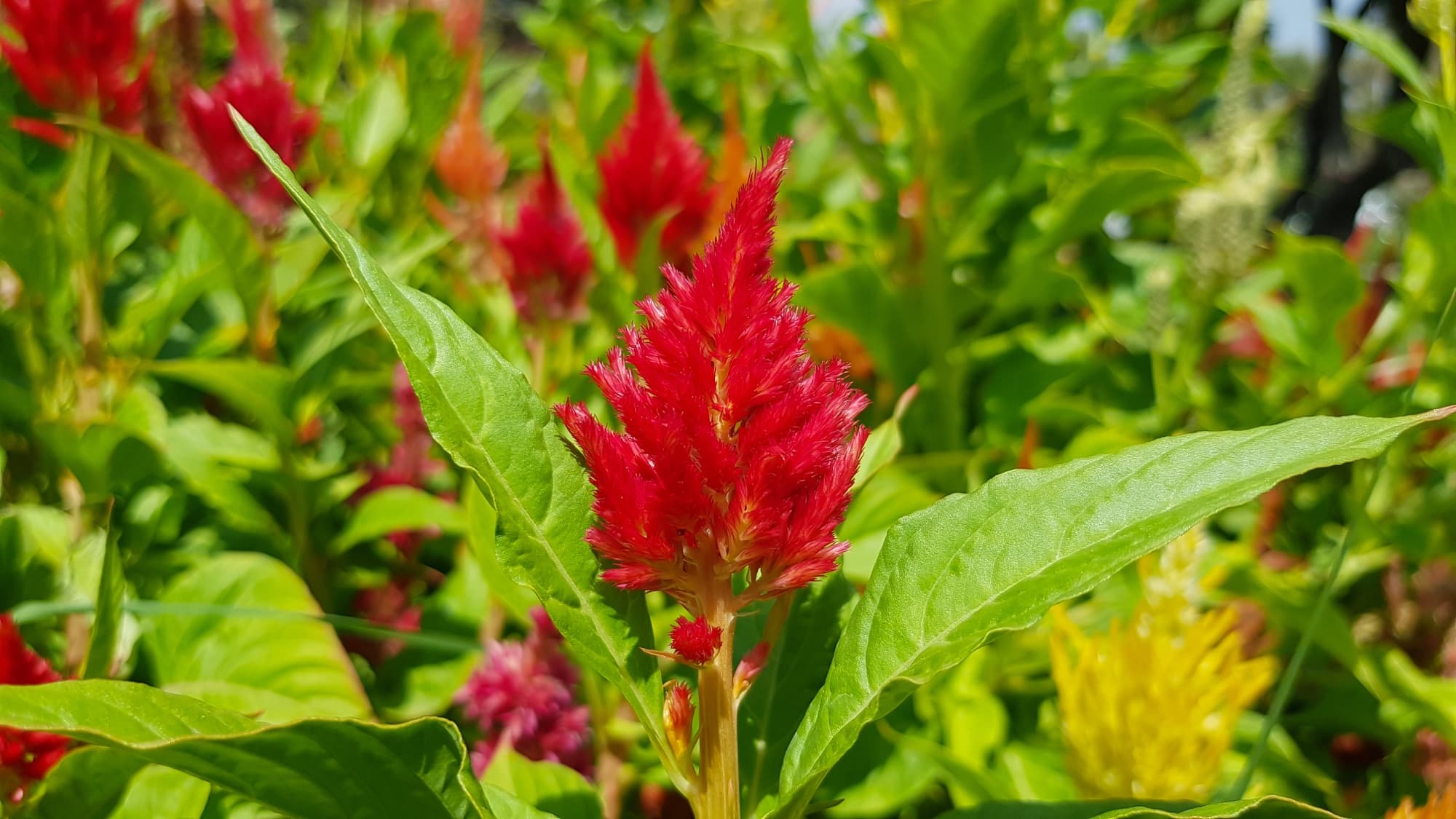
IN THIS GUIDE Can You Grow Celosias In Pots? Choosing Containers Choosing Compost Potting Up Cockscomb Pot-Grown Celosia Care Celosia is a colourful and visually exciting plant that looks fantastic in any garden or outdoor space. A lot of budding gardeners ask whether it’s possible to grow this vibrant specimen in pots – so let’s take a look. Can You Grow Celosias In Pots? Short answer: yes. You’ll need to choose the right pot and the right compost, and follow some care guidelines to give your celosia the best chance to thrive, but yes, you can. You can either grow celosia in pots indoors all year round or keep them in pots outdoors to enable an easy transfer indoors once the weather cools off. The size of the celosia in pots will depend on the container size and the variety. Growing in pots means that, over time, the plant’s roots will take up more and more space, which slows the growth and, if not repotted, will eventually begin to damage the plant. Depending on your variety, you can expect a maximum size anywhere between 6-30 inches in height. Choosing Containers When choosing a pot for your celosia, bear in mind the maximum size of the plant. You should aim for something at least 20cm in diameter, and with a similar depth, as this will give the plant plenty of space to grow. The pot should have adequate drainage in the form of holes at the base. This ensures that the soil will not stay waterlogged, contributing to the ongoing health of your celosia plant. Plastic pots or those made from harder materials will be OK. “Fibre clay is a good option as it is strong, light and made from a sustainable material,” says Professional Gardener and Horticultural Consultant Roy Nicol. If you’re growing your celosia in pots outdoors, the weight of the compost and the pot combined should be enough to keep even plastic pots from blowing away in inclement weather. Choosing Compost Celosias likes potting compost with a loamy base. “Therefore, the loam-based John Innes No2 compost would be suitable,” Roy shares. If you’re using soil from your garden, these plants prefer soil with plenty of organic matter and a pH level somewhere between 6-6.5. Make sure to remove weeds and their stems if you’re using garden soil, as these opportunistic plants will happily start growing again in your pot. Avoid sandy soil with low nutrient content if possible. Potting Up Cockscomb Growing celosias in pots is easy. If you’re growing from seed, let them sprout in a propagator or somewhere warm indoors, then move the seedlings into a pot. Water gently but regularly, and fertilise once every fortnight during summer. If you’re transferring a celosia from another pot, fill it to a couple of inches below where you want the surface to be, then hollow out the centre, making a hole big enough to insert the celosia. Pat down the soil around it and then add another couple of centimetres to the surface. Water immediately and allow to drain. How Many Can You Plant Per Pot? You can grow more than one celosia per pot, but we’d recommend sticking with one at first to get a feel for how much space the plant will eventually take up. As you’ll see in the next section, root-bound celosia is something to avoid and having more than one plant in your pot will accelerate the rate at which this happens. Pot-Grown Celosia Care You should never let celosias become pot-bound, as this will hinder its ability to grow. You can check occasionally by gently pulling the celosia and its soil away from the container and seeing whether roots are visible at the edges. If they are, or if roots are ever visible from the holes in the bottom of the pot, repot the plant into a bigger pot immediately. Water regularly, allowing the soil to drain between waterings. Use your finger to feel a couple of inches below the soil before watering – if it feels wet, hold off for a little while. Pouring liquid fertiliser in your celosia pot every couple of weeks during summer will help the plant to thrive.
Learn more
Astrantia Typically Self-Seed, But You Can Sow Them Yourself In A Desired Area
IN THIS GUIDE When To Sow Astrantia 1) Collect The Seeds 2) Prepare Your Seed Trays 3) Sow Astrantia Seeds 4) Cover Seeds With A Thin Layer 5) Wait For Germination 6) Prick Out Seedlings Astrantias, also known as ‘Masterworts’, are attractive flowering perennials. They are herbaceous plants with attractive, star-shaped floral bracts, which radiate out around pincushion-like flowering heads during the summer months. Sometimes, Astrantias may self-seed in a suitable spot in your garden, but you can also take things into your own hands. Astrantias can be sown using the seed collected from existing plants in your garden. The process is simple: Collect or purchase your Astrantia seeds. Fill a seed tray or pot with seed-sowing compost. Press the Astrantia seeds onto the surface of the growing medium. Cover the Astrantia seeds with a thin layer of horticultural grit or vermiculite. Leave the seeds in a cool, bright spot for germination to take place. Prick out the masterwort seedlings and plant them out into their growing positions. Read on for a more in-depth discussion of the steps above. Difficulty Medium Equipment Required Seeds, seed trays or pots, seed-sowing compost When To Sow February to April or August to October When To Plant Out October to April When To Sow Astrantia If you collect your own seeds, either from a plant in your own garden or from the garden of a friend or relative, these can be sown as soon as they have been collected in August, September or October. “Seeds sown when they are fresh have the best chance of germination, which can be erratic,” says Roy Nicol, a Professional Gardener. Alternatively, they can be stored carefully in a paper envelope and planted in spring, between February and April. Purchased seeds are typically sown in spring indoors or under cover. 1) Collect The Seeds Seeds from Astrantia plants are relatively easy to collect. Once the seed heads are brown and dry and just before they open, place these into a paper bag and give them a shake. The seeds will fall into the bag, ready to be sown. Alternatively, you can purchase Astrantia seeds to sow. 2) Prepare Your Seed Trays Make sure you have a suitable seed tray or pots ready. This should be filled with seed-sowing potting mix, which is moisture retentive yet aerated and reasonably free-draining. 3) Sow Astrantia Seeds The seeds of Astrantias are not buried within the growing medium but are instead pressed gently into the surface. They should not be covered over with the potting mix. 4) Cover Seeds With A Thin Layer Instead, cover over the seeds with a thin protective layer of horticultural grit or vermiculite. Place this tray into some water so it can soak up moisture from below. “This method helps to engage the seeds with the potting mix rather than disturbing them as watering from above can do,” explains Roy. This ensures appropriate conditions and germination should hopefully take place. “Astrantia seeds should be sown fresh in seed trays around October, covered over lightly and then left outside over winter,” explains Caroline from the Astrantia specialist nursery Letham Plants. “If seeds are to be sown in the spring, it is best to place them in a refrigerator for 4 weeks before sowing,” explains Roy. “This cold stratification will encourage germination.” 5) Wait For Germination Astrantia seeds should germinate fairly quickly. Not all of the seeds will germinate, but you should see some new growth after a relatively short period. Sometimes, when sowing in autumn, the seeds may not germinate. If this occurs, simply place the tray somewhere in the cold outdoors. The period of cold over the winter may well lead to germination in late winter or early spring. “Astrantias need the cold to germinate,” Caroline elaborates. “Make sure the seed trays do not dry out and once the weather starts to warm up, the seeds will germinate.” 6) Prick Out Seedlings If sowing in autumn, seedlings can be pricked out and potted on. You can place the plants in containers to grow on or transplant them straight into their final growing positions in your garden. Young Astrantias can be planted out in your garden any time between October and April. Be sure to choose a spot which is in full sun or, ideally for most varietals, in partial or dappled shade. An ideal location will have moisture-retentive, humus-rich, loamy soil which is high in organic matter. “Seed-grown plants will usually flower in their second year,” says Caroline. Choose the right spot and these useful and attractive plants will be great trouble-free additions to your garden, delighting you with their flowering displays for a number of years to come.
Learn more
Expert Gardeners Teach How To Grow Arbutus Unedo AKA ‘Strawberry Tree’
IN THIS GUIDE Overview Common Varieties How To Grow Strawberry Tree Strawberry Tree Care References If you are looking for a small evergreen tree for your garden which can also provide an edible yield, then the strawberry tree, Arbutus unedo, could be a good choice. This tree is not native, though it is native to Southwest Ireland, but it can survive and even thrive in many UK gardens. “Arbutus unedo is one of my favourite trees and I had two of them in my garden at the Chelsea Flower Show in 2017,” shares award-winning Garden Designer Manoj Maldé. Overview Botanical Name Arbutus unedo Common Name(s) Strawberry Tree Plant Type Tree / Shrub Native Area Southern Europe, Ireland and Asia Hardiness Rating H5 Foliage Evergreen Flowers White or pink bell-shaped blooms When To Plant September to November Harvesting Months November to December When To Prune February to March Arbutus unedo is a large bushy shrub that is often pruned to give it a more tree-like form. Although it is commonly referred to as the ‘Strawberry Tree’, this plant is not related to the common garden fruit you might be more familiar with. This evergreen tree is a great choice for gardens, relatively compact in size and provides plenty of visual appeal throughout the year. It is especially attractive between September and November, which is when the flowers and fruits are both born at the same time. This tree is tolerant of a wide range of growing conditions and can be very resilient once established. Opinions differ about how tasty the fruits may be, but they are edible.1 “Perhaps the common name of Strawberry Tree sets the bar too high, but from experience, the fruits are not very tasty,” shares Colin Skelly, a Horticultural Consultant with experience that includes 5 years at The Eden Project. “They do look good on the tree though. Arbutus unedo is also a wind-tolerant tree for coastal locations.” They can be eaten raw and are often used to make preserves like jams and jellies, either on their own or in combination with other ingredients. Common Varieties In the UK, the Royal Horticultural Society has given two cultivars an Award of Garden Merit. The first with an AGM is A. unedo f. rubra, which is a variant with pink flowers. The second is the cultivar A. unedo ‘Atlantic’, with white flowers. “I would, love an A. x andrachnoides in my current garden, but they are so hard to find,” says Manoj. How To Grow Strawberry Tree A. unedo works well as a stand-alone specimen tree, as part of a forest garden design or in a mixed border. It is frequently used to stabilise and improve soils and is a pioneer plant often used in certain parts of the world in ecosystem restoration and to redress deforestation.2 It also can be used as an ornamental in gardens. It might be a good plant for where soils are poor and other fruiting trees or shrubs are failing to thrive. This tree will do best in areas where the soil is free-draining, as it cannot cope with waterlogged soil. Even though it is in the Ericaceae plant family, most of which are acid-loving plants, it is unfussy about pH and can even cope with alkaline conditions. Planting Arbutus unedo trees are best purchased and planted in the autumn. You should think carefully about where you initially plant them, as these trees do not always take well to transplantation. Younger trees are best purchased because these will usually establish most easily. Dig a hole large enough to accommodate the root system and then place the tree inside. Fill back the soil around the tree, water in well and then mulch with organic matter. Growing From Seed Though A. unedo can be grown from seed, this can be challenging and is a time-consuming process, so most gardeners will choose to purchase this plant instead. Seeds need to go through a month-long period of cold stratification and are then soaked in warm water for 5-6 days to improve germination rates. Even after this, germination success rates rarely exceed around 20%. Seedings are very fussy and are prone to damping off and fungal issues. They will need to be mollycoddled for their first year. Strawberry Tree Care Light & Aspect This tree needs full sun to fruit well and should be placed in a sheltered position here in the UK. A south or west-facing aspect is ideal. In small spaces, this tree might be espaliered against a south-facing wall. Overwintering A. unedo will survive temperatures down to -15°C and has a hardiness rating of H5. Watering & Feeding Water regularly during dry spells until the tree becomes established. Once mature, the tree should have reasonable drought tolerance. Replenish the mulch around the tree each spring to provide fertility, retain moisture and suppress weeds. It is also a good idea to consider creating a guild with beneficial companion plants around this fruit tree (see below). Pruning Pruning is not usually required and any pruning should be light. Simply remove dead, damaged, diseased or poorly-placed branches in the late winter or early spring. Common Pests & Diseases The tree is susceptible to aphids, though this can be easily handled by attracting wildlife that eats them to your garden through companion planting. Aim for as much biodiversity in your garden as possible. Though usually not plagued by many issues, Arbutus leaf spot is one problem that may occur. Propagating Though seed propagation is challenging, it is, of course, possible. An easier way to propagate these trees is through semi-ripe cuttings taken during the summer months. Companion Planting You should consider making a guild of beneficial companion plants, which might include: Spring-flowering bulbs Yarrow Comfrey Clovers Mediterranean herbs References 1. Gardens, K. (n.d.). “Strawberry Tree.” Kew Royal Botanic Gardens. Retrieved March 9, 2023, from https://adoptaseed.kew.org/seed/strawberry-tree.html 2. Strategies for the improvement of Arbutus unedo L. (strawberry tree): in vitro propagation, mycorrhization and diversity analysis. (2011). Universidade De Coimbra. Retrieved March 9, 2023, from https://core.ac.uk/download/pdf/19131968.pdf
Learn more
Brown Leaves On Your Apple Tree? These Solutions Can Help With Recovery
IN THIS GUIDE 1) Waterlogging & Root Rot 2) Underwatering 3) Apple Scab 4) Fireblight 5) Chemical Burns 6) Potassium Deficiencies References If you have a prized apple tree in your front yard that is a joy to behold in spring when it colours up with fragrant apple blossoms, brown leaves might become an annoyance. The bounty of luscious, juicy apples that you harvest season after season might be up against leaves that are browning quite alarmingly, and you might be wondering what to do. Well, firstly, you need to try to figure out the problem or diagnose the disease, as apple tree foliage can brown from a multiplicity of causes, including: Waterlogging that causes your apple tree’s roots to rot. Underwatering your apple tree. Apple scab. Fireblight on your apple tree. Chemical burns caused by the overapplication of chemical spray on your apple tree. Potassium deficiencies in your apple tree. I outline the factors that will allow you to identify the cause and treat it below. 1) Waterlogging & Root Rot Though an established tree in open ground is rarely affected by overwatering and waterlogging, a sapling or a young tree may succumb to root rot, especially if it is planted in heavy, dense soil coupled with prolonged rains or excessive watering. The only way to save the affected tree is by digging it up, cutting off the rotten portions of the roots and transplanting it into more amenable free-draining soil. The common signs that waterlogging is the issue includes: The leaves curling up. The browning starting at the tips and the edges of the leaves. 2) Underwatering If your apple tree has the following symptoms, then it might not be receiving enough water: The leaves are covered in random greeny-brown spots. These patches are randomly positioned over the leaves. They occur on both sides of the leaf’s surface. The branches from the tree are cracked and blistered. This problem is the easiest one to rectify on this list, though you should make sure that the diagnosis is correct by checking your watering schedule. You could also examine the soil down to several centimetres for moisture. Give the tree a thorough soaking and then re-commence regular watering. Water in the morning with cool water for the best results. 3) Apple Scab Apple scab is a fungal disease that only some cultivars are susceptible to, but these include 3 of the most popular – ‘McIntosh’, ‘Red Delicious’ and ‘Cortland’.1 Best practice indicates avoidance measures such as the prompt clearance of shredded leaves and the pruning of diseased branches. Alhough fungicides to control this disease are available, they are prohibited for use on fruiting trees. You may treat a diseased apple tree with a fungicide, as long as you first ensure that it will not injure the tree and that you discard and destroy that season’s entire crop of apples. You can identify apple scab from these symptoms: The leaves on a given shoot or branch are almost all browned. The leaves look like they’ve been scorched. The flowers on the tree have wilted and withered. Younger shoots have developed a hook or crook. There is some oozing or canker on the bark of the tree. 4) Fireblight This bacterial disease is a serious one as, unfortunately, it has no cure. To diagnose fireblight, check for the following: The brown leaves are scattered throughout the tree. The browning does not follow any pattern. You have used chemicals on your tree recently. The weather has been particularly sunny and hot and your tree has been exposed to it. If the problem is caught early enough, your best shot is to trim and prune all of the diseased parts of the tree, including the branches. This is a somewhat complicated operation which you will need to research thoroughly before attempting or bring in a tree doctor to do the job for you. Sadly, in extreme or advanced cases, the diseased tree must be entirely destroyed. 5) Chemical Burns “The foliage of your apple tree might have been burnt by chemical sprays, such as pesticides,” shares Colin Skelly, a Horticulturist whose previous experience includes 3 years working as a Gardener at St.Michaels Mount. Other symptoms apart from brown leaves include: Yellowing and/or browning of the leaves. Distorted growth. Small, mishapen or curled leaves. Luckily, if the affliction is not excessive, the tree will heal. “Avoid further spraying of any chemicals and maintain moisture levels,” shares Colin. “If the spray was a contact chemical then pruning out the affected area may limit the damage. “If it was systemic (e.g., glyphosate), this will be less effective. “The tree may recover over time but roots will be impacted, as well as foliage and stems.”2 6) Potassium Deficiencies Apple trees require a soil pH in the moderately acidic range for the efficient uptake of nutrients from the soil. If they are not receiving enough potassium, the leaves of the tree might begin to turn brown. The main symptom includes brown edges on the leaves that may spread towards the centre of the leaf.3 Alkaline soil can arrest the uptake of potassium from the soil. References 1. Bill Shane, Michigan State University Extension. (2014, February 20). A review of apple scab-resistant varieties for commercial growers. MSU Extension. Retrieved March 9, 2023, from https://www.canr.msu.edu/news/a_review_of_apple_scab_resistant_varieties_for_commercial_growers 2. Weedkiller damage / RHS Gardening. (n.d.). Royal Horticultural Society. Retrieved April 11, 2023, from https://www.rhs.org.uk/prevention-protection/weedkiller-damage 3. Potassium deficiency | Apples. (2018, April 30). Yara United Kingdom. Retrieved April 11, 2023, from https://www.yara.co.uk/crop-nutrition/apples/nutrient-deficiencies-apples/potassium-deficiency-apples/?activeSlide=4213
Learn more
Apple Trees Are Usually Amenable To Transplanting - But Follow These Steps
IN THIS GUIDE Considerations Before Transplanting 1) Prepare The Tree 2) Prepare The New Site 3) Remove The Tree 4) Transplant And Backfill The Hole 5) Water And Apply Fertiliser Apple trees are one of the fruit trees that are most amenable to transplanting. That should not be taken to mean that transplanting an apple tree is easy – it’s far from it. You can transplant an apple tree by following these steps: Start preparing the apple tree for transplanting. Prepare the new planting site for your apple tree. Remove the apple tree from its current position. Transplant the tree and backfill the prepared hole. Nurse the stressed apple tree. This process is explained in more depth below. Difficulty Hard Equipment Required Gardening gloves, shovel, hoe, pruning shears, burlap or sackcloth When To Transplant February or March Considerations Before Transplanting If this job is done carelessly or incorrectly, transplant shock can kill an apple tree. To cut to the chase, the critical factors to be mindful of are: The age of the apple tree. The preservation of the root system. The new soil line not being any lower than the original one. The differences between the old and new environments. For a young apple tree up to 3 years old, the chances of a successful transplant are very high. For a tree aged between 4-6 years old, the chances are good. For a tree more than 6 years old, the chances are poor, so a tree in this age group ought not to be shifted. The degree of transplant shock (which will be suffered to some extent) can significantly be reduced if the old and new environment and soil are very similar. Transplant shock will, of course, also be reduced if the tree is prepped properly. 1) Prepare The Tree If you know your plans a year in advance, prep a 4-6-year-old tree by stimulating the growth by feeding the roots and doing a light prune during the winter dormancy. In January or February, make a trench around the tree’s drip line that is about 25cm wide and deep. Fill it in with sand, preferably mica sand. This will stimulate the growth of feeding roots. Prune the tree lightly, only removing old or congested limbs and protruding branches that could be damaged in transit. Do not prune more than a quarter of the growth. 2) Prepare The New Site In February or March, a few days before you intend to transplant the tree, prepare the transplanting site. Select a spot in the new location where the exposure and aspect are as close as possible to that of the tree’s present spot. This should preferably be in a shaded position with some sun, as Julie Bellemann from Sheffield Fruit Trees explains: “Taking your time to plant it correctly, in a place with sufficient levels of sun, is very important.” Examine the soil that the tree is growing in and try to match, as far as possible, the soil of the transplanting site to that of the current spot. Also, prepare that same type of soil for backfilling the transplanting hole. At the very least, the new site’s soil should not be too divergent from the current spot’s soil. Thoroughly clear the site of all weeds, then dig a hole that is about 25% wider than the tree’s drip line and about 30cm deep. Mix in a little of the new soil into the hole. The day before the tree is to be dug up, water it well. 3) Remove The Tree On a sunny morning in February or March, remove and transplant the tree, making sure you have time to complete this task in one day. If necessary, mark the soil line at the base of the trunk, which can almost always be distinguished by a difference in colour. It is critical to know where the soil line was at the time of transplanting. Secure the branches by wrapping a few coils of natural-fibre rope around them, tying them loosely. To dig up the tree, you should first probe the extent of its root system by digging around the canopy. Adjust the width of the circle depending on whether or not you encounter roots as you dig deeper. Although a little damage to the roots will be unavoidable, it is imperative to limit this to the bare minimum. When the lower roots are freed, prise up the tree when it is tilted over while supporting it, taking care to keep as much of the root system intact as possible. Wrap the roots loosely in a damp burlap or sackcloth and place the tree on similar material prior to transporting it to the new site. 4) Transplant And Backfill The Hole Now that the tree’s root system can be observed, adjust the transplanting hole so that it is of the right depth and twice as wide as the root system. Water the hole, including its sides and the surrounding ground. Remove the wrapping material for the tree, spread out the roots and place it in the hole, making sure to spread out the roots once more. Examine the set of the tree and adjust vertically as necessary so that the soil line and the surface of the ground will be level when the hole is backfilled. Start to backfill the hole. As the hole is backfilled, keep watering in moderation to keep the soil moist. Also, keep patting down and firming up the soil and try to ensure that there are no air pockets. Backfill the hole up to the soil line at the base of the trunk. You may backfill to a touch below the soil line but not higher than it. “Keep an eye on the soil line for a few months,” says Master Horticulturist Colin Skelly. “It is likely to drop as the compost settles in the planting hole. “Top up the soil level using the same principles to avoid the tree sitting proud and exposing the top layer of roots.” Firm up the soil well and give the tree a thorough watering. 5) Water And Apply Fertiliser Apply an organic mulch (such as bark, leaves, hay or straw) around the tree at a distance of several centimetres from the base of the trunk. Water the tree periodically. “Make sure to give it sufficient water, particularly if it is a potted plant as they’ll require more care than a free-standing tree in the ground,” says Julie. Though it certainly should not be watered as it would be in the growing season, it should be watered more than normal during dormancy, as water will assist in recovery from transplant shock. Give the tree a month or so to settle down. Then, instead of your customary feeding, fertilise it with a high-phosphorous formula. Apply a high-phosphorous fertiliser at 60-70% of the quantity and strength directed by the manufacturer for a fruit tree of that particular size and age. Alternatively, work in a couple of pinches of bonemeal into the soil in a ring below the tree’s drip line. Water in the fertiliser and then leave your transplanted tree to grow.
Learn more
Tackling Aphids On An Acer Tree - Why Organic Solutions Are Always The Best
IN THIS GUIDE Are Aphids A Problem For Acers? Pest Management In An Organic Garden How To Deal With Aphid Infestations Acers, when grown in the right spots, are typically trouble-free trees to grow. However, on occasion, small pest problems can arise. One pest species that you may spot on your Acers is aphids. Are Aphids A Problem For Acers? Aphids are small sap-sucking insects that usually will not be a major issue for Acers. Even if you do see some aphids on your Acer, they will not usually become a big problem, nor dramatically affect the growth or health of the plant. However, they are attracted to these trees and, if you have a major infestation, this can lead to poor or distorted growth. Growing on the honeydew that aphids excrete, you may also begin to see sooty moulds developing. Pest Management In An Organic Garden One thing that it is important to remember in any organic garden is that we need some pests. Aphids, like many other pest species, are important elements in the food chain and are eaten by a range of different wildlife in your space. Without aphids, other beneficial wildlife would suffer and biodiversity in your garden will be lower, which can cause a range of knock-on problems. If you try to eradicate aphids entirely by using pesticides, you can end up with an environment depleted of their natural predators, which is when the aphid population can get out of control. How To Deal With Aphid Infestations To tackle aphids that are present on your Acers, one of the best things to do is to think about how you can make sure your garden is as rich in wildlife as possible. Planting companion plants which attract aphid predators like ladybirds, lacewings and hoverflies around an Acer is the most important step to make sure aphids don’t get out of control. Coriander, yarrow, cosmos and nasturtium are all said to help attract ladybirds naturally. Less Is More If you can, it is best to tolerate aphids on trees like Acers. If your garden has a healthy ecosystem, by late summer, predators should have restored natural balance and kept their numbers in check. Less is often more when it comes to controlling aphids in an organic garden. However, if there are excessive numbers of aphids before natural predation comes into play, you can simply squash these by hand or use a hose to knock them off the Acer that they are damaging. “Aphids are usually a minor problem with Acers,” says Agustin Coello-Vera, the Chairman of The Maple Society. “If needed, you can often control aphids by wiping or spraying the leaves of the plant with a mild solution of water and a few drops of dish soap.” This is a technique mirrored by RHS Master Horticulturist Dan Ori: “Spraying the aphids directly with a solution of non-biological dish soap should block the breathing pores on the backs of the aphids. “The concentration I use is a sixth of a teaspoon of standard concentration non-biological washing-up liquid to 500ml of water; I apply this early in the morning or evening and I would normally rinse off with water after a few hours if the plant is not in direct sunlight, you may need to repeat this over multiple days to bring aphid levels down to a tolerable level.” See this video for a demonstration of the process from Dan himself: Just remember, you should then take steps to prevent a reoccurrence by attracting beneficial predatory insects and other wildlife to your garden.
Learn more
Agustin Coello-Vera On The Four Causes Of Acer Leaf Browning
IN THIS GUIDE What Is Leaf Scorch? 1) Frost Damage 2) Drying Winds 3) Sun Damage 4) Water Problems Yellowing Leaves Acers can often be relatively easy plants to grow and make great trees for many gardens. However, if you would like to grow an Acer tree where you live, the most important thing is choosing the right location in which to do so. You must select the growing position carefully and provide the right environmental conditions or your Acer will fail to thrive. One of the most common issues seen by those growing Acers is brown leaves, which is often known as leaf scorch. “Brown leaves are a sign that the tree is not happy,” explains Agustin from The Maple Society. “This could be caused by many different environmental conditions, including too little or too much water and too much sun. “Some pests and diseases will also result in leaf browning.” Maple leaves turning brown is typically an issue which arises due to environmental stresses. In short, it can be caused by: Frost and cold conditions impacting your Acer. Drying winds and growing your Acer tree in a position that is too exposed. Intense sunlight getting to your Acer leaves. Issues with watering your Acer tree. Read on for more detail about each of these reasons and for some advice on prevention. What Is Leaf Scorch? When Acer leaves turn brown on the tips, curl up or begin to shrivel, we call this leaf scorch. Leaf scorch happens whenever, for one reason or another, the leaves are losing moisture more quickly than water can be taken up through the roots. Acer leaves may naturally turn brown as part of their natural abscission process, when they lose their leaves in autumn. However, what we are talking about here is when leaves turn brown during a part of the year when they would not naturally do so. The 4 main reasons for this include: 1) Frost Damage If there is a late cold snap in the spring, new Acer growth may be damaged by the cold conditions. Though these are generally hardy trees, the new growth will be more tender. As long as the maple is not in too exposed a location, it should recover once the weather warms. 2) Drying Winds Even if there is no frost, a maple in an exposed location may also become damaged by winds, which dry the foliage out quickly and make it difficult for the plant to obtain the moisture it needs. Moving the Acer to a less exposed location or planting wind-breakers could help prevent the problem from happening again. 3) Sun Damage If Acer leaves turn brown in summer, this could be due to intense sun and heat which increase the speed of moisture loss from the foliage. Placing an Acer where it gets some light shade during mid-summer at the hottest part of the day could help prevent browning for this reason. 4) Water Problems Maple leaves may also turn brown due to issues with waterlogged soil or environmental conditions which do not allow excess water to drain away, as this can lead to root rot. Make sure that you water regularly to keep the conditions moist throughout the summer, but ensure excess water can drain away freely. Yellowing Leaves What if your leaves are turning yellow or are off colour and it is not autumn? According to qualified Horticulturist Dan Ori, “this could be due to disease, pest attack, exposure to cold, conditions too dry, conditions too wet, too much sun, or it could also be something called Chlorosis which is a nutrient deficiency common in Japanese maples grown in high pH (alkaline) conditions.” “To mitigate Chlorosis in Acers caused by high pH, repot or top-dress with ericaceous compost and water with rainwater if possible.”
Learn more
Both Tender And Hardy Verbena Can Be Grown In Containers - Here's How To Care For Them
IN THIS GUIDE Can You Grow Verbena In Pots? Choosing Verbena Containers Verbena-Friendly Compost Potting Up Verbena Potted Verbena Care Whether we are talking about more tender bedding verbenas or hardier perennial types, these plants are wonderful choices for a wildlife-friendly garden. If you are considering growing these lovely plants in your garden, you might be wondering whether you can grow verbenas in pots. Read on for an answer to this question and for more information to guide you when growing verbena. Can You Grow Verbena In Pots? Verbenas can be grown relatively easily in containers. In fact, container growing is an extremely popular choice when it comes to these plants, especially for bedding verbenas that are commonly grown as annuals in UK gardens. Even hardier perennial verbenas can be grown in containers as long as they are given appropriate growing conditions and the right care. When thinking about long-term container growing, which type and cultivar of verbena you choose will be important. So, choose a verbena before you make any other decisions to make sure your chosen plant remains as happy and healthy as possible. Choosing Verbena Containers When choosing a container for verbena, it is important to take into account the size to which the particular verbena you have chosen will eventually grow. Bedding types are generally smaller and can be ideally suited to growing in a wide range of containers, but these can also vary in height and spread quite dramatically. Hardier perennial types may be more vigorous and need a much larger container. If growing perennial types like Verbena bonariensis, look for compact cultivars if you plan to grow them in pots, such as ‘Lollipop’. ‘Lollipop’ Verbena A container for verbenas can be one which sits on the ground, a hanging basket or another hanging container. Just make sure, whatever type of container you choose, that it will retain sufficient moisture while allowing excess water to drain away freely. Generally speaking, the larger the container, the less slowly it will dry out and the less work it will take to maintain it. Many verbenas lend themselves well to planting in larger containers alongside other plants which enjoy similar conditions, either for summer bedding displays or for perennial plantings which will grow a number of years. Verbena-Friendly Compost If you are growing bedding verbenas as part of a summer bedding display in containers, you should fill your container with a peat-free multipurpose potting mix or a homemade equivalent. With perennial displays, it is a good idea to fill containers with a loam or soil-based potting mix or homemade equivalent. Potting Up Verbena Bedding verbenas should be planted out into containers from mid-May onwards since these more tender types won’t survive a late frost. If you pot them up sooner, keep them indoors or undercover in a frost-free location before hardening them off and moving them outdoors once all risk of frost has passed and the weather has warmed up in your area. If you are planting these types of verbena in hanging baskets, you can use a frost-free greenhouse to get them off to the best possible start. “There are many excellent Verbena cultivars for bedding,” says Horticultural Consultant Colin Skelly. “Typically these are smaller than the hardy perennial species and cultivars and more suitable for pots, containers and hanging baskets. They are also more tender, so should be grown as an annual outdoors in the UK.” Place plug plants into the basket in March or April in the greenhouse, so they get a chance to settle in and should begin flowering soon after they are moved and hung outdoors in May or June. How Many Should You Plant Per Pot? Verbenas vary significantly in their size and growing habits, so how many you can place in a given container will very much depend on which type and variety you are growing. Smaller verbenas can look good on their own in smaller pots, but will often take less work if planted in groups, or alongside other plants which like similar sunny and free-draining growing conditions. Potted Verbena Care Place pots in a sunny spot. Taller growing types will do best in a spot that is sheltered too. Water verbenas regularly and remember that those growing in pots will require more frequent watering than those growing in the ground. Water when the medium feels dry at a depth of around 2.5cm, ensuring that excess water can drain away freely, as verbena cannot tolerate waterlogged conditions. When you water, continue to add water until the majority of the compost is wet, but stop before it runs out of the drainage holes. Verbenas planted in the ground in your garden won’t typically need fertilising, other than an organic mulch applied annually in spring. If you want, you can apply a potassium-rich organic fertiliser every couple of weeks or from around a month after planting until the end of the flowering period. In winter, it is generally best to move perennial Verbena into a greenhouse, porch or another sheltered spot to see them through until spring. Cut back perennial verbena in the spring, just before new growth emerges.
Learn more
Overwintering Verbena: You May Need To Dig Up The Root Ball In Colder Areas
IN THIS GUIDE 1) Cut Back Your Verbena 2) Dig Up The Root Ball 3) Plant In A Pot 4) Place Your Pot Inside 5) Fertilise & Prune References Verbena has become popular among gardeners thanks to its rapid growth and vibrant blooms. Verbena is said to symbolise creativity and healing, and in ancient times it was used to bless sacred places like altars and temples.1 Whilst this little plant is quite easy to care for, it does require some extra love in winter. Depending on the variety, Verbena will typically vary from H3-H6 in RHS hardiness zones. This makes it very important to know which type you’re growing, as this distinction can mean the difference between your Verbena being able to survive down to temperatures just under freezing – or being hardy down to -20°C. The most common types of verbena include: Verbena officinalis (Common Vervain) which is H4 hardy (down to -10°C) Verbena bonariensis (Purple Top) which is also H4 hardy If you are growing a tender variety and you live in a more temperate area of the UK, it’s likely you’ll be able to get away with mulching and protecting the roots. However for those in colder areas where a mild winter is unlikely, you’ll likely need to overwinter indoors to guarantee the survival of your plant. See the steps below for a more thorough breakdown: Cut your verbena back to roughly 1/3 its current size. Dig up the root ball and trim the roots. Plant the Verbena in a pot. Place the newly potted plant inside. Fertilise and prune the plant. This process is explained in the individual steps below. Difficulty Easy Equipment Required Gardening gloves, shears, insecticidal soap, a small shovel, a pot, potting soil 1) Cut Back Your Verbena Before the first sign of frost, you will need to cut your verbena plant back. Using gloves and a pair of gardening shears, cut your verbena back to around one-third of its original size. You should also check to see if the plant has any insect damage. If it does, we recommend giving the plant a good spray with insecticidal soap. 2) Dig Up The Root Ball Using a small shovel in late autumn, dig up the root ball of your verbena. It can help to disturb the soil around the roots of your plant as much as possible – to help determine a suitable angle to dig up the plant. Once removed, wearing gloves, gently brush away any clumps of dirt. After, use your garden shears to cut the roots down to half of their original length. 3) Plant In A Pot You will need to find a pot that is a minimum of 3-4 inches in diameter for your verbena’s root ball. This will allow room for your plant to grow. Fill the pot with potting soil, making sure there is enough soil to cover the plant at the same height as it was covered in your garden. Plant the root ball in the pot and cover it with potting soil accordingly, then give it a good water. 4) Place Your Pot Inside You will now need to find a spot by a sunny window to place your newly potted verbena plant. This plant needs at least six hours of sunlight a day. 5) Fertilise & Prune A few weeks before the very last frost, we recommend lightly fertilising your verbena and giving it a gentle prune. This will help to encourage new growth come springtime. As you can see, caring for verbenas in winter is really easy and, once spring has arrived, you can plant them back in your garden and enjoy them for the rest of the year. “Bedding Verbenas, generally grown as annuals as they are not hardy in the UK over winter, can be stored in this way and replanted the following summer,” says Horticultural Consultant Colin Skelly. “The main barrier to this is often the space to store large numbers of the winter months.” References 1. Symbolikon – Iconographic Library. (2020, April 18). Verbena Symbol. Symbolikon – Visual Library of Worldwide Ancient Symbols. Retrieved March 27, 2023, from https://symbolikon.com/downloads/verbena-flower-symbol/
Learn more