Growing

Planting Muscari (Grape Hyacinth) Bulbs In Autumn With Gardener Emily Cupit
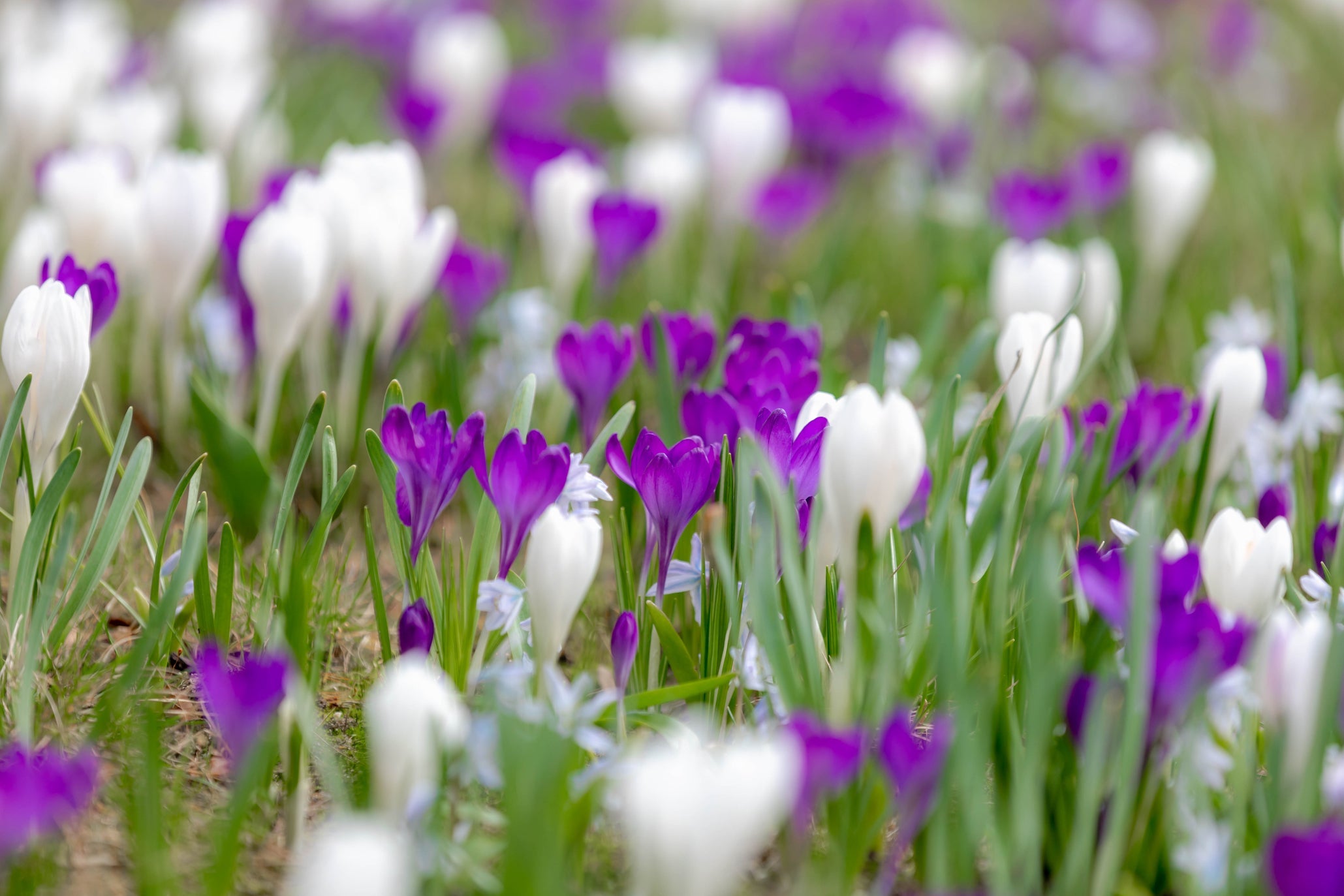
IN THIS GUIDE When To Sow 1) Choose Muscari Bulbs 2) Choose A Suitable Location 3) Plant Your Bulbs Muscari, also known as ‘grape hyacinths’, are small spring bulbs that produce attractive, usually blue-purple blooms to provide for pollinators and provide visual appeal early in the year. They look wonderful on their own and can spread to create a ground cover, but are perhaps at their best when combined with other beautiful spring bulbs. Muscari are a very simple bulb to plant and grow in your garden. In autumn, simply: Select a muscari variety to grow and source your bulbs. Choose where to grow your muscari. Plant your bulbs around 10cm deep in a bed, border or container, with the pointy ends upwards. When To Sow Plant Muscari bulbs in autumn – between September and November. 1) Choose Muscari Bulbs If you would like to grow Muscari in your garden then the first step is to select bulbs to plant. There are a number of different species and cultivars that you might consider. You could try M. armeniacum ‘Christmas Pearl’, M. ‘Jenny Robinson’, M. azureum or M. latifolium. 2) Choose A Suitable Location You can plant the bulbs in containers, or a bed or border. These spring flowers look wonderful at the front of a bed or border, where over a few years they will spread and create a good ground cover. Muscari can also naturalise in a lawn or meadow scheme, in the open or below deciduous trees. As a good ground cover, early pollinator and spring ephemeral, they can be beneficial within an eco-friendly fruit tree guild or forest garden. These flowers draw in early pollinators, ensuring these are present by the time that a fruit tree blossoms. They can also catch and store nutrients and water during this early part of the year. When planted around the drip line of a tree, muscari, like other spring bulbs, can also help keep grass out of the guild area. “Layering your planting both in height and across the growing season maximises the amount of garden plants that you can have in a space,” says Colin Skelly, a Horticultural Consultant. “Any gaps in space throughout the season will be an opportunity for unintended plants (weeds) to find a place to germinate. “Bulbs like muscari are great spring flowering layering plants whose leaves will continue to occupy the space long after flowering has ceased.” Muscaris also work very well in pots, and as well as growing them on their own, you can also create mixed container displays using muscari alongside other spring bulbs. You can create a bulb lasagne by layering different spring bulbs within a container, to create displays that look good all through spring. 3) Plant Your Bulbs Planting muscari bulbs is very easy. Wherever you wish to grow muscari, simply make trenches or holes around 10cm deep, place the bulbs, and then cover them back up again. You can also layer bulbs in a pot a little over 10cm from the top of the container, before placing the bulbs and covering them with 10cm of soil. If you wish to plant muscari in the ground, it is best to plant them in clumps for a more natural look. Make holes or trenches and place a handful of the bulbs within each one. The bulbs should be around bulb width apart, and the pointed end should face upwards. In a container, the bulbs can be placed more closely because a display of bulbs in a container will not be intended to be as long-lasting as bulbs in the ground. If you are layering bulbs in a container, make sure that you do not place your muscari bulbs directly above the bulbs you have placed in a lower tier.
Learn more
Planting Iris Bulbs In Autumn: Remember That Good Drainage Is Key To Good Results
IN THIS GUIDE When To Sow Irises 1) Choose Your Bulbs 2) Pick An Ideal Location 3) Plant Your Iris Bulbs Bulb irises can be impressive and reliable plants to grow in your garden or in containers. They thrive in a sunny position and can cope with a range of different soils. There are a number of different species and cultivars to choose from, some of which flower between February and March, and others that flower in May or June. Fortunately, these spring bulbs are very easy to grow. In autumn you should: Select an iris cultivar to grow and source your bulbs. Choose a suitable location. Plant your bulbs around 15cm deep and usually around 5-7.5cm apart. When To Sow Irises Sow iris bulbs between September and November, ideally earlier in the autumn months. You should aim to plant bulbs as quickly as possible once you have them. 1) Choose Your Bulbs The first thing to decide if you would like to plant iris bulbs is which particular irises you would like to grow. As you can see I opted for Iris x hollandica ‘Tiger Mix’. You should think about their bloom time, as well as the colours and the size to which a particular species will grow. 2) Pick An Ideal Location Once you have decided which type and variety of irises to grow, your next decision to make is where to grow them. Some types prefer neutral or alkaline soil and some can also cope with shade, however, the optimal growing conditions depend on which variety you have chosen to grow. Full sun and free-draining are the key things to remember for most bulb irises that you might grow. You can grow bulb irises in a bed or border in your garden, naturalise them en masse below deciduous trees or in a lawn or meadow scheme, or plant them in pots. If you choose to grow irises in a container, you can consider creating a bulb lasagne and you can layer them along with other spring bulbs to create attractive displays that bloom over a longer period of time. “Iris bulbs, both spring and summer flowering, are brilliant for adding vertical accents to borders or pot displays in combination with other bulbs or perennials,” says Colin Skelly, a Horticultural Consultant. “This type of ‘lasagne’ planting is called layering and means that several flowering plants can occupy to same space through time. It is the mark of a skilled gardener to combine these artfully.” “If you want to make an impact, buy three of the same variety, and, if you are prepared to wait, buy single varieties and allow them to bulk up,” recommends Simon Dodsworth, the owner of the specialist nursery The English Iris Company. 3) Plant Your Iris Bulbs If you plan on planting quite a few iris plants, a bulb hole maker or planter will make your job easier. It is typically best to plant deeply for better chances of successful flowering, so as a general guideline, I’d recommend planting bulb irises around 15cm deep. If planting in the ground, simply make your holes to this depth, then fill them back in and firm the soil gently into place. The bulbs should be placed no closer than 5-7.5cm apart, according to the RHS. However, if growing in containers, you can get away with closer spacing since this won’t be a permanent display. Make sure the bulbs are not touching, but you can place them as little as 1 bulb width apart, or even a little less. Remember, when growing in a container, you might use irises in a bulb lasagne with other spring bulbs. One important thing to remember is that, if you want to create a bulb lasagne, the bulbs should not be placed directly above those in the tiers below. “Apply a bone meal fertiliser and water in well after planting,” says Simon. “Check the bulbs in 2-3 days to make sure that roots have taken hold. In dry conditions, continue to water sparingly every 2-3 days.” Wherever you plant your irises, remember that good drainage is key to good results. So, whether in the ground or in pots, make sure that excess water can drain away freely.
Learn more
Plant Your Amaryllis Bulbs In September And They'll Bloom In Time For Christmas
IN THIS GUIDE When To Plant 1) Soak Bulbs Before Planting 2) Choose A Container 3) Plant The Bulb 4) Leave In A Warm & Dark Place 5) Move To A Bright Location Amaryllis are subtropical plants popular for growing as houseplants in the UK. Their flamboyant blooms are a cheerful sight to brighten up your home over winter and in early spring. When amaryllis bulbs are planted in September, they should bloom in time for your Christmas festivities. Here is the process involved in planting amaryllis bulbs: Soak the bulb in tepid water for a few hours before planting. Select a pot in which to plant your bulb that is just large enough to accommodate it. Sit the bulb on top of the compost, top up with compost and water in well. Leave the bulb in a warm and dark location for a couple of weeks until a shoot emerges. Once a shoot emerges, place in a bright spot out of direct sunlight in your home. Watch our video explanation of this process or read below for further information: When To Plant Plant amaryllis bulbs indoors around 6-8 weeks before you would like it to flower. If you would like your plant to be in bloom for Christmas, planting in mid to late September is generally the best idea. Results can vary somewhat, but counting back 8 weeks from when you want the plant to bloom should tell you roughly when to plant. 1) Soak Bulbs Before Planting Once you have sourced your amaryllis bulbs, you should soak them in tepid water for a few hours before you plant them into containers. This helps to rehydrate the roots and can speed up the process of growth. 2) Choose A Container Select a pot that is just a little larger than the bulb. Don’t use a container that is too large, since these are plants that like to have their roots constricted. They actually do best when they become pot-bound, so there should be no more than 1cm or so of your growing medium on each side of the bulb. You can fill your pot with any peat-free multipurpose compost. “I prefer to use peat-free John Innes no.2 for Amaryllis bulbs,” shares Colin Skelly, a Horticulturist with 5 years of experience working at The Eden Project. “If using peat-free compost, I will always add horticultural grit to the mix to ensure that the mix is free-draining.” It is also a good idea to top the pot around the edges of the bulb, with horticultural grit. 3) Plant The Bulb Place some compost in the pot and place the bulb so that it is sitting on top. Top up a little compost around the sides of the bulb and then water it in well, making sure that the medium is moist but excess water is able to drain away. 4) Leave In A Warm & Dark Place Next, place the bulb into its pot in a warm, dark place. Leave it there, checking on it regularly, until a shoot emerges. 5) Move To A Bright Location Once a shoot emerges from your amaryllis bulb, you should then move the plant in its pot to the position where it will flower within your home. A suitable location will be bright, but out of direct sunlight, and should also be draft-free and somewhere where the temperatures do not fluctuate too much. Again, make sure excess water can drain away and don’t water too much, as the bulbs need reasonably free-draining conditions. Follow these steps and you should only have to wait around 6-8 weeks to see your amaryllis bloom.
Learn more
Planting Oxalis Bulbs (Corms) In 5 Steps With Emily Cupit's Video Guide
IN THIS GUIDE When To Plant Where To Plant 1) Acquire Oxalis Corms 2) Prepare Your Pot 3) Plant The Corms 4) Cover With Growing Medium 5) Water In Well Oxalis plants are ornamentals often grown indoors in the UK, though there are some varieties that can also be grown outdoors. Also commonly referred to as shamrocks for the shape of their leaves, these can be grown from small bulbs, tuberous root sections or from seed. To plant the bulbs (which are technically corms) of this bulbous perennial, which look like long, thin pine cones: Select and purchase your corms. Prepare a pot filled with a suitable free-draining growing medium. Plant the corms vertically in a deep container, with the narrow end upwards. Make sure the corms are around 2.5cm apart and covered with around 2.5-3.5cm of your growing medium. Water in well, making sure excess water can drain away and wait for growth to emerge. Use our easy-to-follow video for more information, or read on for a more detailed explanation: When To Plant Oxalis bulbs are often planted undercover in autumn for indoor cultivation as houseplants or for transplantation into the garden in spring. They can also be planted in spring after all risk of frost has passed in your area. Where To Plant Where you plant and grow oxalis bulbs very much depends on which oxalis variety you have chosen to grow. It also depends on where you live and whether the oxalis you have chosen will thrive outside in your area. Oxalis triangularis cultivars are commonly grown as houseplants in the UK, though they can also grow outdoors in summer in milder or coastal gardens. Indoors, you need to choose a light, bright location and place the corms in pots filled with a suitably fertile yet free-draining growing medium. 1) Acquire Oxalis Corms If you would like to plant oxalis, the first stage is to select and purchase your corms or, if you have an existing pot of oxalis, the corms can be split up and re-potted. When selecting the oxalis to grow, make sure you think about where you would like to grow it, and the conditions you can provide, as well as its visual appearance. 2) Prepare Your Pot A pot or container for oxalis must have good drainage to allow excess water to drain away at the base, as this plant cannot tolerate waterlogged soil. It must also be deep enough to accommodate the long, thin corms. Fill your container with a free-draining yet fertile growing medium. A mix of peat-free houseplant compost with a grit added for drainage is typically best. 3) Plant The Corms Place a little of the growing medium into the base of the container, making sure that there is a reasonable layer, but that you can still accommodate the corms with space to cover them over on top. A planting depth of 3-5cm is recommended. Place the corms upright in the container, with their narrower ends upwards. You can use a dibber to make the holes for these within the medium. Fill in the growing medium around these carefully. 4) Cover With Growing Medium Once the corms are in place within the growing medium, make sure that you cover these, so that the tops of each one are around 2.5-3.5cm below the surface. Remember, there should also be a little headspace at the top of the container. 5) Water In Well Next, simply give your newly planted corms a drink, but make sure excess water can drain away freely. After, make sure your pot is placed in a suitable location and wait for the new growth to appear.
Learn more
Oxalis ‘Purple Shamrock’: This Plant Needs A Period Of Dormancy And Occasional Feeding
IN THIS GUIDE Overview Habitat & Growing Conditions Ongoing Care Common Problems References Shamrock is the name given to several three-leaved plants within the Oxalis genus as well as clover (Trifolium repens) and medick (Medicago lupina), Oxalis bein, popular for their three-four lobed clover-like leaves and star-like flowers, which are grown as houseplants in the UK. These plants, popular as St. Patrick’s Day decoration, are considered lucky by some.1 They are attractive and interesting plants that could be interesting additions to a houseplant collection. In this article, we will focus on the most popular Shamrock or False Shamrock houseplant, Oxalis triangularis. Overview Botanical Name Oxalis triangularis Common Name(s) False Shamrock / Purple Shamrock Plant Type Bulbous perennial Native Area South America Hardiness Rating H3 Foliage Deciduous Flowers Pink and white star-shaped flowers When To Plant Any time if growing indoors, Spring if outdoors Native to South America, this is the plant commonly referred to as false shamrock or ‘shamrock plant’.2 The subspecies O. triangularis subsp. papilionacea, AKA the ‘Purpleleaf False Shamrock’, has been gifted the RHS Award of Garden Merit. This is a bulbous perennial plant with deep maroon, clover-like leaves and white or pale pink, five-petalled little flowers. This may also sometimes be grown outside in the warmest areas, but is also most commonly grown as a houseplant. One very interesting thing about this plant is that the leaves, when examined closely, look like an umbrella during the night or when disturbed, and the flowers also close during the night. It also, unlike most other common houseplants, goes through a period of dormancy each year. Habitat & Growing Conditions Temperature False Shamrock has a H3 hardiness rating and should be grown in temperatures of around 15°C. It will cope with higher temperatures but will tend to suffer if temperatures above 25°C are sustained for too long. It can tolerate temperatures down to around -3°C and will only survive winter outdoors in the very mildest regions of the southern British Isles, in a particularly sheltered spot. Usually, therefore, these plants are grown undercover, or as houseplants here in the UK. Sunlight These plants require a position with bright yet indirect sunlight indoors. Outdoors in a suitable spot they will thrive in partial shade. When not grown as year-round houseplants, these plants are sometimes also placed outdoors in late spring in partial shade, then moved back indoors or undercover into frost-free conditions in early autumn. Soil Requirements In terms of the growing medium, ‘False Shamrock’ needs moisture-retentive yet well-drained soil. A recommended mix for this plant is 1/3 loam, 1/3 leaf mould and 1/3 grit, or, alternatively, an equivalent soil-free compost. Ongoing Care Dormancy ‘False Shamrock’ can be an unusual plant, and many used to growing other houseplants may find them rather different from the other plants they may have grown. The main difference is that as corms, these plants have frequent periods of dormancy, which can occur during winter but may also occur 2-3 times a year if Oxalis is grown undercover. Those who are not familiar with these plants may often fear that their plants are unwell, as they seem unhealthy and begin to lose their leaves, but this is a natural part of the plant’s life cycle. The plant needs a period of rest. Leaves should be allowed to die back naturally, and the corms should be left to the dormancy period for 3-4 weeks when it occurs in the summer months, or overwinter in those with winter dormancy. Watering These plants should be watered in moderation while they are in active growth, taking care not to cause waterlogged conditions, yet also ensuring sufficient moisture. However, when the plants are dormant, watering should be minimal and the growing medium should be kept barely moist. Feeding During periods of active growth, it is a good idea to feed these plants with a balanced, organic liquid plant feed (such as a compost tea) every month or so. However, during dormant phases, feeding should be halted entirely. Propagation Oxalis triangularis can be propagated by means of seed or division. Seeds are best sown as soon as they become mature, in a cold frame or indoors. Note, however, that the seeds of certain subspecies may not come true. This could be interesting, since you may have, for example, purple-leaved types growing from the seeds of a green-leaved form – so you might wish to experiment. Prick out the seedlings into individual pots and grow them indoors, planting out or placing them outdoors in late spring or early summer if you wish to do so. Division is best carried out in spring. Pot up smaller divisions and grow them on in a cold frame or under cover even when planning to place them outdoors, so they are well established. Larger divisions can be placed into an outdoors position right away if they are to be grown outdoors. Common Problems Generally, oxalis are relatively untroubled by pests and diseases. However, they can be troubled by slugs and snails when placed outdoors, and can sometimes be susceptible to rust diseases, which can be unsightly, though these fungal infections will rarely kill your plants. Aside from understanding dormancy, oxalis houseplants are fairly easy to care for and they do not require pruning. In general, you should find false shamrock plants interesting and relatively straightforward additions to a houseplant collection. References 1. DiLonardo, M. (2021, February 8). 17 Things You Didn’t Know About Shamrocks. ThoughtCo. Retrieved March 21, 2023, from https://www.thoughtco.com/things-you-didnt-know-about-shamrocks-4863451 2. Oxalis triangularis. (n.d.). North Carolina Extension Gardener Plant Toolbox. Retrieved March 21, 2023, from https://plants.ces.ncsu.edu/plants/oxalis-triangularis/
Learn more
Protect Daffodils In Pots From Repeated Freezing And Thawing Explains Janet Hickman
IN THIS GUIDE Are Daffodils Suitable For Containers? Choosing Pots What Is The Ideal Compost? Potting Up Potted Daffodils Care Daffodils are among the easiest, most popular and most reliable spring bulbs to grow in UK gardens. They can work well in many different positions in a garden, and in a range of different garden schemes. However, if you are short on space or don’t have a suitable planting location for these spring flowering bulbs where you live, you might be wondering whether you can grow daffodils in pots. Are Daffodils Suitable For Containers? The answer, of course, is yes. Daffodils come in many different flower forms and colour variations, and almost all are wonderful choices for container cultivation. Whether you are new to gardening or have been growing for years, you should have no difficulty in growing daffodils in pots. You can grow them on their own for cheery splashes of spring colour, in a bulb lasagne, or in a wide range of mixed displays alongside other bulbs and plants. “Many varieties need a cooling period in order to bloom,” explains Janet Hickman from the American Daffodil Society. “For potted bulbs, they can be refrigerated or sheltered in outdoor storage, but they should be protected from repeated freezing and thawing.” Make sure you know what is needed for your daffodil bulbs before planting in a pot. Choosing Pots When choosing a container for growing daffodils, there are a number of things that you should consider. Of course, you need to think about which variety of daffodil you would like to grow. It’s important to remember that some smaller types can be grown in small pots indoors or in little window boxes, while larger types will look better and do well in larger containers. If you want to make an impact, it is generally best to plant spring bulbs in groups or drifts that are as large as possible, but there are limits to how many daffodils you can grow, even in a larger container. Choosing a container that is as big as possible will allow you to plant enough daffodils together to make an impact. A larger container (around 40-50cm in width and depth) will allow you to create a dramatic display of daffodils. When choosing a container, remember that you don’t necessarily have to buy one. You might make your own using reclaimed items or materials for a zero-waste, eco-friendly choice. Make sure, whatever container you choose, that it has adequate drainage at the base because if bulbs sit in wet or waterlogged conditions over winter, they can rot. What Is The Ideal Compost? When choosing a compost or growing medium for spring bulbs, you don’t need to be too choosey. Any general peat-free multipurpose compost or homemade equivalent will work well for daffodils and most other common spring bulbs. However, drainage is important, so you might wish to add some grit to improve this. The mix should be different depending on whether the daffodil bulbs will remain in the container for a single season, or will be in the container long term. If you wish to have daffodils flower over several years, rather than just for a single season as bedding, then it is a good idea to incorporate some loam or soil in the mix. Purchase a peat-free compost with added John Innes, or add soil or loam to your homemade compost mix. Potting Up Daffodil bulbs are best planted in early to mid-autumn, ideally before September ends, but October can also be fine as long as you get to the job as soon as possible. You should plant daffodils 3 times as deep as their own height, and when growing in a container, can space them quite closely – perhaps even as close as 1 bulb width apart from one another. Spacing will depend on whether you want a seasonal display or one which you can continue to enjoy over a number of seasons. Tighter spacing is fine for a short-lived display, but spacing a little more widely is best for a longer-lasting container planting mix. “Daffodils need repotting frequently, as the nutrients from the soil get used up and composts lose their structure,” says Anne Wright, the owner of bulb specialist Dryad Nurseries. “I repot my daffodils every year and I use deep pots if they are available for the best results. “This is because bulbs can increase and break out of the pots if they are too small!” Daffodils work particularly well within a container planting scheme often called a bulb lasagne. This involves creating layers of bulbs within the container, either with daffodils with different bloom times or with a range of different spring bulbs that bloom at different times. “As well as planting with other species you can create a daffodil lasagne using cultivars with different heights and flowering times, providing a container in flower from early to late spring,” says Master Horticulturist Colin Skelly. “Using a spring flowering plant such as Myosotis sylvatica (Forget-me-not) also allows daffodils to punch through and flower above a lower layer of flowers.” Daffodils are often planted as a middle tier within the stacked layers of a bulb lasagne. To plant daffodils within a bulb lasagne, you should first create a layer of your growing medium around 10cm deep in the base of the container. On top of this, you will place your largest, late-flowering bulbs. After covering these with more of the soil, place your daffodil bulbs, making sure that these are not directly above the bulbs in the bottom layer. You will then cover these up with soil and repeat the process with the bulbs of the top layer, again making sure that the higher-up bulbs are not directly above those in the tiers below. How Many Can You Plant Per Pot? How many daffodils you can plant in a pot will of course depend on the size of that pot or container. It will also depend on the variety you are growing and on which other bulbs or plants you might add to the same container. Remember, a bulb lasagne is just one option. You might also combine daffodils in pots with a wide range of other plantings, as long as the daffodils still have the space to grow up and through. Just make sure, if you want to enjoy displays over multiple years especially, that you do not overcrowd the container as this will weaken your plants. Potted Daffodils Care Over the winter, place your container in a sheltered spot, where high rainfall will not be an issue, such as in the lee of a wall or fence. Consider placing mesh on the top of the container if squirrels or other pests are an issue where you live. In spring, when green growth emerges, make sure you move your container so it receives plenty of sun. Water well during dry periods during the period of active growth, but take care not to overwater and make sure excess water can drain away freely. I’d recommend feeding daffodil bulbs in pots weekly with a high-potassium organic liquid plant fertiliser. Do not cut off or restrain the green foliage after flowering, just let it die back naturally. Otherwise, flowering may be sparse or at least less abundant the following year. The leaves need to photosynthesise to gather energy to store in the bulb over winter so they can grow and flower the following year. After 2-3 years, you will typically need to lift and thin bulbs to keep the display flowering well.
Learn more
Combine Tulips To Create Attractive Container Displays - These Tips Give Good Flowering
IN THIS GUIDE Are Tulips Suited To Containers? Suitable Containers Suitable Compost Planting Your Tulip Bulbs Ongoing Potted Tulip Care Tulips are beautiful flowers of late spring and early summer that can provide great interest to any garden. We all know that tulips can look lovely in a wide range of different gardens. However, you might be wondering if you can grow tulips in pots. Are Tulips Suited To Containers? Tulips are, of course, commonly grown in containers and can thrive in a container garden. They are a great choice for those looking to create beautiful flowering displays for the spring and early summer. There are a huge number of different tulip varieties that you might choose from when creating a container garden. Different varieties can be combined to create attractive container displays, and tulips also lend themselves well to mixed container displays alongside other spring bulbs. When selecting tulips for container growing, it can be an advantage to look for tulips that will flower for several years without lifting. However, it is important to note that there are also certain specialist tulip types that are specifically suited to cultivation in free-draining conditions in a rock or gravel garden. There are also some that grow in partial shade in moisture-retentive soil and a few that are more tender and are grown in a greenhouse undercover. So, when choosing tulips, make sure that you understand the needs of the different tulips that you would like to grow. When selecting tulips for a container garden, you will also need to think not only about the shape and colour of the tulips in question but also when precisely they bloom. It will be important to know when particular tulips flower in order to find the right combination of bulbs and other plants to include in your container displays. Even if you are growing tulips alone, you might wish to consider combining early-flowering, mid-season and late-flowering tulip varieties to extend the appeal of the display. “Another factor to consider is the height the tulips grow to in relation to other bulbs in the container,” shares Master Horticulturist Roy Nicol. “For example, ‘Red Riding Hood’ is a dwarf variety to 20cm best at the edges of a container while ‘White Triumphator’ is a tall variety to 90cm best in a central position so as to not obscure other flowers.” Suitable Containers When choosing a container for most tulips, it is important to select one which is large enough to create an appealing display. Like other spring bulbs, tulips tend to look best if they are planted in clumps or drifts with as many flowers as possible. Of course, in a container, there will always be a limit to how many tulips you can grow, but choosing a larger container at least 40-50cm in depth and width is usually the best policy. A reasonably sized container will allow you to grow an attractive display of tulips if you are growing these on their own. However, it will also allow you to have more options when it comes to combining tulips with other spring flowering bulbs, or other bedding plants to create interesting and attractive container displays that will look great over a longer period of time. When choosing your container, remember that you can consider reclaimed or reused items, and don’t necessarily have to rush out and purchase new pots or containers for your garden. Whichever container you choose, it is important to make sure that excess water can drain freely from the hole or holes at the base. Most tulips, and most other common spring bulbs, require free-draining conditions as waterlogged soil can be expected to cause the bulbs to rot and fail to flower. Suitable Compost Most tulips do not really require anything particularly special when it comes to the growing medium. You can make use of any peat-free multipurpose compost or a homemade equivalent to fill your containers. I use Biochar All-Purpose which is certified 100% peat-free – Just make sure that whatever growing medium you choose, it is relatively free-draining and won’t cause bulbs to rot due to excessive water retention. Typically I find that adding 1 part grit to 3 parts of this growing medium will help make sure that drainage is not an issue. If you plan on keeping tulips in pots for more than a single season, using a loam-based mix such as compost with added John Innes or a homemade loam-based or soil-based mix can be beneficial. Note that some specialist tulips need even better drainage and require additional steps to improve this, such as a layer of sharp sand below the bulbs, and a layer of grit topdressing in the top of the container. Make sure you understand the needs of the particular type of tulips that you are growing. Planting Your Tulip Bulbs You can plant your tulip bulbs in pots any time in autumn, but I’d recommend sowing tulip bulbs in October or November, which is a little later than most other spring bulbs. Tulips can be sown earlier but will be more susceptible to a disease called tulip fire. However, if you are planting tulip bulbs in a mixed display alongside other spring bulbs, you may wish to plant tulip bulbs earlier so that you can plant them at the same time as other bulbs in a layered system called a bulb lasagne. Whether you plant at the same time as other spring bulbs or hold off for a while, make sure that you get your tulips planted before the first hard frost in your area. Of course, this will be later in some parts of the UK and earlier in others. Spacing can vary depending on a range of factors, including the specific variety or varieties of tulip that you have chosen to grow. As a general rule of thumb, tulip bulbs should be planted at a depth of at least 2-3 times the bulb’s height, and at a spacing of at least twice the bulb’s width. Make sure when planting that the pointy end of the bulb faces upwards. How Many Can You Plant Per Pot? Naturally, how many tulips you can grow in a particular container will depend on the size of the container you have selected. It will also depend, of course, on whether you are growing tulips alone or combining them with other spring bulbs or plants. However, as a general rule, you can place between 12-20 bulbs within a 40-50cm pot. Of course, you would reduce this number if you are planting tulips alongside other plants or making a bulb lasagne that will also include other spring bulbs. If you are creating a bulb lasagne, then tulips will often form the lowest layer or tier within your pot, as the latest flowering bulbs. Above these, in a middle layer, you might plant some daffodil bulbs, and some smaller earlier bulbs, like Muscari, might be placed in a layer above these. You might also place different tiers with different varieties of tulip, by planting the late flowering ones at the base, mid-season ones a little higher within the pot, and early flowering types in the highest tier, making sure that there is still a covering of 2-3 times the bulb’s height of growing medium above the bulbs positioned last. Over the winter, you might also add winter bedding on top, so that there is not just bare soil to look at in your container over the coldest part of the year. Ongoing Potted Tulip Care When choosing where to position your tulips in containers, make sure that you take into account the needs of the particular variety that you have chosen to grow. Most tulips, aside from those with special requirements, will grow best in a sunny and relatively sheltered spot. Make sure that you water only sparingly over the winter months (if at all), and position your container so that the bulbs are not inundated with high levels of rainfall and that excess water can always drain away freely. You may need to protect your bulbs from squirrels and other pests by covering them with a metal mesh. In spring and through the flowering period especially, make sure you do water in dry weather, but again, take care not to overwater and make sure excess can drain away freely. If you would like to enjoy tulips over multiple years, it can be a good idea to feed plants in pots every week with a potassium-rich organic liquid plant feed. Tulip varieties that don’t always re-flower all that reliably can be lifted once leaves die back, and can be stored in a dark, well-ventilated place at 18-20°C until the largest bulbs are replanted in autumn. This can make successful re-flowering more likely, though this is not guaranteed. Expect your display of tulips, if you are not just treating them as single-season bedding plants, to flower well the first year only, with reduced flowering in the second year. “If reliably perennial tulips are used, good flowering can be expected to continue for several years, whilst other bulbs such as Narcissus can be expected to be reliably perennial,” explains Roy. In any case, after two years you will likely need to thin out the tulip bulbs to prevent overcrowding and repot the bulbs in a new container display.
Learn more
Potting Up Ornamental Alliums With Emily Cupit - They're Both Simple And Long-Lasting
IN THIS GUIDE Can Alliums Be Grown In Containers? Choosing Your Container Choosing Your Compost Potting Up Ongoing Container Care Alliums are very useful and attractive bulbs to grow in your garden. They work very well in beds and borders, but if you are short on space, or have heavy soil not ideally suited to their growth, you might also wonder whether you can grow Alliums in pots. Can Alliums Be Grown In Containers? Like other spring bulbs, Alliums can indeed be great container plants. You can grow them in pots with little work and effort on your part. They work especially well in mixed container displays alongside other spring bulbs or lower-growing perennials. Note that when we talk about Alliums we are usually talking about ornamental Alliums, grown for their attractive flowers which bloom in later spring. Alliums can also be useful in pest control as they can help to repel, confuse or distract a range of pest species with their pungent scent. In this role, they can work just as well in containers as they do in the ground in your fruit tree guilds, polycultures, or other sustainable organic garden planting schemes. While most Alliums can be grown in containers, remember that some will grow much larger and taller than others. Shorter types tend to be best for container cultivation. Note that some larger, taller types may need some support, especially if they are not grown in a particularly sheltered location. Choosing Your Container Alliums tend to look best when planted in as large a clump or drift as possible. In a container, you can only grow so many, but choosing as large a container as you can generally be a good idea. This means that you will be able to plant a sufficient number of bulbs to create a pleasing display. Also, the larger the container, the easier it will be to maintain your display since larger pots will need less frequent watering. A larger container will also give you more options when it comes to combining your Alliums with other useful and attractive plants. I would recommend choosing a container with a depth and width of at least 40-50cm. “If you haven’t got space for a large pot then you can grow some of the smaller species in smaller pots, such as A. moly, A. neapolitanum and A. amplectens,” says Master Horticulturist Colin Skelly. “These have become some of my favourite late spring bulbs and make as much of a statement as the larger flowered Alliums.” You don’t necessarily need a container this large to grow Alliums alone, but a larger pot will allow you to create the best displays, and, as mentioned above, make your container garden easier to maintain. Remember, you don’t have to purchase a container. You can keep costs down and make an eco-friendly choice by reusing or upcycling items that might otherwise have been thrown away. When choosing a container for Alliums it is important to remember that they thrive in free-draining conditions, so make sure your container has sufficient drainage at the base for excess water to drain away freely. Choosing Your Compost A general multipurpose compost works well for bulbs. Just make sure, for environmental reasons, that you choose a peat-free option. Alternatively, you can make your own potting mix ½ compost and ½ of regular soil, and you can also add materials like leaf mould to the end product. Your soil should be free-draining as Allium bulbs are prone to rotting. Potting Up Ornamental Alliums are one of the spring bulbs which should be planted in early to mid-autumn for best results. Remember, most Alliums will bloom in late spring and early summer. When the bulbs will bloom is an important thing to think about, especially if you plan on layering your Allium bulbs with other bulbs to create a bulb lasagne. Creating a bulb lasagne is a great idea because it allows you to create displays with successional blooms. You can first enjoy the earliest flowers of spring, before the next flush of flowers, and then eventually the Alliums arrive. If you are planning on creating a bulb lasagne, then you do not just have to think about potting up Alliums, but might also think about planting your other spring bulbs in the container at the same time. First, place around 10cm of your growing medium into the bottom of your container, then plant your Alliums. The bulbs should be planted at a depth of around four times the width of the bulb. Depending on the variety, the bulbs should be placed around 10-20cm apart. Next, you should cover these with another layer of the growing medium, then, depending on what else you have chosen to place in the pot, layer in other bulbs in layers, making sure that you don’t place the bulbs immediately above those in the tier below. Finally, you will cover the final layer of bulbs with your growing medium, and add any bedding plants or perennials you might also have decided to add. How Many Can You Plant Per Pot? How many Alliums you place in a particular pot will of course depend on the size of the container you have chosen, and also on what else you are planting along with those Allium bulbs. Alliums don’t always look great after flowering, so you might choose low-growing perennials to place around the outside of the container. Adding other spring bulbs that flower before the Alliums can also help make sure that your display lasts longer. Ongoing Container Care Place your container in a sunny spot, and over the winter months, make sure it is positioned in a location that will not become too wet. Placing the pot in the lee of a wall or fence can help make sure high rainfall in winter does not cause bulbs to rot. Do not overwater, but make sure you keep your container moist but not soggy throughout the flowering period. A well-thought-out scheme can flower for 2-3 years before it needs repotting. Allium bulbs will multiply and can be lifted in late autumn or early spring and repotted elsewhere.
Learn more
10 Fascinating Bearded Iris Varieties With Some Lovely Colour Combinations
IN THIS GUIDE Iris germanica Expert-Chosen Varieties 1) ‘That’s All Folks’ 2) ‘Absolute Treasure’ 3) ‘Champagne Elegance’ 4) ‘Autumn Tryst’ 5) ‘Sugar Blues’ 6) ‘Immortality’ 7) ‘Jesse’s Song’ 8) ‘Titan’s Glory’ 9) ‘Superstition’ 10) ‘Before The Storm’ (Tall Bearded) References The genus Iris comprises over 310 species and tens of thousands of cultivars, and this very fact clues one into the abiding fascination floriculturists and gardeners have with Iris.1 All these many varieties of Irises are divided into numerous groupings of which the Bearded Iris is emblematic of the genus. Indeed, Bearded Iris itself is further subdivided into six sub-groups. Other types of Iris include Flag Iris, Water Iris, Siberian Iris, Bicolour Iris, Aril Iris…the types and kinds of Iris go on and on. In this guide we focus on Europe’s (and America’s) most popular Iris, Bearded Iris, of which there are so many tens of thousands of cultivars that no-one can keep count! Bearded Iris has been extensively cultivated to the extent that it is now divided into half-a-dozen groups by plant size, flower size, and blooming season. The American Iris Society’s classification, adopted by the British Iris Society, is as follows: Miniature Dwarf Beardeds grow up to only 20cm. Standard Dwarf Beardeds have heights from 20-41cm. Intermediate Beardeds from 41-70cm. Border Bearded Irises are of the same height range as the Intermediate Beardeds but bloom later in the season with the Tall Beardeds. Miniature Tall Beardeds are also of the same height range as the Intermediate Beardeds but their flowers are smaller and stems are thinner – they are daintier. Tall Beardeds start 70cm and rise to over 1m, their stalks exhibit more branching, and their large flowers exhibit desirable qualities more frequently than those of the other types. In general Bearded Irises go into bloom by height, starting from shortest and ending with the tallest. They bloom from the beginning of April to the end of June. However, there are also cyclic bloomers and re-bloomers, flowering again in late summer and early autumn, which introduce a happy variation to the blooming season. Iris germanica The mother species. This iris attains a height of 70-100cm. It blooms in spring, putting out violet flowers with yellow beards. The species is hardy to Zone H6, and varieties, i.e. Bearded Irises, are hardy from Zone H5 to H7. Expert-Chosen Varieties “A bearded iris flower is an intricate shape with 3 upright ‘standard’ petals and 3 hanging ‘fall’ petals,” shares Peter Lickorish, a Horticulture Lecturer at Bradford College. “On these petals are the beards, which are the collection of hairs which help guide pollinators to the centre of the flower and give these plants their name. “At the other end of the scale to the Tall Bearded varieties, ‘Bright Button’ is a Standard Dwarf variety with sumptuous ruby flowers, which could pair nicely with a darker Tall Bearded Iris.” Simon Dodsworth is the owner of The English Iris Company, an award-winning iris specialist based in Norfolk. “If you want a blast of colour, grow ‘William of Orange’,” says Simon. “Try planting it with ‘Red Pike’ for contrast and, just for fun, add ‘Sherwood Pink’. The combination is stunning.” “I am particularly fond of this colour combination; we have used it to great effect at some of the RHS Shows. “It will also give you around four weeks of flowers, starting with ‘Red Pike’, then ‘William of Orange’ and finally ‘Sherwood Pink’, which is the last iris to flower in my garden by over a week.” Underneath we review a top ten of Tall Bearded Iris cultivars with a preference for the aesthetic, striking and dramatic. 1) ‘That’s All Folks’ Growing to 1m or more, this variety has nothing to do with Bugs Bunny or Porky Pig. This variety may not bring any ‘extras’ to the table but its big blooms with frilly petals will undoubtedly bring a radiance to the summer garden. And that is because of its warm, intense, and riveting hue of yellow accented with a white blaze on the falls. 2) ‘Absolute Treasure’ Grows to 1m or more – the large flowers are well ruffled. The falls feature creamy white centres but the reason that this flower is a ‘treasure’ is surely that the outer part of the falls and the standards are of a rare floral colour in a rare tone: a very pale, pastel tone of blue. 3) ‘Champagne Elegance’ Aptly named in view of its colouration – it grows to about 90cm. The standards are off-white while the falls are truly of a ‘champagne’ hue, and display yellow beards. Champagne coloured with a hint of orange as it is, this flower appropriately has a lovely orangey scent. 4) ‘Autumn Tryst’ Rises to about 85cm with the welcome qualities of being a re-bloomer and also being sweetly fragrant. The largeish flower is bicoloured as the frilly petals have unusual pearly-white centres gradating into a sparkling tone of lavender. It blooms a second time in end-summer or early autumn. 5) ‘Sugar Blues’ Attains a height of about 85cm and it too is a reliable re-bloomer, putting out flowers a second time from late summer. It is also fragrant but of a pleasant, powdery scent rather than an intense perfume. As for the colours, this knockout has a striated white blaze near the centre and also has a white-yellow beard while the petals are a mesmerising, translucent hue of baby blue. 6) ‘Immortality’ Attains a height of about 75cm, and has multiple desirable attributes. First, it is a re-bloomer that flowers a second time in late summer or early autumn. Next, its blooms are intensely fragrant. Finally, the heavily ruffled blooms are spectacular as they are pure, snowy white with the small yellow beard accentuating the petals’ snowy whiteness. 7) ‘Jesse’s Song’ Grows to about 85cm. Though its flowers’ petals are heavily frilled and ruffled, the flowers’ shape is among the finest as the falls are spread out and are relatively firm rather than limp. The medial halves of the petals are a bright white while the outer part is an equally bright purple, with lighter lavender tones and speckling where the two colours meet. 8) ‘Titan’s Glory’ Grows to nearly 90cm and it too is quite fragrant. It boasts especially large flowers, even for a Tall Bearded. What is more they are ‘selfs’, so to speak, being unicoloured including even the beard. And this colour is an intense, gorgeous violet that your eyes will feast on. 9) ‘Superstition’ Rises to about 90cm and has the desirable trait of a slightly longer-than-normal flowering season. The frilly standards are a deep and vivid gem-like purple with a beard to match while the falls are nearly black, making it one of the most striking and dramatic of Iris flowers. 10) ‘Before The Storm’ (Tall Bearded) Attains a height of about 90cm – its flowers are very fragrant; petals are very ruffled. Though for a Tall Bearded it does not boast large blooms, these blooms are indubitably among the most stunning and dramatic in all Flowerdom, for they are black with delicious chocolate-maroon tinges and tints. References 1. Iris. (n.d.). Kew Royal Botanic Gardens. Retrieved March 13, 2023, from https://powo.science.kew.org/taxon/urn:lsid:ipni.org:names:326330-2
Learn more