Growing

Bromeliad Houseplant Growing Tips: How To Make Yours Bloom
IN THIS GUIDE Overview Bromeliad Care How To Make A Bromeliad Bloom References There are many plants that call the family Bromeliaceae their home – including the pineapple! Many of the plants in this family are also epiphytic, meaning they absorb water and nutrients from the air rather than the soil. This is a really interesting trait, as it means bromeliads can grow on other plants without causing any harm or absorbing any of their nutrients as a parasitic plant would.1 They can even grow on inanimate objects like rocks. Overview Botanical Name Bromeliaceae Common Name(s) Bromeliad / Air plant Plant Type Perennial Houseplant Native Area Central & South America, The Caribbean and West Africa Hardiness Rating Varies depending on cultivar Foliage Evergreen Flowers Varies When To Plant Any time (when sowing indoors) When To Prune Any time (varies with cultivar) While not all bromeliad cultivars lend themselves well to being houseplants, there are a few that will fit the bill. Just bear in mind that these plants only have a single reproductive cycle which means they’ll flower once and then die away. The plus side is it’s a relatively long lifecycle, and they’ll produce ‘pups’ which you can replant for another go. Bromeliad Care Because we’ve recommended various types of bromeliad houseplants, the next section will be quite surface-level. Obviously, each type of plant will have its own requirements, so check the specific cultivar(s) you’re working with to make sure it gets what it needs. Light & Temperature Bromeliads like a lot of light, but make sure it’s not direct as they can suffer scorching. Aim for at least five hours of indirect sunlight each day. A south or west-facing windowsill is preferred. While bromeliads can bloom at any time, balmy indoor temperatures around 21°C will do more to encourage it. Once bloomed, lower temperatures can encourage a longer bloom. A rule of thumb for comfortable bromeliad temperature is 12-21°C. Watering These plants generally like to be watered about once a week, although again this will vary between varieties. Check for soil dryness an inch or so below the surface – this is usually a good indicator that they’re thirsty. Some varieties have a central reservoir that you can water. Soil Requirements Obviously, some bromeliads can grow as air plants, meaning they don’t need soil at all. If your bromeliad isn’t an air plant, look for fast-draining potting soil. Orchid mix is a good place to start, but make sure to check the specific needs of your variety. Fertilising Many bromeliads do just fine without fertiliser. If you’re unsure, check the requirements for your variety. Those varieties that do like a bit of extra food often do well with light, infrequent feedings. Winter Care These plants tend to go dormant in the winter, meaning they’ll grow slower and require less water. It can be a good idea to mist their leaves or put a humidifier nearby to ensure they stay moist. Try to ensure they’re still getting 5 hours of daylight per day if possible. Common Pests & Diseases Like pretty much every plant, certain pests find bromeliads difficult to resist. You’ll need to keep your eyes peeled for mealybugs and aphids, both of which like to suck sap from plant tissue. Uninterrupted feeding can cause make plants look pallid and weak, which can lead to lasting damage. To remove mealybugs and aphids your best first step is vigilance. Check your plants regularly and remove early visitors by hand. If you notice repeat visits and you’re finding it difficult to keep them in check, you have a few options: Predators like ladybirds which will keep pest populations at bay. Sticky traps which will lure the visitors away and kill them. Pesticides which are a little more extreme, but are usually quite effective. Propagation One of the great things about bromeliads is that they put out pups after they’ve bloomed. These pups are new plants, ready to be potted and to start their own journey. Once you see pups growing from your mother plant, you can remove it with a pruning tool or, if you’re careful, by hand. Then it’s just a case of potting up the pup in the same conditions as the mother-plant and watching the cycle repeat. Or, if you like to spread the houseplant love, you can give a pup to a friend! Potting & Re-Potting Because bromeliads have a one-bloom lifecycle, there’s not often a need to repot them. If you do find your plant struggling for space in its pot, repotting is simple. Gently remove the bromeliad from its existing soil and transplant it to soil in a new, bigger pot. Ensure the top of the soil is level with the top of the new plant, and water right away. How To Make A Bromeliad Bloom Keeping your plant in its ideal conditions is the best way to make it bloom. This means well-drained compost, plenty of water when it’s thirsty and, if the variety requires it, the right amount of fertiliser at the right intervals. The above is a general guide, and we recommend looking at specific advice for the variety you are growing to ensure the best results. What Happens When A Bromeliad Bloom Dies? After the bloom, your bromeliad will begin to produce pups. You can either leave the floral bloom to die on the plant or remove it carefully. Do Bromeliads Only Flower Once? For most varieties, the answer is yes, although bear in mind bromeliads can stay in bloom for a long time, sometimes up to a year. Also remember that you can replant the pups that a mother plant puts out, letting you enjoy an endless series of individual blooms. References 1. Bromeliads. (n.d.). Wisconsin Horticulture. Retrieved March 13, 2023, from https://hort.extension.wisc.edu/articles/bromeliads/
Learn more
12 Interesting Bromeliad Varieties That Are Award Of Garden Merit (AGM) Recipients
IN THIS GUIDE 1) Aechmea ‘Del Mar’ 2) A. fasciata ‘Primera’ 3) Guzmania ‘Mirador’ 4) G. lingulata var. minor 5) G. ‘Theresa’ 6) Neoregelia carolinae 7) Vriesea splendens 8) V. ‘Astrid’ 9) Tillandsia cyanea ‘Anita’ 10) T. argentea 11) Billbergia × windii ‘angel’s tears’ 12) Cryptanthus bivittatus ‘Pink Starlite’ There are many types of bromeliad, giving us a range of choices when considering which ones to add to our houseplant collections. Rather than showcase all bromeliad varieties, we’re going to spotlight a few common varieties that lend themselves particularly well to growing indoors. We’ve selected varieties in receipt of the Royal Horticultural Society’s Award of Garden Merit (AGM) as a way to ensure their quality and suitability to UK growing conditions. Here’s our list, but keep in mind it is far from exhaustive: 1) Aechmea ‘Del Mar’ An evergreen, perennial bromeliad with pink-red stems that sport attractive flowers in blue, purple, green and white. A truly exotic colour combination that’s sure to draw the eye! 2) A. fasciata ‘Primera’ Another evergreen perennial with a colourful floret of spiky flowers in an attractive pink hue. 3) Guzmania ‘Mirador’ The point of interest of this stunning cultivar is the spiky tower of colour that grows up from the central arrangement of leaves. 4) G. lingulata var. minor This really is a remarkable plant, as you can see in the image at the bottom of this section. Where else can you find such a bold, bright display of purples, oranges and yellows? 5) G. ‘Theresa’ If you’re looking for an entry-level bromeliad, this dwarf variety may be a good fit. A fiery red core sits in a spiky circle of green. 6) Neoregelia carolinae This bromeliad has quite a different aesthetic: long green blade-shaped leaves with white cores surround almost flesh-coloured foliage. 7) Vriesea splendens Green leaves interspersed with bands of grey-green grow to an impressive length of up to 60cm. 8) V. ‘Astrid’ Bright red flowers with sharp tips shoot out from the green beneath, giving this cultivar its well-earned nickname: flaming sword. 9) Tillandsia cyanea ‘Anita’ This bromeliad, with its stunning pink blooms, can be grown in a pot or as an air plant: very on-trend. 10) T. argentea Here’s another which can be grown well as an air plant, this time sporting silvery green spindles of leaves. 11) Billbergia × windii ‘angel’s tears’ This hybrid cultivar has exotic pink flowers that droop from dark green foliage. 12) Cryptanthus bivittatus ‘Pink Starlite’ This bromeliad is white on the outside and green in the centre, with a captivating pink hue infused. There are plenty of other types of bromeliad to look at that haven’t received the RHS AGM. Check for varieties in the families mentioned above, as well as Dyckia and Hechtia varieties.
Learn more
The Basics Of Philodendron Houseplant Care From Master Horticulturist Colin Skelly
IN THIS GUIDE Overview Common Varieties Is My Plant A Pothos Or A Philodendron? Growing From Seed Ongoing Plant Care Common Problems Propagation Overwintering References Philodendrons make exceptional houseplants which are wonderful for even novice gardeners, but there are still certain things you need to know to grow them successfully. In this guide, you will learn a lot more about philodendron plants and some commonly grown members of this genus. You’ll also learn how to grow and care for these plants and get the information you need to keep them happy and healthy in your home. Overview Botanical Name Philodendron Plant Type Perennial Houseplant Native Area South and Central America Hardiness Rating H1B/H2 Foliage Evergreen Flowers Tiny flowers When To Plant March-May (but can be grown year-round) When To Prune March-September Philodendron is a large genus within the Araceae plant family.1 There are approaching 600 different species within this genus, but the best-known species are those which are commonly grown as houseplants in the UK and other temperate regions.2 These plants can have a range of different growth habits, but those grown as houseplants can usually be divided into two categories – climbers or vines, and non-climbing types. Both types are prized as foliage plants, with glossy green leaves which can add an exotic touch to your home without a lot of effort. “Philodendron is one of my favourite houseplant genera,” says Master Horticulturist Colin Skelly. “They are very easy to grow and provide a real exotic flavour. The options for upright, climbing or trailing species also provide a great many choices. “I like to grow mine with ferns as I love the contrast of leaf textures.” Common Varieties The most commonly grown species of philodendron grown as houseplants are: P. scandens P. bipinnatifidum P. erubescens P. melanochrysum P. ‘Congo Rojo’ Is My Plant A Pothos Or A Philodendron? Philodendron scandens is arguably the most popular of the above. This plant is sometimes confused with another very popular houseplant – Pothos, or ‘Devil’s Ivy’. Here are some ways to tell these two plants apart: The leaves on philodendron have more heart-shaped and thinner, softer leaves, while pothos leaves are thicker and have a more waxy texture. Both plants have aerial roots, but pothos only has one aerial root per node, while philodendron can have several. The petioles (small stems that join the leaves to the main stems) on philodendron are thinner than those of pothos, and their petioles are fully rounded rather than indented towards the stem they connect with. Growing From Seed Philodendrons are usually purchased as houseplants, or propagated by means of cuttings. It is possible to grow philodendrons from seed, though this is a very slow process and not usually something recommended for novice gardeners. If you do decide to give it a go: Sow seeds around 1cm deep, at a spacing of around 5cm. Place a seed tray or small pots in a lidded propagator, removing the lid occasionally to allow ventilation. Soil temperatures between 20-23°C degrees as required. Keep the growing medium moist. Seeds should germinate in around 2-8 weeks time. Ongoing Plant Care Fortunately, you do not have to go to the trouble of propagating these houseplants from seed. These are frequently offered for sale and you can simply buy one to grow inside your home. Picking up a philodendron can be a great choice for those new to growing houseplants since these plants are very easy to care for. The most important thing is making sure that the environmental conditions are right. Here’s what you need to know to create a good home for your philodendron: Light In their native habitat, philodendrons grow in the dappled shade under the canopy of a tropical forest. They grow best in a relatively bright spot out of direct light, but they can also cope with lower light conditions. In lower light conditions, these plants can still survive but can become leggy, with lots of space between the leaves. Too much direct sunlight can cause yellowing leaves and sun damage. Soil Requirements A loam-based peat-free potting mix is ideal for growing philodendron plants. They like a rich and fertile medium, with plenty of organic matter. The medium should be moist, yet free-draining. It is best to replace the soil in your container every couple of years, both to maintain fertility and because salts can build up in the medium from watering, and philodendrons can be sensitive to this. Watering Philodendrons like moderate soil moisture. Leaves can wilt both with too little water and too much. Always use rainwater where possible. You can aim for the ‘goldilocks zone’ and get things just right by inserting a finger into the top of the soil, and watering again when the top 2cm or so of the medium feels dry. Make sure drainage is sufficient as philodendrons don’t like sitting in waterlogged conditions. If you bottom water, you should flush through the medium by watering from above every now and then to reduce salts. Remember that water needs will vary based on where a plant is placed, the time of year, and also on which specific variety you are growing. Climbing types tend to be a little less drought tolerant than non-climbing types, and plants will need far less water in winter. Temperature & Humidity Some philodendrons are more tolerant of lower temperatures than others. Most should not be exposed to temperatures below 12°C. Ideally, philodendrons should be placed somewhere with moderately high humidity. If the air in your home is rather dry, it is best to mist the plant every few days. Feeding A philodendron grown in a suitably rich growing medium may not require additional fertilisation at all, but if the plant seems lacking in vigour, you can feed it with a weak, balanced organic liquid feed once a month during the active growth period. Pruning You can quite safely remove any naturally yellowing leaves or lightly trim weak growth at any time of the year. If you wish to remove more of a leggy vine, it is best to prune in spring or summer. Cut just above a node and remember that pruned material might be used for propagation (see below). Often, however, no pruning is required. Common Problems Serious problems are rare and any problems that do arise are usually due to you failing to meet the needs of the plant by providing the right environmental conditions. Frequently, a problem with either too much or too little water is the issue. Usually trouble-free, philodendrons, like other houseplants, can be troubled by pests like scale insects, thrips and red spider mites. Generally, philodendrons don’t suffer from diseases and are remarkably robust plants. Propagation As well as propagating by seed, these plants can also be propagated by means of stem tips or leaf bud cuttings. Simply take cuttings around 15cm long. Place these around the edges of a small pot filled with a damp but free-draining medium, using a rooting hormone to increase the chances of successful rooting. Roots should begin to develop within a few weeks. Some philodendrons also develop small plantlets which can be removed from the main plant with the roots intact and carefully transplanted into their own separate containers. Potting & Repotting Philodendrons should be planted in containers just a little larger than the existing rootball. Repot when roots start emerging on the surface of the soil and pop out through the drainage holes at the base of the pot. Ideally, this should be done in late spring or early summer. Use fresh potting mix around the plant each time you do this job and, as mentioned above, you should ideally replace the medium, even if not repotting, every couple of years. Overwintering Philodendrons are usually grown inside your home year-round, though some of the less tender types can be placed outdoors in summer and then brought back indoors well before the first frosts. References 1. Loss-Oliveira, L., Sakuragui, C. M., De Lourdes Soares, M., & Schrago, C. G. (2016). Evolution of Philodendron (Araceae) species in Neotropical biomes. PeerJ, 4, e1744. https://doi.org/10.7717/peerj.1744 2. Philodendron. (n.d.). Plants of the World Online. Retrieved July 18, 2023, from https://powo.science.kew.org/taxon/urn:lsid:ipni.org:names:326132-2#children
Learn more
Growing The Exotic Strelitzia 'Bird Of Paradise' Plant At Home - It's Ideal For A Conservatory
IN THIS GUIDE Overview Common Varieties Plant Care Propagation References Strelitzia is a great conservatory plant to bring an exotic feel to your home. In this guide, you can learn how to keep it happy and enjoy its astonishing blooms. This plant is well known for its surprising bright orange and electric blue flowers, which really do look like the head of some fantastical bird.1 It cannot cope outdoors in winter in the UK, but it can be grown in a conservatory or another bright spot within your home and placed outdoors in a suitable spot over the summer. In this guide, we have collaborated with Harriet Thompson, the founder of Harriet’s Plants. “Strelitzia nicolai is a great bright loving plant that is native to South Africa,” says Harriet. “It has stunning white, bird-like flowering spikes and is one of my favourite houseplants.” Overview Botanical Name Strelitzia Common Name(s) Bird of Paradise Plant Type Perennial Houseplant Native Area South Africa Hardiness Rating H1B Foliage Evergreen Flowers Exotic flowers resembling a bird When To Plant April-September The Bird of Paradise plant is native to South Africa, where it grows up to 2m tall.2 In the wild, it is pollinated by birds. This plant was first introduced to the UK in 1773 when it was grown at Kew Gardens.3 It is very popular as a houseplant here and in other temperate climes. Common Varieties Some options include: S. reginae S. reginae ‘Kirstenbosch Gold’ S. nicolai S. alba Plant Care Strelitzia plants do require careful thought as to where they are grown since they can be rather fussy about conditions. Here are some tips to help you understand what they need and the ongoing care that they will require. Light Exposure “The very best houseplant advice I can give, is right plant, right place,” says Harriet. “Having a place in mind for a houseplant and buying a suitable plant that will enjoy the lighting that area has to offer, sets the plant up for success when entering your home.” These plants require a light and bright location, with plenty of sunshine early or late in the day. A conservatory or another bright and humid room inside your home should be an ideal spot. In summer, you can also place your plant outdoors in a sunny and sheltered spot. Humidity & Temperature Strelitzia needs minimum night temperatures of 10-12°C in winter and will struggle and require additional ventilation in summer when temperatures rise about 20°C. If you do not place your plant outdoors for summer, you will need to make sure that it does not become too warm in your conservatory or wherever else in your home you have chosen to grow this plant. Open windows to increase airflow as needed. Humidity should be high, so inside your home, especially if the plant is in a centrally heated area, it may become too dry for these plants. Raise humidity in the area by grouping houseplants together and also by misting daily. Wiping down foliage with a damp cloth will also raise humidity whilst helping to keep the plant clean and free from dust. “I do find these plants suffer from mealybugs, which can be dealt with using plant oil,” shares Peter Lickorish, a Master Horticulturist. “However, if it’s any consolation, they’re a sign the plant has the humidity it craves. The importance of humidity for strelitzia cannot be overstressed.” Watering Strelitzias must be watered to maintain a consistently moist growing medium in spring and summer, but make sure that the soil does not become waterlogged. However, you should tail off watering in autumn and from the end of November, the medium should be allowed to dry out between waterings. “Fresh and free-draining peat-free compost will also help to create a good watering schedule,” adds Harriet. Soil Requirements Pots for strelitzia should be filled with a John Innes No 3 compost with added grit for drainage or a homemade equivalent. You can also plant them outside in summer in well-drained soil as long as they are brought back inside again before the first frost. Pots should snugly accommodate the roots and the plants should only be potted up when roots appear at the top of the compost. Fertilising Regular feeding is essential during the growing season, which is usually between April and September. Apply an organic houseplant feed every couple of weeks during this time. Pruning You do not need to prune strelitzia. However, you can, if you wish, make the plant a little neater by cutting off any old or damaged leaves in the spring. Simply trim off these leaves to the base with sharp secateurs or a gardening knife. Blooming If you do not get flowers on your strelitzias, even though you have met all the conditions and provided all the care mentioned above, be patient. Your plant will take 3-4 years to bloom. Still, even before it does bloom, it can be an attractive houseplant with green, glossy leaves. Propagation Propagation can be achieved by means of sowing seeds, but you will need to have a lot of patience, as it can take 10 years from sowing for the plant to mature and bloom! You can achieve mature plants more quickly by dividing a mature plant by cutting the root ball in half and repotting. You can also cut away offsets which have formed around the base of the parent and place these in their own pots to grow on. References 1. Bird-of-paradise (Plant). (n.d.). San Diego Zoo Animals & Plants. Retrieved March 24, 2023, from https://animals.sandiegozoo.org/plants/bird-paradise-0 2. Strelitzia reginae. (n.d.). Kew Royal Botanic Gardens. Retrieved March 24, 2023, from https://powo.science.kew.org/taxon/urn:lsid:ipni.org:names:798194-1 3. Buckley, J. (2016, December 6). A royal flower- Bauer’s Strelitzia. Kew Royal Botanic Gardens. Retrieved March 24, 2023, from https://www.kew.org/read-and-watch/royal-flower-bauer
Learn more
Growing Christmas Cactus: Find The Right Room With Ideal Light And Moisture Levels
IN THIS GUIDE Overview Recommended Varieties Growing From Seed Planting Guidelines Christmas Cactus Care Common Problems References Schlumbergera, or Christmas Cactus as they are far more commonly known, are wonderful houseplants that can brighten up the indoors during the winter months. The Christmas cactus earned its familiar name as it tends to flower between November to January and is easy to care for, making it a popular gift during the festive season. Overview Botanical Name Schlumbergera Common Name(s) Christmas Cactus / Winter Cactus Plant Type Cacti Native Area Brazil Hardiness Rating H1B Foliage Evergreen Flowers Exotic and bell-shaped When To Plant Any time When To Prune January – March Christmas Cacti are tender plants and generally one of two species of Schlumbergera, either S. truncata or S. buckleyi. Both are very similar, but with subtle differences between their foliage and flowers. Schlumbergera originates from the wooded areas of Brazil and grows on trees and rocks where they receive their preferred growing conditions of high humidity and partial shade, in contrast to the full sun and dry heat that most desert cacti require.1 Being a tender plant, the Christmas cactus needs to be kept indoors during the colder months here in the United Kingdom. However, they can be moved outside, but only once all risk of frost has safely passed. Recommended Varieties Christmas cacti are widely available here in the UK as potted plants from garden centres and online plant suppliers. Often simply labelled as ‘Christmas Cactus’, they tend not to be sold as specific varieties, but simply differentiated by their flower colours of either red, pink, purple or white. However, newly introduced varieties are now available with multicoloured blooms, such as the S. ‘Tricolour’ which resembles a miniature decorated Christmas tree with its red, pink and white flowers. Growing From Seed Christmas cacti can be grown, although not very easily, from seed. However, growing from seed can be a very rewarding and cost-efficient way of growing plants for free. To grow from seed, the seed can either be purchased online or harvested from a parent plant. To produce your own seed, the parent plant flower, if not a self-fertile variety, needs to be pollinated either by another Christmas cactus plant or from another flower on the plant. To pollinate the flowers, use a small clean brush or cotton bud to collect the pollen from one flower and gently transfer it onto the stigma of another flower and vice versa. If pollination is successful, the base of the flower will swell and produce a small fruit full of seeds, which after several months will come away easily from the plant and the seeds can be removed. To sow the seed, sow thinly using a free-draining seed compost and water from below. Cover with a clear plastic bag for 8-12 weeks to reduce moisture loss and keep at a minimum temperature of 21°C. Once seedlings are of a size suitable to handle, carefully pot them on and continue to grow in a warm and humid environment. Planting Guidelines A Christmas cactus is a great houseplant to have on display, especially when in flower. However, they do like certain conditions to grow well, look their best and flower successfully. Christmas cacti like a humid atmosphere, so a warm kitchen, sitting room or bathroom is ideal. Beware of cold and draughty windowsills though, as nighttime temperatures can drop suddenly and cause shock to the plant. Christmas Cactus Care Watering From April until September, the Christmas cactus goes through a growing season when watering will need to be increased from other times of the year and the soil kept moist. Christmas cacti go through a rest period of 2-3 months after flowering and during this time watering can be reduced, although not to the point of the soil being allowed to completely dry out. As a general tip, it is recommended to wait until the top 2cm of the soil is dry before watering again. Sunlight Exposure Originating from shaded forests, it is important to keep a Christmas cactus away from harsh and direct sunlight, yet not in complete shade either. Near an east-facing window is ideal, as it will only receive the morning sun and be sheltered from the strong midday light. In order to get the best flowers from your plant, it can sometimes be necessary to place it in complete darkness each night for 8 weeks from September, to encourage the flower buds to form. Humidity & Temperature Christmas cacti can be rather fussy when it comes to temperature and humidity. When the plants are actively growing from April to September, they require a constant temperature of ideally 18-21°C, so can be placed outside during the warmer months. However, for the rest of the year, they are generally happy at around 12-15°C. Coming from a more humid climate, Christmas cactus prefer a higher humidity level if possible. This can either be provided by regular misting, placing in a more humid room such as a bathroom or kitchen or by placing on a bed or tray of pebbles which are kept wet. Pruning & Training Christmas cacti plants don’t require regular pruning. However, they can become rather leggy over the years, so pruning can help prevent this and create a bushier habit. The correct time to prune is right after the plant has finished flowering and before it is coming into the growing season. To prune, simply remove a segment or two from each stem, either by twisting or cutting using a clean and sharp pair of secateurs. “Schlumbergera grows well only in one room in my house, the kitchen, where the light levels and moisture seem to suit it,” shares Horticultural Consultant Colin Skelly. “However, the space in which it grows is limited, meaning that I have to prune it annually to keep it within bounds. Being able to remove selective segments means that the appearance of the plant is never harmed.” These removed segments can then be used for cuttings, as discussed later. Fertiliser To encourage as many flowers as possible it is recommended to feed the plant with a high-potash feed, such as a tomato fertiliser, every month whilst it is actively growing between April and September. Encouraging More Blooms From September onwards the flower buds can begin to appear. At this point, watering can be slightly reduced and the plant kept somewhere slightly cooler and with total darkness at night until all buds have formed. After this period and once moved back to an environment of 18 – 21°C, try not to move the plant as the buds are rather precocious and can drop before opening. Cuttings If the thought of growing from seed appears to be too much, then thankfully Christmas cacti can easily be reproduced by taking cuttings. In late spring remove a section of the stem which includes 2-3 segments and leave it to dry for 48 hours. Insert the cutting into a free-draining mix of seed compost to a depth of only 1cm (any more and the cutting may rot). Keep the soil barely moist and place it out of direct sunlight at a minimum temperature of 18°C. Once rooted, usually after 4-8 weeks, they can be potted up and grown on. However, it may be a few years until the plants bloom successfully. Potting & Repotting Christmas Cacti tend to grow at an average rate. However, to promote healthy growth, it is advisable to repot them on an annual basis. The best time to repot a Christmas cactus is in April when the growing season is beginning. To repot, choose a container only one size up and use a specific cactus soil mix or a loam-based mix with added grit to increase drainage. Common Problems Stunted Growth Christmas cacti generally grow steadily without too many problems. However, poor growth can be caused by trying to grow them in a pot that is too large as they prefer their roots a little constricted. If in doubt, check the plant’s roots and if no new growth is shown, try repotting the cactus into a pot one size smaller to see if this stimulates more growth. Limp Leaves Limp leaves or stems can be a sign that the plant is receiving too much or too little water. Remove the plant from its pot and if any black roots are displayed; these can be trimmed off and the plant repotted using fresh soil. If the root system appears healthy, it may be possible that the cactus is not receiving enough water. This can be addressed by watering a little more than previously so the soil is slightly moist. Discoloured Leaves If the leaves begin to turn from their fresh green to red or brown then it may be a sign that the plant is experiencing too much direct sunlight and needs to be moved to a more shaded spot. It can also be a sign that the plant is not receiving enough water. References 1. Cactus from the Rainforest: Christmas Cactus. (2021, November 26). The Real Dirt Blog. Retrieved March 23, 2023, from https://ucanr.edu/blogs/blogcore/postdetail.cfm?postnum=50947
Learn more
12 Streptocarpus Varieties: 'Once You Have One, You Want Another, And Then Another'
IN THIS GUIDE 1) ‘Harlequin Blue’ 2) ‘White Butterfly’ 3) ‘Tina’ 4) ‘Charlotte’ 5) ‘Crystal Ice’ 6) ‘Sioned’ 7) ‘Burgundy Ice’ 8) ‘Stella’ 9) ‘Watermelon Wine’ 10) ‘Anne’ 11) ‘Zoe’ 12) ‘Polka-Dot Purple’ References Apart from Cape Primrose’s many merits related above, this happy little wildflower possesses a remarkable talent for collecting RHS Awards of Garden Merit – it has garnered 35 of them.1 All but three of my top twelve choices are AGM winners. “The great thing about Streptocarpus is their collectability,” says Master Horticulturist Colin Skelly. “Once you have one, you want another, and then another! A bit like auriculas, you keep finding one after another that you admire and think ‘just one more’.” The exceptions are ’Watermelon Wine’ selected for being one of the only true reds and a self at that, ‘Anne’ for its double form but even more for the intense violet, and ‘Zoe’ for its unusually lovely colouration and patterning. 1) ‘Harlequin Blue’ Has to lead our rundown because it was the Chelsea Plant of the Year for 2010.2 One might say that its flowers are precisely bi-coloured to perfection. The entirety of the upper two petals is a soft purplish-blue while the entirety of the lower three is a pale creamy yellow. A dark violet streak running from the throat out to the edge divides the two sets of petals and the two colours! This variety blooms from spring through autumn. 2) ‘White Butterfly’ Possesses two rare attributes. Though its flowers in size are at the lower limit at 2.5cm this variety is possibly the only one to produce pure white ‘self’ flowers. And, second, it is floriferous, and it is one of those wonders that blooms all 12 months of the year! 3) ‘Tina’ Is not particularly distinguished in the unremarkable pink tone of its flowers with darker splotches on the lower petals but it is distinguished in the size of its flowers which, at up to 6cm, are massive for Cape Primrose. The leaves are of quite a dark shade and are oblong. It flowers from spring through autumn. 4) ‘Charlotte’ Has bright green foliage from which arise exquisitely hued blooms. They are a pale pastel lilac with the lower petals displaying blotches of an equally pale, pastel complementary yellow with a similarly coloured throat. It blooms from spring through autumn. 5) ‘Crystal Ice’ Has snowy white flowers with delicate, veined accents of purple to violet on the lower petals. The leaves are a rich, dark shade, and it is remarkable for being one of those relatively few year-round flowering wonders. 6) ‘Sioned’ Has medium-green strap-like leaves and bears particularly delightful flowers. They are off-white with the lower petals accented with a variegated and veined blotch of magenta-pink that starts in the throat and bleeds away near the outer edges. It blooms from spring through autumn. 7) ‘Burgundy Ice’ Produces flowers that are as unusual as they are eye-pulling. Their ground colour is a rich maroon of a burgundy-blackcurrant tone with subtly darker veining and gradation. These saturated tones are accented with a white throat, central white speckles, and fine white edging. It blooms from spring through autumn. 8) ‘Stella’ Has strap-shaped leaves of a very rich shade. The flowers are of an even richer tone of purple with subtle streaking, veining and gradation in a slightly darker violet so as to produce a shifting colour effect. The rich, deep hues and the gradation produce the effect of the petals appearing to be glossy. This variety blooms from spring through autumn. 9) ‘Watermelon Wine’ Has foliage of a very pleasing bright mid-green shade. The spectacular flowers are of a single colour, a solid lipstick red with slightly darker shadings on the lower petals which only enhances the intensity of the hue. It blooms from spring through autumn. 10) ‘Anne’ Has spanking bright green leaves that are particularly wrinkled and textured. It is one of the few varieties to produce double flowers with the inner petals being ruffled or half-closed. The flowers are ‘selfs’ in a tone of intense violet all through. It does not bloom as long as most other varieties, producing flowers from mid-spring to early autumn. 11) ‘Zoe’ Has attractive foliage of nearly an emerald green tone. It produces flowers with extraordinary colourations. Each flower is in a gradated shade of purple from pale lilac to deep, rich purple with veining in darker shades over lighter shades all over. Streaks of deep purple run out from the throat on the three lower petals which are further embellished with creamy yellow in the throat and the medial sides, just as the upper petals are similarly accented with white. It blooms from spring through autumn. 12) ‘Polka-Dot Purple’ Has leaves of a particularly light, bright green. It produces trumpet-shaped flowers that are quite startling. They are of a deep, rich purple hue with white streaks radiating from the centre, broad white edging, and very many white speckles or ‘polka dots’. The overall effect is one of purple and white marbling of a kind. This fantastic variety blooms year-round. References 1. Ornamental AGM Plants. (2021c, July). Royal Horticultural Society. Retrieved March 24, 2023, from https://www.rhs.org.uk/plants/pdfs/agm-lists/agm-ornamentals.pdf 2. Buy RHS Chelsea Flower Show Plant of the Year 2010 Streptocarpus “Harlequin Blue (PBR).” (n.d.). RHS Plants. Retrieved March 24, 2023, from https://www.rhsplants.co.uk/plants/_/streptocarpus-harlequin-blue-pbr/classid.2000035807/
Learn more
The 40 Most Commonly Grown Houseplants With Some Of Doug Stewart's Favourites
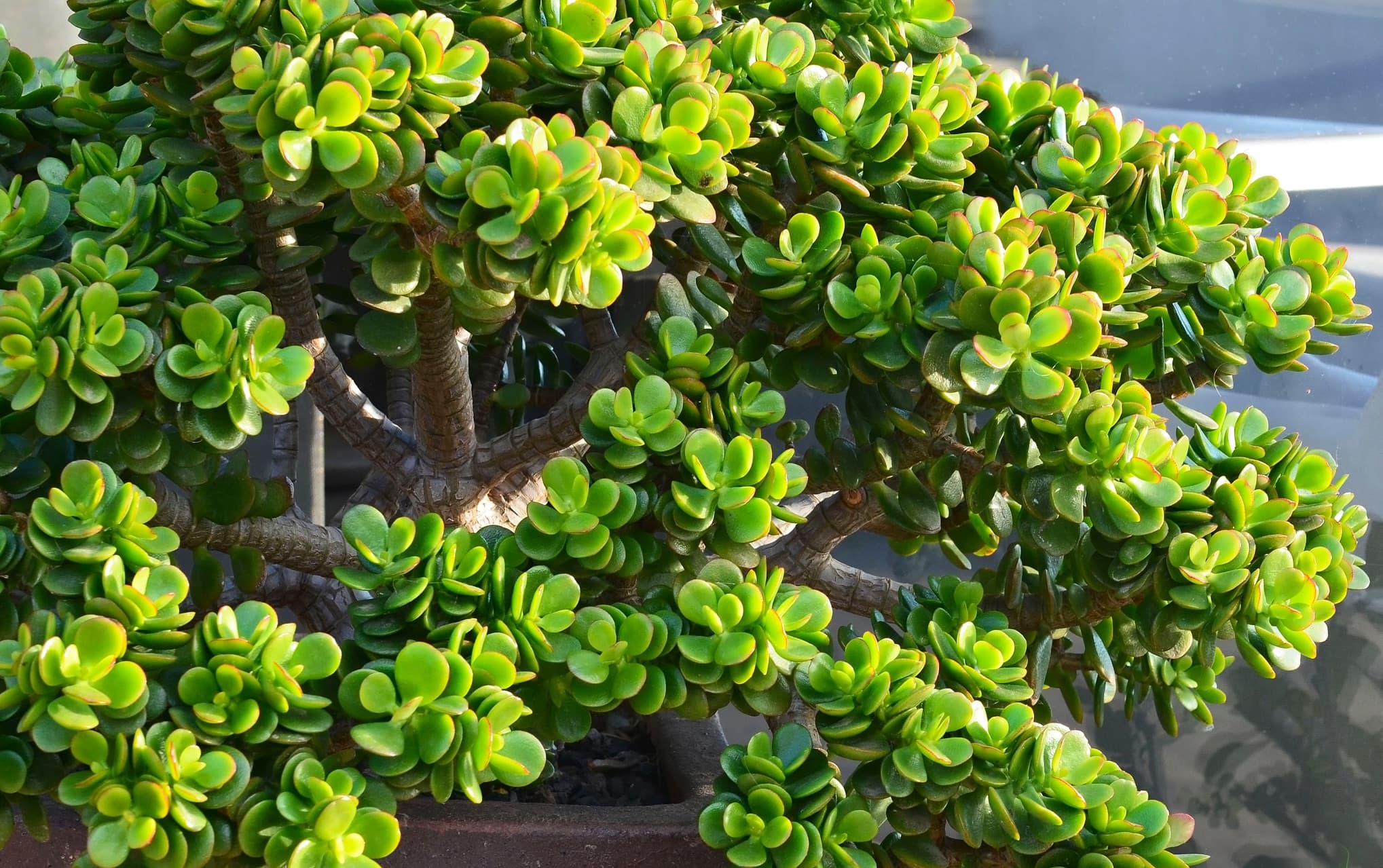
IN THIS GUIDE 1) African Violet 2) Air Plant 3) Aloe Vera 4) Amaryllis 5) Aspidistra 6) Bamboo 7) Begonia 8) Bonsai Tree 9) Boston Fern 10) Bromeliad 11) Cape Primrose 12) Chinese Money Plant 13) Areca Palm 14) Croton 15) Crown Of Thorns 16) Devil’s Ivy 17) Dracaena 18) Dumb Cane Plant 19) Echeveria 20) Fiddle-Leaf Fig 21) Elephant Ear 22) Wax Plant 23) Ivy 24) Jade Plant 25) Kalanchoe 26) Maidenhair Fern 27) Swiss Cheese Plant 28) Moth Orchid 29) Peace Lily 30) Philodendron 31) Prayer Plant 32) Prickly Pear Cactus 33) Purple Shamrock 34) Rhipsalis 35) Snake Plant 36) Slipper Orchid 37) Spider Plant 38) Staghorn Fern 39) String Of Pearls 40) Umbrella Tree One Final Word Of Warning References A sizeable garden at your disposal isn’t a prerequisite to having green fingers. Houseplants are a great way of indulging your passion for horticulture and sprucing up your home’s interior décor in one fell swoop. “I absolutely adore houseplants and have about 60 in my home right now,” shares Horticulturist Doug Stewart. “I think they are transient and I wouldn’t live without them.” Best of all, most house plants require little maintenance, with many enjoying the same temperatures as humans and demanding nothing more than regular watering. Below are a selection of the most widespread varieties in the UK, which are popular for their aesthetic qualities and their ease of cultivation. 1) African Violet BOTANICAL NAME: Saintpaulia ionantha HARDINESS RATING: H1A FLOWERING SEASON(S): Spring / Summer / Autumn / Winter SUNLIGHT: Bright, indirect light WATERING: Once per week The Streptocarpus genus encompasses more than 150 species and over a thousand cultivars, so there’s bound to be an option to suit your space.1 Characterised by colourful but dainty blossoms and pleasingly shaped leaves, African violets are a delightful addition to any windowsill. 2) Air Plant BOTANICAL NAME: Tillandsia spp. HARDINESS RATING: H1C FLOWERING SEASON(S): Spring / Autumn SUNLIGHT: Bright, diffused light WATERING: Spray once per week Termed by some sellers as virtually indestructible, air plants do not require any soil whatsoever and have revolutionised the term terrarium. They do, however, demand bright sunlight and a good drink once a week, which can be provided by misting the plant or submerging it fully in water and allowing it to air dry. 3) Aloe Vera BOTANICAL NAME: Aloe vera HARDINESS RATING: H1C FLOWERING SEASON(S): Summer SUNLIGHT: Bright, direct light WATERING: Once per month Aloe vera is adept at surviving without watering, making them highly useful to have around the home. They’re also easy on the eye and as succulents, they don’t need too much in the way of irrigation (though they do need bright sunlight). 4) Amaryllis BOTANICAL NAME: Hippeastrum HARDINESS RATING: H2 FLOWERING SEASON(S): Spring / Winter SUNLIGHT: Bright, diffused light WATERING: Once every 2 weeks Also known as Hippeastrum, amaryllis plants boast bulbous roots, long stems and oversized flowers with a velvety texture and vibrant tones. They’re often grown for Christmas but will provide interest to your indoor display in whichever month you choose to cultivate them. Expect blossoms around two months after planting. 5) Aspidistra BOTANICAL NAME: Aspidistra elatior HARDINESS RATING: H3 FLOWERING SEASON(S): Summer SUNLIGHT: Bright, indirect light WATERING: Once per week Aspidistras are commonly referred to as cast iron plants in recognition of their resilience, since they’re hardy up to -5°C and will survive a modicum of neglect from absent-minded gardening enthusiasts. Their broad leaves bring interesting foliage to any corner and they do best when kept out of direct sunlight. 6) Bamboo BOTANICAL NAME: Bambusa vulgaris HARDINESS RATING: H1C SUNLIGHT: Bright, direct light WATERING: Once per week Bamboo has increased massively in popularity in the UK of late. This is despite the fact that they require a little more TLC than almost all other options on this list. Great for hobbyists keen to integrate a contemporary aesthetic. 7) Begonia BOTANICAL NAME: Begonia HARDINESS RATING: H2 FLOWERING SEASON(S): Spring / Summer / Autumn / Winter SUNLIGHT: Bright, indirect light WATERING: Every 2-4 days Often found on the floors of shadowy forests, begonias are a perfect choice for a north-facing room which enjoys a few hours of sunlight. Their fascinating coloured foliage, which combines psychedelic tones with spiral or variegated patterns, is the main attraction for these dimly lit dwellers. 8) Bonsai Tree HARDINESS RATING: Varies between species FLOWERING SEASON(S): Varies between species SUNLIGHT: Bright, indirect light WATERING: Once per week Okay, so bonsai are one specimen which require more upkeep than bamboo – but they’re less of a style choice and more of a way of life. Bonsai enthusiasts dedicate several minutes (or for some, even hours!) every week to restoring balance in their specimens, in their homes and in their inner peace. 9) Boston Fern BOTANICAL NAME: Nephrolepis exaltata HARDINESS RATING: H1B SUNLIGHT: Bright to medium, indirect light WATERING: Once per week The arching fronds of the Boston fern are deliciously zesty lime green in colour, bringing a lighter contrast when placed alongside darker leafed foliage. It’s generally an unfussy plant, but its leaves do tend to droop and become discoloured if the soil is allowed to dry out completely. If that happens, water it thoroughly straight away and witness a miraculous revival. 10) Bromeliad BOTANICAL NAME: Bromeliad HARDINESS RATING: H3 FLOWERING SEASON(S): Summer SUNLIGHT: Bright to medium, indirect light WATERING: Once per week In the wild, bromeliads are found in the upper echelons of tree boughs. This means that they prefer good aeration around their roots and dappled sunlight on their foliage, as well as filtered rainwater – though none of the above are total deal-breakers. Great for architectural attraction. 11) Cape Primrose BOTANICAL NAME: Streptocarpus glandulosissimus HARDINESS RATING: H1C FLOWERING SEASON(S): Spring / Summer / Autumn SUNLIGHT: Bright, indirect light WATERING: Every 9 days With large, leathery green leaves and eye-catching blossoms in a range of different colours, Cape Primrose is a cheerful addition to any environment they adorn. Position them on a windowsill that receives bright but indirect sunlight and avoid overwatering and they’ll thrive quite independently. 12) Chinese Money Plant BOTANICAL NAME: Pilea peperomioides HARDINESS RATING: H1C FLOWERING SEASON(S): Summer SUNLIGHT: Bright, indirect light WATERING: Once per week We can’t guarantee that this plant will bring you good omens financially, but we can promise it will add contemporary charm to your indoor display. The small but profuse spherical leaves are highly pleasing to the eye, especially in mature plants, since they look great spilling over the sides of a hanging basket. 13) Areca Palm BOTANICAL NAME: Chrysalidocarpus lutescens HARDINESS RATING: H1A FLOWERING SEASON(S): Summer SUNLIGHT: Bright, indirect light WATERING: Once per week The fountain of bright green foliage which springs forth from the Chrysalidocarpus genus, alongside its towering stature, makes the plant a superb focal point for any room of the house. It needs bright but indirect sunlight and thorough watering throughout the growing season. 14) Croton BOTANICAL NAME: Codiaeum variegatum HARDINESS RATING: H1B FLOWERING SEASON(S): Summer SUNLIGHT: Bright, indirect light WATERING: Once per week The foliage of croton can vary immensely from one cultivar to the next, with some boasting lance-like fronds and others with deeper and rounder surfaces. Regardless, they carry streaks of bright yellow, orange, red and pink which are great at brightening up dull or monochrome parts of the home. 15) Crown Of Thorns BOTANICAL NAME: Euphorbia milii HARDINESS RATING: H1B FLOWERING SEASON(S): Summer SUNLIGHT: Bright, direct light WATERING: Once every 2 weeks The prickly name of this species comes from the barbs on its leaves and the sap inside its fat foliage. However, it’s worth the trouble of handling with gloves for the dainty but dazzling flowers (or, more accurately, coloured bracts) that it shoots forth on a nearly continual basis. 16) Devil’s Ivy BOTANICAL NAME: Epipremnum aureum HARDINESS RATING: H1B FLOWERING SEASON(S): Summer SUNLIGHT: Medium, indirect light WATERING: Once per week Devil’s Ivy is at its most comfortable when surrounded by hot and humid conditions, which makes it an ideal choice for the bathroom. It can either be grown out of a pot or hung from a hanger, while its trailing vines lend themselves to attractive draping as seen in the image above. 17) Dracaena BOTANICAL NAME: Dracaena HARDINESS RATING: H1C FLOWERING SEASON(S): Summer SUNLIGHT: Bright, indirect light WATERING: Once per week Dracaenas are highly versatile plants which come in a variety of different forms. The pictured specimen above boasts attractive twin trunks and fun, oversized foliage. It’s best in bright light but can handle some shade, though it doesn’t take kindly to fluoride at all, so make sure to use rainwater to irrigate.2 18) Dumb Cane Plant BOTANICAL NAME: Dieffenbachia amoena HARDINESS RATING: H1A SUNLIGHT: Bright, indirect light WATERING: Once every 2 weeks Despite the unflattering name, dumb cane plants offer attractively large leaves that are green with white speckles. Perfect for complementing similar hues in the surrounding colour scheme. 19) Echeveria BOTANICAL NAME: Echeveria secunda HARDINESS RATING: H2 FLOWERING SEASON(S): Summer SUNLIGHT: Bright, direct light WATERING: Every 1-2 months Succulents are the ultimate in set-and-forget house plants. Simply pop them on a windowsill which receives its fair share of UV radiation and mist them occasionally and voila – you have a living ornament in your home. Echeveria is a large genus with many cultivars to choose from in all shapes and sizes. 20) Fiddle-Leaf Fig BOTANICAL NAME: Ficus lyrata HARDINESS RATING: H1B FLOWERING SEASON(S): Summer SUNLIGHT: Bright, direct light WATERING: Once per week The oversized leaves of fiddle-leaf figs are what makes them such an attractive option around the home, but they’re also what makes them slightly more demanding than some of the other options in this article. That’s because they need an abundance of sunlight to photosynthesise and just the right amount of water to thrive. 21) Elephant Ear BOTANICAL NAME: Colocasia esculenta HARDINESS RATING: H1B FLOWERING SEASON(S): Summer SUNLIGHT: Bright, indirect light WATERING: Once a day Another plant with a moniker derived from its enormous leaves, Elephant Ears are prized for their foliage rather than their flowers. They originally hail from tropical climes, making them ideal for an indoor environment, while their extremely quick-growing nature means they can reach maturity in a matter of months. 22) Wax Plant BOTANICAL NAME: Hoya carnosa HARDINESS RATING: H2 FLOWERING SEASON(S): Spring / Summer / Autumn SUNLIGHT: Bright to medium, indirect light WATERING: Once per week The woody stems and waxy leaves of hoya plants make them a huge favourite around the home, regardless of whether they’re trained upwards or allowed to trail downwards. The colourful clusters of diminutive flowers, reminiscent of wax or porcelain (hence their common names), are the icing on the cake. 23) Ivy BOTANICAL NAME: Hedera HARDINESS RATING: H5 FLOWERING SEASON(S): Autumn SUNLIGHT: Bright, indirect light WATERING: Once per week Another trailer/climber, Ivy is most often seen adorning the external façade of grand country homes. However, it’s equally attractive in an indoor setting and can liven up lacklustre walls or add intrigue to a boring corner. Another which favours humidity, it is ideal for the kitchen or bathroom. 24) Jade Plant BOTANICAL NAME: Crassula ovata HARDINESS RATING: H2 FLOWERING SEASON(S): Summer SUNLIGHT: Bright, indirect light WATERING: Once every 2-3 weeks The rubber-like leaves on a Jade Plant are just as on-point and en vogue as the plastic counterparts you might find in an Ikea home display – and they only require slightly more upkeep. However, unlike those artificial alternatives, jade plants continue to develop and become more lovely as they grow. 25) Kalanchoe BOTANICAL NAME: Kalanchoe HARDINESS RATING: H1B FLOWERING SEASON(S): Spring SUNLIGHT: Bright, indirect light WATERING: Once every 2-3 weeks A close relative of the jade plant, kalanchoes are succulents hailing from Madagascar which do extremely well in the cosier confines of an indoor climate. Their umbels of upward-facing blooms last longer than almost all other succulents, making them an attractive choice. 26) Maidenhair Fern BOTANICAL NAME: Adiantum HARDINESS RATING: H1C SUNLIGHT: Bright, indirect light WATERING: Every other day Another tropical fern which likes its humidity levels hot and heavy, maidenhair ferns do best in steamy bathrooms. Get the conditions right and you’ll be richly rewarded with mountains upon mountains of aesthetically pleasing light green leaves in miniature, which contrast nicely against the darker hues of the stems. 27) Swiss Cheese Plant BOTANICAL NAME: Monstera deliciosa HARDINESS RATING: H1B FLOWERING SEASON(S): Spring / Summer SUNLIGHT: Bright, indirect light WATERING: Every 1-2 weeks Commonly called Swiss Cheese plants, monsteras are true monsters of the house plant scene if allowed to grow unencumbered. They don’t require too much to produce prodigious leaves, though they’ll benefit from a moss pole to help them stay upright and they do demand regular irrigation. 28) Moth Orchid BOTANICAL NAME: Phalaenopsis HARDINESS RATING: H1C FLOWERING SEASON(S): Spring / Summer / Autumn / Winter SUNLIGHT: Bright, indirect light WATERING: Once per week Moth Orchids are tropical creatures that are highly appreciative of central heating systems. If the temperature and humidity levels are right, they’ll flower for longer than many other house plants, with their blossoms encompassing the full spectrum of pinks, purples, peaches, yellows and burgundies. 29) Peace Lily BOTANICAL NAME: Spathiphyllum wallisii HARDINESS RATING: H1B FLOWERING SEASON(S): Spring / Summer SUNLIGHT: Bright to low, indirect light WATERING: Once per week Another hugely popular house plant, Peace Lilies produce delicately graceful white spathes that are a pleasure on the eye. They’re capable of handling low exposure to sunlight, but won’t be quite so accommodating if you forget to water them more than once. 30) Philodendron BOTANICAL NAME: Philodendron HARDINESS RATING: H2 FLOWERING SEASON(S): Summer SUNLIGHT: Bright, indirect light WATERING: Every 1-2 weeks The heart-shaped foliage of philodendron can grow to monstrous proportions if left unchecked in the great outdoors, but potted varieties are more easily controlled. They look equally impressive if trained up a trellis or allowed to dangle invitingly over the rim of their pot or basket. 31) Prayer Plant BOTANICAL NAME: Maranta leuconeura HARDINESS RATING: H1B FLOWERING SEASON(S): Summer SUNLIGHT: Medium, indirect light WATERING: Every 1-2 weeks Prayer Plants belong to the maranta genus, which is home to some of the most brightly coloured foliage in the whole of the house plant kingdom. It’s not uncommon to see rich burgundies and profound pinks on the underside of a leaf and dark greens on the topmost surface. Beware of the pests it may attract. 32) Prickly Pear Cactus BOTANICAL NAME: Opuntia HARDINESS RATING: H1C FLOWERING SEASON(S): Spring / Summer SUNLIGHT: Bright, direct light WATERING: Once per month With distinctive rounded stems covered on both sides in spines, Prickly Pears are attractive but aggressive additions to your living room. The aforementioned stems often grow in pairs, earning them the nickname bunny ears, but they’re far from cuddly. The flowers which appear atop their ridges in summer are pleasant, however. 33) Purple Shamrock BOTANICAL NAME: Oxalis triangularis HARDINESS RATING: H3 FLOWERING SEASON(S): Summer SUNLIGHT: Bright to medium, indirect light WATERING: Every 1-2 weeks The proliferation of triangular purple leaves which swarm the purple shamrock plant make it a curious sight in any room, especially when those warm tones are complemented by the bright pink of its nodding flowers in summer. A humidity enthusiast, it does well in kitchens and bathrooms. 34) Rhipsalis BOTANICAL NAME: Rhipsalis baccifera HARDINESS RATING: H1B FLOWERING SEASON(S): Spring / Summer / Autumn / Winter SUNLIGHT: Bright, indirect light WATERING: Once per week Though technically a cactus, Rhipsalis has torn up the rule book on the genus. Instead of thriving in sun, it prefers darkness, while the complete absence of spines along the surface of its leaves makes it the least cactus-like cactus in existence. Its trailing habit makes it ideal for hanging. “You’d find it difficult to go wrong with something like a Rhipsalis baccifera,” shares Jane Perrone, a Houseplant Expert. “I had a colleague back at The Guardian who had one on her desk forever. It didn’t grow, but it didn’t die either, it was just green and beautiful. “She didn’t care for it all – I’m sure there was some coffee thrown in there at some point! I love the Rhipsalis genus.” 35) Snake Plant BOTANICAL NAME: Sansevieria trifasciata HARDINESS RATING: H1B FLOWERING SEASON(S): Spring SUNLIGHT: Bright, indirect light WATERING: Once every 2 weeks Variously known as Snake Plant and (rather unkindly) mother-in-law’s tongue, sansevierias are another wildly popular choice for household cultivation. The stiff, upright leaves are instantly recognisable and there is a wide range of colours and patterns to choose from, but variegated forms may require more care than others. 36) Slipper Orchid BOTANICAL NAME: Paphiopedilum HARDINESS RATING: H1A FLOWERING SEASON(S): Spring / Summer / Autumn / Winter SUNLIGHT: Medium, indirect light WATERING: Twice per week Orchids are exotic and enticing house plants, but many of them demand exposure to direct sunlight. Not so with slipper orchids. Not only are they among the most shade-tolerant varieties out there, but their arresting petals and sometimes mottled foliage make them a showstopper and statement-maker, to boot. 37) Spider Plant BOTANICAL NAME: Chlorophytum comosum HARDINESS RATING: H2 FLOWERING SEASON(S): Summer SUNLIGHT: Bright, indirect light WATERING: Once per week A firm favourite in British homes for decades, spider plants can bring classic charm to their surroundings. Characterised by light, arching leaves that cascade beautifully over the edge of their container, they’re perfect for an elevated display. 38) Staghorn Fern BOTANICAL NAME: Platycerium superbum HARDINESS RATING: H1A SUNLIGHT: Bright, indirect light WATERING: Every 1-2 weeks The staghorn fern must have some of the most architecturally interesting foliage of any plant anywhere. Native to the rainforests of Papua New Guinea, its robust, probing fronds stretch out enquiringly like the antlers of that cervid monarch of the glen. Certain to draw attention to itself. 39) String Of Pearls BOTANICAL NAME: Senecio rowleyanus HARDINESS RATING: H2 FLOWERING SEASON(S): Summer SUNLIGHT: Bright, direct light WATERING: Once every 2 weeks As the name suggests, this dainty succulent features lengths of green globes along its stringy stems, meaning it’s another excellent choice for hanging or trailing. The species requires little in the way of upkeep other than sufficient light and water, and mature specimens can live for five years or more. 40) Umbrella Tree BOTANICAL NAME: Schefflera arboricola HARDINESS RATING: H1C SUNLIGHT: Bright, indirect light WATERING: Once every 10 days In its native Taiwan, the umbrella tree can reach an astonishing 10 feet in height. Of course, that’s likely far too tall for most homeowners, but the good news is that its growth is easily kept in line when potted. The green-and-yellow foliage makes it a head-turner, whatever its stature. One Final Word Of Warning Master Horticulturist Dan Ori offers a final word of warning – whichever houseplant type you choose to grow: “In my experience, success with houseplants can be 50% deliberate neglect, 40% right plant right place and 10% your intervention. “What kills most houseplants is overwatering (or allowing them to sit in water that can’t drain away). “If we don’t kill them by drowning, then placing a tender plant in a draught or in direct sunlight will probably see them fail, but if we have managed not to kill them with poor placement, forgetting to water them or check them over for pests and other problems will most likely do the job. “It is a balancing act of action and inaction, but choosing a suitable spot for the plant in your home will hugely help.” References 1. Streptocarpus. (n.d.). North Carolina Extension Gardener Plant Toolbox. Retrieved March 14, 2023, from https://plants.ces.ncsu.edu/plants/streptocarpus/ 2. Fluorine Toxicity in Plants. (2020, May 12). Pacific Northwest Pest Management Handbooks. Retrieved March 14, 2023, from https://pnwhandbooks.org/plantdisease/pathogen-articles/nonpathogenic-phenomena/fluorine-toxicity-plants
Learn more
Roots Emerging From The Base Of Your Pot? Time To Repot Your Monstera Plant
IN THIS GUIDE Common Issues When To Repot Choosing A Container How To Repot Ongoing Plant Care The Swiss cheese plant, Monstera deliciosa, is a popular house plant which is generally remarkably easy to grow. However, there are certain issues that may occur and you do need to think about certain things when repotting a Swiss cheese plant. In this guide, we will help you understand some of the things that can go wrong when growing monsteras and we will share the best time to repot, as well as how to do so. Common Issues One reason to repot a Monstera is that there is a serious issue with the existing environment you have provided. The existing container may be too small or too large for a smaller plant, or it might not have suitable drainage at the base. A container should allow at least an inch of space around the root ball of the monstera on all sides, but too large a container right away can cause water-related issues. You also may not have chosen a suitable growing medium. Monsteras need a good peat-free multipurpose compost or an equivalent homemade mix to thrive. Finally, you might have overwatered your monstera and the growing medium may have become severely waterlogged and compacted. Wilting leaves can be a sign that you have either watered too much or watered too little, but it can also be a sign that repotting is required. When To Repot Monsteras should be repotted as it grows to ensure that the roots continue to have at least an inch of growing medium around them. If you see signs of wilting, check to make sure that the wilting is not occurring because the roots have run out of space. If the roots are emerging from the base of the pot it is time to choose a new, larger container. While monsteras are young, it is typical to repot them every spring before the new leaves emerge. Monsteras can grow quite rapidly and to a huge size if allowed to do so. Usually, those growing Swiss cheese plants indoors will pot up until the plant reaches the largest manageable size for their space, then prune the plant in order to restrict its growth and avoid the need to repot into ever-increasing sized containers. Once your monstera reaches a mature size and you no longer want to repot it into a larger container, repotting will not be required every year. Instead, you will carefully remove the top 1/3 of the growing medium in the pot from around your monstera and replenish it with fresh potting mix each spring. Choosing A Container Remember to choose a pot which is sturdy and large enough to accommodate your monstera at its current stage of growth. Smaller monsteras may easily find a place on a small windowsill, but larger, more mature specimens can grow much larger and will require much more commodious accommodation. One other thing to remember is that larger specimens are typically going to require some support. Typically, they are planted in a large pot with a moss-covered pole or wooden stake. Make sure that your new pot for a mature specimen is large and heavy enough not to tip over and that it can accommodate your growing plant and its support. How To Repot Follow the steps below to successfully repot your monstera: Choose your new container. Place a support stake or pole if required. Carefully remove your plant from its previous pot. Place the plant into the new container, so that it is sitting just slightly deeper than it was previously. Fill in the growing medium around the plant’s base roots and around any aerial roots which reach the potting medium. Where necessary, tie the plant gently to the new support. Water deeply immediately after repotting. Ongoing Plant Care After re-potting, you are going to want to care for your plant so that it is able to quickly establish itself in its new home. Monstera are pretty easy to care for, even for those who do not have a lot of experience with houseplants. Where To Place Your Monstera Place Monstera in a light, bright location but somewhere out of direct sunlight, which can cause the leaves to burn. A spot a few feet away from a window which lets in plentiful light can be ideal. Avoid locating your potted plant too close to a heat source, and keep it out of drafts. These plants prefer a place where there is moderate to high humidity and misting may be beneficial where the environment is prone to dryness. In terms of temperatures, monsteras can cope with temperatures as low as 10°C and will grow as long as temperatures are above 18°C. They will, however, do best when they are grown in temperatures between 20-30°C. Watering Monsteras require moderately moist conditions, but will not like overwatering or waterlogged conditions. “Just as the light levels should reflect the forest floor from which monsteras come, so too should the moisture levels,” says Master Horticulturist Colin Skelly. “Forest floors are typically high in decomposing leaf litter, which holds moisture but also drains freely. “This is what your potting and watering should achieve – regular watering but in a pot and growing medium that allows the water to flow through freely rather than becoming clogged.” Exact watering requirements will depend on the location, conditions and time of year. However, as a general rule of thumb, you should water when the top few centimetres of the growing medium are dry. When they are, you should water well, allowing excess water to drain away freely. Remember that your plant will need less water during the coldest winter months and more during warmer summer periods. Pruning Remember, to keep the size of a monstera in check and avoid repotting to an ever larger container, you will need to prune your monstera. Pruning both the above-ground plant and the root system will help keep your Swiss cheese plant in check. Stems can then be cut off at the base to restrict the size of the plant and keep it happy in the size of the container you have chosen. To keep a monstera small, you can also prune the roots. Simply remove the plant from the pot, carefully brush away the soil, and tease out the roots. You can cut back up to around a third of the subterranean roots from a mature plant to restrict its size without damaging its health. Aerial roots (once these form on mature specimens) should be left in place if possible.
Learn more
These 25 Houseplants Are Built To Thrive In Dark And Humid Bathrooms
IN THIS GUIDE 1) Air Plant 2) Asparagus Fern 3) Aspidistra 4) Azalea 5) Begonia 6) Bird’s Nest Fern 7) Bromeliad 8) Chinese Evergreen 9) Croton 10) Dendrobium Orchid 11) Dragon Tree 12) Devil’s Ivy 13) Lucky Bamboo 14) Maidenhair Fern 15) Majesty Palm 16) Marble Queen Pothos 17) Monstera 18) Peace Lily 19) Philodendron 20) Purple Shamrock 21) Fiddle-Leaf Fig 22) Snake Plant 23) Spider Plant 24) String Of Turtles 25) ZZ Plant References A well-chosen house plant can be the perfect way to add some energy, intrigue and character to a bathroom. Not only are they great at brightening up the place, but they are also an excellent method of removing airborne contaminants from such an enclosed environment, to boot. While the heat and humidity of the bathroom isn’t ideal for all plants, there are certain species which will positively flourish in those conditions. Nonetheless, you should still watch out for signs of root rot or powdery mildew, which are common afflictions in near-constant moisture.1 “Managing and coping with humidity is the key for happy bathroom plants,” says Peter Lickorish, a Lecturer in Horticulture. “If the humidity is too low, leaves will often show crisping and wilting, whereas humidity that is too high tends to cause fungal problems and rot. “Fungus gnats may also become a problem, for which there are sticky traps and nematodes.” At the same time, light is a basic requirement for almost all flora, but certain cultivars are better adapted to deal with a dearth of it than others. Indeed, fluorescent lighting can even supplement the needs of some plant types. With that in mind, here are 25 species best suited to the dark and humid environs of a bathroom. 1) Air Plant BOTANICAL NAME: Tillandsia spp. COMMON NAME(S): Air Plant HARDINESS RATING: H1C FLOWERING SEASON(S): Spring / Autumn SUNLIGHT: Bright, diffused light WATERING: 1-2 times per week Air plants dispense with soil altogether, so all you need is a frame or wire to attach them to. Positioning them in a bathroom will mean that they’ll usually absorb all the moisture they need from the ambient conditions, as misting on the leaves is sufficient. That means that the only thing you’ll have to supply them with is sunlight, so placing your air plant on the sill of a frosted glass window should suffice. Failing that, the fluorescence given off by artificial lighting should be enough of a replacement to keep these hardy little creatures alive and kicking. 2) Asparagus Fern BOTANICAL NAME: Asparagus setaceus COMMON NAME(S): Asparagus Fern HARDINESS RATING: H1C FLOWERING SEASON(S): Summer SUNLIGHT: Indirect light WATERING: 1-2 times per week The sinewy fronds of this attractive fern are the perfect accompaniment to a bathroom environment, especially since it thrives upon a steady supply of humidity. It’s another one that prefers at least some sunlight, so a windowsill location is ideal. Although it looks fuzzy enough to stroke, you should be mindful that it carries barbed thorns on its stems, so keep out of the reach of visitors. 3) Aspidistra BOTANICAL NAME: Aspidistra COMMON NAME(S): Cast-Iron Plant / Bar Room Plant HARDINESS RATING: H3 FLOWERING SEASON(S): Summer SUNLIGHT: Indirect light WATERING: Once per fortnight Aspidistras are also known as cast iron plants, which should give you some idea of their virtually indestructible nature. It’s one of the few varieties of houseplants which isn’t fussy about much light at all, making it a great choice for a guest bathroom that receives lower footfall. It can also take or leave humidity levels, adding another plus point to its attractiveness in less-frequented locales. 4) Azalea BOTANICAL NAME: Rhododendron simsii COMMON NAME(S): Indoor Azalea HARDINESS RATING: H4 FLOWERING SEASON(S): Winter SUNLIGHT: Bright, indirect light WATERING: Twice per week Blessed with vibrant blooms in all shades, from brilliant white through luscious pink and into deep scarlet, azaleas can provide a colourful contrast to the pristine and sometimes impersonal décor of a bathroom. They absorb water through their foliage, meaning they’ll thrive in a bathroom environment and your watering assistance will only be needed when the soil fully dries out. They do require a modicum of sunlight, however. “Moving from warmer rooms to cooler bathrooms in late autumn can help specimens that are less keen to flower,” shares Peter. 5) Begonia BOTANICAL NAME: Begonia COMMON NAME(S): Begonias HARDINESS RATING: H1B FLOWERING SEASON(S): Winter SUNLIGHT: Bright, indirect light WATERING: 1-2 times per week Because they absolutely adore heat and humidity, begonias and bathrooms are a match made in alliterative heaven. They’ll do best on a bathroom shelf, while opting for a species which is prized for its foliage rather than its flowers (such as rex begonia) is the best way to ensure they cope with limited light levels. Their absorption of ambient moisture should be sufficient in regularly-used bathrooms but don’t be afraid to water the roots gently if they’re looking thirsty. 6) Bird’s Nest Fern BOTANICAL NAME: Asplenium nidus COMMON NAME(S): Bird’s Nest Fern HARDINESS RATING: H1B SUNLIGHT: medium to bright, indirect light WATERING: Every 1-2 weeks Another fern, the bird’s nest boasts bright green foliage and wavy, waxy leaves in large dimensions. As such, it can impart a tropical aesthetic to your bathroom and will respond positively to the ambient moisture after a shower or bath. It does prefer sunlight, but it’ll survive just fine in lower-light conditions. 7) Bromeliad BOTANICAL NAME: Vriesia spp., Ananas spp., Aechmea spp. COMMON NAME(S): Bromeliad HARDINESS RATING: H1B FLOWERING SEASON(S): Summer SUNLIGHT: Medium to bright, indirect light WATERING: Once per week Famous for thriving in situations where most other plants would falter, bromeliads produce long-lasting blooms in a variety of soft colours during the winter months. Many of the genera are epiphytic, meaning they absorb water through the air rather than through their roots, which is why they’re such a strong choice in the bathroom.2 However, they do require good ventilation, so leave the extractor fan running after use. 8) Chinese Evergreen BOTANICAL NAME: Aglaonema COMMON NAME(S): Chinese Evergreen HARDINESS RATING: H1B SUNLIGHT: Low to bright, indirect light WATERING: Every 1-2 weeks Humid or dry, bright or dim, the Chinese evergreen is extremely unfussy about the surroundings it’s grown in. Indeed, it’s one of the most adaptable and resilient species out there, so a hot, dark and stuffy location like a bathroom poses no problem for it whatsoever. There are around 20 different cultivars to choose from in the genus and each of them will bring some tropical charm to your bathroom space. 9) Croton BOTANICAL NAME: Codiaeum variegatum COMMON NAME(S): Croton HARDINESS RATING: H1B FLOWERING SEASON(S): Summer SUNLIGHT: Bright, indirect light WATERING: Once per week Crotons are big fans of both excessive moisture and humidity levels, so it’s no wonder they’re often placed in bathrooms in the UK. There are a multitude of broad-leaved varieties to choose from, some of which come in speckled or mottled patterns. However, they do require as much indirect light as you’re able to give them, so near a window is best, while some species can outgrow a human adult in height, so make sure you have the requisite space available. 10) Dendrobium Orchid BOTANICAL NAME: Dendrobium COMMON NAME(S): Orchid HARDINESS RATING: H1C FLOWERING SEASON(S): Winter / Spring SUNLIGHT: Bright, indirect light WATERING: Every 1-2 weeks Almost any orchid from the 1,500-strong genus will do well in the steamy confines of a bathroom since they invariably prefer a damp environment. However, some of them are less tolerant of dimly lit locations than others, which is why we recommend the dendrobium orchid for those bathrooms which don’t enjoy a south-facing window. “If you have a window, the sill will still be its happiest place,” shares Peter. The pretty blossoms it produces are a delightful addition to any home. 11) Dragon Tree BOTANICAL NAME: Dracaena draco COMMON NAME(S): Dragon Tree HARDINESS RATING: H1C FLOWERING SEASON(S): Summer SUNLIGHT: Bright, indirect light WATERING: Once per week If you have the space to accommodate a tree in your bathroom, the dragon tree is an exceptional choice. That’s because they thrive in humid conditions and don’t mind too much if they’re deprived of sunlight, making them ideal for the steamy and sultry bathroom environment. They’re capable of growing over six metres tall in the wild, but rest assured that potted varieties will never reach such lofty heights.3 12) Devil’s Ivy BOTANICAL NAME: Epipremnum aureum COMMON NAME(S): Devil’s Ivy / Golden Pothos HARDINESS RATING: H1B FLOWERING SEASON(S): Summer SUNLIGHT: Medium, indirect light WATERING: Once per week Also known as Golden Pothos, this attractive trailing plant looks best when displayed in a hanging basket at altitude in your bathroom. Its tolerance of low light and high humidity levels means it’s an excellent option in that room of the house, while it will let you know if it’s not receiving enough moisture through browning of its leaves. 13) Lucky Bamboo BOTANICAL NAME: Dracaena sanderiana COMMON NAME(S): Lucky Bamboo HARDINESS RATING: H1B SUNLIGHT: Indirect light WATERING: Once per week This bamboo is highly versatile – not only does it not require bright sunlight, it doesn’t even need soil! Instead, plant it in a container filled with water and pebbles, changing the former every few weeks, and you’ll be rewarded with a supremely attractive specimen that will bring major spa vibes to your bathroom. It can even be shaped into the structure of your choosing! 14) Maidenhair Fern BOTANICAL NAME: Adiantum COMMON NAME(S): Maidenhair Fern HARDINESS RATING: H1C SUNLIGHT: Bright, indirect light WATERING: Every other day In the wild, maidenhair ferns are often found where other plants fear to tread, such as the fissures between rocks. That’s because they’re capable of soaking up all moisture within their vicinity and they absolutely love a humid environment, so the bathroom is the best place for them. They boast smaller, daintier leaves than some of their counterparts and have a slow-growing habit, meaning it could take years before they reach full maturity. 15) Majesty Palm BOTANICAL NAME: Ravenea rivularis COMMON NAME(S): Majesty Palm HARDINESS RATING: H1A SUNLIGHT: Bright, indirect light WATERING: Every 1-2 weeks One of the larger options on this list, majesty palms can reach up to 3m in an indoor environment and almost ten times that in their natural habitat. As such, it’s important you ensure you have the dimensions to cater for this tree. Having said that, those who meet its modest needs (consistent moisture, high humidity levels and as much sunlight as you can give it) will be rewarded with a breath-taking addition to their bathroom. 16) Marble Queen Pothos BOTANICAL NAME: Epipremnum pinnatum ‘Marble Queen’ COMMON NAME(S): Marble Queen Pothos / Cubicle Plant HARDINESS RATING: H1B SUNLIGHT: Medium to bright indirect light WATERING: Once per week Sometimes referred to as the ‘cubicle plant’ because of its ability to withstand inhospitable environments, the marble queen pothos will feel right at home in your bathroom. It’s capable of surviving in low-light conditions and although humidity isn’t a prerequisite to achieving its full potential, it certainly won’t hinder its growth. Its trailing habit makes it ideal for hanging from your shower rail. 17) Monstera BOTANICAL NAME: Monstera deliciosa COMMON NAME(S): Monstera / Swiss Cheese Plant HARDINESS RATING: H1B FLOWERING SEASON(S): Spring / Summer SUNLIGHT: Bright, indirect light WATERING: Every 1-2 weeks Monsteras are one of the most common house plants across the UK, largely due to their attractive and instantly recognisable foliage and their hardy temperament. They’re completely unfazed by any sort of humidity and while they will do better when given plenty of sunshine, they’ll cope just fine in its absence. Their versatility makes them a great choice for any room in the house, including a dark and humid bathroom. 18) Peace Lily BOTANICAL NAME: Spathiphyllum wallisii COMMON NAME(S): Peace Lily HARDINESS RATING: H1B FLOWERING SEASON(S): Spring / Summer SUNLIGHT: Low to bright indirect light WATERING: Once per week Peace lilies are a perfect fit for the bathroom for several reasons. Firstly, they have a strong preference for locations with high humidity and low light exposure, meaning a spot next to the shower is ideal. Secondly, their iconic blossoms burst forth all year round, adding a touch of class to any room they’re placed in. 19) Philodendron BOTANICAL NAME: Philodendron COMMON NAME(S): Philodendron HARDINESS RATING: H2 FLOWERING SEASON(S): Summer SUNLIGHT: Bright, indirect light WATERING: Every 1-2 weeks Split-leafed philodendrons bear a remarkable resemblance to monsteras, prompting many people to mistakenly believe they are one and the same. However, they’re actually very different plants which belong to different genera, though both will do well in a bathroom environment. But whereas monstera will grow upwards, philodendron tend to grow outwards, so make sure they have enough room to spread if you place one in your privy. 20) Purple Shamrock BOTANICAL NAME: Oxalis triangularis COMMON NAME(S): Purple Shamrock HARDINESS RATING: H3 FLOWERING SEASON(S): Summer SUNLIGHT: Medium to bright indirect light WATERING: Every 1-2 weeks Purple shamrocks boast an abundance of triangular-shaped leaves in the deepest purple, which creates a pleasing contrast again the white tiles of a conventional bathroom. That colour scheme is brought further to life during the summer months when the plant will sprout forth a profusion of delicate pink blossoms, while its humidity-loving habit makes it an ideal option for a steamy bathroom shelf. 21) Fiddle-Leaf Fig BOTANICAL NAME: Ficus lyrata COMMON NAME(S): Fiddle-leaf Fig HARDINESS RATING: H1B FLOWERING SEASON(S): Summer SUNLIGHT: Bright, direct light WATERING: Once per week A native of the tropical jungles of Africa, the fiddle leaf fig is a plant which loves hot and steamy conditions. Indeed, even the most humid bathroom environments might need to be supplemented with regular misting to keep this critter happy. Though it does prefer some sunlight, it’ll do fine in dimly-lit bathrooms, but you might find that its pace of growth is slowed as a result. Given that it can reach 3m in height indoors, that’s perhaps no bad thing. 22) Snake Plant BOTANICAL NAME: Dracaena trifasciata COMMON NAME(S): Snake Plant HARDINESS RATING: H1B SUNLIGHT: Bright, indirect light WATERING: Once per fortnight The stiff upright leaves of a snake plant make it immediately recognisable and can add some arresting allure to a bathroom corner, especially if complemented by other trailing or climbing species. It isn’t fazed by stuffy environs and though it prospers best in well-lit rooms, it will cope admirably in conditions others would flounder in. It may, however, lose its variegated colour pattern if not given enough UV radiation. 23) Spider Plant BOTANICAL NAME: Chlorophytum comosum COMMON NAME(S): Spider Plant HARDINESS RATING: H2 FLOWERING SEASON(S): Summer SUNLIGHT: Bright, indirect light WATERING: Once per week The spider plant is the perfect choice for a family bathroom. It’s happy in most conditions and will even self-propagate at will, with the tiny flowers it shoots forth in blooming season eventually dropping off and sprouting roots of their own. It’s the opposite of claustrophobic, so plant it in a pot not much larger than its root ball for the best results. 24) String Of Turtles BOTANICAL NAME: Peperomia prostrata COMMON NAME(S): String of Turtles HARDINESS RATING: H1B FLOWERING SEASON(S): Spring / Summer / Autumn SUNLIGHT: Bright indirect light WATERING: Every 2-3 weeks Peperomia are delightful little trailing plants which boast turtle-shaped leaves in striped or variegated shades of yellow and green. As such, they make an elegant addition to your bathroom when placed atop the toilet cistern or sink, especially since their diminutive dimensions won’t take up too much space. 25) ZZ Plant BOTANICAL NAME: Zamioculcas zamiifolia COMMON NAME(S): ZZ / Fern Arum HARDINESS RATING: H1B FLOWERING SEASON(S): Summer SUNLIGHT: Low to bright indirect light WATERING: Every 2-3 weeks Also known as the eternity plant, this tough customer is forgiving of even the most forgetful home horticulturalists. It thrives in low-light conditions and will gobble up any moisture in the atmosphere, meaning it only ever requires watering if its soil is allowed to dry out completely. References 1. Saalau, E. (2014, February 14). Root Rots of Houseplants. Horticulture and Home Pest News. Retrieved May 2, 2023, from https://hortnews.extension.iastate.edu/2014/02-14/rootrot.html 2. S. (n.d.-c). Bromeliads. Wisconsin Horticulture. Retrieved March 13, 2023, from https://hort.extension.wisc.edu/articles/bromeliads/ 3. Dracaena draco | dragon tree. (n.d.). Royal Horticultural Society. Retrieved March 13, 2023, from https://www.rhs.org.uk/plants/6092/i-dracaena-draco-i/details
Learn more