Growing

Deadheading Geraniums: Following This Process Forces Their Energy Into Future Growth
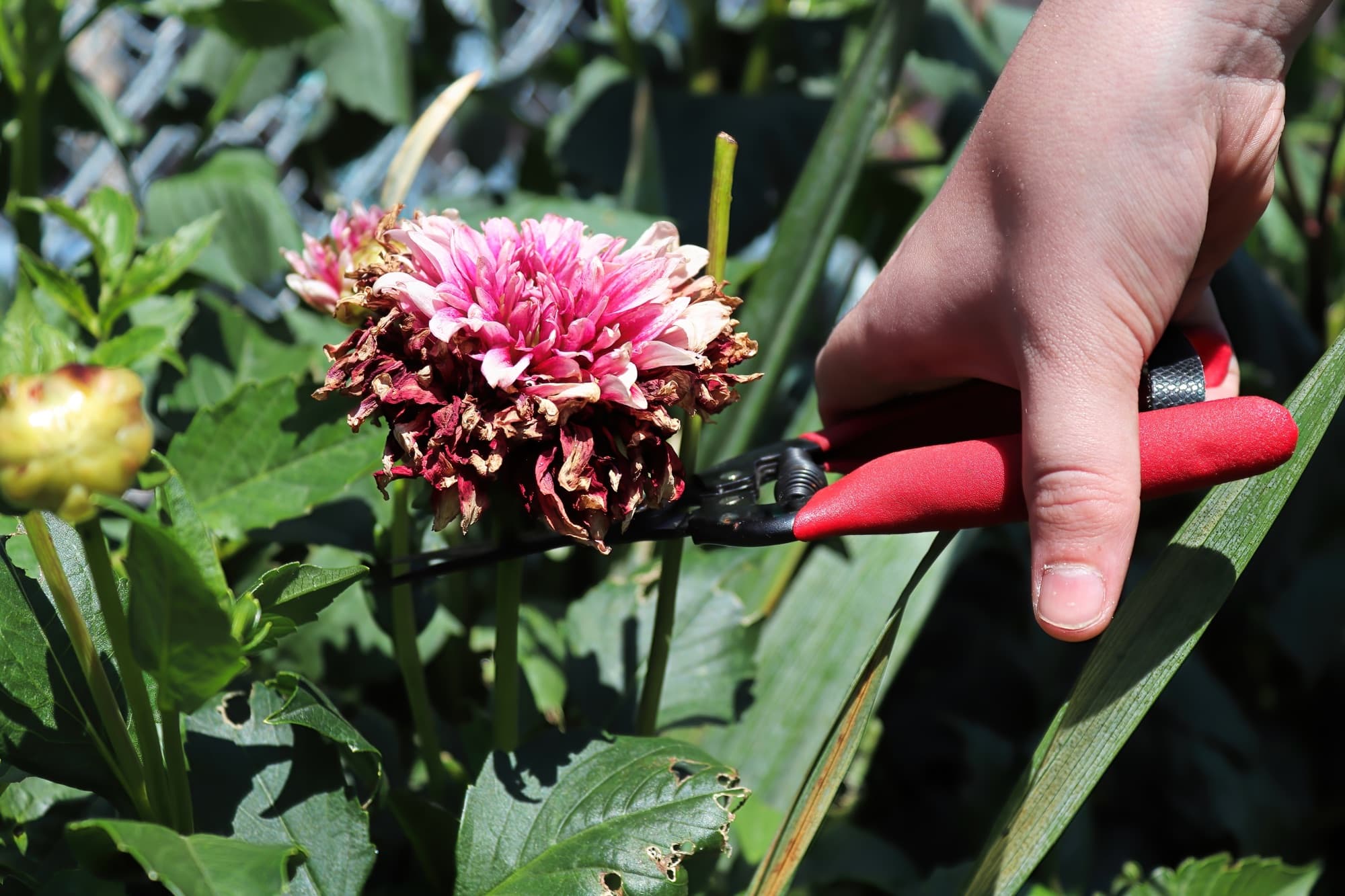
IN THIS GUIDE Do You Need To Deadhead Geraniums? Deadheading Pelargoniums Deadheading is one of those ridiculously easy garden jobs that can actually be rather confusing. It can be difficult to determine which flowers will benefit from deadheading, and which will not – and it can also be confusing where exactly to remove the flower. Should you remove the bloom itself, or the entire stem that supports it? Difficulty Easy Equipment Required Secateurs When To Deadhead July, August When we talk about deadheading geraniums, we first have to understand whether we are talking about true geraniums (also known as hardy geraniums) or tender geraniums, which are technically Pelargoniums and not geraniums at all. Follow these hard and fast rules when deadheading geraniums: Deadhead Pelargoniums, as this can encourage repeat blooms. Depending on which cultivar you are growing, some repeat bloom, while others will bloom only once a year. Also note that this is not usually the case with true geraniums, which do not usually benefit from deadheading at all. Deadhead Pelargoniums when the flowers fade and begin to turn brown. Cut or pinch off the dead or dying flowers along with the stem down to the next leaf node. Do You Need To Deadhead Geraniums? Deadheading is not strictly essential – most plants which repeat bloom will do so with or without your intervention. However, certain hardy Geraniums do appreciate being cut back after the first flush of flowers because it allows them to put their energy into future blooms and growth. Often, a second flush of flowers appears later in the summer. Tender geraniums, or Pelargoniums, will benefit from this care. Whether or not deadheading will do much good and bring more blooms very much depends on which cultivar you are growing. Some only bloom once a year whatever you do, while many are repeat bloomers and you will see better results by deadheading. Deadheading Pelargoniums Deadheading pelargoniums is a simple job. You just need to wait for the first flush of flowers to fade, then nip or snip them off with your fingers or a pair of secateurs or gardening knife. Make sure that rather than just taking the bloom, you take also a section of the stem down to the next leaf node. The removal of this material will spur the growth of new stems, which can soon bud and flower. So deadheading does not only promote repeat-flowering, but also makes for bushier, healthier-looking plants. “Deadheading also improves the appearance of the flower display immeasurably as brown, faded blooms detract from the beauty of fresh and emerging blooms,” says Master Horticulturist Roy Nicol.
Learn more
Geraniums Will Look Better Later In The Season If They're Given A ‘Chelsea Chop’
IN THIS GUIDE Pruning Pelargonium (Tender Geraniums) Pruning Hardy Geraniums Geraniums, both tender geraniums (Pelargoniums) and hardy geraniums, can be relatively easy and trouble-free plants to grow. The hardy types especially can be great low-maintenance plants for a garden. However, there are some jobs that it is important not to neglect, and pruning is one of them. Difficulty Moderate Equipment Required Secateurs When To Prune Varies by type According to expert Horticulturist Colin Skelly: “many hardy geraniums, particularly taller or flop-prone species and cultivars, will look better later in the season if given a ‘Chelsea chop’ – so-called because it is typically carried out in May around the flower show time. “Following the first flush of growth, cut back by one-third to one-half. “This will ensure a tidier plant and flowers into late summer.” That being said, how you prune geraniums will depend on which type you are growing, and, if growing tender types, how you plan to overwinter them. Here are the basic rules to follow: Prune Pelargoniums which have been overwintered as bare-root dormant plants back to around 10cm in spring. Prune Pelargonium overwintered in pots, which will be kept in a dormant state to 10cm in autumn. Prune Pelargonium overwintered in pots and kept in active growth in autumn (cutting back by one-third to one-half) – or hold back until spring. Pinch back growing tips of Pelargonium to encourage bushy growth on new or overwintered plants. Take a centimetre or two off every stem. Cut hardy geraniums back after they have finished flowering. Cut back to just above ground level to rejuvenate a plant that is becoming woody or straggly. Otherwise, cut back by around one-third as required. Pruning Pelargonium (Tender Geraniums) When you should prune Pelargoniums depends largely on how you have (or plan to) overwinter them. Remember, these are plants which cannot survive the winter outdoors in our climate. Pelargoniums can be kept for more than one year, if you do not wish to dispose of them at the end of the season by: Taking cuttings in summer. (If you take cuttings, you may then dispose of the parent plant, and each of the cuttings will grow into a clone of the parent.) Overwintering bare-root as dormant plants. Overwintering in pots, in a dormant state. Overwintering in pots, in active growth. The pruning time and the extent to which the plants are cut back will depend on which of these options you have chosen. If you decide, at the end of the growing season, that you would like to keep your Pelargoniums in a dormant state in pots, then you should cut back the plants to around 10cm above the surface of the growing medium in autumn, when you bring them into a frost-free location. You might also prune in autumn if you plan on keeping your plants in pots in active growth. Remove any yellowing or browning leaves and any straggly growth, and, if the plant looks a bit leggy, you can also consider cutting back stems by around one-third to one-half. However, this may not be necessary and you may wait until spring. Pelargonium which are overwintered as bare-root plants should typically be cut back to 10cm in spring. Regardless of which option you have chosen, with most Pelargonium it is also a good idea to pinch off the growing tips after fresh new growth emerges in spring. This simply means nipping or snipping off the top 1-2cm from all the stems just above a leaf node. Where the tips have been pinched off, this will encourage new branching to occur, which leads to a bushier and fuller plant. Pruning Hardy Geraniums Hardy geraniums are low maintenance and don’t always need much pruning at all. But it can be a good idea to keep them healthy and prevent straggly or woody plants by pruning back by around one-third after they have finished flowering, as Gary Carroll, owner of Cranesbill Nursery, explains: “Most hardy geraniums will benefit from being cut hard back halfway through the season. “They will then bounce back with fresh foliage and, usually, a second flush of flowers. “The plant will tend to give you a hint when to do this, as it will start to look a bit tired, and the flowers might diminish.” If a plant is not looking as good, you can hard prune back to just above the ground to give your plants a new lease of life. However, be aware that not every geranium variety can cope with hard pruning. “The two main types that are a bit different as regards cutting back, are the G. x cantabrigienses and macrorrhizums,” says Gary. “These can be cut back, but they have thick stems from which the foliage sprouts, which you shouldn’t cut into, as these stems form the structure of the plant.”
Learn more
Geraniums In Pots - Choose A Loam-Based Compost And Ensure Good Drainage At The Base
IN THIS GUIDE Choosing Containers For Geraniums Choosing Compost / Potting Mix Potting Up Geraniums Potted Geranium Care Aspect Watering & Feeding Compost Both true Geraniums and Pelargoniums (commonly known as tender Geraniums) are popular garden plants. However, it is important to note that these plants can have different requirements and care needs, depending on which type you have chosen. Both hardy Geraniums and Pelargoniums can be good choices for a container garden. There are a staggering array of different cultivars ideal for container growing. Pelargoniums are great as bedding plants for summer containers, or as houseplants to be grown in pots indoors year-round. Summer bedding plants can also be potted up and grown in containers indoors over the winter months. While Pelargoniums tend to be most popular for container growing, hardy Geraniums can also be placed in perennial displays for a garden. As long as they are given sufficient moisture they can be very happy over multiple years. Choosing Containers For Geraniums Before choosing a container for a Geranium or Pelargonium it is important to think about the specific type and cultivar that you are planning to grow. There is such a great variety within each genus, and they include plants with a wide range of different heights, spreads and growth habits. It is also important to consider whether you plan on keeping your plants in the containers short-term, or longer-term to reach their full potential and full size. Terracotta pots can be a perfect choice – just make sure these have good drainage at the base. However, you can also consider a range of reclaimed items to use as containers or even grow some Geraniums in an innovative planting solution, such as a vertical garden – great for small spaces. Choosing Compost / Potting Mix Fill containers for most Geraniums and Pelargoniums with a general-purpose peat-free potting mix which is moist yet reasonably free-draining. It is best to choose a soil-less mix for younger plant seedlings to reduce the chances of damping-off and other fungal issues. Mature plants will benefit from a mix with loam/soil incorporated, though any good quality, peat-free compost should work well. “If it’s intended hardy Geraniums or Pelargoniums will be in the container longer term, it’s best to choose a loam-based compost such as the John Innes formula mixes,” says Horticulturist Roy Nicol. Potting Up Geraniums Most Geraniums, when grown in a fertile medium with plenty of organic matter, and watered well, can tolerate close spacing within a container. They can look great when planted in mixed container displays with other bedding plants which like similar conditions. How Many Can You Plant Per Pot? This will of course depend on which type you are growing, and how long-term a display you hope to create. How many plants you can fit into a container can be determined by taking a look at the typical size and spread for a variety that you wish to grow. But individual plug plants are typically potted up into 9cm pots and can then later be transplanted out into the garden, or grown on in larger containers. See our video above for guidelines on re-potting geraniums. Potted Geranium Care Aspect Decide where to position your Geraniums in containers. Will you grow Pelargonium indoors year-round, or place them outside in summer? Most Pelargoniums need a light, bright location indoors, or a spot in full sun, but some, depending on type, do like light shade. Some hardy Geraniums are fine in full sun or partial shade, and some are even more shade tolerant. Watering & Feeding Water hardy Geraniums regularly and Pelargoniums only moderately throughout the summer months when growing in containers – but remember it is crucial to avoid overwatering and to ensure good drainage. Feed Pelargonium every 10-14 days through spring with a balanced organic liquid feed, then feed every couple of weeks with a high potassium organic liquid feed once flowers form and throughout the summer. Compost A good quality nutrient-rich compost should be sufficient for hardy Geraniums, though you should top dress each spring with organic matter to retain fertility in the growing medium. Remember that Pelargonium growing outdoors will need to be brought inside to be overwintered or propagated using cuttings which will be grown indoors over winter. “Pelargoniums which have developed woody stems can also be overwintered as bare root plants by lifting before frosts, drying and wrapping in newspaper in a frost-free place,” says Roy. “The plants are then brought into growth in the spring by soaking in water for a few hours and then potting up.”
Learn more
There Are Two Main Ways To Propagate Agapanthus - Here's The Pros And Cons Of Each
IN THIS GUIDE Agapanthus Propagation Methods Method One: Growing Agapanthus From Seed Method Two: Dividing Agapanthus Agapanthus, or African Lilies as they are sometimes known, can be great perennial flowers to grow in a container garden, or sometimes in a sunny border. Once you have one of these plants in your garden, you may well want more. Fortunately, Agapanthus is relatively easy to propagate. Agapanthus Propagation Methods There are two main ways to make new plants from an existing Agapanthus. These are: Growing from seed. Division of mature plants. Both of these methods can allow you to easily obtain new Agapanthus for your garden – and you can learn a little more about both of them below to discover which option might be the best one for you. See our individual articles to explore both of these methods in more depth, or see our brief overview, and some of the pros and cons of both of these two options below. Method One: Growing Agapanthus From Seed Use this guide to learn how to grow from seed. Seeds can easily be harvested if the flowers of an existing Agapanthus are left to develop into pods, and seeds are allowed to mature. These are typically ready to collect in July or August, and you can sow these as soon as you collect them. Seed pots or trays are then prepared, and filled with a seed starting potting mix. The seeds are pressed into the surface of this medium, then covered with a thin layer of horticultural grit. The trays or pots are left in a suitable place for germination to take place. Then, once the plants are growing well, the seedlings are pricked out to grow on in their own pots before they are planted out or potted up the following spring. Pros Numerous plants can be obtained through this means of propagation. You do not need to disturb your existing Agapanthus plant. Sowing seed can throw up some interesting variations since many types won’t come true from seed. Cons You won’t get plants that are the same as the parent (which can be interesting, as mentioned above, but which may also be disappointing if you love the existing plant and want more like it). It will usually take at least two years from sowing seed for the plants to flower. So patience is required with this propagation method. Method Two: Dividing Agapanthus Use this guide to propagate through division. Dividing a mature Agapanthus is potentially a way to enjoy new flowering plants much more quickly – and it is a very easy job to do. It simply involves lifting a mature existing Agapanthus from the soil, or from its container, and splitting the root system apart to give two or more new plants. “If the existing Agapanthus is large and well established it could involve a lot of effort to remove the whole plant for division,” says Horticulturist Colin Skelly. “In such situations I have removed outer sections and replanted or potted them, saving time and energy for other tasks!” Pros You can gain new plants identical to the parent plant. Divisions will usually flower more quickly than Agapanthus grown from seed. The process is a little simpler and less time-consuming than sowing seeds and tending to seedlings and young Agapanthus plants. Cons Your existing mature Agapanthus will be somewhat diminished by the process. You won’t get as many new plants as you can get by sowing seed. As you can see from the above, there are pros and cons to both methods of Agapanthus propagation. However, both can be useful in helping you to avoid purchasing new plants and instead, growing your plant collection from the plants you already own.
Learn more
Look Out For These 7 Problems When Growing Agapanthus Says Dan Ori
IN THIS GUIDE 1) My Agapanthus Won’t Flower 2) Sunlight Issues 3) Watering Issues 4) Agapanthus Fertility Issues 5) Issues With Agapanthus Winter Care 6) Gall Midge 7) Plant Diseases References Agapanthus are popular flowers. While native to South Africa, these plants can cope with British conditions as long as you take care of them, especially over the winter. But while they can often do very well in our gardens, there are certain problems to look out for. 1) My Agapanthus Won’t Flower The most common issues gardeners experience when growing Agapanthus relate to flowering. Agapanthus can flower fairly reliably when cared for correctly. However, they can flower poorly, or fail to flower at all. A problem with flowering is usually due to one of the following issues: Too much shade Too little water or too much The wrong sized container Low fertility (especially when grown in pots) Incorrect winter care and protection Agapanthus gall midge Plant diseases Of course, in addition to causing poor or non-flowering, these issues can also cause other symptoms in Agapanthus plants. Read on to explore each one of these issues in a little more depth. 2) Sunlight Issues Most issues with Agapanthus non-flowering relate to some problem with the environmental conditions. One such common issue is a lack of sunlight. Remember, Agapanthus need a spot that is as sunny as possible. Too much shade is one reason why your plant may not be flowering as well as it should. 3) Watering Issues If the weather has been very dry, and especially when growing in containers, a lack of watering over the previous spring, summer and early autumn may be to blame for poor flowering. Once established, these plants can be relatively drought-tolerant. But still have to be watered frequently when growing in pots, and certainly until they are well settled in. However, Agapanthus also needs well-drained conditions. Waterlogging, and excessive watering, can also cause issues. Roots may rot (and fungal diseases, see below, may be more likely to set in) when conditions are too damp. 4) Agapanthus Fertility Issues Agapanthus, especially when grown in containers, can also suffer from a lack of fertility. Low potassium, for example, may reduce flowering, or even mean that a plant does not flower altogether. It is a good idea to feed your plant with a potassium-rich liquid feed from spring through to early autumn. Fertility issues may also cause other symptoms, such as yellowing leaves, in certain cases. 5) Issues With Agapanthus Winter Care Another common issue with Agapanthus is incorrect winter care. Hardier Agapanthus can often overwinter outdoors, but usually need some protection – such as a mulch of straw or autumn leaves piled over the crown. In more northerly gardens, and for more tender cultivars, it will usually be necessary to move plants to an unheated greenhouse or other protected frost-free location over the winter months. Where this is not done, plants will be damaged, and can die. Exposure to cold can also reduce flowering the following year, even when plants do survive the winter. However, poor quality flowering can also be due to being kept in too warm a location over the winter months. Agapanthus spaced in heated conditions over winter may flower earlier, but the flowers will usually be inferior in this case. 6) Gall Midge If the flower buds on an Agapanthus become discoloured and deformed and don’t open, this can be due to Agapanthus gall midge. This is caused by the larvae of a small fly, Enigmadiplosis agapanthi, first observed in the UK in 2014.1 When the deformed buds are opened, little maggots can be seen inside. The affected flower heads should be carefully removed and destroyed. 7) Plant Diseases While Agapanthus are not usually troubled by disease, there are several fungal issues that can occur – such as Anthracnose, powdery mildew, grey mould, and root rot, for example. Ensuring that you have provided the right environmental conditions for your Agapanthus, and are not causing problems through your watering, can help reduce the chances of such problems taking hold. References 1. Agapanthus gall midge. (n.d.). Royal Horticultural Society. Retrieved March 9, 2023, from https://www.rhs.org.uk/biodiversity/agapanthus-gall-midge
Learn more
Want Your Agapanthus To Survive Winter? Use These Tips From Elizabeth Waddington
IN THIS GUIDE Hardy ‘Ground-Growing’ Agapanthus Winter Care Potted Agapanthus Winter Care Agapanthus is an attractive flowering plant, but this South African native is not ideally suited to winter growing conditions here in the UK. In order to make sure that you can enjoy this perennial over a number of years, you need to think about providing it with some protection and some care over the winter months. How you care for Agapanthus over the winter months will depend on which variety you have chosen to grow – one of the hardier deciduous types, or a more tender evergreen. It will also depend on whether you are growing your Agapanthus in the ground, or in a container. Evergreen types are almost always grown in containers, while deciduous types are often grown in the ground. Here’s an easy-to-follow summary explaining how to care for Agapanthus in winter: Mulch hardier deciduous plants growing in a suitable spot. Lift Agapanthus growing in the ground where the conditions do not allow it to remain in place over winter. Remove it to an undercover or more sheltered spot. Move container-grown Agapanthus to a more sheltered or undercover position before frost threatens and take care of your plants until placing them back in their summer growing positions in the spring.. Hardy ‘Ground-Growing’ Agapanthus Winter Care In a reasonably mild, sheltered location, with free-draining soil, hardy deciduous Agapanthus can be left in the ground over the winter months, but the plants will usually need some protection. In autumn, protect the crowns by covering them and surrounding them with a thick layer of carbon-rich, insulating mulch, like straw or autumn leaves. It is also a good idea to leave foliage in place and not cut back, to provide a little extra protection from the cold and wet. If your Agapanthus is growing in a less well-drained spot, or somewhere more northerly or a bit more exposed, or if you have grown a more tender type in the ground, you will have to lift your plant and move it elsewhere to overwinter. You can move the plant into a bed inside a greenhouse or polytunnel, into a bed covered by a cold frame, or into a sheltered spot such as one protected at the base of a wall, where it will not only be protected from cold temperatures but also from excessive winter wet. Water sparingly when there is no access to natural rainfall, but don’t water too much. You can also pot up the plant you have lifted and deal with it as you would other Agapanthus growing in containers – see below for more information. Potted Agapanthus Winter Care Agapanthus growing in containers should be moved into a frost-free but cool location before the first frosts in your area. An unheated greenhouse or polytunnel is ideal, but a very sheltered spot at the base of a wall may also work in some areas and for some types of Agapanthus. While tender Agapanthus should certainly be kept in a frost-free location over the winter, it is also important to note that they should not be kept in a heated space or anywhere that will get too warm. High temperatures over the winter could very well lead to poor flowering the following year. Water sparingly, but consistently over the winter months when growing in a location where the plants do not get any rainfall at all. But remember that water needs are significantly lower over the winter than they are during the spring and summer months. Agapanthus in containers can be moved back outdoors to their summer growing positions once there is no longer a risk of frost where you live, in the spring.
Learn more
Deciduous Agapanthus Are Usually Cut Back Hard In Late Autumn - Experts Share How
IN THIS GUIDE When To Prune Agapanthus Do You Need To Cut Back Agapanthus? Identifying Your Type Pruning Deciduous Agapanthus Pruning Evergreen Agapanthus Agapanthus are tender perennials that need protection over the winter months but can be grown in many UK gardens. They are often grown in containers so they can easily be moved undercover for the coldest months, though they can also be grown in a border in southern, warm, sunny and protected gardens. If you are growing Agapanthus, you might wonder if you should prune your plants. And, if you do, when and how you should do so. Here’s the usual process to follow: Determine whether you need to prune at all by determining if you have a deciduous or evergreen type. Decide whether you will cut back deciduous Agapanthus in autumn or spring. Cut back deciduous Agapanthus to around 10cm above the soil surface Leave evergreen Agapanthus alone, or give it a trim for aesthetic reasons if you wish. When To Prune Agapanthus Agapanthus of the types which are pruned are usually pruned or cut back in October, or in March. Whether you prune in autumn or spring will largely depend on personal preference. Do You Need To Cut Back Agapanthus? Whether or not you should prune Agapanthus at all depends on whether you are growing a deciduous or evergreen type. Deciduous types are usually cut back hard, but evergreen types are usually left alone, unless you wish to give them a little tidy up for aesthetic reasons. Identifying Your Type Deciduous Agapanthus are those which die back over winter; evergreens will keep their foliage year-round. Deciduous Agapanthus tend to be hardier than the evergreen types. Deciduous types are sometimes overwintered outdoors with a thick mulch of straw or autumn leaves to protect the crown, while evergreen types are almost invariably moved undercover for the winter months. Pruning Deciduous Agapanthus If you have a deciduous Agapanthus that you plan to keep outdoors over the winter months, then it is usual to cut back the stalks with spent flowers or seed heads (if these have not already been deadheaded) to around 10cm above the ground. However, I sometimes choose to leave seed heads in place, since these can be rather attractive, and only cut the plant back to the base in spring. However, you may choose to leave the foliage in place to offer a little extra protection for the crown over the coldest months before you cut back straggly old leaves in the early spring to make way for new growth. “I remove the foliage of deciduous Agapanthus in late autumn as I find that it rots quite quickly to a slimy mess,” says RHS Master Horticulturist Colin Skelly. “Unless you are in the very coldest regions in the UK these Agapanthus should be perfectly hardy without additional protection.” If growing in a container and moving under cover over the winter, you may choose to cut the plants right back down to the crown in Autumn (as shown above). “Agapanthus stems can be pruned at ground level when the flower has gone over unless you want to leave them in the garden for winter structure,” says Patrick Fairweather, the Managing Director of Fairweather’s Nursery. “Flower stems should also be removed from young plants to encourage root and shoot development.” Provided you overwinter adequately you will see new shoots of growth in the following Spring. I covered the plant shown in the images above with a layer of mulch and it survived the winter outdoors next to our garden wall. Pruning Evergreen Agapanthus Evergreen Agapanthus should usually not be pruned or cut back. It should be left alone, aside from removing any unsightly leaves or removing particular portions of the plant with a little trim to improve its visual appearance. “I enjoy the foliage of evergreen Agapanthus in the winter when most other perennials have died back,” admits Colin. “I leave the dead flower stems in place for attractive early winter structure but remove these as winter progresses and the stems begin to degrade.”
Learn more
Emily Cupit's Deadheading Regimen For Agapanthus Can Help Boost Their Flowering
IN THIS GUIDE When To Deadhead Agapanthus Identifying Blooms To Deadhead How To Deadhead Agapanthus Agapanthus are beautiful flowering perennials that love a warm and sunny spot with free-draining soil. They not only look good over the summer, but can also bloom into the autumn. If you do not deadhead the later blooms, these will form into attractive seed heads which can also look good towards the tail end of the year. However, deadheading earlier blooms can sometimes be a good idea – deadheading earlier in the season can encourage new blooms to form. And if you do not want to collect and sow the seeds (or allow self-seeding to occur) then deadheading will prevent the plants from wasting energy on seed production. Deadheading Agapanthus could not be simpler: Identify blooms which have passed their peak and begun to fade. Snip off the spent blooms before they go to seed with sharp and clean secateurs, cutting off the stalks close to the base of the plant to keep things neat. Place the dead flower heads into your composting system. When To Deadhead Agapanthus Agapanthus will begin to bloom sometime in the early to mid-summer (depending on where you live, and the specific variety that you have chosen to grow). As soon as these first blooms begin to die back, and before they go to seed, you can start deadheading. Then, as required or desired, you can continue to deadhead all through the rest of the summer and into autumn. However deadheading is not necessary if you’d prefer to acquire some seeds for use in future years. “Choosing not to deadhead some of your blooms to harvest the seed later is a great idea,” says Dan Ori, qualified Horticulturist. “The plants you get from seed are not necessarily going to be like the parent plant you harvested it from; you could get a plant that grows differently or even a totally different colour flower!” Identifying Blooms To Deadhead Just remember that you might not want to deadhead all your blooms. If you want to collect the seeds you will of course have to leave some flowers to form into seed heads. But if you are deadheading for appearance’s sake, and to stop the plants from wasting their energy on seed production rather than foliage and further blooms, then you should easily see when the blooms have begun to wilt and wither. How To Deadhead Agapanthus Once you have decided which flowers need to be removed, simply take a sharp, sterilized pair of secateurs and cut off the flowering stalk close to the base of the plant. It does not really matter where on each stalk you choose to make your cut. Some people will leave the stalks and simply cut off each flower, but it can look neater if you cut lower down – so it is really up to you. So, as you can see, deadheading Agapanthus is a quick and easy job. You might not need to do it at all, but deadheading, at least during the earliest part of the growing season, can prolong the blooming period and keep your Agapanthus looking its best.
Learn more
16 Stunning Agapanthus Varieties With Advice From Patrick Fairweather
IN THIS GUIDE Expert Choices 1) A. ‘Arctic Star’ 2) A. ‘Fireworks’ 3) A. ‘Midnight Star’ 4) A. ‘Hoyland Blue’ 5) A. inapertus ‘Avalanche’ 6) A. ‘Twister’ 7) A. ‘Loch Hope’ 8) A. ‘Northern Star’ 9) A. ‘Peter Franklin’ 10) A. ‘Royal Blue’ 11) A. ‘Snow Cloud’ 12) A. ‘Purple Delight’ 13) A. ‘Peter Pan’ 14) A. ‘Flower of Love’ 15) A. ‘Jacaranda’ 16) A. praecox subsp. orientalis ‘Royal Velvet’ Key Considerations Agapanthus can be great options for a container garden, or for filling gaps with beautiful blooms in a sunny, sheltered and free-draining border. “Agapanthus is a versatile garden plant with foliage that provides structure when not in flower, which then sends out tall flower stems with striking clusters of bell-shaped flowers,” says Horticulturist Colin Skelly, who completed his Master of Horticulture qualification with the RHS. “I have grown different varieties in mixed borders, planted as specimens and more naturalistically and in large and small pots. “In all of these situations, they require minimal maintenance for a lot of horticultural return.” But which variety should you grow? Below, we list some of the excellent options to consider – all of which (except A. ‘Peter Pan’) have been given an RHS Award of Garden Merit. Expert Choices When building our list we spoke with Patrick Fairweather, one of the leading growers of Agapanthus in the UK and MD of Fairweather’s Nursery. We asked him to share his favourite varieties. “I love ‘Northern Star’, as its hardy and deciduous,” said Patrick. “I have it in my flower beds and it comes back year after year with large, striped, dark blue flowers.” You can find more information on ‘Northern Star’ in our detailed list below. “‘Ever White’ is a brilliant reblooming white Agapanthus that is great in a pot or at the front of a border,” Patrick adds. “For a dramatic patio plant in a pot, I would choose ‘Full Moon’. This is a tall variety that has large, rounded, pale blue umbels.” Read on to discover just some of the great Agapanthus varieties that you might consider: 1) A. ‘Arctic Star’ HARDINESS RATING: H4 USUAL HEIGHT: 80CM ‘Arctic Star’ grows to a height of around 80cm, with a 50cm spread. It flowers in July and August, and has creamy buds that open to pale blue/white blooms. These contrast well with greyish-green foliage. 2) A. ‘Fireworks’ HARDINESS RATING: H3 USUAL HEIGHT: 60CM ‘Fireworks’ grows to around 60cm tall. It is an evergreen type of Agapanthus, which bears round umbels of upright white buds which open to reveal trumpet-shaped blooms with purple-blue bases and white, flaring petal tips. 3) A. ‘Midnight Star’ HARDINESS RATING: H5 USUAL HEIGHT: 50-100CM If you are looking for a hardier, deciduous Agapanthus with deeper blue flowers then this is an excellent choice. The deep blue-hued blooms on this cultivar are born from mid to late summer, at a height of between 50cm and 1m. 4) A. ‘Hoyland Blue’ HARDINESS RATING: H3/H4 USUAL HEIGHT: 75CM Another evergreen type, ‘Hoyland Blue’ grows to around 75cm tall. It has broad, strap-shaped foliage above which the white to pale blue flowers tower from the late summer into autumn. 5) A. inapertus ‘Avalanche’ HARDINESS RATING: H4 USUAL HEIGHT: 80CM This herbaceous perennial grows up to around 80cm in height. It has relatively upright foliage and its stiff stems are surmounted by dangling, tubular white flowers in late summer and early in the autumn. 6) A. ‘Twister’ HARDINESS RATING: H4 USUAL HEIGHT: 50CM This compact option grows only around 50cm tall. The trumpet-shaped blooms are a deep blue-purple at the base, with white tips which flare outwards. It is also sometimes referred to as ‘Indigo Frost’. 7) A. ‘Loch Hope’ HARDINESS RATING: H5 USUAL HEIGHT: 120CM A hardier option, ‘Loch Hope’ is another good deciduous Agapanthus to consider. It grows a little taller than options discussed thus far, to a height of around 1.2m. It has beautiful deep blue flowers. 8) A. ‘Northern Star’ HARDINESS RATING: H4 USUAL HEIGHT: 80-100CM This is another great choice if you love including plenty of blue and purple hues in your garden. ‘Northern Star’ grows up to around 1m in height, and its flowers are a deep violet-blue, with delicate purple stripes down the centre of each petal. 9) A. ‘Peter Franklin’ HARDINESS RATING: H3 USUAL HEIGHT: 150CM A tall and dramatic Agapanthus, the stems on this plant can soar up to around 1.5m in height. This is another more tender evergreen option. The flowers on their large round umbels are a pure and pristine white. 10) A. ‘Royal Blue’ HARDINESS RATING: H4 USUAL HEIGHT: 75CM With bell-shaped flowers of a vibrant violet-blue, this is another deciduous Agapanthus to consider. The flowers are born in late summer, and grow to a height of around 75cm. 11) A. ‘Snow Cloud’ HARDINESS RATING: H4 USUAL HEIGHT: 120CM With the synonym ‘Fragrant Snow’, this Agapanthus lives up to its names, bearing beautiful loose balls of snowy white flowers in the summer months. The erect stems on this cultivar can grow to a height of around 1.2m. 12) A. ‘Purple Delight’ HARDINESS RATING: H3 USUAL HEIGHT: 90CM The name rather gives it away – the flowers of this variety of Agapanthus are indeed a lovely purple hue. The purple funnel-shaped flowers in their rounded umbels appear from mid-summer to early autumn. Their stems grow to a height of around 90cm. 13) A. ‘Peter Pan’ HARDINESS RATING: H4 USUAL HEIGHT: 50CM This is a dwarf Agapanthus that will grow to a maximum of half a metre. This variety has beautiful lilac and white striped flowers and contrasting yellow stamen which will stand out in any garden. This is the only type of Agapanthus on our list which has not received the RHS AGM. 14) A. ‘Flower of Love’ HARDINESS RATING: H4 USUAL HEIGHT: 50CM This compact deciduous Agapanthus has lovely deep blue flowers, born on upright stems that grow to around 50cm tall. This Agapanthus is in bloom through the summer months. 15) A. ‘Jacaranda’ HARDINESS RATING: H4 USUAL HEIGHT: 90CM This is an evergreen Agapanthus with purple-blue flowers, with deeper stripes down the heart of each petal. This is an earlier flowering type, and bears its flowers on 90cm high stems between June and August. 16) A. praecox subsp. orientalis ‘Royal Velvet’ HARDINESS RATING: H4 USUAL HEIGHT: 75CM This Agapanthus grows to a height of around 75cm. The rounded flower heads are a deep purple, with a darker central stripe down each one. There is also a purple tinge around the base of the leaves and flower stems. Key Considerations When choosing an Agapanthus, the first thing to consider is the hardiness of the variety you are considering. Hardiness Some can overwinter outdoors with some protection, while others are definitely more tender and will usually need to be brought undercover into an unheated greenhouse for the winter months. They range from half-hardy (H3), requiring a very mild winter or an unheated greenhouse to H5 (hardy through most of the UK even during extreme winters). Deciduous types are generally hardier, and evergreens more tender, but hardiness rating can vary even within each of these two categories. Colour Of course, another key consideration will be colour. Many Agapanthus are in shades of purple-blue, but there are white options. And some have bi-coloured flowers. Height Some larger, taller Agapanthus will work best in a border, while more compact options are often better choices for containers.
Learn more